This simple homemade strawberry rhubarb jam recipe combines 1 1/2 cups of crushed strawberries, 1 1/2 cups of finely chopped rhubarb, bottled lemon juice, powdered fruit pectin, and sugar to make approximately 5–6 half-pint jars. The jam takes about 15–20 minutes to prepare and 10–15 minutes to cook, making it a practical small-batch recipe for fresh seasonal fruit.
Every spoonful has the sunny sweetness of strawberries balanced by rhubarb’s bright, tangy flavor. The powdered pectin helps the jam set reliably, while crushing the berries instead of puréeing them gives the finished spread a traditional texture with tender fruit pieces.
Jump to RecipeWhy You’ll Love This Recipe
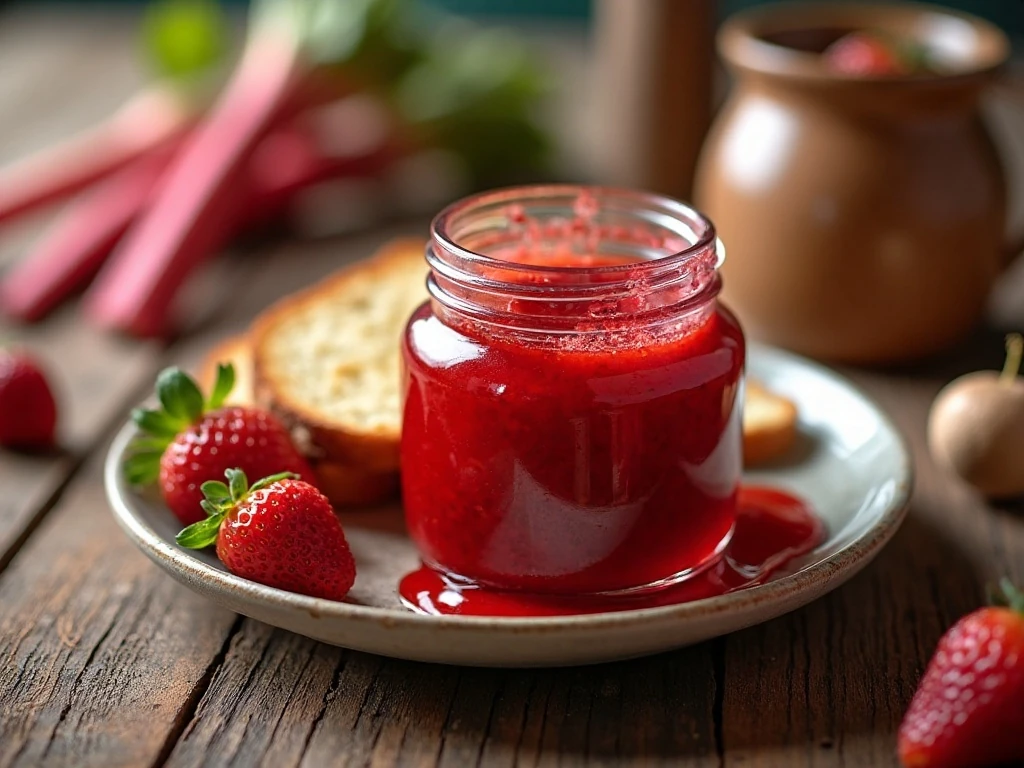
Strawberry rhubarb jam is one of those classic preserves that tastes far more special than the effort required to make it. The fruit is prepared in minutes, and powdered pectin gives the mixture dependable structure without requiring a long cooking session.
The flavor is wonderfully balanced. Strawberries bring floral sweetness and a familiar berry aroma, while rhubarb contributes a crisp, lemony tartness that keeps the jam from tasting heavy.
This batch is also an excellent way to preserve a short strawberry or rhubarb season. Five to six half-pint jars are enough to enjoy immediately while saving several jars for breakfasts, desserts, and thoughtful homemade gifts.
For another fruit-forward idea, serve a spoonful of this jam alongside a fresh strawberry salsa at a weekend brunch. The contrasting sweet, tart, and savory flavors make a beautiful seasonal spread.
Ingredients You’ll Need
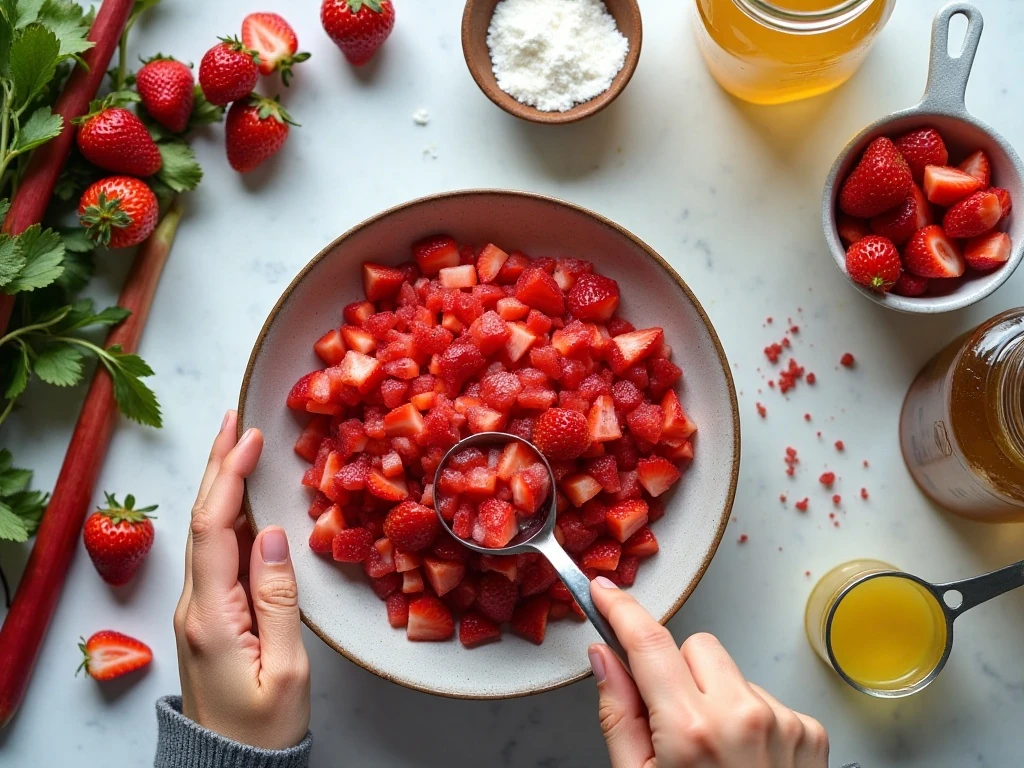
The ingredient list is short, but accuracy matters. Fruit should be measured after the strawberries have been crushed and the rhubarb has been finely chopped, since changing the fruit-to-sugar or fruit-to-pectin ratio can result in jam that is too soft or too firm.
- Strawberries: Use 1 1/2 cups of prepared berries. Wash, hull, and crush them rather than blending them completely smooth.
- Rhubarb: Finely chop 1 1/2 cups of stalks. Never use rhubarb leaves, which are toxic.
- Bottled lemon juice: Use 1/4 cup. Bottled juice is preferred for a shelf-stable canning batch because its acidity is standardized.
- Powdered fruit pectin: One box, approximately 1.75 ounces, helps the jam set in the tested-style formula.
- Granulated sugar: Measure 5 cups and add it all at once when the fruit mixture reaches a full rolling boil.
Have clean jars, lids, a ladle, a wide-mouth funnel, and a jar lifter ready before cooking. Jam waits for no one once it reaches the correct boil, so arranging your equipment first makes filling faster and less stressful.
If you are preparing a separate brunch menu, homemade jam pairs beautifully with baked goods such as these Irish soda scones. Their tender crumb is ideal for catching every glossy spoonful.
How to Make It Step-by-Step
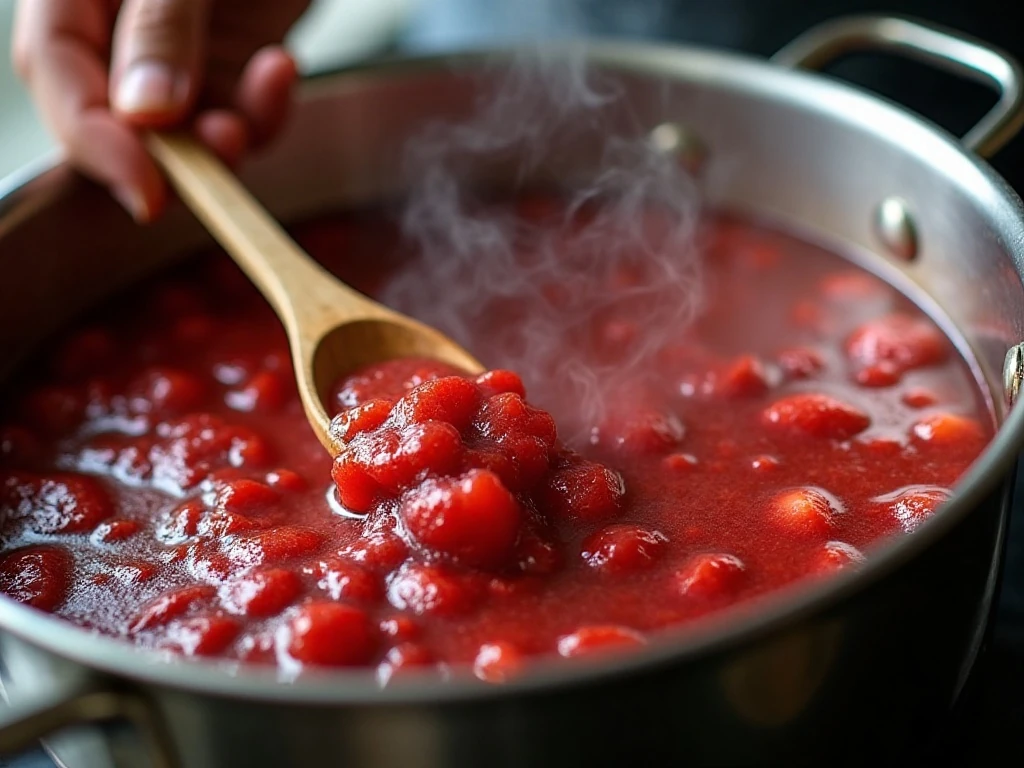
Step 1: Wash the strawberries under cool running water, remove the green tops, and crush the berries with a potato masher or fork. Leave some small pieces intact for a rustic jam texture rather than puréeing the fruit completely.
Step 2: Wash the rhubarb stalks thoroughly and trim away the ends. Discard all leaves, then finely chop the stalks so they soften quickly and distribute evenly through the jam.
Step 3: Measure exactly 1 1/2 cups of crushed strawberries and 1 1/2 cups of chopped rhubarb. Place both fruits in a large, heavy pot with the bottled lemon juice and powdered pectin.
Step 4: Set the pot over medium-high to high heat and bring the mixture to a full rolling boil. Stir frequently, scraping across the bottom and around the sides to prevent sticking as the fruit releases its juices.
Step 5: Add all 5 cups of granulated sugar at once. Stir continuously until the sugar dissolves and the mixture returns to a vigorous boil.
Step 6: Boil hard for 1 minute, stirring constantly. The boil should remain active even while you stir; this is the important setting point for the pectin-style method.
Step 7: Remove the pot from the heat and check the surface for foam. If foam is present, skim it off gently with a spoon so the jars have a clearer, more attractive finish.
Step 8: Ladle the hot jam into hot, sterilized jars, leaving the headspace specified by your pectin or canning instructions. Wipe each rim carefully, apply the lids, and secure the bands according to the manufacturer’s directions.
Step 9: For shelf-stable storage, process the sealed jars in a boiling-water canner for 10 minutes, adjusting the time for altitude according to current canning guidance. If you are not processing the jars, cool the jam and refrigerate it instead.
During the cooking stage, the mixture will look loose and syrupy before it sets. That is normal; the jam continues to thicken as it cools, so avoid extending the cooking time simply because it does not look fully firm in the pot.
Pro Tips for the Best Jam
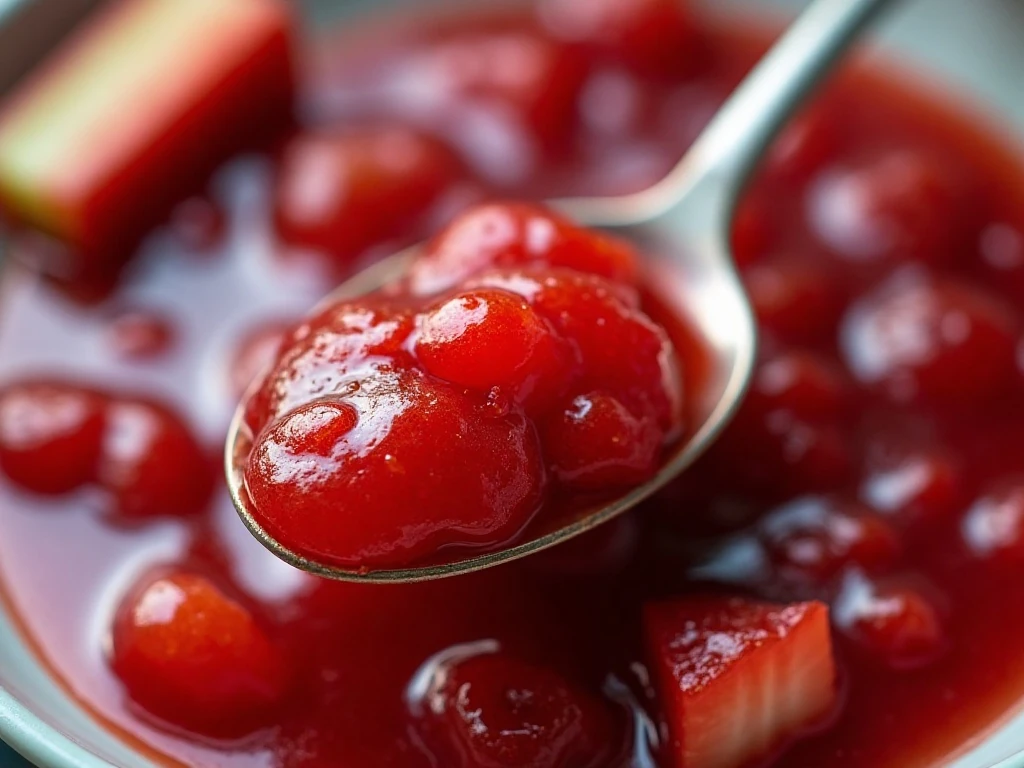
Measure prepared fruit carefully. This is the most important practical tip. Measure after crushing the strawberries and chopping the rhubarb, not before, because extra fruit can dilute the pectin and sugar balance.
Use bottled lemon juice for canning. Fresh lemons vary in acidity, while bottled lemon juice is standardized. Fresh juice can be used for a refrigerated batch, but bottled juice is the safer choice when preparing jam for shelf-stable storage.
Choose a large pot. Fruit jam foams and bubbles vigorously, especially after sugar is added. A spacious pot reduces the chance of boil-over and gives you room to stir safely.
Do not reduce the sugar casually. In this pectin-style recipe, the stated sugar quantity is part of the tested formula and contributes to both flavor and setting. Reducing it may change the texture and preservation characteristics.
Keep the fruit texture rustic. Crushing the strawberries preserves small berry pieces, while finely chopped rhubarb softens into tender flecks. This combination creates a spread that feels homemade rather than completely smooth.
For a second scone pairing, try these soda scones with warm jam and salted butter. The slight tang of the baked scone complements the bright fruit especially well.
Storage and Canning Guidance
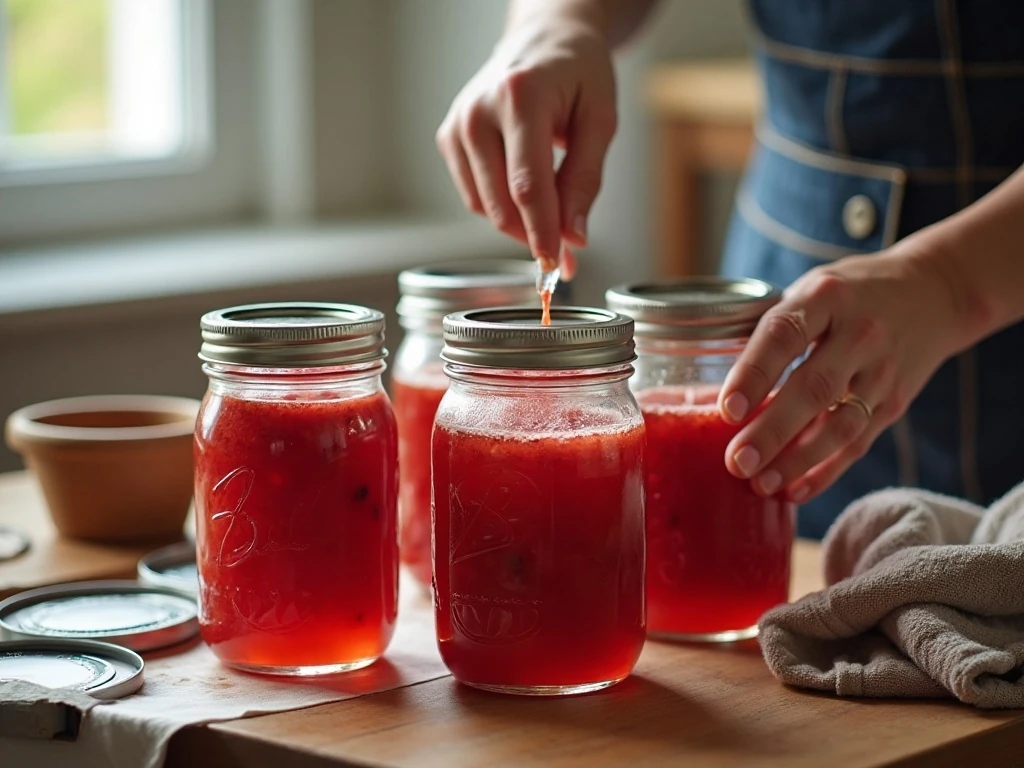
For shelf-stable storage, fill hot sterilized jars and process them in a boiling-water canner for 10 minutes, with altitude adjustments made according to current canning guidance and the instructions supplied with your pectin. Use intact jars, new lids when required, and clean rims for a reliable seal.
If you are not using a water-bath canner, cool the filled jars and refrigerate them. Refrigerated jam should be kept cold, and opened jars should be used with a clean utensil to protect the quality of the spread.
Always follow the headspace, lid, processing, and altitude instructions provided with your pectin or an up-to-date tested canning resource. When in doubt, choose refrigeration or freezing rather than guessing at a shelf-stable process.
Because this recipe makes approximately 5–6 half-pint jars depending on cooking and filling, you can keep one jar in the refrigerator and store the remaining sealed jars for later enjoyment.
Serving Ideas for Strawberry Rhubarb Jam
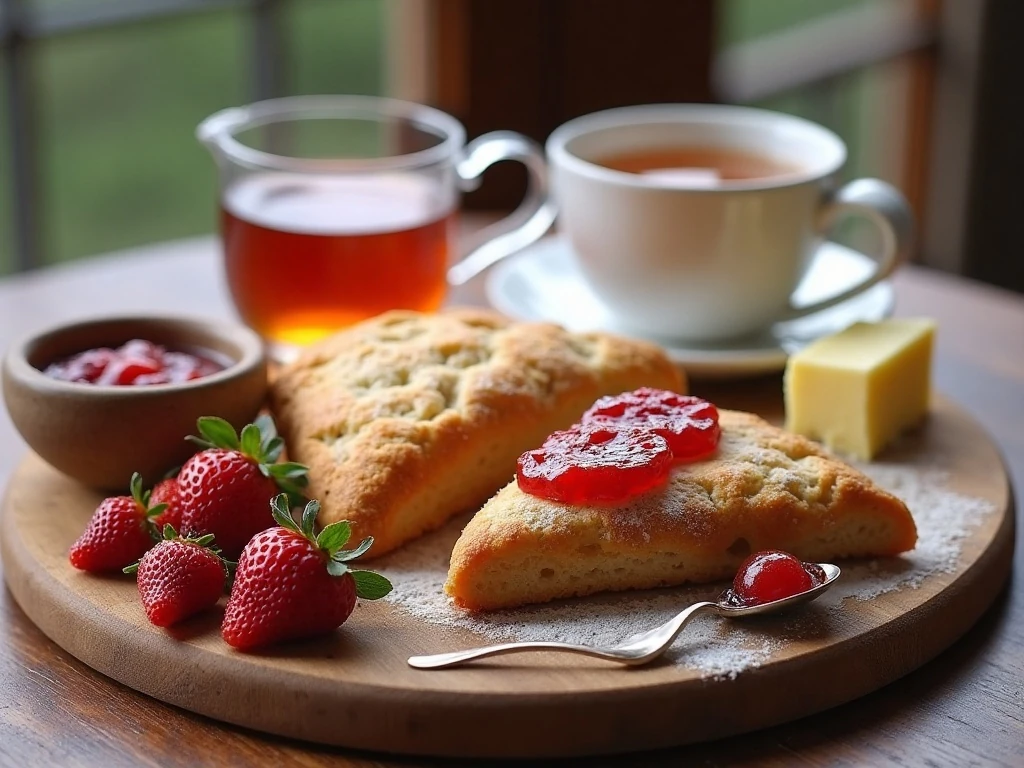
Spread the jam on toast, English muffins, biscuits, or warm scones for an easy breakfast. It is also delicious spooned over plain yogurt, oatmeal, rice pudding, cheesecake, or vanilla ice cream.
For a pretty dessert plate, place a small pool of jam beside a slice of custard pie. Our homemade egg custard pie offers a creamy, mild contrast to the lively fruit.
The jam can also be used as a pastry filling or brushed over a simple baked tart. Warm a small amount gently if you want a glossy glaze, taking care not to scorch it.
At brunch, balance the sweet spread with savory dishes such as a bowl of homemade cream of chicken soup. A small spoonful of jam on the bread course adds color and a welcome sweet-tart accent.
Optional No-Pectin Variation
If you prefer a no-pectin preserve, a common home-style variation uses 2 cups chopped rhubarb, 2 cups chopped strawberries, 3 cups granulated sugar, and 2 tablespoons lemon juice. Combine the fruit, sugar, and lemon juice, let the mixture rest for about 15–30 minutes, and then simmer it for approximately 25–40 minutes.
Since rhubarb varies in water content, do not rely only on the clock when making the no-pectin version. Test a spoonful on a chilled plate and continue cooking until it gels to your liking.
The no-pectin variation usually makes about 3–4 cups and is best refrigerated or frozen unless you are following a properly tested canning recipe. It has a softer, more spoonable texture than the powdered-pectin batch.
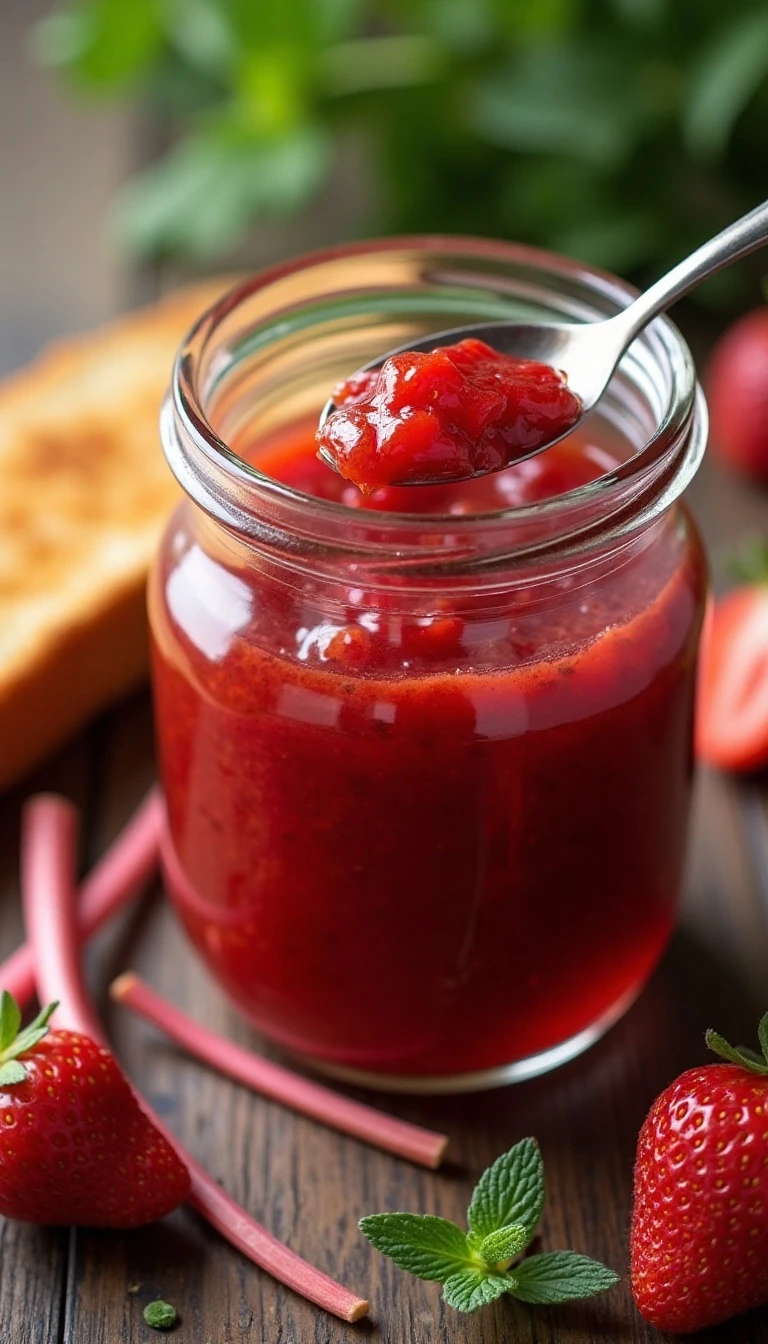
Simple Homemade Strawberry Rhubarb Jam
Ingredients
Method
- Wash and hull the strawberries, then crush them until they are juicy but still slightly chunky. Wash the rhubarb, discard every leaf, and finely chop the stalks.
- Measure the prepared fruit accurately after crushing and chopping. Add the strawberries, rhubarb, bottled lemon juice, and powdered pectin to a large pot.
- Bring the fruit mixture to a full rolling boil over medium-high to high heat, stirring frequently so it does not scorch.
- Add all 5 cups of sugar at once and stir until dissolved. Return the mixture to a full rolling boil that cannot be stirred down.
- Boil hard for 1 minute while stirring constantly. Remove the pot from the heat and skim off foam if needed.
- Ladle the hot jam into hot, sterilized jars, following the headspace specified by your pectin or canning instructions. Wipe the rims clean and apply the lids.
- For shelf-stable storage, process the filled jars in a boiling-water canner for 10 minutes, adjusting for altitude according to current canning guidance. Otherwise, let the jam cool and refrigerate it.
Notes
Final Thoughts
This simple strawberry rhubarb jam delivers a beautiful balance of ripe berry sweetness and lively rhubarb tartness with a straightforward, dependable method. Accurate measuring, a full rolling boil, and the correct one-minute hard boil are the keys to a batch that sets beautifully.
Enjoy it fresh on toast or scones, spoon it over desserts, or preserve it for a taste of summer later in the year. Whether you make the tested-style pectin version or try the smaller no-pectin variation, this homemade jam is a delicious reminder that seasonal fruit deserves a place in your pantry.
2 thoughts on “Simple Homemade Strawberry Rhubarb Jam Recipe”