To bake spaghetti squash, heat your oven to 400°F, cut one medium squash in half lengthwise, remove the seeds, season the cut sides with olive oil, salt, and pepper, then roast the halves cut-side down for 40 to 50 minutes. After a 5-to-10-minute rest, gently scrape the tender flesh with a fork to create long, spaghetti-like strands.
This easy oven method produces lightly sweet, tender squash with a delicate roasted flavor and a satisfying noodle-like texture. Serve it with butter and Parmesan, marinara, pesto, fresh herbs, or your favorite pasta topping for a simple dinner that feels comforting without requiring complicated preparation.
Jump to RecipeWhy You’ll Love This Recipe
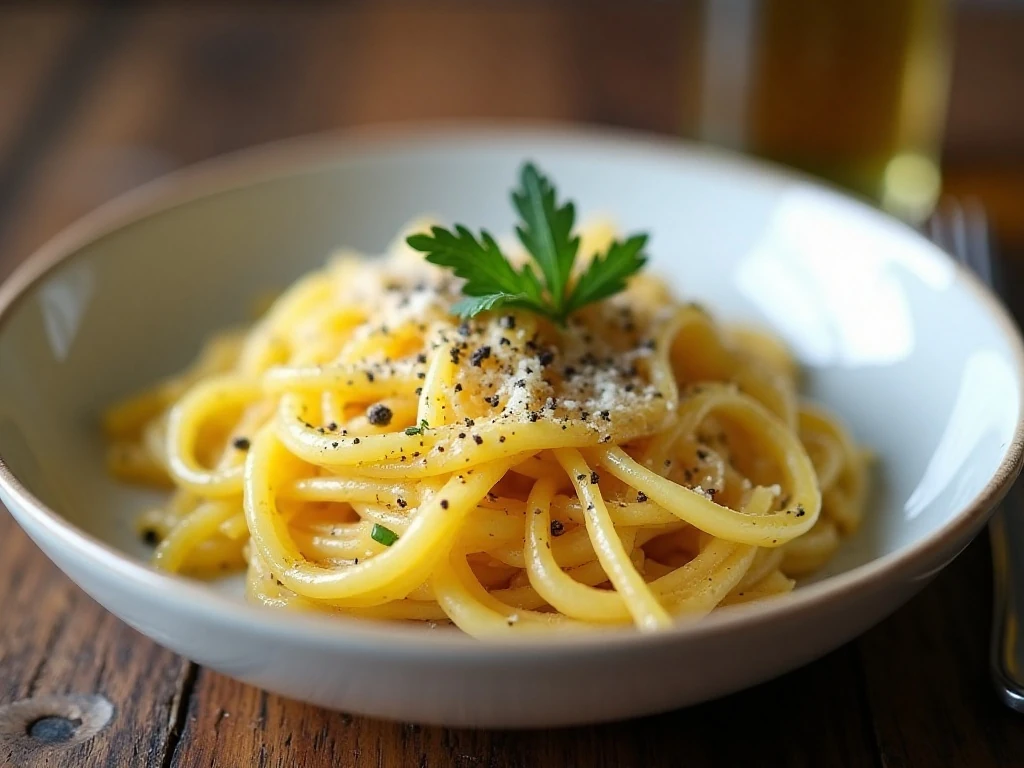
Baking spaghetti squash is one of the simplest ways to turn a whole winter squash into a versatile dinner base. The oven does nearly all the work, while the cut-side-down roasting method helps the flesh steam gently inside its sturdy shell.
The finished strands have a mild, naturally sweet flavor that pairs with both rich and fresh toppings. They are delicious with just butter, salt, and Parmesan, but they can also stand in for noodles beneath marinara, pesto, or a hearty vegetable sauce.
This recipe is also wonderfully flexible. You can roast the squash while preparing a protein or salad, then finish the strands just before serving for a warm meal with very little last-minute work.
For another comforting dinner idea when you have more time, try this overnight lasagna. The squash makes a lighter side or main course, while lasagna brings the classic baked-pasta experience to the table.
Ingredients You’ll Need
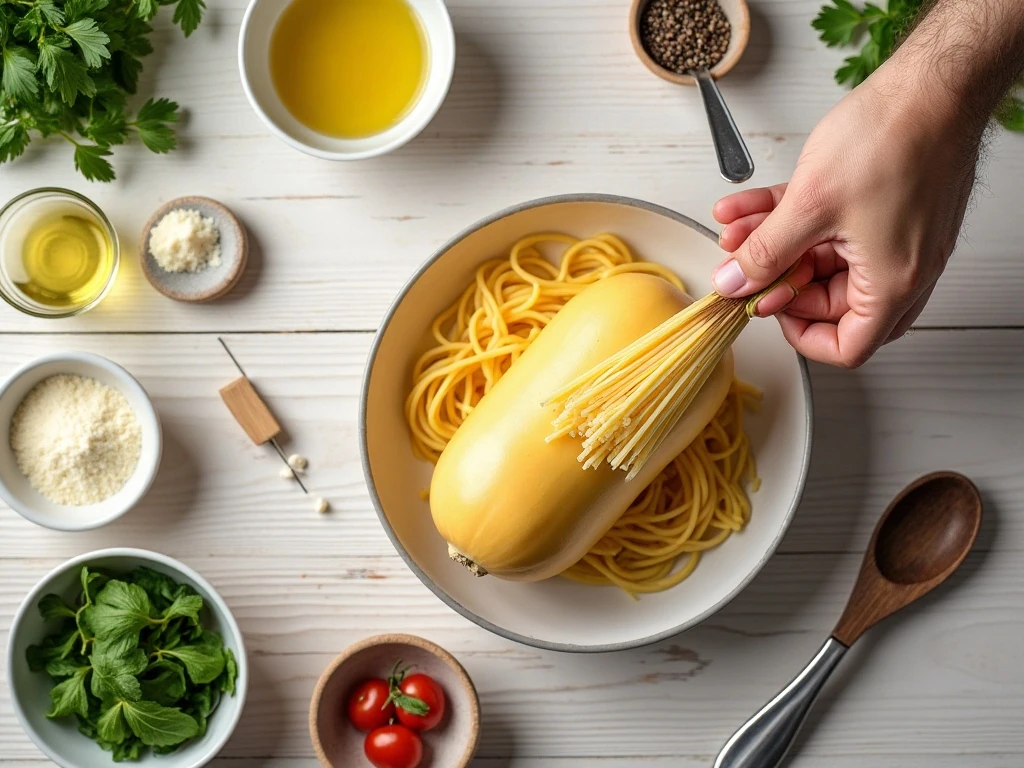
The ingredient list is short because spaghetti squash already brings plenty of character to the plate. Choose a medium squash weighing about 2 1/2 to 3 pounds, with firm skin and no large soft spots.
- Spaghetti squash: One medium squash provides several servings of tender strands.
- Olive oil: One tablespoon coats the cut surfaces and encourages flavorful roasting.
- Kosher salt: Use 1/2 teaspoon before baking, then add more after tasting.
- Black pepper: One-quarter teaspoon adds gentle warmth and contrast.
- Optional garlic: Add 1/2 teaspoon garlic powder or one small minced garlic clove for a savory note.
- Optional toppings: Keep Parmesan, butter, fresh herbs, or extra olive oil nearby for serving.
Fresh parsley, basil, or chives add color and a clean finish. If you want a complete pasta-inspired dinner, a little marinara or pesto can turn the roasted strands into a satisfying main dish.
For another squash side, compare the sweet and salty flavors in roasted butternut squash with feta. Spaghetti squash is milder, but both recipes show how roasting brings out a squash’s natural sweetness.
How to Make It Step-by-Step
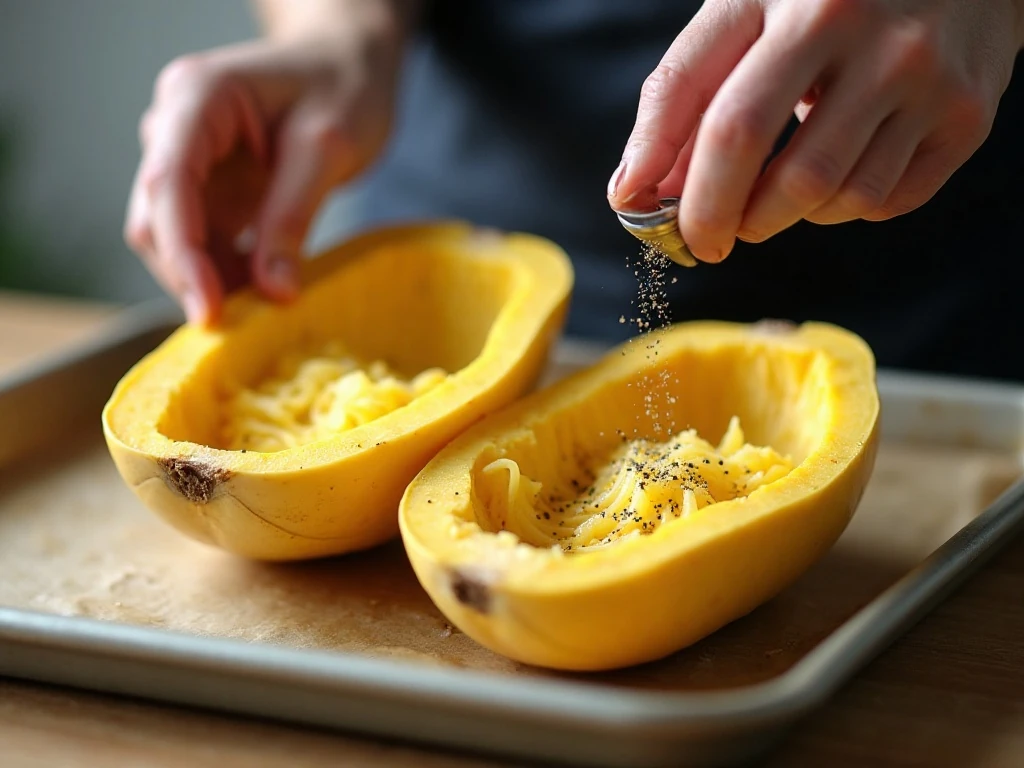
Step 1: Heat your oven to 400°F and position a rack in the center. Wash the spaghetti squash thoroughly, dry it well, and place it on a sturdy cutting board so it does not slide while you work.
Step 2: Carefully cut the squash in half lengthwise from stem to base. If the skin is too difficult to pierce safely, make several small holes in the whole squash, microwave it for 3 to 5 minutes, and let it cool briefly before cutting; never microwave a whole squash without piercing it first.
Step 3: Use a large spoon to scoop out the seeds and stringy pulp from each half. Scrape only the loose center material, leaving the firm flesh intact so you have plenty of strands after roasting.
Step 4: Brush the cut surfaces with 1 tablespoon of olive oil. Sprinkle the halves with 1/2 teaspoon kosher salt and 1/4 teaspoon freshly ground black pepper, adding the optional garlic powder or minced garlic if you like a more savory flavor.
Step 5: Arrange the squash halves cut-side down on a rimmed baking sheet. This position holds in steam and helps the flesh become tender without requiring extra water or covering.
Step 6: Bake for 40 to 50 minutes, checking the squash toward the shorter end of the range if it is small. It is ready when a fork easily pierces the skin and the flesh pulls away into strands, but do not continue baking once the texture is tender.
Step 7: Remove the baking sheet from the oven and let the squash rest for 5 to 10 minutes. This brief pause makes the squash easier to handle and gives the interior heat time to settle.
Step 8: Turn the halves cut-side up and gently scrape the flesh with a fork, working from the outside toward the center. Use light strokes to separate the strands rather than pressing down and crushing them.
Step 9: Taste the strands and adjust the seasoning with more salt and pepper as needed. Finish with butter, Parmesan, fresh herbs, additional olive oil, marinara, pesto, or another sauce, then serve warm.
Pro Tips for Tender, Long Strands
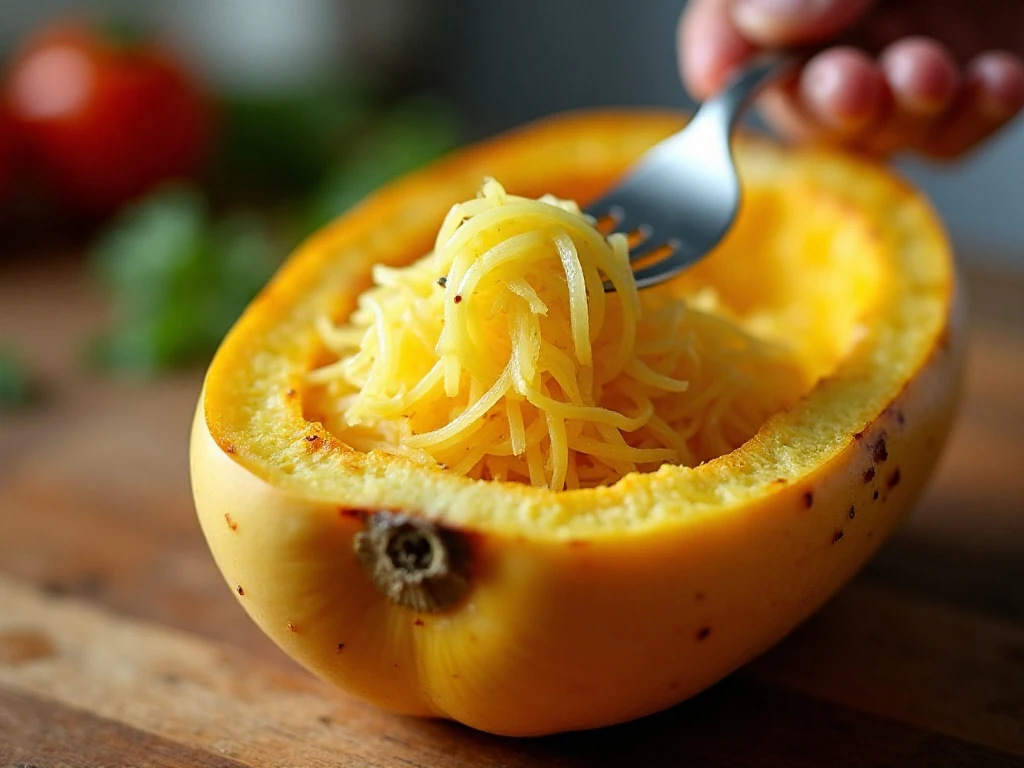
The biggest mistake when baking spaghetti squash is leaving it in the oven too long. The flesh should be tender enough for a fork to pass through easily, but it should not collapse into a wet, mushy mass.
For especially long strands, cut the squash crosswise into rings instead of lengthwise halves. Remove the seeds from each ring, brush with the same seasonings, and roast at 400°F for roughly 35 to 45 minutes, watching closely as the rings can cook a little faster.
Cutting safely matters more than cutting quickly. Keep the squash stable, use a sharp chef’s knife, and work slowly; if the skin resists, use the pierced-and-microwaved method rather than forcing the blade.
Roasting cut-side down is the standard, dependable approach for tender flesh. It also protects the cut surface from drying out while the squash cooks in its own steam.
When scraping, begin near the outer edge and move toward the center. This direction helps release defined strands and keeps them from becoming compressed or watery.
If you enjoy vegetable side dishes, you may also like this guide to cooking yellow squash on the stove. It uses a different technique, but the same focus on avoiding an overly soft texture applies.
Flavor Ideas and Serving Suggestions
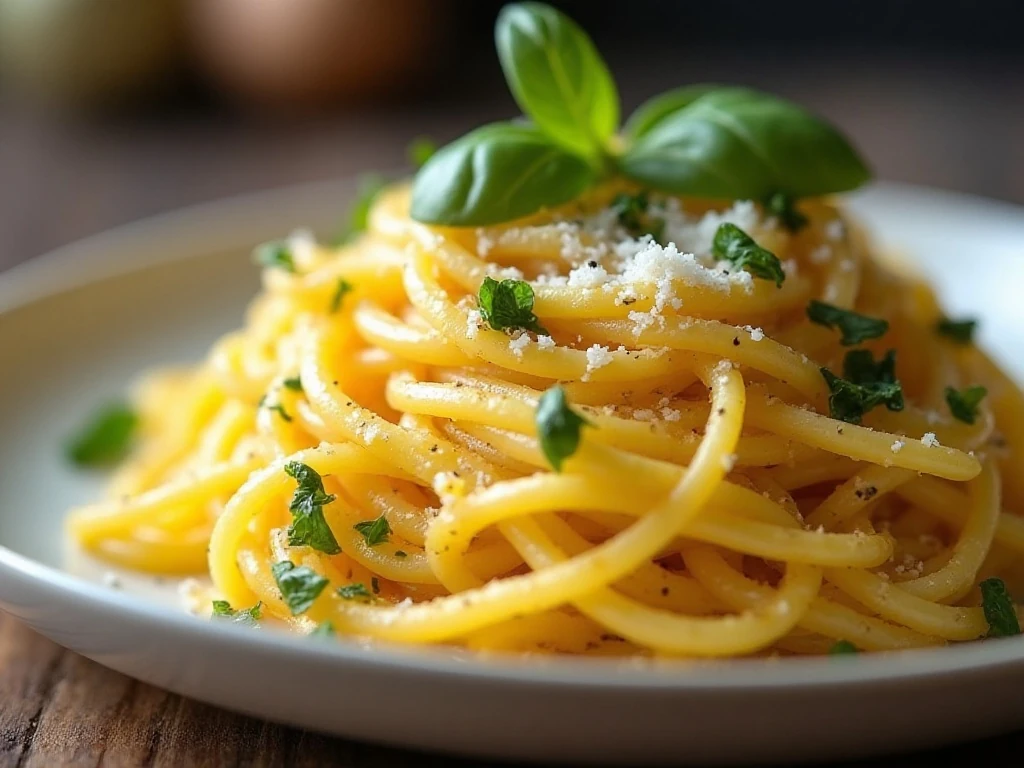
Plain roasted strands are tasty enough to serve with a drizzle of olive oil and a pinch of salt, but toppings let you take the dish in many directions. A little butter and Parmesan creates a cozy, savory finish that works especially well beside roasted chicken or fish.
- Italian-inspired: Toss with warm marinara, Parmesan, basil, and black pepper.
- Pesto style: Stir in pesto just before serving and top with fresh herbs or toasted nuts.
- Garlic butter: Add melted butter, garlic, Parmesan, and chopped parsley.
- Fresh and bright: Finish with olive oil, lemon juice, herbs, and a small pinch of salt.
- Protein-friendly dinner: Serve the strands beneath grilled chicken, shrimp, salmon, or roasted beans.
For a seafood pairing, serve the squash beside or beneath this easy salmon pasta. The mild squash gives a lighter contrast to a rich salmon-based meal.
You can also fold the strands into sautéed spinach, mushrooms, or roasted tomatoes. Add sauce gradually, since too much liquid can overpower the squash and make the strands seem wetter than they are.
Storage and Reheating
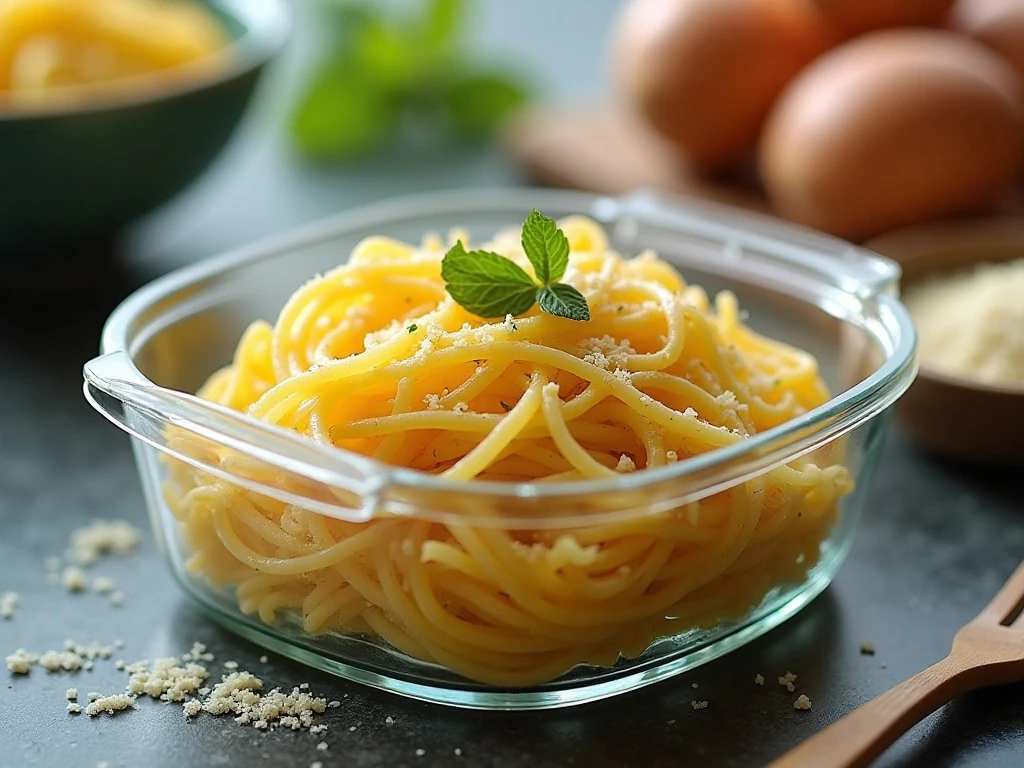
Let leftover strands cool before transferring them to an airtight container. Refrigerate them promptly and use them within a few days for the best flavor and texture.
Reheat gently in a skillet over medium-low heat or in the microwave in short intervals. Stir once or twice, and stop as soon as the strands are warm; prolonged reheating can make them soft and watery.
If you are preparing ahead, roast the squash, scrape the strands, and keep the toppings separate. Warm the squash shortly before dinner, then add butter, Parmesan, herbs, or sauce at the table.
Keep leftover roasted squash in mind for quick lunches, too. It can be added to a bowl with greens, beans, roasted vegetables, or a little cheese for a filling meal without starting from scratch.
Common Questions
Can I roast spaghetti squash whole? The most reliable method in this guide is to cut it before roasting, but the microwave safety rule is important if the squash is hard to cut: pierce it several times before microwaving for 3 to 5 minutes. Never microwave an unpierced whole squash.
Why are my strands watery? The squash may have been overbaked, or the strands may still be holding excess steam. Roast only until fork-tender, allow a 5-to-10-minute rest, and avoid adding a large amount of sauce all at once.
Why did my squash not form long strands? Some varieties naturally produce shorter strands, and scraping too firmly can break them apart. For longer strands, use the crosswise ring method and scrape gently from the outside toward the center.
Do I need to season the inside before baking? Yes, brushing the cut surfaces with olive oil and seasoning with salt and pepper gives the flesh a more balanced flavor. You can add garlic powder or a small minced garlic clove, then finish with additional toppings after roasting.
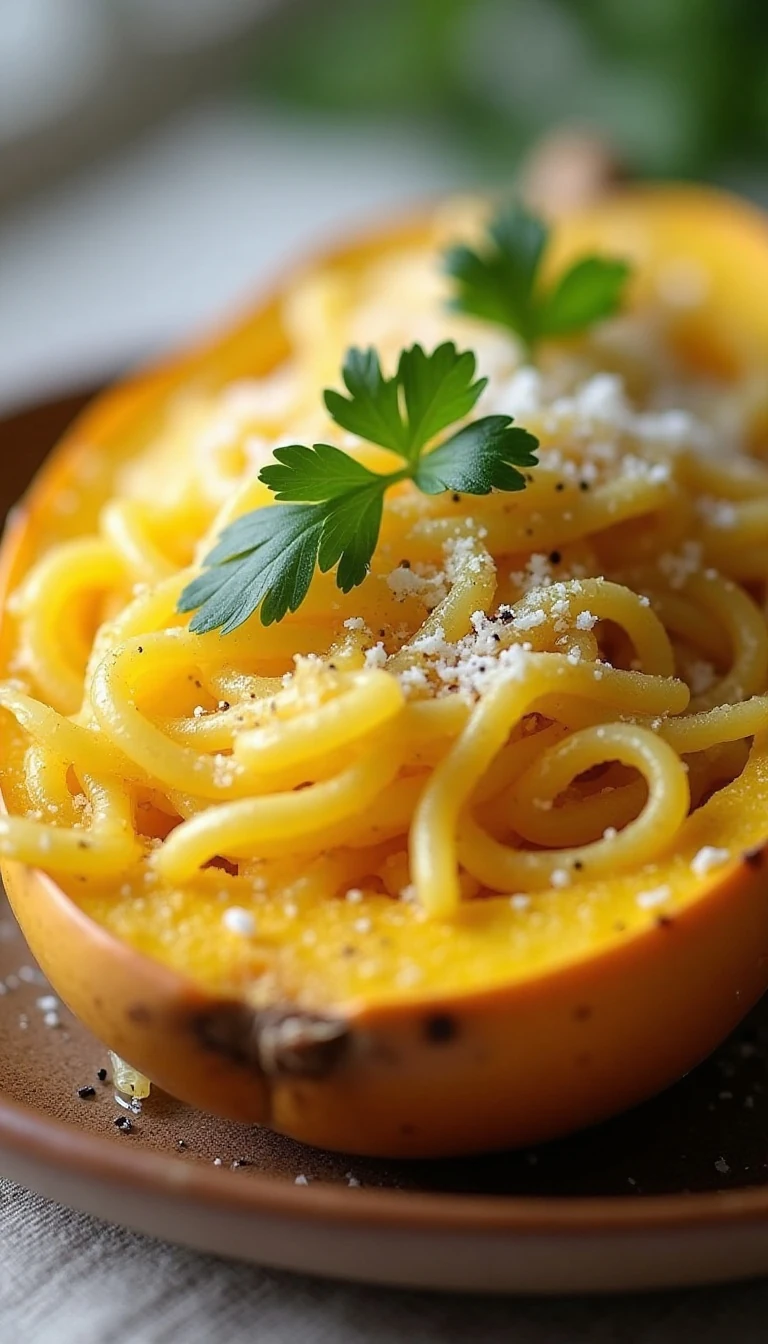
Baked Spaghetti Squash
Ingredients
Method
- Heat the oven to 400°F. Wash and dry the spaghetti squash, then place it on a stable cutting board.
- Carefully cut the squash in half lengthwise and scoop out the seeds and stringy pulp. If the squash is unusually difficult to cut, pierce it several times and microwave it for 3 to 5 minutes, then let it cool briefly before cutting; never microwave it unpierced.
- Brush the cut surfaces with olive oil and sprinkle evenly with kosher salt and black pepper. Add the optional garlic powder or minced garlic if desired.
- Place the squash halves cut-side down on a rimmed baking sheet. Roast for 40 to 50 minutes, depending on the size of the squash.
- Check for doneness when a fork easily pierces the skin and the flesh separates into strands. Remove the squash before it becomes mushy, since overbaking can create watery strands.
- Let the baked squash rest for 5 to 10 minutes so it is easier to handle and the steam can settle. Use a fork to gently scrape from the outside toward the center, separating the flesh into spaghetti-like strands.
- Taste the strands and adjust the seasoning with more salt, pepper, olive oil, butter, Parmesan, or herbs. Toss with marinara, pesto, or another sauce and serve warm.
Notes
Final Thoughts
Once you know how to bake spaghetti squash, you have an easy, reliable foundation for countless dinners. A medium squash, a little olive oil, simple seasoning, and 40 to 50 minutes at 400°F are all you need to create tender strands with a naturally sweet roasted flavor.
Remember the key details: roast the halves cut-side down, check for doneness before the flesh turns mushy, rest the squash for 5 to 10 minutes, and scrape gently from the outside toward the center. Those small steps make the difference between defined strands and a watery texture.
Finish your baked spaghetti squash with Parmesan and herbs for a simple side, or add marinara, pesto, vegetables, or protein to make it dinner. Once it becomes part of your routine, this adaptable squash will earn a regular place on your menu.
For a sweet finish after dinner, consider serving a fruit-filled treat such as this apple cream cheese Danish. It makes a lovely contrast to the savory, roasted flavors of the meal.