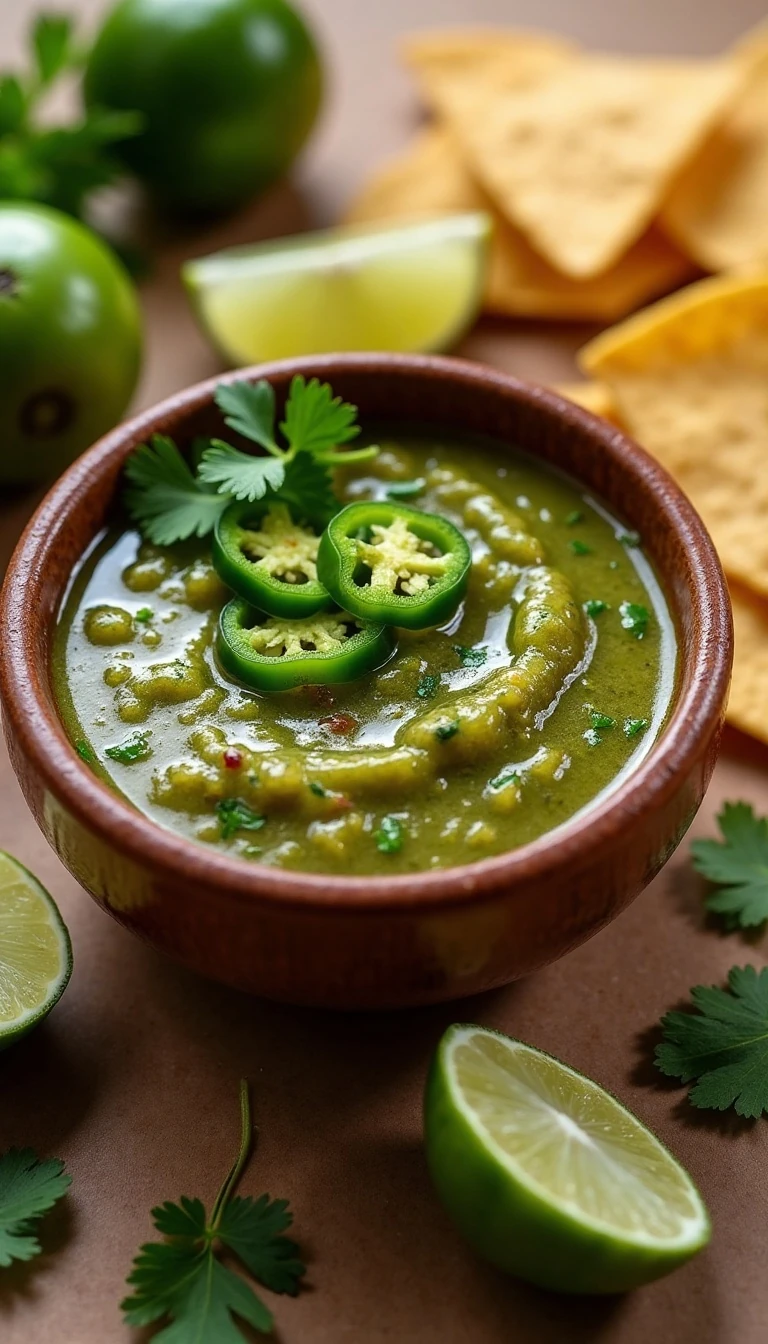
This easy roasted tomatillo salsa recipe makes about 2 cups of authentic-tasting salsa verde in approximately 25–35 minutes. Broiling tomatillos, jalapeños, onion, and garlic creates smoky char and rich flavor before everything is pulsed with cilantro, lime juice, and salt.
The finished salsa is bright, tangy, lightly smoky, and as spicy as you choose to make it. Serve it warm or chilled with tortilla chips, spoon it over tacos and eggs, or use it as a fresh sauce for roasted meats, beans, and vegetables.
Jump to RecipeWhy You’ll Love This Recipe
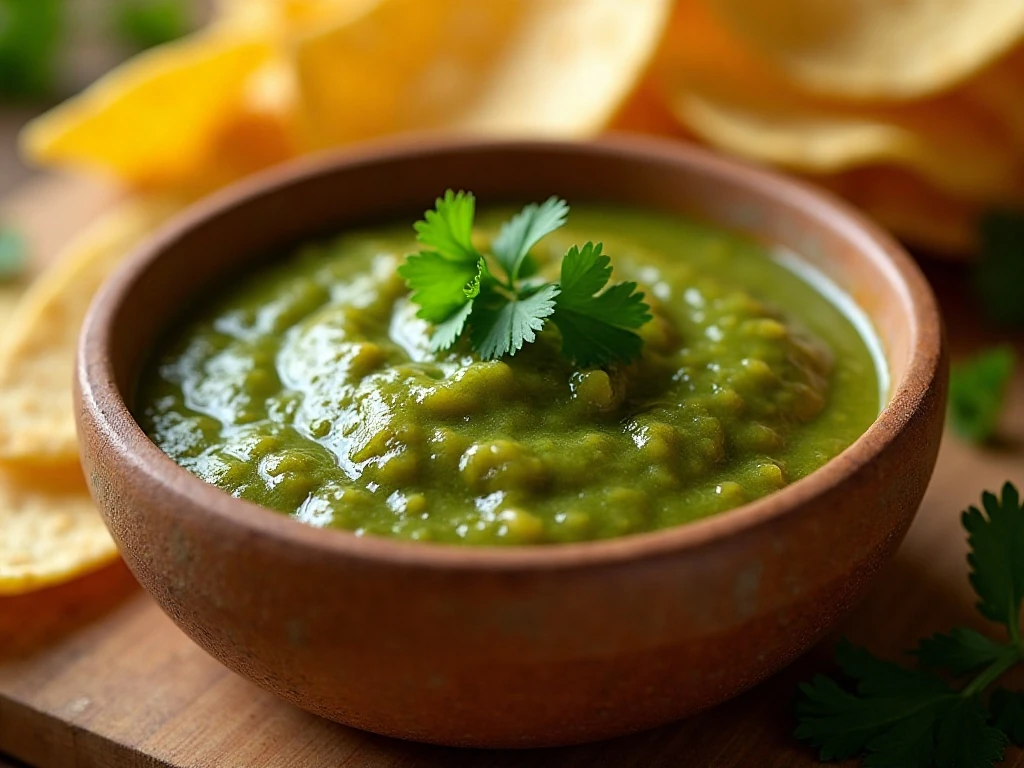
Roasted tomatillo salsa has the best of several flavors in one bowl: fresh green brightness, gentle acidity, smoky char, and a savory garlic finish. The broiler softens the vegetables quickly while creating dark patches that give the salsa its memorable roasted character.
This recipe is also wonderfully flexible. You can make it chunky or smooth, keep the jalapeño seeds for more heat, or remove them for a gentler dip that still tastes full and lively.
Because the ingredient list is short, each component matters. Tomatillos provide the tart foundation, onion brings sweetness, cilantro adds a fresh herbal note, and lime sharpens the final bite.
For a complete casual spread, spoon this salsa beside crispy roasted potatoes. The smoky green sauce is especially good with potatoes straight from the oven.
Ingredients You’ll Need
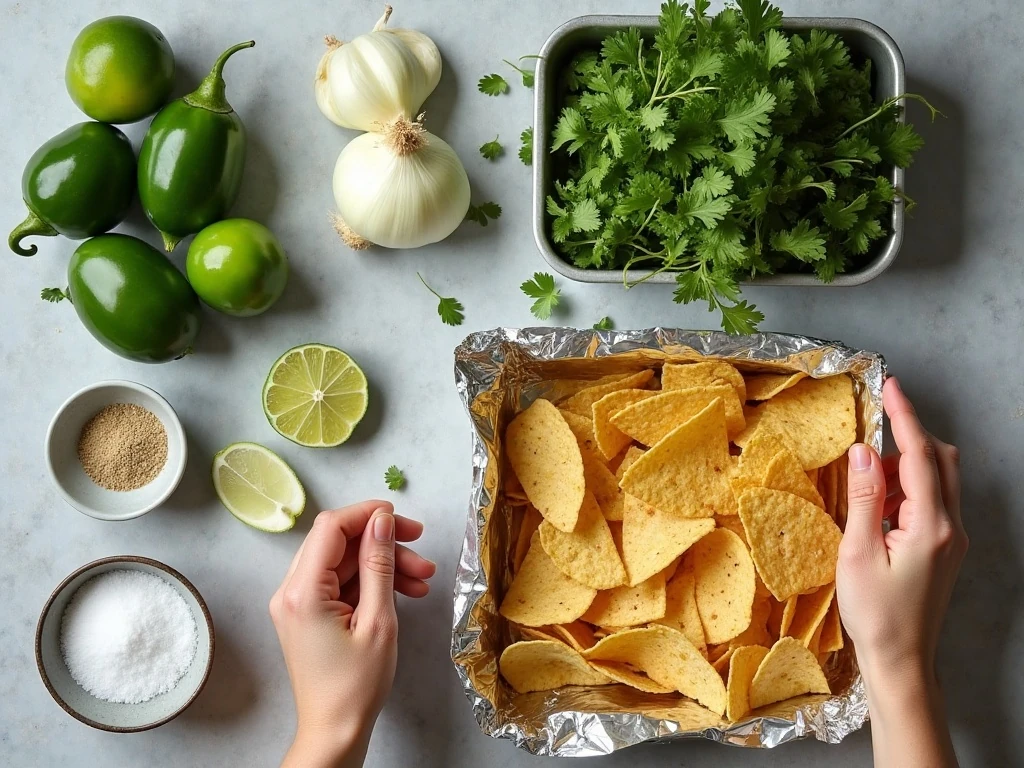
Choose firm tomatillos with bright green skin and no soft or sunken spots. The papery husks may look dry, but the fruit underneath should feel plump and firm.
- Tomatillos: Use 1 1/2 pounds, or about 10–12 medium tomatillos. Rinse them well after removing the husks because the fruit often has a tacky coating.
- Jalapeños: Two fresh jalapeños provide moderate heat and a fresh chile flavor. Their seeds and membranes can stay in for more heat or be removed for a milder salsa.
- White onion: Half of a medium onion, cut into chunks, roasts until sweet and tender.
- Garlic: Two unpeeled cloves roast in their skins, protecting them from scorching while concentrating their flavor.
- Cilantro: Half a cup of loosely packed leaves adds a clean, green finish.
- Lime and salt: One tablespoon of lime juice and one teaspoon of kosher salt balance the roasted vegetables. Add either gradually when adjusting the salsa.
- Water: Keep 2–4 tablespoons nearby, but use it only if the salsa needs thinning.
A blender or food processor works well, and a foil-lined baking sheet makes cleanup easier. If you prefer a more rustic texture, pulse in short bursts rather than running the machine continuously.
For another menu idea after your savory course, serve a light mandarin orange dessert. Its sweet citrus flavor makes a refreshing contrast to the tart salsa.
How to Make It Step-by-Step
Step 1: Remove the papery husks from all the tomatillos, then rinse the fruit thoroughly under cool running water. Rub away the slightly sticky coating, since leaving it behind can affect the clean flavor of the salsa.
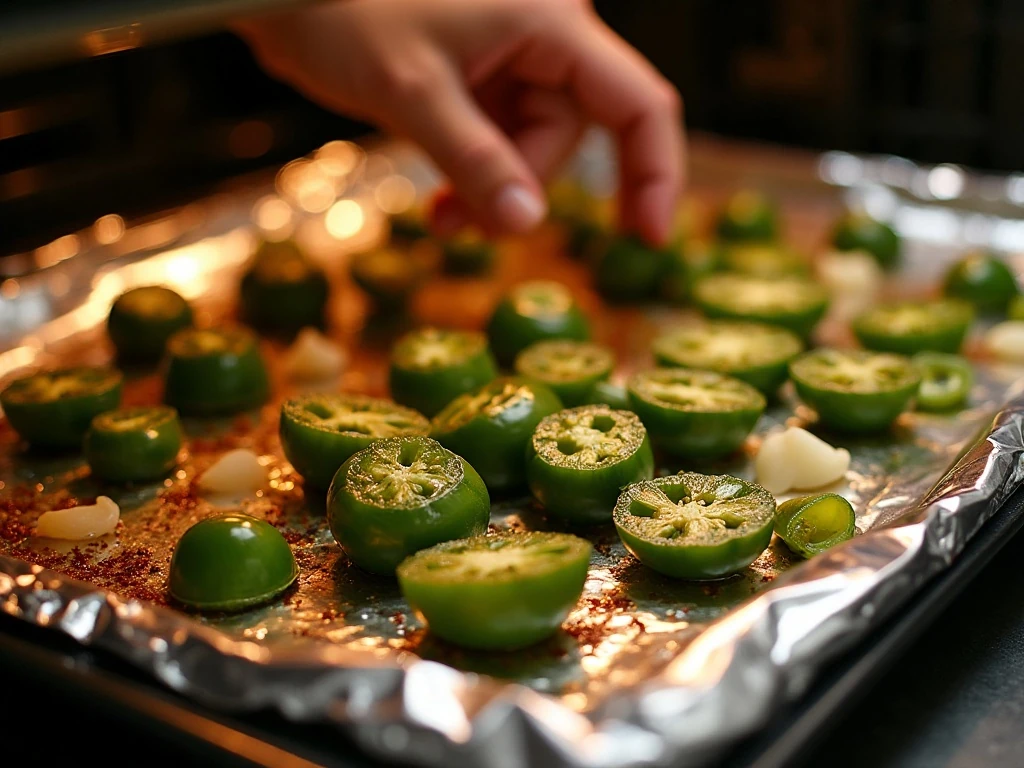
Step 2: Heat the broiler and position an oven rack 4–6 inches from the heat. Arrange the tomatillos, stemmed jalapeños, onion chunks, and unpeeled garlic cloves on a foil-lined baking sheet, keeping the vegetables in a single layer.
Step 3: Broil the vegetables for about 5–6 minutes per side, turning them once with tongs. The tomatillos should be softened and blistered, with noticeable dark brown or black patches; watch the garlic closely so it does not burn.
Step 4: If you prefer to roast instead of broil, place the baking sheet in a 425°F oven for 15–20 minutes and turn the vegetables once during cooking. This method takes longer but still produces tender vegetables with attractive roasted spots.
Step 5: Let the roasted vegetables cool for several minutes so they are easier to handle. Peel away the garlic skins, and keep a small amount of the flavorful liquid from the baking sheet rather than discarding every drop.
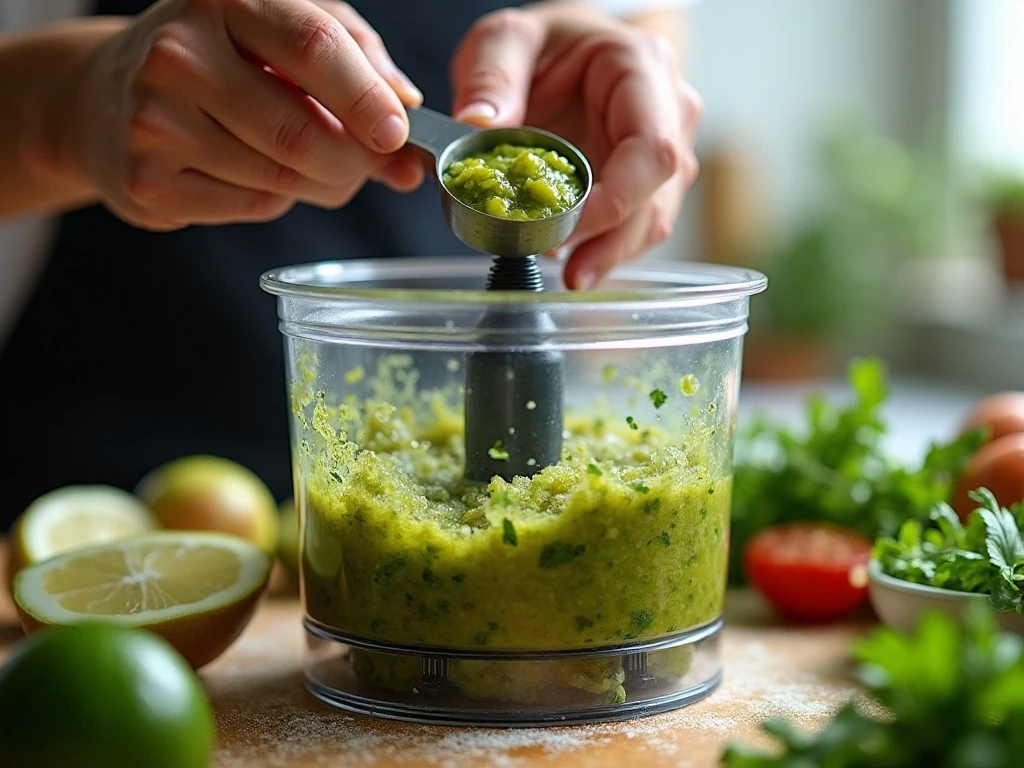
Step 6: Add the roasted tomatillos, jalapeños, onion, peeled garlic, cilantro, lime juice, and kosher salt to a blender or food processor. Pulse in short bursts until the mixture is mostly smooth but retains a little texture.
Step 7: Check the consistency before adding water. If the salsa is too thick, add water one tablespoon at a time, pulsing after each addition; stop as soon as it becomes spoonable because excess liquid can make it watery.
Step 8: Taste the salsa and adjust it carefully. Add more salt for savory depth, a little lime for extra tang, or additional chile if you want more heat, then serve it warm or chilled.
Pro Tips for the Best Salsa Verde
Char is one of the most important flavor details in this recipe. Let the tomatillos develop distinct roasted patches, but do not allow the garlic to blacken completely because burned garlic can taste harsh and bitter.
Tomatillos release plenty of liquid as they roast. A little of that juice belongs in the blender because it carries roasted flavor, while too much can make the finished salsa thin and difficult to scoop.
Pulse instead of fully puréeing. A slightly coarse texture is typical of homemade salsa verde and gives every bite small pieces of roasted tomatillo, onion, and chile.
- For a hotter, more traditional chile profile, use 1–2 serrano chiles instead of the jalapeños.
- For mild salsa, use only one jalapeño or remove the seeds and membranes from both.
- Add lime juice gradually because roasted tomatillos are naturally tart and may not need the full amount.
- Let the salsa rest for a few minutes before serving so the salt, lime, and roasted flavors can settle together.
If you are planning a sweet finish for your gathering, our easy beignets make a fun contrast to this savory appetizer. Prepare the salsa first so it has time to cool while the rest of the meal comes together.
Serving Ideas and Pairings
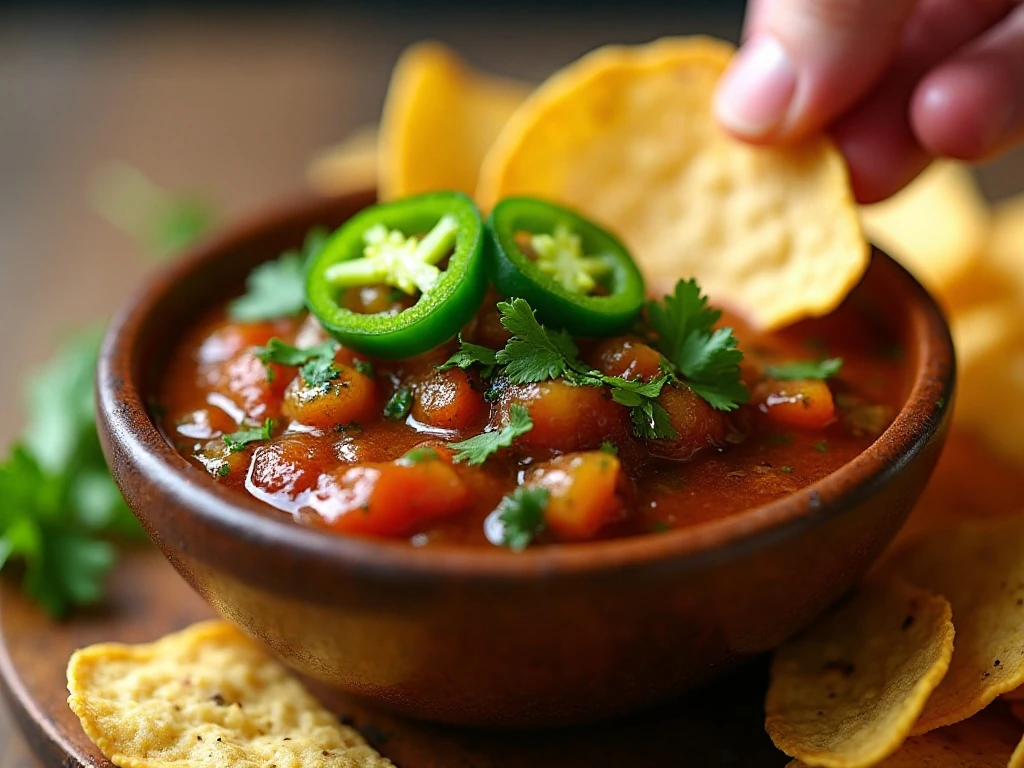
The classic presentation is simple: pour the salsa into a bowl and surround it with sturdy tortilla chips. A small spoonful of chopped cilantro or a few thin chile slices on top makes the color especially inviting.
For dinner, spoon roasted tomatillo salsa over tacos, grilled chicken, scrambled eggs, quesadillas, rice bowls, or black beans. Its acidity cuts through rich foods, while the roasted vegetables give simple dishes a more complete flavor.
You can also use it as a finishing sauce for roasted vegetables. Try it with potatoes, cauliflower, zucchini, or corn, and add a dollop of sour cream or Mexican crema if you enjoy a creamy contrast.
For a soup-and-salsa meal, serve a spoonful beside roasted eggplant soup. The tangy green salsa adds freshness to a warm, silky bowl.
Serve the salsa warm shortly after blending for a more pronounced roasted flavor, or chill it for a brighter and more refreshing dip. Both options are delicious, so choose based on the rest of your menu.
Storage, Make-Ahead, and Reheating
Transfer leftover salsa to a clean airtight container and refrigerate it. Because this recipe contains fresh cilantro and lime, it is best enjoyed within several days for the freshest flavor and color.
The salsa can be made ahead for a party. Prepare it, cool it, cover it, and refrigerate it until needed; taste it again before serving because chilling can soften the perception of salt, lime, and chile heat.
Roasted tomatillo salsa does not need to be reheated, but it can be served gently warmed if you prefer. Warm it slowly in a small saucepan over low heat, stirring occasionally, and avoid vigorous boiling, which can dull its fresh character.
If the salsa thickens in the refrigerator, stir in a small splash of water rather than adding a large amount at once. If it becomes too loose, let it sit uncovered briefly or pulse in another roasted tomatillo if you have one available.
For a brunch or dessert-focused gathering, pair the salsa with savory breakfast dishes and follow it with easy peach bread. The fruity loaf brings a soft, sweet finish after the bright chile flavors.
Easy Roasted Tomatillo Salsa Recipe
Ingredients
Method
- Remove the papery husks from the tomatillos and rinse them thoroughly under cool water to remove their slightly sticky coating. Pat them dry and prepare the jalapeños, onion, and garlic.
- Arrange the tomatillos, jalapeños, onion chunks, and unpeeled garlic cloves on a foil-lined baking sheet. Broil 4–6 inches from the heat for about 5–6 minutes per side, turning once, until softened and blistered with dark brown or black spots.
- For an oven-roasted alternative, roast the vegetables at 425°F for 15–20 minutes, turning once. Let the roasted ingredients cool for several minutes, then peel the garlic.
- Transfer the roasted tomatillos, jalapeños, onion, garlic, cilantro, lime juice, and kosher salt to a blender or food processor. Pulse until mostly smooth but still slightly textured.
- Add water one tablespoon at a time only if the salsa is too thick. Taste and adjust the salt, lime juice, or heat, then serve warm or chilled.
Notes
Final Thoughts
This easy roasted tomatillo salsa recipe proves that a handful of fresh ingredients can create a deeply flavorful dip. The key is simple: rinse the tomatillos well, roast until they are tender with dark charred patches, protect the garlic from burning, and pulse everything into a textured salsa rather than a completely smooth purée.
Adjust the heat and acidity to suit your table, then serve the salsa with chips or use it as a sauce for your favorite meals. Once you taste the smoky, tangy result, this homemade salsa verde is likely to become a regular part of taco nights, brunches, and casual entertaining.