This traditional Amish potato stuffing recipe combines creamy mashed potatoes, soft white bread, sautéed onion, celery, butter, eggs, and savory poultry seasoning in one comforting holiday side dish. Baked separately from the turkey at 350°F, it serves about 10 to 12 people and takes approximately 1 hour 20 minutes to 1 hour 35 minutes from start to finish.
Known as Amish potato filling, Pennsylvania Dutch potato filling, or potato-bread stuffing, this dish is moist, tender, buttery, and gently savory. The top develops a light golden crust while the center stays soft and spoonable, making it a wonderful companion for turkey, gravy, roasted vegetables, and cranberry sauce.
Jump to RecipeWhy You’ll Love This Recipe
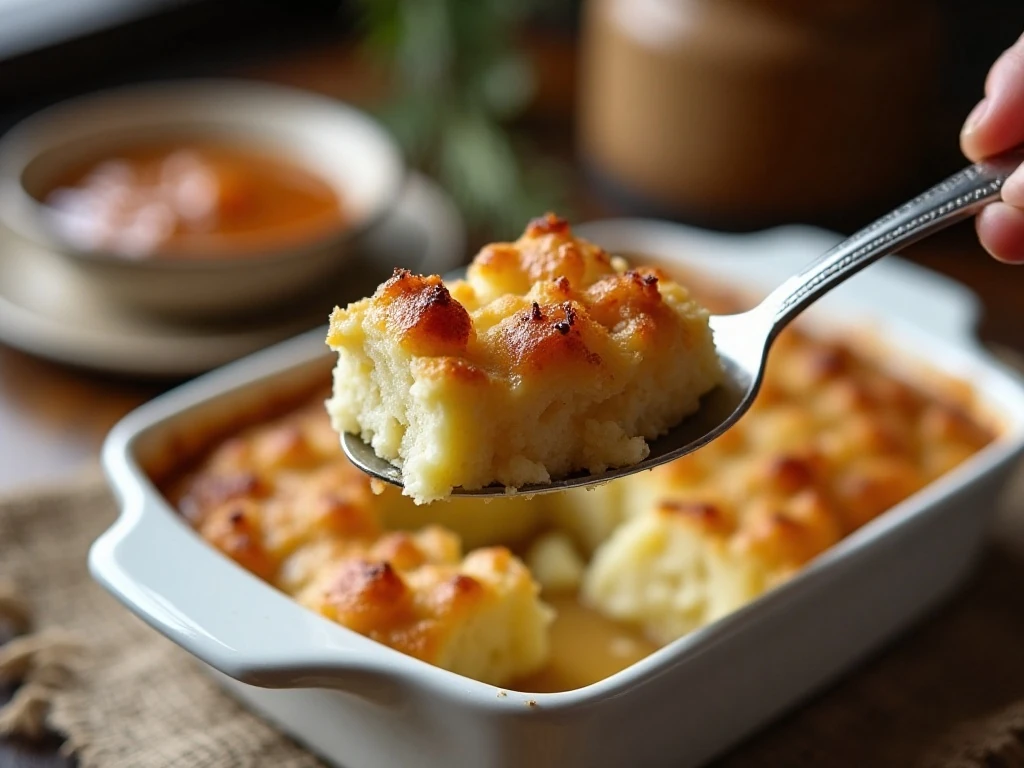
Traditional Amish potato stuffing is the kind of holiday food that feels familiar from the first bite. It has the cozy character of mashed potatoes and the fragrant, savory appeal of classic bread stuffing, so it satisfies guests who usually choose one or the other.
The texture is its greatest charm. Soft bread absorbs butter, vegetable juices, milk, and potato, while the top browns gently in the oven and creates a pleasant contrast with the tender middle.
This recipe is also practical for a large gathering. It makes about 10 to 12 servings, can be assembled several hours in advance, and bakes in its own dish rather than taking up space inside the turkey.
If your holiday menu includes several potato dishes, our cheesy ham and potato quiche is another comforting choice for a brunch or make-ahead meal.
Ingredients You’ll Need

The foundation is six medium russet or Yukon Gold potatoes, about three pounds total. Russets create a fluffy filling, while Yukon Gold potatoes bring a naturally buttery flavor and slightly denser texture.
Use one 16-ounce loaf of soft white sandwich bread, torn or cut into pieces between 1/2 and 1 inch. Day-old bread is ideal because it absorbs the seasoned mixture without collapsing, but fresh bread can be briefly dried in a low oven first.
- Butter: One cup provides richness for the vegetables, bread, and golden top.
- Aromatics: One finely chopped onion and three to four celery ribs create the classic savory base.
- Binding ingredients: Two lightly beaten eggs help the filling set as it bakes.
- Moisture: Keep 1 1/2 to 2 cups of whole milk nearby, adding it gradually.
- Seasoning: Use 1 1/2 teaspoons poultry seasoning or 1 teaspoon rubbed sage, along with salt and black pepper.
- Finishing touch: Two to three tablespoons of chopped fresh parsley are optional but add color and freshness.
For the most pronounced Pennsylvania Dutch flavor, choose rubbed sage and include both onion and celery. Avoid salting heavily until all ingredients are combined, since butter, bread, and seasoning can vary in saltiness.
How to Make It Step-by-Step
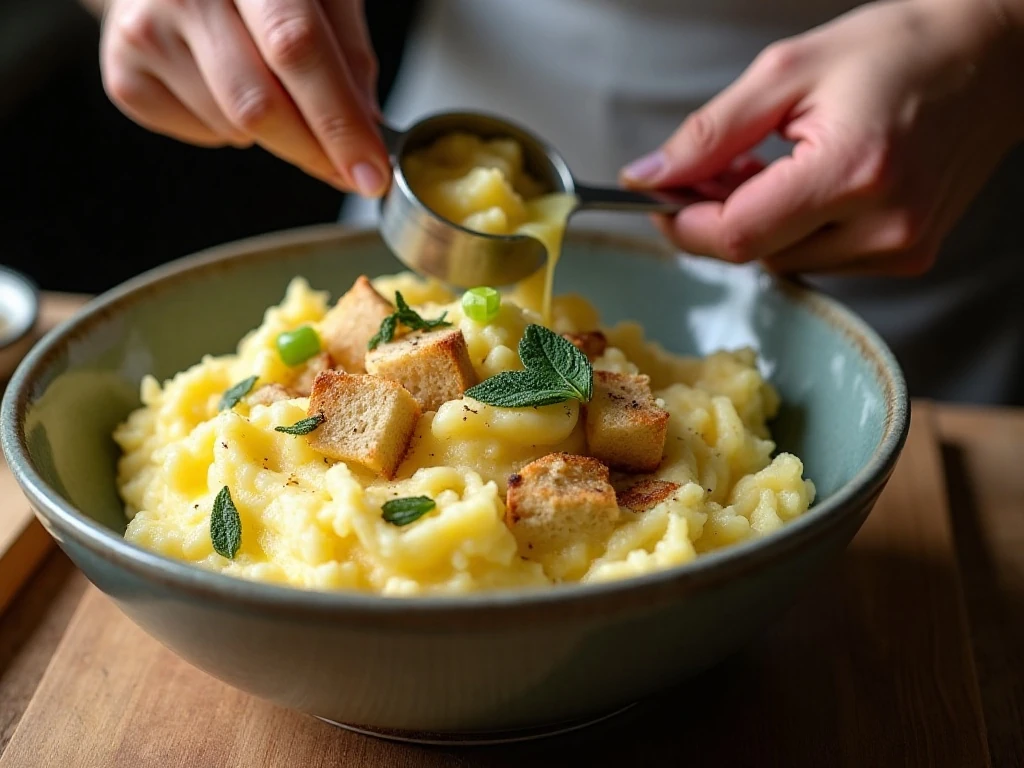
Step 1: Prepare the potatoes by peeling them and cutting them into evenly sized chunks. Place them in a pot of salted water, bring the water to a boil, and cook for 15 to 20 minutes until a fork slides through easily.
Step 2: Drain the potatoes well so excess water does not make the filling loose. Mash them roughly while warm, keeping a little texture because a completely smooth potato puree can make the stuffing heavy.
Step 3: Melt about 1/2 cup of the butter in a large skillet over medium heat. Add the chopped onion and celery, then cook for 8 to 10 minutes, stirring occasionally, until both vegetables are soft and fragrant.
Step 4: Put the bread pieces into a large bowl that leaves plenty of room for mixing. Pour the warm onion and celery mixture over the bread, then add the remaining melted butter so the pieces become lightly coated.
Step 5: Add the mashed potatoes, poultry seasoning or rubbed sage, 1 1/2 teaspoons salt, and 1/2 teaspoon black pepper. Fold everything together gently so the bread remains in tender pieces rather than turning into a paste.
Step 6: Stir in the lightly beaten eggs after the mixture has cooled slightly. Add the milk a little at a time, stopping when the stuffing is moist and spoonable but not wet; when pressed lightly, it should hold together.
Step 7: Grease a 9-by-13-inch baking dish and spoon in the stuffing. Spread it evenly, then dot the surface with a little additional butter for a fragrant browned crust.
Step 8: Bake at 350°F (175°C) for 45 to 60 minutes. Leave the dish uncovered for a lightly browned top, or cover it for the first 30 minutes and uncover it near the end if you prefer a softer, moister filling.
Step 9: Let the dish rest for several minutes before serving so the center can settle. Sprinkle with fresh parsley if desired and bring it to the table warm with gravy or pan juices.
For another comforting take on a holiday favorite, you can also compare this dish with our slow-cooker stuffing recipe, especially when oven space is limited.
Pro Tips for the Best Potato Filling
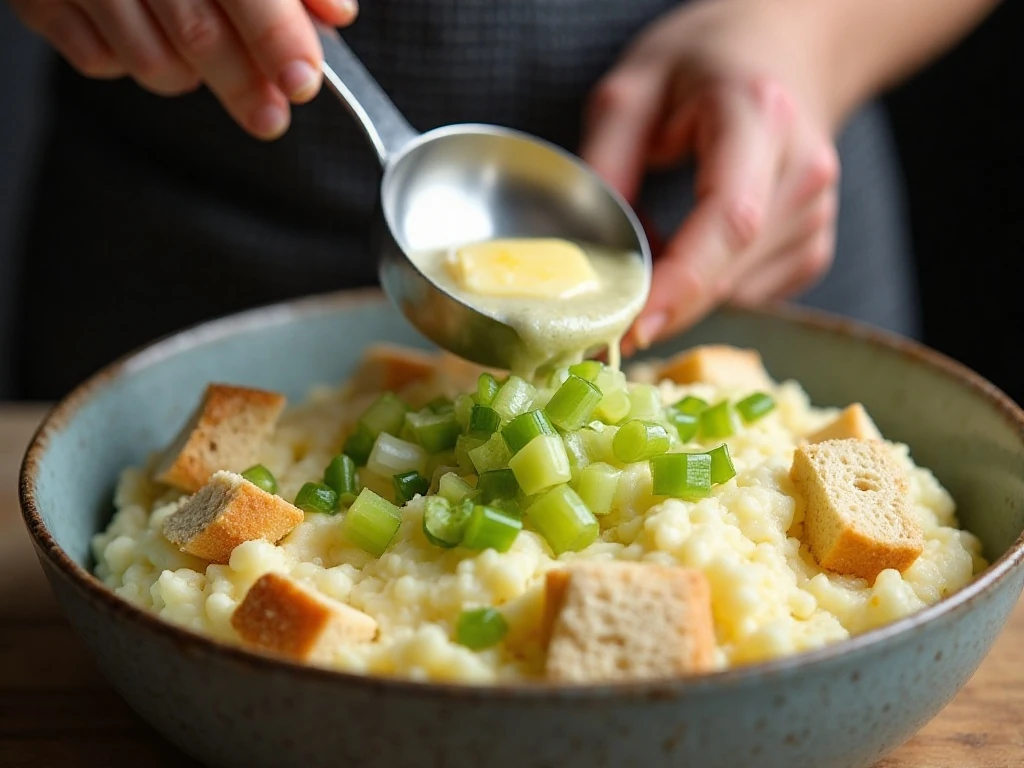
Dry the bread properly. Day-old white bread gives the best balance of softness and structure. If the bread is very fresh, spread the pieces on a baking sheet and dry them briefly in a low oven, taking care not to toast them brown.
Control the milk. Potatoes differ in moisture, and bread can be drier or softer depending on its age. Begin with 1 1/2 cups, mix thoroughly, and add more only if the stuffing seems dry or crumbly.
Keep some texture. The traditional filling is not a smooth potato casserole. Rough mashed potatoes and visible bread pieces give it the rustic bite associated with Amish and Pennsylvania Dutch versions.
Cook the vegetables until tender. The onion and celery should soften fully in the butter before they go into the bowl. This releases their flavor and prevents crunchy bits in the finished stuffing.
Taste before adding the eggs. Because the eggs are uncooked, season the potato-bread mixture before they are incorporated, or sauté a small spoonful in the skillet to check the salt and sage level safely.
When planning the rest of the meal, our easy bread stuffing offers a simpler comparison for guests who want a more traditional bread-forward side.
Make-Ahead, Storage, and Reheating
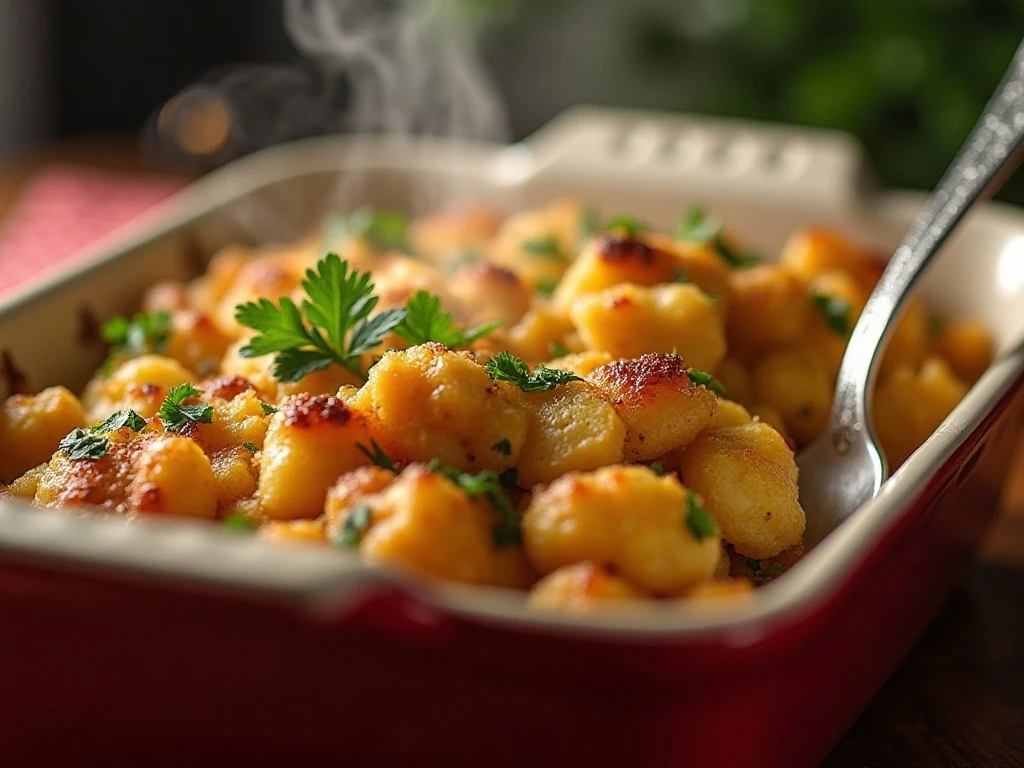
To make the stuffing ahead, assemble it in the greased baking dish, cover it tightly, and refrigerate it for several hours. Take it from the refrigerator while the oven preheats, then allow roughly 10 to 15 extra minutes of baking because the mixture will be cold.
For the best texture, avoid leaving the assembled dish at room temperature for an extended period. The eggs and milk need to stay chilled until the dish is ready to bake.
Refrigerate leftovers in a covered container and use them within a few days. Reheat individual portions in the microwave or warm a larger amount covered in the oven until hot throughout, uncovering briefly if you want the top to regain some crispness.
Leftover potato stuffing is excellent with turkey, chicken, or a spoonful of gravy. It can also share the table with a festive main course such as dinner baked in a pumpkin for a memorable autumn menu.
What to Serve with Amish Potato Stuffing
This filling is rich and savory, so pair it with foods that bring brightness and contrast. Turkey gravy, cranberry sauce, roasted green beans, glazed carrots, and a crisp winter salad all work beautifully.
It is especially good alongside roasted poultry because the soft, buttery texture catches every drop of gravy. If you are building a holiday spread, serve it in a shallow dish so everyone can enjoy both the tender center and browned edges.
Although it is usually associated with Thanksgiving, this potato stuffing also belongs on Christmas and Sunday dinner tables. For a nontraditional comfort-food menu, a crisp salad and a simple pasta dish such as our classic spaghetti carbonara can round out the meal.
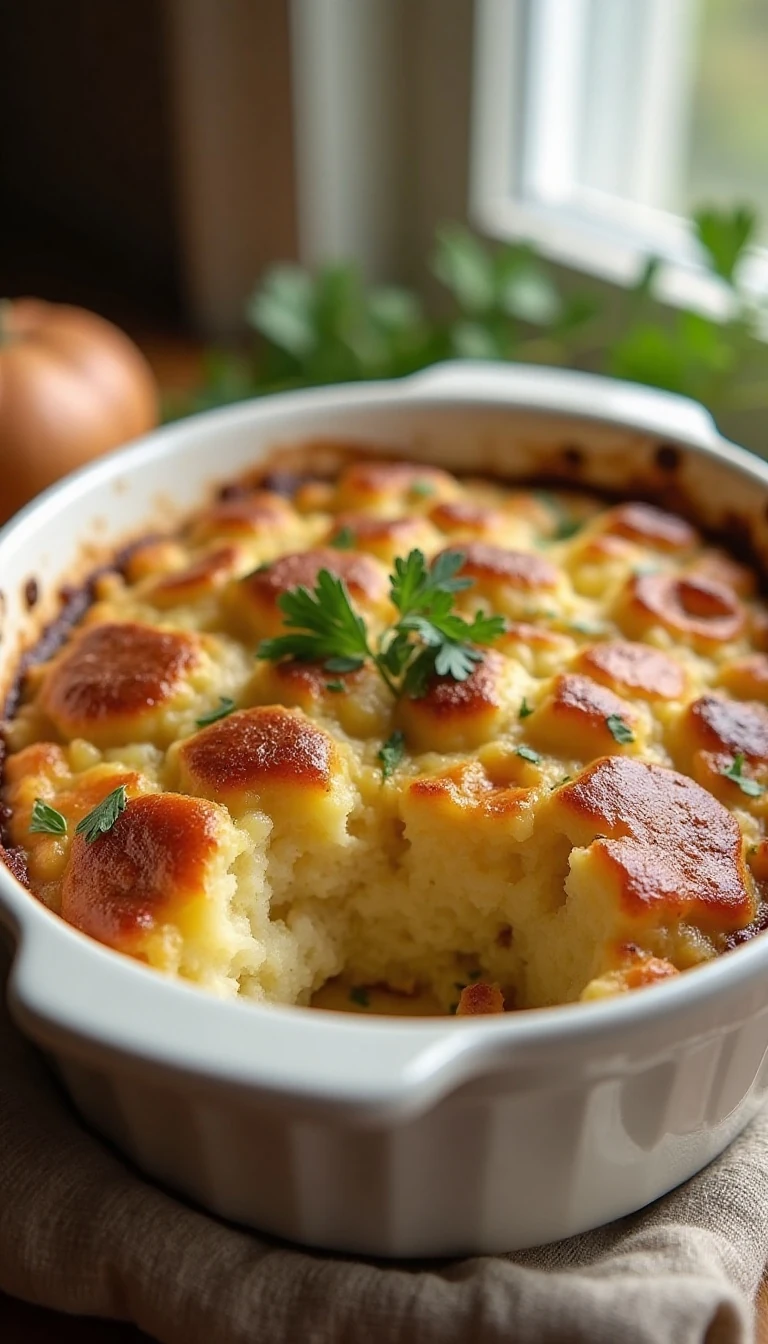
Traditional Amish Potato Stuffing
Ingredients
Method
- Peel and chunk the potatoes, then boil them in salted water for 15 to 20 minutes, or until very tender. Drain them thoroughly and mash roughly, leaving a little texture rather than making perfectly smooth potatoes.
- While the potatoes cook, melt about 1/2 cup of the butter in a large skillet over medium heat. Add the onion and celery and sauté for 8 to 10 minutes, until softened and fragrant but not deeply browned.
- Place the bread pieces in a very large mixing bowl. Add the warm onion-celery mixture, the remaining melted butter, mashed potatoes, poultry seasoning or sage, salt, and black pepper.
- Stir in the lightly beaten eggs once the mixture has cooled slightly. Add the milk gradually, starting with 1 1/2 cups, until the stuffing is moist and soft but not soupy; it should hold together when pressed.
- Grease a 9-by-13-inch baking dish and transfer the stuffing mixture into it, spreading it into an even layer. Dot the top with a little additional butter for a fragrant, lightly crisp finish.
- Bake uncovered at 350°F (175°C) for 45 to 60 minutes, until heated through and lightly browned on top. For a softer, moister center, cover the dish for the first 30 minutes, then uncover it for the remaining baking time.
Notes
Final Thoughts
Traditional Amish potato stuffing is a generous, home-style side dish built from simple ingredients and careful technique. The combination of mashed potatoes, soft bread, butter, onion, celery, eggs, and sage creates a filling that is tender in the middle, golden on top, and deeply suited to a holiday table.
Remember the three details that matter most: use day-old or lightly dried bread, add milk gradually, and bake the stuffing separately at 350°F until hot and lightly browned. Once you taste the rich, savory spoonfuls with gravy, this Pennsylvania Dutch favorite is likely to become part of your own family traditions.
1 thought on “Traditional Amish Potato Stuffing Recipe”