The best buttery flaky pie crust starts with five simple ingredients: all-purpose flour, fine salt, sugar, very cold unsalted butter, and ice water. Cut the butter into the flour until both coarse crumbs and visible pea-sized pieces remain, add the water gradually, then chill the dough for at least one hour before rolling and baking.
This all-butter crust bakes up golden, crisp, tender, and richly flavored, with delicate layers that crackle under your fork. The recipe makes one 9-inch single crust, and the ingredients can be doubled when you need a bottom and top crust for a classic fruit pie.
Jump to RecipeWhy You’ll Love This Recipe

This pie crust has the deep, buttery flavor that shortening-based pastry cannot provide, along with a wonderfully crisp bite and tender center. The secret is not complicated technique; it is controlling temperature and resisting the urge to overwork the dough.
Small pieces of cold butter become pockets between layers of flour. In the oven, the butter melts and releases steam, helping separate those layers while the flour sets into a delicate pastry shell.
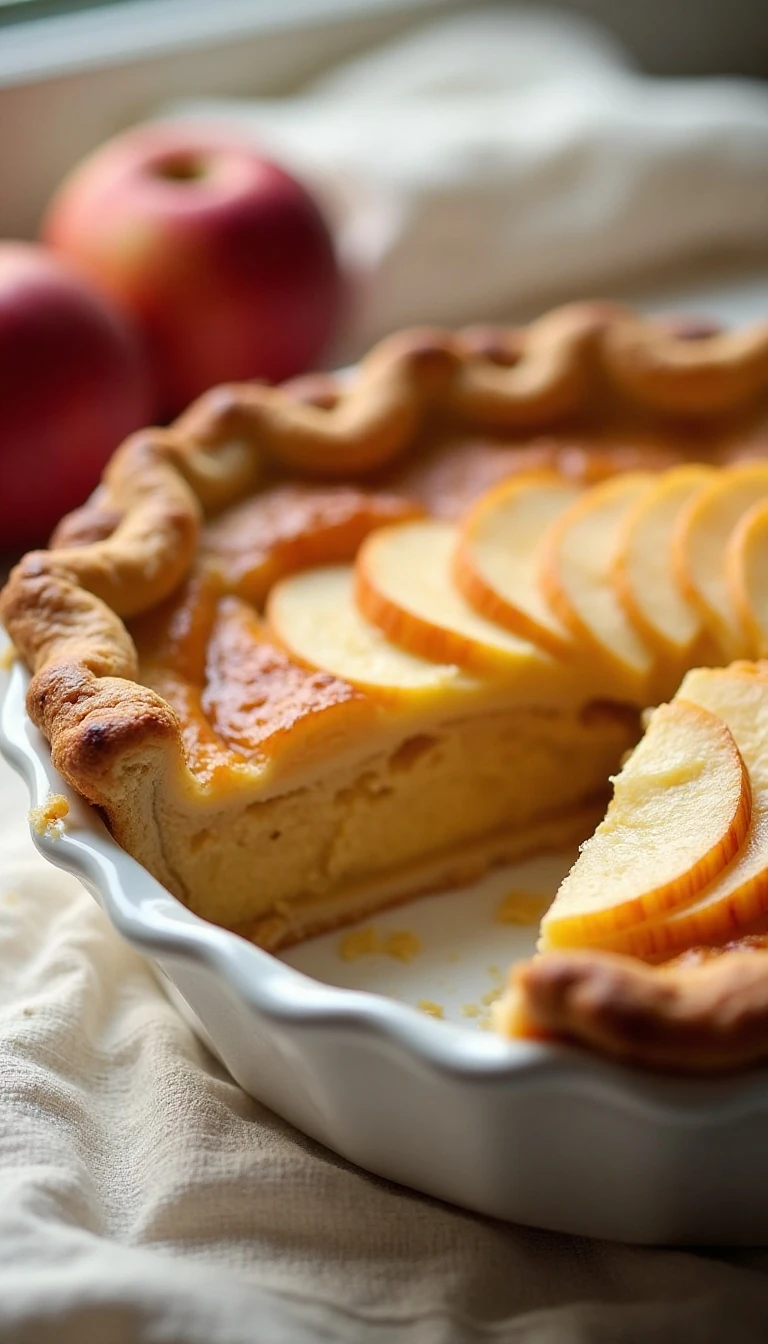
Use this crust for apple, peach, berry, pumpkin, chocolate, or custard pies. It is also a wonderful starting point for a classic old-fashioned apple pie when you want a traditional dessert with a beautifully flaky base.
Ingredients You’ll Need
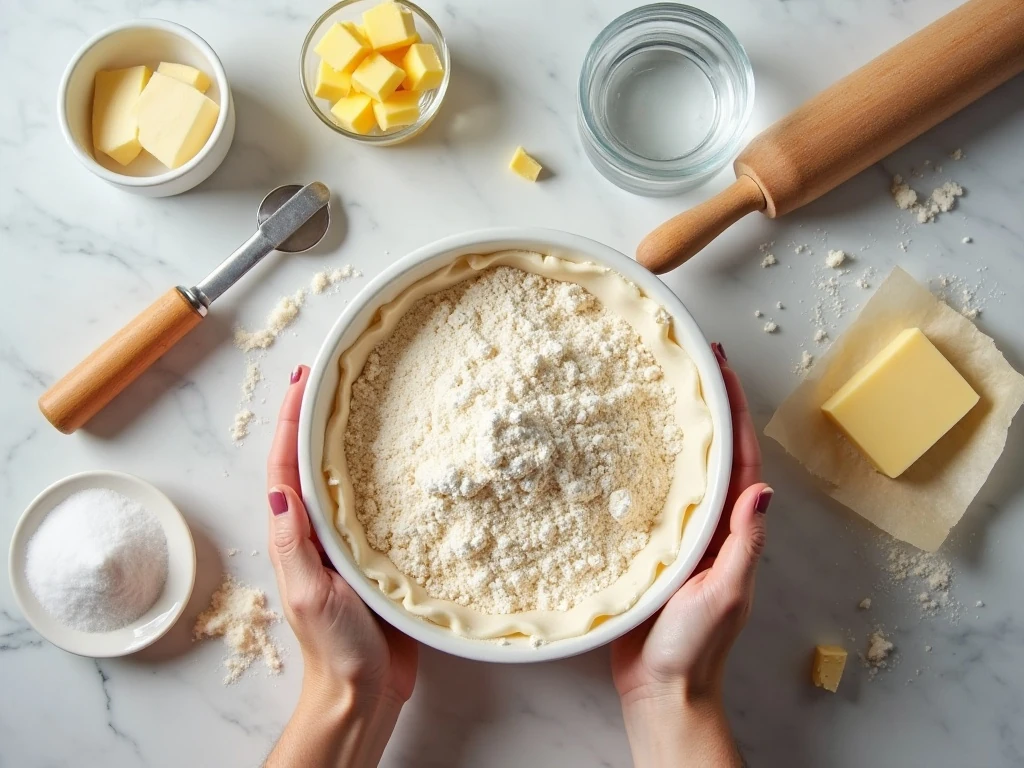
The ingredient list is short, but each item has a specific job. Weighing the flour and butter gives the most consistent result, although cup measurements are provided for convenience.
- All-purpose flour: Use 2 1/2 cups, or 325 grams, for structure and tenderness.
- Fine salt: One teaspoon brings the buttery flavor into focus and keeps the pastry from tasting flat.
- Granulated sugar: One tablespoon adds a gentle sweetness and encourages attractive browning.
- Unsalted butter: Use 1 cup, or 226 grams, cut into cubes and kept very cold. Unsalted butter lets you control the final salt level.
- Ice water: Start with 1/2 cup, or 120 milliliters, but add it gradually. You may need slightly less or up to 1–2 additional tablespoons.
Prepare a bowl, fork, pastry blender, rolling pin, parchment paper, and a 9-inch pie plate before you begin. If you are blind-baking, have pie weights or dried beans ready as well.
For a savory baking idea, this same pastry method can support a vegetable-filled pie, while this cozy pumpkin dinner offers another seasonal way to plan a comforting meal.
How to Make It Step-by-Step

Step 1: Whisk the flour, salt, and sugar together in a large bowl until evenly combined. Mixing the dry ingredients first distributes the salt and sugar, so you will not need to stir the dough aggressively later.
Step 2: Add the cold butter cubes and cut them into the flour with a pastry blender. You can also pulse briefly in a food processor or rub the butter in with your fingertips, stopping when the mixture has coarse crumbs plus clearly visible pea-sized pieces of butter.
Step 3: Drizzle in the ice water a little at a time while tossing the mixture with a fork. Press a small amount between your fingers after each addition; stop immediately when it holds together, because the dough does not need to look smooth.
Step 4: Turn the shaggy mixture onto a lightly floured surface and gather it into a disk. Do not knead it like bread, since mixing develops gluten and can make the finished crust tough instead of flaky.
Step 5: Wrap the dough tightly and refrigerate it for at least 1 hour. Overnight chilling is acceptable and can make pie-day preparation easier, but keep the dough protected from refrigerator odors and drying.
Step 6: Place the chilled dough on a lightly floured surface and roll it into an approximately 12-inch round. Roll from the center outward, rotating the dough occasionally, and add only enough flour to prevent sticking.
Step 7: Carefully fit the round into a 9-inch pie plate without stretching it. Trim the edge, then crimp or shape it as desired; if the butter begins to soften, refrigerate the shaped crust before baking.
Step 8: For a filled pie, add the prepared filling and bake according to the filling recipe, commonly 40–60 minutes depending on the type of pie. For a blind-baked shell, prick the base with a fork, cover it with parchment, and fill it with pie weights or dried beans.
Step 9: Blind-bake at 425°F (220°C) for about 15 minutes. Remove the parchment and weights, lower the oven to 375°F (190°C), and bake for another 15–20 minutes, or until the crust is golden brown.
How to Get Extra-Flaky Layers
The butter must be genuinely cold when it goes into the bowl. Warm butter blends too thoroughly into the flour, leaving fewer distinct pockets to create flaky layers in the oven.
Work quickly, especially in a warm kitchen. If the dough becomes greasy, limp, or difficult to lift, slide it onto a plate or tray and refrigerate it until firm again.
- Use ice water rather than cool tap water.
- Leave some pea-sized butter pieces visible.
- Add water gradually instead of automatically pouring in the full amount.
- Press and gather rather than knead.
- Chill the shaped crust if it feels soft before baking.
The finished dough may look rough and slightly crumbly before chilling. That is a good sign; a perfectly smooth dough often indicates too much mixing.
Blind-Baking and Filling Options
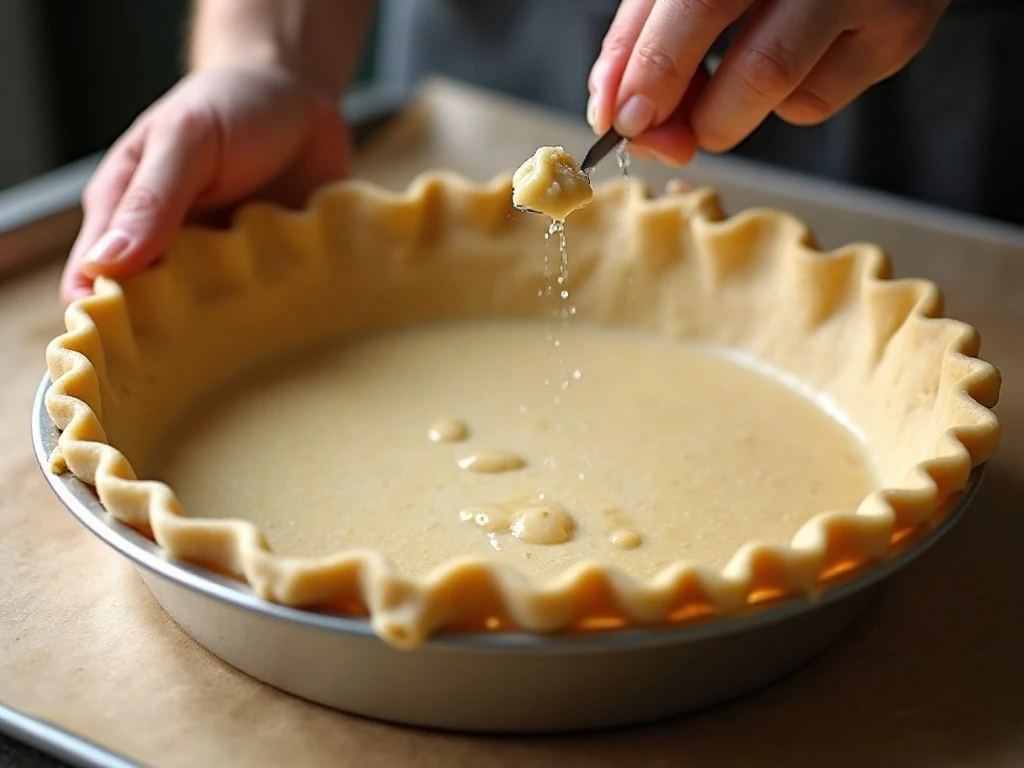
Blind-baking is useful when the filling is already cooked, needs less oven time than the crust, or could make the pastry soggy. The parchment and weights hold the base down while the crust begins to set.
After the first 15 minutes at 425°F, remove the weights carefully because they will be hot. The additional 15–20 minutes at 375°F dries and browns the pastry, producing a sturdy shell for cream, custard, or chilled fillings.
For a fruit pie, you generally do not need to blind-bake this crust. Fill the chilled pastry and follow the filling recipe, watching for a deeply golden edge and a bubbling center.
If you are serving dessert with a bright fruit topping, try pairing slices with a simple raspberry sauce. For a sweet snack spread, this pineapple dip can also complement a dessert table.
Common Pie Crust Mistakes
The most common problem is adding too much water. Water helps the dough come together, but excess liquid encourages gluten development and can leave the crust firm rather than tender.
Another mistake is kneading until smooth. A shaggy dough with visible butter is exactly what you want, and the refrigerator will make it easier to roll and shape.
Do not skip the chilling period. Resting gives the flour time to hydrate and allows the butter to firm, which helps the crust hold its shape instead of shrinking or spreading in the oven.
Finally, avoid packing flour into the measuring cup. Spoon it lightly into the cup and level it, or use the listed 325-gram weight for reliable results.
Storage, Make-Ahead, and Serving

Wrapped unbaked dough can be refrigerated overnight, making it a practical make-ahead pastry. Before rolling, let it sit briefly at room temperature only until it is flexible enough to roll without cracking; do not allow the butter to become soft.
A blind-baked shell is best used after it has cooled completely. Store it covered at room temperature for a short period, or refrigerate it when preparing a filling that requires chilling.
Double the ingredients for a two-crust pie, then divide the dough into two disks before chilling. One disk forms the base, while the other can be rolled for a full top crust or cut into decorative strips.
When planning a full meal before dessert, keep the menu relaxed with proper spaghetti carbonara as a savory option. The contrast between a salty pasta course and a crisp, buttery fruit pie makes a memorable dinner.
The Best Buttery Flaky Pie Crust Recipe
Ingredients
Method
- Whisk the flour, salt, and sugar together in a large bowl.
- Cut the very cold butter into the flour mixture with a pastry blender, food processor, or fingertips until coarse crumbs form and pea-sized butter pieces remain visible.
- Drizzle in the ice water gradually while tossing with a fork. Stop as soon as the dough begins to hold together when pressed.
- Turn the dough onto a lightly floured surface, gather it into a disk without kneading, wrap it tightly, and refrigerate for at least 1 hour.
- Roll the chilled dough into an approximately 12-inch round, fit it into a 9-inch pie plate, and trim or crimp the edges.
- For a filled pie, add the filling and bake according to that filling recipe. For blind-baking, prick the base, line it with parchment, and add pie weights or dried beans.
- Bake at 425°F (220°C) for about 15 minutes, remove the weights, and continue baking at 375°F (190°C) for another 15–20 minutes, until golden brown.
Notes
Final Thoughts
This buttery flaky pie crust is dependable once you remember three rules: keep the butter and water cold, stop adding water as soon as the dough holds together, and chill before rolling and baking. Those simple habits create a pastry that is crisp at the edges, tender in the middle, and full of rich butter flavor.
Make one for your favorite seasonal filling, or double the formula when a two-crust pie is on the menu. With its golden color and delicate layers, this crust is the kind of recipe worth keeping close for every holiday and family gathering.
3 thoughts on “The Best Buttery Flaky Pie Crust Recipe”