To make proper spaghetti carbonara, cook spaghetti until just al dente, render guanciale in a cold skillet, then toss the hot pasta with a mixture of egg yolks, one whole egg, Pecorino Romano, black pepper, and reserved pasta water. The egg-and-cheese sauce is added off the heat, allowing the residual warmth of the pasta to create a smooth, glossy coating without scrambling the eggs.
This authentic spaghetti carbonara recipe serves four and takes about 25–30 minutes from start to finish, including 10 minutes of preparation and 15–20 minutes of cooking. Traditional Roman carbonara contains no cream, milk, garlic, onion, butter, or olive oil; its rich texture comes from eggs, cheese, guanciale fat, and starchy pasta water.
Jump to RecipeWhy You’ll Love This Recipe
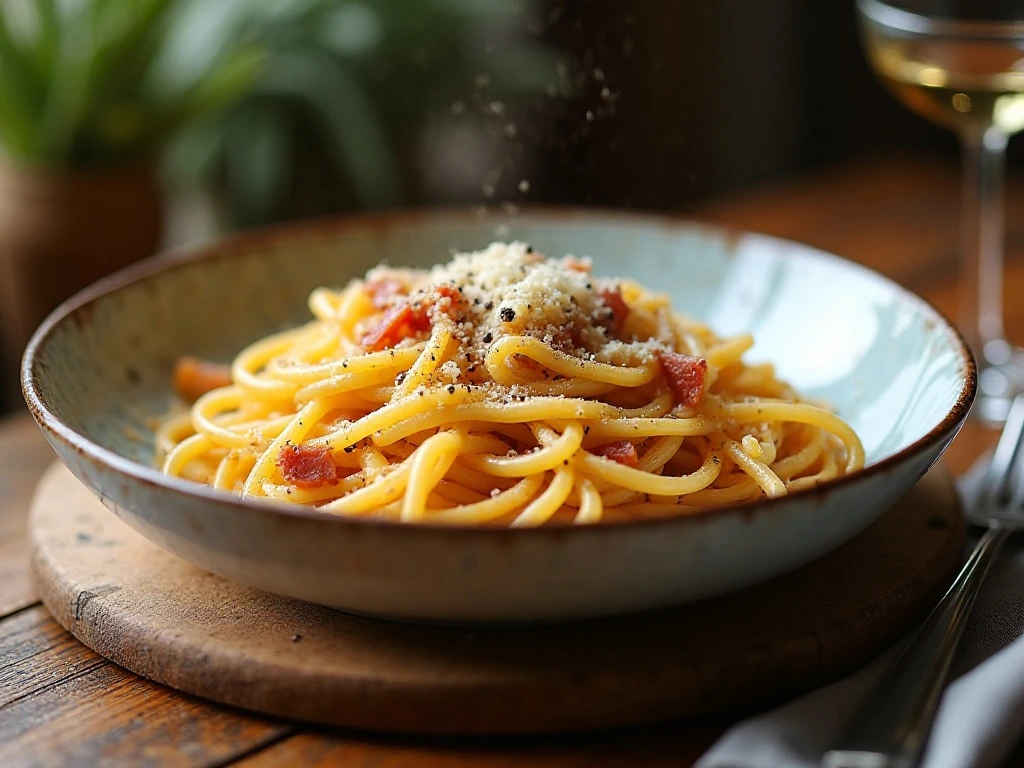
Authentic spaghetti carbonara is one of the best examples of how a short ingredient list can produce a deeply satisfying dinner. The sauce is rich, savory, peppery, and glossy, while crisp guanciale adds salty bites and a delicate pork flavor to every forkful.
There is no cream hiding in this recipe. The luxurious texture comes from carefully combining egg, Pecorino Romano, rendered guanciale fat, and pasta water, making this a fast and practical meal for a busy evening.
The method is also wonderfully economical. A handful of pantry and refrigerator staples becomes a restaurant-style plate in about half an hour, much like these easy air fryer meatballs, which are another satisfying dinner option when you want something quick.
Ingredients You’ll Need
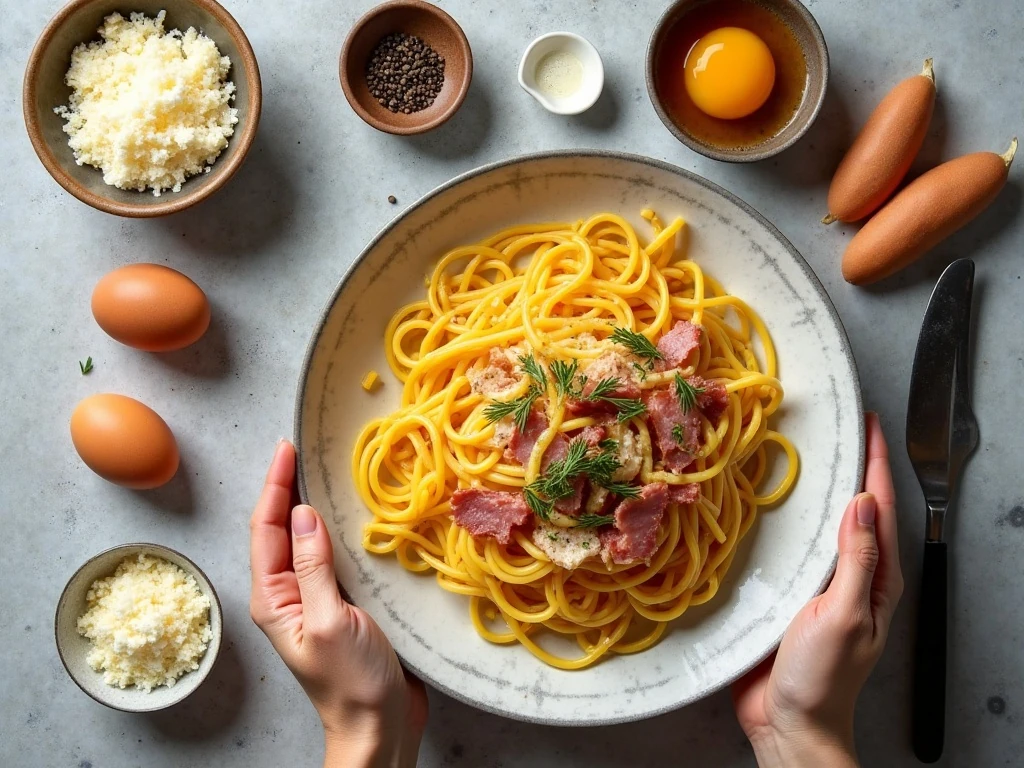
Traditional Roman carbonara depends on the balance between five essential ingredients: pasta, guanciale, eggs, Pecorino Romano, and black pepper. Each one has a particular job, so quality and technique matter more than adding extra ingredients.
- Spaghetti: Use 400 g and cook it just until al dente. The pasta should still have a slight bite because it continues to soften as it is tossed with the sauce.
- Guanciale: Use 150 g cut into short strips or small batons. This cured pork cheek releases flavorful fat as it cooks and gives carbonara its characteristic savory richness.
- Eggs: Four large yolks plus one whole large egg create a thick, creamy base with enough structure to coat the spaghetti.
- Pecorino Romano: Use 100 g finely grated, plus extra for serving. A fine grate helps the cheese blend into the eggs instead of forming lumps.
- Black pepper: Add 1–2 teaspoons of freshly ground pepper, reserving some for the finished plates.
- Salt: Salt the pasta water lightly. Guanciale and Pecorino are both salty, so the water should be less seasoned than it would be for many other pasta dishes.
Guanciale is the customary ingredient for Roman carbonara. Pancetta is a common substitute when guanciale is unavailable, but avoid adding cream, milk, garlic, onion, butter, or olive oil if your goal is the traditional version.
Read More: For another easy dinner idea, try this quick air fryer tortilla pizza.
How to Make It Step-by-Step
Step 1: Bring a large pot of water to a boil, then salt it lightly. Use less salt than usual because the cured guanciale and Pecorino Romano will bring plenty of savory seasoning to the finished sauce.
Step 2: While the water heats, prepare the egg mixture. Add the four egg yolks, one whole egg, finely grated Pecorino, and most of the freshly ground black pepper to a bowl, then stir until you have a thick, cohesive paste.
Step 3: Put the sliced guanciale into a cold skillet before turning on the burner. Cook it over medium-low to medium heat for about 6–8 minutes, allowing the fat to render gradually until the pork is golden and crisp rather than burnt on the outside.
Step 4: Turn off the heat under the skillet and leave the guanciale sitting in its rendered fat. Meanwhile, cook the spaghetti according to the package timing until just al dente, keeping an eye on the clock so the pasta is ready while the guanciale is still warm.
Step 5: Before draining the spaghetti, reserve at least 250 ml, or 1 cup, of pasta water. This cloudy, starchy water is essential because it loosens the egg-and-cheese mixture and helps it form a smooth emulsion with the pork fat.
Step 6: Drain the spaghetti and transfer it directly to the skillet with the guanciale. Toss thoroughly so every strand is coated, then let it sit for about 30 seconds; the skillet should be hot, but not so hot that it instantly cooks the eggs.
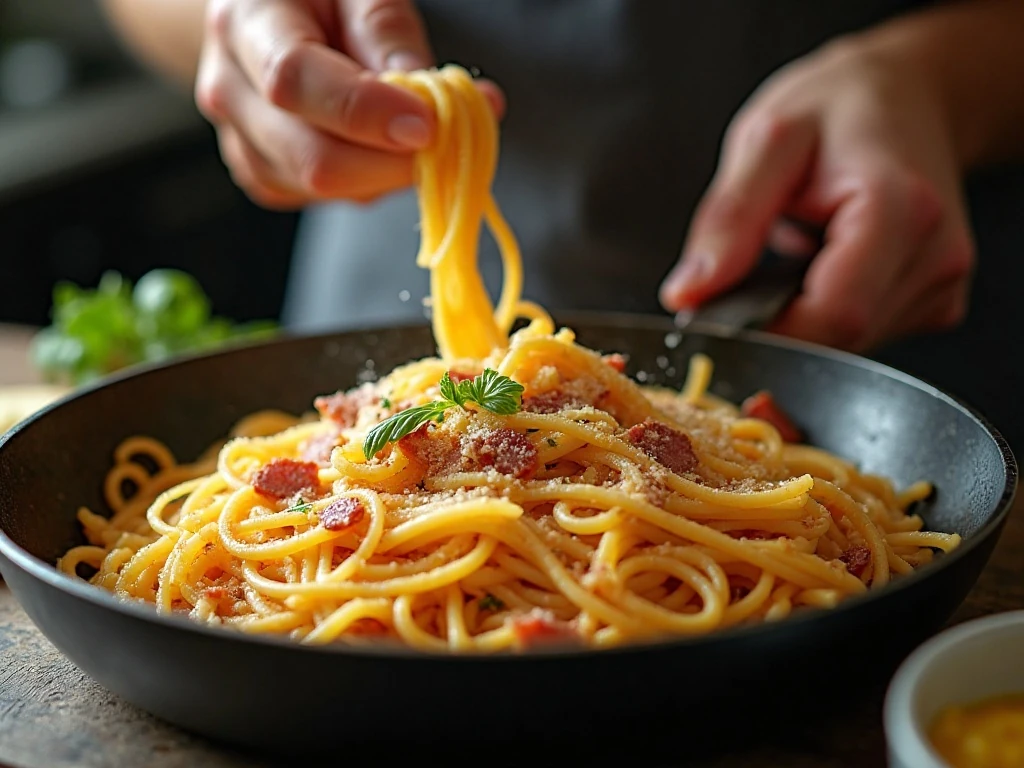
Step 7: Remove the skillet completely from direct heat. Add the egg-and-cheese paste and toss continuously, using tongs or a pasta fork, while adding the reserved pasta water one or two tablespoons at a time.
Step 8: Keep tossing until the sauce turns glossy, creamy, and evenly distributed across the spaghetti. Add only as much water as needed; the goal is a sauce that clings to the pasta rather than pooling thinly at the bottom of the skillet.
Step 9: Finish with more freshly ground black pepper and a shower of Pecorino Romano. Divide the spaghetti among four bowls and serve immediately, while the guanciale remains crisp and the sauce is at its silkiest.
Pro Tips for Creamy Carbonara
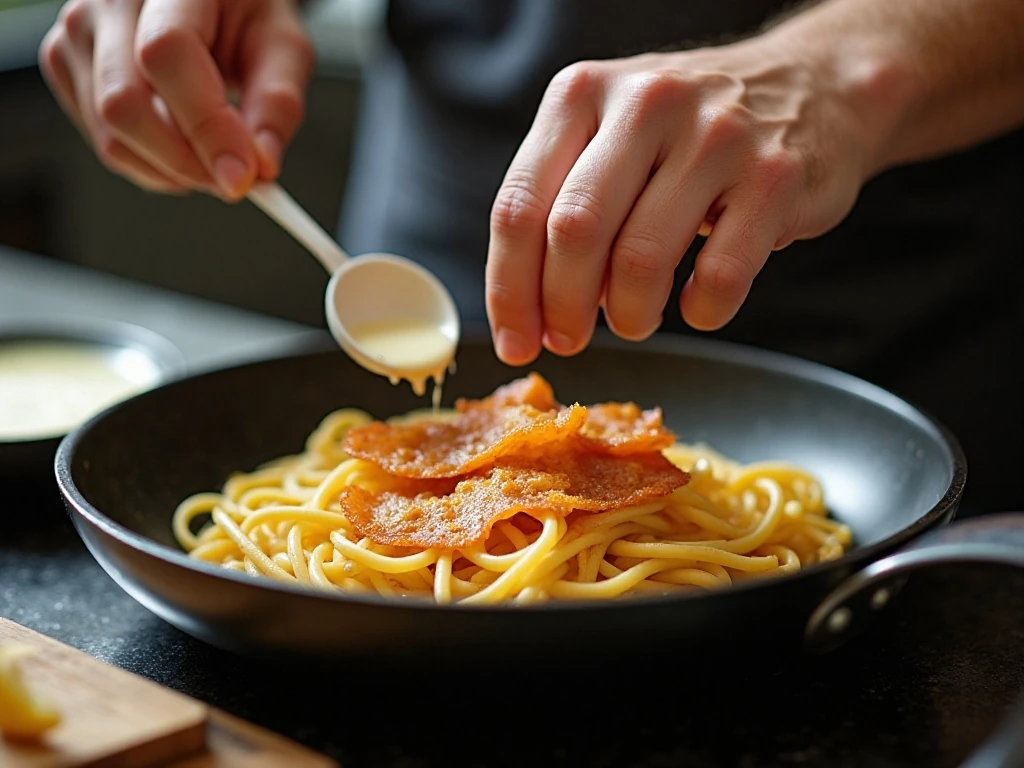
The most important temperature rule is simple: do not add the eggs while the skillet is over direct heat. Residual heat from the warm pasta and pan is enough to thicken the eggs gently, while high heat can turn the sauce into scrambled egg curds.
Starting the guanciale in a cold pan is equally important. The gradual rise in temperature gives the fat time to melt out, leaving you with crisp pork and a flavorful base for coating the spaghetti.
- Grate the cheese finely: Fine Pecorino blends more readily with the eggs and reduces the chance of clumps.
- Reserve extra water: Keep at least 250 ml on hand even if you expect to use less. Different pasta brands release different amounts of starch.
- Toss constantly: Continuous movement distributes heat and fat throughout the pasta, helping the sauce become creamy.
- Work quickly: Carbonara is best served immediately. The longer it sits, the more the sauce thickens and the less crisp the guanciale becomes.
- Taste before salting: The cured pork and aged cheese may already provide all the seasoning you need.
If you are planning a casual spread, keep the main course simple and finish with a small sweet treat. Our easy homemade fudge is a convenient make-ahead option.
Serving, Storage & Reheating
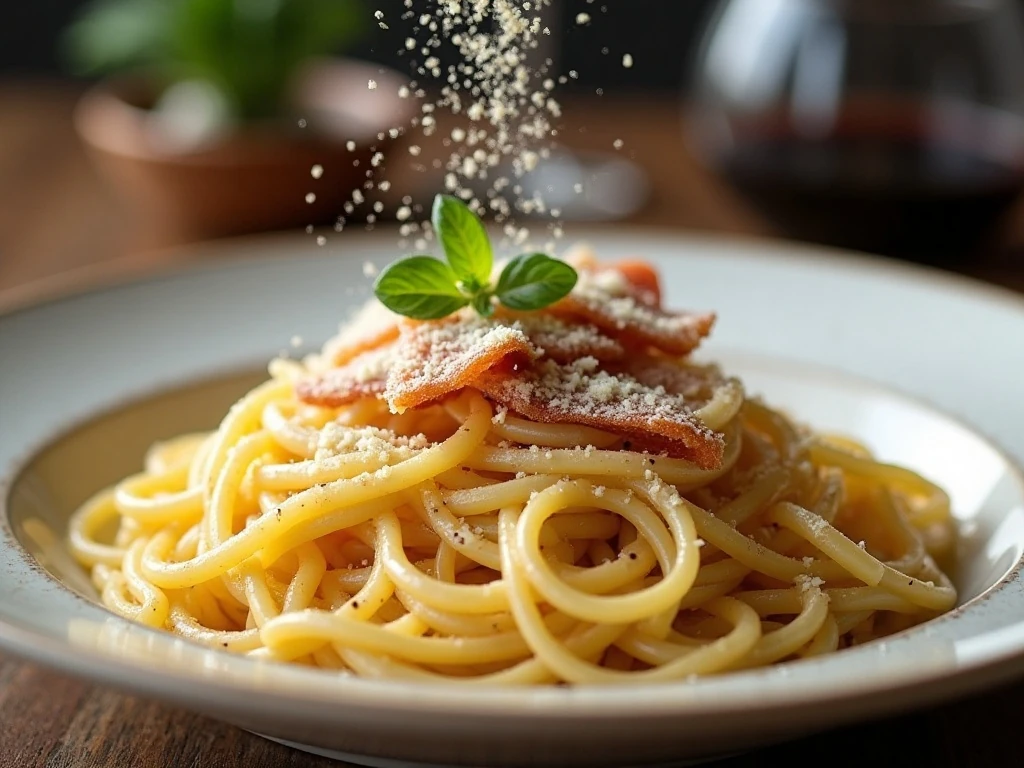
Serve carbonara in warm bowls with extra Pecorino Romano and freshly ground black pepper. A crisp green salad can accompany it, but the pasta is substantial enough to stand alone as dinner.
Carbonara is at its best straight from the skillet, so prepare only what you plan to eat. Leftovers can be refrigerated in an airtight container, but the sauce will firm up and the guanciale will lose some of its crispness.
To reheat, warm the pasta gently in a skillet over low heat with a small splash of water, tossing frequently. Avoid high heat, since it can make the egg sauce grainy or cause it to scramble.
If you enjoy bold flavors for entertaining, serve a small appetizer of hot pepper jelly with crackers before dinner. For a second dessert choice, these cake batter fudge squares are easy to portion and share.
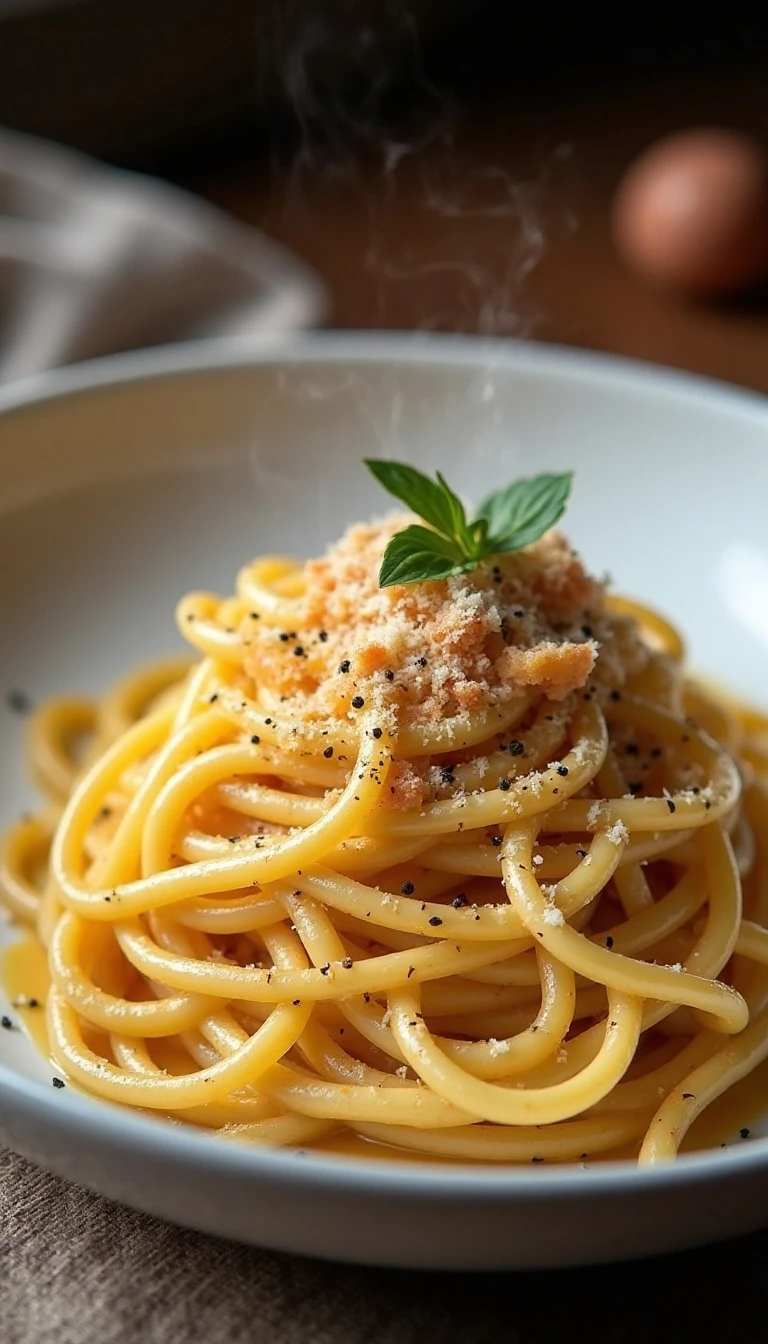
Proper Spaghetti Carbonara
Ingredients
Method
- Bring a large pot of water to a boil and salt it lightly, using less salt than usual because the guanciale and Pecorino Romano are already salty.
- In a bowl, whisk together the four egg yolks, whole egg, finely grated Pecorino Romano, and most of the black pepper until a thick paste forms.
- Place the guanciale in a cold skillet and cook over medium-low to medium heat for about 6–8 minutes, turning or stirring as needed, until the fat renders and the meat is golden and crisp. Turn off the heat and leave the guanciale in the skillet.
- Cook the spaghetti according to the package timing until just al dente. Before draining, reserve at least 250 ml, or 1 cup, of the starchy pasta water.
- Add the drained spaghetti to the skillet with the guanciale and toss well to coat it in the rendered fat. Let the pan cool for about 30 seconds so it remains warm but is no longer scorching hot.
- Remove the skillet from direct heat and add the egg-and-cheese mixture. Toss continuously, adding the reserved pasta water one or two tablespoons at a time until the sauce becomes smooth, glossy, and creamy.
- Taste and add more black pepper or Pecorino Romano as desired. Serve immediately while the sauce is silky and the guanciale is crisp.
Notes
Final Thoughts
Proper spaghetti carbonara does not need cream or a long ingredient list. When guanciale is rendered slowly, the pasta water is reserved, and the egg mixture is tossed off the heat, the classic Roman ingredients come together in a sauce that is creamy, savory, and full of character.
Remember the sequence: lightly salted water, a cool skillet for the guanciale, finely mixed eggs and Pecorino, just-al-dente spaghetti, and patient tossing away from direct heat. Follow those steps and you can bring a genuinely satisfying Italian dinner to the table in about 25–30 minutes.
Serve it immediately with extra cheese and pepper, and enjoy every glossy strand while the contrast between silky sauce and crisp guanciale is at its best.