This easy lemon cranberry scones recipe makes eight tender, flaky scones in about 35 to 50 minutes, including an optional chilling period. Made with all-purpose flour, cold butter, dried cranberries, fresh lemon zest, egg, and cream, these scones are simple enough for a weekday breakfast yet special enough for brunch or afternoon tea.
Every bite brings together buttery pastry, bright citrus fragrance, and pleasantly chewy bursts of sweet-tart cranberry. A quick lemon glaze adds a fresh finishing touch, while the scones are still delicious served warm without it.
Jump to RecipeWhy You’ll Love This Recipe

These lemon cranberry scones strike the ideal balance between a biscuit and a pastry. The outside bakes into a lightly crisp, golden shell, while the inside stays soft, tender, and full of buttery layers.
Lemon zest is mixed directly into the dough, so its fragrant citrus flavor reaches every bite. Dried cranberries add color, chewiness, and a gentle tartness that keeps the scones from tasting overly sweet.
The dough comes together in one main bowl, and there is no complicated shaping technique. Simply pat it into a round, cut it into eight wedges, and bake.
For another bright dessert pairing, you may also enjoy this raspberry cake with lemon buttercream, especially when planning a colorful brunch table.
Ingredients You’ll Need
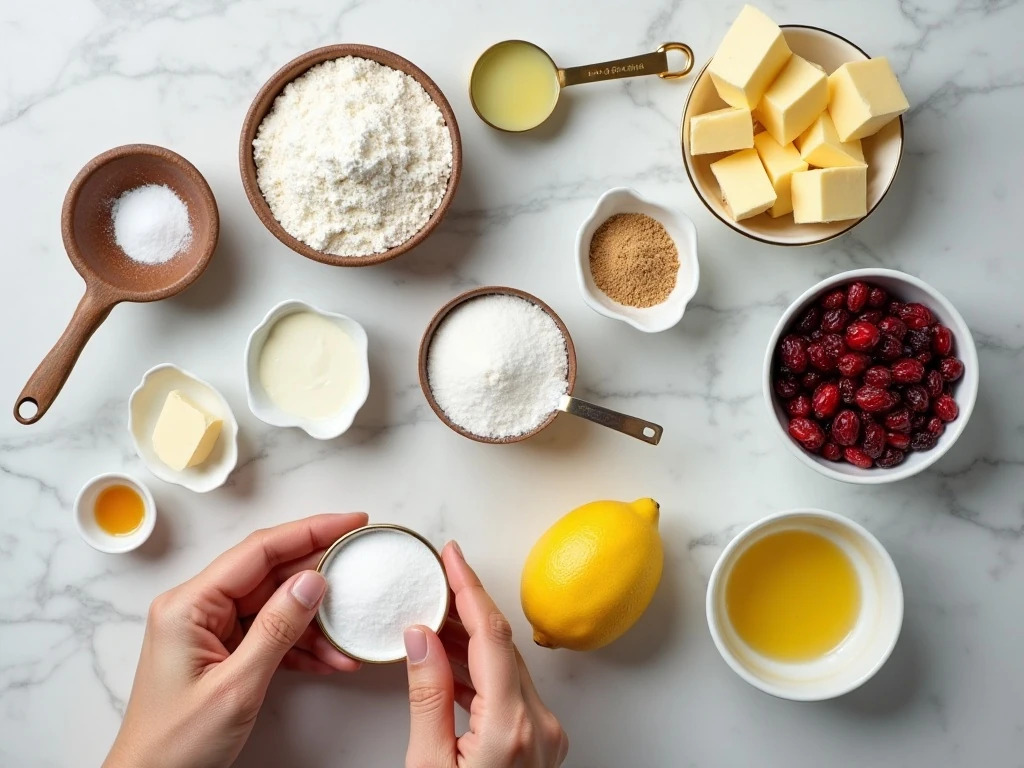
Each ingredient has a clear job in this straightforward recipe. The flour provides structure, while baking powder gives the scones their lift without requiring yeast or a long rise.
- All-purpose flour: Use 2 cups, or 240 grams, for a dependable tender crumb.
- Granulated sugar: One-third cup provides balanced sweetness and lets the lemon and cranberry flavors stand out.
- Baking powder and salt: Baking powder creates rise, and fine salt sharpens the buttery flavor.
- Cold unsalted butter: Six tablespoons cut into small cubes create flaky pockets as the butter melts in the hot oven.
- Dried cranberries: Two-thirds cup gives every wedge a generous amount of fruit without making the dough wet.
- Lemon zest: The finely grated zest of one lemon supplies the strongest fresh lemon flavor.
- Egg and cream: One large egg plus one-half cup of heavy cream or half-and-half binds the dough and contributes richness.
- Vanilla: One teaspoon is optional, but it rounds out the citrus and buttery notes.
If you enjoy serving baked breakfast treats alongside a fruit-forward option, these bakery-style blueberry muffins make a wonderful companion.
How to Make It Step-by-Step

Step 1: Heat the oven to 400°F, or 200°C, and line a baking sheet with parchment paper. The hot oven helps the cold butter release steam quickly, which supports a higher, flakier scone.
Step 2: Whisk the flour, sugar, baking powder, salt, and lemon zest in a large mixing bowl. Take a moment to distribute the zest evenly so the citrus flavor does not collect in just a few places.
Step 3: Add the cold butter cubes and cut them into the flour with a pastry blender or your fingertips. Stop when the mixture resembles coarse crumbs with some pea-sized butter pieces still visible; those larger pieces are important for flaky layers.
Step 4: Stir the dried cranberries into the flour mixture. Coating the fruit with a little flour helps distribute it through the dough and reduces the chance of the cranberries clumping together.
Step 5: Whisk the egg, cream or half-and-half, and vanilla together in a separate bowl. Pour this mixture into the dry ingredients and stir gently just until a shaggy dough forms, resisting the urge to make it perfectly smooth.
Step 6: Turn the dough onto a lightly floured surface and gently bring it together with your hands. Pat it into a round about 1 inch thick, using as little pressure as possible so the finished scones stay light rather than dense.
Step 7: Cut the round into eight wedges with a sharp knife or bench scraper. Transfer the wedges to the parchment-lined sheet, leaving space between each one so the sides can bake evenly.
Step 8: Chill the shaped scones for 15 to 30 minutes if possible. This short rest firms the butter and helps the wedges hold their shape while they bake.
Step 9: Bake for 18 to 22 minutes, or until the tops are lightly golden and the centers look set. Let them cool for several minutes on the baking sheet before moving them to a rack.
Step 10: Make the optional glaze by whisking the confectioners’ sugar with 1 1/2 to 2 tablespoons of fresh lemon juice. Drizzle it over cooled or slightly warm scones, then allow it to set briefly before serving.
Chef’s Tips for Flaky, Tender Scones

Cold ingredients are the foundation of good scones. Keep the butter, egg, and cream chilled until you are ready to use them, and work efficiently once the dough is mixed.
Do not knead the dough like bread. A few gentle folds are enough to bring it together, and visible butter flecks are a positive sign rather than a problem.
For especially clear wedge shapes, place the unbaked scones in the refrigerator for the full 30-minute chilling period. If the kitchen is warm or the butter begins to soften noticeably, chill the dough before shaping as well.
Grate only the colorful outer layer of the lemon. The white pith underneath can taste bitter, while the bright zest contains the fragrant oils that make these scones taste fresh.
Heavy cream produces a richer, softer scone, while half-and-half makes a slightly lighter version. Both work well with the stated one-half cup quantity.
For a festive pastry spread, pair these wedges with our Christmas tree pastries. The contrasting shapes make a breakfast buffet look especially inviting.
Lemon Glaze and Serving Ideas

The lemon glaze is optional, but it adds a lovely sweet-tart finish and makes the scones look bakery-worthy. Begin with 1 1/2 tablespoons of lemon juice and add the remaining amount only if needed to reach a smooth drizzling consistency.
Serve the scones slightly warm with butter, lemon curd, or clotted cream. They are equally appealing with a cup of black tea, coffee, or a glass of cold milk.
For brunch, arrange the scones on a platter with fresh lemon slices and a small bowl of extra glaze. Their sunny color also pairs nicely with savory dishes, including a seasonal citrus cranberry ham for a sweet-and-savory holiday meal.
Storage and Reheating

Cool the scones completely before storing them in an airtight container at room temperature. They are best within 1 to 2 days, when the edges still have some crispness and the centers remain tender.
To refresh a scone, warm it in a 300°F oven for 5 to 8 minutes. You can also microwave one briefly, but the oven does a better job of restoring the pastry-like exterior.
Unbaked shaped wedges can be frozen on a parchment-lined tray and then transferred to a freezer-safe bag. Bake them from frozen, adding a few minutes to the stated 18 to 22 minute baking time, and check that the centers are fully set.
If the scones are already glazed, store them in a single layer or place parchment between layers to prevent the lemon topping from sticking. For the freshest appearance, glaze them shortly before serving.

Easy Lemon Cranberry Scones
Ingredients
Method
- Heat the oven to 400°F (200°C) and line a baking sheet with parchment paper.
- Whisk the flour, sugar, baking powder, salt, and lemon zest together in a large bowl. Add the cold cubed butter and cut it in until coarse crumbs form, leaving a few pea-sized pieces.
- Stir in the dried cranberries. In a separate bowl, whisk together the egg, cream or half-and-half, and vanilla if using.
- Pour the wet mixture into the dry ingredients and stir just until a shaggy dough forms. Avoid mixing beyond the point where the flour is nearly incorporated.
- Turn the dough onto a lightly floured surface and gently bring it together. Pat it into a round about 1 inch thick, then cut it into eight wedges.
- Place the wedges on the prepared baking sheet with space between them. Chill the shaped scones for 15 to 30 minutes if you have time for better definition and rise.
- Bake for 18 to 22 minutes, until the tops are lightly golden and the centers are set. Cool the scones for several minutes before serving.
- For the optional glaze, whisk the confectioners' sugar with 1 1/2 to 2 tablespoons of fresh lemon juice until smooth. Drizzle it over cooled or slightly warm scones.
Notes
Final Thoughts
This easy lemon cranberry scones recipe is a reliable way to bring fresh bakery flavor to your own kitchen. With cold butter, a light touch, and a short chill, you will get eight golden wedges with tender centers, crisp edges, fragrant lemon zest, and juicy-feeling cranberry bites.
Serve them warm for breakfast, add them to a weekend brunch, or drizzle them with lemon glaze for an afternoon treat. Once you taste how quickly this dough comes together, these bright, buttery scones are sure to become a favorite for both ordinary mornings and special gatherings.
1 thought on “Easy Lemon Cranberry Scones Recipe”