This easy classic thumbprint cookies recipe makes about 24 buttery cookies with lightly golden edges, tender centers, and a bright spoonful of raspberry jam in every bite. The dough comes together with softened butter, sugar, egg yolks, vanilla, flour, and salt, then bakes at 350°F (175°C) for 10–13 minutes per batch.
These old-fashioned jam-filled cookies are rich without being heavy, pleasantly crisp around the edges, and soft enough to melt in your mouth. Use raspberry, strawberry, apricot, or another thick preserve for a beautiful holiday tray, afternoon treat, or simple homemade dessert.
Jump to RecipeWhy You’ll Love This Recipe

Thumbprint cookies have a wonderfully simple design: a tender butter cookie wrapped around a jewel-like center of jam. They look special enough for a cookie exchange, yet the dough requires no complicated technique, unusual equipment, or long list of ingredients.
The flavor is classic and balanced. Butter brings richness, granulated sugar adds sweetness and delicate crispness, egg yolks create a soft texture, and a little salt keeps the cookie from tasting flat.
They are also easy to customize without changing the core recipe. Raspberry jam gives a tangy contrast, strawberry preserves taste familiar and sunny, and apricot jam offers a mellow fruit flavor that pairs beautifully with the optional almond extract.
For another buttery cookie idea, you can also browse our buttery cookie recipe when planning a dessert assortment.
Ingredients You’ll Need
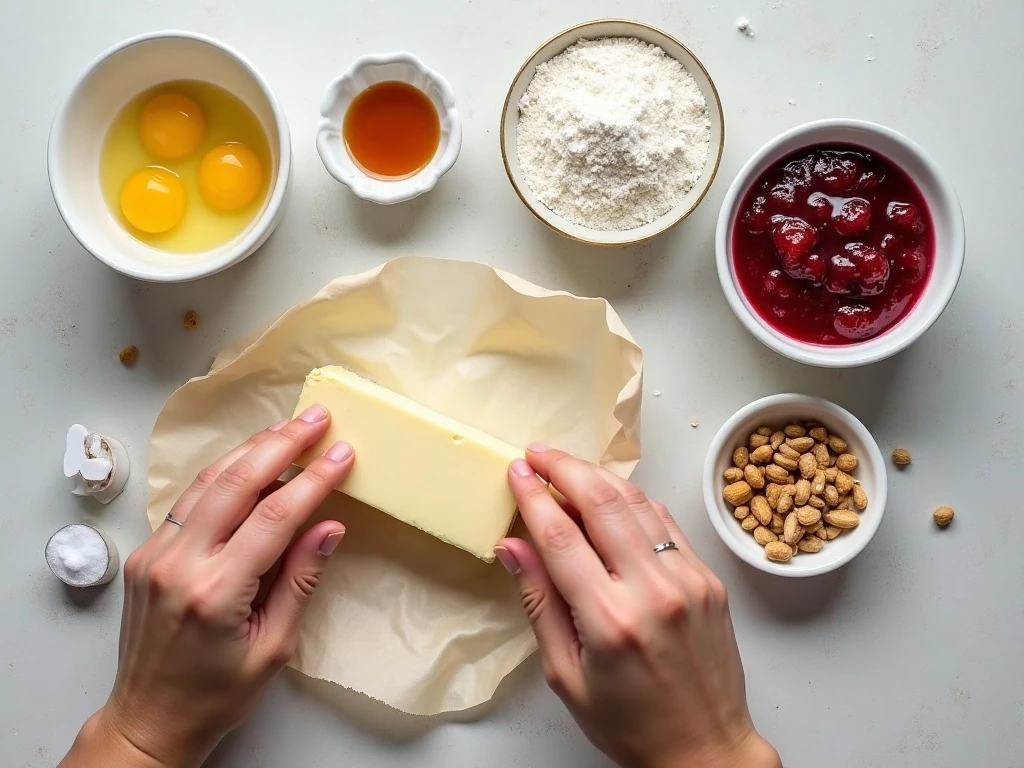
Begin with 1 cup (227 g) of unsalted butter softened to room temperature. Soft butter should yield when pressed but should not look oily or melted, because properly softened butter helps create a light, creamy mixture when beaten with sugar.
You will also need 2/3 cup (134 g) granulated sugar, 2 large egg yolks, 1 teaspoon pure vanilla extract, 2 cups (240–250 g) all-purpose flour, and 1/2 teaspoon fine salt. The recipe finishes with about 1/2 cup, or approximately 160 g, of thick jam or preserves.
- Choose thick raspberry, strawberry, apricot, or mixed-berry jam.
- Use unsalted butter so the salt level stays easy to control.
- Measure flour carefully, preferably by weight or by gently spooning it into measuring cups.
- Keep finely chopped nuts available if you want a crunchy coating around the dough balls.
For a nutty variation, use 1/2 to 1 cup finely chopped nuts for rolling. A 1/4 teaspoon of almond extract can supplement the vanilla or replace a small portion of it for a bakery-style aroma.
How to Make It Step-by-Step

Step 1: Heat the oven to 350°F (175°C) and line one or more baking sheets with parchment paper. Parchment helps the delicate cookies release cleanly and makes cleanup easier, especially if a little jam bubbles over.
Step 2: Place the softened butter and granulated sugar in a large mixing bowl, then beat for 2–3 minutes until the mixture looks light and creamy. Scrape the sides and bottom of the bowl once or twice so the butter and sugar blend evenly.
Step 3: Beat in the two egg yolks and vanilla extract until the mixture is smooth and cohesive. Add the optional almond extract now if you want a gentle almond note, taking care not to overpower the fruit filling.
Step 4: Add the all-purpose flour and fine salt gradually, mixing only until a soft dough forms. Stop as soon as no obvious streaks of dry flour remain, since overmixing can make the cookies less tender.
Step 5: Check the dough before shaping. If it feels soft or sticky, cover it and chill it for about 30 minutes; if it is already easy to handle, you may portion it right away.
Step 6: Shape the dough into approximately 1-inch balls and arrange them about 2 inches apart on the prepared baking sheets. For consistent results, use a small cookie scoop or weigh each portion, and roll each ball in finely chopped nuts first if using them.
Step 7: Press a deep indentation into the center of every dough ball with your thumb or the rounded end of a small measuring spoon. Press firmly enough to create a clear well, but avoid flattening the cookie completely.
Step 8: Spoon about 1/2 teaspoon of jam into each indentation. If your preserves are very firm, warm them briefly so they spread neatly, and avoid filling beyond the hollow because excess jam may spread during baking.
Step 9: Bake for 10–13 minutes, watching for set edges that are only lightly golden. The centers should remain fairly pale, which is the best visual clue that the cookies will stay tender rather than become dry.
Step 10: Leave the cookies on the baking sheet for 5 minutes after baking. If an indentation has puffed up, gently deepen it while the cookies are still warm, then transfer them to a wire rack to cool completely.
While these cookies are cooling, consider adding another festive option such as our peanut butter sugar cookie recipe to a holiday dessert table.
Pro Tips for Tender, Beautiful Cookies

The texture depends heavily on butter temperature. Cold butter will not cream properly with the sugar, while melted butter can make the dough greasy and difficult to shape, so let the butter soften naturally until it is pliable.
Do not skip the visual cues at the oven. Thumbprints should have set edges and pale centers, not a uniformly brown surface; even a minute or two too long can take away their soft, buttery texture.
- Make the wells deep enough to hold the jam without overflowing.
- Use a small measuring spoon for uniform indentations.
- Rotate the baking sheet only if your oven browns unevenly.
- Bake in batches so every cookie has about 2 inches of room.
- Let the cookies cool briefly before moving them, since they are fragile when hot.
If your dough cracks while shaping, roll the portion gently between your palms until the surface becomes smooth. A few small cracks are harmless, but a smooth ball produces a neater ring around the filling.
For a broader cookie platter, pair these fruit-filled treats with our chocolate pistachio cookies for a contrast of color and flavor.
Jam Choices and Flavor Variations

Raspberry jam is the traditional favorite because its tartness cuts through the buttery dough, but nearly any thick preserve works. Strawberry creates a sweeter, softer fruit flavor, while apricot adds a floral note and a lovely golden-orange center.
You can change the appearance by combining several jams on one tray. Use red raspberry for a vivid finish, pale apricot for contrast, or blackberry preserves for a deep purple center.
Chopped nuts add a pleasant crunch and make the edges look festive. Finely chopped pecans, walnuts, or almonds are especially suitable, but keep the pieces small enough to cling to the dough and allow the cookies to sit level on the baking sheet.
Storage and Serving Suggestions

Cool the cookies completely before storing them so trapped warmth does not create condensation. Place them in an airtight container and keep them at room temperature, arranging parchment between layers if the jam centers are especially soft.
They are excellent with coffee, tea, or a glass of cold milk. Serve them on a small platter for an afternoon snack, or tuck a few into a lined gift box once the jam has fully set.
For a dessert spread, balance the cookies with a chilled treat such as this easy no-bake pie. A fruit-filled cookie and creamy pineapple dessert make a cheerful finish after a casual meal.
Common Questions About Thumbprint Cookies
Can I use jelly instead of jam? Thick jam or preserves are the better choice because runny jelly can spread too much during baking. If the filling is firm, warm it briefly rather than adding extra, which helps it settle into the indentation.
Why did my wells disappear? The dough may have been shaped with indentations that were too shallow, or the cookies may have puffed in the oven. Deepen the centers immediately after baking while the cookies are still warm and pliable.
Why are my cookies dry? The most common causes are too much flour or overbaking. Measure the flour carefully and remove the cookies when the edges are set and lightly golden but the centers remain fairly pale.
Can I skip chilling? Yes, if the dough is firm and easy to handle. Chill it for about 30 minutes whenever it feels soft or sticky, since cooler dough is easier to portion and shape cleanly.

Easy Classic Thumbprint Cookies
Ingredients
Method
- Heat the oven to 350°F (175°C) and line baking sheets with parchment paper. Beat the softened butter and granulated sugar for 2–3 minutes, until light and creamy.
- Beat in the egg yolks and vanilla extract until smooth. If desired, add 1/4 teaspoon almond extract either alongside the vanilla or in place of a small portion of it.
- Add the flour and salt gradually, mixing only until a soft dough forms. Chill the dough for about 30 minutes if it feels soft or sticky.
- Shape the dough into approximately 1-inch balls and place them about 2 inches apart on the prepared baking sheets. Roll the balls in finely chopped nuts first if using them.
- Press a deep indentation into the center of each ball with your thumb or the rounded end of a small measuring spoon. Fill each hollow with about 1/2 teaspoon of thick jam, taking care not to overfill.
- Bake for 10–13 minutes, until the edges are set and only lightly golden while the centers remain fairly pale. Cool the cookies on the baking sheet for 5 minutes, then transfer them to a wire rack.
Notes
Final Thoughts
This easy classic thumbprint cookies recipe is proof that a few dependable ingredients can create an irresistible homemade dessert. The tender butter cookie, bright jam center, and lightly golden edge deliver a satisfying combination of textures in every bite.
Make the dough balls evenly, press generous but controlled wells, and watch the oven closely during the 10–13 minute baking window. Once cooled, these cookies are ready for a holiday platter, a thoughtful edible gift, or a quiet afternoon treat.
For a complete baking-day lineup, keep this easy breakfast recipe in mind for the morning, then finish the day with these jam-filled cookies. They are simple, welcoming, and sure to disappear quickly.