This rhubarb cheesecake is a creamy, tangy dessert made with a buttery biscuit crust, smooth full-fat cream cheese filling, and ruby-red rhubarb cooked with lemon, sugar, cornstarch, and vanilla. It serves 10–12 people and is baked in a 23 cm / 9-inch springform pan at 175°C conventional, 160°C fan, or 350°F.
The flavor is wonderfully balanced: rich and silky cheesecake meets the bright, pleasantly sour taste of rhubarb. Bake the cheesecake for 55–70 minutes, cool it gradually, and refrigerate it for at least 4 hours, preferably overnight, for neat slices and the best texture.
Jump to RecipeWhy You’ll Love This Recipe
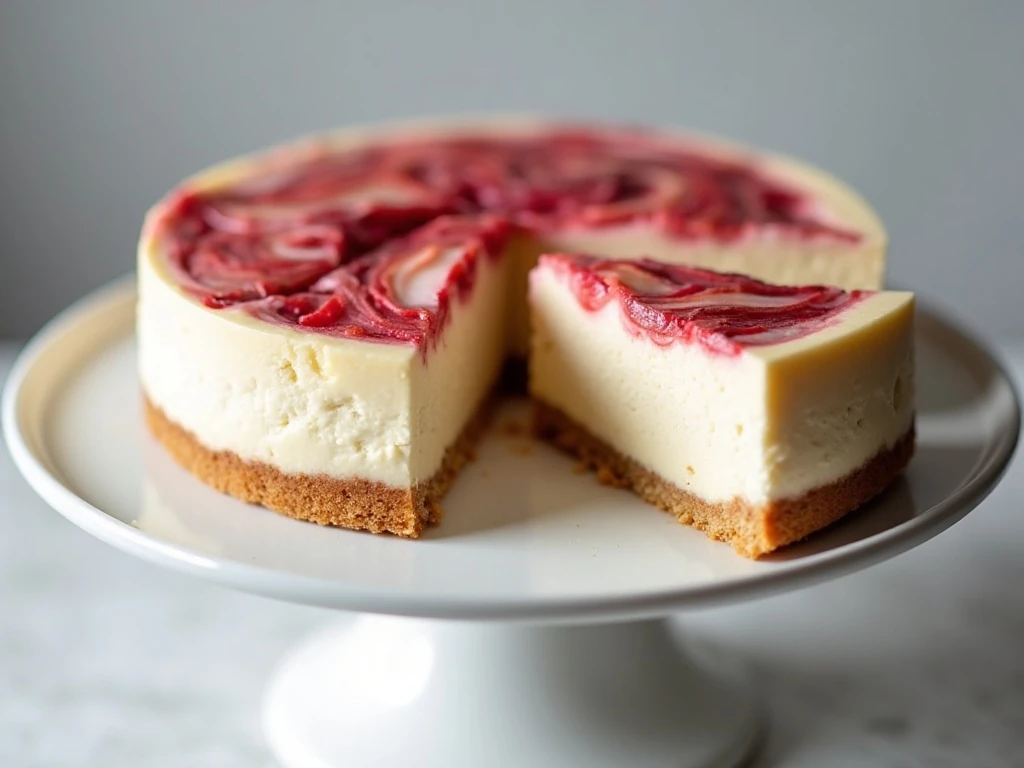
Rhubarb cheesecake brings together two contrasting textures in one memorable dessert. The base is crisp and buttery, the filling is soft and creamy, and the cooked rhubarb adds jewel-like color plus a lively tartness that keeps each bite from tasting too heavy.
This is also a wonderful make-ahead recipe. Since the cheesecake needs at least 4 hours of chilling, it fits beautifully into a dinner-party menu when prepared the day before. For another fruit-forward dessert idea, you might also enjoy this blueberry almond cream tart.
The rhubarb is cooked before it reaches the cheesecake, which gives you control over its texture and prevents watery fruit from weakening the filling. A little lemon juice sharpens the flavor, while vanilla rounds out the fruit with a warm, fragrant note.
Ingredients You’ll Need

The rhubarb mixture begins with 500 g of trimmed rhubarb cut into 1–2 cm pieces. Combine it with 100 g granulated or caster sugar, 1 tablespoon lemon juice, 1 tablespoon cornstarch or cornflour, and 1 teaspoon vanilla extract. The cornstarch thickens the juices so the swirl stays distinct rather than spreading into a loose sauce.
For the crust, use 200 g finely crushed digestive biscuits or graham crackers, 100 g melted unsalted butter, a tablespoon of sugar if you prefer extra sweetness, and a pinch of salt. Crush the biscuits very finely so the base presses together evenly and slices without crumbling.
The filling needs 680 g softened full-fat cream cheese, 150 g granulated sugar, 3 room-temperature large eggs, 1 large egg yolk, 180 g sour cream, 2 teaspoons vanilla extract, and 1 tablespoon plain flour or cornstarch. Finely grated zest from 1 lemon is optional, but it gives the dairy filling a fresh citrus fragrance.
For more fruit-centered inspiration, keep this easy pineapple dessert in mind when planning a warm-weather menu. Its bright fruit profile makes a lovely contrast to the rich, cool texture of cheesecake.
How to Make It Step-by-Step
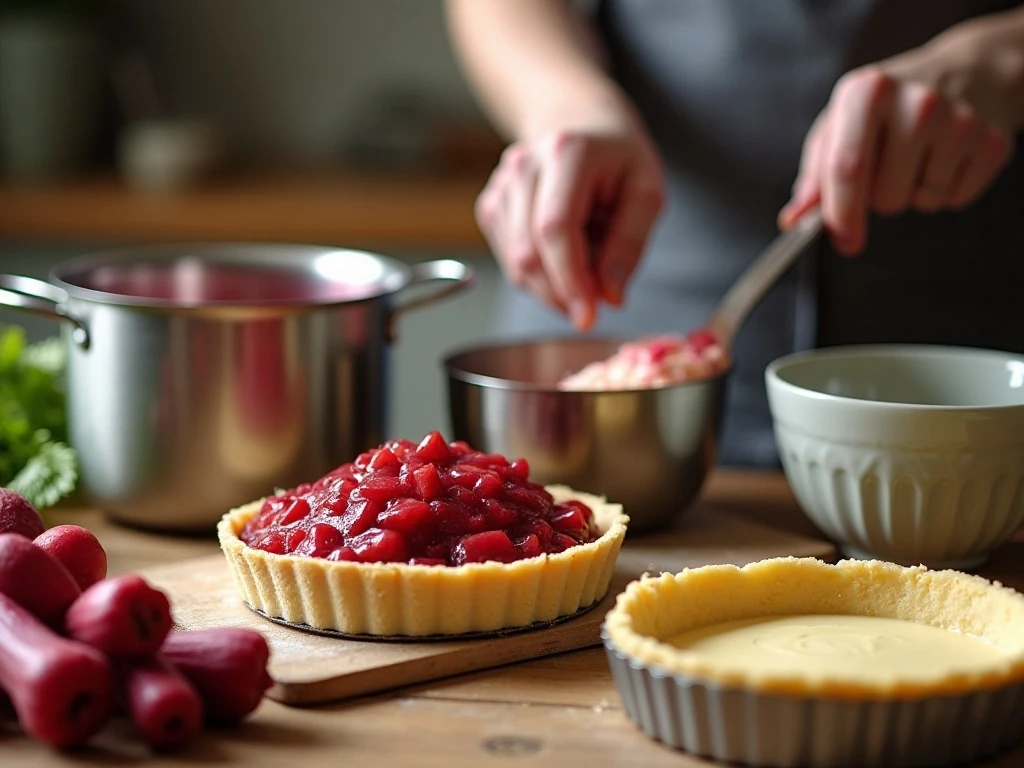
Step 1: Heat the oven to 175°C conventional, 160°C fan, or 350°F. Line the base of a 23 cm / 9-inch springform pan with parchment, making sure the paper lies flat so the finished crust releases cleanly.
Step 2: Place the chopped rhubarb, sugar, lemon juice, and cornstarch in a saucepan over medium heat. Cook for 8–12 minutes, stirring as needed, until the fruit is tender and the juices have visibly thickened.
Step 3: Remove the rhubarb from the heat and stir in the vanilla. Transfer it to a bowl and let it cool completely; warm or watery rhubarb can loosen the cheesecake filling and make the crust soggy.
Step 4: Stir the biscuit crumbs, melted butter, optional sugar, and salt together until every crumb is lightly coated. Press the mixture firmly over the base of the pan, using the bottom of a glass to create an even layer.
Step 5: Bake the crust for about 10 minutes, then remove it and allow it to cool slightly. Keep the oven at the recipe temperature while you prepare the filling.
Step 6: Beat the softened cream cheese and sugar on low to medium speed until smooth. Avoid whipping vigorously, because excess air can rise during baking and contribute to cracks or a puffy surface.
Step 7: Add the eggs one at a time, followed by the egg yolk, mixing only until each addition disappears. Blend in the sour cream, vanilla, flour or cornstarch, and optional lemon zest until the batter is creamy and uniform.
Step 8: Pour about half of the filling over the cooled crust. Spoon some rhubarb mixture over it, cover with the remaining filling, and dot the top with more rhubarb.
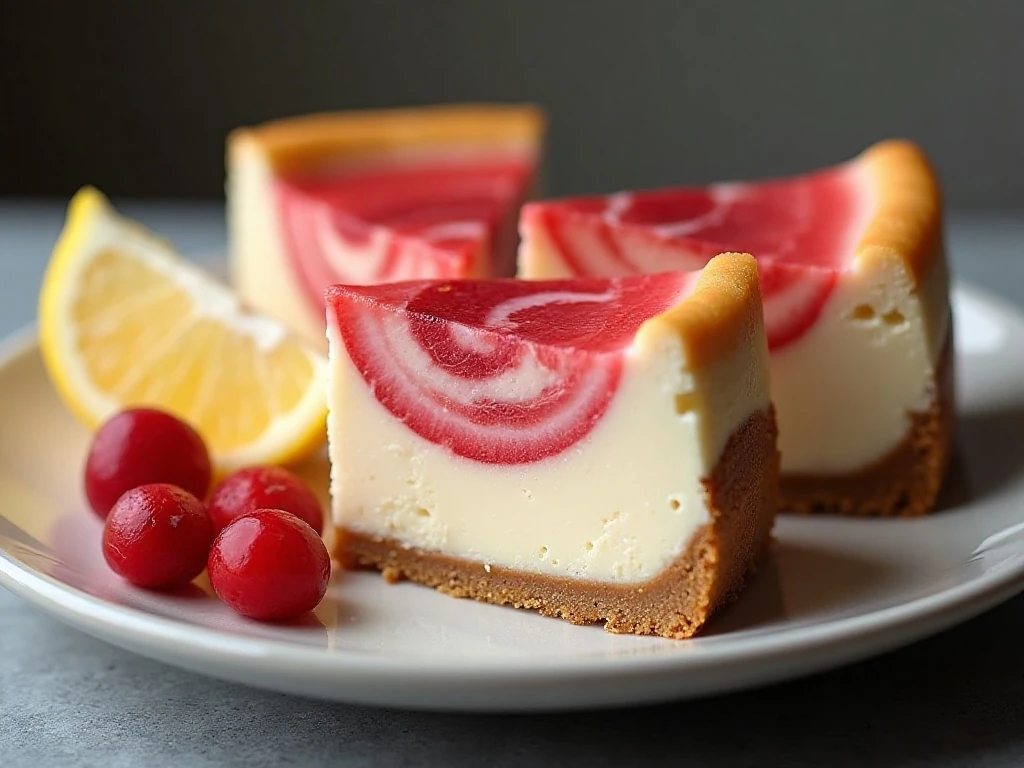
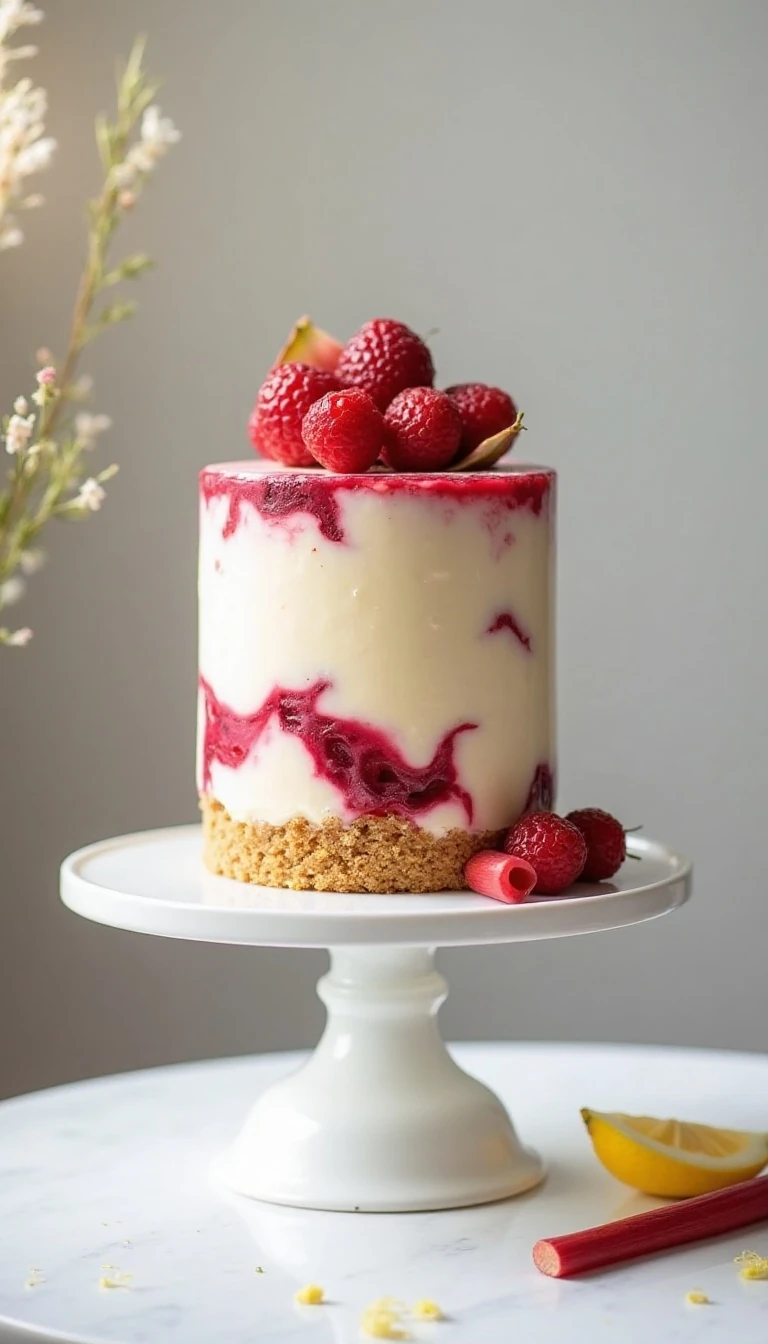
Step 9: Draw a skewer or thin knife gently through the surface to create swirls. Do not overmix, or the distinct red-and-cream pattern may disappear.
Step 10: Bake for 55–70 minutes, checking for set edges and a center with a slight wobble. A water bath, or a pan of hot water placed on the lower oven rack, can add moisture and help reduce cracking.
Step 11: Turn off the oven and leave the cheesecake inside with the door slightly ajar for 30–60 minutes. This gradual temperature change helps the delicate filling settle instead of shrinking suddenly.
Step 12: Cool the cheesecake to room temperature, then refrigerate it for at least 4 hours. Overnight chilling gives the filling its firmest, creamiest texture and makes cutting especially easy.
Pro Tips for a Smooth Cheesecake
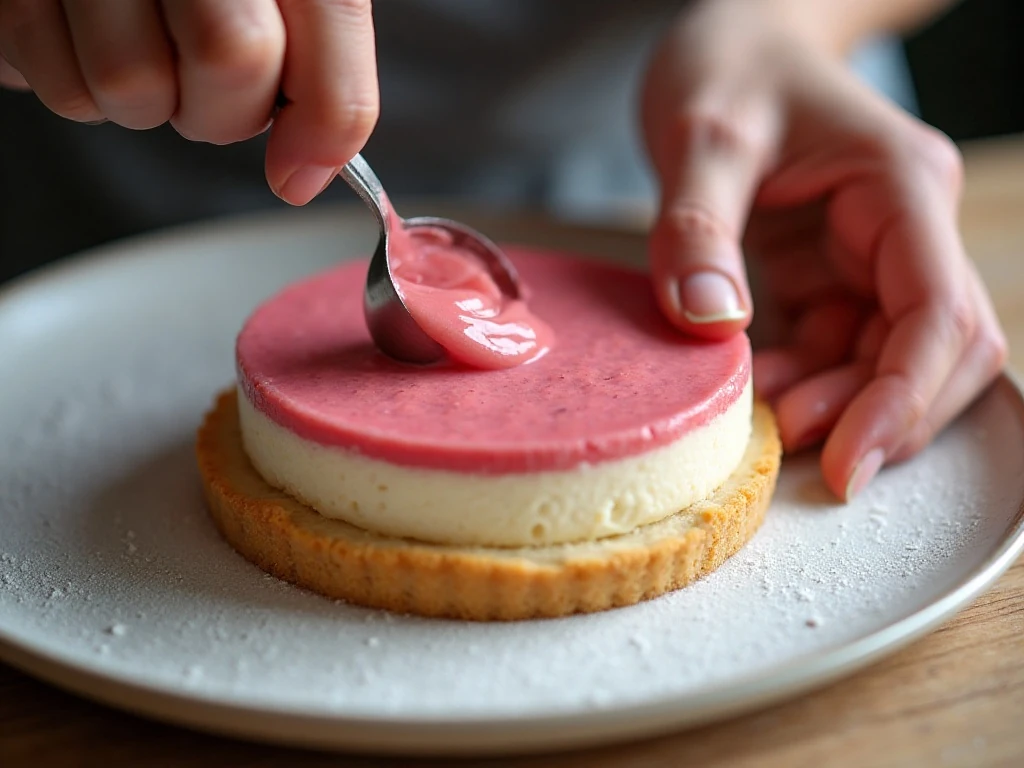
Room-temperature ingredients are important. Soft cream cheese blends smoothly with the sugar, while room-temperature eggs incorporate without requiring prolonged mixing. Cold cream cheese often leaves small lumps, and beating harder to remove them can trap too much air.
Rhubarb varies in tartness from stalk to stalk and from season to season. Taste the cooked mixture once it has thickened and adjust the sweetness slightly if necessary, while preserving enough acidity to balance the rich dairy filling.
Do not rush the cooling stage. Adding warm fruit to the batter can affect its consistency, and slicing before the cheesecake is fully chilled may produce soft, uneven portions rather than clean wedges.
If you enjoy citrus desserts, browse this luscious lemon dessert for another refreshing option. It offers a different preparation style while sharing the bright citrus character that works so well after a rich meal.
Serving, Storage, and Slicing
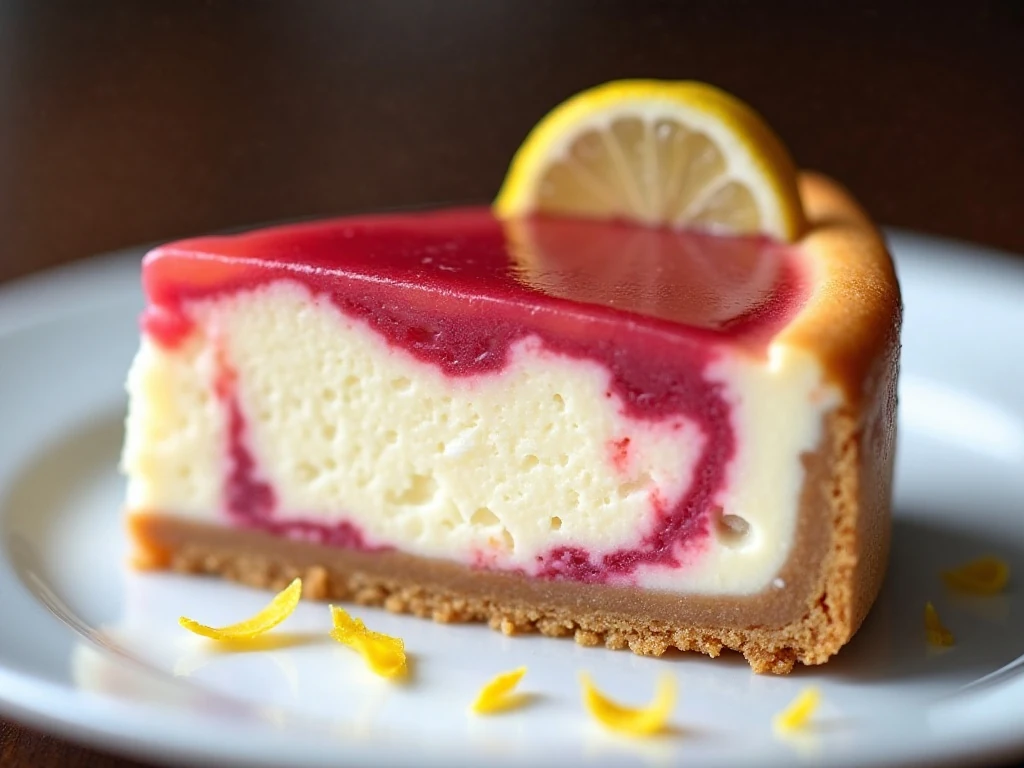
Serve this cheesecake cold or allow it to stand at room temperature for about 10 minutes before serving. The brief rest softens the filling just enough for a luxurious texture while keeping the slices stable.
For the cleanest cuts, use a thin knife warmed under hot water, then wipe it dry. Make one confident slice, clean the blade, and repeat; this keeps the pale filling free of streaks from the ruby rhubarb swirl.
Keep leftovers covered in the refrigerator. The cheesecake is best enjoyed within several days, and it should remain chilled whenever it is not being served.
For a vintage-style fruit dessert to serve alongside your cheesecake spread, take a look at this vintage pineapple dessert. A selection of contrasting fruit desserts gives guests plenty of choices without making the menu feel repetitive.
Recipe Variations and Pairing Ideas
The core recipe is intentionally balanced, so changes should be modest. You can use digestive biscuits for a gently caramelized flavor or graham crackers for a more honeyed crust, while the optional lemon zest can make the filling taste even brighter.
For a naturally gluten-free dessert table, serve this cheesecake with other suitable choices from these sweet gluten-free dessert recipes. If using gluten-free biscuits for the crust, also check that the cornstarch, flavorings, and other packaged ingredients meet your needs.
Simple garnishes work best: a few curls of fresh rhubarb, a fine dusting of icing sugar, or a spoonful of lightly sweetened sour cream. Avoid covering the marbled top, because the jewel-toned swirl is part of the dessert’s charm.
Rhubarb Cheesecake
Ingredients
Method
- Heat the oven to 175°C conventional, 160°C fan, or 350°F. Line the base of a 23 cm / 9-inch springform pan with baking parchment.
- Combine the rhubarb, sugar, lemon juice, and cornstarch in a saucepan. Cook over medium heat for 8–12 minutes, stirring occasionally, until the rhubarb softens and the juices thicken; stir in the vanilla and cool completely.
- Mix the biscuit crumbs, melted butter, optional sugar, and salt. Press the mixture firmly into the prepared pan and bake for about 10 minutes, then cool slightly.
- Beat the softened cream cheese and sugar on low to medium speed until smooth. Add the eggs and yolk one at a time, mixing just until incorporated, then blend in the sour cream, vanilla, flour or cornstarch, and lemon zest.
- Pour about half of the filling over the crust. Spoon in some cooled rhubarb, add the remaining filling, and dot the surface with the rest of the rhubarb; swirl gently with a skewer or knife.
- Bake for 55–70 minutes, until the edges are set and the center still has a slight wobble. Turn off the oven, leave the cheesecake inside with the door slightly ajar for 30–60 minutes, then cool to room temperature.
- Refrigerate the cheesecake for at least 4 hours, although overnight is best. Remove the pan, warm and wipe a thin knife between cuts, and serve chilled.
Notes
Final Thoughts
Rhubarb cheesecake is a beautiful dessert for anyone who loves the contrast of tart fruit and creamy sweetness. The crisp biscuit crust supports a smooth sour-cream cheesecake, while the thickened rhubarb swirl adds color, fragrance, and a refreshing finish.
Give the fruit time to cool, mix the filling gently, and allow the baked cheesecake to chill thoroughly before slicing. With those simple details in place, you will have a polished dessert that is just as welcome at a spring celebration as it is at a relaxed family dinner.
Prepare it the day before serving, cut each slice with a clean warmed knife, and let the vibrant rhubarb do the talking. This is a dessert that looks special, tastes balanced, and rewards careful preparation with every creamy, tangy bite.