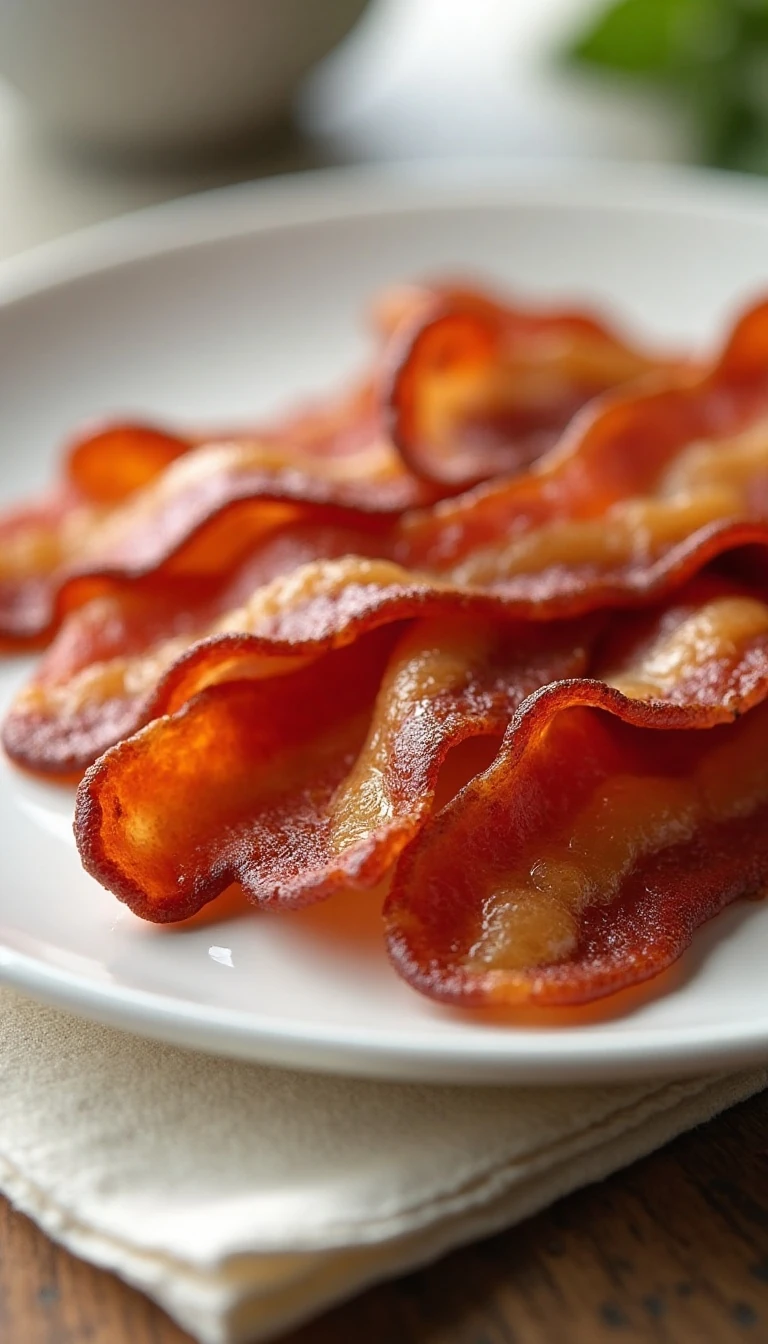
To make perfect bacon the fast and easy way, bake 1 pound of sliced bacon in a single layer on a parchment- or foil-lined rimmed baking sheet at 400°F (200°C) for 15–20 minutes. There is no need to add oil or butter, and a wire rack is optional. Start checking early because thin slices cook faster than thick-cut bacon.
Oven-baked bacon cooks evenly, releases less splatter than stovetop bacon, and gives you plenty of crisp, savory strips for breakfast, sandwiches, salads, and burgers. The bacon will firm slightly as it cools, so transfer it to a paper-towel-lined plate as soon as it reaches your preferred level of doneness.
Jump to RecipeWhy You’ll Love This Recipe

This oven method is the answer when you want reliably delicious bacon without standing over a skillet. The oven provides steady, surrounding heat, while the rimmed pan keeps hot rendered fat contained and away from your stovetop.
It is also easy to scale for a family breakfast or weekend brunch. Arrange the strips, set the timer, and use the cooking time to prepare eggs, toast, fruit, or coffee.
- Minimal ingredients: You need only 1 pound of sliced bacon.
- No added fat: Bacon renders its own flavorful fat, so oil and butter are unnecessary.
- Flexible texture: Remove it when it is chewy-tender, crisp around the edges, or deeply crisp throughout.
- Simple cleanup: Parchment paper or foil catches most of the rendered fat.
For a complete brunch plate, serve the bacon with warm homemade rolls. These easy yeast rolls are especially handy when you want individual portions with a soft, golden crust.
Ingredients You’ll Need
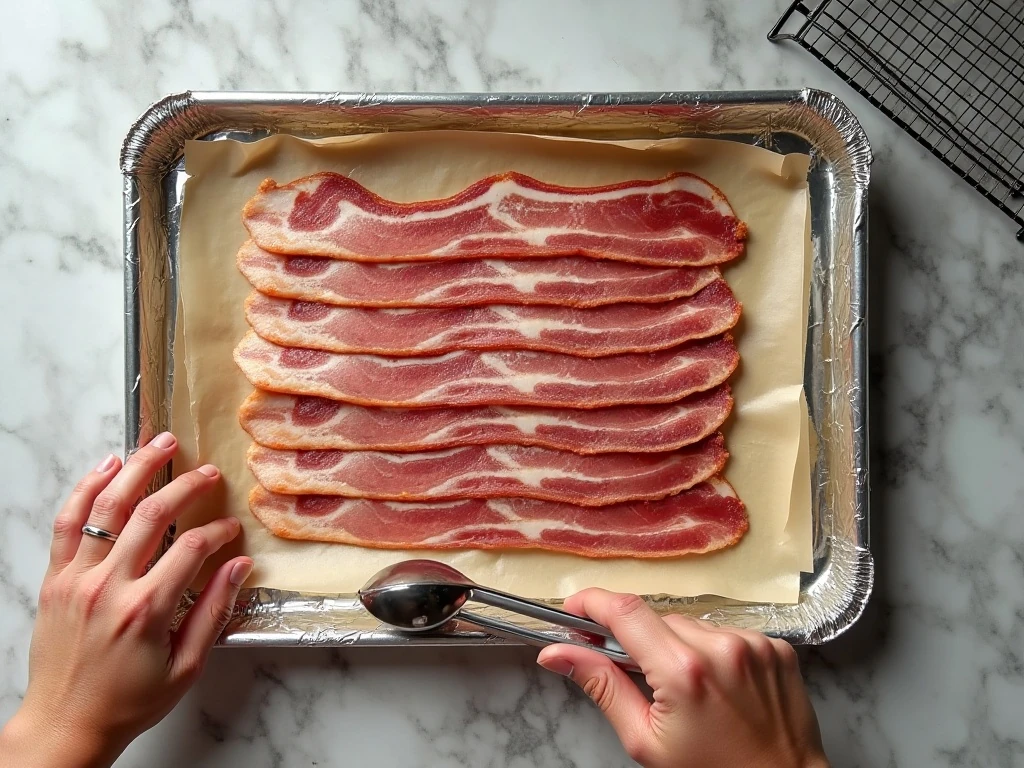
The ingredient list could not be shorter: 1 pound of sliced bacon, which is usually about 8 to 12 slices depending on thickness. Choose regular-cut bacon for a classic crisp texture or thick-cut bacon for meatier bites and a longer cooking time.
- 1 pound sliced bacon: Use your favorite smoked, applewood, peppered, or unsmoked variety.
- No oil or butter: The bacon will release enough fat as it cooks.
- Parchment paper or aluminum foil: Either works for lining the pan and simplifying cleanup.
- Optional wire rack: A rack allows rendered fat to drip away and can produce more evenly crisp bacon.
Always choose a rimmed baking sheet rather than a flat cookie sheet. Bacon can release a substantial amount of hot fat, and the raised edges help keep it safely contained.
If you plan to serve bacon with freshly baked bread, the make-anything yeast dough is a useful companion recipe for building a generous breakfast spread.
How to Make It Step-by-Step
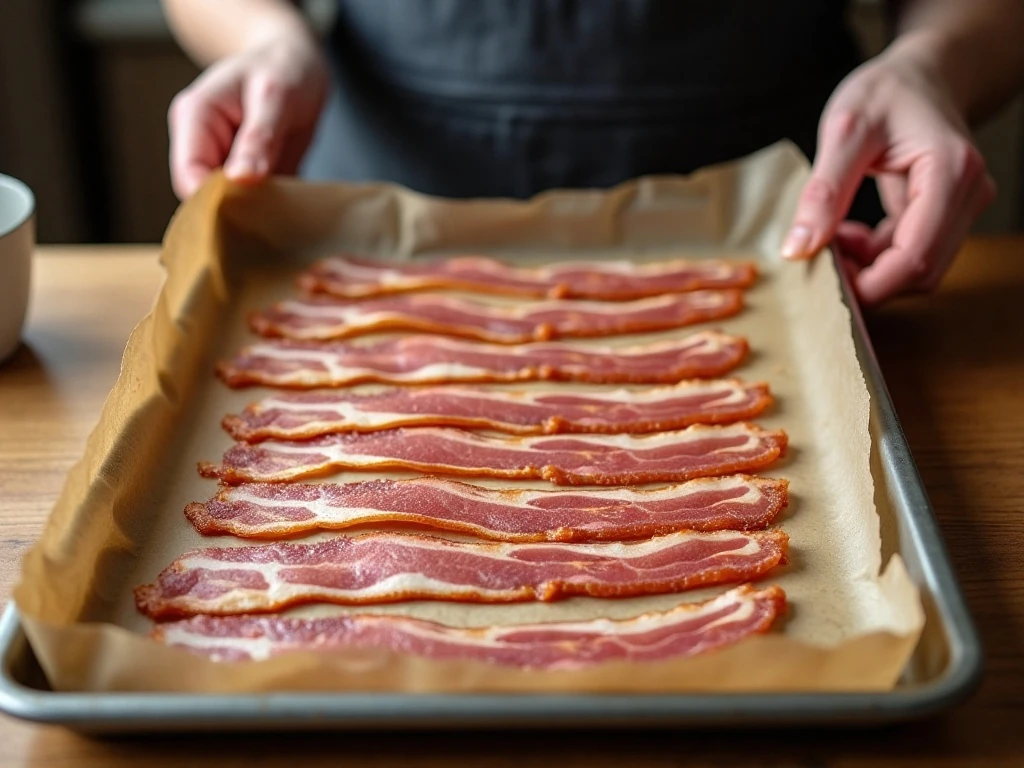
Step 1: Heat your oven to 400°F (200°C). Give the oven time to reach the full temperature so the bacon begins cooking consistently from the moment the pan goes in.
Step 2: Line a rimmed baking sheet with parchment paper or aluminum foil. The lining is not required for cooking, but it catches much of the rendered fat and makes cleanup considerably easier.
Step 3: Arrange 1 pound of bacon in a single layer on the prepared pan. Keep the strips flat with little or no overlap; if using a wire rack, set it on the pan first and lay the bacon across the rack.
Step 4: Bake the bacon for 15–20 minutes, checking earlier if the slices are thin. Very thick-cut bacon may require 20–25 minutes, and the exact timing can vary with slice thickness and bacon type.
Step 5: Judge doneness by appearance rather than the clock alone. Look for the color and crispness you like, remembering that the bacon continues cooking briefly and firms as it cools.
Step 6: Use tongs to transfer the bacon to a paper-towel-lined plate. Let it drain for a moment before serving, and avoid stacking the pieces immediately if you want the crispest texture.
Step 7: If desired, carefully pour the warm rendered bacon fat through a fine strainer into a heatproof container. Refrigerate the strained fat for cooking vegetables, potatoes, eggs, or savory bread crumbs.
Pro Tips for Crisp, Even Bacon
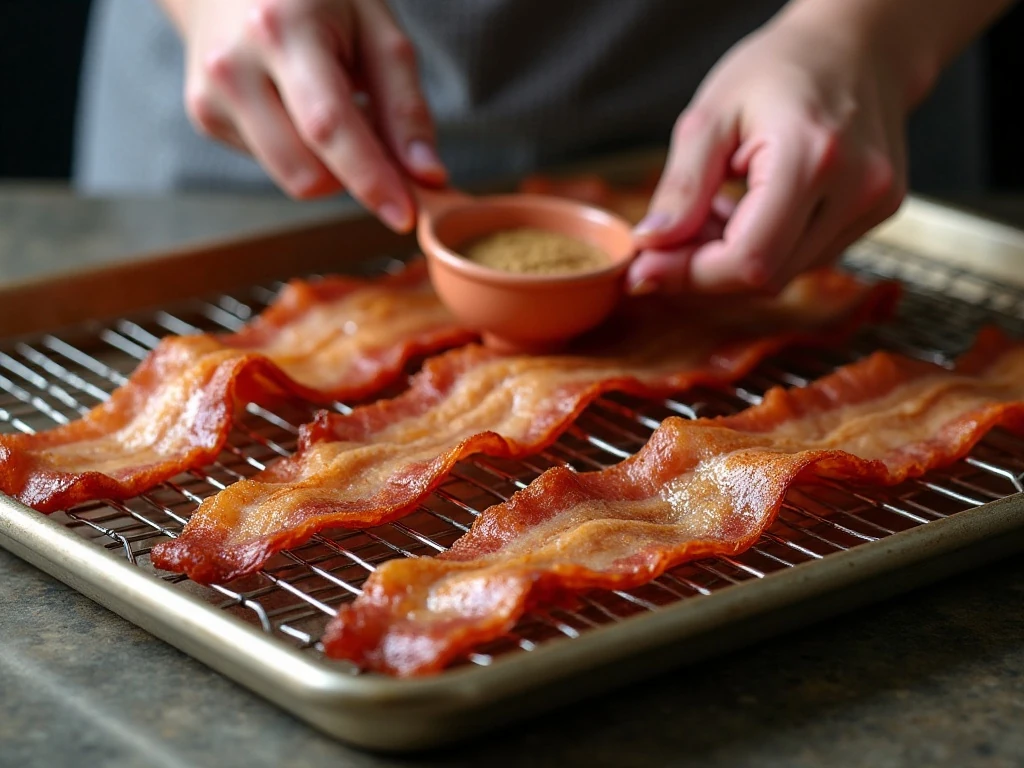
Start checking early, particularly when using thin bacon. A few extra minutes can change bacon from pleasantly crisp to overly dark, while thick-cut slices may still need additional time after regular bacon is ready.
For extra-even cooking and less greasy bacon, use a wire rack over the lined sheet pan. The fat drips below as the bacon cooks, allowing more of the surface to brown. For slightly more tender bacon and the easiest cleanup, place the strips directly on parchment or foil.
- Do not crowd the pan: Overlapping strips can cook unevenly and remain soft where they touch.
- Use the rimmed pan: Hot bacon fat needs a secure edge.
- Watch the final minutes: Bacon can darken quickly near the end of cooking.
- Drain promptly: Paper towels remove excess surface fat without drying out the bacon.
- Save the fat carefully: Strain it before refrigerating so small bacon particles do not shorten its storage life.
For a hearty dinner that uses bacon in a different way, try this bacon-wrapped chicken idea. It turns the same smoky ingredient into a savory main dish.
How to Serve Perfect Bacon

Fresh oven-baked bacon is wonderful beside scrambled eggs, pancakes, waffles, hash browns, or buttered toast. It also brings salty contrast to a bowl of oatmeal or a plate of fresh fruit.
For sandwiches, let the bacon cool for a minute so it stays crisp rather than steaming the bread. Layer it into a toasted roll with lettuce and tomato, crumble it over a grilled cheese sandwich, or tuck it into a breakfast wrap.
A small spoonful of sweet jam makes a particularly good partner for smoky bacon. This quick no-sugar microwave jam offers a bright, fruity accent for toast, biscuits, and breakfast sandwiches.
Bacon can also add texture to salads, baked potatoes, creamy soups, pasta, and roasted vegetables. Crumble cooled strips just before serving so they retain as much crunch as possible.
Storage, Reheating, and Make-Ahead Tips
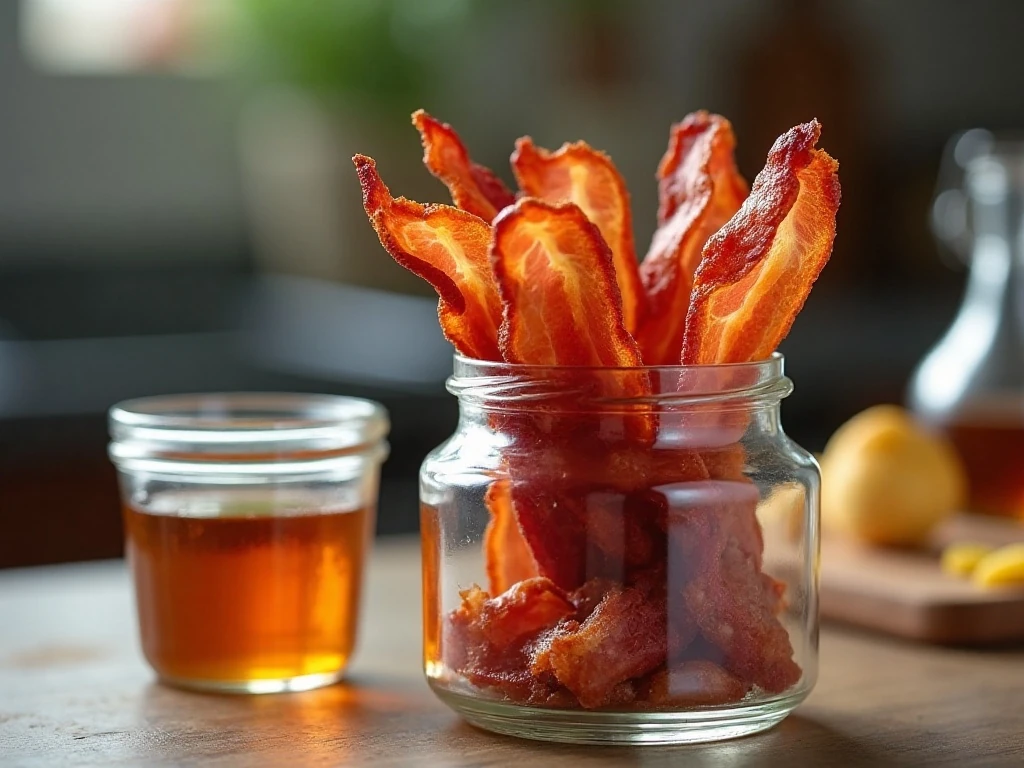
Cooked bacon is best immediately, but leftovers can be cooled and refrigerated in a covered container. Separate the pieces with parchment if you are stacking them, and use them within a few days for the best flavor and texture.
To reheat, place the bacon on a paper towel-lined plate and warm it briefly in the microwave, checking often. You can also return it to a warm oven until heated through. Avoid heating it too long because it can become dry and overly brittle.
Rendered bacon fat should be strained and refrigerated in a sealed container. Use it in small amounts for sautéing potatoes, onions, greens, or other savory ingredients when you want a gentle smoky flavor.
If you are preparing brunch for guests, bake the bacon shortly before serving and transfer it to a lined plate. Do not cover it tightly while hot, since trapped steam can soften the crisp surface.
Common Questions About Oven-Baked Bacon
Should I start bacon in a cold oven? This recipe uses a preheated 400°F (200°C) oven for a straightforward, repeatable method. Starting with the oven fully heated makes the stated 15–20 minute timing easier to follow.
Do I need to flip the bacon? No. Bacon can cook well without flipping, especially when arranged in a single layer. A wire rack can help both sides cook evenly, but it is optional.
Why is my bacon not crisp yet? Slice thickness, bacon type, pan arrangement, and personal preference all affect the timing. Continue baking while checking frequently, with very thick-cut bacon sometimes requiring 20–25 minutes.
Can I cook bacon directly on foil? Yes. Aluminum foil is one of the recommended lining options, and parchment paper works as well. Use a rimmed sheet to contain the hot fat.
Perfect Oven-Baked Bacon
Ingredients
Method
- Heat the oven to 400°F (200°C). Line a rimmed baking sheet with parchment paper or aluminum foil, then arrange the bacon in a single layer with little or no overlap.
- Bake for 15–20 minutes, checking early for thin slices and watching for your preferred level of crispness. Very thick-cut bacon may need 20–25 minutes.
- Transfer the cooked bacon to a paper-towel-lined plate to drain. Let it rest briefly because it will firm up slightly as it cools.
Notes
Final Thoughts
Perfect bacon is simple: use 1 pound of sliced bacon, arrange it in a single layer on a lined rimmed baking sheet, and bake at 400°F (200°C) for about 15–20 minutes. Watch closely near the end, especially with thin slices, and allow the cooked bacon to rest briefly so it firms to a satisfying crisp.
Whether you serve it with eggs, tuck it into a sandwich, crumble it over a salad, or pair it with a sweet spread, this method delivers dependable flavor with very little effort. Save the rendered fat if you like, clean the pan, and enjoy having a fast breakfast staple ready whenever a savory bite is needed.
For dessert after a bacon-centered brunch, a chilled pineapple lush cake makes a cool, creamy finish.