Guinness-glazed ribs are tender pork baby-back ribs baked low and slow, then brushed with a reduced stout barbecue sauce and finished over high heat. The complete method takes approximately 3 1/2 hours, including 2 1/2–3 hours of covered oven cooking, a 15–20 minute glaze reduction, and a final 5–10 minutes on the grill or under the broiler.
Every bite brings smoky paprika, savory Worcestershire, tangy cider vinegar, dark brown sugar, and the roasted malt character of Guinness together in one glossy, sticky coating. The ribs are rich without being flat, with just enough optional cayenne to give the sweet molasses finish a gentle spark.
Jump to RecipeWhy You’ll Love This Recipe
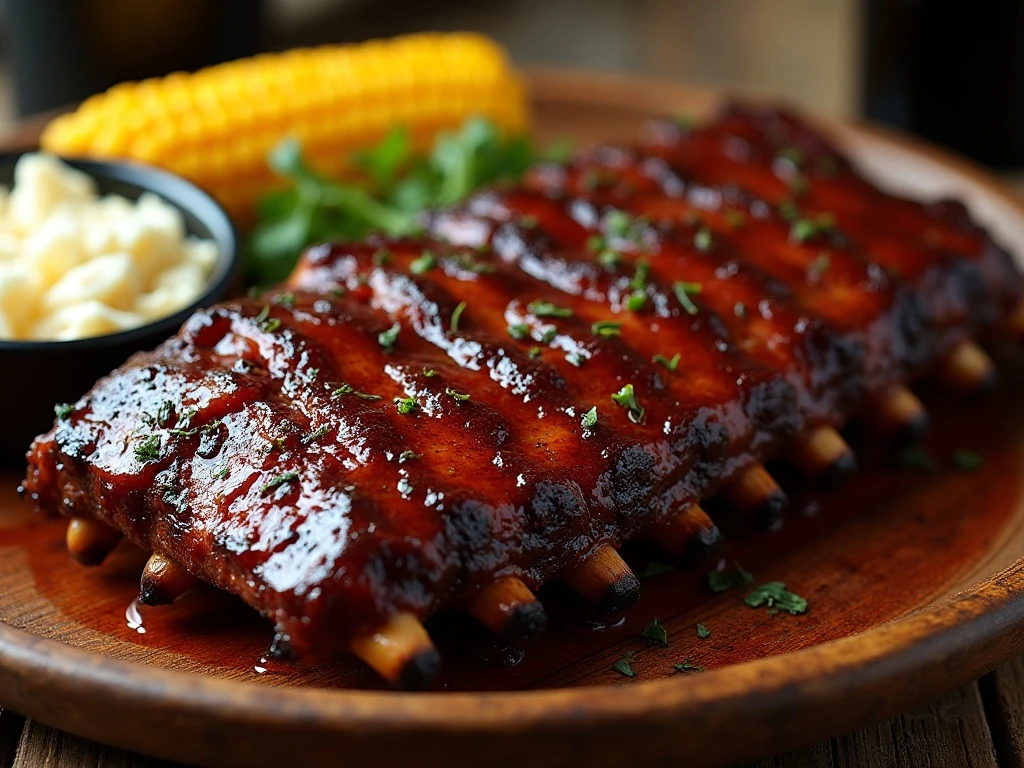
These ribs deliver the texture of classic barbecue without requiring a smoker. Covered oven cooking keeps the pork moist while giving the connective tissue time to soften, and the final blast of heat creates the dark, lacquered exterior that makes sticky ribs so tempting.
The Guinness sauce has a balanced flavor profile. Ketchup supplies body, brown sugar and molasses bring deep sweetness, cider vinegar adds brightness, Worcestershire contributes savory depth, and Dijon keeps the sauce from tasting overly sugary.
This recipe serves 4–6 people, making it a strong choice for a weekend dinner, game-day table, or casual gathering. Serve the ribs with crisp slaw, baked potatoes, grilled corn, or a simple green salad to balance the richness.
For a dessert that continues the stout-inspired theme, pair the meal with these stout cupcakes with sweet cream. Their soft crumb and creamy topping make a pleasant finish after the smoky ribs.
Ingredients You’ll Need
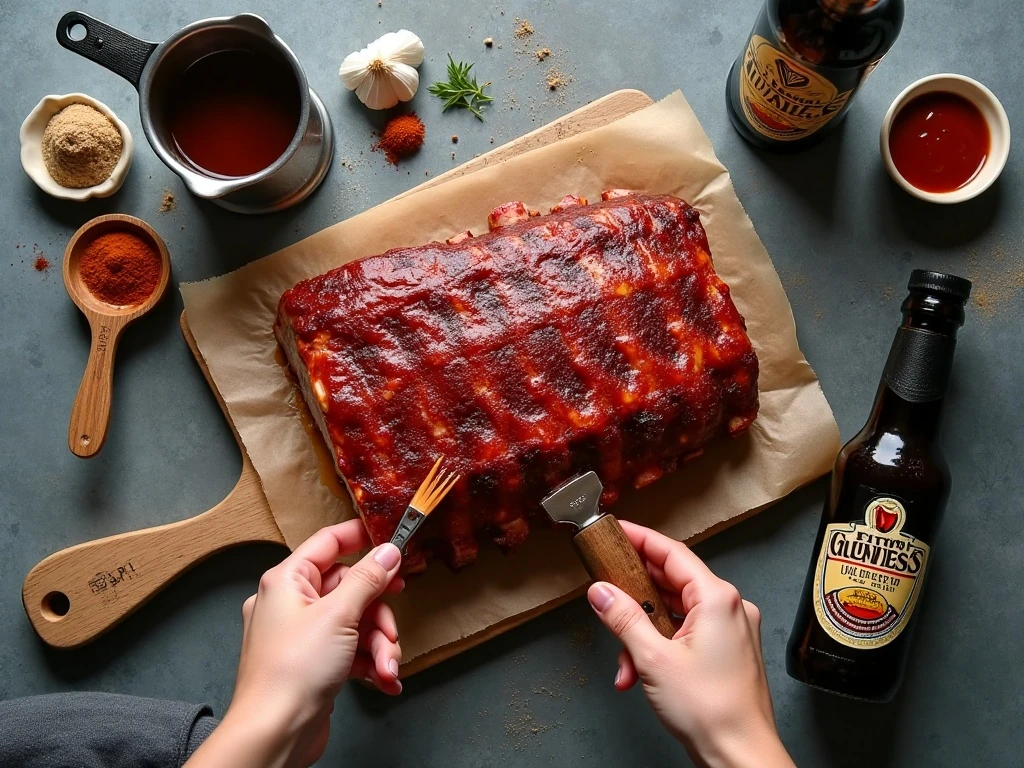
Begin with two racks of pork baby-back ribs weighing about 4–5 pounds total. Baby-backs are relatively lean and cook tender in the covered oven, while the seasoning forms a savory foundation beneath the glaze.
- 2 teaspoons kosher salt
- 1 teaspoon freshly ground black pepper
- 2 teaspoons smoked paprika
- 1 teaspoon garlic powder
- 1 teaspoon onion powder
The sauce uses one cup of Guinness, which gives it a noticeable roasted malt flavor without requiring an unusually long reduction. Dark brown sugar and unsulfured molasses create the glossy finish, while apple-cider vinegar, Worcestershire sauce, and Dijon mustard keep the sweetness in check.
- 1 cup Guinness stout
- 1 cup ketchup
- 1/2 cup packed dark brown sugar
- 1/4 cup unsulfured molasses
- 1/4 cup apple-cider vinegar
- 2 tablespoons Worcestershire sauce
- 1 tablespoon Dijon mustard
- 2 minced garlic cloves
- 1 teaspoon smoked paprika
- 1/4 teaspoon cayenne pepper, optional
Have heavy-duty foil, a rimmed baking sheet, a saucepan, a pastry brush, and either a medium-hot grill or broiler ready. Lining the pan makes cleanup easier and helps you seal the ribs tightly for the covered cooking stage.
For another dessert option after dinner, a small portion of raspberry mini cheesecakes adds bright fruit flavor and a creamy contrast to the stout glaze.
How to Make It Step-by-Step
Step 1: Remove the thin membrane from the bone side of each rack by loosening one corner with a small knife and pulling it away with a paper towel. Pat the ribs thoroughly dry so the seasoning clings instead of sliding across a damp surface.
Step 2: Stir together the kosher salt, black pepper, smoked paprika, garlic powder, and onion powder in a small bowl. Rub the mixture over every part of both racks, including the edges, for even seasoning in each serving.
Step 3: Arrange the ribs bone-side down on a foil-lined baking sheet. Add a small splash of Guinness to the pan if desired, then cover the ribs tightly with foil; refrigerate them for 1–12 hours if you want to prepare the seasoning in advance.
Step 4: Heat the oven to 300°F (150°C) and bake the covered ribs for 2 1/2–3 hours. They are ready when the meat is tender and has pulled back slightly from the bones, though the racks should still hold together well enough to move.
Step 5: While the ribs cook, add the Guinness, ketchup, dark brown sugar, molasses, cider vinegar, Worcestershire sauce, Dijon mustard, minced garlic, smoked paprika, and optional cayenne to a saucepan. Bring the mixture to a simmer and cook it uncovered for 15–20 minutes, stirring occasionally, until it coats the back of a spoon.
Step 6: Take the sauce off the heat and let it cool slightly. It will thicken more as it cools, so waiting briefly gives you a glaze that clings to the ribs instead of running off.
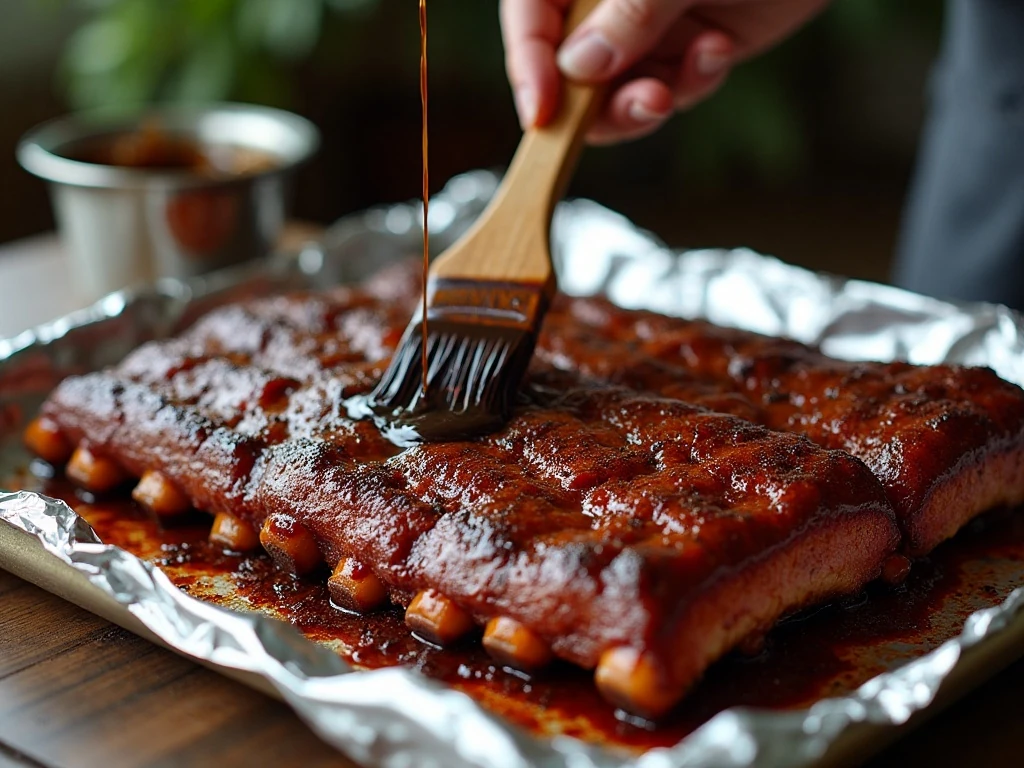
Step 7: Carefully uncover the tender ribs and brush them generously with the reduced Guinness glaze. Turn the ribs bone-side down or position them according to your grill or broiler setup, keeping the remaining sauce nearby for another coating.
Step 8: Finish the ribs over a medium-hot grill or under a broiler for about 5–10 minutes. Turn and brush them with more glaze once or twice, watching closely because the sugar and molasses can burn quickly at high heat.
Step 9: Transfer the finished ribs to a cutting board and let them rest for 5–10 minutes. Cut between the bones, arrange the portions on a platter, and serve with extra glaze.
How to Get a Thick, Sticky Glaze
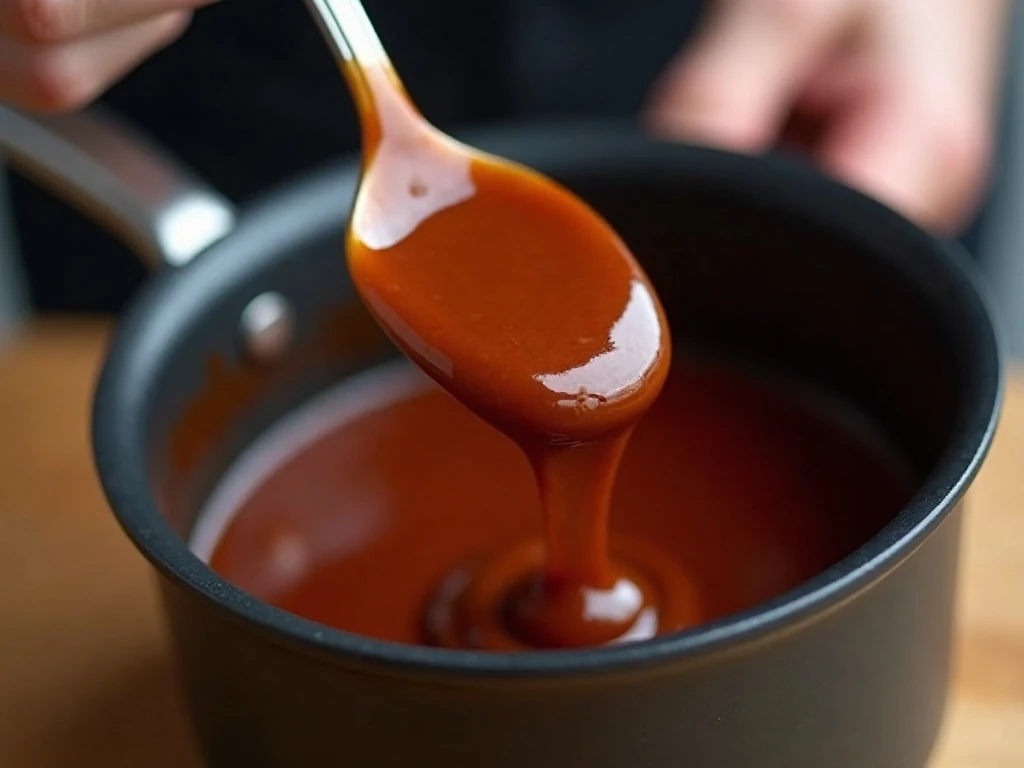
The most important sauce rule is to reduce it before it touches the ribs. A thin sauce applied too early can make the surface watery, while the sugars may scorch during the long oven cook.
Keep the saucepan uncovered and use a steady simmer rather than an aggressive boil. Stir occasionally so the ketchup, sugar, and molasses do not catch on the bottom, and remember that the sauce continues thickening as it cools.
Apply the glaze mainly during the final high-heat stage. Two or three thin layers produce a more polished, sticky coating than one heavy layer, and each brief turn lets the sauce set against the meat.
Chef’s Tips and Variations
- Use paper towels when removing the membrane because they provide a better grip than bare fingers.
- Do not rush the covered oven stage; tenderness comes from the gentle 300°F cooking time.
- Keep the ribs close while broiling, since the dark sugar can move from caramelized to burned in moments.
- For more heat, the optional cayenne can remain in the sauce, or you can add chili powder, chipotle, or hot sauce.
- St. Louis-style spare ribs may replace baby-backs, but allow roughly 30–60 additional minutes of covered cooking.
- For a smoked version, cook the ribs at 225–250°F (107–121°C) for about 4–5 hours, then apply the Guinness glaze during the final 30–45 minutes.
If you are planning a dessert spread, delicate homemade éclairs can be prepared ahead and filled shortly before serving. Their light pastry gives guests an alternative to the rich barbecue flavors.
Serving, Storage, and Reheating
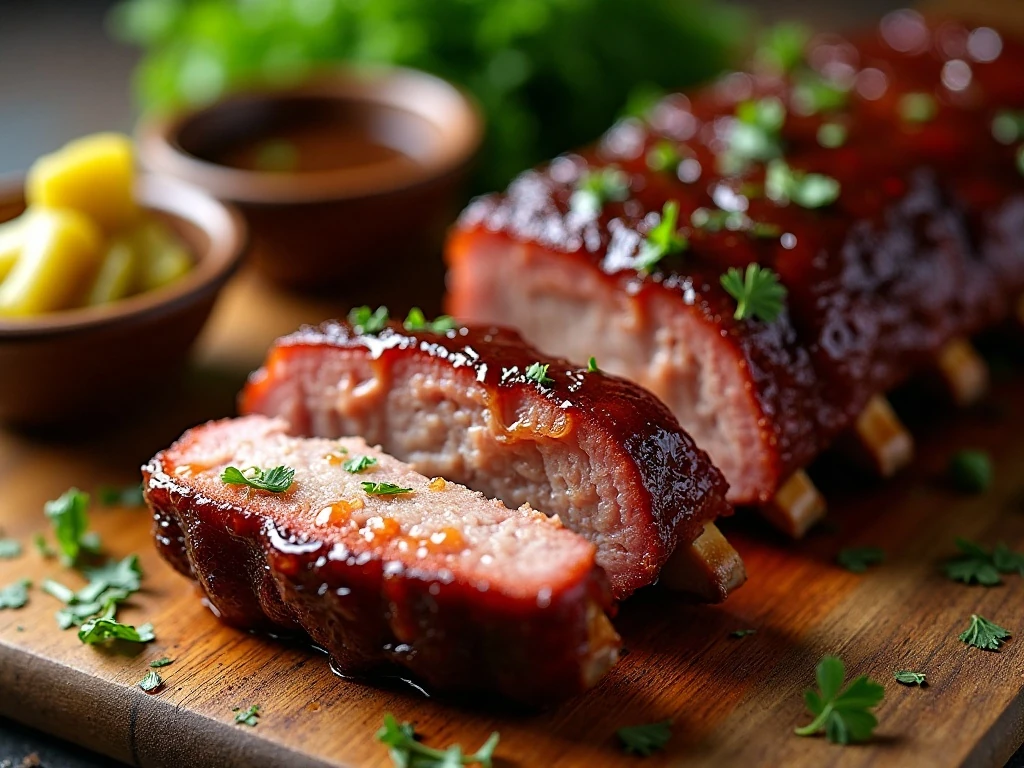
Serve the ribs with extra warm glaze in a small bowl, plus napkins for the inevitable sticky fingers. Creamy potato salad, vinegar slaw, roasted vegetables, and pickles all work well because their acidity or freshness cuts through the pork’s richness.
Refrigerate leftovers in a covered container and use them within a few days. To reheat, place the ribs in a covered baking dish with a small splash of water or extra glaze, warm them gently until heated through, and finish briefly under the broiler if you want to refresh the sticky surface.
Cut leftover meat from the bones for sandwiches, loaded baked potatoes, or barbecue bowls. Add a spoonful of the reserved glaze just before serving so the meat stays moist and flavorful.
For a cozy dessert pairing, gingerbread whoopie pies echo the molasses notes in the sauce while adding a soft, warmly spiced finish.
Make-Ahead Plan
The ribs can be seasoned and refrigerated for 1–12 hours before baking. This optional rest gives the salt and spices more time to flavor the meat, while the sauce can be simmered during the cooking period.
You can also prepare the glaze earlier in the day and let it cool before covering and refrigerating it. Warm it gently until brushable before using, taking care not to boil it aggressively or reduce it too far.
For a sweet finish that suits a dinner party, prepare mocha latte salted caramel cupcakes ahead of time. The coffee and caramel notes pair naturally with the stout’s roasted character.
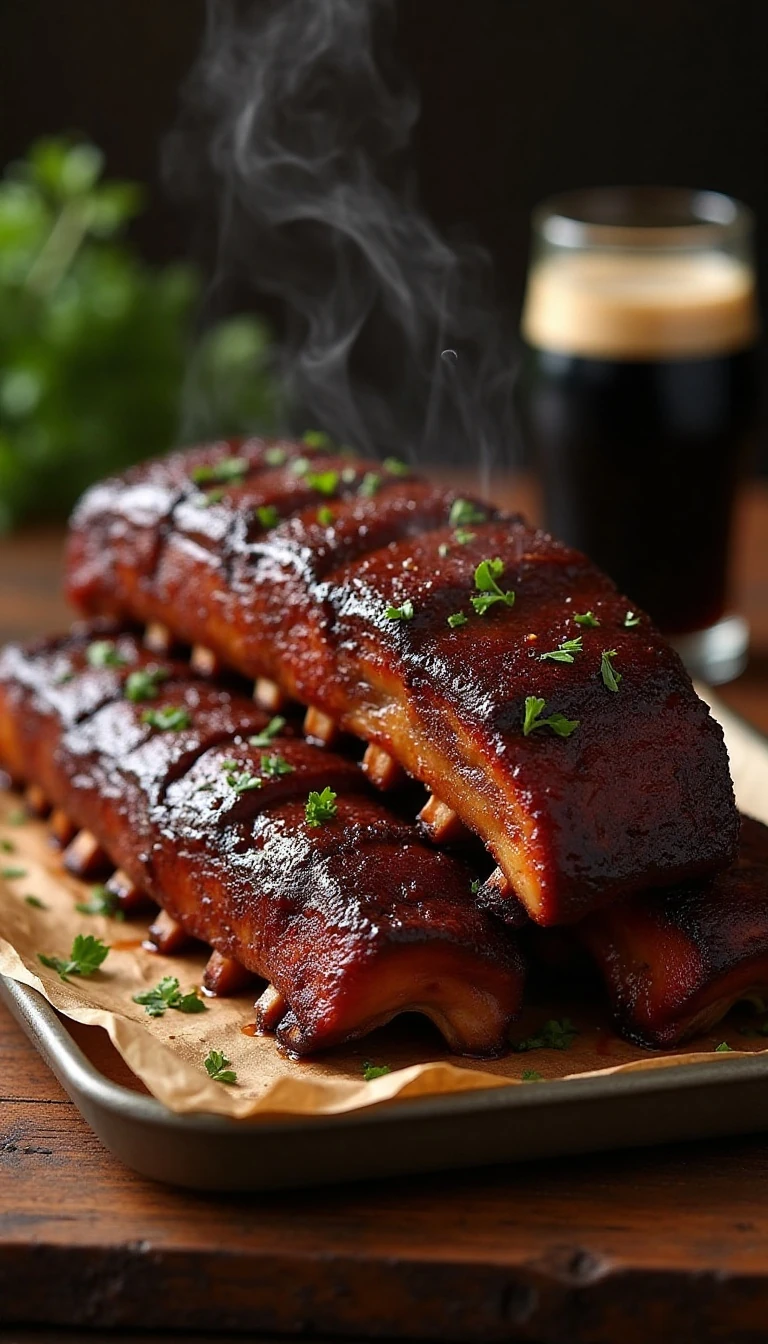
Guinness-Glazed Ribs
Ingredients
Method
- Remove the thin membrane from the bone side of both rib racks. Pat the ribs dry with paper towels.
- Combine kosher salt, black pepper, smoked paprika, garlic powder, and onion powder. Rub the seasoning evenly over both sides of the ribs.
- Place the ribs on a foil-lined baking sheet, add a small splash of Guinness if desired, and cover tightly with foil. Refrigerate for 1–12 hours if you want to season them ahead.
- Bake the covered ribs at 300°F (150°C) for 2 1/2–3 hours, until tender and slightly pulled back from the bones.
- Combine all glaze ingredients in a saucepan. Simmer uncovered for 15–20 minutes, stirring occasionally, until thick enough to coat the back of a spoon; cool slightly.
- Uncover the ribs and brush them generously with the glaze. Finish on a medium-hot grill or under a broiler for 5–10 minutes, turning and brushing with more glaze once or twice.
- Rest the ribs for 5–10 minutes before cutting between the bones. Serve with extra Guinness glaze.
Notes
Final Thoughts
Guinness-glazed ribs turn a straightforward oven method into a memorable barbecue centerpiece. The covered bake creates tender pork, while the reduced stout sauce and quick high-heat finish provide the glossy, smoky, sweet coating everyone wants to pull apart.
Keep the glaze thick, brush it on only at the end, and watch the final grilling or broiling stage carefully. After a 5–10 minute rest, cut between the bones, add extra sauce, and bring these rich, sticky ribs straight to the table.