This Easy Eggs Benedict Quiche Recipe brings the classic brunch favorite to the table in a simple baked format. A refrigerated 9-inch pie crust is filled with diced Canadian bacon, Swiss cheese, and a silky egg-and-half-and-half custard, then baked at 350°F for 40 to 45 minutes and served with prepared hollandaise sauce.
Every slice has the familiar flavors of Eggs Benedict: savory Canadian bacon, nutty melted cheese, tender eggs, buttery hollandaise, and a fresh sprinkle of chives. With 15 minutes of preparation, about 10 minutes of resting time, and approximately 1 hour 5 minutes total before hollandaise preparation, this quiche makes an inviting breakfast, brunch, or light dinner for about six servings.
Jump to RecipeWhy You’ll Love This Recipe

Eggs Benedict is beloved for its combination of creamy eggs, savory meat, toasted bread, and buttery hollandaise, but poaching eggs and assembling individual servings can take extra attention. This quiche captures those same brunch flavors in one sliceable dish, making it especially useful when you are feeding a family or hosting guests.
The filling is wonderfully balanced. Canadian bacon supplies a gentle smoky-salty bite, Swiss cheese melts into savory pockets, and the half-and-half gives the custard a soft, luxurious texture without making the recipe complicated.
The prepared pie crust keeps the process friendly for busy mornings. If you enjoy other simple egg-centered breakfasts, you can also try this cheesy omelet idea for another quick option.
Most importantly, the hollandaise is added after baking. That preserves its smooth, buttery character and lets every person add as much sauce as they like.
Ingredients You’ll Need
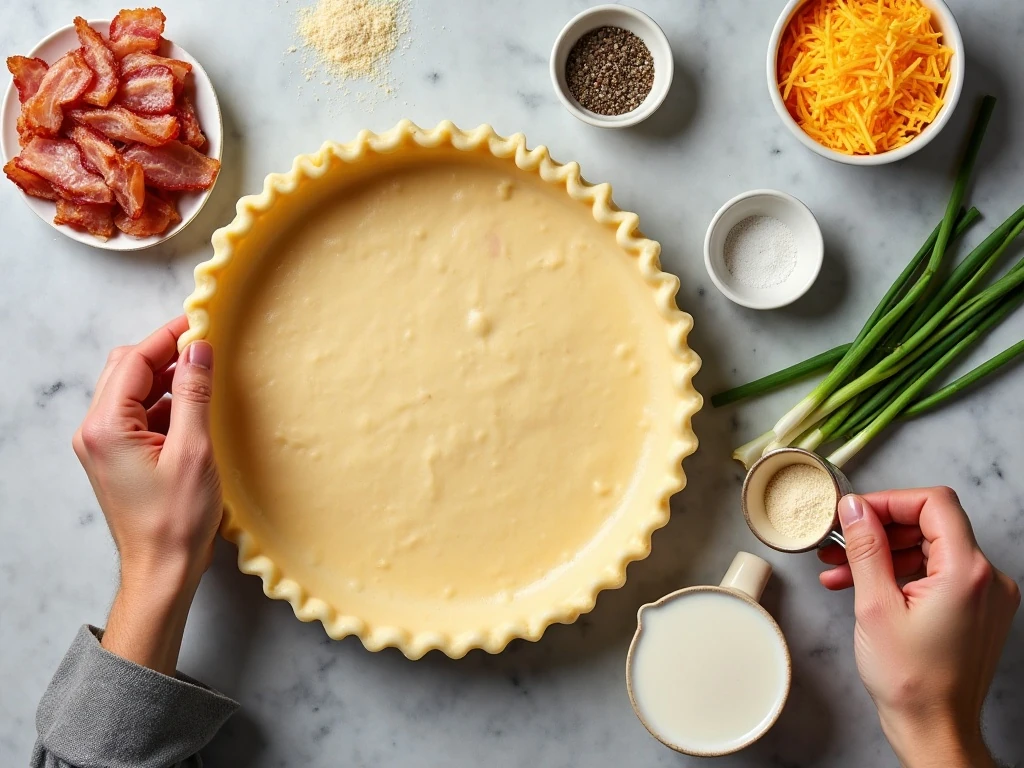
The ingredient list is short, but each component has an important role in the finished quiche. Use a refrigerated 9-inch unbaked pie crust for the base, and keep it chilled until you are ready to fit it into the pie plate.
- Pie crust: One refrigerated 9-inch unbaked crust creates the flaky shell.
- Canadian bacon: Six ounces, diced into small pieces, provides the signature savory filling.
- Swiss cheese: One cup of shredded cheese melts smoothly and adds a mild nutty flavor.
- Eggs and half-and-half: Four large eggs and 1 1/2 cups half-and-half create the tender custard.
- Seasoning: Use 1/4 teaspoon salt and 1/8 teaspoon ground black pepper.
- Hollandaise: Prepare one package of hollandaise sauce mix according to its package directions.
- Chives: Chopped fresh chives are an optional finishing touch that adds color and a light onion flavor.
For substitutions, diced ham can stand in for Canadian bacon, while Gruyère can replace Swiss cheese. Whole milk may replace the half-and-half in an equal amount, although the custard will be slightly less rich.
Gather your pie plate, mixing bowl, whisk, measuring tools, and a sharp knife before beginning. Having everything ready makes the short preparation time feel even easier.
How to Make It Step-by-Step

Step 1: Heat the oven to 350°F and position a rack in the center. Fit the refrigerated pie crust into a 9-inch pie plate, gently pressing it into the bottom and sides without stretching the dough, then crimp or flute the edge.
Step 2: If you want a crisper bottom crust, blind-bake the empty crust at 350°F for about 8 to 10 minutes. This extra step is particularly helpful when using a glass pie plate or when you prefer a firmer pastry base; allow the crust to cool slightly before filling.
Step 3: Dice the Canadian bacon into small, bite-size pieces so it distributes throughout each slice. Scatter the bacon evenly over the crust, then cover it with the shredded Swiss cheese rather than piling either ingredient in the center.
Step 4: Crack the four eggs into a medium bowl and add the half-and-half, salt, and ground black pepper. Whisk until the mixture is smooth and well blended, taking care not to leave streaks of egg white or yolk.
Step 5: Slowly pour the custard over the Canadian bacon and cheese. Pour around the surface rather than in one forceful stream, allowing the liquid to settle into the spaces between the filling ingredients.
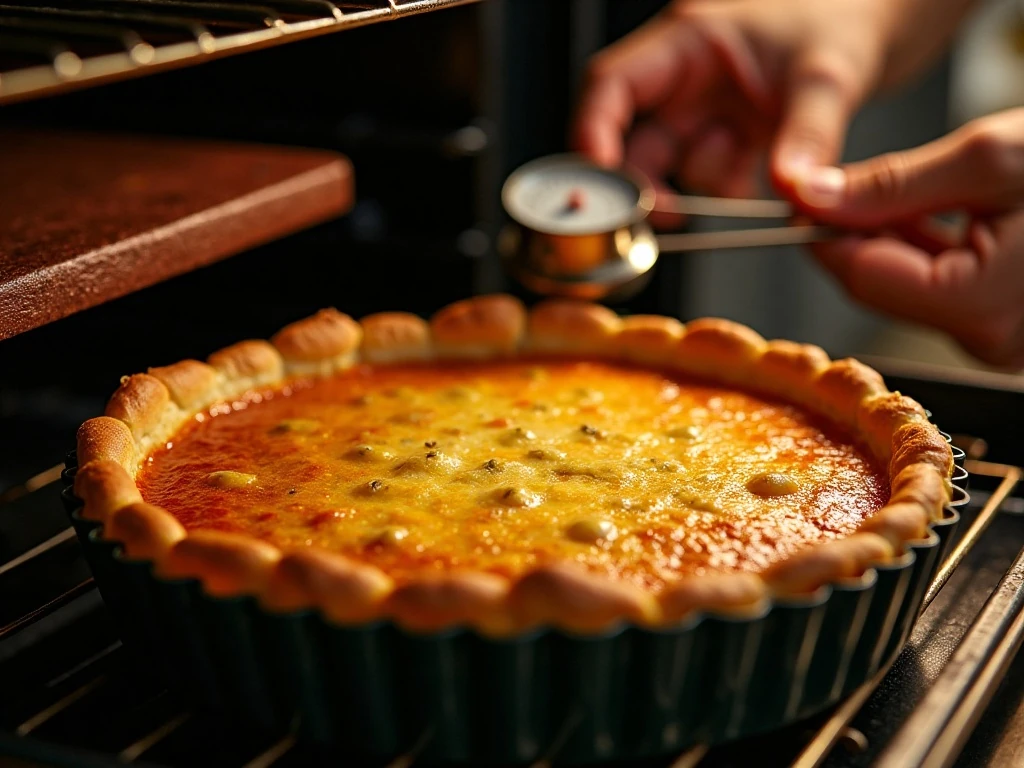
Step 6: Bake the quiche for 40 to 45 minutes at 350°F. It is ready when the center is nearly set, a knife inserted near the center comes out clean, and the middle has only a slight wobble rather than looking liquid.
Step 7: Remove the pie plate from the oven and let the quiche stand for about 10 minutes. Resting gives the custard time to finish setting, so the slices hold together more neatly when cut.
Step 8: Prepare the hollandaise sauce mix according to the package directions separately from the quiche. Spoon the warm sauce over each slice immediately before serving and scatter chopped fresh chives over the top if desired.
Chef’s Tips for the Best Quiche
Use a light hand when pressing the crust into the pie plate. Stretching the dough can cause it to pull away from the sides while baking, while a relaxed crust is more likely to keep its shape.
Even distribution is the secret to balanced slices. Spread the Canadian bacon and Swiss cheese from edge to edge, leaving no large empty areas and avoiding a thick mound in the middle.
Watch the center closely during the final minutes. A slight wobble is desirable, because residual heat continues cooking the custard as it rests; baking until the entire surface is completely firm can result in a drier texture.
Hollandaise should never be baked on top of the quiche for the full cooking time. Prolonged oven heat can make the sauce separate or turn oily, so prepare it separately and add it right before serving.
If you prefer a from-scratch sauce, common proportions include 3 egg yolks, 1 tablespoon lemon juice, 1/2 cup melted butter, 1/4 teaspoon salt, and a pinch of cayenne. A packet mix is the simplest choice, particularly when you are preparing several brunch dishes at once.
For a larger breakfast spread, pair this quiche with fresh fruit and coffee, or browse these salmon and asparagus foil packs when planning a savory menu for another meal.
Serving Suggestions

Slice the quiche into six wedges and spoon hollandaise over each portion. The warm sauce should look glossy and creamy, pooling lightly over the top without hiding the golden crust.
A simple green salad adds freshness and contrast to the rich custard. Fresh berries, melon, or citrus segments also make a bright side for brunch without competing with the Canadian bacon and Swiss cheese.
For a relaxed weekend table, serve the quiche with roasted potatoes, sautéed greens, or a platter of seasonal fruit. If you are building a menu with easy comfort food, this skillet lasagna is another practical dish to keep in mind for a later lunch or dinner.
Keep the garnish simple. Fresh chives are enough to add color and a mild onion note, while a small amount of black pepper over the hollandaise gives the plate a polished finish.
Storage and Reheating

Let leftover quiche cool before covering and refrigerating it. Store the quiche and hollandaise separately whenever possible, since the sauce keeps its best texture when it is not repeatedly heated with the egg filling.
To serve leftovers, reheat individual slices gently until warmed through, taking care not to overcook the custard. Add freshly prepared or gently warmed hollandaise just before eating rather than baking the sauce onto the slice.
The 10-minute rest after baking is important even when you plan to serve the quiche immediately. It gives the filling time to settle and makes cutting cleaner, more attractive wedges.
Leftover slices are also convenient for a next-day breakfast. Serve them with fruit, toast, or a simple salad, and consider finishing a sweet brunch menu with this easy no-bake pineapple pie.
Make-Ahead Brunch Notes
This recipe is well suited to a calm brunch because the crust, filling ingredients, and custard can be prepared in advance. Keep the assembled unbaked quiche chilled if preparing it ahead, then bake it when you are ready for the meal while allowing the full 40 to 45 minutes.
Prepare the hollandaise separately and time it close to serving. The sauce is at its best when warm, smooth, and freshly spooned over the quiche rather than left sitting for a long period.
When planning the table, remember that the recipe yields about six servings. Set out a sharp knife, a pie server, and a small bowl of chopped chives so guests can finish their own slices.
For another sweet addition to a breakfast table, these pineapple lush cake layers can provide a cool contrast to the warm, savory quiche.

Easy Eggs Benedict Quiche
Ingredients
Method
- Heat the oven to 350°F. Fit the refrigerated pie crust into a 9-inch pie plate and crimp or flute the edge.
- For a crisper bottom crust, blind-bake the empty crust at 350°F for about 8 to 10 minutes, especially when using a glass pie plate. Let it cool slightly before adding the filling.
- Scatter the diced Canadian bacon and shredded Swiss cheese evenly over the crust.
- Whisk the eggs, half-and-half, salt, and black pepper in a bowl until smooth and well blended. Pour the custard evenly over the Canadian bacon and cheese.
- Bake for 40 to 45 minutes, until the center is nearly set and a knife inserted near the center comes out clean. The middle should have only a slight wobble.
- Let the quiche stand for about 10 minutes before slicing. This allows the custard to finish setting and helps produce cleaner wedges.
- Prepare the hollandaise sauce mix according to the package directions while the quiche rests or just before serving. Spoon the warm sauce over each serving and garnish with chopped fresh chives if desired.
Notes
Final Thoughts
This Easy Eggs Benedict Quiche Recipe is a dependable way to serve classic brunch flavor without preparing individual poached eggs. The refrigerated crust, Canadian bacon, Swiss cheese, and creamy custard come together with very little hands-on work, while the final spoonful of hollandaise makes the dish taste special.
Remember the three details that matter most: blind-bake the crust for 8 to 10 minutes if you want a crisper base, bake until the center has only a slight wobble, and rest the quiche for about 10 minutes before slicing. Add hollandaise just before serving so it remains smooth and buttery.
Bring the wedges to the table with fresh chives and simple sides, then enjoy a warm, satisfying meal that works for a holiday brunch, a weekend breakfast, or an easy breakfast-for-dinner gathering.