This creamy lemon dill salmon recipe delivers a complete fish dinner in about 30 minutes. Four salmon fillets are lightly browned in a skillet, then finished in a buttery garlic cream sauce flavored with fresh lemon juice, lemon zest, dill, and optional Parmesan.
The salmon is tender and rich while the sauce is smooth, bright, savory, and fragrant. Serve it with rice, mashed potatoes, pasta, steamed vegetables, or crusty bread so every drop of the lemon dill sauce has a place to go.
Jump to RecipeWhy You’ll Love This Recipe
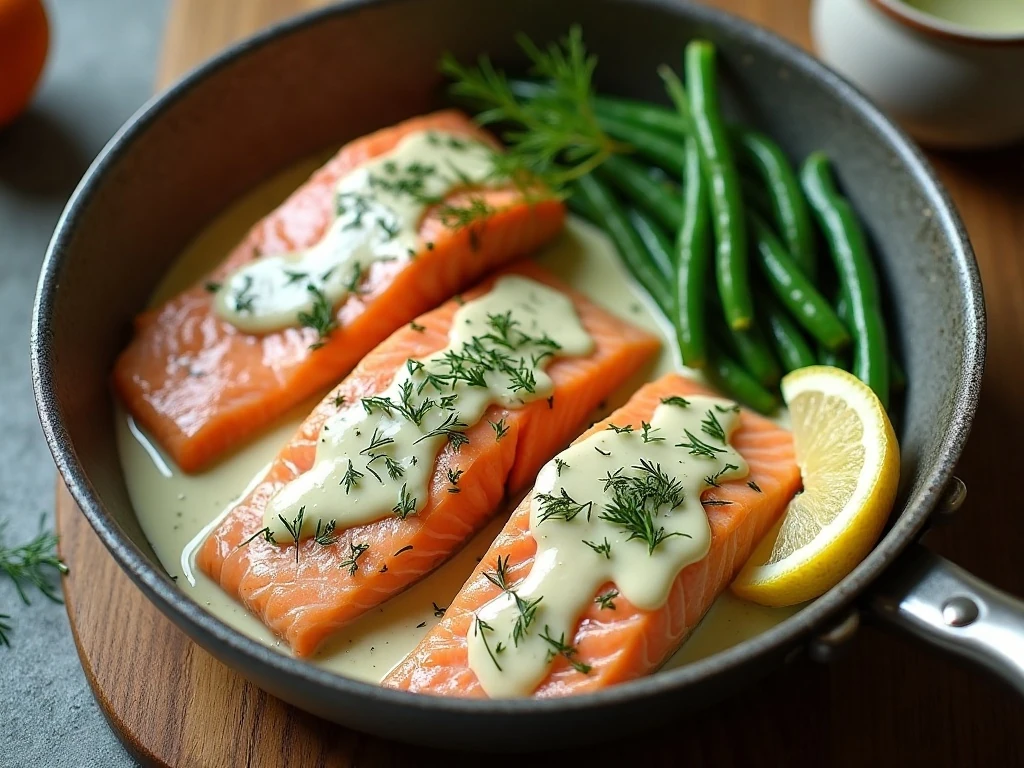
This skillet salmon has the kind of flavor that feels special enough for company but is easy enough for a weeknight. The fish cooks quickly, and the sauce comes together in the same pan, which means the browned salmon bits become part of the finished dish instead of being left behind.
The sauce balances several delicious contrasts. Heavy cream gives it body, garlic adds savory warmth, lemon brings brightness, and fresh dill contributes a clean herbal note that suits salmon beautifully. A small amount of Parmesan is optional, but it adds a gentle salty richness when included.
If your household enjoys seafood dinners with bold but familiar flavors, you may also want to try this sweet and spicy salmon variation for a different skillet-style meal.
Ingredients You’ll Need

Start with four salmon fillets weighing about 6 ounces, or 170 grams, each. Skin-on fillets work well and can help protect the fish as it cooks, while skinless fillets are convenient for serving directly from the pan.
- Salmon: Choose fillets of similar thickness so they finish cooking at approximately the same time.
- Seasonings: Kosher salt and freshly ground black pepper provide the foundation for the fish and sauce.
- Cooking fats: Olive oil helps brown the salmon, while unsalted butter forms the aromatic base for the sauce.
- Aromatics and liquid: Finely minced garlic, chicken broth or seafood stock, and heavy cream create a smooth, savory pan sauce.
- Lemon and herbs: Fresh lemon juice, finely grated lemon zest, and chopped fresh dill make the sauce bright and fragrant.
- Optional finish: Finely grated Parmesan adds extra savory depth, though the recipe is delicious without it.
For the best flavor, use fresh dill and fresh lemons. Bottled lemon juice can taste sharper and less fragrant, while fresh zest supplies citrus aroma that juice alone cannot provide.
Plan your side dishes before you begin because the salmon finishes quickly. Rice, mashed potatoes, pasta, steamed asparagus, green beans, broccoli, or crusty bread all pair naturally with the creamy sauce.
How to Make It Step-by-Step
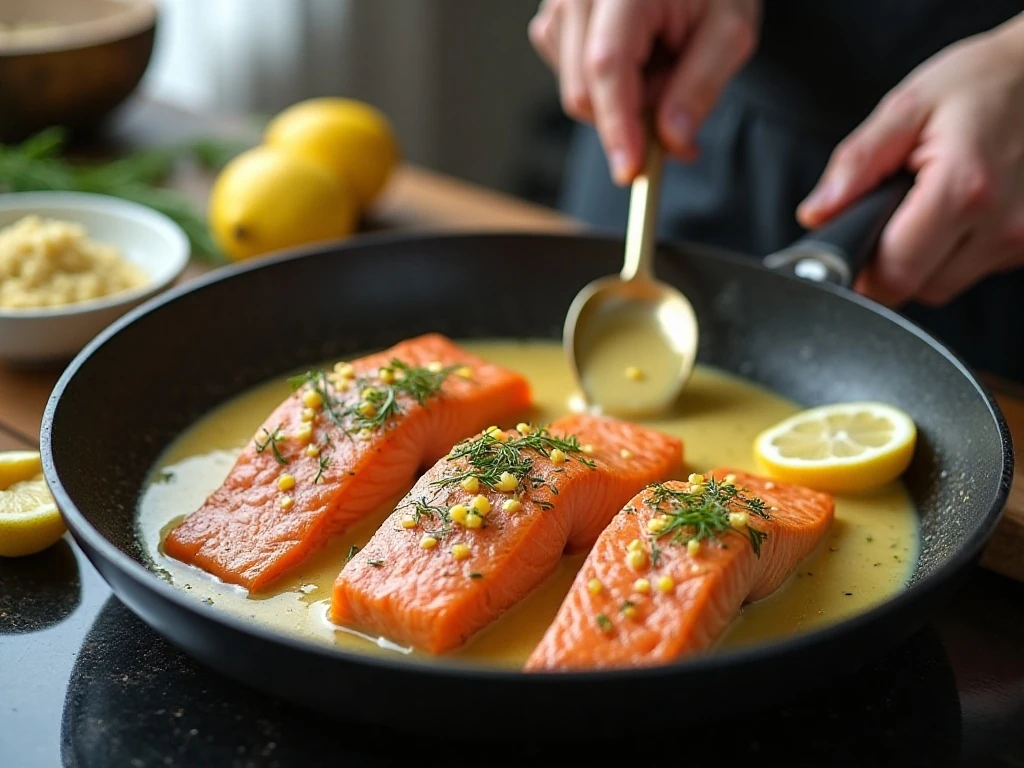
Step 1: Pat the salmon thoroughly dry with paper towels, including the skin if the fillets are skin-on. Season both sides with about 3/4 teaspoon of the kosher salt and 1/4 teaspoon of the black pepper, reserving the remaining seasoning for the sauce.
Step 2: Heat the olive oil in a large skillet over medium-high heat. Place the salmon in the pan and cook for about 4 minutes on the first side, then 3-4 minutes on the second side, until the fillets are lightly browned and nearly cooked through.
Transfer the salmon to a plate and keep the juices that collect around it. Those juices can be returned to the sauce, where they add flavor and help keep the fish moist.
Step 3: Reduce the skillet heat to medium and add the unsalted butter. Once it melts, stir in the finely minced garlic and cook for 30-60 seconds, just until fragrant.
Do not brown the garlic, since dark garlic can taste bitter and distract from the delicate salmon. The residual heat in the skillet will continue to warm it while you add the broth.
Step 4: Pour the chicken broth or seafood stock into the skillet. Use a wooden spoon or spatula to scrape up the browned bits from the bottom of the pan, then simmer the liquid for 2-3 minutes so it reduces slightly.
This short reduction concentrates the savory flavor without making the sauce heavy. If using seafood stock, the finished sauce will have a particularly pronounced seafood character; chicken broth creates a milder base.
Step 5: Stir in the heavy cream, lemon zest, remaining kosher salt, and remaining black pepper. Let the sauce simmer gently for 3-5 minutes, stirring occasionally, until it begins to thicken.
Keep the heat moderate and avoid a vigorous boil. Gentle simmering helps the cream stay smooth and gives it time to coat the back of a spoon.
Step 6: Stir in the fresh lemon juice, chopped dill, and optional Parmesan cheese. Adding the lemon juice near the end keeps its flavor fresh and reduces the chance of the cream sauce splitting during prolonged cooking.
Taste the sauce before returning the fish to the skillet. The remaining salt and pepper should provide balance, but you can adjust the seasoning according to the stock and Parmesan you use.
Step 7: Return the salmon to the skillet along with any accumulated juices from the plate. Spoon the sauce over the fillets and simmer for 1-2 minutes, until the salmon reaches an internal temperature of 145°F (63°C).
The final simmer allows the fish to absorb some of the lemon dill sauce without overcooking. If your fillets vary in thickness, check the thickest portion with an instant-read thermometer.
Step 8: Sprinkle the salmon with additional chopped dill and serve immediately with lemon wedges. Spoon plenty of sauce onto each plate and offer an accompaniment that can absorb it.
For another seafood dinner with a citrus-forward flavor profile, keep this lemon pepper shrimp idea on your menu for a future meal.
Pro Tips for the Best Salmon
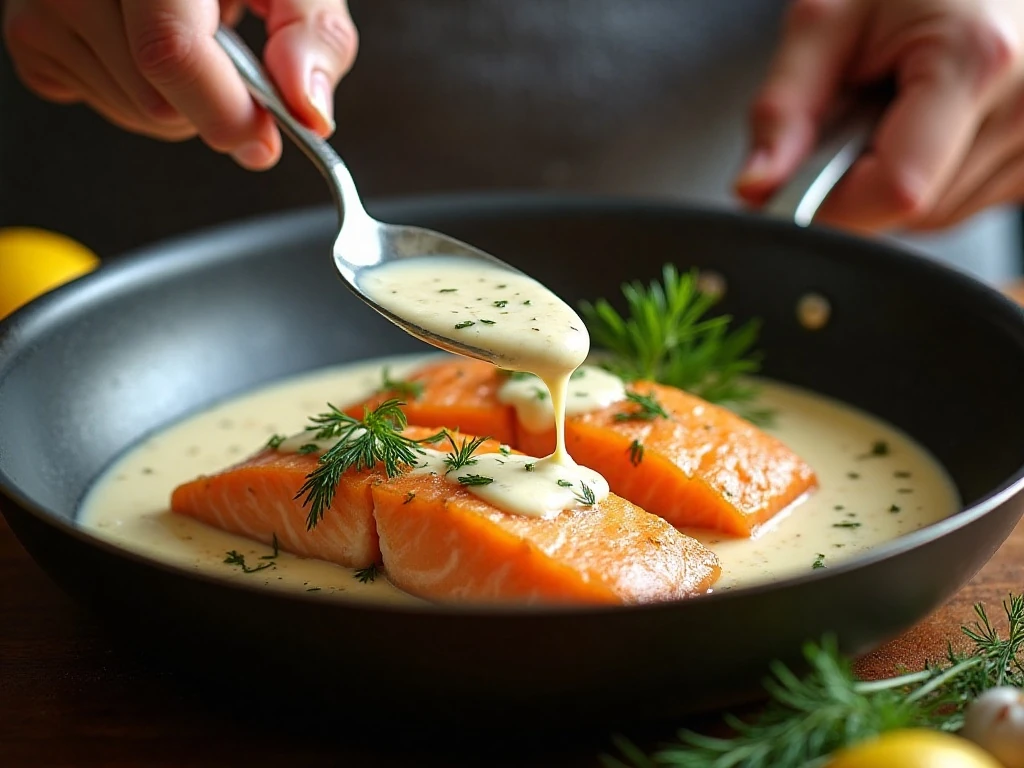
Dry salmon browns; wet salmon steams. Patting the fillets thoroughly dry before seasoning removes surface moisture and helps the oil create a light golden crust in the skillet.
Use a large skillet that gives the fillets room to sit in a single layer. Crowding the pan can lower the heat and make it harder to brown the salmon evenly.
- Watch the garlic: Thirty to 60 seconds is enough to release its aroma without browning it.
- Keep the cream gentle: A gentle simmer thickens the sauce more reliably than a rapid boil.
- Add citrus late: Lemon juice belongs near the end of cooking for a clean flavor and a smoother sauce.
- Use fresh dill when possible: If substituting dried dill, reduce the amount to about 2 teaspoons because dried herbs are more concentrated.
- Check doneness: The salmon is ready when the thickest portion reaches 145°F (63°C).
For a complete creamy dinner spread, serve this salmon with vegetables and compare it with our creamy Brussels sprouts side dish. Its savory profile makes a generous counterpoint to the bright lemon sauce.
Serving Ideas and Pairings
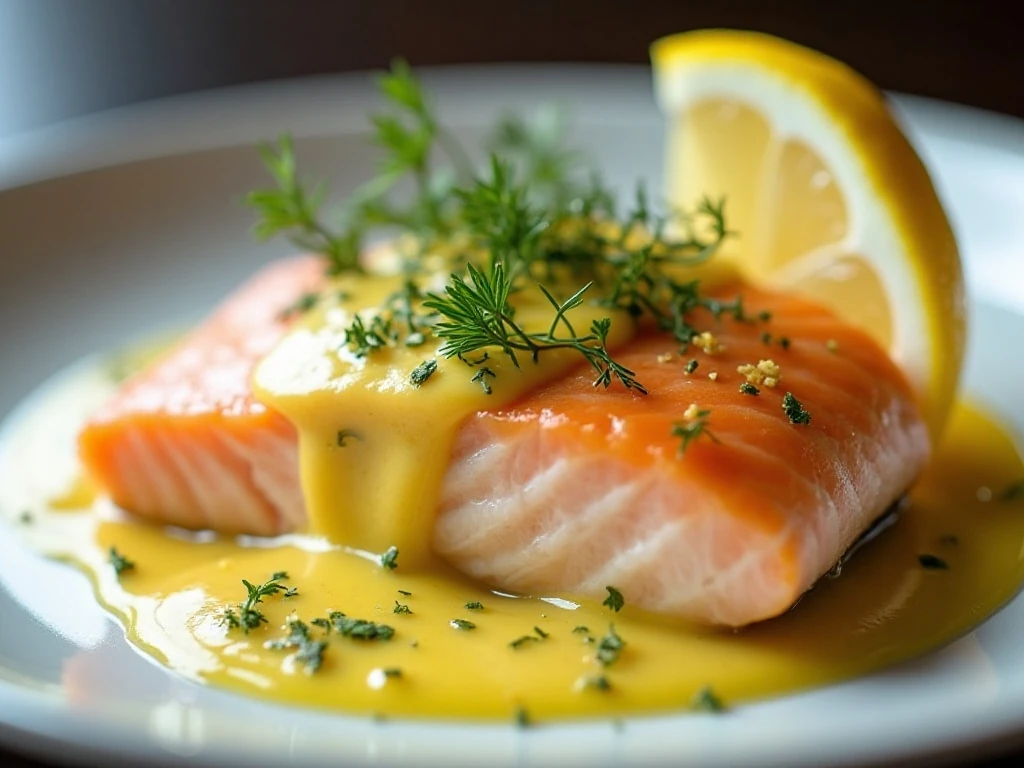
Rice is one of the easiest accompaniments because it catches the sauce without competing with the salmon. Fluffy white rice, brown rice, or a simple pilaf all work well, while mashed potatoes create a particularly comforting plate.
Pasta is another excellent option. Toss the noodles with a little of the sauce before placing a salmon fillet on top, then finish with dill and a lemon wedge. Crusty bread is ideal when you want the simplest possible side.
For vegetables, choose steamed asparagus, green beans, or broccoli. Their fresh flavor and gentle texture balance the richness of the cream while adding color to the plate.
If you are planning a seafood-focused meal, our creamy tomato shrimp pairing offers another saucy option with a vegetable-based accompaniment.
Storage and Reheating
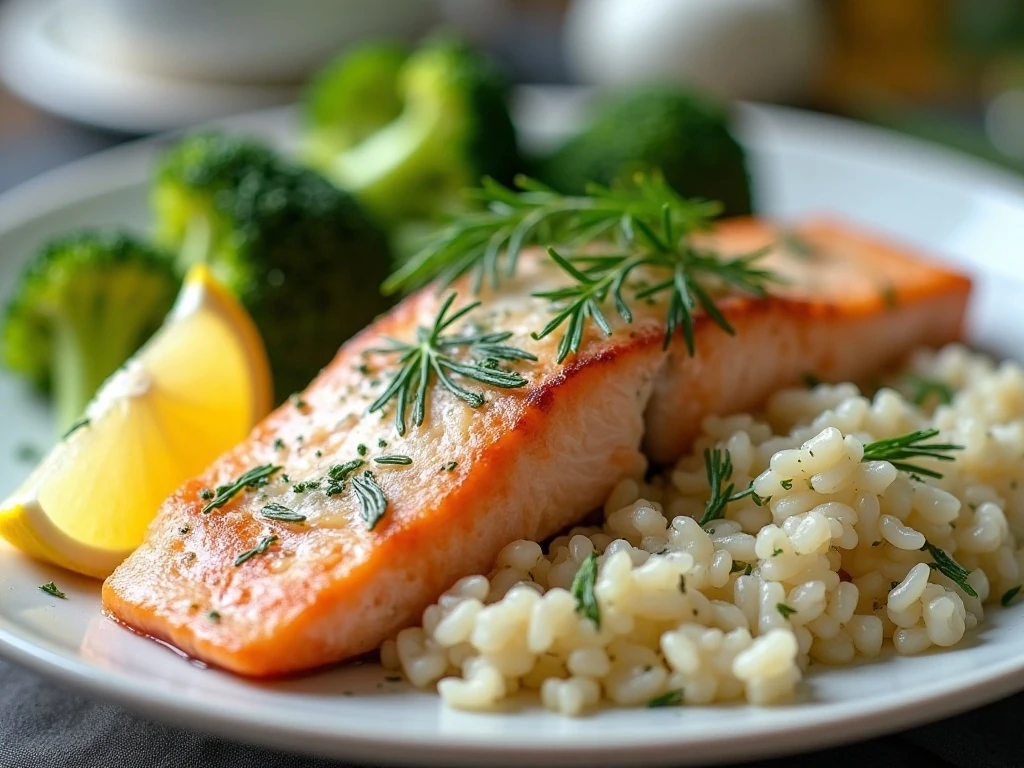
Cool leftover salmon and sauce promptly, then store them together in an airtight container in the refrigerator. For the best texture, enjoy leftovers within a short refrigerated storage period and reheat them gently rather than using high heat.
Warm the salmon and sauce in a covered skillet over low heat, adding a small splash of broth if the sauce has thickened. Heat only until warmed through, since repeated or vigorous heating can dry out the fish and cause the cream sauce to separate.
Keep lemon wedges and extra dill for serving after reheating. A fresh squeeze of lemon and a little herb garnish can refresh the flavor without requiring additional cooking.
For a vegetarian creamy skillet dinner to serve on another evening, browse our creamy mushroom tortellini recipe.

Creamy Lemon Dill Salmon
Ingredients
Method
- Pat the salmon dry. Season both sides with about 3/4 teaspoon kosher salt and 1/4 teaspoon black pepper.
- Heat the olive oil in a large skillet over medium-high heat. Cook the salmon for about 4 minutes on the first side and 3-4 minutes on the second side, until lightly browned and nearly cooked through. Transfer the salmon to a plate.
- Reduce the heat to medium. Add the butter and garlic to the skillet and cook for 30-60 seconds, just until fragrant, taking care not to brown the garlic.
- Pour in the broth and scrape up the browned bits from the bottom of the pan. Simmer for 2-3 minutes so the liquid reduces slightly.
- Stir in the heavy cream, lemon zest, remaining salt, and remaining pepper. Simmer gently for 3-5 minutes, until the sauce begins to thicken; do not let it boil vigorously.
- Stir in the lemon juice, chopped dill, and optional Parmesan. Taste the sauce and adjust the seasoning if needed.
- Return the salmon and any accumulated juices to the skillet. Spoon the sauce over the fillets and simmer for 1-2 minutes, or until the salmon reaches an internal temperature of 145°F (63°C).
- Garnish with additional fresh dill and serve with lemon wedges.
Notes
Final Thoughts
Creamy lemon dill salmon is a dependable recipe when you want a polished fish dinner without a long ingredient list or complicated preparation. The salmon browns in one skillet, and the garlic cream sauce is finished with lemon, dill, and optional Parmesan for a balanced combination of richness and freshness.
Keep the heat gentle once the cream is added, stir in the lemon juice near the end, and use a thermometer to confirm that the salmon reaches 145°F (63°C). With rice, potatoes, pasta, vegetables, or bread alongside, this easy recipe becomes a complete four-serving meal that is ready in about 30 minutes.