This authentic German Sauerbraten recipe is a traditional Rhineland-style pot roast marinated for 2 to 4 days in dry red wine, red-wine vinegar, aromatics, and spices, then slowly braised until fork-tender. Crushed German ginger snaps or Lebkuchen finish the sauce, creating the signature sweet-sour gravy that makes Sauerbraten so special.
The long marinade gives the beef deep flavor and helps soften a substantial roast, while gentle braising keeps every slice juicy. Serve this comforting 6-to-8-serving meal with Kartoffelklöße, Spätzle, boiled potatoes, red cabbage, or stewed apples for a memorable German dinner.
Jump to RecipeWhy You’ll Love This Recipe
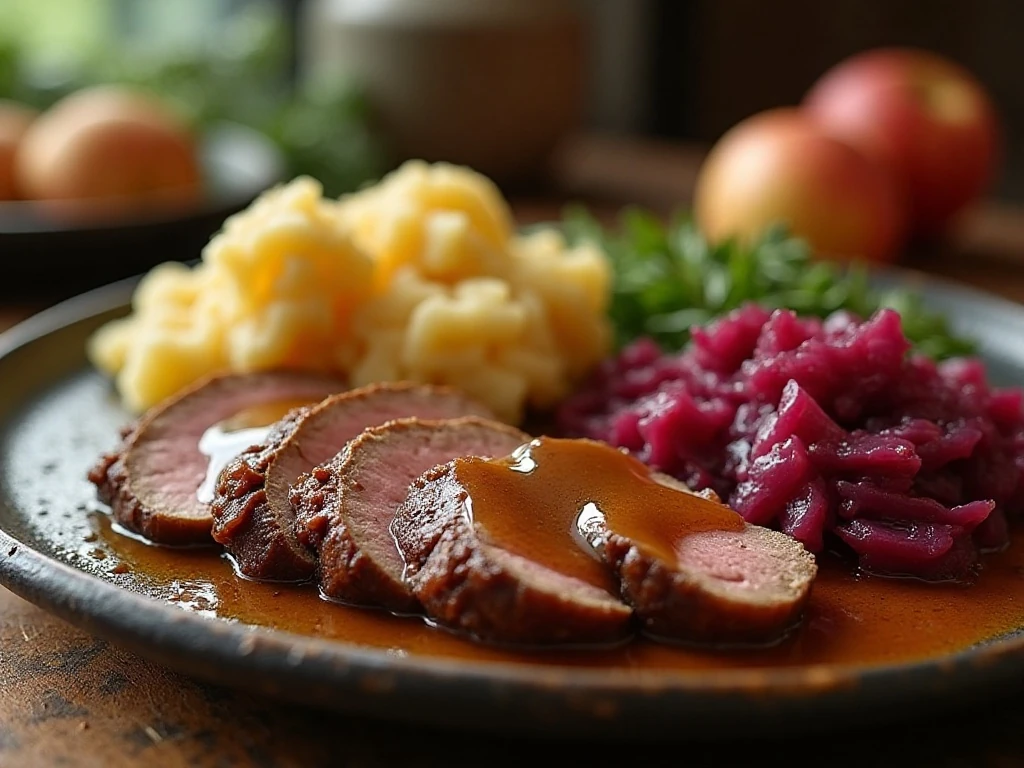
Sauerbraten is the kind of dish that rewards patience. The beef rests in an aromatic marinade for several days, absorbing the flavors of wine, vinegar, juniper, cloves, pepper, and vegetables before it is transformed by slow cooking into tender pot roast.
The finished gravy is the defining feature. Red-wine vinegar provides brightness, wine contributes depth, and crushed ginger snaps bring gentle sweetness, spice, and body without requiring a complicated roux.
This is also a wonderful make-ahead main course. The roast can rest while you finish the sauce and prepare side dishes, making it practical for Sunday dinner, a holiday table, or a cozy gathering.
If you are planning a generous German-inspired menu, you can also browse these slow-cooker meatballs for a casual appetizer option before the main course.
Ingredients You’ll Need

Choose a 1.4-to-1.8-kilogram beef roast. Rump, bottom round, top round, and chuck all work well, with chuck generally offering more marbling and the round cuts providing neat, sliceable portions.
- Marinade base: Use 500 ml each of dry red wine, red-wine vinegar, and water or unsalted beef stock.
- Aromatics: Add sliced onion, carrot, leek or celery, and lightly crushed garlic.
- Spices: Bay leaves, cloves, juniper berries, and black peppercorns create the characteristic savory fragrance.
- Seasoning: Kosher salt and a teaspoon of sugar round out the marinade.
- Gravy finish: Crushed German ginger snaps or 100-150 g of dry Lebkuchen or gingerbread crumbs thicken and balance the sauce.
Use a nonreactive container for marinating, such as glass or stainless steel. The vinegar is strong, so avoid letting the raw marinade sit in an unlined reactive metal pan.
For cooking, keep 250-500 ml of beef stock available. The exact amount depends on the size and shape of the roast and is used to bring the braising liquid one-third to halfway up the meat.
How to Make It Step-by-Step
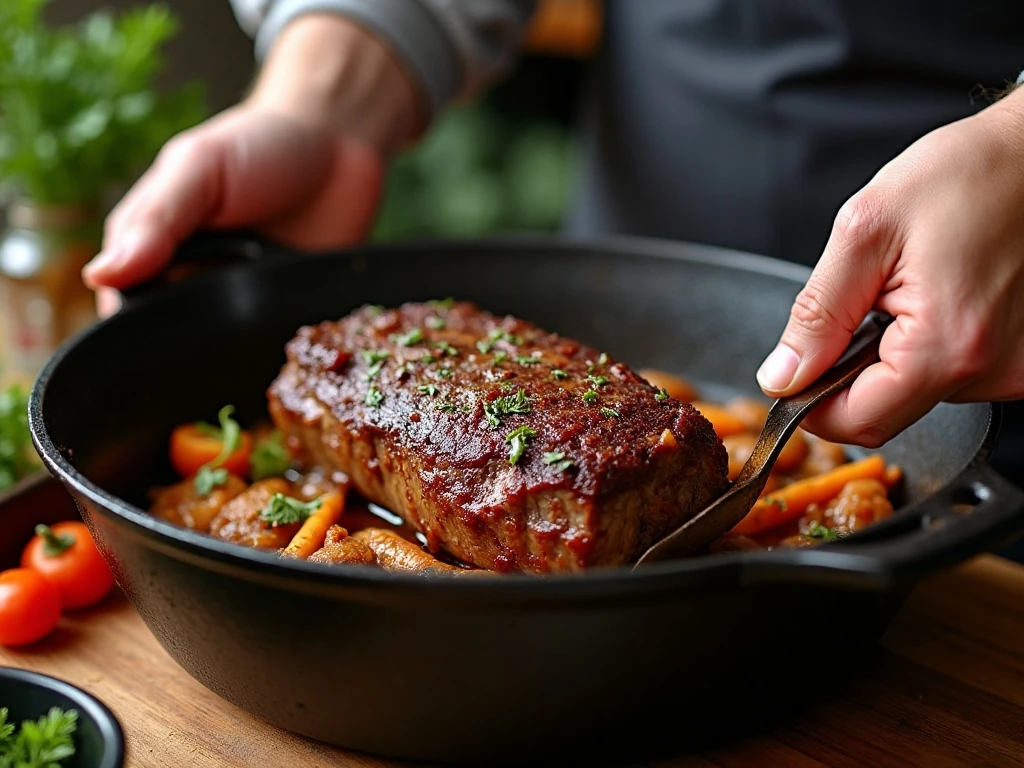
Step 1: Make the aromatic marinade by combining the red wine, red-wine vinegar, water or unsalted beef stock, onion, carrot, leek or celery, garlic, bay leaves, cloves, juniper berries, peppercorns, salt, and sugar in a saucepan. Bring everything just to a simmer so the flavors begin to mingle, then let the mixture cool completely before it touches the beef.
Step 2: Put the roast into a glass or stainless-steel container and pour the cooled marinade over it. Cover it well and refrigerate for 2-4 days, turning the beef once every day so the acidic mixture reaches all sides evenly.
Step 3: Remove the marinated beef from the container and pat it exceptionally dry with paper towels. Strain the marinade into a bowl, reserving both the liquid and the vegetables because each will be used in the braise.
Step 4: Heat the neutral oil, lard, or clarified butter in a heavy Dutch oven over medium-high heat. Brown the beef on all sides for about 10-15 minutes total, turning it only after each surface has developed a deep brown crust.
Step 5: Add the reserved vegetables to the Dutch oven and cook them briefly in the flavorful fat. Pour in the strained marinade and enough stock to reach roughly one-third to halfway up the roast, taking care not to completely submerge it.
Step 6: Bring the liquid to a gentle simmer, then cover the pot. Cook over low stovetop heat or in a 160°C (325°F) oven for 2 1/2-3 1/2 hours, turning the roast occasionally, until a fork slides into the meat with little resistance.
Step 7: Move the beef to a platter and cover it loosely to keep it warm. Strain the braising liquid into a clean pot, pressing the softened vegetables firmly to release their flavor before discarding the solids.
Step 8: Return the liquid to the pot and stir in the crushed ginger snaps or Lebkuchen a little at a time. Simmer until thickened, adding brown sugar only if the vinegar is too sharp and optional flour only if more body is needed.
Step 9: Rest the roast for 15-20 minutes before slicing it across the grain. Taste the hot gravy one final time, adjust the salt and pepper, and serve the beef with plenty of sauce.
How to Get Tender, Flavorful Beef
Drying the roast is one of the most important details in this recipe. If the surface is wet, the beef steams in the pot instead of browning, and that lost browning means less savory flavor in the finished gravy.
Marinate for at least 48 hours, with 3 days being a particularly good target. Turn the roast daily and check that it remains coated; a large roast benefits from this regular contact with the wine-and-vinegar mixture.
Do not use a steak-style temperature test as the only measure of doneness. Sauerbraten is ready when it is fork-tender, which can take 2 1/2-3 1/2 hours depending on the cut, thickness, and cooking temperature.
Keep the braising liquid calm rather than boiling hard. An aggressive boil can make the exterior tighten and may produce a rougher sauce, while a covered gentle simmer gives the connective tissue time to soften.
For another comforting recipe to save for a different night, try these easy baked chicken tacos with fresh toppings and a crisp shell.
Finishing the Signature Gravy

Straining the braising liquid creates a smooth, polished sauce, but press the vegetables well before discarding them. They hold valuable wine-, spice-, and beef-infused liquid that adds depth to the gravy.
Add the ginger snaps gradually rather than dumping them in all at once. They absorb liquid quickly, and the sauce continues to thicken as it simmers and then cools slightly.
The ideal gravy tastes balanced rather than simply sour or sweet. If the vinegar is prominent, stir in 1-2 tablespoons of brown sugar; if the sauce needs more thickness, add the optional flour carefully and simmer long enough to remove its raw taste.
Season only after the sauce has reduced and the cookies have been added. Concentration changes the salt level, and final tasting gives you better control over the sweet-sour character.
For a lighter seafood idea later in the week, keep this garlic butter shrimp with asparagus recipe nearby.
What to Serve With Sauerbraten

Potato dumplings, known as Kartoffelklöße, are a classic choice because their soft texture catches every drop of gravy. Spätzle and boiled potatoes are equally satisfying and make the meal feel hearty without competing with the beef.
- Serve red cabbage for a colorful, gently sweet vegetable side.
- Add applesauce or stewed apples to echo the sweet-tart notes in the sauce.
- Offer extra gravy at the table for dumplings, noodles, or potatoes.
- Finish with a crisp green salad if you want a fresh contrast.
Because Sauerbraten is rich, simple accompaniments are often best. A bright vegetable, tender starch, and a small spoonful of apple sauce create a classic balance.
If you need a quick seafood side or alternate main for another meal, see this easy shrimp recipe for a fast option.
Storage, Reheating, and Make-Ahead Tips
Sauerbraten is an excellent make-ahead dish, and the flavor often tastes even more integrated after resting. Cool the beef and gravy promptly, store them covered in the refrigerator, and keep the meat with some sauce so it does not dry out.
Reheat sliced beef gently in gravy over low heat until hot. Avoid a vigorous boil, which can make the slices firm; add a small splash of beef stock if the sauce has thickened too much overnight.
The roast can also be marinated ahead of time and cooked when convenient. Always keep the raw beef and marinade refrigerated during the full 2-4-day marinating period.
For dessert after this substantial meal, a chilled berry icebox cake offers a cool, fruity finish.

Authentic German Sauerbraten Recipe
Ingredients
Method
- Combine the red wine, red-wine vinegar, water or unsalted beef stock, onion, carrot, leek or celery, garlic, bay leaves, cloves, juniper berries, peppercorns, kosher salt, and granulated sugar in a saucepan. Bring the mixture just to a simmer, then cool it completely.
- Place the beef in a nonreactive glass or stainless-steel container and pour the cooled marinade over it. Cover and refrigerate for 2-4 days, turning the roast once daily so it remains fully coated.
- Remove the beef from the marinade and pat it very dry. Strain the marinade, reserving the liquid and vegetables separately.
- Heat the oil, lard, or clarified butter in a heavy Dutch oven. Brown the roast thoroughly on every side, working in batches if needed to avoid crowding.
- Add the reserved vegetables to the pot and cook briefly. Pour in the strained marinade and enough beef stock to bring the liquid about one-third to halfway up the roast.
- Bring the liquid to a gentle simmer, cover the Dutch oven, and braise over low stovetop heat or in a 160°C (325°F) oven for 2 1/2-3 1/2 hours. Turn the roast occasionally, cooking until fork-tender.
- Transfer the beef to a platter and keep it covered. Strain the braising liquid, pressing the vegetables to extract their flavor, then return the liquid to the pot.
- Stir in the crushed ginger snaps or Lebkuchen gradually and simmer until the gravy thickens. Add brown sugar if the vinegar tastes too sharp, and season with salt and pepper.
- Rest the roast for 15-20 minutes, then slice it across the grain. Spoon the hot gravy over the slices and serve immediately with your chosen German accompaniments.
Notes
Final Thoughts
This authentic German Sauerbraten recipe brings together the essential elements of the Rhineland tradition: a long red-wine-and-vinegar marinade, fragrant spices, careful browning, slow braising, and a ginger snap-thickened gravy. Each stage contributes something important, so give the marinade time and do not rush the gentle cooking.
When the roast is fork-tender, rest it for 15-20 minutes before slicing across the grain. Ladle the glossy sweet-sour sauce over the beef, add potato dumplings or Spätzle, and serve red cabbage or stewed apples alongside for a deeply comforting German feast.
Although the recipe takes several days from start to finish, most of that time is hands-off marinating. The reward is tender beef with a complex balance of tangy vinegar, rich wine, warm spice, and subtle sweetness in every bite.