This hearty Brazilian black bean stew recipe, inspired by traditional feijoada, combines creamy black beans, tender pork shoulder, smoky sausage, bacon, garlic, onion, bay leaves, and a small strip of orange peel. Plan on soaking the beans overnight, then simmering the stew gently for 2½ to 3½ hours so the meat becomes tender and the broth develops deep, savory flavor.
Feijoada-style stew is rich, smoky, satisfying, and wonderfully comforting without requiring complicated techniques. Serve it with white rice, sautéed collard greens, toasted farofa, orange wedges, and a bright tomato-onion vinaigrette for a Brazilian-inspired meal that feeds 6 to 8 people.
Jump to RecipeWhy You’ll Love This Feijoada-Style Stew
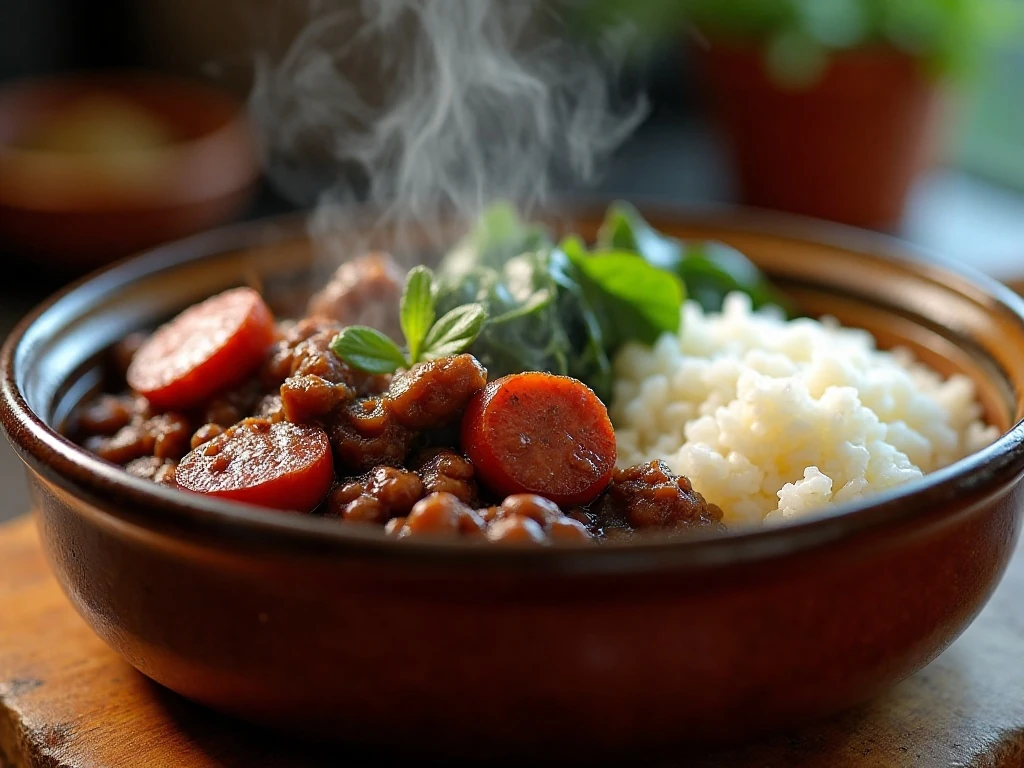
This black bean stew is the kind of meal that makes a kitchen smell inviting for hours. The beans slowly absorb smoky bacon, savory pork, and sausage juices while their starch naturally thickens the broth into a glossy, spoon-coating sauce.
It is also flexible. A simple version with pork shoulder, bacon, and smoked sausage is excellent for a weeknight-style weekend dinner, while cured pork, smoked ribs, ham hock, or carne seca can bring the dish closer to a more traditional feijoada.
The most important technique is patience. Gentle simmering gives the beans time to soften without splitting apart and allows tough cuts of pork to become fork-tender.
If you are planning a full comfort-food menu, a crisp side dish such as this street-style corn recipe can add a bright, sweet contrast to the rich stew.
Ingredients You’ll Need
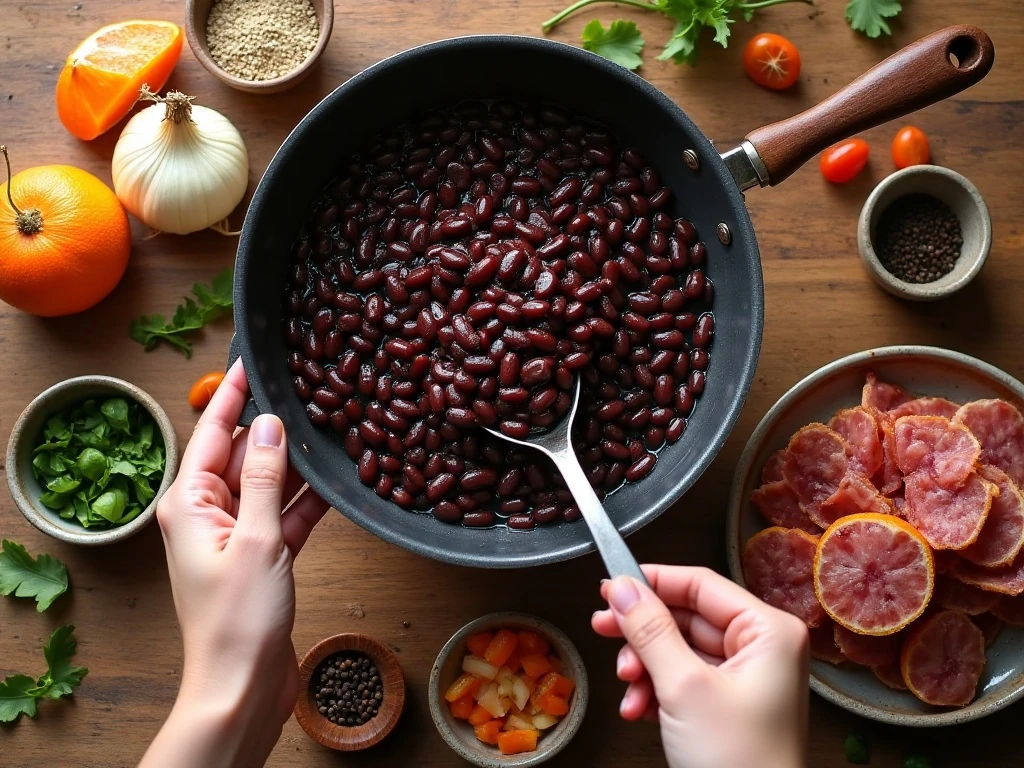
Dried black beans form the foundation of the dish. Sort them carefully, rinse away dust, and soak them in plenty of cold water overnight so they cook more evenly and efficiently.
- Beans: Use 1 pound of dried black beans.
- Pork: Choose 1 pound of pork shoulder or pork butt, cut into large pieces.
- Smoky ingredients: Add 4 to 6 ounces of diced bacon and 8 ounces of sliced smoked sausage, linguiça, or kielbasa.
- Aromatics: A large yellow onion, 4 to 6 garlic cloves, and 2 bay leaves create a savory foundation.
- Finishing flavors: Use a scrubbed orange for a few wide strips of peel, black pepper, and salt added only after cooking.
- Cooking liquid: Keep 8 to 10 cups of water or unsalted stock available, adding enough to cover the beans and meat by about 1 inch.
For a traditional-style pot, include one or more cured or salted pork products. Salted pork and carne seca must be desalted separately in cold water, with several water changes, before they go into the stew.
For a lighter meal before dessert, you might also like these deli-style tuna salad ideas, which are useful for lunch while the beans soak overnight.
How to Make It Step-by-Step
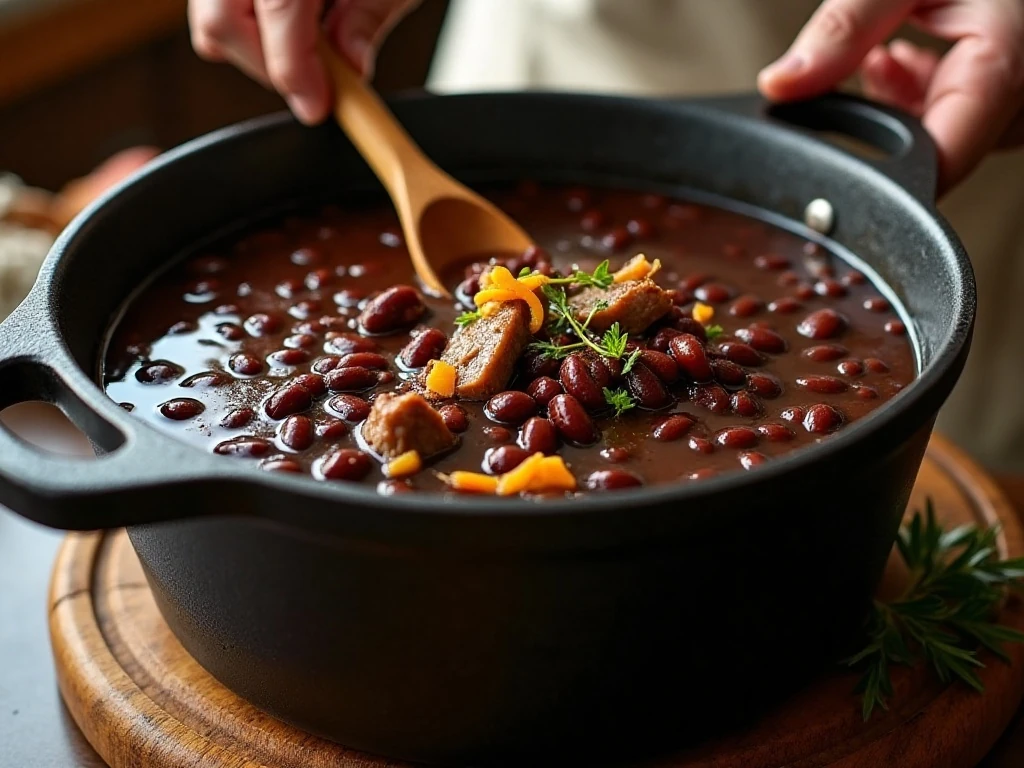
Step 1: Rinse and sort the dried black beans, checking for small stones or damaged beans. Place them in a large bowl, cover with plenty of cold water, and soak for 8 to 12 hours or overnight before draining and rinsing.
Step 2: Prepare any salted pork or carne seca separately. Soak it in cold water for several hours or overnight, changing the water a few times, and blanch it briefly if you want an additional way to reduce excess salt.
Step 3: Set a large heavy pot over medium heat and add the diced bacon. Cook until the fat renders and the bacon is browned, then add the pork shoulder and brown it lightly if desired; browning adds flavor, but it is not essential to feijoada.
Step 4: Add the drained beans, bay leaves, orange peel, and any prepared cured meats. Pour in enough water or unsalted stock to cover the ingredients by about 1 inch, bring the pot to a boil, skim the foam, and immediately reduce the heat.
Step 5: Partially cover the pot and simmer gently for about 1½ to 2 hours. Stir from time to time and add hot water whenever necessary, keeping the beans and meat mostly covered without turning the pot into a hard boil.
Step 6: Add the sliced smoked sausage during the final 30 to 45 minutes. This timing keeps the sausage juicy and plump while allowing its smoky flavor to season the broth without making it excessively salty.
Step 7: Warm the oil or a spoonful of rendered bacon fat in a separate pan. Sauté the chopped onion until soft, add the garlic, cook for about 1 minute, and then stir this mixture into the simmering beans.
Step 8: Continue simmering for another 30 to 60 minutes, checking that the beans are tender and the pork is very soft. If the broth needs more body, mash about 1 cup of beans against the inside of the pot and stir them back through the stew.
Step 9: Add black pepper, then taste before adding salt. Season cautiously because bacon, smoked sausage, ham hocks, ribs, and carne seca may already provide plenty of salt.
Step 10: Remove the orange peel and bay leaves, turn off the heat, and let the stew rest for 15 to 30 minutes. This brief pause allows the broth to settle and makes the serving texture thicker and more cohesive.
Traditional Brazilian Accompaniments
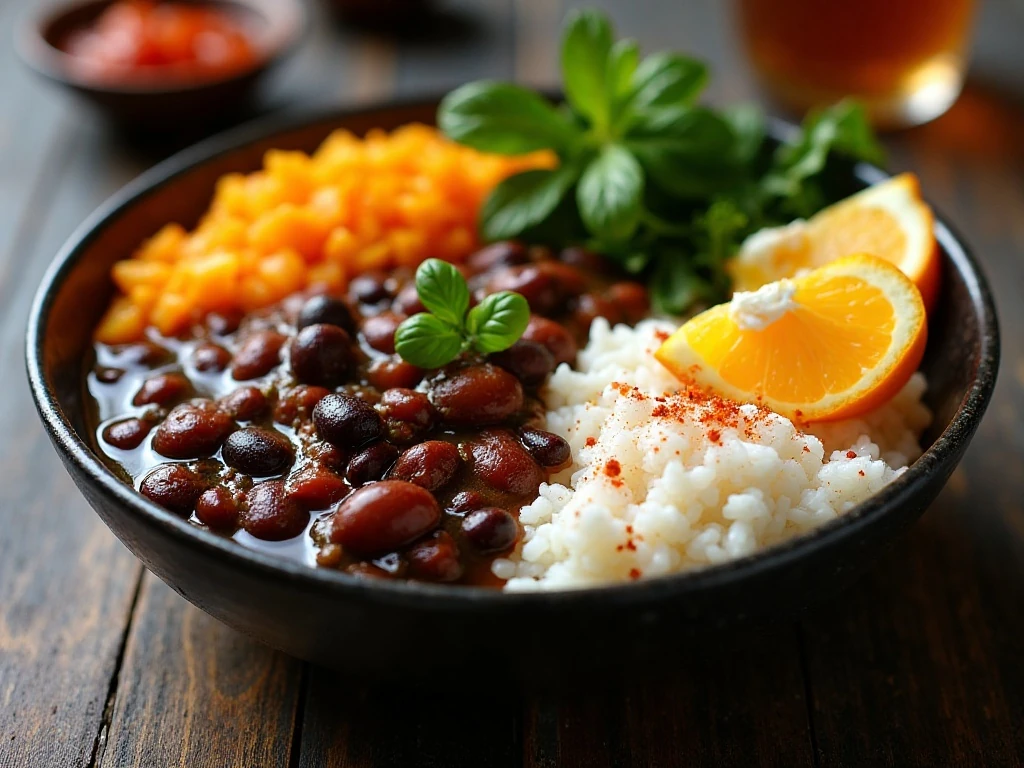
Feijoada is traditionally served as a generous spread rather than a bowl of stew alone. Steamed white rice provides a mild base for the intensely flavored beans and pork, while collard greens add freshness and a pleasant, lightly bitter note.
- Steamed white rice: Spoon the stew over fluffy rice to catch every drop of broth.
- Sautéed collard greens: Slice the greens thinly and cook them quickly with a little oil or bacon fat.
- Farofa: Serve toasted cassava flour for a nutty, crisp texture.
- Orange wedges: The citrus cuts through the richness and refreshes the palate.
- Molho à campanha: Add a simple tomato-onion vinaigrette for acidity and color.
Keep the accompaniments simple because the stew already has considerable depth. A crunchy vegetable side or bright vinaigrette is usually more useful than another rich dish.
For another savory recipe to round out your cooking plans, try this bacon, spinach, and caramelized onion pasta on a separate evening.
Chef’s Tips for the Best Black Bean Stew
Salt late: Wait until the beans, pork, and sausage are fully cooked before making the final seasoning adjustment. This prevents the stew from becoming too salty as cured meats release their flavor.
Use gentle heat: A slow simmer is preferable to aggressive boiling. Hard boiling can split the beans and cause the meat to break apart before the broth has developed its best texture.
Be restrained with orange: Use only the peel or a few wide strips of zest, avoiding much of the white pith. Orange peel brightens the rich broth, while a large quantity of juice can make it sharply acidic.
Choose the right pot: A wide, heavy Dutch oven or stockpot distributes heat steadily and gives the beans room to cook evenly. Keep a kettle of hot water nearby for topping up the liquid.
Make it ahead: Feijoada often tastes even better after resting for several hours or overnight. Cool and refrigerate it promptly, then reheat gently on the stovetop with a splash of water if the broth has thickened too much.
Pressure Cooker Method
A pressure cooker can shorten the active cooking portion considerably. Combine the soaked beans, pork, bacon, bay leaves, orange peel, and water in the cooker, taking care not to fill it beyond the appliance’s recommended limit.
Cook at high pressure for about 30 to 35 minutes, then allow the pressure to release naturally. After opening, add the browned or sliced sausage and the sautéed onion-garlic mixture, then simmer uncovered for 10 to 15 minutes so the flavors come together and the broth thickens.
Because bean age and appliance design affect cooking speed, check the beans before serving. If they are not completely tender, continue simmering until they reach the desired texture.
When you want a lighter seafood option for another meal, these fried shrimp wontons make a crisp contrast to slow-cooked bean dishes.
Serving, Storage, and Reheating
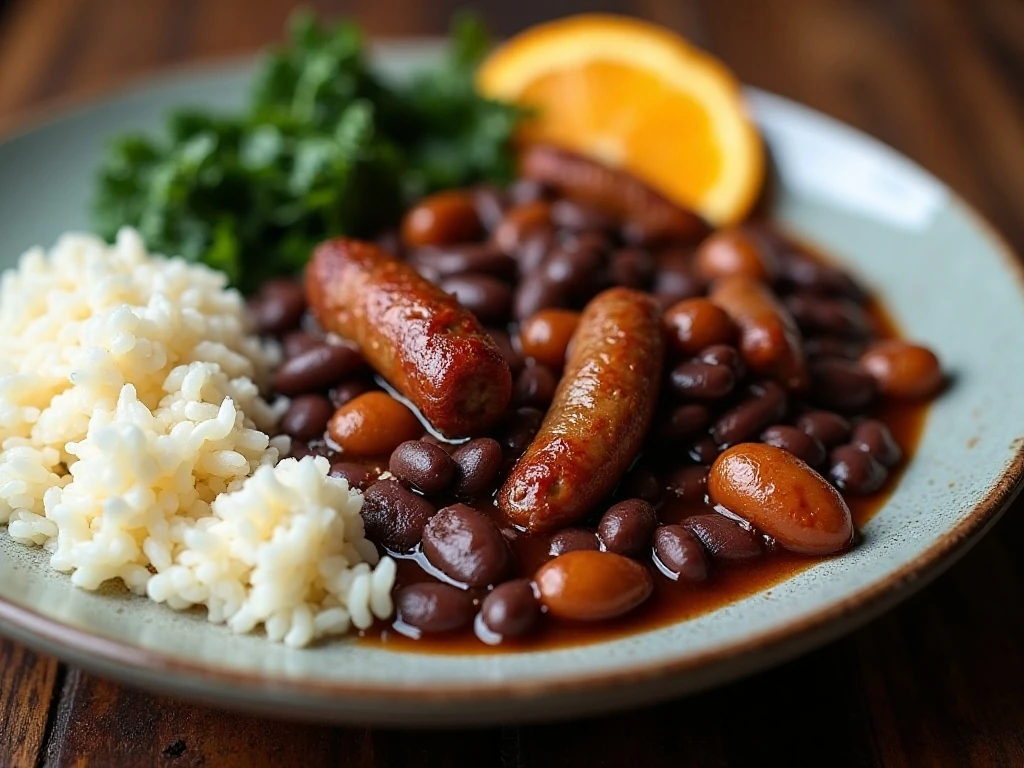
Serve the stew in warm bowls with rice on the side or underneath, then arrange collard greens, farofa, orange wedges, and vinaigrette around the plate. A small spoonful of vinaigrette can brighten each bite without changing the stew’s hearty character.
Store leftovers in a shallow airtight container and refrigerate promptly. Reheat gently on the stovetop, stirring occasionally, and add a little water if the beans have absorbed too much broth during chilling.
For a complete meal plan, make the stew one day ahead and prepare the garnishes shortly before dinner. Finish with fresh orange wedges rather than extra juice so the deep smoky flavor remains balanced.
Frequently Asked Questions
Can I skip soaking the beans? Overnight soaking is the most reliable approach for this recipe because it helps the beans cook evenly during the long simmer. It also makes it easier to coordinate the beans with the pork.
Do I have to brown the pork? No. Many feijoada recipes do not require browning, though lightly browning the pork and bacon can add extra roasted flavor to the finished broth.
Can I use only pork shoulder, bacon, and sausage? Yes. That combination creates a practical home-style version while preserving the essential smoky, savory character of feijoada.
Why is my broth thin? Simmer uncovered for a little longer, or mash a cupful of tender beans against the side of the pot and stir them back in. The bean starch will naturally add body.
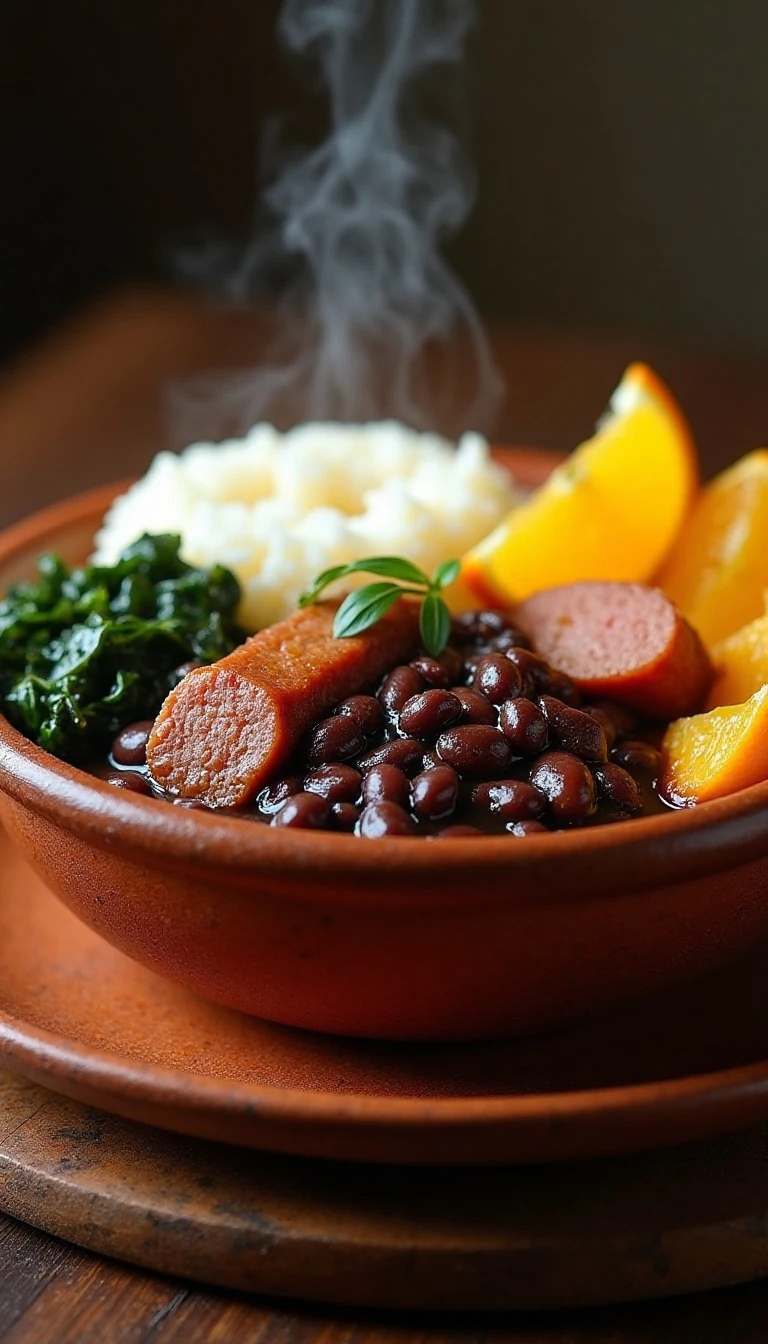
Hearty Brazilian Black Bean Stew (Feijoada Style)
Ingredients
Method
- Rinse and sort the black beans, removing any stones or damaged beans. Cover generously with cold water and soak for 8-12 hours or overnight, then drain and rinse.
- If using salted pork or carne seca, soak it separately in cold water for several hours or overnight, changing the water a few times. Briefly blanching the salted meat is also a useful way to remove excess salt.
- Brown the diced bacon in a large heavy pot until it renders fat and develops color. Add the pork shoulder and brown lightly if desired, although browning is not required for a traditional feijoada-style preparation.
- Add the drained beans, bay leaves, orange peel, optional cured meats, and enough water or unsalted stock to cover everything by about 1 inch (2-3 cm). Bring to a boil, skim away foam, then reduce to a gentle simmer.
- Partially cover and cook for 1½-2 hours, stirring occasionally and adding hot water as needed to keep the ingredients covered. Maintain a gentle simmer rather than a hard boil so the beans remain intact.
- Add the sliced smoked sausage during the final 30-45 minutes of cooking. Adding it later helps keep the sausage plump and prevents the broth from becoming unnecessarily salty.
- In a separate pan, sauté the chopped onion in oil or rendered bacon fat until soft and translucent. Add the minced garlic and cook for about 1 minute, then stir the aromatic mixture into the stew.
- Continue simmering for another 30-60 minutes, or until the beans are tender and the pork is very soft. For a thicker broth, mash about 1 cup of beans against the side of the pot and stir them back into the stew.
- Season with black pepper and taste carefully before adding salt, since bacon, sausage, ham hocks, ribs, and carne seca can contribute substantial seasoning. Remove the orange peel and bay leaves, then rest the stew for 15-30 minutes before serving.
Notes
Final Thoughts
This hearty Brazilian black bean stew is a rewarding recipe built on simple ingredients, patient cooking, and careful seasoning. Tender pork, smoky sausage, creamy beans, and fragrant orange peel create a bowl that is deeply comforting yet balanced by fresh, colorful accompaniments.
Start the beans the night before, keep the simmer gentle, and delay the salt until the end. Whether you prepare the stovetop version or use a pressure cooker, let the finished feijoada rest before serving so every flavor has time to settle.
For a sweet finish after dinner, keep these bakery-style blueberry muffins in mind for breakfast or a relaxed next-day treat.