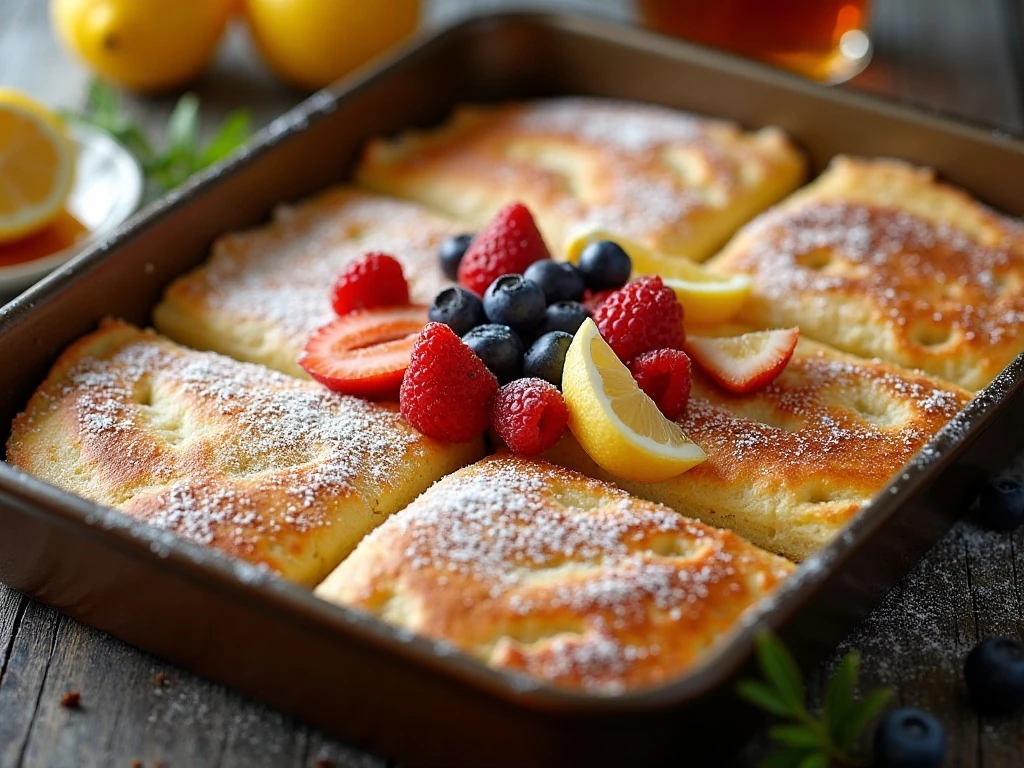
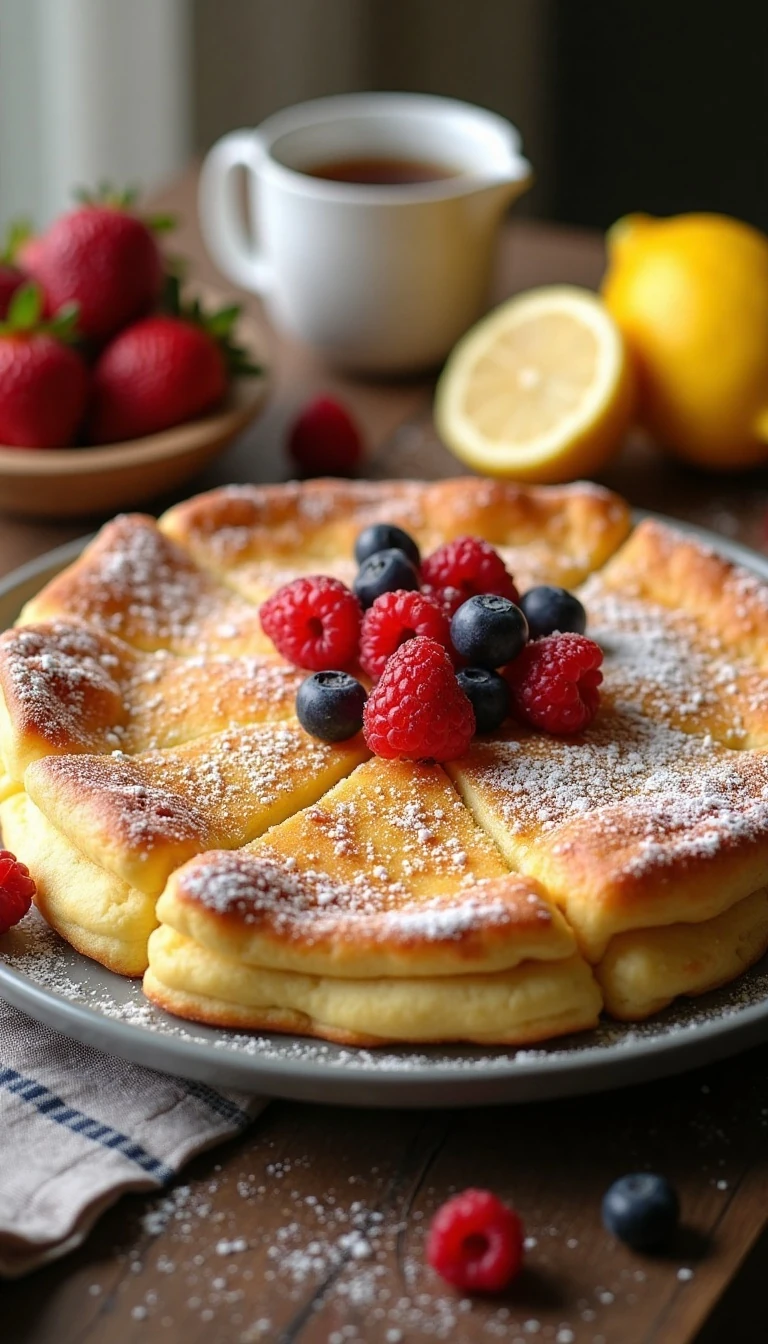
This easy German pancake recipe makes one large, puffy oven-baked pancake in a 9 x 13-inch dish with only 6 eggs, whole milk, all-purpose flour, butter, vanilla, and salt. Prep takes 5–10 minutes, baking takes about 20–25 minutes at 425°F (220°C), and the finished pancake serves 4–6 people.
Expect deeply golden, ruffled edges and a tender, custardy center with a lightly buttery vanilla flavor. Serve this family-style breakfast immediately with powdered sugar, fresh fruit, lemon juice, or maple syrup for a simple dish that looks special without requiring any stovetop flipping.
Jump to RecipeWhy You’ll Love This Recipe
This German pancake is the perfect answer when you want a memorable breakfast without standing over a griddle. Instead of cooking individual pancakes one at a time, you pour one thin batter into a hot dish and let the oven do the work.
The dramatic rise comes from the eggs, hot pan, and high oven temperature rather than baking powder. The edges become crisp and ruffled, while the middle stays tender, soft, and lightly custardy.
It is also wonderfully adaptable at the table. One family member can choose powdered sugar and berries, another can add lemon juice, and someone else can reach for maple syrup, all from the same pan.
For another bright, citrusy treat to serve later in the day, keep our easy lime dessert in mind as a refreshing follow-up.
Ingredients You’ll Need
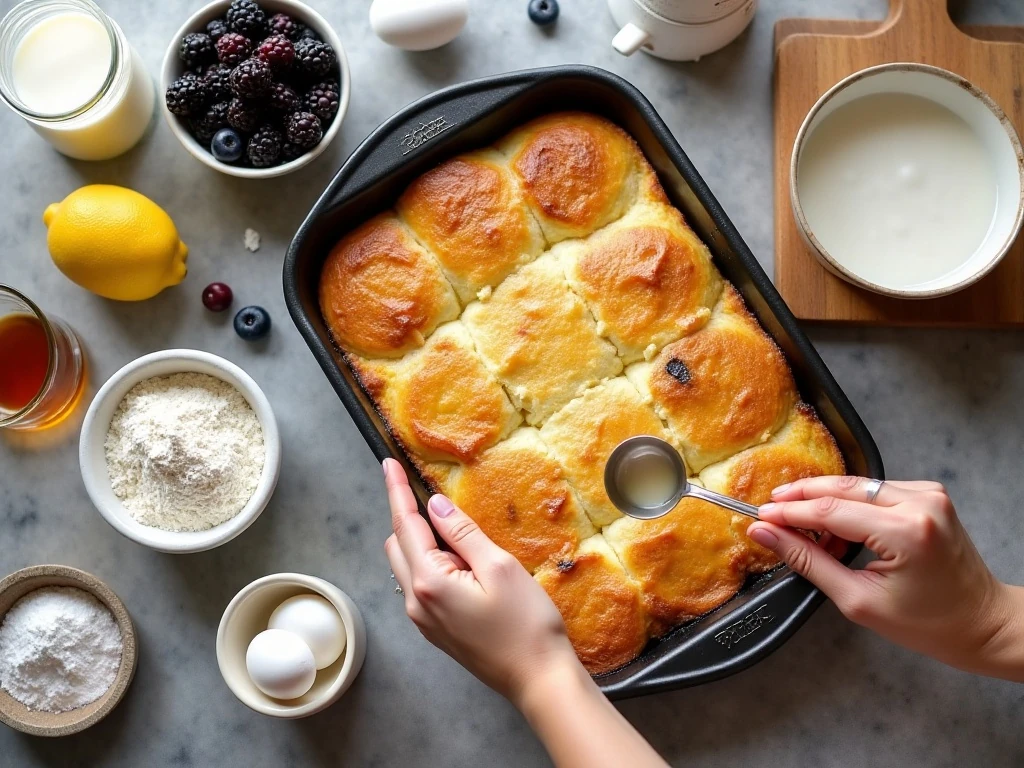
The ingredient list is short, but each item has a role in the final pancake. Eggs provide structure and the airy lift, while whole milk gives the center a soft, rich texture.
- 6 large eggs: Use room-temperature eggs when possible so they combine easily with the milk and flour.
- 1 cup whole milk: Whole milk adds tenderness and a pleasant dairy flavor.
- 1 cup all-purpose flour: This creates enough structure for the pancake to rise while keeping the center delicate.
- 1/4 cup unsalted butter: The butter coats the dish, flavors the pancake, and helps brown the edges.
- 1 teaspoon vanilla extract: Vanilla gives the pancake a gentle sweetness and warm aroma.
- 1/4 teaspoon salt: Salt balances the mild sweetness and brings out the buttery flavor.
- Optional toppings: Powdered sugar, fresh fruit, lemon juice, or maple syrup.
A 9 x 13-inch baking dish is the right size for this quantity. Glass, ceramic, or metal can work, but always handle the heated dish carefully and use a sturdy oven mitt.
If you enjoy fruit with warm, buttery breakfasts, our stovetop caramel apples make a lovely seasonal topping idea for another morning treat.
How to Make It Step-by-Step
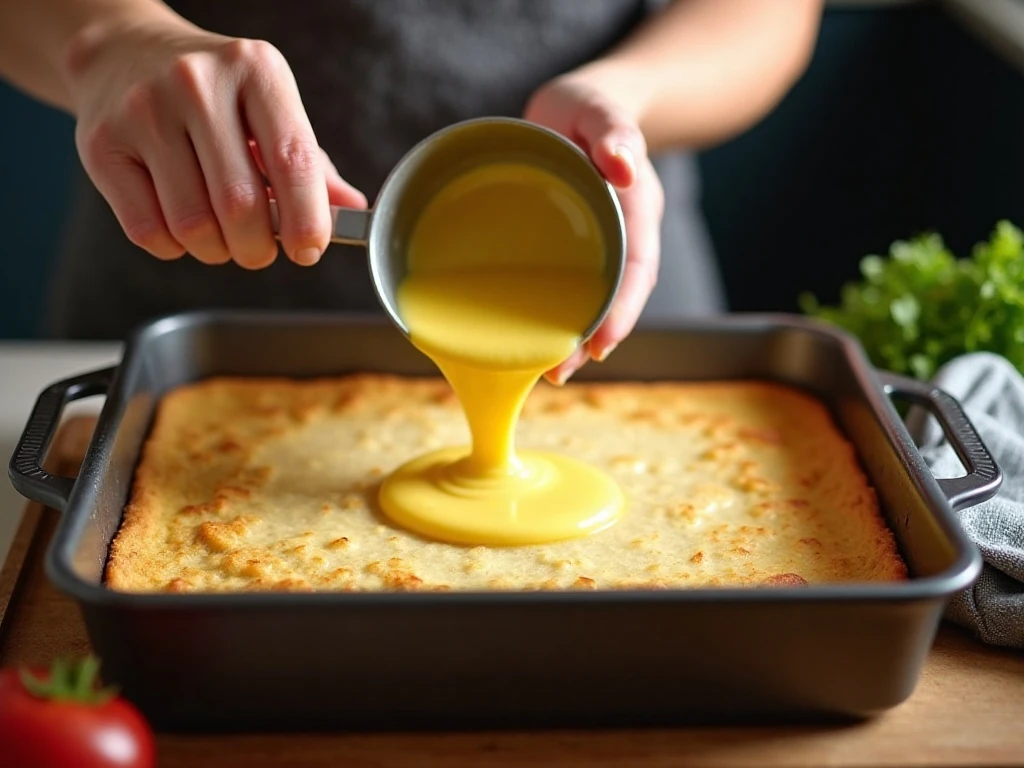
Step 1: Heat the oven to 425°F (220°C). Put the butter in a 9 x 13-inch baking dish and place the dish in the oven while it preheats. Watch the butter as it melts so it does not brown excessively.
Step 2: While the oven heats, prepare the batter. Blend or whisk the eggs, milk, flour, vanilla, and salt until smooth and lump-free, then stop mixing; overmixing after the batter is smooth is unnecessary.
Step 3: Carefully remove the hot dish from the oven. Swirl the melted butter over the entire bottom, working quickly but cautiously so the butter remains evenly distributed.
Step 4: Pour the batter into the hot, buttered baking dish. You should hear or see the batter begin to react around the edges, an encouraging sign that the dish is ready.
Step 5: Bake for approximately 20–25 minutes. Keep the oven door closed during baking because a sudden temperature drop can reduce the pancake’s rise.
Step 6: When the edges are deeply golden, the pancake is impressively puffed, and the center is set, remove it from the oven. Add your toppings and bring the dish to the table right away.
Pro Tips for a Taller, Golden Pancake
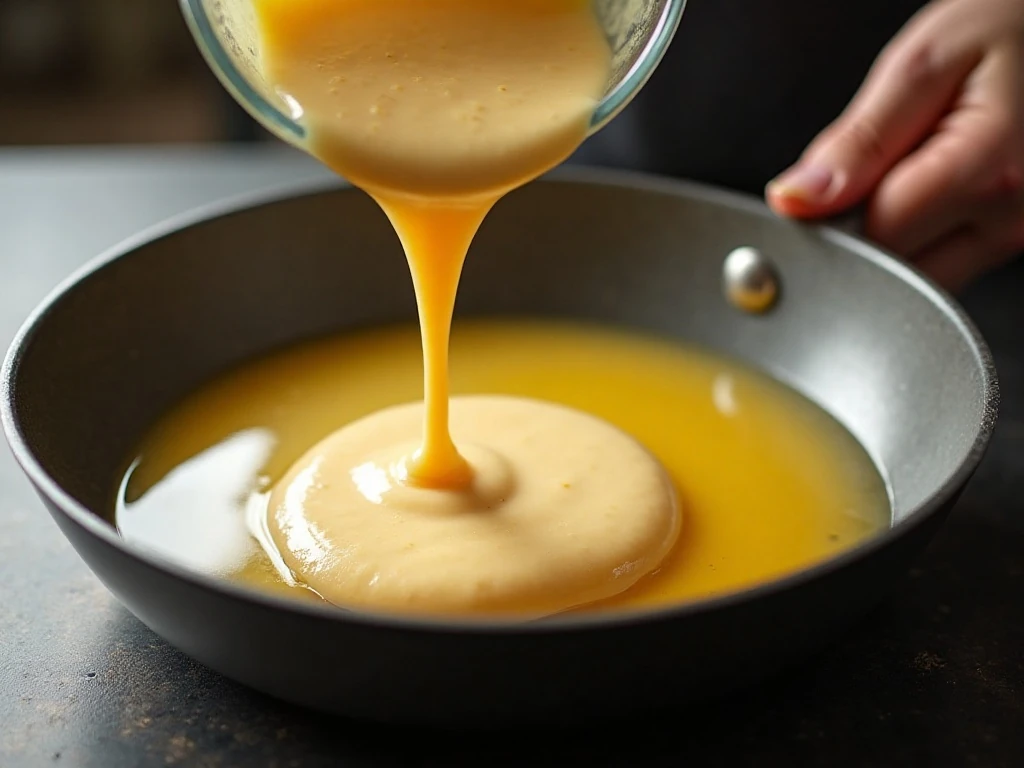
The most important detail is temperature. A thoroughly preheated oven and hot melted butter help the batter start puffing immediately, producing the raised, ruffled edges that make German pancakes so appealing.
Room-temperature eggs and milk are helpful when you have time to set them out before cooking. They blend into a smoother batter than very cold ingredients, though the recipe still works when you are preparing breakfast in a hurry.
Do not open the oven during the first 20 minutes. The pancake depends on steady heat to rise, and even a brief rush of cool air may cause it to fall before the center has finished setting.
A blender is convenient for making a smooth batter, but use it only until the ingredients are combined. Once the flour disappears, stop blending to avoid adding more air than necessary or making the batter tougher.
Pour the batter into the dish as soon as the butter is melted and the pan is hot. If the dish sits on the counter for too long, it may lose some of the heat that helps the edges puff.
For a savory breakfast variation, you would need a separate recipe because this formula is designed as a lightly sweet base. For a hearty holiday side dish instead, see our easy bread stuffing when planning a larger meal.
Serving Ideas and Topping Combinations
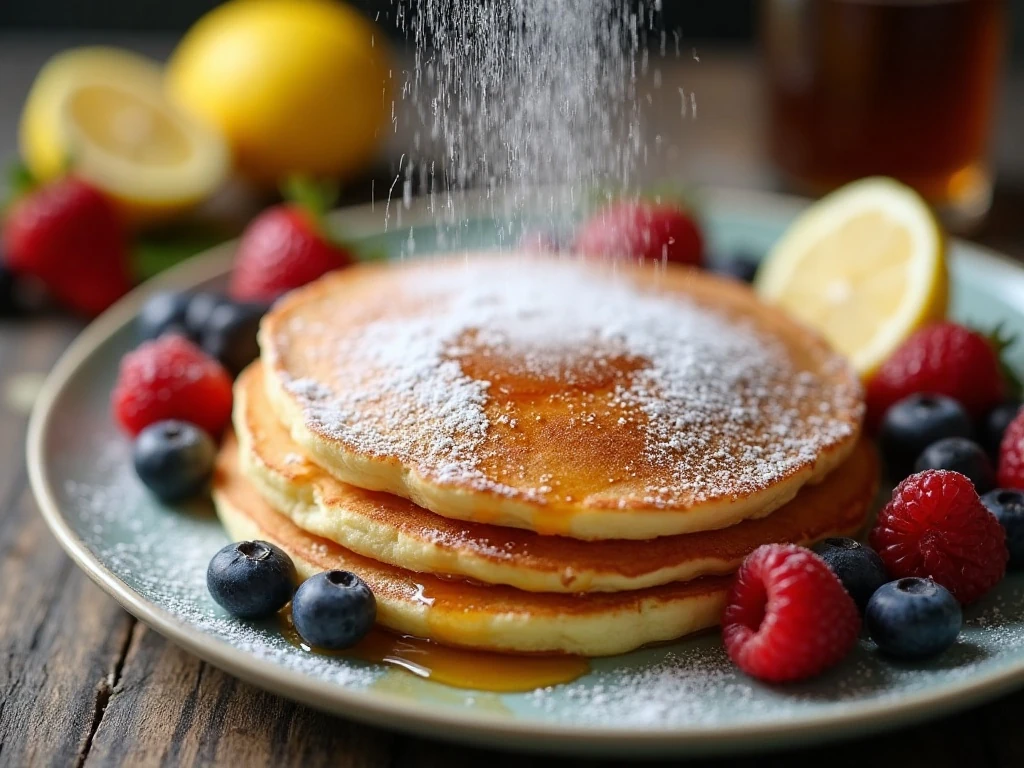
Powdered sugar is the simplest finish and makes the golden edges stand out beautifully. Dust it over the pancake just before serving so it remains bright and snowy.
Fresh berries add color and a pleasant juicy contrast to the crisp edges. Strawberries, blueberries, raspberries, or sliced bananas all work well, and a small squeeze of lemon juice keeps the topping fresh and lively.
Maple syrup is ideal when you want a classic pancake experience. Pour it over individual portions rather than the entire dish so leftovers do not become soggy.
For a brunch spread, cut the pancake into squares and offer toppings in small bowls. Powdered sugar, fruit, lemon wedges, and warm maple syrup let guests customize each serving.
Because the pancake naturally deflates somewhat after it comes out of the oven, do not wait for it to remain fully puffed. The best moment to serve it is while the edges are still crisp and the center is warm.
If you are assembling a dessert-inspired breakfast table, our Twix-style cookies can provide a fun sweet bite for guests after brunch.
Storage and Reheating
German pancakes are at their best immediately after baking, when the edges are crisp and the center is tender. If you have leftovers, let them cool, cover them, and refrigerate them promptly.
Reheat portions gently until warmed through. The edges may not regain their original crispness, but the pancake will still make a pleasant next-day breakfast with fresh fruit or a little maple syrup.
For the best leftover texture, avoid pouring syrup over the whole pancake before storing it. Keep toppings separate and add them after reheating.
This recipe is designed as one 9 x 13-inch pancake and makes about 4–6 servings. It is not the same as a small skillet Dutch baby, so use the stated pan size and ingredient quantities for the intended rise and thickness.
When planning a casual brunch with hearty appetizers later in the day, our cheeseburger dip is another crowd-friendly recipe worth saving.
Easy German Pancake Recipe
Ingredients
Method
- Heat the oven to 425°F (220°C). Place the unsalted butter in a 9 x 13-inch baking dish and set the dish in the oven as it preheats, allowing the butter to melt without letting it brown excessively.
- Blend or whisk the eggs, whole milk, flour, vanilla extract, and salt until the batter is smooth and lump-free. If using a blender, mix only until combined so the pancake stays tender.
- Carefully remove the hot baking dish from the oven. Swirl the melted butter across the bottom, taking care because both the dish and butter will be very hot.
- Pour the batter into the hot, buttered dish. The batter should begin cooking at the edges right away, which helps create the signature puffed border.
- Bake for approximately 20–25 minutes, without opening the oven door, until the pancake is puffed, deeply golden at the edges, and set in the center.
- Remove the pancake from the oven and serve immediately with powdered sugar, fresh fruit, lemon juice, or maple syrup. Expect it to deflate somewhat as it cools; this natural settling is part of its texture.
Notes
Final Thoughts
This easy German pancake recipe brings together a handful of everyday ingredients for a breakfast centerpiece with crisp golden edges and a soft, tender middle. The hot dish and melted butter do much of the cooking magic, while the oven frees you from flipping pancakes at the stove.
Remember the essentials: preheat the oven to 425°F, melt the butter in the 9 x 13-inch dish, blend the batter only until smooth, and keep the oven door closed while it bakes. Serve the pancake immediately with powdered sugar, fruit, lemon juice, or maple syrup for a warm, welcoming breakfast everyone can share.
2 thoughts on “Easy German Pancake Recipe: A Puffy Oven-Baked Breakfast Favorite”