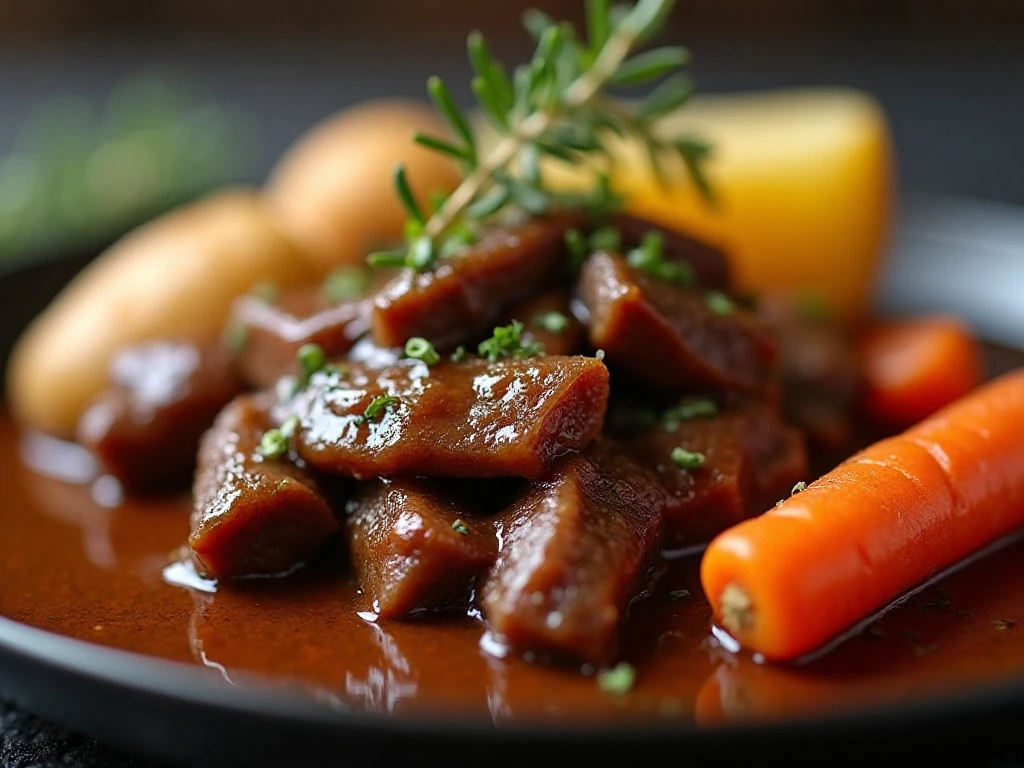
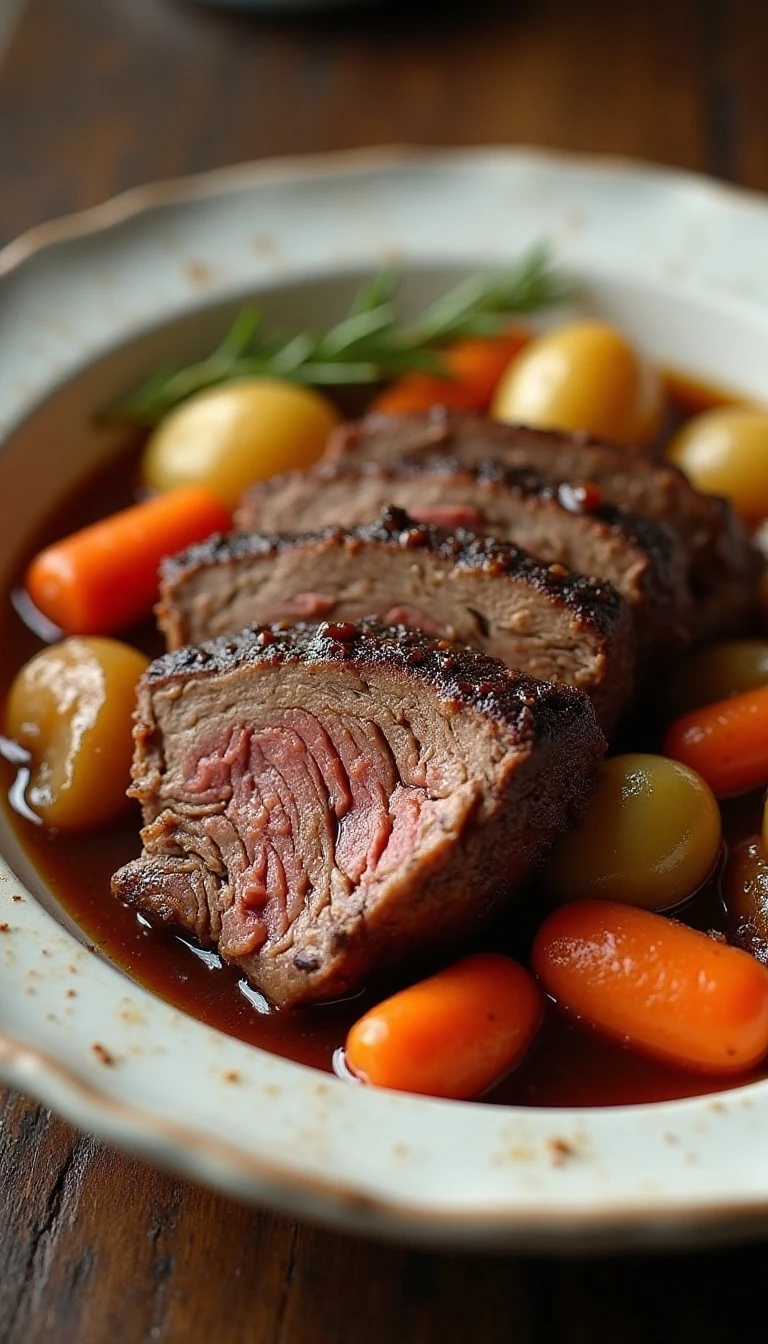
The absolute best favorite pot roast is made with a well-marbled 3- to 4-pound boneless chuck roast, deeply browned and slowly braised at 300°F with onions, garlic, red wine, beef broth, carrots, and potatoes. After 3 to 4 hours in a tightly covered Dutch oven, the meat becomes fork-tender, juicy, and nearly ready to fall apart.
This classic dinner recipe delivers rich beef flavor, silky gravy, and vegetables that soak up every savory drop. Serve it sliced or shredded with the gravy spooned over the top, and finish the meal with a comforting peach crisp for dessert.
Jump to RecipeWhy You’ll Love This Recipe
There is a reason pot roast remains one of the most satisfying family dinners. A modest chuck roast transforms into tender, juicy beef when it is browned first and then cooked slowly in a flavorful liquid. The finished meat is rich without being fussy, and the vegetables become infused with the savory broth.
This recipe is especially dependable because it uses a covered, low-temperature oven braise. Rather than relying on a precise clock alone, you check the roast for fork tenderness. That small change in thinking helps prevent a roast that is technically cooked but still chewy.
The gravy begins in the same Dutch oven as the roast, so every browned bit, onion, and spoonful of tomato paste contributes flavor. Red wine adds depth, while Worcestershire sauce brings a savory note that rounds out the beef broth.
For a cozy appetizer before dinner, serve a simple bruschetta starter with crisp bread and fresh toppings. It gives guests something to enjoy while the pot roast rests.
Ingredients You’ll Need
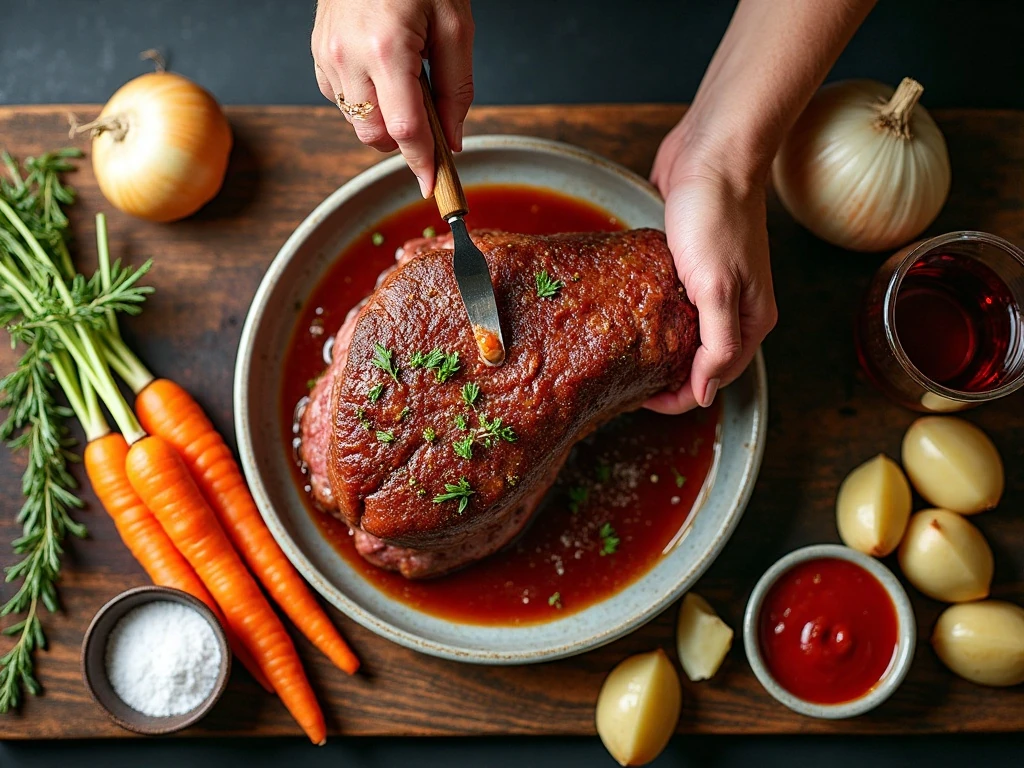
Choose a boneless chuck roast with visible marbling and some connective tissue. Those qualities may look less polished than a lean roast, but they are exactly what break down during the long braise and create juicy, spoon-tender meat.
- Beef: Use 3-4 pounds of boneless beef chuck roast.
- Seasoning: Kosher salt, freshly ground black pepper, and dried thyme provide a simple savory foundation.
- Aromatics: One large yellow onion and three minced garlic cloves build the base of the braising liquid.
- Flavor builders: Tomato paste, dry red wine, low-sodium beef broth, and Worcestershire sauce make a full-bodied gravy.
- Vegetables: One pound of carrots and one pound of baby potatoes make the dish a complete dinner.
- Optional thickener: A slurry made from 2 tablespoons cornstarch and 2 tablespoons cold water gives the gravy a thicker texture.
If you prefer not to cook with wine, substitute additional beef broth for the 1 cup of dry red wine. The result will still be comforting and deeply savory.
How to Make It Step-by-Step
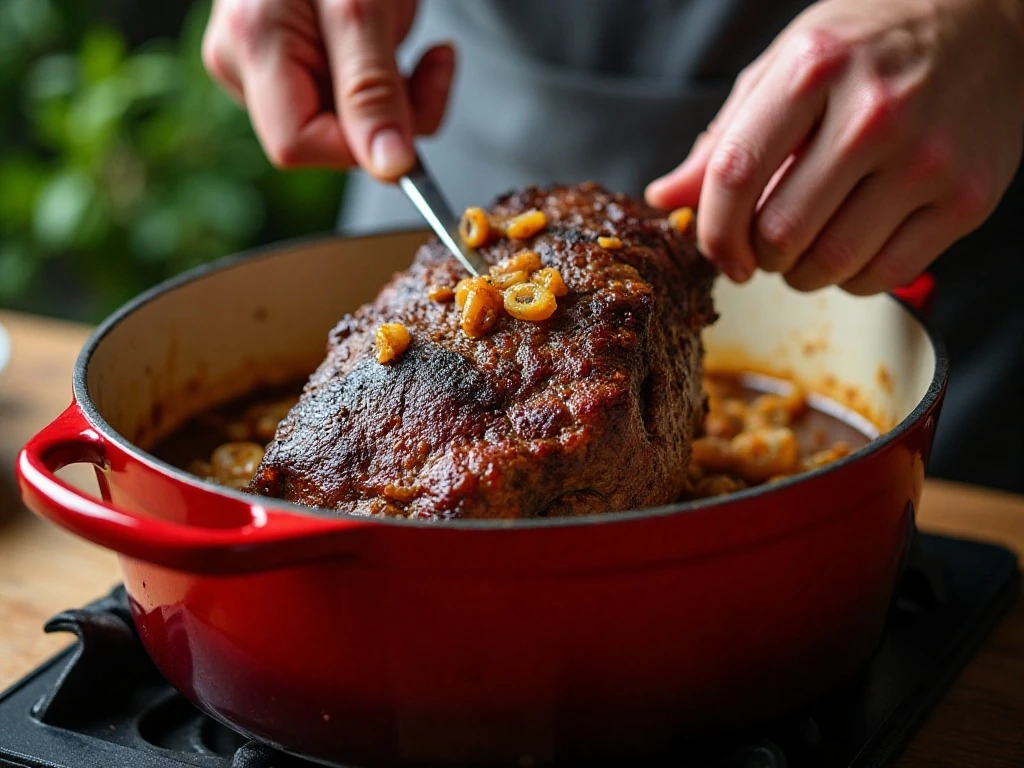
Step 1: Heat the oven to 300°F so it is ready when the roast has been browned and the braising liquid is assembled. Pat the roast very dry with paper towels, since surface moisture can prevent the deep sear that gives the gravy its best flavor.
Step 2: Season the roast all over with 1 teaspoon kosher salt, 1/2 teaspoon freshly ground black pepper, and 1 teaspoon dried thyme. Make sure the seasoning reaches the sides and edges, not just the broad top and bottom surfaces.
Step 3: Heat 2 tablespoons canola or another neutral oil in a large Dutch oven over medium-high heat. Sear the roast for 2-4 minutes per side, including the edges, until it develops a deep brown crust, then move it to a plate.
Step 4: Add the chopped or sliced yellow onion to the same pot. Cook it for about 3-5 minutes, stirring occasionally, until softened and lightly browned, then add the minced garlic and tomato paste and cook for about 1 minute.
Step 5: Pour in 1 cup dry red wine and immediately scrape the bottom of the pot with a sturdy spoon. Let the wine simmer for 2-3 minutes so it can loosen the browned bits and become part of the braising base.
Step 6: Add 2 cups low-sodium beef broth and 1 tablespoon Worcestershire sauce. Return the browned roast to the Dutch oven, positioning it among the onions and liquid.
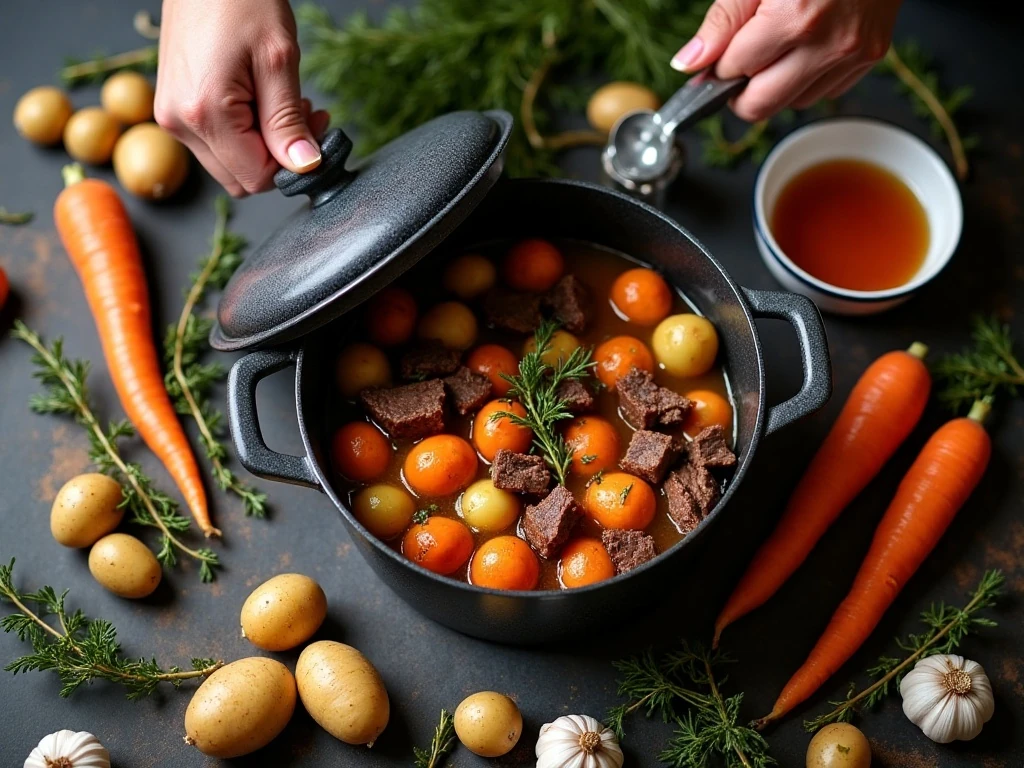
Step 7: Arrange the peeled, large-cut carrots and baby potatoes around the roast. The liquid should come partway up the meat, rather than completely cover it; this balance allows the roast to braise while its top remains surrounded by moist oven heat.
Step 8: Cover the Dutch oven tightly and bake for 3-4 hours. Turn the roast once if convenient, but avoid opening the lid repeatedly because each peek releases heat and moisture.
Step 9: Test the roast with a fork toward the end of the cooking time. It is ready when the fork slides into the meat easily and the roast is nearly falling apart; if it still feels firm, continue cooking and check again rather than judging by time alone.
Step 10: Transfer the meat and vegetables to a serving platter. If you want a thicker gravy, bring the cooking liquid to a simmer and whisk in a slurry made with 2 tablespoons cornstarch and 2 tablespoons cold water, cooking for 1-2 minutes until thickened.
Step 11: Rest the roast for 10-15 minutes before slicing or shredding. This pause gives the juices time to settle and makes the meat easier to portion, while the vegetables can remain warm in the platter or Dutch oven.
Chef’s Tips for Tender, Juicy Pot Roast
The first essential tip is to buy chuck roast rather than a lean cut. Chuck contains enough fat and connective tissue to withstand a long braise, and that connective tissue gradually softens into a luscious texture.
Brown the roast thoroughly on every side. A pale roast will still cook, but the dark browned bits left on the bottom of the pot provide much of the finished gravy’s depth. Give the meat room in the Dutch oven, working in batches if necessary rather than crowding it.
Keep the lid tightly closed while the pot is in the oven. The covered environment holds in moisture, and the low 300°F temperature allows the connective tissue to break down without aggressively boiling the meat.
The vegetables can be added at the beginning for very soft, stew-like carrots and potatoes. If you prefer them firmer, add them during the last 1 1/2-2 hours of cooking, as recommended for this style of braise.
When serving, slice the roast against the grain if it is firm enough to slice, or shred it with two forks when it is nearly falling apart. Taste the gravy before serving and add more salt only if needed, especially when using regular-sodium broth.
Serving Ideas and Dinner Pairings
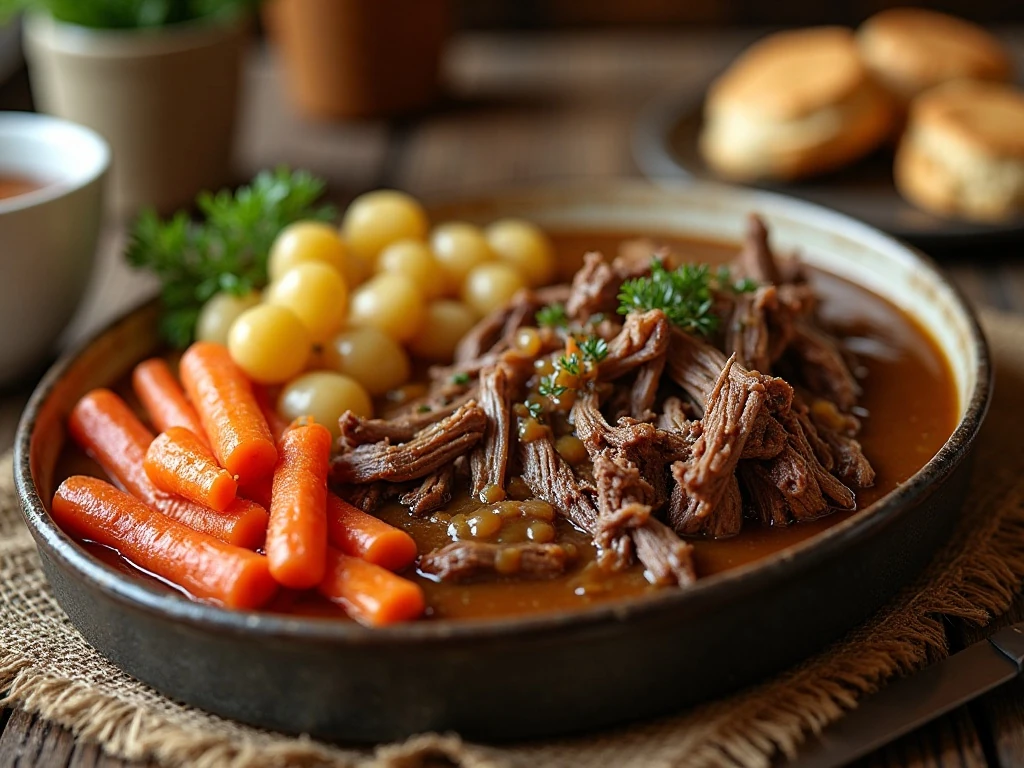
This pot roast already includes potatoes and carrots, so it can stand alone as a complete dinner. Spoon the gravy over every portion, making sure each plate receives both tender vegetables and a generous piece of beef.
If you want an additional side, warm bread is perfect for catching the gravy. These basic biscuits make a wonderful accompaniment, especially when served warm alongside the Dutch oven.
A crisp green salad can add freshness to the table without competing with the roast. Keep the rest of the meal simple, because the braising liquid and tender vegetables are meant to be the main attraction.
For an easy seasonal finish, cinnamon roll apple pie cups offer warm apple flavor in a small dessert portion. They are a particularly nice choice after a rich, slow-cooked dinner.
Storage, Reheating, and Make-Ahead Notes
Cool leftover roast, vegetables, and gravy promptly, then store them in airtight containers in the refrigerator. Keeping the meat with some gravy helps protect its moisture and makes reheating more successful.
Reheat gently on the stovetop over low to medium-low heat or in a covered oven-safe dish until warmed through. Add a little beef broth if the gravy has thickened too much, and avoid high heat, which can make the meat seem dry.
Pot roast is also an excellent make-ahead dinner because the flavors become even more cohesive after resting overnight. Reheat the roast in its gravy, then taste and adjust the seasoning just before serving.
For a seasonal drink or baking project on another day, keep homemade pumpkin spice syrup in mind for coffee, warm milk, or autumn desserts. It is a pleasant way to continue the cozy comfort-food theme.
The Absolute Best Favorite Pot Roast Recipe (Tender & Juicy)
Ingredients
Method
- Heat the oven to 300°F. Pat the chuck roast dry, then season all over with kosher salt, freshly ground black pepper, and dried thyme.
- Heat the oil in a large Dutch oven over medium-high heat. Sear the roast for 2-4 minutes per side, including the edges, until deeply browned, then transfer it to a plate.
- Add the onion to the pot and cook for 3-5 minutes, until softened and lightly browned. Stir in the garlic and tomato paste and cook for about 1 minute.
- Pour in the dry red wine and scrape the browned bits from the bottom of the pot. Simmer for 2-3 minutes.
- Add the beef broth and Worcestershire sauce, then return the roast to the pot. Arrange the carrots and potatoes around it; the liquid should come partway up the meat without completely covering it.
- Cover the Dutch oven tightly and bake for 3-4 hours, turning the roast once if convenient. Check for doneness by inserting a fork; the roast is ready when it slides in easily and the meat is nearly falling apart.
- Transfer the roast and vegetables to a serving platter. For thicker gravy, bring the cooking liquid to a simmer, whisk in the cornstarch slurry, and cook for 1-2 minutes.
- Rest the roast for 10-15 minutes before slicing or shredding. Serve with the carrots, potatoes, and plenty of gravy.
Notes
Final Thoughts
The absolute best favorite pot roast comes down to a few careful choices: use a marbled chuck roast, brown it deeply, braise it covered at 300°F, and wait for true fork tenderness. The 3-4 hour cooking window is a guide, but the texture of the meat is the final test.
Once the roast is resting, finish the gravy if desired, arrange the carrots and potatoes around the beef, and bring the platter straight to the table. With its juicy meat, rich sauce, and tender vegetables, this is the kind of dinner that feels generous, comforting, and worth gathering around.
2 thoughts on “The Absolute Best Favorite Pot Roast Recipe (Tender & Juicy)”