Dandelion jelly is a simple spring preserve made by turning yellow dandelion petals into a fragrant floral tea, then cooking that tea with bottled lemon juice, powdered pectin, and sugar. This recipe yields about 4 half-pint jars of clear, honey-colored jelly and takes approximately 45 to 60 minutes of active time, not counting an optional overnight steep.
The finished jelly tastes lightly floral, mildly honey-like, and pleasantly bright from the lemon juice. Spread it on warm toast, biscuits, pancakes, or a slice of pound cake for a beautiful taste of spring, and be sure to pick flowers from a clean area free of chemicals, roads, and pet waste.
Jump to RecipeWhy You’ll Love This Recipe
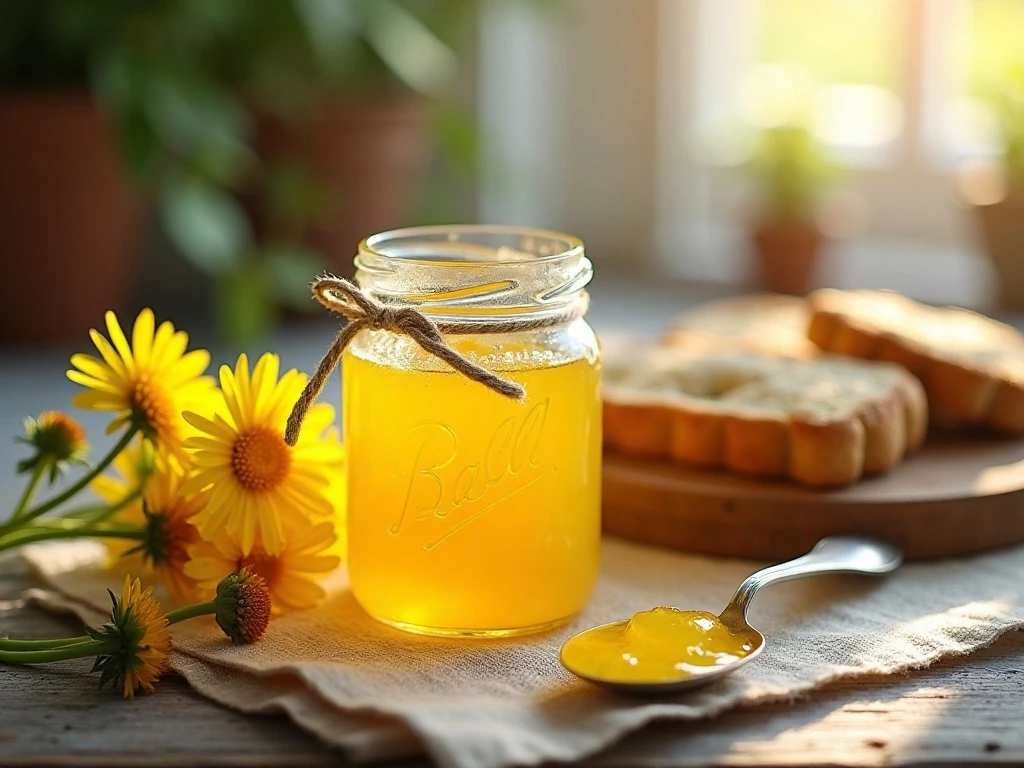
This dandelion jelly is one of those old-fashioned recipes that turns an everyday spring flower into something special. Its clear golden color looks like sunshine in a jar, while the delicate floral aroma makes each spoonful feel fresh and seasonal.
The flavor is gentle rather than intensely herbal. Dandelion-petal tea contributes a soft flower note, sugar brings sweetness, and bottled lemon juice keeps the jelly from tasting flat while providing consistent acidity for a water-bath-canned batch.
It is also a wonderful small-batch project. You do not need unusual equipment beyond a saucepan, a fine-mesh strainer or jelly bag, a large pot, and clean half-pint canning jars.
- Makes about 4 half-pint jars.
- Uses the common formula of 4 cups petals, 4 cups water, pectin, lemon juice, and sugar.
- Requires only about 45 to 60 minutes of active work.
- Pairs beautifully with toast, biscuits, scones, pancakes, and mild cheese.
If you enjoy bright, seasonal fruit desserts, keep a few jars nearby for serving alongside these pear pie bars. The floral jelly adds a lovely contrast to buttery pastry and ripe fruit.
Ingredients You’ll Need
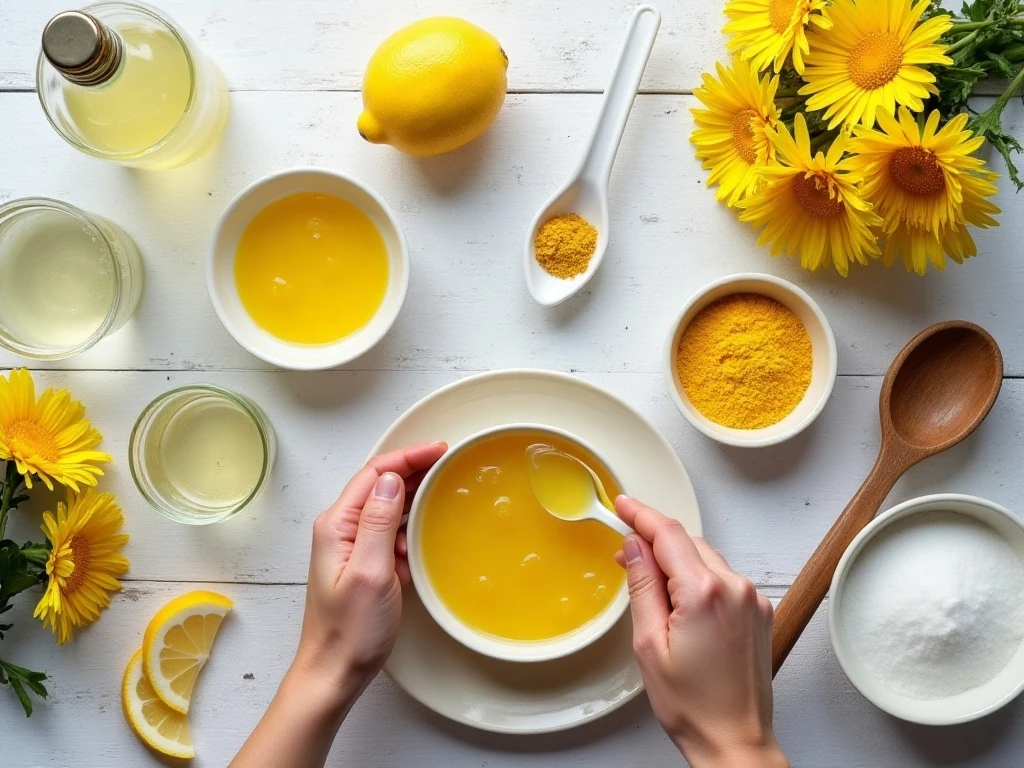
The most important ingredient is the dandelion itself. Gather 4 cups of loosely packed fresh yellow petals, choosing flowers that are fully open and free from pesticides, herbicides, roadside residue, and pet waste.
Remove the stems and green bases carefully. The green calyx and other green portions are the most common reason dandelion jelly tastes bitter or grassy, so spend time separating them from the soft yellow petals.
- 4 cups yellow dandelion petals: Loosely pack the petals rather than compressing them firmly.
- 4 cups water: This extracts the floral tea before the jelly is cooked.
- 1/4 cup bottled lemon juice: Bottled juice gives consistent acidity, especially when canning.
- 1 box powdered fruit pectin: Use the usual 1.75-ounce box.
- 4 to 4 1/2 cups granulated sugar: Add the full amount required by this standard pectin formula.
Do not reduce the sugar or lemon juice in a standard pectin recipe. If you want a lower-sugar preserve, use a pectin specifically formulated for low-sugar recipes and follow that product’s instructions rather than changing this formula.
For another spring-inspired way to enjoy tart and sweet flavors, you may also like this green apple pie. Its bright fruit flavor makes a delicious companion to a spoonful of floral jelly.
How to Make It Step-by-Step
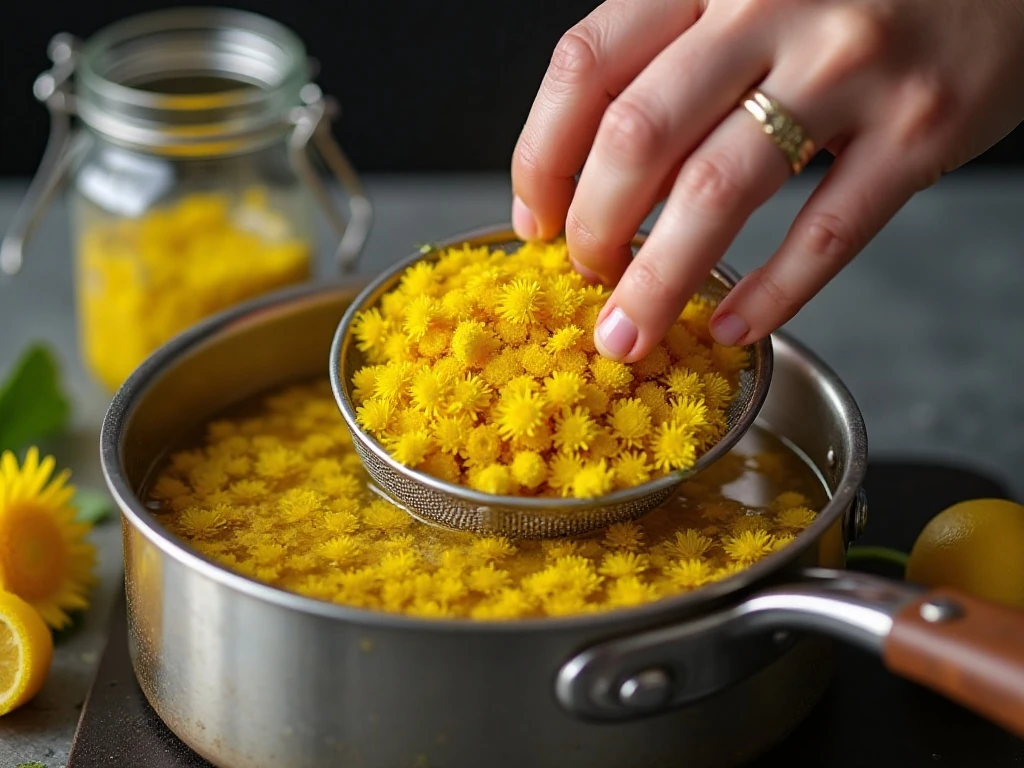
Step 1: Pick and sort the flowers.
Choose fully open dandelion flowers from a clean location, then rinse them briefly under cool water. Pull away the stems and separate the green calyx from the yellow petals, keeping as much of the yellow portion as possible.
Step 2: Make the dandelion tea.
Put the 4 cups of petals and 4 cups of water into a saucepan. Bring the mixture to a boil, reduce the heat, and simmer for about 10 minutes so the water takes on the flowers’ color and gentle flavor.
Step 3: Consider an optional steep.
For a deeper floral color and taste, some cooks let the petals steep in the hot water for several hours or overnight before straining. The petals are still commonly simmered briefly first, and the overnight method is optional rather than required.
Step 4: Strain and measure the tea.
Pour the cooked mixture through a fine-mesh sieve or jelly bag into a heatproof bowl or measuring container. Press gently to extract the tea, then measure exactly 4 cups; add a small amount of water if the strained liquid comes up short.
Step 5: Combine the tea, lemon juice, and pectin.
Transfer the measured dandelion tea to a large pot and stir in 1/4 cup bottled lemon juice and one 1.75-ounce box of powdered fruit pectin. A large pot is important because the mixture foams and rises quickly during boiling.
Step 6: Bring the mixture to a rolling boil.
Set the pot over high heat and stir frequently as the tea heats. Wait for a full rolling boil, meaning the bubbles continue even while you stir.
Step 7: Add the sugar.
Add all 4 to 4 1/2 cups of sugar at once and stir constantly until it dissolves. Continue heating until the mixture returns to a full rolling boil, watching closely to prevent boil-over.
Step 8: Boil the jelly for 1 minute.
Once the mixture reaches a full rolling boil again, boil hard for 1 minute while stirring continuously. Remove the pot from the heat immediately afterward and skim away any foam with a spoon if needed.
Step 9: Fill the jars.
Ladle the hot jelly into hot, sterilized half-pint jars, leaving about 1/4 inch headspace at the top. Wipe each rim clean, place the lids, and apply the bands according to the manufacturer’s directions.
Step 10: Process and cool.
For shelf storage, process the filled jars in a boiling-water canner for the time recommended for your specific pectin and jar size, commonly 5 to 10 minutes in published home versions, with altitude adjustments as needed. Remove the jars, cool them undisturbed, and check the seals once completely cool.
Pro Tips for Clear, Floral Jelly
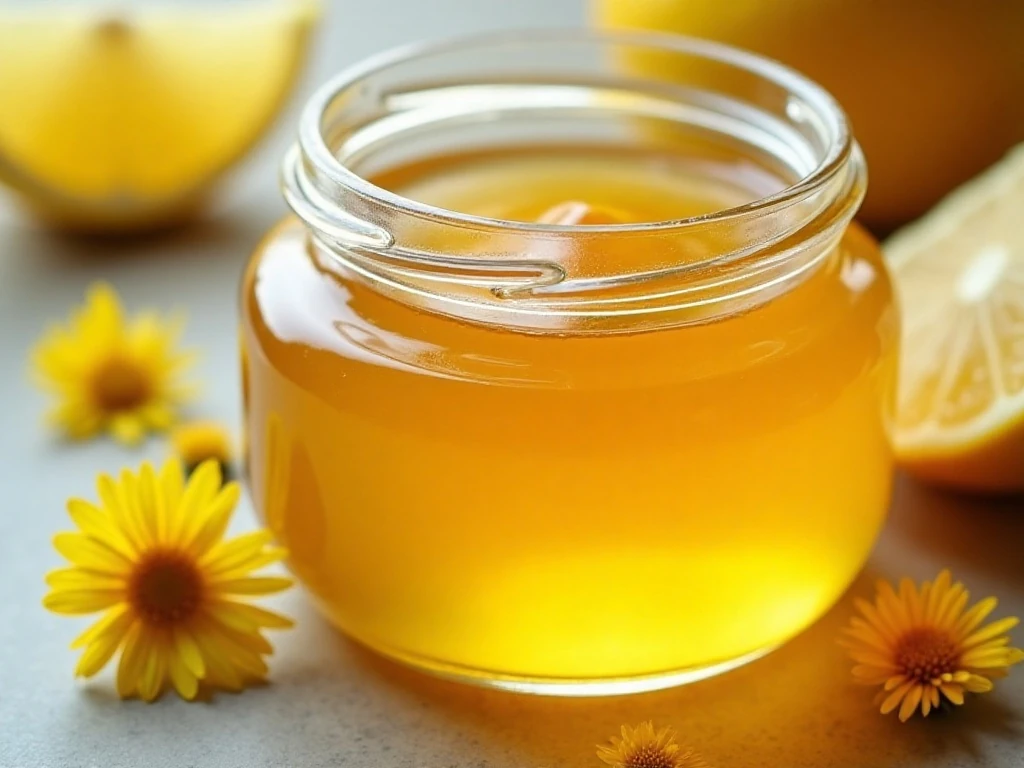
Petal preparation makes the greatest difference in flavor. If green pieces remain attached, the jelly may have a noticeably bitter edge that sugar cannot fully hide.
Accurate measuring also matters. Too much tea can leave the jelly soft, while too little liquid may produce a thicker, firmer set than expected.
- Use a large pot to allow room for foaming.
- Use bottled lemon juice when water-bath canning for dependable acidity.
- Add all the sugar at once after the pectin mixture boils.
- Stir continuously during the 1-minute hard boil.
- Skim foam before filling jars for a clearer finished jelly.
For a lovely sweet-and-tart breakfast board, serve this jelly with buttered toast and a little fruit preserve. It would also be a charming addition beside this strawberry rhubarb pie, especially when you want a small floral accent with a classic spring dessert.
Serving Ideas and Pairings
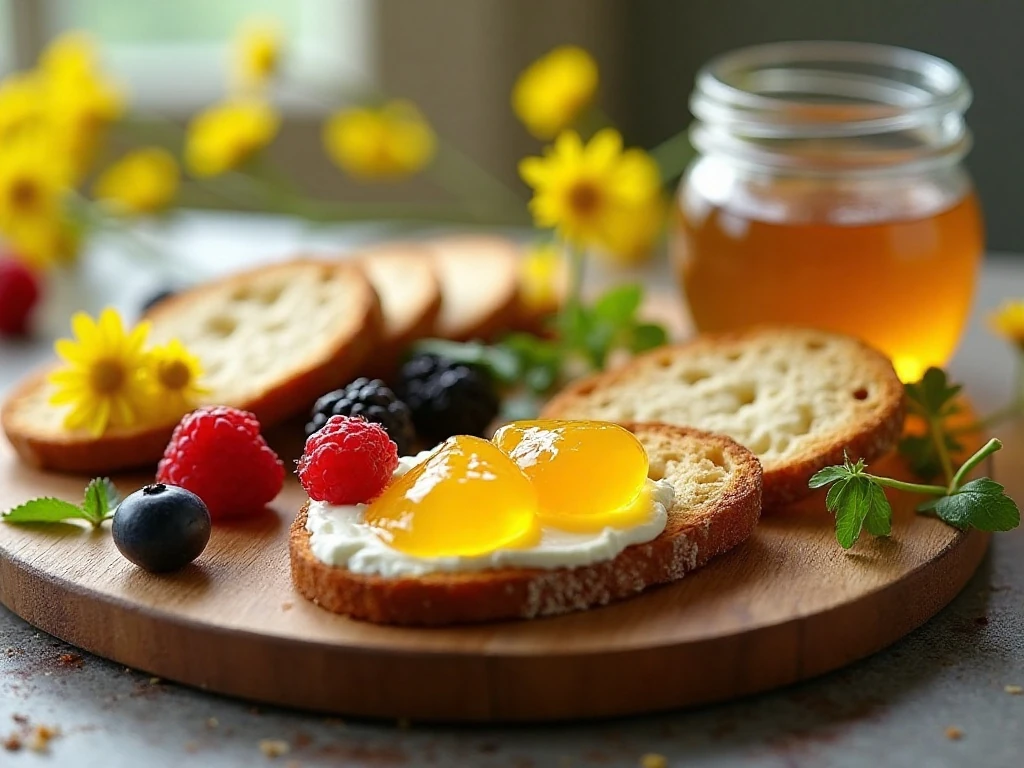
Dandelion jelly is especially good on warm biscuits, English muffins, toast, pancakes, and waffles. Let the jar sit at room temperature for a few minutes before serving so the jelly spreads easily without losing its glossy texture.
Try it with cream cheese, soft goat cheese, mild brie, or sharp cheddar. The sweetness and lemony brightness balance salty, creamy flavors, making the jelly suitable for breakfast, afternoon tea, or a simple appetizer board.
You can also brush a thin layer over a plain baked tart or use a spoonful to sweeten a cup of unsweetened yogurt. For a fun spring dessert table, serve it with this rhubarb poke cake, whose tangy flavor complements the honey-like jelly.
Storage, Canning, and Troubleshooting
For shelf storage, use hot, sterilized half-pint jars and process them in a boiling-water canner using the instructions supplied with your pectin and the appropriate jar size. Published versions often specify 5 to 10 minutes, but processing time must be adjusted for altitude and should follow the specific tested guidance available to you.
After processing, cool the jars undisturbed and check the seals. Refrigerate any jar that does not seal, and refrigerate opened jelly for the best quality.
If the jelly seems soft after cooling, do not decide that it has failed immediately. Refrigerate it for at least 24 hours because pectin jelly often firms as it cools, and do not reprocess or alter the batch without following a tested reprocessing method.
A cheese board is an excellent place to use a jar that has been opened. Add a little sweet contrast beside this festive cheese ring for a colorful appetizer pairing that guests can spread onto crackers.

Amazing Dandelion Jelly
Ingredients
Method
- Pick fully open dandelion flowers from a clean, untreated area. Rinse them briefly, remove the stems and as much green calyx as possible, and keep only the yellow petals.
- Place the 4 cups of petals and 4 cups of water in a saucepan. Bring the mixture to a boil, reduce the heat, and simmer for about 10 minutes.
- Strain the tea through a fine-mesh sieve or jelly bag, pressing gently to collect the liquid. Measure exactly 4 cups of strained tea, adding a little water if needed.
- Pour the measured tea into a large pot and stir in the bottled lemon juice and powdered pectin. Bring the mixture to a full rolling boil over high heat, stirring frequently.
- Add all the sugar at once and stir constantly until the mixture returns to a full rolling boil. Boil hard for 1 minute, then remove the pot from the heat and skim foam if necessary.
- Ladle the hot jelly into hot, sterilized half-pint jars, leaving about 1/4 inch headspace. Wipe the rims, apply the lids, and process in a boiling-water canner according to the directions for your specific pectin and jar size.
Notes
Final Thoughts
Amazing dandelion jelly is a rewarding way to preserve the brief, sunny season when fresh dandelions cover the lawn. With careful petal cleaning, an accurate 4-cup tea measurement, and the proper pectin method, you can create a clear golden jelly with a gentle floral flavor and a bright lemon finish.
Take your time removing the green portions, use a large pot, and follow safe water-bath canning directions for shelf storage. Once the jars are cool, enjoy this spring preserve on breakfast breads, desserts, or a favorite cheese board, and save a jar to brighten a rainy day.