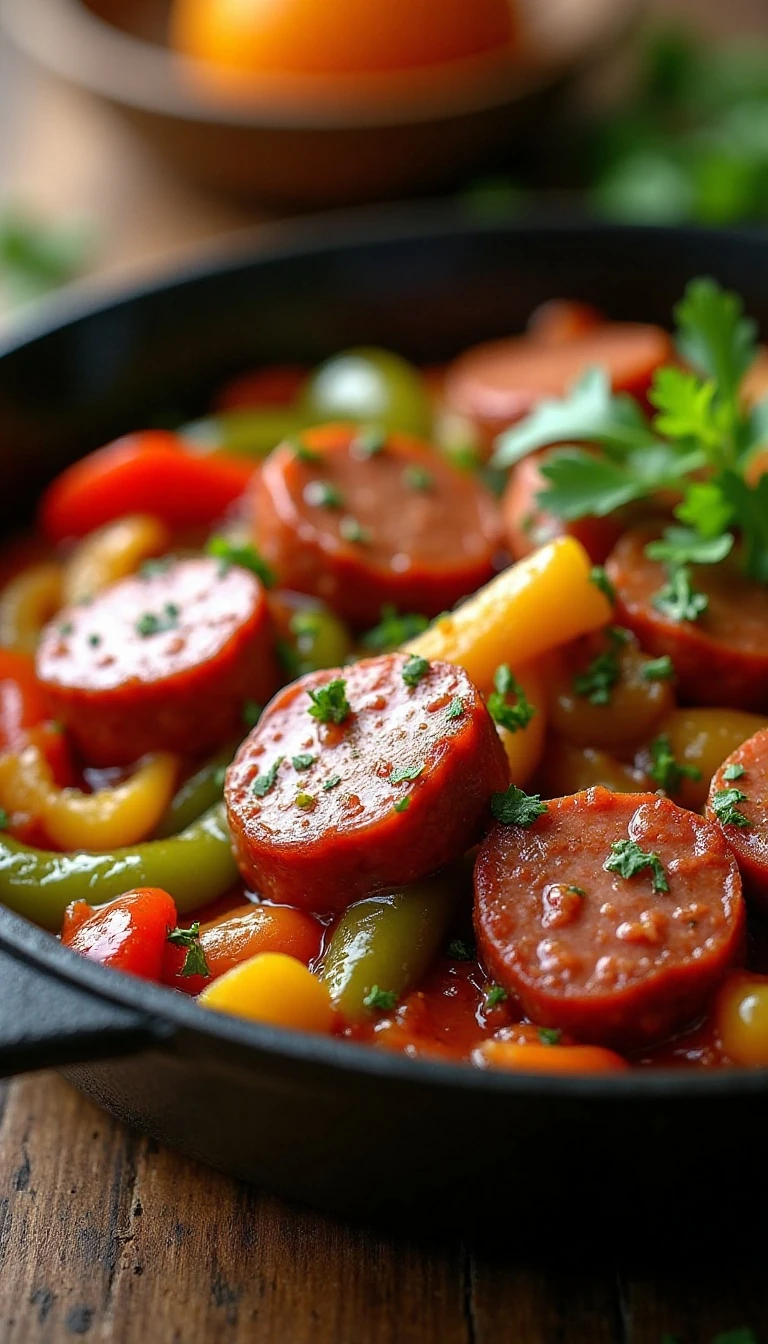
This low-carb sausage, peppers, and onions recipe makes a satisfying one-skillet dinner in about 40–45 minutes. Italian sausage is browned first, then simmered with colorful bell peppers, yellow onion, garlic, herbs, and a small amount of chicken broth for a flavorful meal without marinara sauce, sugar, pasta, or bread.
Every bite brings juicy sausage, lightly caramelized onion, tender-crisp peppers, and a savory garlic-herb pan sauce. Choose sweet or hot Italian sausage, serve the links whole or sliced into coins, and enjoy an easy dinner that delivers plenty of flavor with only one skillet to wash.
Jump to RecipeWhy You’ll Love This Recipe

This is the kind of dinner that feels generous and comforting while keeping the ingredient list wonderfully practical. The sausage brings savory richness, the peppers add sweetness and color, and the onion becomes soft and lightly browned as it cooks in the flavorful skillet.
Because the sausage is browned before the vegetables are added, the pan develops delicious browned bits. A splash of broth loosens those bits and creates a light sauce that coats every slice without relying on a sugary tomato sauce or starchy side.
- Low-carb friendly: There is no pasta, bread, sugar, or traditional marinara sauce.
- One-skillet convenience: The sausage and vegetables cook in the same pan.
- Flexible flavor: Use sweet sausage for a mellow dinner or hot sausage and red-pepper flakes for extra heat.
- Four-serving yield: It works well for a family dinner or planned leftovers.
If you enjoy hearty sausage dinners with a hands-off cooking style, you may also like this slow cooker sausage and cabbage idea for another comforting meal.
Ingredients You’ll Need
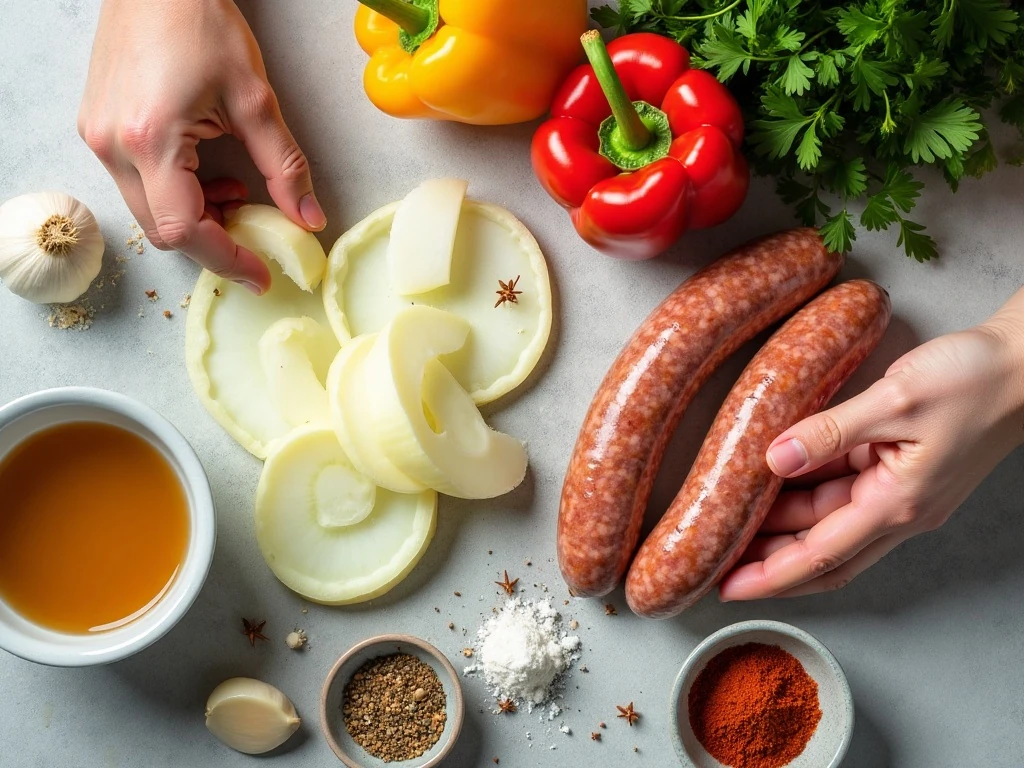
The recipe starts with one pound of Italian sausage links. Sweet and hot varieties both work beautifully, and you can prick the links lightly before browning or remove the casings and cook the sausage as larger pieces or crumbles.
Three large bell peppers create a beautiful mix of colors and textures: one red, one green, and one yellow or orange. Thin, even slices help the vegetables soften at the same rate while still holding enough shape to look appealing on the plate.
- One tablespoon olive oil helps start the browning process.
- One medium yellow onion supplies sweetness and savory depth.
- Three minced garlic cloves add a fragrant finish.
- Italian seasoning, kosher salt, and black pepper provide the main seasoning base.
- Crushed red-pepper flakes are optional for a warmer, spicier finish.
- One-half cup low-sodium chicken broth or water deglazes the pan.
- Fresh parsley is optional, but its color and fresh flavor are a lovely final touch.
Keep the broth low-sodium when possible so you can control the final seasoning. Water also works, especially when the sausage has already left plenty of savory flavor in the skillet.
How to Make It Step-by-Step
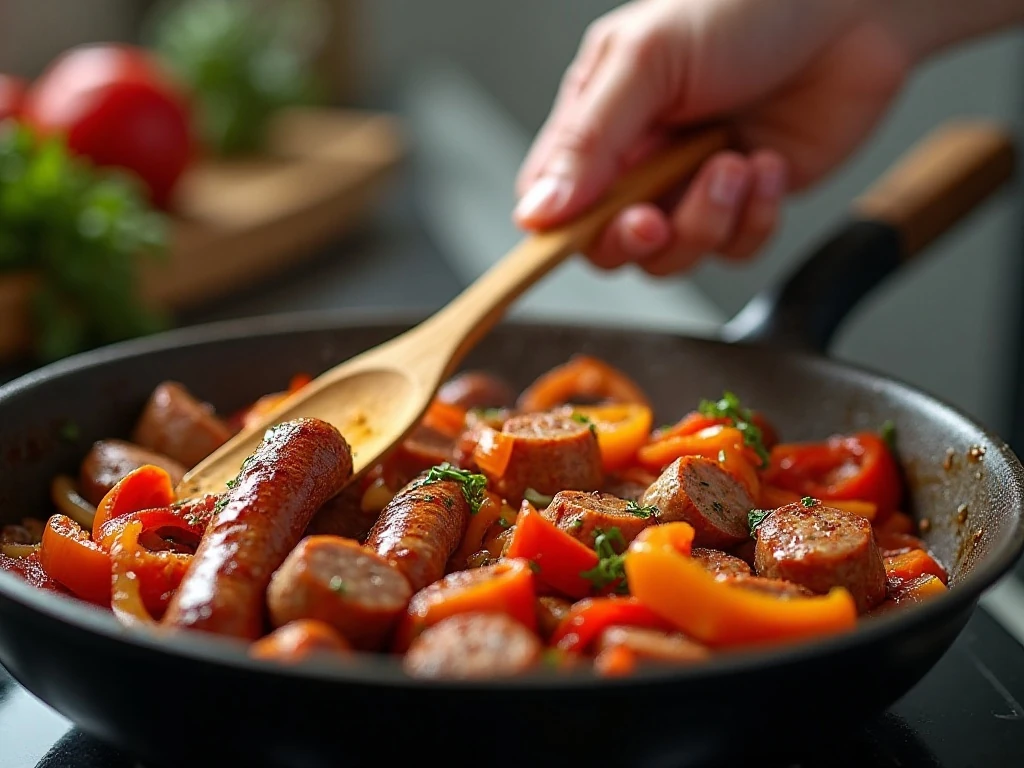
Step 1: Prepare the sausage and vegetables before turning on the stove. If you are keeping the sausage in links, prick them lightly; alternatively, remove the casings if you prefer to break the meat into pieces. Thinly slice the onion and all three peppers so everything cooks evenly.
Step 2: Heat a large skillet over medium heat and add the olive oil. Place in the sausages and brown them for 6–8 minutes, turning occasionally so several sides take on color. They do not need to be fully cooked yet, so transfer them to a plate once browned.
Step 3: Add the sliced onion, red pepper, green pepper, and yellow or orange pepper to the same skillet. Cook for 7–10 minutes, stirring occasionally, until the vegetables are softened and lightly browned around the edges.
Step 4: Add the minced garlic, Italian seasoning, kosher salt, black pepper, and optional red-pepper flakes. Stir and cook for about 30 seconds, just until the garlic is fragrant and the seasonings coat the vegetables.
Step 5: Pour in the low-sodium chicken broth or water. Use a wooden spoon or spatula to scrape up the browned bits from the bottom of the skillet, since those concentrated bits add savory flavor to the broth.
Step 6: Return the browned sausages to the pan and cover the skillet. Simmer for 8–12 minutes, turning the sausages once, until they are cooked through. Pork sausage should reach 160°F/71°C internally, while poultry sausage should reach 165°F/74°C.
Step 7: Slice the sausages into coins if desired, then toss them with the peppers and onions. Taste and add more salt if needed, scatter over the optional parsley, and serve while hot.
The complete cook time is approximately 25–30 minutes after the 15-minute preparation period. The exact timing can vary slightly with the thickness of the sausage links and the size of the skillet.
Chef Tips for the Best Skillet Dinner
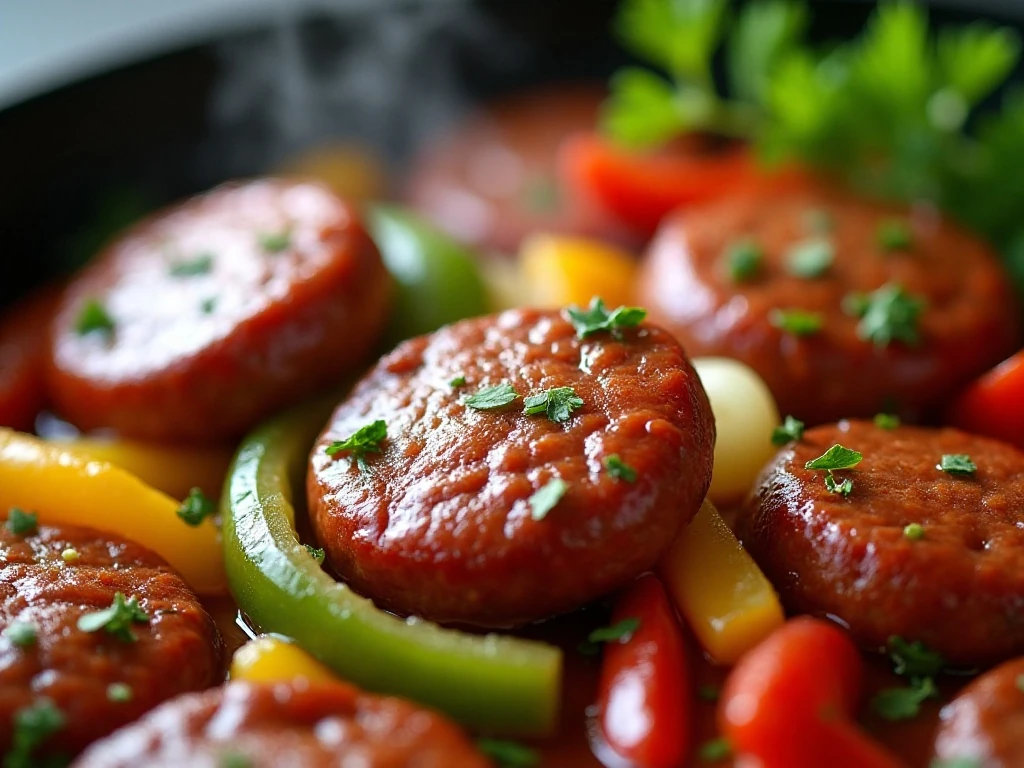
Use the largest skillet you have that allows the vegetables to spread into a fairly even layer. When the pan is overcrowded, the peppers and onions release moisture and steam rather than developing lightly browned edges.
Slice the vegetables consistently, preferably into thin strips of similar thickness. This gives you tender peppers and onions without some pieces becoming soft long before others are ready.
Do not skip the initial sausage browning. Cooking the links first leaves flavorful browned bits and rendered fat behind, which makes the vegetables taste richer than they would if everything began simmering together.
- For milder flavor, choose sweet Italian sausage and leave out the red-pepper flakes.
- For a spicier plate, use hot Italian sausage and include the optional flakes.
- For a different presentation, keep the sausages whole and spoon the vegetables over them.
- For easy serving, slice the cooked links into coins and toss them through the vegetables.
- Use a thermometer rather than color alone to confirm doneness.
If you are planning a sausage-and-pepper meal with less active cooking time, consider this slow cooker sausage option. For another pepper-centered skillet dinner, our one-pot unstuffed peppers is also worth adding to your dinner rotation.
Serving Suggestions
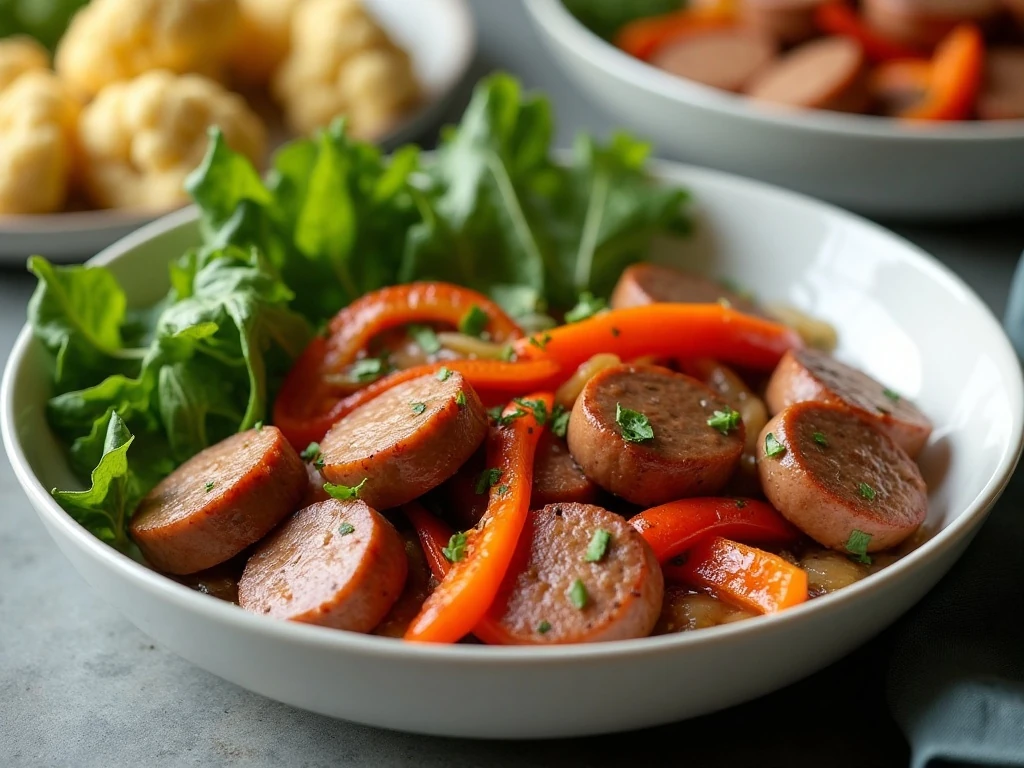
This dish is filling enough to serve on its own, especially when the sausage is sliced generously and the skillet vegetables are tender. Spoon a little of the pan liquid over each serving so the sausage and vegetables stay moist and glossy.
For a low-carb plate, pair it with a simple green salad, steamed broccoli, sautéed zucchini, or roasted cauliflower. These sides add freshness and volume without turning the meal into a pasta-based dinner.
Fresh parsley provides a clean contrast to the rich sausage. You can also bring the skillet directly to the table for a relaxed family-style meal, taking care to use a heatproof trivet.
Although this recipe is designed to stand alone, it can also be part of a larger comfort-food spread. If you are making a traditional dessert or savory pie afterward, keep this simple pie crust guide nearby for another kitchen project.
Storage and Reheating
Let leftovers cool briefly, then place the sausage, peppers, and onions in a covered container in the refrigerator. For the best quality, reheat the portions gently in a skillet over medium-low heat or in the microwave until hot.
A skillet is especially useful because it brings back a little of the roasted, savory character without making the peppers overly wet. Add a small splash of water or broth if the pan looks dry, and stir occasionally as the food warms.
When preparing leftovers, slice the sausage before storing if you want quick lunches or easy portioning. Keep the parsley separate when possible and add it after reheating so it stays fresh and colorful.
Frequently Asked Questions
Can I use crumbled sausage? Yes. Remove the casings and brown the sausage in the skillet, breaking it into pieces, then continue with the peppers, onions, seasonings, broth, and simmering step.
Can I serve the links whole? Absolutely. The recipe notes that the sausages may be served whole, sliced into coins, or tossed with the vegetables after slicing. Whole links make a particularly attractive presentation.
Why use broth instead of marinara? Broth deglazes the pan and creates a light savory coating while keeping the dish aligned with its low-carb approach. Water is also acceptable when you want the sausage and vegetables to provide all the main flavor.
How do I know the sausage is done? Use an instant-read thermometer in the thickest part of the sausage. Pork sausage should reach 160°F/71°C, and poultry sausage should reach 165°F/74°C.
Can I use only two pepper colors? The recipe calls for one large red, one large green, and one large yellow or orange pepper. Keeping all three gives the finished dish its signature color and balance, so use the specified combination for the intended result.
Low-Carb Sausage, Peppers, and Onions
Ingredients
Method
- If using sausage links, prick them lightly or remove the casings. Heat a large skillet over medium heat and add the olive oil.
- Brown the sausages for 6–8 minutes, turning occasionally. They do not need to be fully cooked at this stage; transfer them to a plate.
- Add the sliced onion and peppers to the skillet. Cook for 7–10 minutes, stirring occasionally, until softened and lightly browned.
- Add the garlic, Italian seasoning, kosher salt, black pepper, and optional crushed red-pepper flakes. Cook for about 30 seconds.
- Pour in the chicken broth or water and scrape up the browned bits from the bottom of the skillet.
- Return the sausages to the pan. Cover and simmer for 8–12 minutes, turning the sausages once, until cooked through. Pork sausage should reach 160°F/71°C internally, while poultry sausage should reach 165°F/74°C.
- Slice the sausages into pieces if desired and toss them with the vegetables. Garnish with chopped parsley and serve.
Notes
Final Thoughts
This low-carb sausage, peppers, and onions recipe proves that a short ingredient list can create a deeply satisfying dinner. Browning the sausage first, cooking the vegetables in the same skillet, and finishing with a little broth gives the dish layers of flavor without adding pasta, bread, sugar, or a heavy sauce.
With 15 minutes of preparation and 25–30 minutes of cooking, it is practical enough for a weeknight and special enough to share. Choose sweet or hot sausage, keep the links whole or slice them into coins, and finish with parsley for a colorful skillet meal everyone will want seconds of.
For another breakfast-sausage comfort dish, you can also try this cheesy sausage casserole. But when you want a fresh, colorful, low-carb dinner with minimal cleanup, this skillet version is the recipe to make.