Apple Upside-Down Cake with a Golden Caramel Topping is a tender, cinnamon-scented cake baked beneath firm apple slices and a buttery brown-sugar caramel. After baking, the cake is inverted while warm so the glossy topping coats every slice. It serves 8–10 people and takes about 25 minutes to prepare, 45–55 minutes to bake, and approximately 1 hour 25 minutes in total.
This classic dessert brings together soft vanilla cake, lightly tart apples, and a rich golden topping with just enough syrupy sweetness. Serve it warm on its own, with whipped cream, or alongside vanilla ice cream for a comforting finish to a family dinner, afternoon tea, or autumn gathering.
Jump to RecipeWhy You’ll Love This Recipe
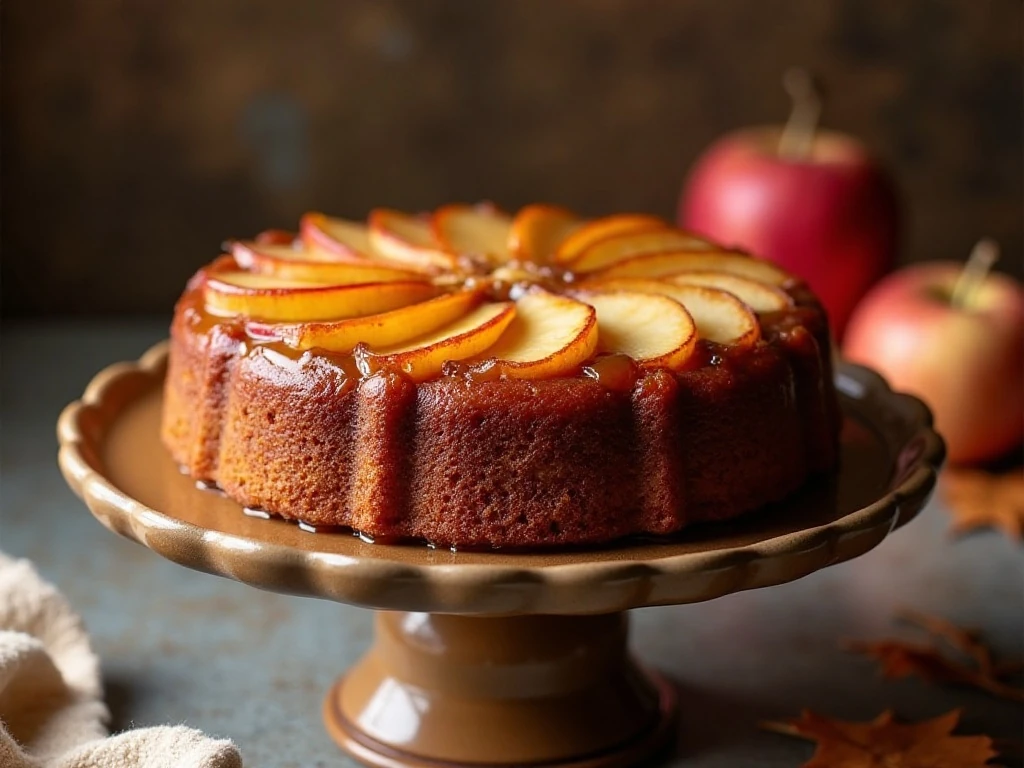
This apple upside-down cake has the charm of a traditional baked pudding with the polished look of a celebration dessert. The apples soften just enough to become tender, while their edges keep a pleasing shape beneath the golden caramel.
The cake itself is light but rich, thanks to softened butter, eggs, milk, and vanilla. Cinnamon appears in both the topping and the batter, creating a warm aroma without overpowering the natural apple flavor.
It is also a practical dessert for entertaining. The apple pattern is arranged before the cake goes into the oven, so the finished decoration requires no piping, frosting, or special equipment.
If you enjoy fruit-forward upside-down desserts, you can also try this berry-filled upside-down cake for a darker, tangier variation.
Ingredients You’ll Need
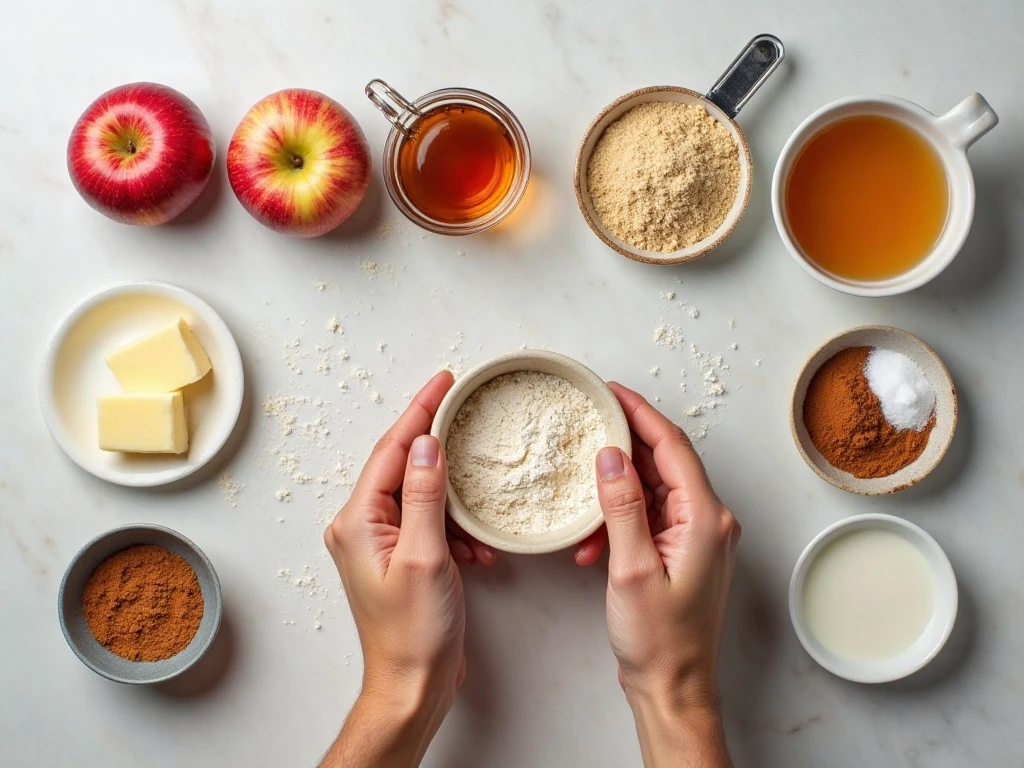
Choose four medium firm apples weighing approximately 650–750 g in total. Granny Smith, Braeburn, Pink Lady, and Golden Delicious all work well, either alone or in a mixture. Firm, slightly tart apples balance the sweet caramel and are less likely to collapse during baking.
The topping uses 75 g unsalted butter, 150 g firmly packed light brown sugar, 2 tablespoons golden syrup, 1/2 teaspoon ground cinnamon, and a pinch of salt. The butter gives the caramel a rounded flavor, while the syrup supplies a soft shine and gentle toffee note.
For the cake, gather 125 g softened unsalted butter, 150 g caster sugar, two large room-temperature eggs, 1 teaspoon vanilla extract, 180 g plain flour, 2 teaspoons baking powder, 1/2 teaspoon cinnamon, 1/4 teaspoon salt, and 120 ml milk.
- Use room-temperature eggs and milk for a smoother batter.
- Soften the butter until it yields easily to a fingertip but is not oily or melted.
- Measure the flour accurately and mix the batter only until no dry streaks remain.
For another apple-centered bake with a cozy spiced profile, you may also like this apple cider loaf cake.
How to Make It Step-by-Step
Step 1: Heat the oven to 175°C conventional/350°F, or 160°C fan. Grease a 23-cm/9-inch round cake pan, preferably a springform or deep-sided pan, and line the base with baking paper. If using a springform pan, check that it closes securely because the caramel will be fluid before baking.
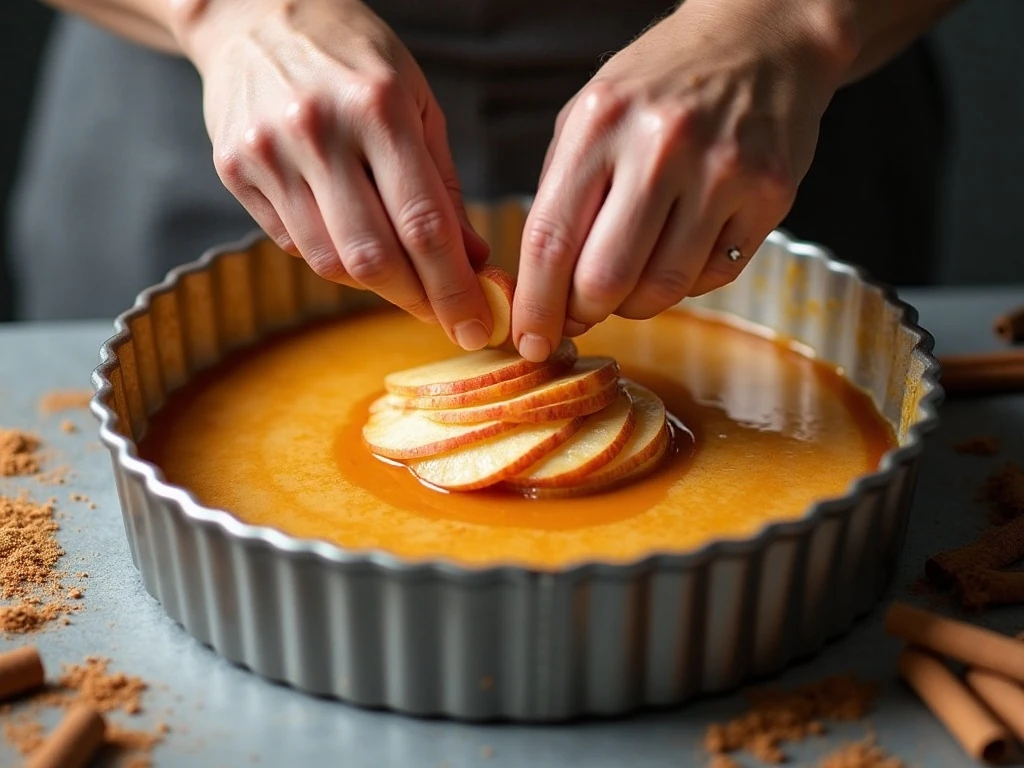
Step 2: Peel and core the apples, then slice them into wedges approximately 5 mm thick. Aim for consistent slices so they soften at the same rate and form an even layer when the cake is turned out.
Step 3: Melt the 75 g butter in a saucepan over medium heat. Add the brown sugar, golden syrup, cinnamon, and salt, stirring until the mixture is smooth and bubbling gently for about 1–2 minutes. Keep the heat moderate and avoid an aggressive boil.
Step 4: Pour the warm caramel into the prepared pan and tilt the pan carefully so it spreads across the base. Arrange the apple slices in overlapping circles, beginning around the outside and working inward for an attractive pattern after inversion.
Step 5: Place the softened butter and caster sugar in a mixing bowl. Cream them for about 2–3 minutes, until pale, fluffy, and slightly increased in volume. This step helps the cake bake with a fine, tender crumb.
Step 6: Beat in the eggs one at a time, scraping down the bowl if needed, then mix in the vanilla. The mixture may look slightly curdled at this stage, but it will come together when the flour is added.
Step 7: Whisk the flour, baking powder, cinnamon, and salt in a separate bowl. Add the dry ingredients to the butter mixture in two or three additions, alternating with the milk. Mix only until combined, since overmixing can make the cake dense.
Step 8: Spoon the batter over the arranged apples in several dollops. Spread it gently toward the edges with the back of a spoon or a small spatula, taking care not to shift the apple slices or expose large gaps in the topping.
Step 9: Bake for 45–55 minutes, checking toward the end of the baking window. The cake should be golden on top, and a skewer inserted into the center should come out clean or with a few moist crumbs rather than wet batter.
Step 10: Let the cake stand in the pan for 10 minutes. Run a thin knife around the edge, place a serving plate over the pan, and invert carefully in one confident motion. Remove the pan and baking paper while the caramel is still warm, then allow the topping to settle before slicing.
For a playful companion to this dessert, see the warm-spiced notes in our cinnamon vanilla iced coffee. Its cinnamon and vanilla flavors pair naturally with a slice of this cake.
Pro Tips for a Glossy Caramel Topping
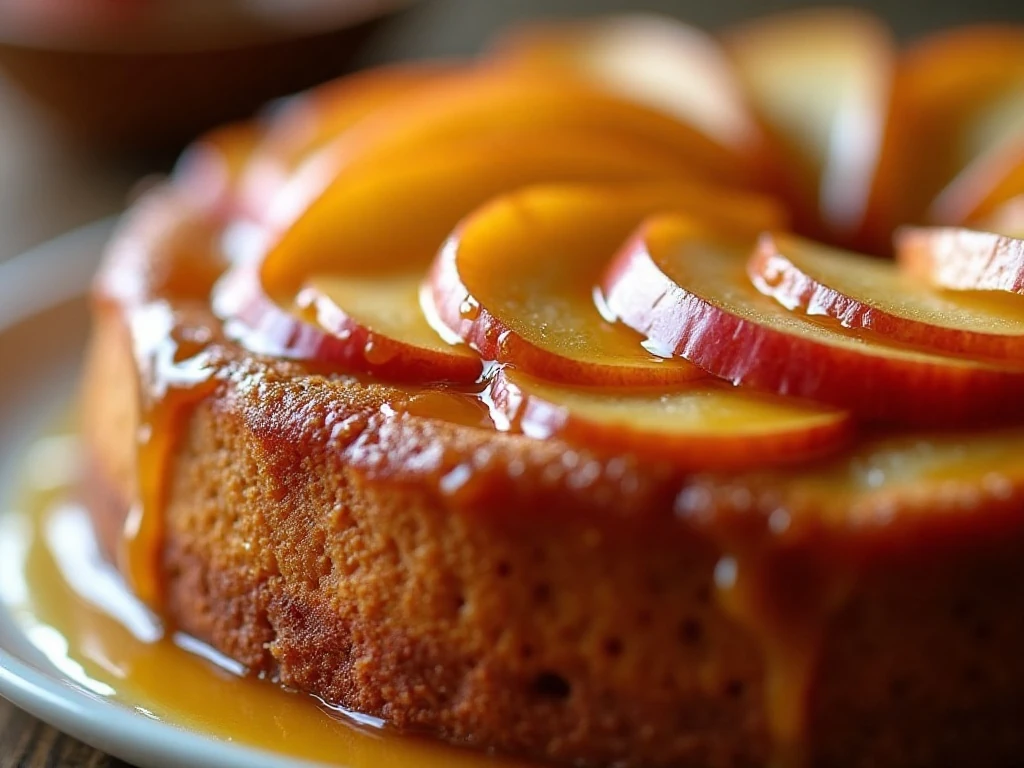
The apples are the most important ingredient for a neat result. Softer or very ripe fruit can release excess liquid and collapse, which may leave the topping watery. Select apples that feel firm and slice them evenly.
Do not boil the caramel mixture aggressively. It only needs a brief, gentle simmer until the butter, sugar, syrup, cinnamon, and salt look smooth. Prolonged boiling can cause the topping to become hard or bitter after baking.
Arrange the apples with a little overlap because they shrink slightly in the oven. A circular pattern gives the inverted cake a classic appearance, but rows or fan shapes work as well if the slices are kept close together.
Spread the batter softly rather than pressing down firmly. The apple layer should remain in place, and a light touch helps preserve the pattern that will be revealed when the cake is turned out.
Most importantly, invert the cake while it is warm. After cooling completely, the caramel firms and can stick to the pan. The 10-minute resting period allows the cake to settle without letting the topping harden.
For a caramel rescue, place any apple pieces or topping left in the pan back onto the cake while warm. A small amount of loosened caramel can be spooned over the top before serving.
Serving, Storage, and Reheating
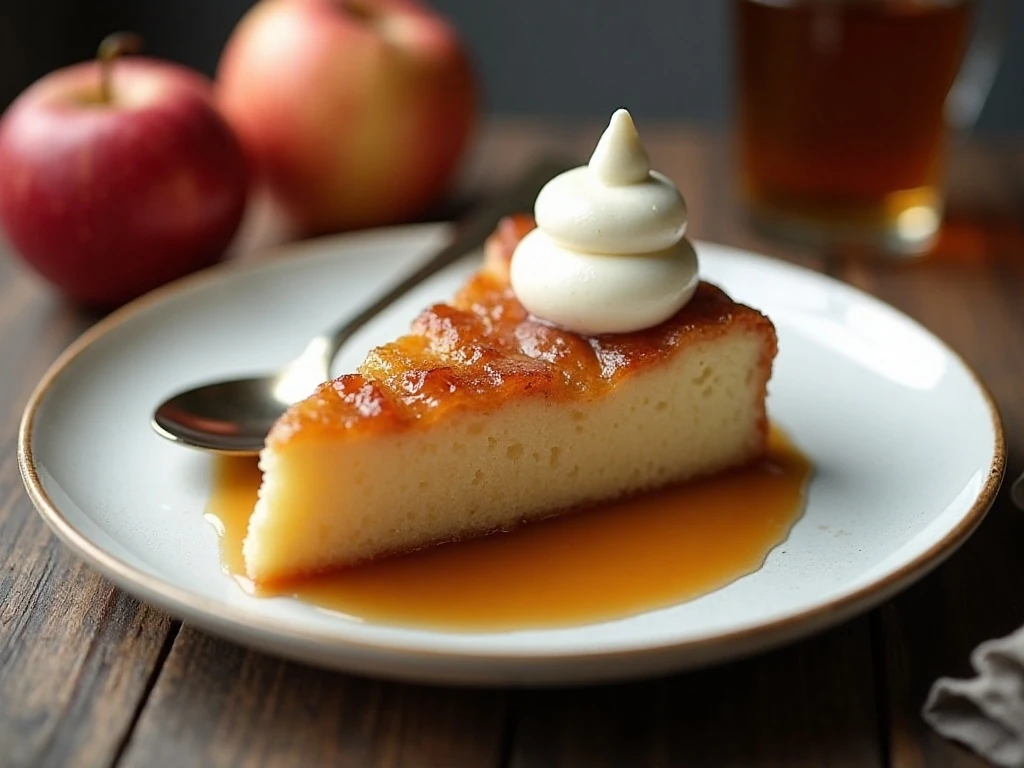
Serve the cake warm or just slightly cooled so the caramel remains soft and fragrant. A spoonful of softly whipped cream balances the sweetness, while vanilla ice cream melts into the warm apple topping for a classic pairing.
It is delicious at afternoon tea with coffee or black tea, and it also makes an inviting finish after a roast dinner. Cut into 8–10 slices, depending on whether you prefer generous wedges or smaller portions.
Store leftovers covered at room temperature for a short period or refrigerate them if your kitchen is warm. The caramel will firm in the refrigerator, so warm individual slices gently before serving to restore a softer texture.
To reheat, place a slice on a microwave-safe plate and warm it briefly in short intervals, checking between each one. Alternatively, use a low oven until the cake is warmed through, taking care not to dry the sponge or scorch the caramel.
If preparing ahead, bake the cake earlier on the day you plan to serve it and invert it after the recommended 10-minute rest. Waiting too long before turning it out is more likely to make the caramel adhere to the pan.
More Upside-Down Dessert Ideas
This recipe is part of a delicious family of fruit-topped cakes in which the baking pan creates the sauce and decoration at the same time. For a tropical option, try our classic pineapple version, where tangy fruit meets a buttery brown-sugar topping.
If you enjoy preserving fruit flavors as well as baking them, our pineapple cake jam idea offers a creative way to bring those sunny notes to toast, scones, or dessert fillings.
Each variation uses the same useful principle: choose fruit that brings color, flavor, and enough structure to remain appealing after baking. Apples are especially welcoming because their tartness keeps the caramel from tasting one-dimensional.
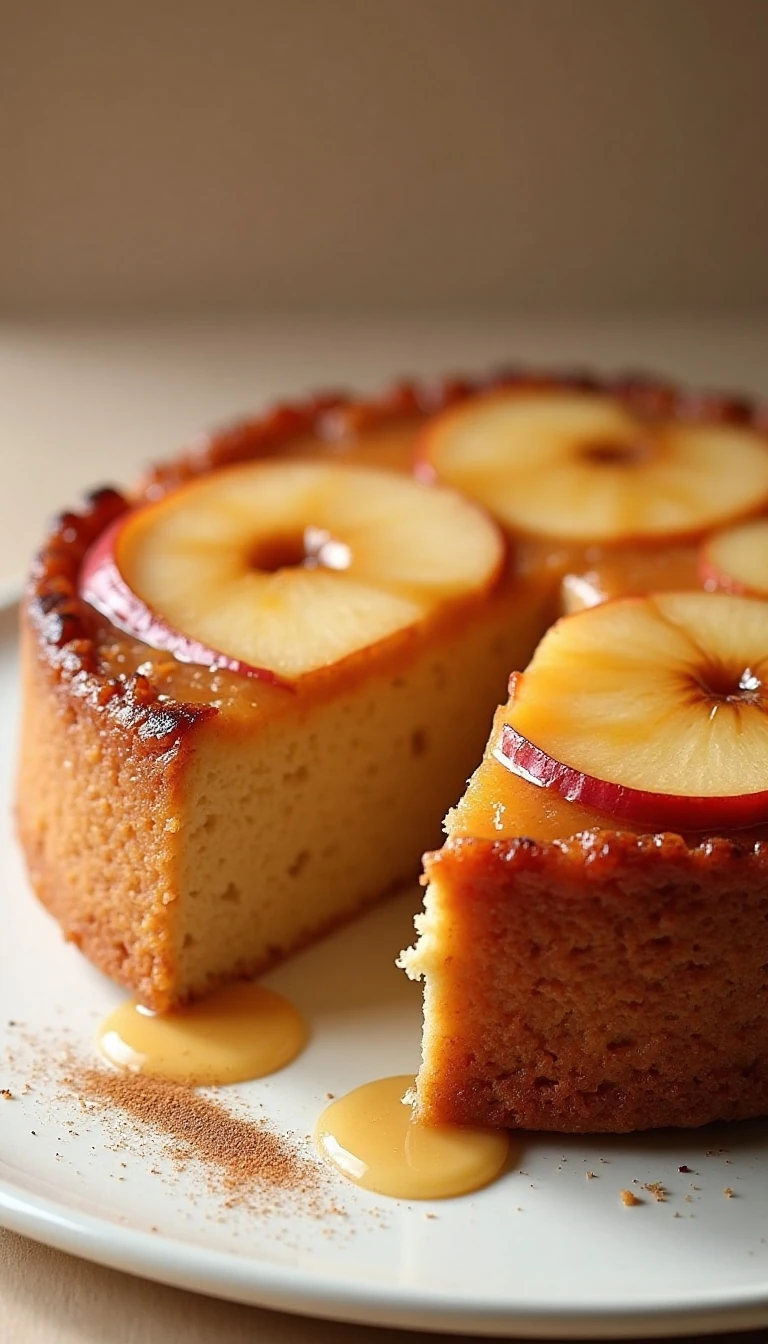
Apple Upside-Down Cake with a Golden Caramel Topping
Ingredients
Method
- Heat the oven to 175°C conventional/350°F, or 160°C fan. Grease a 23-cm/9-inch round springform or deep-sided cake pan and line the base with baking paper.
- Peel, core, and slice the apples into even wedges approximately 5 mm thick.
- Melt the butter in a saucepan over medium heat. Add the brown sugar, golden syrup, cinnamon, and salt, then stir until smooth and gently bubbling for 1–2 minutes.
- Pour the warm caramel into the prepared pan and arrange the apple slices in overlapping circles over the surface.
- Cream the softened butter and caster sugar for 2–3 minutes, until pale and fluffy. Beat in the eggs one at a time, followed by the vanilla.
- Whisk together the flour, baking powder, cinnamon, and salt. Add the dry ingredients in two or three additions, alternating with the milk, and mix only until combined.
- Spoon the batter over the apples and spread gently to the edges without disturbing the arrangement.
- Bake for 45–55 minutes, until golden and a skewer inserted into the cake comes out clean or with a few moist crumbs.
- Let the cake stand in the pan for 10 minutes. Run a knife around the edge, place a serving plate over the pan, and invert carefully while the caramel is still warm. Remove the pan and baking paper.
Notes
Final Thoughts
Apple Upside-Down Cake with a Golden Caramel Topping is the kind of dessert that looks impressive but follows a reassuringly simple method. Firm apples, a gently simmered caramel, and a tender cinnamon-vanilla batter are all it takes to create a glossy centerpiece.
Remember to slice the apples evenly, avoid boiling the caramel too hard, and invert the cake after its 10-minute rest. Serve it warm with cream or ice cream, and enjoy every buttery, fruity, caramel-coated bite.