To make the best sauerkraut from a bag, cook undrained or lightly rinsed sauerkraut slowly with browned bacon, onion, apple, caraway seeds, brown sugar, and a little broth, beer, or water. The gentle 30–45 minute simmer mellows the cabbage, softens its sharp acidity, and gives you a rich side dish in about 50–65 minutes from start to finish.
This easy recipe turns a convenient 32-ounce bag into tender, savory sauerkraut with crisp-tart apple, sweet onion, smoky bacon, and a balanced tang. Taste the sauerkraut before rinsing so you keep as much flavor as possible, then serve it hot alongside sausages, roasted meats, pork, or a hearty family dinner.
Jump to RecipeWhy You’ll Love This Recipe
This recipe is the answer when you want satisfying sauerkraut without starting with a whole head of cabbage. A bag of prepared sauerkraut already gives you the signature fermented tang, while bacon, onion, apple, and caraway add the layered flavor that makes a homemade side dish taste special.
The result is tender but not mushy, pleasantly sour, lightly sweet, and savory enough to stand beside rich meats. The apple brings small bursts of fruity flavor, while the brown sugar rounds off the sharpest edges without making the dish taste like dessert.
It is also flexible. Choose chicken broth for a rounded savory taste, beer for a more traditional and complex note, or water when you want the cleanest flavor. Dijon mustard adds gentle heat and extra tang, while dry white wine gives the cooking liquid a bright, aromatic character.
Ingredients You’ll Need

Gather the ingredients before heating the pot so the recipe moves quickly from the bacon stage to the simmer. The quantities below make about six servings.
- Sauerkraut: Use one undrained bag of approximately 32 ounces, or 2 pounds. Taste it first to determine whether it needs a brief rinse.
- Bacon: Four to six chopped slices, about 4 ounces, provide smoky flavor and cooking fat.
- Aromatics: One finely chopped medium yellow onion and one peeled, cored, diced medium apple create a sweet-savory base.
- Cooking liquid: Add 1/2 cup chicken broth, beer, or water to keep the sauerkraut moist as it simmers.
- Seasonings: Use 1 tablespoon packed brown sugar, 1 teaspoon caraway seeds, 1 bay leaf, and 1/4 teaspoon freshly ground black pepper.
- Optional additions: Stir in 1 tablespoon Dijon mustard or 1/4 cup dry white wine for another layer of flavor.
Salt is not listed as a mandatory ingredient because bagged sauerkraut and bacon can both be salty. Add it only after cooking and tasting.
How to Make It Step-by-Step
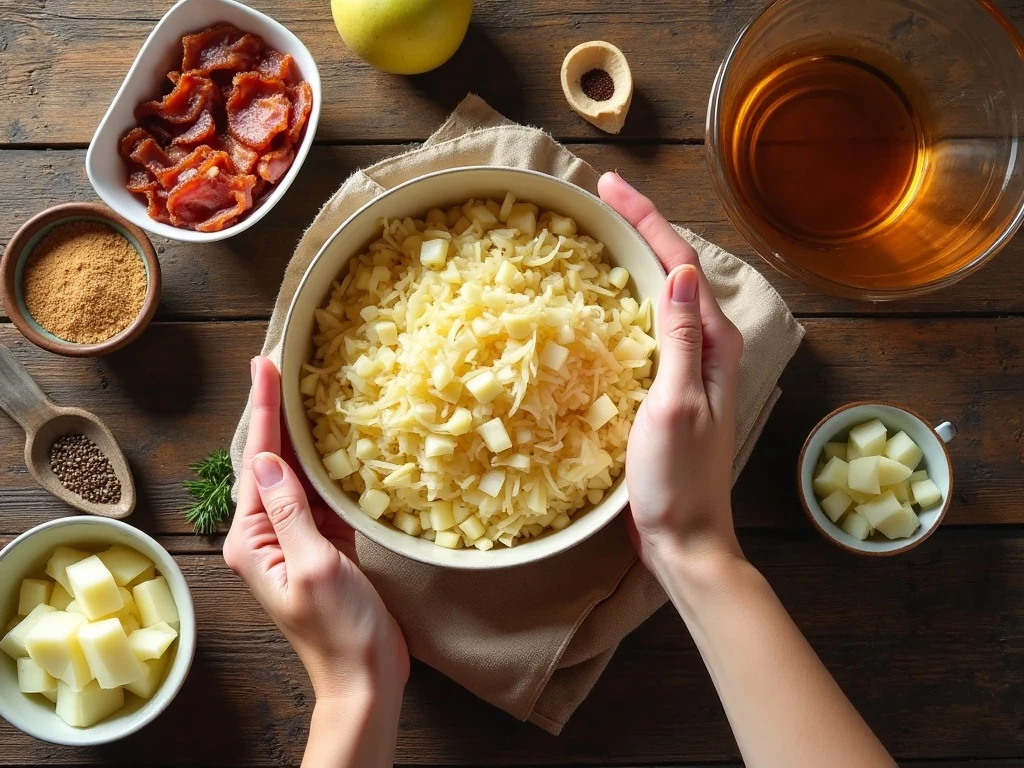
Step 1: Taste and prepare the sauerkraut. If it is excessively sour or salty, drain it, rinse it briefly under cold water, and squeeze out the excess liquid. If the flavor is pleasantly tangy, simply drain it without rinsing so the finished dish keeps its fuller fermented character.
Step 2: Brown the bacon in a large Dutch oven or heavy saucepan over medium heat for 5–8 minutes. Stir occasionally as it cooks, and wait until the pieces are browned and most of the fat has rendered; this savory fat will flavor the onion and sauerkraut.
Step 3: Add the finely chopped onion to the bacon and cook for 4–6 minutes. Stir frequently until it softens and begins to pick up a little color from the bottom of the pot. If you are using lean bacon or skipping bacon, add 1 tablespoon butter or oil before cooking the onion.
Step 4: Stir in the diced apple and cook for 2 minutes. This short cooking time softens the apple slightly while allowing it to retain enough shape and fresh flavor to contrast with the tender sauerkraut.
Step 5: Add the prepared sauerkraut, 1/2 cup broth, beer, or water, brown sugar, caraway seeds, bay leaf, and black pepper. If using them, add the Dijon mustard or dry white wine now, then stir thoroughly so the seasonings and bacon fat are distributed throughout the pot.
Step 6: Bring the mixture just to a simmer rather than allowing it to boil vigorously. Cover the pot, reduce the heat to low, and cook for 30–45 minutes, stirring occasionally so the bottom does not catch and the flavors blend slowly.
Step 7: Check the consistency near the end of cooking. If the sauerkraut still has excess liquid, remove the lid and cook uncovered for the final 5–10 minutes, allowing the sauce to reduce while keeping the cabbage moist.
Step 8: Remove the bay leaf and taste the finished sauerkraut. Add a little more brown sugar if it is too sharp, extra black pepper for warmth, or salt only if the dish genuinely needs it. Serve hot while the bacon, apple, and caraway aromas are at their best.
Pro Tips for the Best Flavor
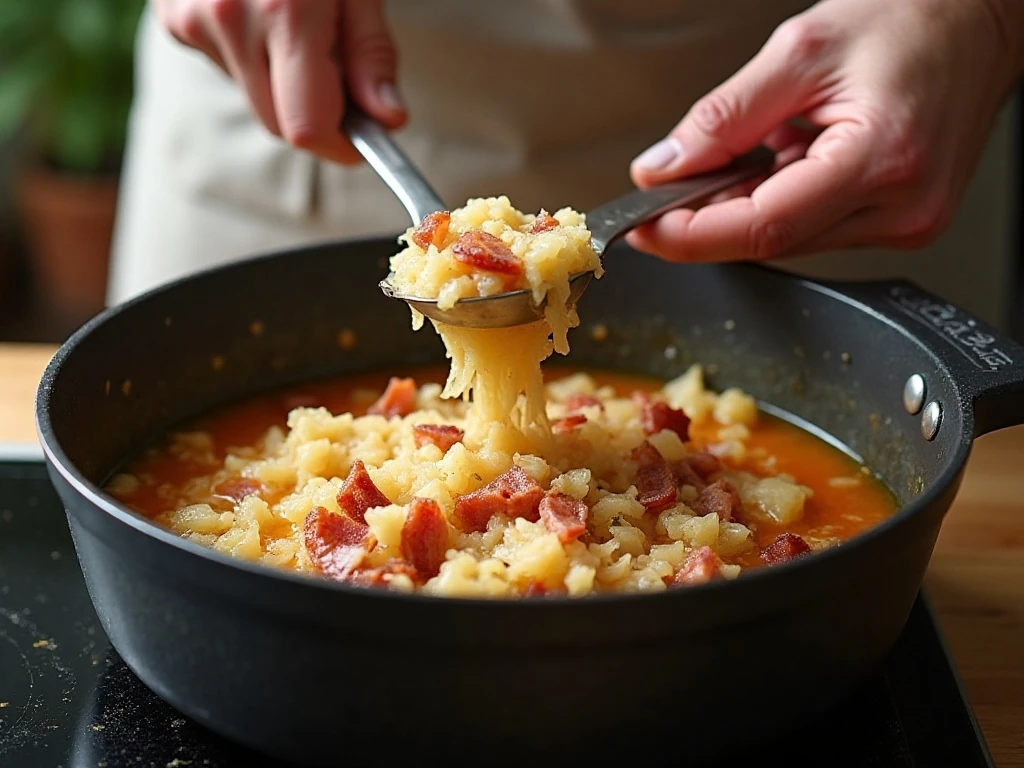
Taste before rinsing. This is the most important decision when cooking sauerkraut from a bag. Some brands are mild and balanced, while others are intensely salty or acidic; a quick taste tells you whether rinsing will improve the final dish or simply wash away character.
Brown the bacon and onion properly. Pale bacon and barely softened onion will produce a flatter result. Give both time to develop color over medium heat, but lower the heat if the browned bits on the bottom begin to darken too quickly.
Simmer gently. A slow simmer softens the acidity and allows the apple, caraway, and cooking liquid to mingle with the cabbage. A hard boil can make the liquid evaporate too quickly and may leave the sauerkraut unevenly seasoned.
Use at least 40 minutes for deeper flavor. The sauerkraut is technically ready after the shorter simmer, but a longer gentle cook gives the onion more time to melt into the dish and creates a rounder, more traditional taste.
Choose the liquid with intention. Water keeps the flavor simple, chicken broth adds savory depth, beer contributes malty complexity, and dry white wine brings brightness. Do not use more than the listed 1/2 cup broth, beer, or water, since the sauerkraut should be moist rather than soupy.
Balance gradually. Brown sugar is optional in many traditional preparations, but 1 tablespoon is useful when the bagged sauerkraut is especially tart. Taste after simmering before adding more, because the bacon and apple will also soften the acidity.
What to Serve with Sauerkraut
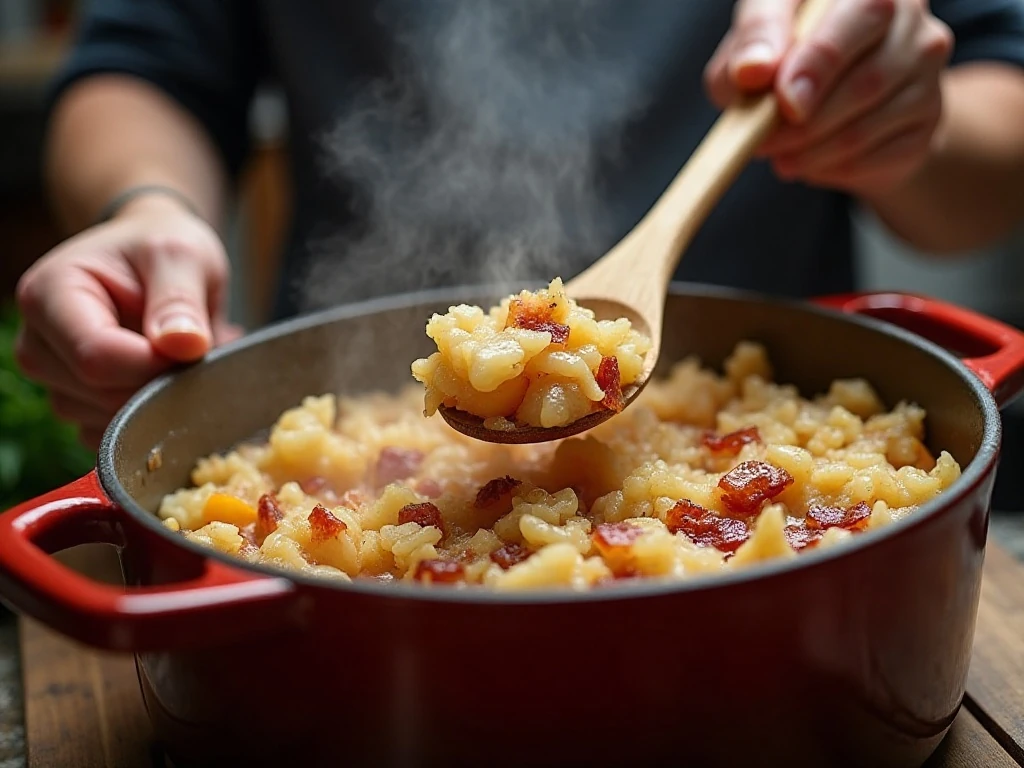
This sauerkraut makes a classic partner for bratwurst, kielbasa, pork chops, ham, roasted pork shoulder, and roast chicken. Its tangy flavor cuts through rich meats, while the bacon and apple make it substantial enough to earn a place beside mashed potatoes or crusty bread.
For a cozy comfort-food menu, serve it beside our hearty cottage pie. The savory filling and creamy potato topping pair beautifully with the bright, lightly sweet cabbage.
You can also spoon it onto sausages in a toasted roll, add it to a warm grain bowl, or serve it as part of a holiday buffet. If you are building a table around grilled or broiled beef, our tender London broil offers a satisfying contrast to the sauerkraut’s acidity.
For a broader casual spread, consider serving a small portion alongside other takeout-style favorites. Our savory chow mein can join the table when you want a varied meal with plenty of texture and bold flavor.
Storage and Reheating
Cool leftover sauerkraut promptly, then transfer it to an airtight container and refrigerate it. The flavors often taste even more integrated the next day, making this a useful make-ahead side for busy dinners or holiday meals.
Reheat it gently in a saucepan over low to medium-low heat, stirring occasionally until hot. You can also warm individual portions in the microwave, but cover the dish loosely and stir midway through heating so the edges do not dry out.
If the leftovers seem dry, add a small splash of water or broth while reheating. Taste again before serving because the seasoning can become more pronounced after refrigeration; add salt only when necessary.
Common Questions
Should I drain all the liquid from the bag? Drain the sauerkraut before adding it to the pot, especially if the package contains a large amount of brine. Do not rinse unless the sauerkraut is very sour or salty, because the liquid clinging to the cabbage carries flavor.
Can I make it without bacon? Yes. Use 1 tablespoon butter or oil to cook the onion, then follow the same method. The dish will be lighter but will still gain plenty of flavor from the apple, caraway, brown sugar, and slow simmer.
Why add an apple? Apple brings gentle sweetness and a fresh fruity note that balances fermented cabbage. It also adds pleasant texture, especially when diced instead of grated.
Can I skip the brown sugar? Absolutely. Brown sugar is optional, but it is helpful when the sauerkraut tastes especially tart. Start with the listed 1 tablespoon and adjust only after the sauerkraut has finished cooking.

The Best Sauerkraut from a Bag
Ingredients
Method
- Taste the bagged sauerkraut before deciding whether to rinse it. If it is very sour or salty, drain it, rinse it briefly under cold water, and squeeze out excess liquid; for stronger traditional flavor, simply drain it without rinsing.
- Cook the chopped bacon in a large Dutch oven or heavy saucepan over medium heat for 5–8 minutes, until browned and most of the fat has rendered. Add the chopped onion and cook for 4–6 minutes, until softened; use 1 tablespoon butter or oil if using lean bacon or no bacon.
- Stir in the diced apple and cook for 2 minutes. Add the sauerkraut, broth, beer, or water, brown sugar, caraway seeds, bay leaf, black pepper, and optional Dijon mustard or dry white wine.
- Bring the mixture just to a simmer, then cover the pot and reduce the heat to low. Cook for 30–45 minutes, stirring occasionally, and cook uncovered for the final 5–10 minutes if excess liquid remains.
- Remove the bay leaf and taste the sauerkraut carefully. Adjust with additional brown sugar, pepper, or salt only if needed, then serve hot.
Notes
Final Thoughts
The best sauerkraut from a bag comes from a few thoughtful choices: taste before rinsing, brown the bacon and onion well, add a little apple and caraway, and cook everything slowly instead of boiling it. Those simple steps transform a convenient package into a warm, deeply savory side with balanced acidity and inviting texture.
Give the sauerkraut a full 40-minute simmer when you have time, then reduce any excess liquid uncovered during the final 5–10 minutes. Finish by tasting carefully and adjusting the brown sugar, pepper, or salt to suit the particular bag you bought.
Serve it hot with sausages, pork, beef, or cottage pie, and keep the leftovers for an easy next-day meal. Once you try this method, a bag of sauerkraut becomes the dependable starting point for a memorable homemade dish.