The best way to freeze sweet corn is to blanch the kernels for 4 minutes, cool them immediately in ice water for about 4 minutes, drain them thoroughly, and pack them in airtight freezer bags or rigid containers. This quick heat treatment slows the enzyme activity that can otherwise reduce corn’s sweetness, color, flavor, and texture during storage.
Fresh-frozen corn keeps the sunny taste of summer ready for soups, casseroles, skillet meals, and side dishes. For the sweetest results, process 8–12 ears as soon after picking as possible, portion the kernels into small flat packages, and use them within 8–12 months for best quality.
Jump to RecipeWhy You’ll Love This Recipe
Freezing sweet corn is one of the easiest ways to preserve the flavor of a summer harvest without adding salt, butter, or sugar. The finished kernels are ready whenever you need a quick vegetable for dinner, and they retain much more of their garden-fresh character than corn that has been stored too long before processing.
The method is simple, but each part has a purpose. Blanching protects the corn during freezer storage, the ice bath stops the cooking immediately, and careful draining prevents excess water from turning into a layer of icy crystals.
One medium ear produces about 1/2 cup of kernels, so 8 medium ears yield approximately 4 cups. That makes it easy to plan several convenient packages for weeknight meals instead of freezing one large block that must all be thawed at once.
Once your freezer is stocked, the kernels are useful in everything from chowder and cornbread to a simple skillet side. They also pair nicely with a comforting dinner such as these hot tuna melts.
Ingredients You’ll Need

You need only fresh corn, water, ice, and suitable freezer packaging. Choose ears that are firm, plump, and preferably picked the same day, because the natural sugar in corn begins converting to starch soon after harvest.
- 8–12 ears fresh sweet corn: This amount will produce roughly 4 cups from 8 medium ears.
- About 4 quarts water: Use this for blanching in a large pot.
- About 4 quarts ice water: A large bowl or clean sink works well for rapid cooling.
- Freezer bags or rigid freezer containers: Small portions freeze faster and are easier to use.
- Optional cooking salt: Add 1/2 teaspoon per quart of corn when cooking after thawing, if desired.
There is no need to add salt, butter, or sugar before freezing. Keeping the corn plain gives you flexibility later, whether you use it in a savory soup, a sweet corn pudding, or a quick vegetable side.
How to Make It Step-by-Step

Step 1: Husk the corn, remove every strand of silk, and trim away damaged ends. Rinse the ears under cool water, then bring about 4 quarts of water to a full boil in a large pot; use enough water that the corn can be covered without crowding.
Step 2: Blanch the whole ears according to their size if you plan to freeze them on the cob: 7 minutes for small ears, 9 minutes for medium ears, or 11 minutes for large ears. For the kernel method, which is the most convenient for everyday cooking, blanch the kernels for 4 minutes.
Step 3: Move the hot corn immediately into a large bowl of ice water. Cool kernels for approximately 4 minutes, or cool whole ears for about the same amount of time as they were blanched; this rapid change in temperature stops residual cooking and helps protect the bright color and crisp-tender texture.
Step 4: Drain the corn thoroughly in a colander. Give the kernels time to release trapped water, because moisture left in the package can create ice crystals and cause watery corn after thawing.
Step 5: If you blanched whole ears, stand each ear upright on a stable cutting board and use a sharp knife to cut downward through about two-thirds of the kernel depth. Work carefully and rotate the ear as needed, but do not scrape the cob; scraping can bring starchy cob material into the kernels.
Step 6: Divide the kernels into small portions and transfer them to freezer bags or rigid freezer containers. Press out as much air as possible from bags, and leave about 1/2 inch of headspace in rigid containers so the expanding contents have room.
Step 7: Label every package with the date and lay the bags flat in the freezer until solid. Flat packages freeze more quickly, stack neatly, and allow you to break off or thaw only the amount needed for a meal.
Why Blanching Matters
Fresh corn continues to change after harvest, even when it is chilled. Enzymes naturally present in the kernels can gradually cause losses in sweetness, color, flavor, and texture during freezer storage.
Blanching briefly heats the corn enough to slow those changes without fully cooking it. The National Center for Home Food Preservation and USDA guidance recommend 4 minutes for corn kernels, while whole ears require 7, 9, or 11 minutes depending on size.
Do not skip the ice bath after blanching. Leaving hot corn to cool slowly can result in overcooked outer kernels and a softer texture, while rapid cooling preserves the quality you worked to protect.
Read More: A simple summer vegetable side
Best Packaging and Freezer Tips
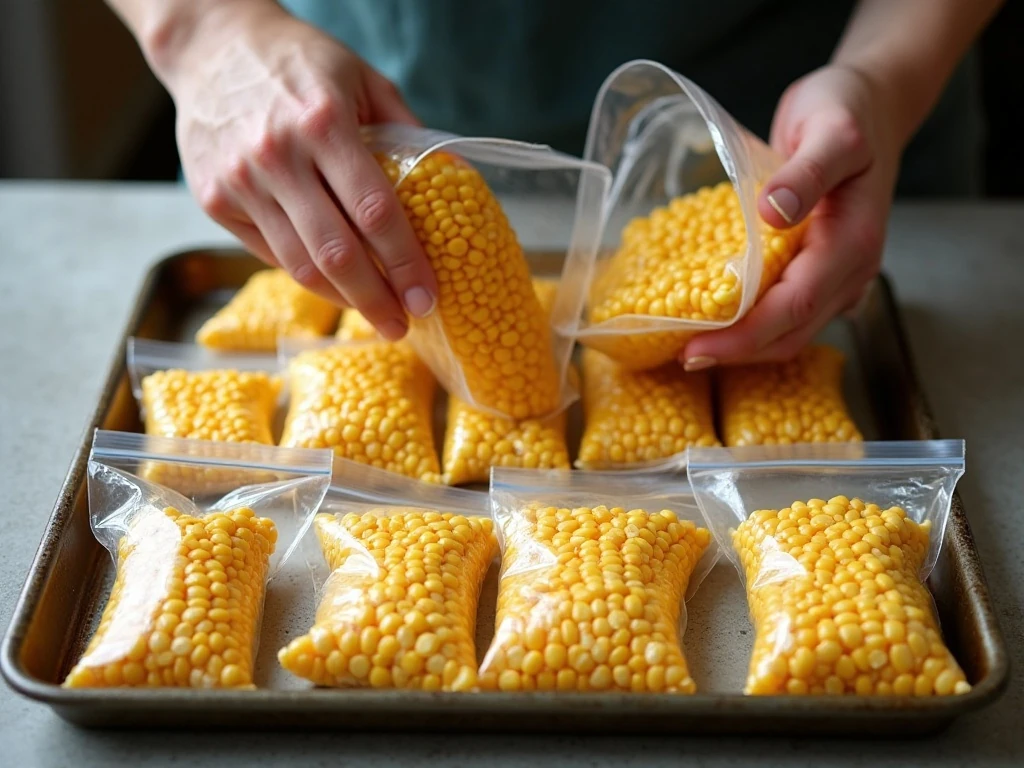
Air is the enemy of long-term freezer quality, so remove as much as possible before sealing. If using freezer bags, gently press the bag flat from the bottom upward, stop before pushing kernels out, and seal securely.
Rigid containers should be made for freezer use and should have about 1/2 inch of headspace. Wipe the rims clean before closing, since stray moisture or kernels can interfere with a tight seal.
Freeze the corn in meal-size portions rather than placing all of it into one large container. Small, flat packages freeze faster and are less likely to develop a large frozen center surrounded by partially thawed kernels.
For best quality, use the dated packages within about 8–12 months. The corn may remain safe longer when continuously frozen, but its flavor and texture are most enjoyable during this recommended quality window.
Preserving corn at the height of summer gives you a versatile ingredient for cooler months. Keep a few portions beside other homemade staples, and consider serving a warm corn side with fresh basic biscuits for a cozy meal.
How to Thaw and Cook Frozen Corn

Frozen corn does not need elaborate preparation. You can add it directly to a soup, stew, casserole, stir-fry, or skillet, allowing it to heat through near the end of cooking.
For a simple side dish, thaw the desired portion in the refrigerator, drain any liquid, and reheat it briefly in a saucepan or skillet. Add butter, herbs, pepper, or other seasonings at that point, and use 1/2 teaspoon salt per quart of corn if you want salted corn.
Avoid prolonged boiling, which can soften the kernels and dilute their naturally sweet flavor. Since blanching has already started the cooking process, frozen corn generally needs only brief reheating until hot.
Thawed corn is also excellent folded into savory bakes and quick breads. For a sweet menu, balance a summer-inspired dinner with a warm peach crisp or another fruit dessert.
Common Mistakes to Avoid
- Waiting too long after harvest: Process corn as soon as possible because sugar begins converting to starch soon after picking.
- Skipping blanching: Raw kernels can lose quality more quickly in the freezer.
- Cooling too slowly: Transfer the corn straight from boiling water to ice water.
- Leaving excess water: Drain well before packaging to reduce ice crystals and watery results.
- Scraping the cob: Remove about two-thirds of the kernel depth and leave the cob clean.
- Freezing one oversized package: Small flat portions freeze and thaw more conveniently.
- Forgetting the date: A label helps you use the oldest packages first and stay within the 8–12 month quality period.
Ways to Use Your Frozen Corn

Keep a bag handy for creamy chowder, chicken soup, chili, corn fritters, casseroles, and skillet rice. The kernels can also add color and a pleasant sweet bite to tacos, pasta salads, grain bowls, and quick fried rice.
For a fast vegetable plate, warm the corn in a skillet with a little seasoning and serve it alongside roasted meat or fish. It is especially welcome with late-summer produce, including a dessert such as this late-summer peach cake.
Because the corn is already blanched, it is a practical addition to recipes that need a short cooking time. Add it near the end so it warms through while keeping its fresh flavor and appealing texture.
How to Freeze Sweet Corn
Ingredients
Method
- Husk the corn, pull away all silk, trim any damaged ends, and rinse the ears. Bring about 4 quarts of water to a full boil in a large pot.
- For kernels, cut them from the cob only after blanching and blanch the kernels for 4 minutes. If freezing whole ears instead, blanch small ears for 7 minutes, medium ears for 9 minutes, or large ears for 11 minutes.
- Immediately transfer the hot corn to about 4 quarts of ice water for approximately the same amount of time as the blanching period. Drain very thoroughly so excess water does not form large ice crystals or make the thawed corn watery.
- For kernels, stand each ear upright and use a sharp knife to cut downward, removing about two-thirds of the kernel depth. Do not scrape the cob, because scraped cob material can make the corn starchy.
- Pack the cooled kernels into freezer bags or rigid freezer containers, pressing out as much air as possible. Leave about 1/2 inch of headspace in rigid containers, label each package with the date, and freeze flat.
Notes
Final Thoughts
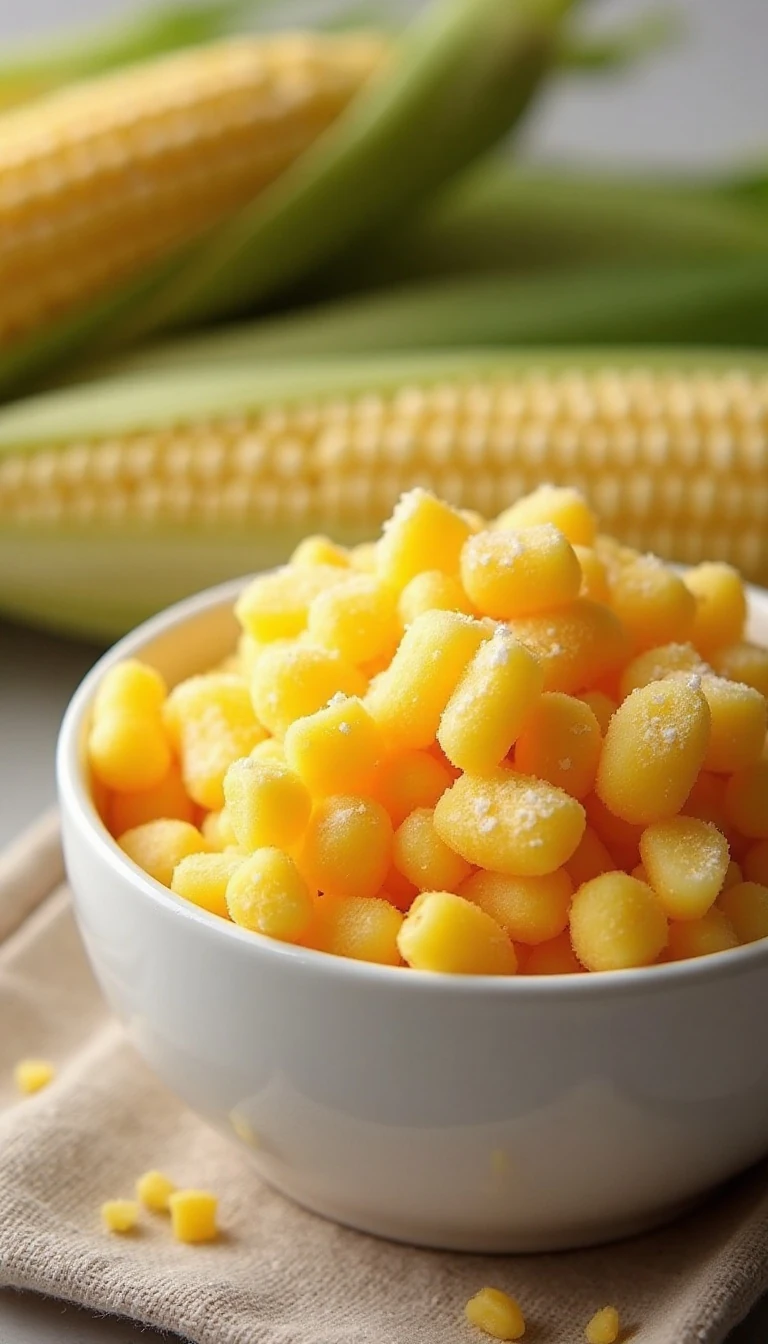
The best way to freeze sweet corn is straightforward: blanch kernels for 4 minutes, cool them quickly in ice water for about 4 minutes, drain them well, and package them with as little air as possible. This small amount of preparation protects the sweetness and color that make fresh summer corn so special.
Label the portions, freeze them flat, and use them within about 8–12 months for the best quality. When winter arrives, you can cook the corn straight from frozen or thaw it in the refrigerator and give it a brief reheating.
With a few ears, a pot of boiling water, and a bowl of ice water, you can preserve the taste of the season for countless easy meals. Make an afternoon of it, freeze several useful portions, and enjoy that sunny corn flavor long after the local harvest has ended.
1 thought on “How to Freeze Sweet Corn: The Best Way to Preserve Fresh Summer Corn”