Sausage kabobs in the oven are an easy, flavorful dinner made with fully cooked smoked sausage, bell pepper, red onion, zucchini, and cherry tomatoes. Toss everything with olive oil and simple Italian seasoning, thread the ingredients onto skewers, and roast at 425°F for 18–25 minutes until the vegetables are tender and the sausage is nicely browned.
This colorful meal brings smoky, savory sausage together with sweet roasted tomatoes, tender zucchini, and lightly caramelized onions. It serves 4, requires just 15–20 minutes of preparation, and is a practical choice for a busy weeknight when you want a complete dinner without a complicated cooking process.
Jump to RecipeWhy You’ll Love This Recipe

These sausage kabobs are designed for real-life dinners. The sausage is already cooked, the vegetables need only a quick chop, and the oven handles most of the work while you prepare a side dish or tidy the kitchen.
Every bite offers a pleasing mix of textures. The sausage becomes warm and lightly crisp around the edges, while the pepper and onion soften, the zucchini turns tender, and the cherry tomatoes become juicy and concentrated.
The recipe also looks special enough for casual entertaining without demanding extra effort. For another comforting sausage-centered meal, you can also try this Italian sausage soup when the weather calls for something warm and spoonable.
Ingredients You’ll Need
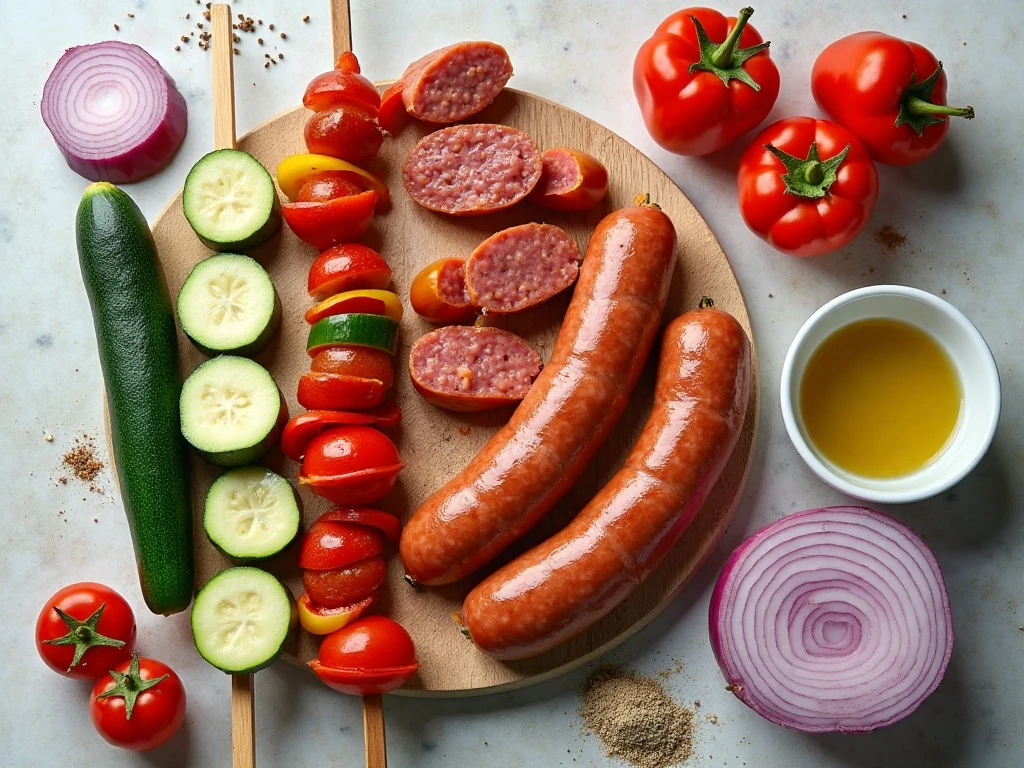
The ingredient list is short, but each item contributes something important to the finished kabobs. Use a fully cooked smoked sausage or kielbasa with a flavor you enjoy, since its smoky seasoning forms the foundation of the dish.
- Sausage: Cut 1 pound into 1-inch pieces so it warms and browns at the same pace as the vegetables.
- Vegetables: One large bell pepper, one medium red onion, one medium zucchini, and 1 cup of cherry tomatoes provide color, sweetness, and freshness.
- Seasoning: Olive oil helps the vegetables roast, while Italian seasoning, garlic powder, kosher salt, and black pepper create a simple savory coating.
- Garnish: Chopped parsley and 1–2 teaspoons of lemon juice are optional, but they add a fresh finish.
Choose firm zucchini and peppers without soft spots, and use cherry tomatoes that are ripe but not overly delicate. Consistent cutting matters more than perfect shapes because similarly sized pieces cook more evenly.
How to Make It Step-by-Step
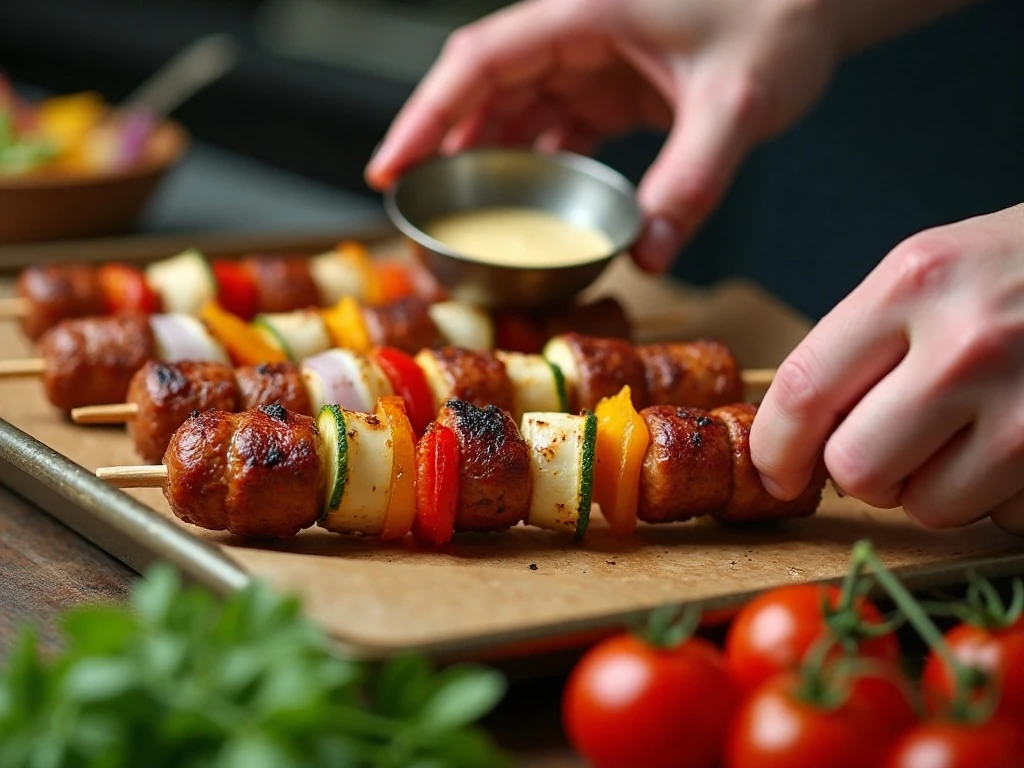
Step 1: Heat the oven to 425°F (220°C), then line a large rimmed baking sheet with foil or parchment. If you want additional air circulation and browning underneath, place a wire rack on top of the sheet before arranging the kabobs.
Step 2: Soak wooden skewers in water for at least 30 minutes before assembling. This keeps them from scorching in the hot oven; metal skewers can be used immediately without soaking.
Step 3: Cut the fully cooked sausage, bell pepper, red onion, and zucchini into pieces that are close to 1 inch. Slice the zucchini into thick half-moons and keep the cherry tomatoes whole so they hold their shape while roasting.
Step 4: Put the sausage and all the vegetables into a large bowl. Add 2 tablespoons of olive oil, 1 teaspoon of Italian seasoning, 1/2 teaspoon of garlic powder, 1/2 teaspoon of kosher salt, and 1/4 teaspoon of black pepper.
Step 5: Toss gently but thoroughly until the oil and seasonings coat every piece. A careful toss helps prevent the tomatoes from splitting before they reach the oven and distributes the seasoning across both the sausage and vegetables.
Step 6: Thread the ingredients onto 8 skewers, alternating sausage with the vegetables. Leave a small amount of space between pieces instead of pressing everything tightly together, because airflow helps the ingredients roast rather than steam.
Step 7: Arrange the filled skewers on the prepared baking sheet without overcrowding them. Roast for 10–12 minutes, then use tongs to turn each skewer and continue roasting for another 8–12 minutes.
Step 8: Check that the vegetables are tender and the sausage is browned. If you want deeper color, broil the kabobs for 1–2 minutes at the end, watching closely because the sausage and exposed vegetables can brown quickly.
Step 9: Finish the hot kabobs with chopped parsley or a squeeze of lemon juice, if desired. Serve them directly from the skewers or slide the ingredients onto plates for easier eating.
Pro Tips for Better Oven Kabobs

Do not overcrowd the baking sheet. Space around the skewers allows hot air to circulate and gives the vegetables a better chance to brown instead of releasing moisture into a crowded pan.
When turning the kabobs, use tongs and rotate them carefully so the softened vegetables stay on the skewers. If a tomato begins to split, that is normal; its juices will add a pleasant roasted sweetness to the pan.
A wire rack is optional, not essential. The lined baking sheet works well, while the rack can encourage more even heat around the kabobs and reduce the amount of direct contact with the pan.
Remember that smoked sausage is already cooked. The oven time is primarily for heating it through and creating browned edges while the vegetables become tender.
If you prefer a saucier finish, brush the kabobs with 1–2 tablespoons of barbecue sauce, Italian dressing, or a honey-mustard glaze in place of or in addition to the dry seasoning. Apply sugary sauces near the end of cooking so they do not burn.
Safe Sausage Choices and Cooking Notes
The listed 18–25 minute timing is for fully cooked smoked sausage, kielbasa, or a similar product. Check the package so you know whether the sausage is fully cooked before beginning.
Raw sausage needs different handling. If using raw pork or beef sausage, cut it into smaller pieces and cook until the center reaches 160°F; raw poultry sausage must reach 165°F.
Raw sausage generally takes about 25–30 minutes, depending on the size of the pieces. Use the package instructions and an instant-read thermometer rather than relying only on color.
If you enjoy hearty baked meals for busy nights, a bubbling baked burrito casserole is another practical option to add to your dinner rotation.
Serving Ideas and Variations

Serve the kabobs with rice, couscous, pasta salad, or crusty bread. A simple green salad also balances the smoky sausage and roasted vegetables without adding much work.
For a different vegetable combination, substitute mushrooms, yellow squash, grape tomatoes, or pineapple for some of the listed produce. Keep the pieces close in size so the replacements roast at a similar rate.
Pineapple adds a sweet contrast to smoky sausage, while mushrooms bring a deeper savory flavor. Yellow squash works especially well with zucchini because both vegetables become tender in the same general time.
For a broader weeknight spread, pair these kabobs with ravioli pizza for a fun family-style meal, or serve them alongside a bright salad and warm bread.
Storage, Reheating, and Make-Ahead Advice
Let leftover kabobs cool, then remove the ingredients from the skewers and place them in a covered refrigerator-safe container. Refrigerate promptly and use good food-safety practices when storing cooked sausage and vegetables.
Reheat the leftovers in the oven until hot, or warm them in a skillet over medium heat. The skillet can help restore some browned edges, while the oven is convenient when reheating several portions.
For easier preparation, cut the sausage and vegetables earlier in the day and refrigerate them separately. Toss with the oil and seasonings shortly before threading so the vegetables remain firm and the tomatoes do not sit in the mixture longer than necessary.
Keep extra sauce and garnishes separate until serving. A fresh sprinkle of parsley or a little lemon juice can make reheated kabobs taste brighter.
More Dinner Inspiration
These kabobs fit nicely into a relaxed weeknight menu because they are colorful, filling, and adaptable. If you want to change cuisines on another evening, try this fragrant Thai green curry for a saucy meal with a different flavor profile.
After dinner, finish with an easy fruit dessert such as this cherry cobbler. Its warm fruit and tender topping make a pleasing contrast to the savory meal.

Sausage Kabobs in the Oven
Ingredients
Method
- Heat the oven to 425°F (220°C). Line a large rimmed baking sheet with foil or parchment, and place a wire rack on top if desired.
- If using wooden skewers, soak them in water for at least 30 minutes. Metal skewers do not require soaking.
- Cut the sausage and vegetables into similarly sized pieces. Place the sausage, bell pepper, red onion, zucchini, and cherry tomatoes in a large bowl.
- Add the olive oil, Italian seasoning, garlic powder, kosher salt, and black pepper. Toss until every piece is evenly coated.
- Thread the sausage and vegetables onto 8 skewers, alternating ingredients and leaving a small amount of space between pieces.
- Arrange the skewers on the prepared baking sheet. Roast for 10–12 minutes, turn the skewers, and roast for another 8–12 minutes, until the vegetables are tender and the sausage is browned.
- For extra browning, broil the kabobs for 1–2 minutes at the end while watching closely. Garnish with chopped parsley or a squeeze of lemon juice, if desired.
Notes
Final Thoughts
Sausage kabobs in the oven deliver a complete dinner with very little fuss. At 425°F, fully cooked smoked sausage warms and browns while bell pepper, red onion, zucchini, and cherry tomatoes roast into a colorful combination of savory, sweet, and juicy flavors.
Keep the cuts similar, leave space between the pieces, and turn the skewers halfway through cooking for the best results. A quick broil at the end adds extra color, while parsley or lemon juice provides a fresh finishing touch.
With 15–20 minutes of preparation and 18–25 minutes in the oven, this recipe is easy enough for a regular night yet attractive enough to share. Add rice, couscous, pasta salad, or crusty bread, and dinner is ready to serve.