This classic Thanksgiving stuffing recipe combines dried white or French bread with buttery sautéed onion and celery, poultry seasoning, parsley, broth, and eggs. Baked separately from the turkey in a 9-by-13-inch dish, it takes about 25–30 minutes to prepare, 20–30 minutes to dry the bread, and 40–50 minutes to bake, making approximately 10–12 servings.
Every spoonful has the comforting flavor people expect from Mom’s stuffing: savory herbs, tender bread, sweet onion, crisp celery, and a golden, crunchy top. The center stays moist without becoming gummy because the bread is thoroughly dried and the broth is added gradually.
Jump to RecipeWhy You’ll Love This Recipe
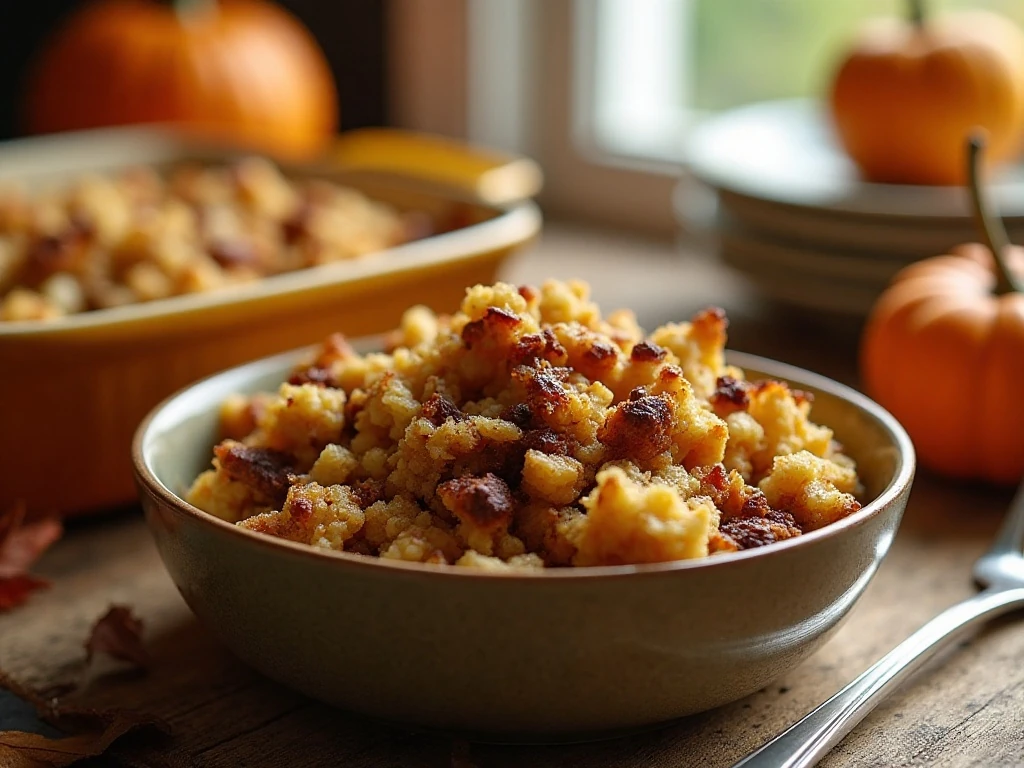
This is the stuffing that makes everyone look toward the serving dish before the turkey is even carved. It is familiar, generous, and richly savory, with enough butter to make every bite satisfying without turning the casserole greasy.
The separate baking method gives you control over the texture. The middle becomes soft and flavorful while the exposed surface develops crisp, toasted edges that are perfect for scooping with a serving spoon.
It is also a practical holiday recipe. The bread can dry overnight, the vegetables can be cooked a day ahead, and the finished dish serves 10–12 people alongside turkey and the rest of the Thanksgiving menu.
For another festive bite to pass around before dinner, try these savory cheese puffs. Their light texture makes a pleasant contrast to this hearty stuffing.
Ingredients You’ll Need
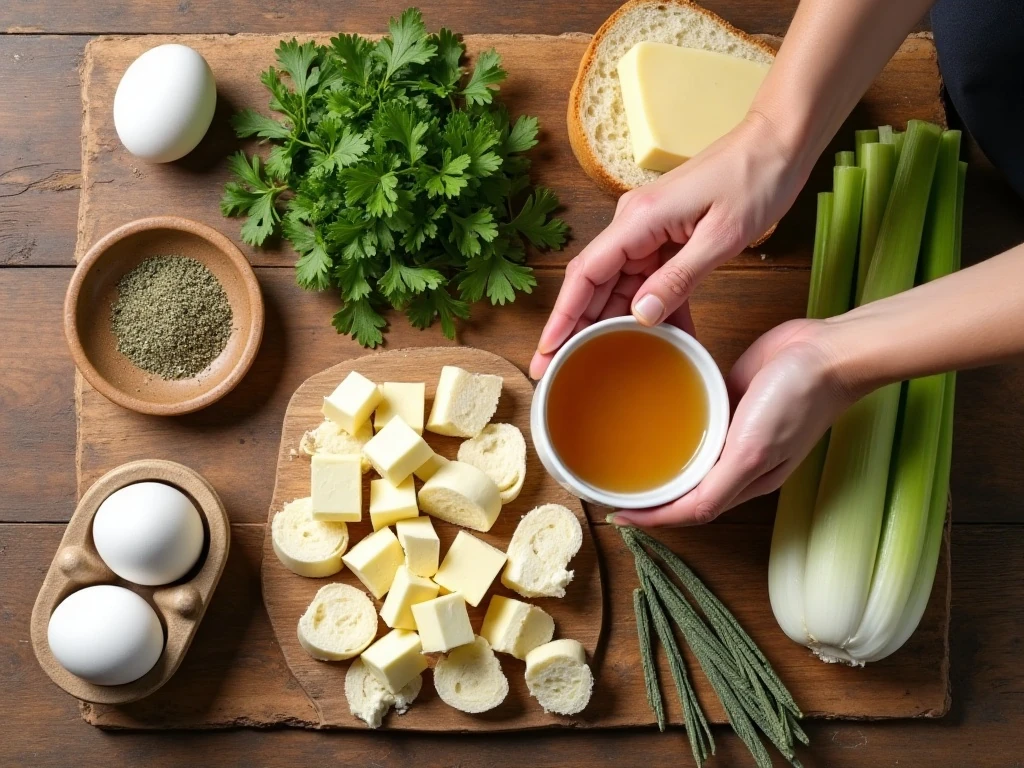
The foundation is 1 pound of day-old white sandwich bread or French bread, cut into 3/4-inch cubes. This yields about 10–12 cups, enough to fill a 9-by-13-inch baking dish generously.
- Bread: Use plain white bread or French bread with a mild flavor that allows the herbs and vegetables to shine.
- Butter: Eight tablespoons create the rich base for the onion, celery, and seasonings.
- Aromatics: One large yellow onion and 3–4 celery stalks provide sweetness, fragrance, and a gentle crunch.
- Herbs: Poultry seasoning, parsley, and optional rubbed sage bring the classic Thanksgiving profile.
- Broth and eggs: Low-sodium chicken or turkey broth moistens the bread, while two beaten eggs help the stuffing hold together.
- Seasoning: Kosher salt and freshly ground black pepper finish the savory flavor.
Fresh parsley gives the brightest color, but 2 tablespoons of dried parsley works well when that is what you have in the pantry. The optional teaspoon of rubbed sage is useful if your family likes a stronger sage flavor.
Keep the broth low-sodium so you can control the final seasoning. Different breads absorb liquid differently, which is why the recipe gives a range of 2 1/2–3 cups rather than one rigid amount.
How to Make It Step-by-Step
Step 1: Cut the bread into even 3/4-inch cubes so the pieces soften at the same rate. Spread them in a single layer on baking sheets and dry them at 300°F for 20–30 minutes, stirring once or twice; they should feel dry throughout but should not become deeply browned.
Step 2: While the bread dries, melt the 8 tablespoons of butter in a large skillet or Dutch oven over medium heat. Add the finely chopped onion and celery and cook for 8–10 minutes, stirring occasionally, until tender and translucent without browning the vegetables.
Step 3: Stir the poultry seasoning, optional rubbed sage, parsley, kosher salt, and black pepper into the softened vegetables. Let the herbs warm in the butter for a moment so their aroma spreads through the mixture.
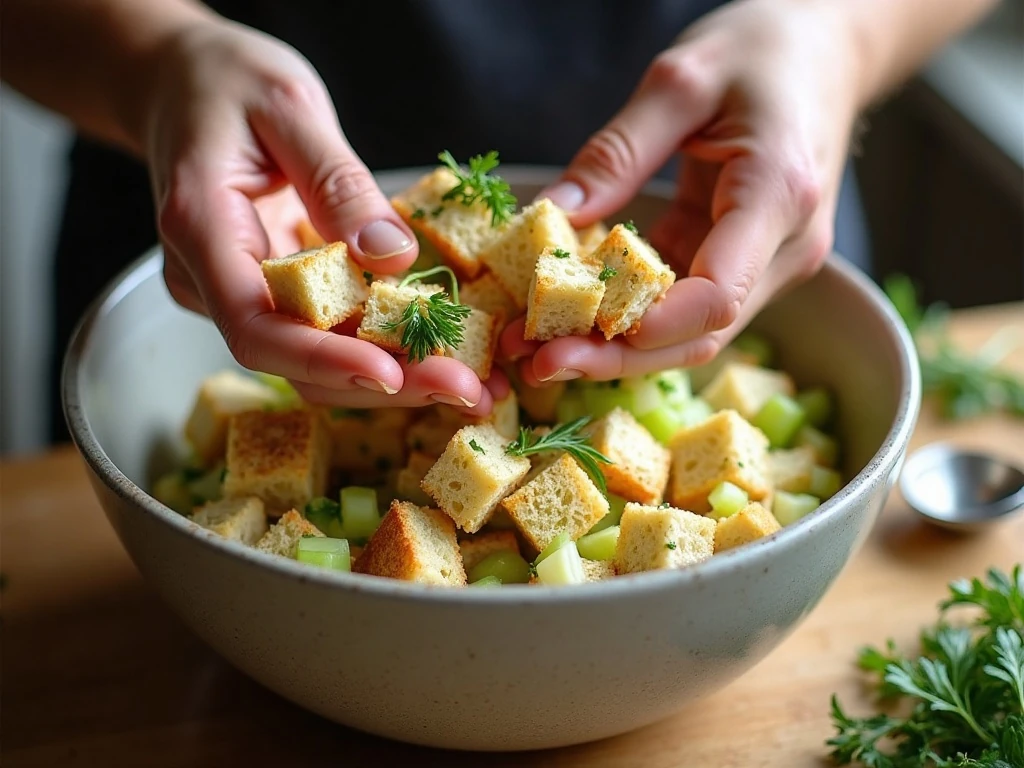
Step 4: Put the dried bread cubes in a very large mixing bowl. Scrape the buttery vegetables over the bread and toss gently with a wide spatula or clean hands until the onion, celery, and herbs are evenly distributed.
Step 5: Whisk the two beaten eggs with 2 1/2 cups of broth in a separate bowl. Pour it over the bread in stages, folding gently after each addition so the cubes remain intact instead of collapsing into a paste.
Step 6: Check the texture before adding more liquid. The bread should be evenly moist and should feel moist when squeezed, but it should not release liquid or look wet and mushy; add the remaining broth a little at a time only as needed.
Step 7: Butter a 9-by-13-inch baking dish and transfer the stuffing into it. Spread it into an even layer without packing it down firmly, then cover the dish with foil.
Step 8: Bake at 350°F for 25–30 minutes with the foil in place. This allows the center to heat and set gently while protecting the surface from browning too quickly.
Step 9: Remove the foil and bake for another 15–20 minutes. The stuffing is ready when the center is hot and the top is crisp and golden, with a few browned edges ready to catch extra gravy.
Step 10: Let the casserole rest briefly before serving so the interior settles and the portions hold their shape. Spoon from the center and edges together to give guests a balance of tender bread and crisp topping.
Pro Tips for Perfect Stuffing
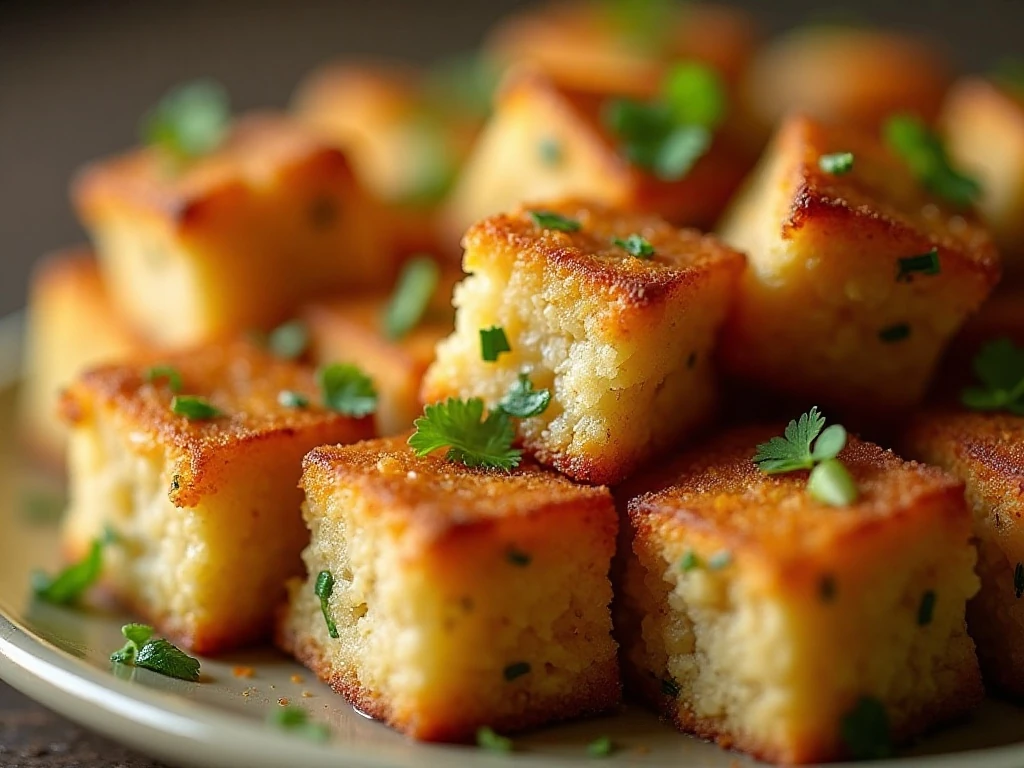
Dry bread is the most important texture step. Fresh bread absorbs broth unevenly, which can leave some pieces gummy while others stay dry; stale bread or briefly oven-dried bread produces a lighter, more cohesive casserole.
Do not pour all the broth in at once. Begin with 2 1/2 cups, fold carefully, and judge the bread before adding more. A moist handful that does not release liquid is the texture you want.
Cut the onion and celery into small, similar pieces. Large chunks can remain firm while the bread softens, but finely chopped vegetables distribute their buttery flavor throughout every serving.
Cook the vegetables until softened, not browned. Browning is not wrong, but this family-style version is built around a mellow, buttery flavor that lets the herbs and broth remain recognizable.
For the crispest top, uncover the casserole for the full final 15–20 minutes. If your oven browns unevenly, rotate the dish once during the uncovered portion, taking care not to spill the hot contents.
Use a light hand when folding. Stirring aggressively breaks the bread cubes apart and can make the stuffing dense. Gentle folding keeps distinct pieces in the finished dish.
Make-Ahead Thanksgiving Strategy
To make the holiday easier, dry the bread up to a day ahead and keep it covered at room temperature once completely cool. You can also cook the butter, onion, celery, and herb mixture one day ahead and refrigerate it.
Before combining, bring the vegetable mixture close to room temperature so it does not chill the bread or slow the absorption of the broth. Assemble the stuffing shortly before baking for the best contrast between the tender center and crisp top.
If you are planning a full dessert table, these pumpkin chocolate chip cookies can be prepared while the stuffing ingredients are cooling. Their warm pumpkin spice flavor fits naturally beside a Thanksgiving meal.
Serving Ideas
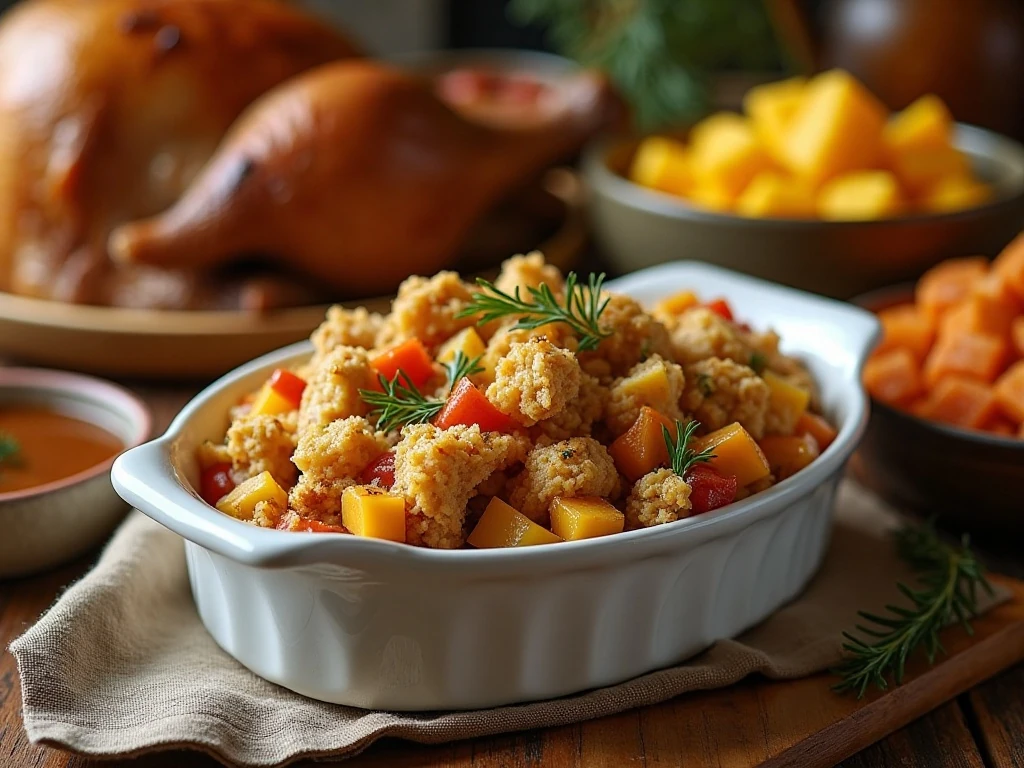
Serve this stuffing warm with turkey, gravy, cranberry sauce, and roasted vegetables. The savory herbs also pair nicely with green beans, mashed potatoes, and a bright salad that cuts through the richness.
A spoonful from the crisp corner is often the prized serving, so try to distribute both the golden top and moist center across the table. If you have leftover parsley, scatter it over the casserole just before it reaches the buffet.
For a sweet and colorful side dish, consider adding fluffy pineapple salad to the menu. A fruit-forward salad brings a cool, creamy contrast to the hot, herb-filled stuffing.
Finish the meal with something cozy and simple, such as a classic cherry crisp. The tart fruit and buttery topping provide a lovely ending after a plate filled with savory holiday dishes.
Storage and Reheating
Cool leftover stuffing promptly and refrigerate it in a covered container. Reheat it until hot throughout, adding a small splash of broth if it seems dry, and cover it at first so the center warms without over-browning the top.
For a crisp finish, uncover the stuffing near the end of reheating. Individual portions can also be warmed in the oven until hot, which helps restore some of the texture from the original bake.
Keep portions sensible when planning the meal, but do not worry if there are leftovers. They are wonderful alongside roasted turkey the next day, tucked into a lunch plate with cranberry sauce, or served with a simple soup.
If you prefer a rich dessert with a dramatic finish after the holiday meal, this almost no-bake mud pie is an indulgent option that can be prepared ahead.
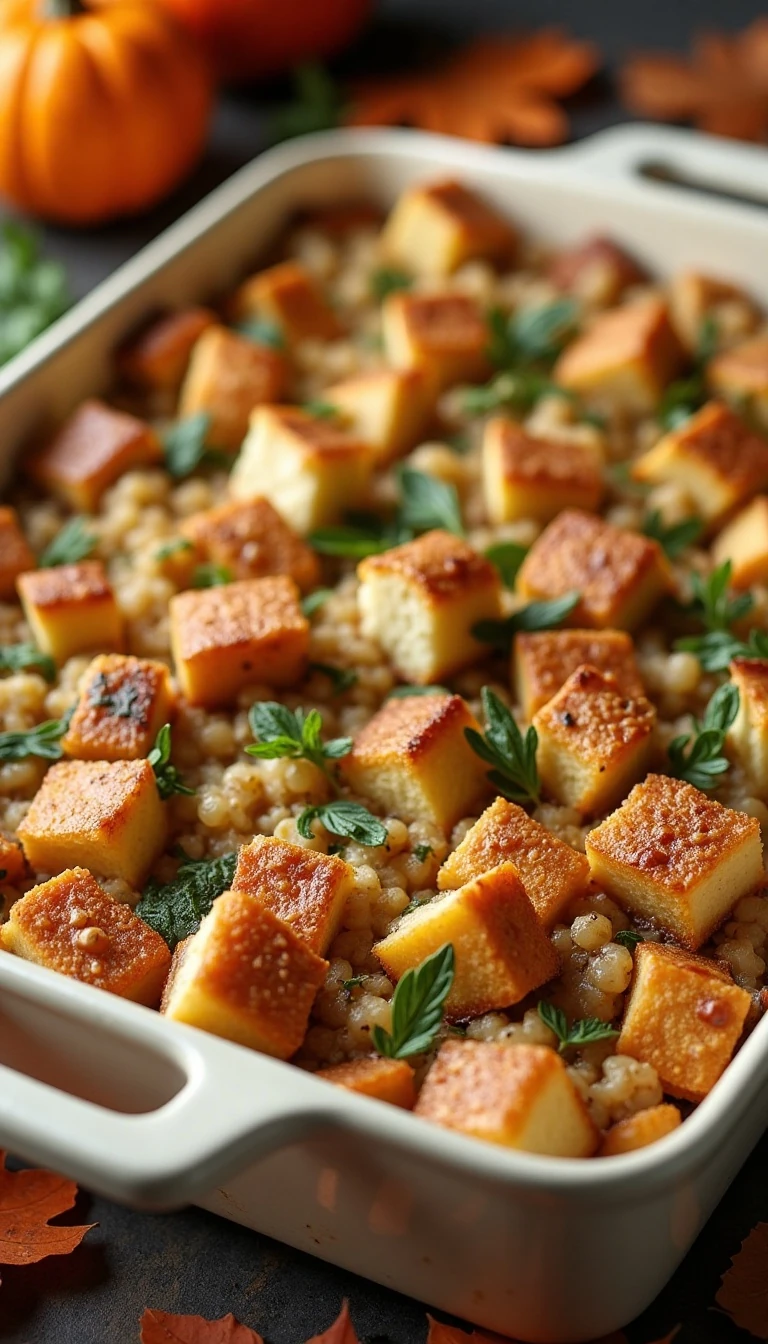
Mom’s Thanksgiving Stuffing Recipe Everyone Loves
Ingredients
Method
- Cut the bread into 3/4-inch cubes and spread them over baking sheets. Dry at 300°F for 20–30 minutes, stirring once or twice, until the cubes feel dry but are not deeply browned.
- Melt the butter in a large skillet or Dutch oven over medium heat. Add the onion and celery and cook for 8–10 minutes, stirring often, until softened but not browned.
- Stir the poultry seasoning, optional rubbed sage, parsley, kosher salt, and black pepper into the buttered vegetables. Cook briefly until the herbs smell fragrant.
- Place the dried bread in a large bowl and add the cooked onion and celery mixture. Toss gently until the vegetables and herbs are distributed throughout the bread.
- Whisk the beaten eggs with 2 1/2 cups of broth. Pour the mixture over the bread and fold gently; add more broth a little at a time until the bread is evenly moist but not wet or mushy.
- Transfer the stuffing to a buttered 9-by-13-inch baking dish. Cover with foil and bake at 350°F for 25–30 minutes.
- Remove the foil and continue baking for 15–20 minutes, until the center is hot and the top is crisp and golden. Rest briefly before serving.
Notes
Final Thoughts
Mom’s Thanksgiving stuffing succeeds because it does a few classic things exceptionally well: it starts with properly dried bread, builds flavor in butter with onion and celery, seasons carefully, and bakes in two stages. The covered bake protects the tender center, while the final uncovered minutes create the crisp golden top everyone reaches for.
Keep the broth gradual, taste for seasoning before the casserole goes into the oven, and give the bread a gentle fold rather than a vigorous stir. With those details in place, you will have a warm, savory stuffing that feels nostalgic, serves a crowd, and earns a permanent place on the Thanksgiving table.