This easy authentic mapo tofu recipe brings the bold, savory flavor of Sichuan cooking to your table in about 35 minutes. Soft or medium-firm tofu simmers in a glossy sauce made with Pixian doubanjiang, ground pork, garlic, ginger, fermented black beans, Sichuan pepper, and a touch of soy sauce, then gets served over hot steamed rice.
The finished dish is spicy, fragrant, slightly numbing, and richly savory without being dry or paste-like. Frying the doubanjiang before adding the stock releases its red chili oil and deep fermented flavor, while adding Sichuan pepper in two stages gives the tofu both citrusy aroma and a lingering numbing sensation.
Jump to RecipeWhy You’ll Love This Recipe
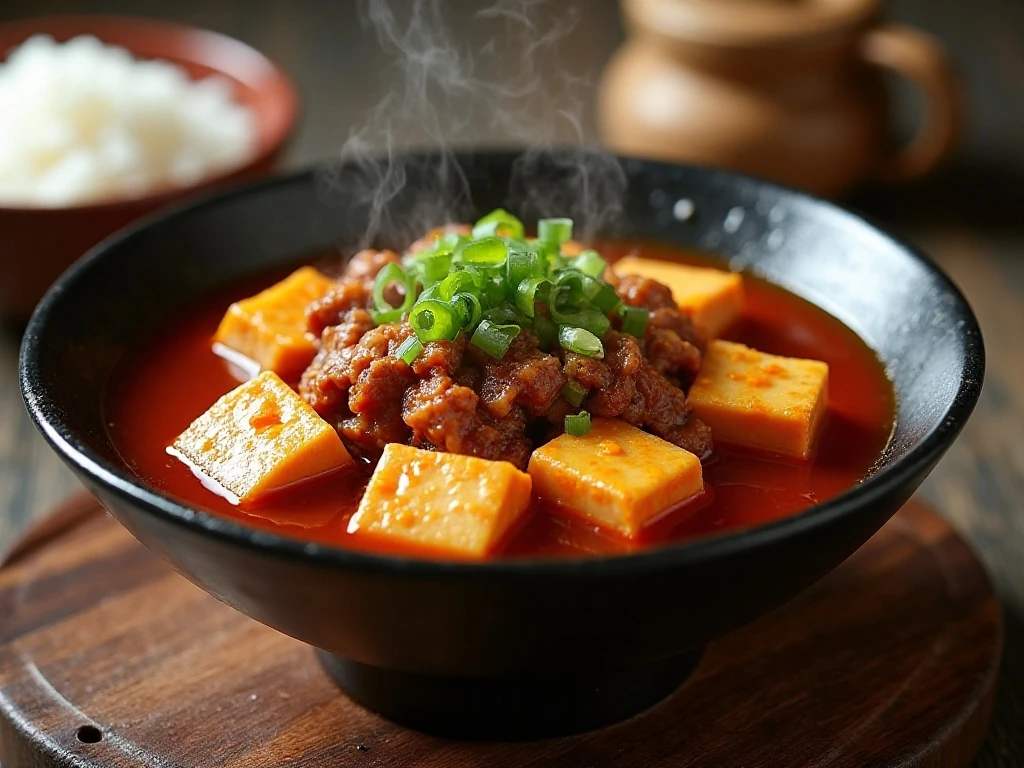
Mapo tofu is one of those dishes that proves a short ingredient list can create extraordinary depth. The combination of fermented bean paste, browned meat, fragrant aromatics, and Sichuan pepper produces layers of flavor in every spoonful, while tofu provides a tender, delicate contrast to the bold sauce.
This home-style version is practical enough for a weeknight but still follows the essential techniques that define authentic Sichuan mapo tofu. The total cooking time is only 15-20 minutes after preparation, making the complete recipe ready in about 35 minutes.
- Deep flavor: Doubanjiang and fermented black beans give the sauce its savory, fermented character.
- Perfect texture: Briefly simmering the tofu warms it and firms it slightly before it enters the sauce.
- Balanced heat: You control the chili powder while Sichuan pepper supplies its distinctive citrusy numbness.
- Easy cleanup: One saucepan and one wok or large skillet are all you need.
If you enjoy bold one-pan dinners, you may also like our easy skillet chicken dinner for another flavorful meal with minimal fuss.
Ingredients You’ll Need
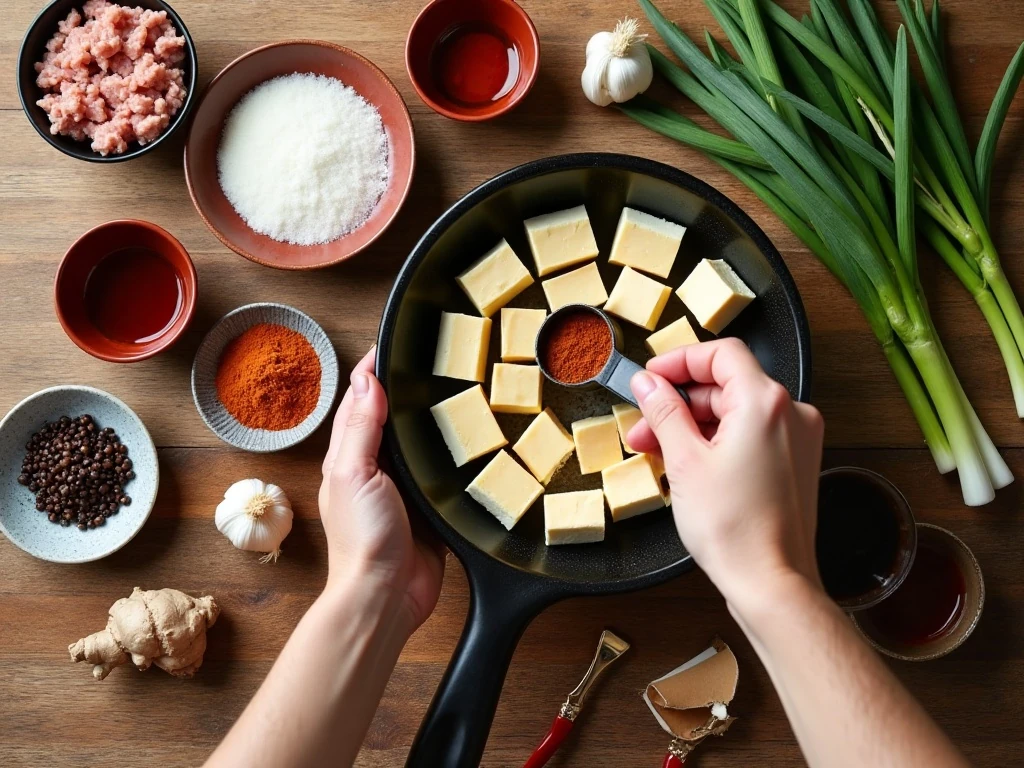
The defining ingredient is doubanjiang, a fermented broad-bean chili paste. For the most characteristic flavor, look for Sichuan Pixian doubanjiang at an Asian grocery store or from a well-stocked online market. Different brands vary in saltiness and heat, so taste the sauce before adding extra soy sauce.
Soft tofu gives the most traditional custardy texture, but medium-firm tofu is easier to move from the simmering water to the wok without breaking. Avoid very firm or extra-firm tofu if you want the classic delicate texture.
Ground pork is widely used and brings richness to the sauce, although ground beef is also traditional in some versions. You only need 3 ounces, because the meat is meant to season the tofu rather than dominate it.
- Fermented black beans: These are optional but traditional, adding a pleasantly salty, earthy note. Lightly chop them so their flavor distributes through the sauce.
- Sichuan peppercorns: Grind them finely and divide the amount. Cooking half releases flavor into the sauce, while the finishing portion keeps its fresh citrus aroma.
- Shaoxing wine: This optional ingredient adds a rounded fragrance. The recipe remains delicious without it.
- Neutral oil: Canola or peanut oil works well because it allows the fermented paste and aromatics to stand out.
For a complete meal, prepare steamed white rice before starting the wok. Its mild flavor and fluffy texture are ideal for catching every drop of the glossy sauce.
How to Make It Step-by-Step
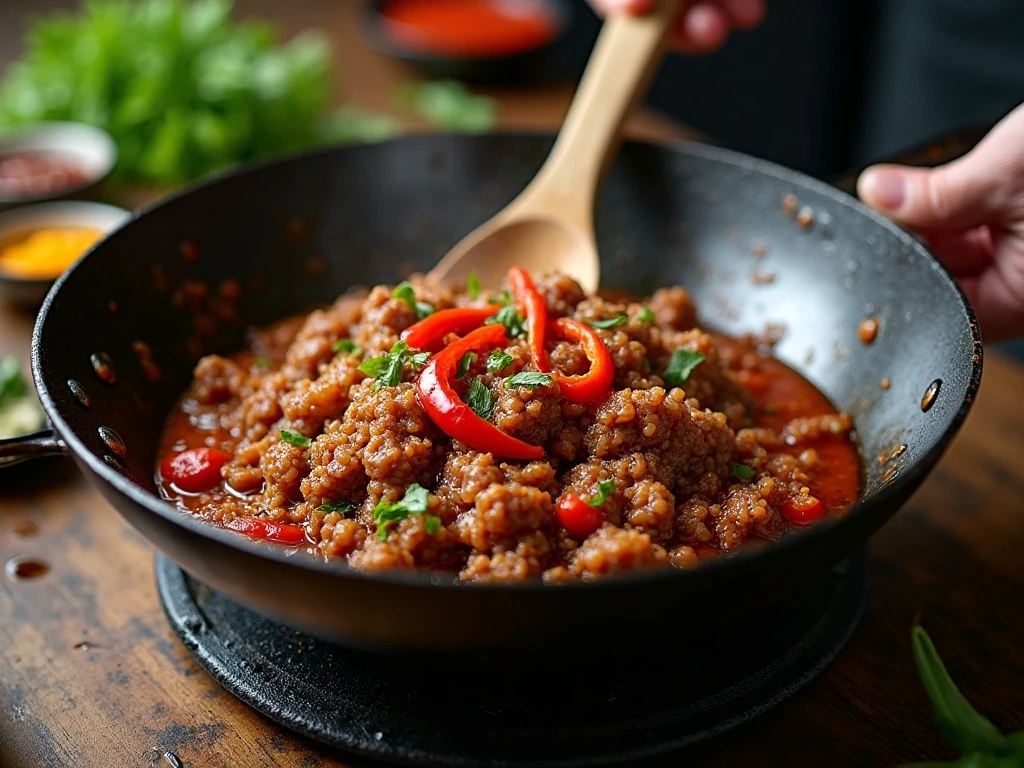
Step 1: Prepare the tofu gently. Bring lightly salted water to a gentle simmer, add the 3/4-inch tofu cubes, and cook for 1-2 minutes. Drain carefully; this short bath warms the tofu, reduces its raw beany flavor, and firms it just enough to make cooking easier.
Step 2: Mix the liquid ingredients before heating the wok. Combine the chicken stock or water, light soy sauce, sugar, and optional Shaoxing wine in a small bowl. Separately whisk the cornstarch with cold water until no dry pockets remain, because the slurry will thicken the sauce at the very end.
Step 3: Brown the meat. Heat a wok or large skillet over medium-high heat, add the neutral oil, and stir-fry the ground pork for 2-3 minutes. Break it into very small pieces as it cooks, allowing the edges to brown and release savory flavor into the oil.
Step 4: Bloom the fermented seasonings. Lower the heat to medium, then add the doubanjiang, chopped fermented black beans, garlic, ginger, chili powder, and half of the ground Sichuan pepper. Fry for 30-60 seconds, stirring constantly, until the mixture smells fragrant and the oil turns a beautiful red; do not let the paste burn.
Step 5: Build the sauce. Pour the prepared stock mixture into the wok and bring it to a gentle simmer, scraping up any flavorful bits from the bottom. Taste carefully at this stage if your doubanjiang is especially salty, and hold back some or all of the soy sauce next time if needed.
Step 6: Add the tofu without breaking it. Slide the drained cubes into the simmering sauce and use a gentle shaking motion to settle them into the pan. If you need to move them, fold from underneath with a spatula rather than stirring vigorously, then simmer for 5-7 minutes so the tofu absorbs the seasoning.
Step 7: Thicken the sauce gradually. Stir the cornstarch slurry once more because the starch settles quickly, then add it little by little while gently folding the tofu. Simmer for 30-60 seconds, stopping when the sauce is glossy and lightly thickened enough to cling to the cubes.
Step 8: Finish and serve immediately. Transfer the mapo tofu to a serving bowl, scatter over the remaining Sichuan pepper and sliced scallions, and bring it to the table with steamed white rice. The dish is at its best while the sauce is hot, fragrant, and fluid rather than stiff.
For another comforting dinner idea to serve on a different night, try these cozy lasagna roll-ups, which use a completely different flavor profile but are just as satisfying.
Chef Tips for Authentic Flavor
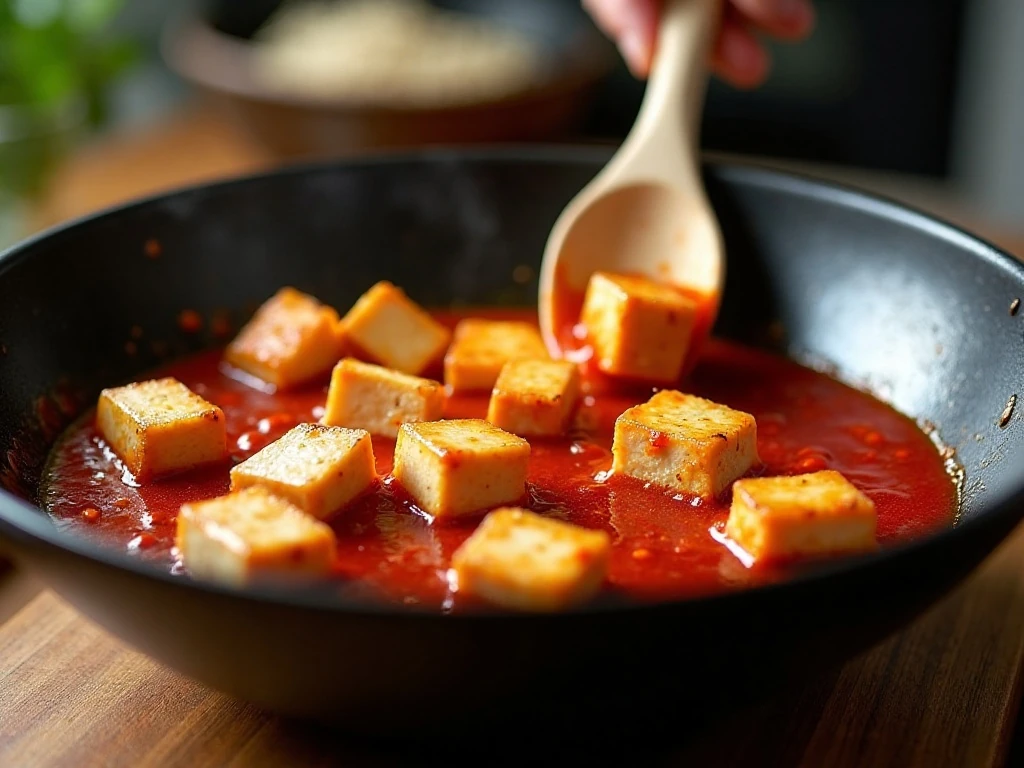
The most important technique is frying the doubanjiang and aromatics in oil before adding liquid. This brief blooming step releases the paste’s red chili oil and deep fermented flavor, giving the final sauce much more character than simply stirring the paste into stock.
Keep the heat moderate once the doubanjiang enters the pan. It should sizzle gently and become aromatic, not scorch. Burned fermented bean paste can taste bitter and will overpower the delicate tofu.
Use Sichuan pepper in stages rather than adding it all at once. The first portion infuses the sauce, while the final sprinkle preserves the bright, citrusy scent and signature numbing sensation that makes mapo tofu distinctive.
- Cut every tofu cube close to 3/4 inch so the pieces cook evenly.
- Shake the wok whenever possible instead of stirring through the tofu.
- Add the cornstarch slurry slowly; the sauce should be lightly thick, glossy, and spoonable.
- Adjust chili powder according to your preferred heat, but do not omit doubanjiang because it supplies the dish’s essential flavor.
- Serve the tofu as soon as it is finished for the best texture.
For a milder family version, use the lower amount of chili powder and keep the doubanjiang measured carefully. You can still enjoy the fragrant fermented flavor without making the sauce intensely hot.
Serving Suggestions
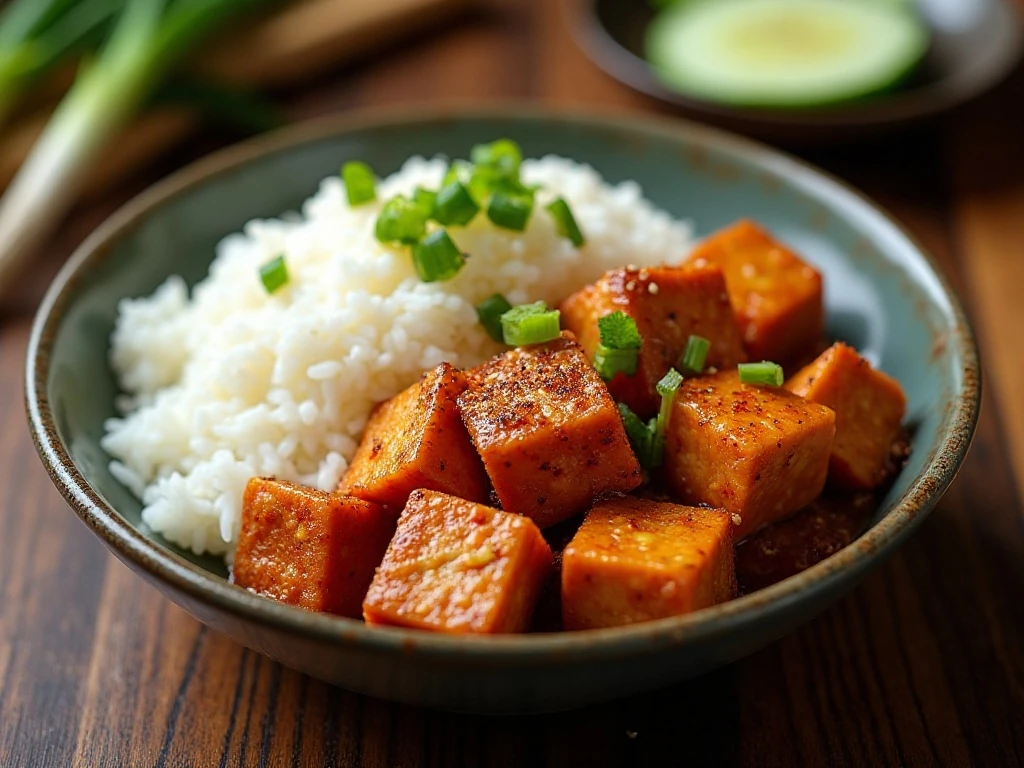
Steamed white rice is the classic partner because it softens the heat and absorbs the red sauce. Spoon the mapo tofu over individual rice bowls, making sure each serving receives tofu, pork, sauce, scallions, and a little finishing pepper.
A simple cucumber salad, lightly dressed greens, or quick-steamed vegetables can provide freshness beside the rich tofu. Keep side dishes clean and mild so they do not compete with the fermented chili sauce.
Mapo tofu is also a wonderful centerpiece for a casual Chinese-inspired dinner. If you are planning a broader comfort-food menu, our easy tortilla soup offers another warming bowl recipe to bookmark.
Storage, Reheating, and Make-Ahead Advice
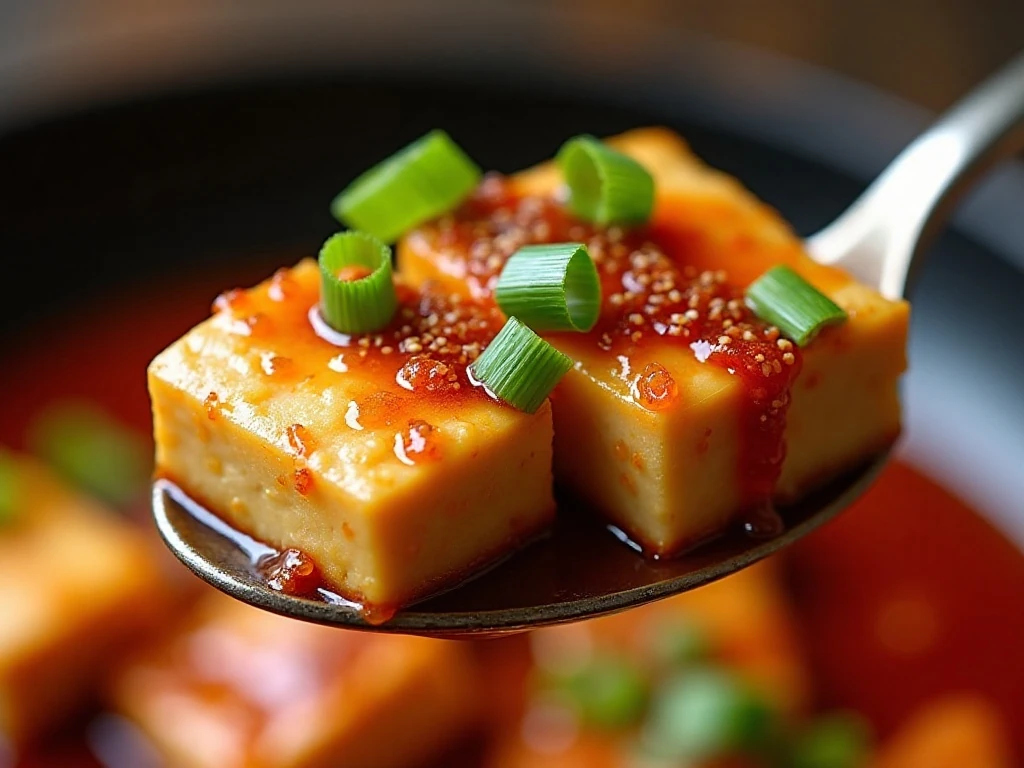
Cool leftovers promptly and store them in a covered container in the refrigerator for up to 3 days. The tofu may become slightly softer after resting, but the sauce will remain flavorful.
Reheat gently in a skillet over medium-low heat with a small splash of water or stock. Fold carefully rather than stirring hard, and warm only until hot; vigorous reheating can break the tofu into small pieces.
For the best texture, prepare the sauce and tofu close to serving time. You can measure the seasonings, mix the stock, chop the aromatics, and make the cornstarch slurry in advance, then cook the dish fresh when everyone is ready to eat.
Leftover ground pork can also inspire another easy dinner, such as our slow cooker meatballs. For a sweet finish after a spicy meal, keep our cranberry bliss bread recipe nearby.
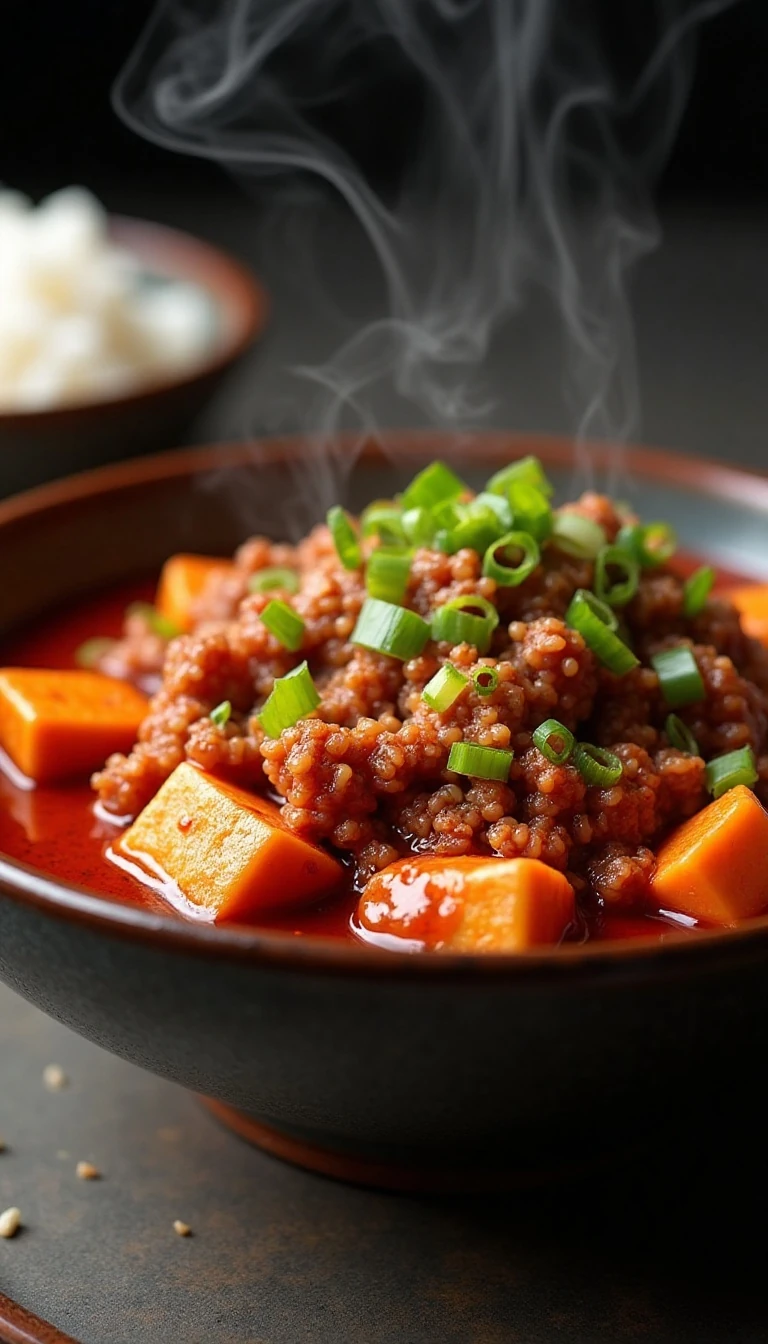
Easy Authentic Mapo Tofu Recipe
Ingredients
Method
- Bring a saucepan of lightly salted water to a gentle simmer. Add the tofu cubes and simmer for 1-2 minutes, then drain carefully.
- Mix the chicken stock or water, light soy sauce, sugar, and Shaoxing wine in a small bowl. In a separate bowl, stir the cornstarch with 2 tablespoons cold water to make a smooth slurry.
- Heat a wok or large skillet over medium-high heat. Add the oil and ground pork, then stir-fry for 2-3 minutes while breaking the meat into small pieces until browned.
- Lower the heat to medium. Add the doubanjiang, fermented black beans, garlic, ginger, chili powder, and half of the ground Sichuan pepper, then fry for 30-60 seconds until fragrant and the oil turns red.
- Pour in the stock mixture and bring it to a simmer. Add the tofu and gently shake the pan or fold with a spatula, then simmer for 5-7 minutes.
- Stir the cornstarch slurry again and add it gradually while gently folding. Simmer for 30-60 seconds, just until the sauce lightly thickens and coats the tofu.
- Transfer the mapo tofu to a serving bowl. Finish with the remaining Sichuan pepper and sliced scallions, then serve immediately with steamed white rice.
Notes
Final Thoughts
This easy authentic mapo tofu recipe delivers the essential Sichuan experience with a manageable ingredient list and straightforward timing. The key is not rushing the small details: simmer the tofu briefly, bloom the doubanjiang in oil, add Sichuan pepper in stages, and handle the tofu with care.
Once the glossy sauce coats the tender cubes, finish the bowl with scallions and fresh Sichuan pepper, then serve it immediately over steamed rice. The result is a hot, savory, spicy dinner with just enough numbing citrus character to keep every bite interesting.
Make it with pork for the classic rich flavor, or use ground beef when that is what you have available. Whether this is your first Sichuan recipe or a familiar favorite, it is a dependable way to put an impressive bowl of mapo tofu on the table in about 35 minutes.