Meringue cookies are light, crisp, and surprisingly easy to make with just four egg whites, sugar, cream of tartar, vanilla, and a pinch of salt. Beat the whites until glossy stiff peaks form, pipe or spoon them onto parchment, then bake at 225°F for 1 to 1 1/2 hours and let them finish drying in the turned-off oven.
These small cookies have a delicate crunch that melts into a soft, airy center. Their clean vanilla flavor makes them lovely for holidays, showers, cookie trays, or an elegant after-dinner treat, and the recipe yields about 36 to 48 cookies depending on the size you pipe.
Jump to RecipeWhy You’ll Love This Recipe
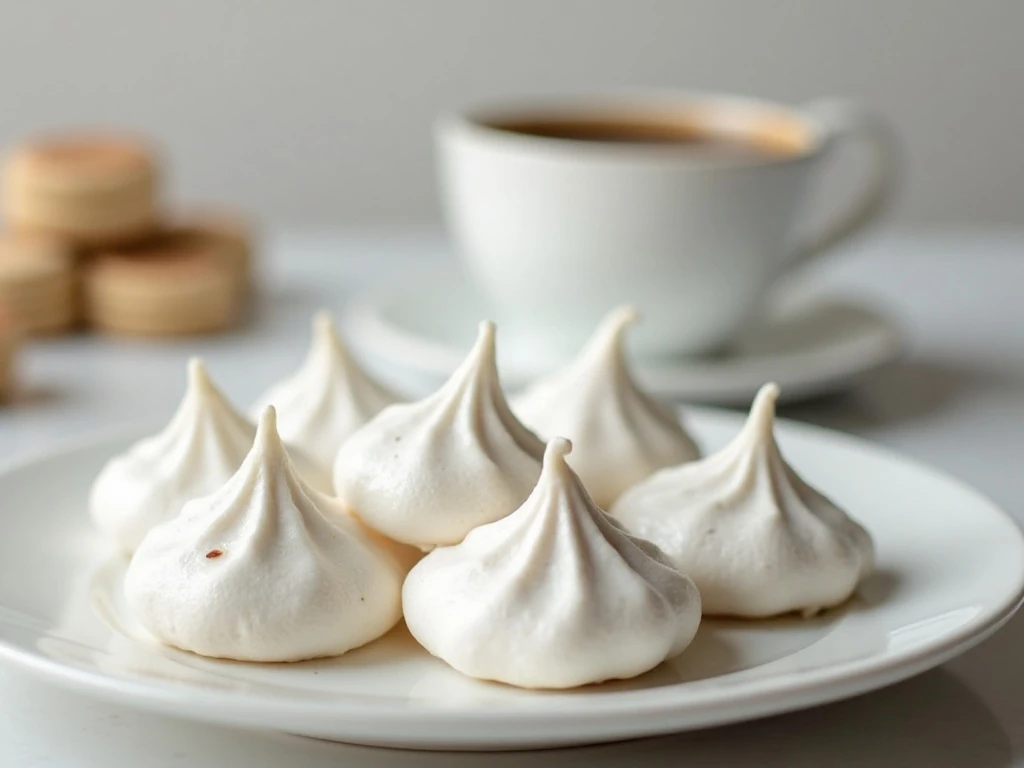
Meringue cookies are one of the most charming ways to turn a few simple ingredients into a special dessert. The finished cookies are featherlight in your hand, crisp at the edges, and full of sweet vanilla flavor without the heaviness of a traditional butter cookie.
The recipe is also wonderfully flexible in presentation. Pipe neat stars, swirls, kisses, or small rounds, or use a spoon for a more rustic look. The cookies can stand alone on a dessert plate, accompany coffee, or add a crisp contrast beside fruit and cream.
Because the oven does most of the work, meringues are especially useful when you want a make-ahead cookie. If you are building a varied dessert table, you might also enjoy the tender texture of our buttery melting moments for a completely different cookie experience.
Ingredients You’ll Need
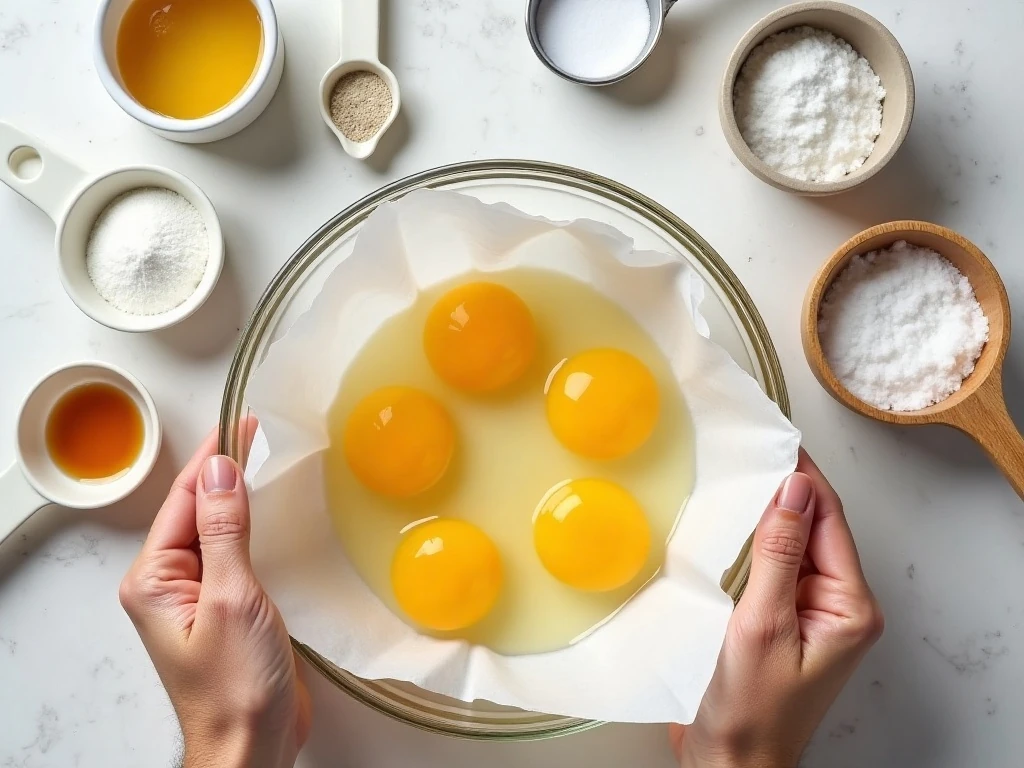
The ingredient list is short, but each item has an important job. Egg whites provide the structure, sugar sweetens and stabilizes the foam, cream of tartar supports a stable whip, vanilla adds flavor, and salt keeps the sweetness balanced.
- 4 large egg whites: Use about 120 grams of whites and bring them to room temperature for better volume.
- 1 cup sugar: Superfine sugar dissolves quickly, though regular granulated sugar works well when added slowly.
- 1/2 teaspoon cream of tartar: This helps the whipped whites hold their shape.
- 1 teaspoon pure vanilla extract: Vanilla gives the cookies their familiar bakery-style flavor.
- 1/8 teaspoon salt: A small pinch is enough to round out the sweetness.
Measure the sugar carefully because too little can produce a fragile foam, while undissolved sugar can leave the cookies grainy. If you are separating eggs, crack each egg into a small cup first, then add the clean white to the mixing bowl; this prevents one broken yolk from spoiling the whole batch.
Equipment and Preparation
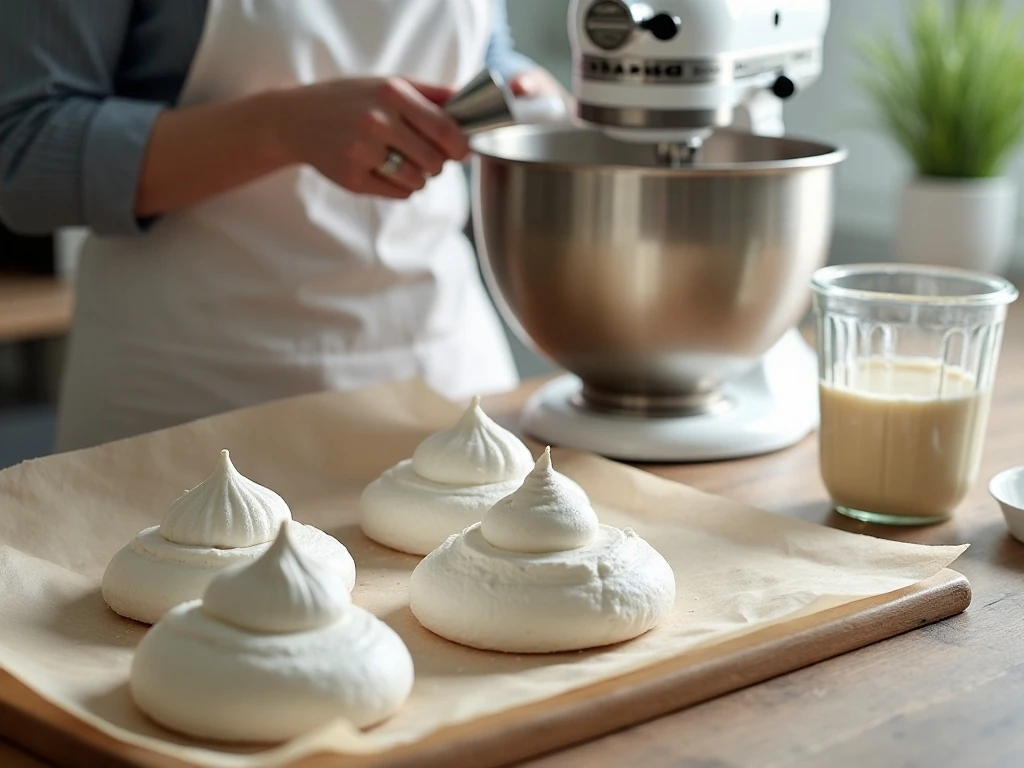
You will need a large mixing bowl, an electric hand mixer or stand mixer, measuring tools, parchment paper, and one or two baking sheets. A piping bag with a star tip makes attractive ridges, but a spoon works perfectly for simple rounded mounds.
Grease is the main enemy of whipped egg whites. Wash and dry the bowl, beaters, and any utensils thoroughly, then wipe them with a little vinegar or lemon juice if you want extra assurance that no oily residue remains.
Set the eggs out before beginning so the whites reach room temperature. Preheat the oven to 225°F (107°C), or choose 200°F (95°C) when making especially tiny or delicate cookies, and line the baking sheets with parchment.
For another dessert that rewards careful preparation, save our easy pumpkin roll for a weekend baking project. Its soft cake and creamy filling offer a lovely contrast to these crisp cookies.
How to Make It Step-by-Step
Step 1: Separate the eggs carefully, making sure no trace of yolk enters the whites. Place the room-temperature whites in the clean mixing bowl with the cream of tartar and salt, then beat on medium speed until the mixture becomes foamy.
Step 2: Increase the mixer to medium-high speed and continue beating until soft peaks form. When you lift the beaters, the whites should create peaks that bend gently at the tips rather than standing upright.
Step 3: Add the sugar about 1 tablespoon at a time while the mixer continues running. Pause occasionally to let each addition blend in, because slowly incorporating the sugar produces a smoother, more stable meringue than adding it all at once.
Step 4: Keep beating until the mixture is thick, glossy, and able to hold stiff peaks. Rub a tiny amount between clean fingers; the sugar should be mostly dissolved, with little or no gritty feeling, before you move on.
Step 5: Beat in the vanilla extract just until combined. Avoid prolonged mixing at this stage, since the goal is to preserve the airy structure you created while whipping the whites.
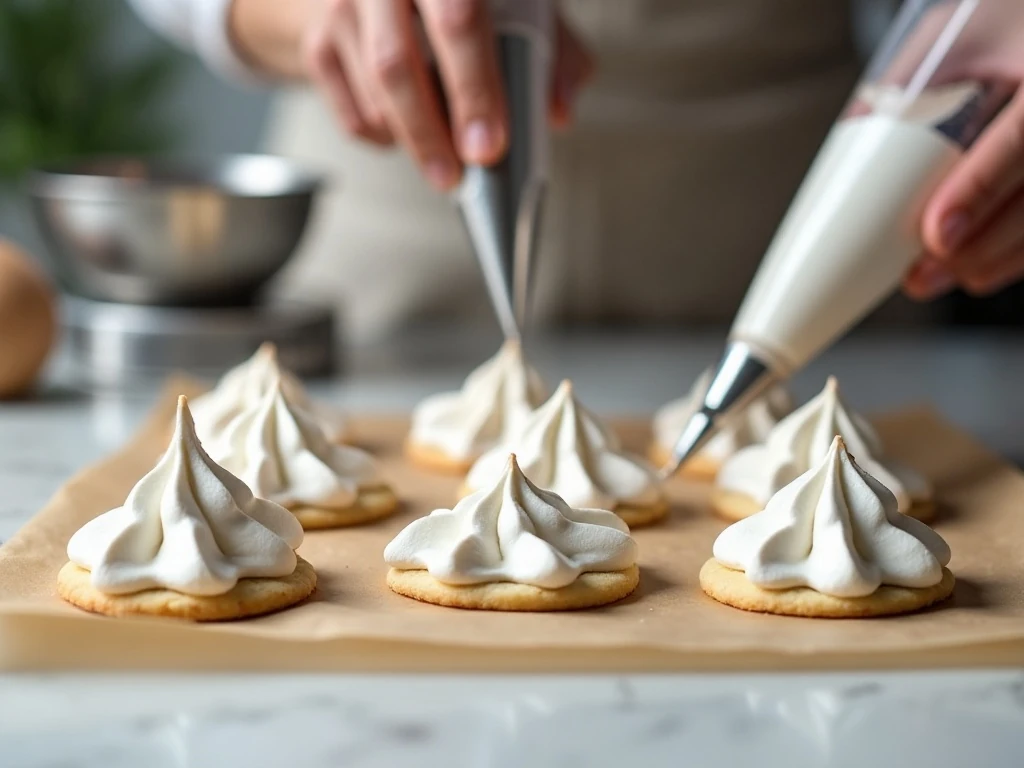
Step 6: Spoon small mounds onto the parchment or transfer the meringue to a piping bag and pipe 36 to 48 small cookies. Leave a little space between each one, even though they do not spread as much as ordinary drop cookies.
Step 7: Bake for 1 to 1 1/2 hours, checking for dryness rather than browning. The cookies should remain white or only lightly colored, feel dry to the touch, and lift easily from the parchment when ready.
Step 8: Turn off the oven and leave the cookies inside for at least 1 hour, allowing the gentle residual heat to remove remaining moisture. In damp weather, leave them in the closed oven overnight for the crispest finish.
Pro Tips for Crisp, Stable Meringues
The most important rule is to keep every trace of fat away from the bowl. Even a small amount of butter, oil, or egg yolk can stop the whites from developing a strong foam, so separate eggs slowly and use spotless equipment.
Room-temperature whites generally whip to greater volume, but patience matters just as much. Begin at medium speed to build smaller, more stable bubbles before increasing the speed, and do not rush the sugar additions.
- Use parchment: It helps the cookies release cleanly after drying.
- Watch the color: If the meringues begin to brown, reduce the oven temperature.
- Pipe consistent sizes: Cookies of similar size finish at the same time.
- Keep the oven closed: Frequent door opening releases heat and can lengthen the drying process.
- Plan for humidity: A damp day may require overnight drying in the switched-off oven.
If your finished meringue feels gritty, the sugar likely needed more time to dissolve. If it spreads or loses its shape, check for grease, yolk contamination, or sugar added too quickly.
Storage and Serving Ideas
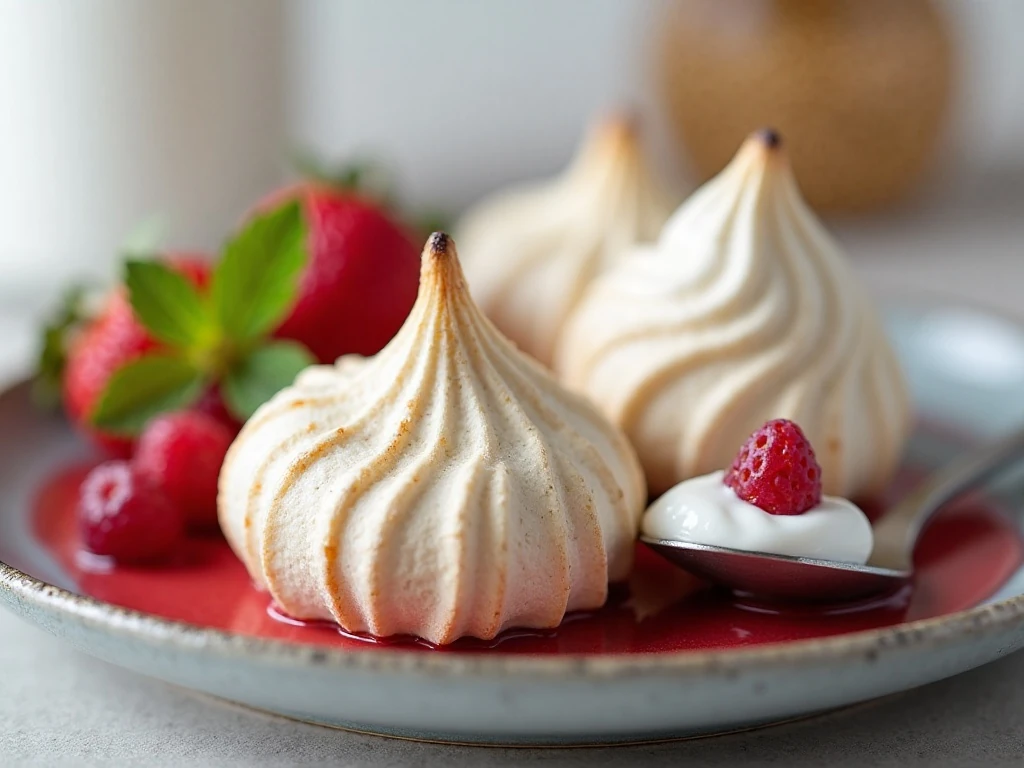
Cool the cookies completely before storing them. Place them in an airtight container at room temperature, separating fragile layers with parchment if needed, and keep the container away from steam, humidity, and direct sunlight.
Do not refrigerate meringue cookies. The refrigerator contains moisture that can soften their crisp texture, while a tightly sealed container at room temperature protects them much better.
Serve them with tea, espresso, berries, whipped cream, or a scoop of ice cream. They also make a pretty garnish for cakes and puddings when crumbled just before serving, though their best texture comes from enjoying them fresh and dry.
For a seasonal cookie tray, pair these airy bites with pumpkin oatmeal cookies. If you are planning a broader celebration menu, our Cinco de Mayo recipe collection offers plenty of savory dishes and festive sweets to round out the table.
Frequently Asked Questions
Why did my meringue cookies turn brown? The oven may be running hot, or the cookies may need a lower drying temperature. Reduce the heat, especially if using a dark baking sheet, and remember that the cookies should remain white or only lightly colored.
Why are the cookies sticky? Sticky meringues usually need more drying time, particularly during humid weather. Return them to a low oven or leave them in the switched-off oven longer, then store them immediately in an airtight container.
Can I make them without a piping bag? Yes. Spoon small, evenly sized mounds onto parchment and use the back of the spoon to create a gentle swirl or peak. The appearance will be rustic, but the flavor and crisp texture will be just as delightful.
What can I serve with them? Fresh berries, softly whipped cream, custard, chocolate mousse, or coffee all pair beautifully with the sweet vanilla cookies. Their crisp texture is particularly pleasant alongside creamy desserts such as our peach cobbler.
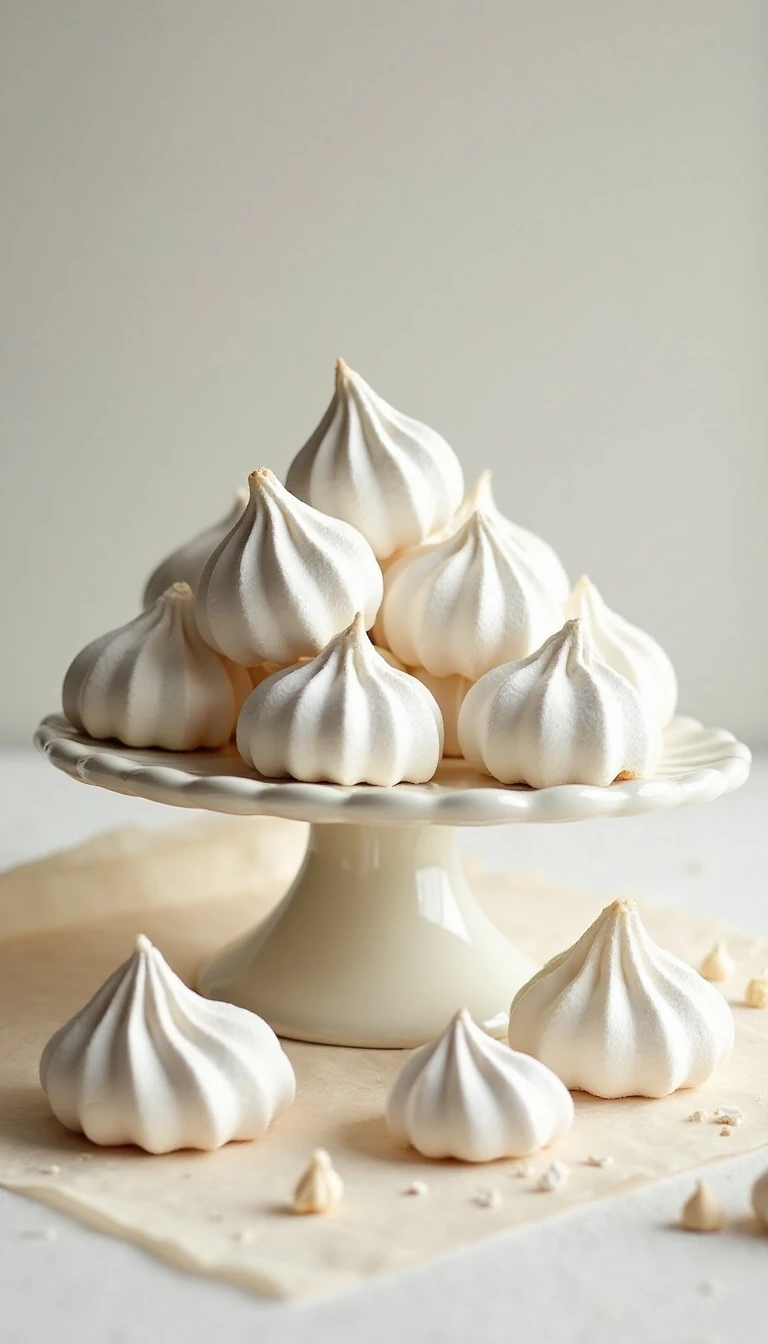
Meringue Cookies
Ingredients
Method
- Heat the oven to 225°F (107°C), or 200°F (95°C) for especially small or delicate cookies. Line baking sheets with parchment paper.
- Place the room-temperature egg whites, cream of tartar, and salt in a completely clean, grease-free mixing bowl. Beat on medium speed until foamy, then increase to medium-high and continue until soft peaks form.
- Add the sugar gradually, about 1 tablespoon at a time, while continuing to beat. Keep mixing until the meringue is thick and glossy, forms stiff peaks, and feels mostly smooth when rubbed gently between clean fingers.
- Beat in the vanilla extract. Transfer the meringue to a piping bag, or spoon small mounds onto the prepared baking sheets.
- Bake for 1 to 1 1/2 hours, until the cookies are dry, crisp, and easy to lift from the parchment. They should remain white or only lightly colored.
- Turn off the oven and leave the cookies inside until completely cool and dry, at least 1 hour. In humid weather, leave them in the switched-off oven overnight.
Notes
Final Thoughts
These meringue cookies prove that impressive baking does not require a long ingredient list. With clean equipment, carefully separated eggs, gradual sugar additions, and a slow drying period, you can create a batch of delicate cookies that look elegant and taste wonderfully crisp.
Give yourself plenty of time for the oven and cooling stages, especially if the weather is humid. Once fully dry, the cookies are ready to brighten a dessert platter, accompany a warm drink, or satisfy a craving for something sweet and light.
Make the cookies small for a classic melt-in-your-mouth bite, or pipe slightly larger shapes for an eye-catching centerpiece. However you serve them, protect their crispness in an airtight container and enjoy every airy, vanilla-scented bite.