This easy custard bread pudding recipe turns 8 cups of day-old bread into a warm, creamy dessert with a lightly browned top and a soft, gently set center. Make it in a 9 x 13-inch baking dish with eggs, whole milk, cream, sugar, butter, vanilla, cinnamon, and nutmeg, then bake it at 350°F for 45–55 minutes.
The texture is the best part: tender bread absorbs the rich vanilla custard while the top becomes golden and slightly crisp. Serve each warm spoonful plain, with powdered sugar, whipped cream, caramel sauce, or vanilla sauce for a comforting dessert that is simple enough for a weeknight and special enough for guests.
Jump to RecipeWhy You’ll Love This Recipe
This custard bread pudding is one of those desserts that feels generous without demanding complicated preparation. The ingredients are familiar, the method uses one baking dish, and the finished pudding feeds 8–10 people.
Day-old bread gives every cube a chance to soak up the egg-and-cream mixture. As it bakes, the edges turn golden while the middle stays tender, creamy, and pleasantly spoonable.
The recipe is also flexible. French bread gives the pudding a classic structure, brioche makes it especially buttery, challah adds a delicate richness, and plain white bread creates a wonderfully nostalgic result.
If you enjoy turning simple bread into a family-style side or dessert, our homestyle bread stuffing is another useful recipe to keep nearby.
Ingredients You’ll Need
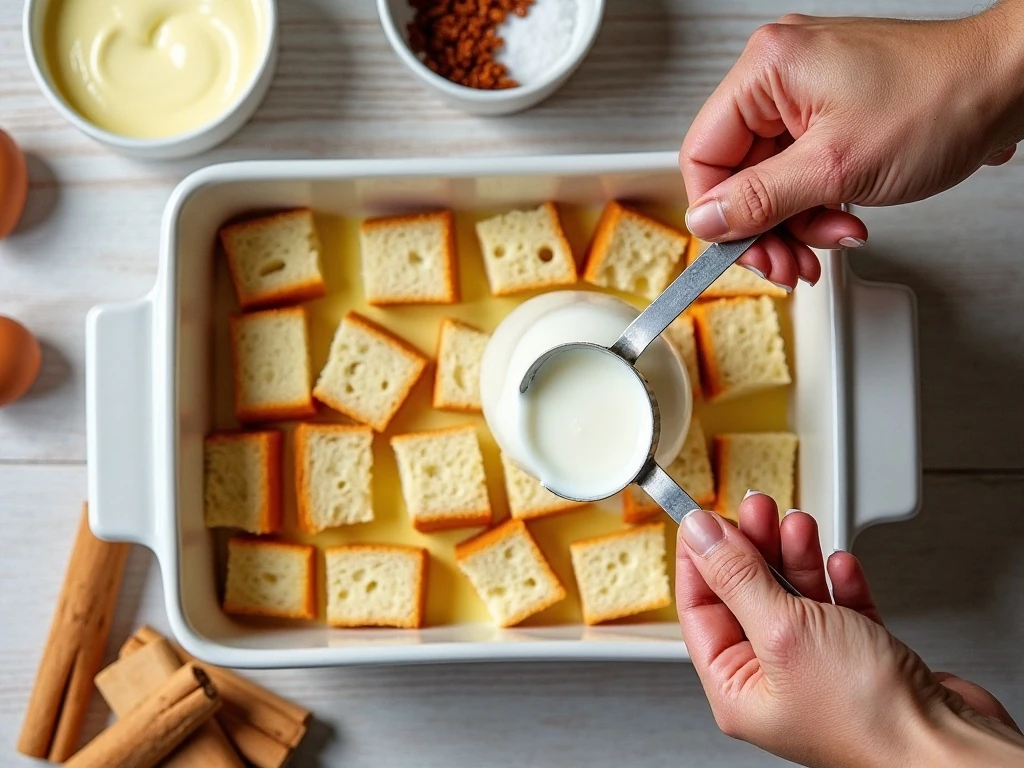
The foundation is 8 cups of cubed day-old bread. Cut the slices into approximately 1-inch cubes so they are large enough to retain some texture but small enough to absorb the custard throughout.
Four large eggs provide the setting power, while 2 cups of whole milk and 1 cup of heavy cream or half-and-half create a rich, tender texture. The cream is especially helpful when you want a dessert that tastes lush without requiring a complicated sauce.
- Sweetness: Three-fourths cup granulated sugar balances the dairy and spices.
- Flavor: Vanilla, cinnamon, nutmeg, and salt give the custard its familiar bakery warmth.
- Richness: Four tablespoons of melted unsalted butter add a silky mouthfeel.
- Optional fruit: Half a cup of raisins brings chewy sweetness to every few bites.
Grease the baking dish with extra butter before adding the bread. This helps prevent sticking and adds a little flavor around the browned edges.
Choosing and Preparing the Bread
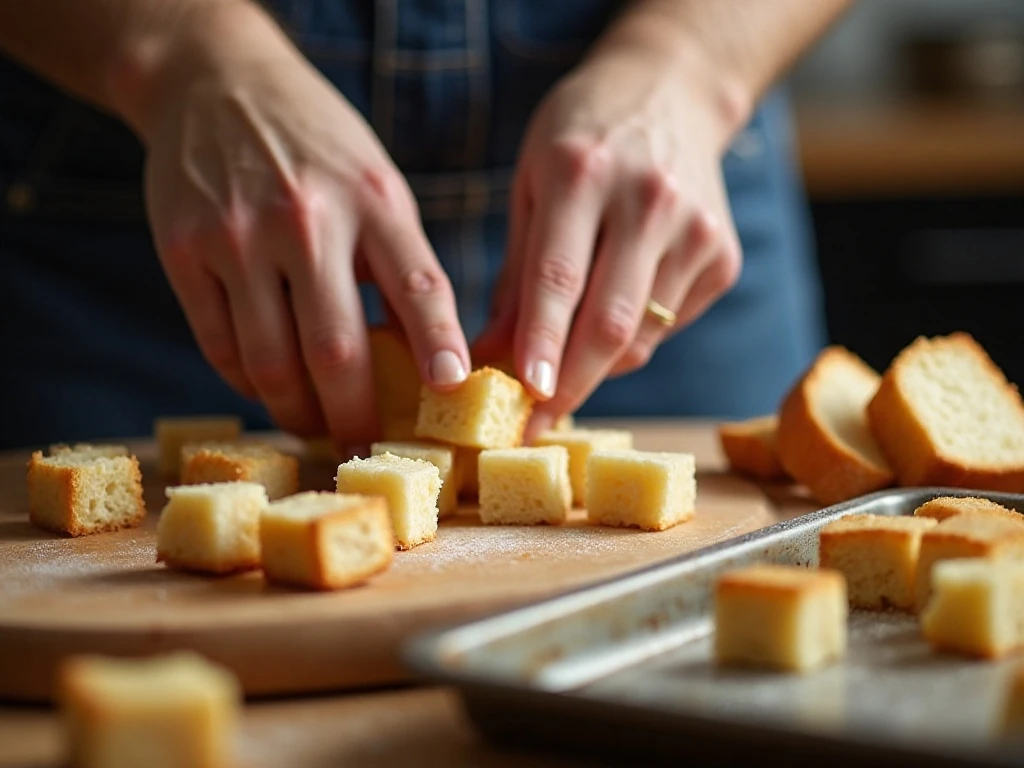
Stale bread is ideal because its drier crumb acts like a sponge for the custard. Fresh bread can work, but it may become overly soft on the outside before the center has absorbed enough liquid.
If your bread is fresh, cut it into cubes and spread them on a baking sheet. Dry the cubes in a 300°F oven for about 10–15 minutes, then let them cool briefly before placing them in the prepared dish.
There is no need to make every cube perfectly identical, but keeping them close to 1 inch helps the pudding bake evenly. A mixture of slightly smaller and larger pieces can create appealing contrast between creamy pockets and chewy edges.
For another creative way to use leftover bread, try this chocolate banana bread pudding when you are in the mood for a fruit-and-chocolate variation.
How to Make It Step-by-Step
Step 1: Heat the oven to 350°F (175°C), then generously grease a 9 x 13-inch baking dish with extra butter. Set the dish aside while you prepare the bread and custard so the assembly can happen quickly and evenly.
Step 2: Cut the day-old French bread, brioche, challah, or white bread into approximately 1-inch cubes. Place the cubes in the prepared dish, spreading them into an even layer, and sprinkle the raisins over the top if you are using them.
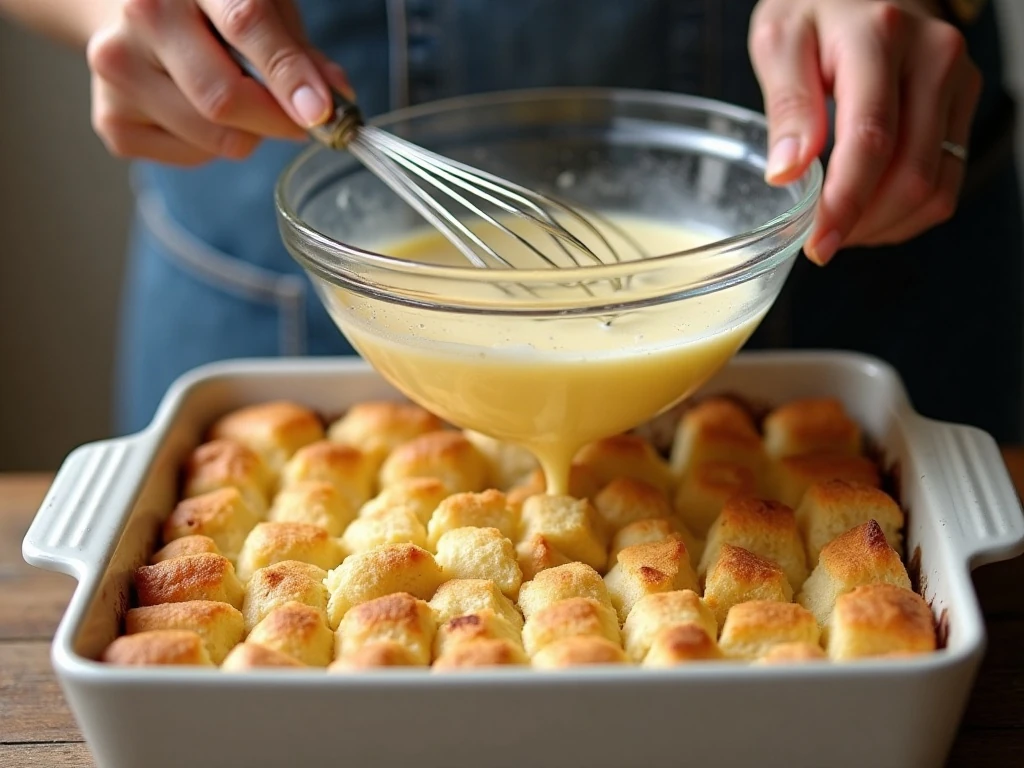
Step 3: In a large bowl, whisk together the eggs, whole milk, heavy cream or half-and-half, sugar, melted butter, vanilla extract, cinnamon, nutmeg, and salt. Continue whisking until the sugar is distributed and the mixture looks smooth, with no visible streaks of egg white.
Step 4: Pour the custard slowly and evenly over the bread cubes. Use a spatula or the back of a spoon to press the bread down gently, turning or nudging a few pieces if needed so the liquid reaches the lower layers.
Step 5: Let the assembled pudding stand for 10–20 minutes. This soaking period allows the bread to absorb the custard before baking, which helps create a soft center instead of a dry one.
Step 6: Bake the dish uncovered for 45–55 minutes. Watch for a lightly browned top and a center that is nearly set; a knife inserted near the middle should come out mostly clean, while the pudding should retain a slight jiggle.
Step 7: Remove the baking dish from the oven and let it rest for 10–15 minutes. The custard will continue firming during this time, making the portions easier to serve while keeping the inside warm and creamy.
How to Tell When Bread Pudding Is Done
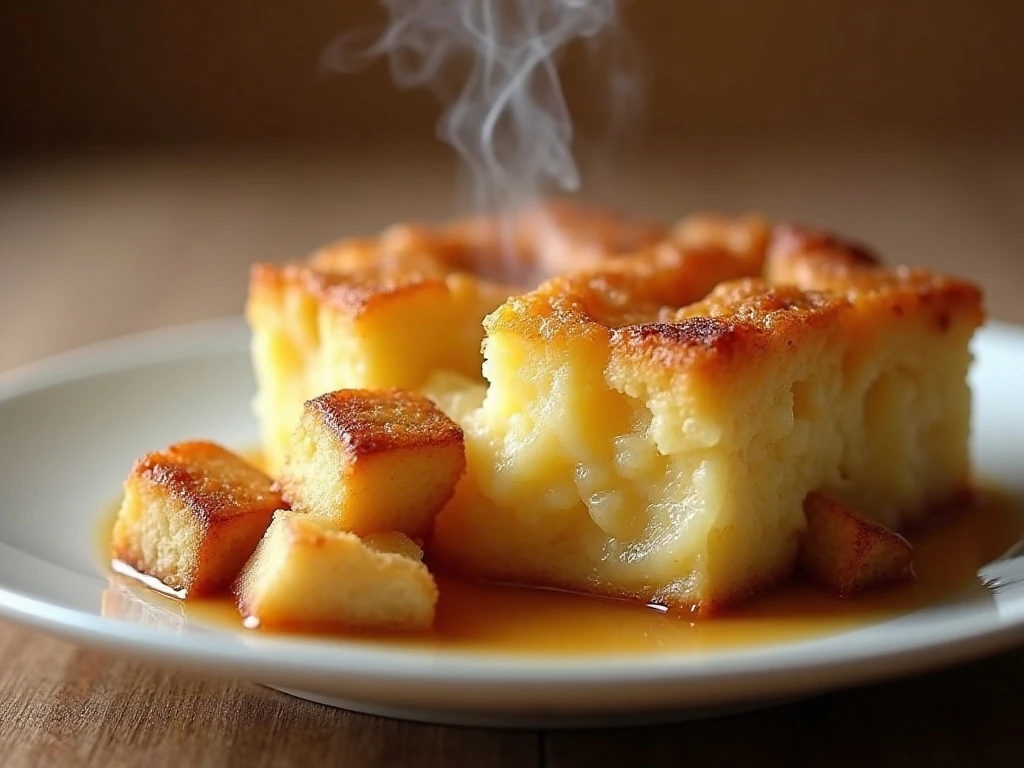
The most important visual cue is the center. It should look set enough that it does not ripple like liquid, but it should still have a small, gentle jiggle when the dish is moved.
A knife inserted near the center should come out mostly clean. A few moist crumbs are welcome because they indicate a tender pudding, while a completely dry knife and a firm, rigid center may mean the pudding has baked too long.
Remember that the dish continues cooking from residual heat after it leaves the oven. Removing it when the center is just set protects the creamy custard texture that makes this dessert special.
Chef Tips for the Best Texture
- Use the right bread: Stale French bread, brioche, challah, or white bread all work well, provided the cubes are dry enough to absorb the custard.
- Press, do not crush: Gently submerge the bread so it absorbs liquid without compressing the cubes into a dense mass.
- Give it time: The 10–20 minute soak is a small step that makes a noticeable difference in the center.
- Keep the dish uncovered: This allows the top to brown while the custard sets underneath.
- Do not chase a firm center: A slight jiggle is desirable before resting and serving.
For a brighter dessert spread, serve this warm pudding after a citrus-forward treat such as our tangy lime bars. The contrast between creamy spice and sharp citrus makes a satisfying finish.
Serving Ideas and Variations

Serve the pudding warm in squares or generous spoonfuls. A light dusting of powdered sugar keeps the presentation simple, while whipped cream adds cool, airy contrast.
Caramel sauce and vanilla sauce are classic choices. You can also pair a serving with gently warmed fruit, or add chopped pecans for crunch if you want a more textured bite.
Raisins are optional, so leave them out for a smooth, classic custard flavor. Common additions include chopped pecans, bourbon, orange zest, or a light caramel topping, but add-ins should not overwhelm the delicate vanilla and spice profile.
For a regional style with its own rich character, compare this recipe with our Louisiana-style bread pudding. It is a delicious choice when you want to explore another comforting version of the same beloved dessert.
Storage and Reheating
Cool leftover bread pudding, cover it, and refrigerate it. The custard may become firmer when chilled, but gentle reheating will bring back much of its soft texture.
Warm individual portions carefully until heated through, taking care not to overcook them. A low, gentle reheating approach is preferable because intense heat can make the egg custard tighten.
Store sauces separately when possible so the top of the pudding does not become overly wet. Add powdered sugar, whipped cream, caramel, or vanilla sauce immediately before serving.
What to Serve with Custard Bread Pudding
This pudding is rich enough to stand on its own, but a contrasting topping can make each bite feel fresher. Whipped cream offers lightness, powdered sugar adds a delicate sweetness, and vanilla sauce doubles down on the dessert’s warm custard flavor.
Caramel is particularly delicious with cinnamon and nutmeg. For a playful dessert table, serve a small dish of stovetop caramel apples alongside the pudding and let guests add spoonfuls of fruit and sauce.
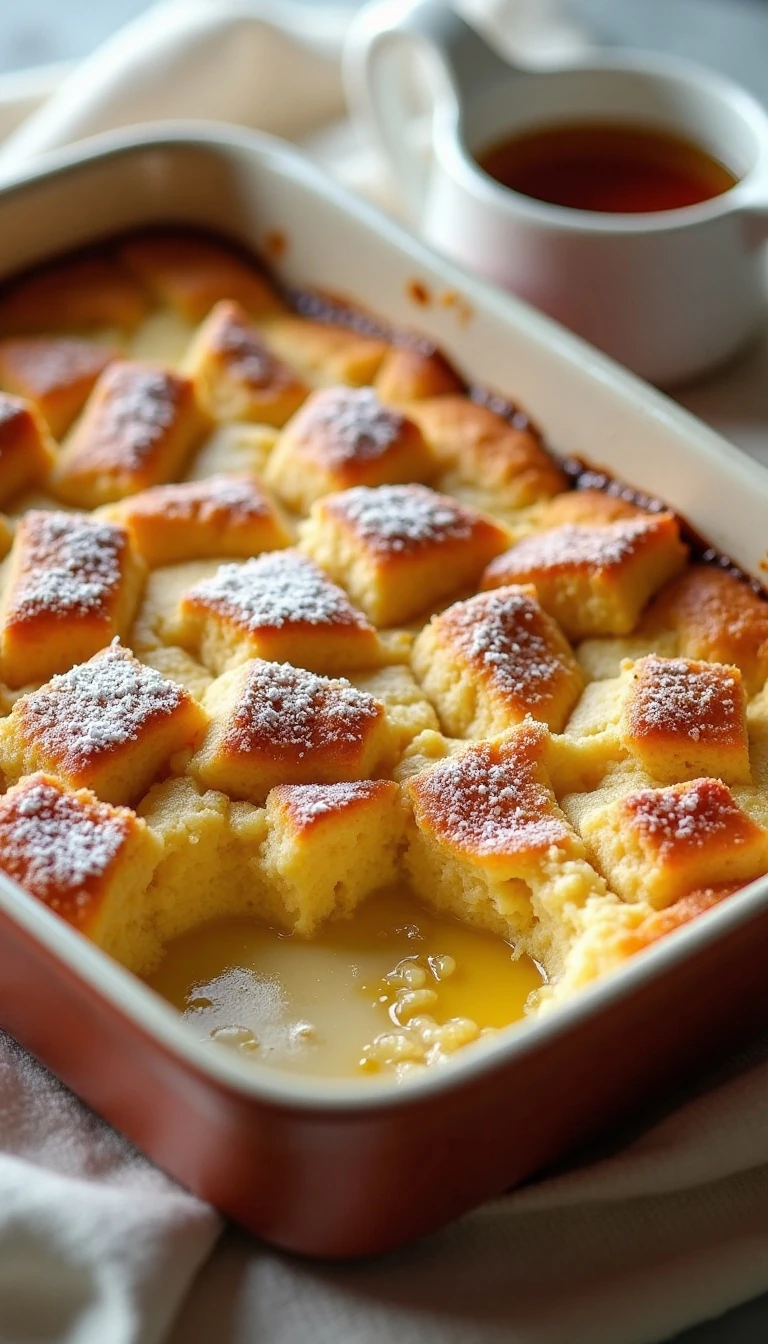
Easy Custard Bread Pudding Recipe
Ingredients
Method
- Heat the oven to 350°F (175°C) and grease a 9 x 13-inch baking dish with butter. Cut the day-old bread into approximately 1-inch cubes and arrange them evenly in the dish.
- If using fresh bread, spread the cubes on a baking sheet and dry them in a 300°F oven for about 10–15 minutes before assembling. Sprinkle the raisins over the bread if using.
- Whisk the eggs, whole milk, heavy cream or half-and-half, sugar, melted butter, vanilla, cinnamon, nutmeg, and salt in a bowl until smooth and well combined. Pour the custard evenly over the bread cubes.
- Press the bread down gently with a spatula or the back of a spoon so the cubes absorb the custard. Let the assembled pudding stand for 10–20 minutes.
- Bake the pudding uncovered at 350°F for 45–55 minutes, until the top is lightly browned and the center is nearly set. A knife inserted near the center should come out mostly clean, and the pudding should still have a slight jiggle.
- Let the bread pudding rest for 10–15 minutes before serving. Serve warm with powdered sugar, whipped cream, caramel sauce, or vanilla sauce.
Notes
Final Thoughts
This easy custard bread pudding recipe proves that a few everyday ingredients can create a deeply comforting dessert. The key is simple: start with stale or lightly dried bread, let it soak for 10–20 minutes, and remove the pudding from the oven when the center is just set with a slight jiggle.
After a 10–15 minute rest, the warm custard settles into the bread and the flavors become beautifully balanced. Whether you serve it plain or finish it with powdered sugar, whipped cream, caramel sauce, or vanilla sauce, this 9 x 13-inch bake is ready to bring everyone to the table.
Keep the recipe in mind whenever you have extra bread waiting to be used. It is cozy, forgiving, and wonderfully adaptable while still delivering the creamy center and golden top that make bread pudding a timeless favorite.