This easy strawberry rhubarb jam recipe needs no pectin and comes together with just fresh strawberries, rhubarb, granulated sugar, and lemon juice. Prepare the fruit in 10 to 15 minutes, let it macerate for about 30 minutes, then cook the mixture uncovered for 20 to 30 minutes until it reaches approximately 220°F/104°C or passes the chilled-plate test.
The finished jam is bright, sweet, gently tart, and wonderfully soft and spreadable. It makes about 4 cups, or roughly four half-pint jars, and is delicious on toast, biscuits, pancakes, yogurt, or a slice of easy strawberry cake.
Jump to RecipeWhy You’ll Love This Recipe
There is something especially satisfying about making jam from a short list of familiar ingredients. Strawberries provide juicy sweetness and a beautiful ruby color, while rhubarb brings a crisp, tangy flavor that keeps the preserve from tasting heavy.
This is a traditional small-batch recipe, so you do not need a large preserving kettle or a pantry full of special ingredients. The fruit, sugar, and lemon juice cook down in one wide saucepan, giving you a homemade spread with a soft texture and fresh seasonal flavor.
Because no commercial pectin is added, the jam is not meant to be stiff or sliceable. Expect a spoonable, glossy consistency that spreads easily across warm toast and drips attractively over pancakes, waffles, oatmeal, or vanilla ice cream.
If you enjoy sweet-tart desserts, serve a spoonful beside buttery shortbread or pair the jam with the bright citrus flavor of our easy lime bars.
Ingredients You’ll Need
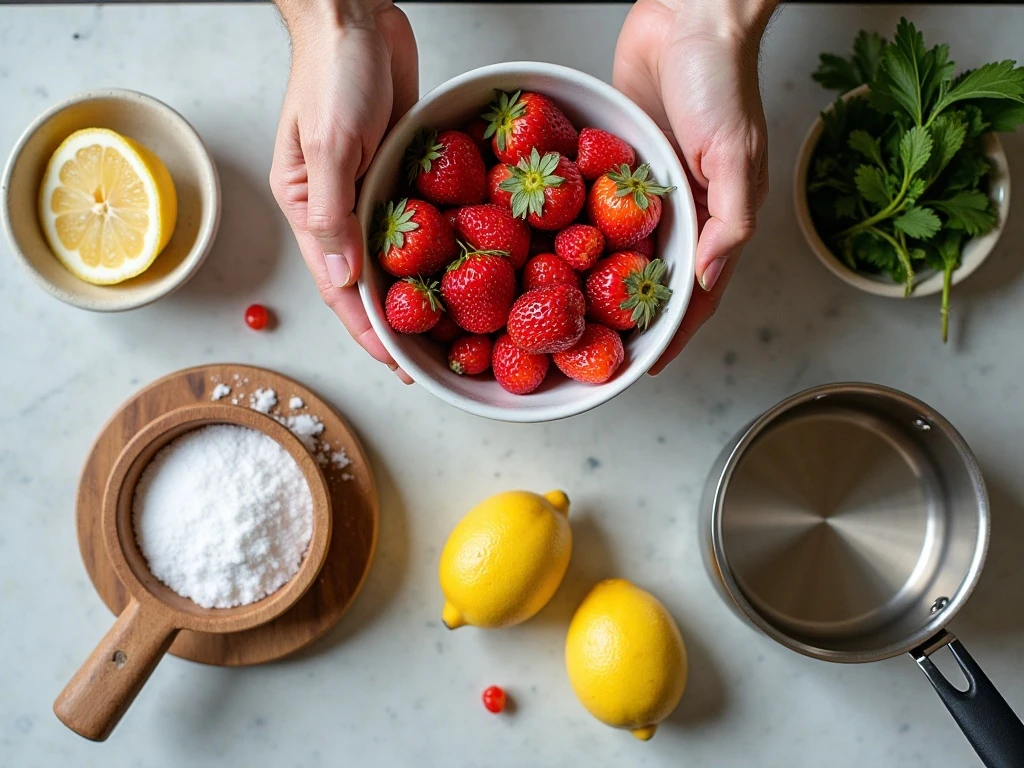
The fruit should be measured after basic preparation. One pound of strawberries produces about 3 cups once hulled and chopped, while one pound of rhubarb yields approximately 3 to 4 cups when trimmed and cut into 1/2-inch pieces.
- 1 pound fresh strawberries: Hull them and chop them into bite-size pieces. Very large pieces can remain watery in the center, while tiny pieces may disappear completely.
- 1 pound fresh rhubarb: Trim away the leaves and dry ends, then cut the stalks into even 1/2-inch pieces. Rhubarb leaves should not be used.
- 3 cups granulated sugar: Sugar sweetens the fruit, helps preserve the jam, and assists with thickening as water evaporates.
- 2 tablespoons fresh lemon juice: This amount balances the sweetness, brightens the fruit flavor, and supports the set. Do not reduce it.
- A small pinch of salt: Optional, but it can make the strawberry flavor taste more rounded.
Choose a large, wide, nonreactive saucepan. Stainless steel or enamel is a good choice, and the broad cooking surface helps the fruit release steam more quickly than a narrow, deep pot.
How to Make It Step-by-Step
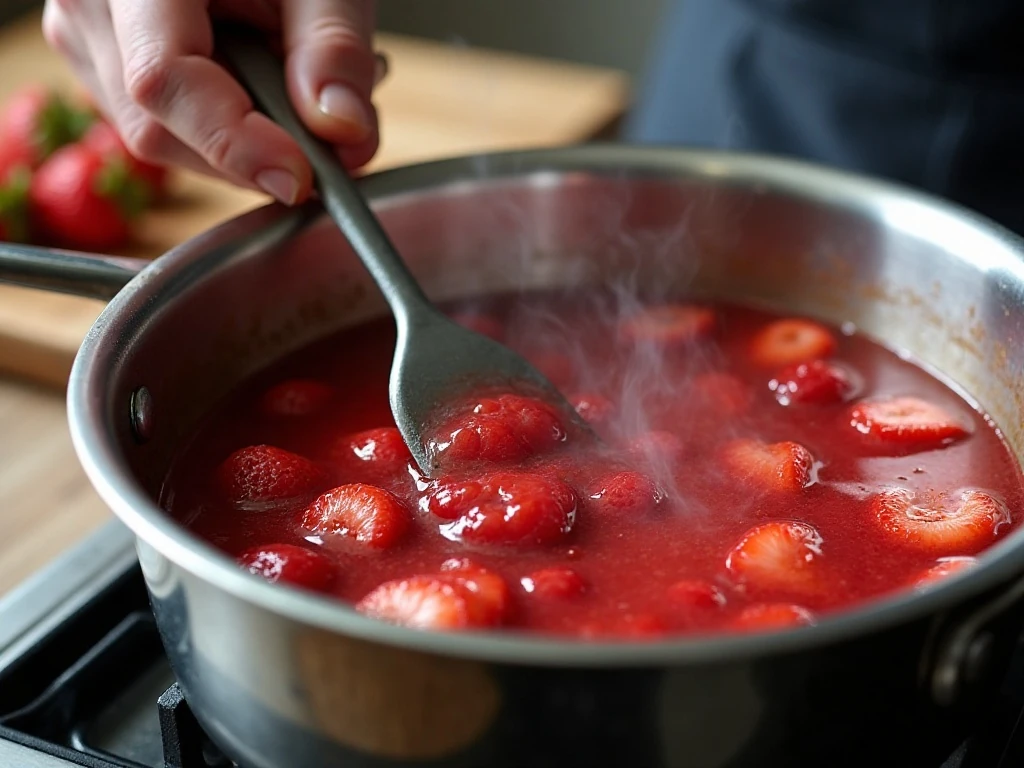
Step 1: Hull the strawberries by removing the green tops, then chop the berries into small, fairly even pieces. Trim the rhubarb and cut it into 1/2-inch pieces so it cooks at a similar rate throughout the batch.
Step 2: Add the strawberries, rhubarb, granulated sugar, lemon juice, and optional pinch of salt to a large nonreactive saucepan. Stir until the fruit is coated, then let the mixture stand for about 30 minutes so the sugar can draw out the juices.
Step 3: Set the saucepan over medium-high heat and bring the fruit mixture to a boil, stirring frequently. As the sugar dissolves, the fruit will become increasingly juicy, and the mixture may produce a layer of pale foam.
Step 4: Reduce the heat enough to maintain a vigorous simmer, but do not cover the pan. Cook for 20 to 30 minutes, stirring often and scraping along the bottom and corners so the sugar and fruit do not scorch.
Step 5: Skim off excess foam with a spoon if you want a clearer-looking jam. Begin checking the texture near the 20-minute mark, remembering that cooking time changes with the width of your pan and the water content of the strawberries.
Step 6: Test the jam with a thermometer or a chilled plate. It is ready at about 220°F/104°C, or when a spoonful placed on a chilled plate wrinkles slightly as you push it with your finger.
Step 7: Spoon or pour the hot jam into clean, hot jars, leaving appropriate headspace. Let the jars cool, then refrigerate them, or follow a current, tested water-bath canning recipe if you want shelf-stable storage.
How to Tell When the Jam Is Ready
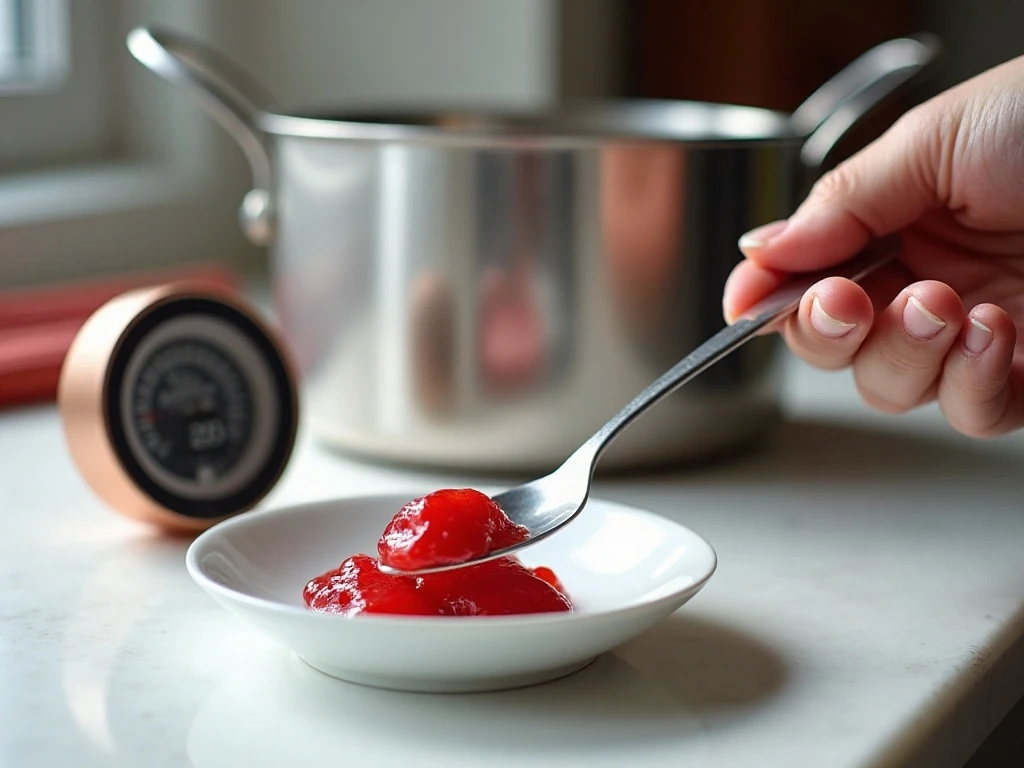
A thermometer reading of about 220°F/104°C is a useful guide, but it is not the only way to judge the finish. Fruit naturally varies, and strawberries can contain enough extra water to make one batch require several more minutes than another.
For the cold-plate test, place a small plate in the freezer before you begin cooking. When the jam looks glossy and has noticeably thickened, put a spoonful on the cold plate, wait briefly, and push it with your fingertip; properly cooked jam should wrinkle slightly instead of flowing quickly back into place.
Remember that the jam will thicken further as it cools. It should look loose but cohesive in the saucepan, not dry, stiff, or difficult to stir.
For another fruit-forward treat, the jam can be spooned into or served beside no-bake raspberry lemon tartlets.
Pro Tips for the Best Texture and Flavor
- Use a wide pan: More surface area allows moisture to evaporate efficiently, which helps the jam reach its soft set within the expected cooking window.
- Stir with care: Scrape the bottom regularly, especially as the mixture thickens. A heatproof spatula is useful for reaching into the corners.
- Keep the lemon juice: The lemon is not merely a flavoring. It adds needed acidity, counters the sweetness, and helps the fruit mixture set properly.
- Do not overcook: Cooking far beyond the setting point can make the jam too firm and may dull the fresh strawberry flavor.
- Choose your fruit texture: Chopping the strawberries into medium pieces gives the finished jam visible fruit. For a smoother spread, gently mash some of the berries during cooking.
- Skim only if desired: Foam is harmless, but removing it gives the surface a cleaner, more polished appearance.
The jam is also wonderful with a cheese board, spooned over baked brie, or paired with a warm breakfast pastry. A little jar makes a thoughtful homemade gift when clearly labeled and kept refrigerated unless processed using a tested canning method.
Serving Ideas
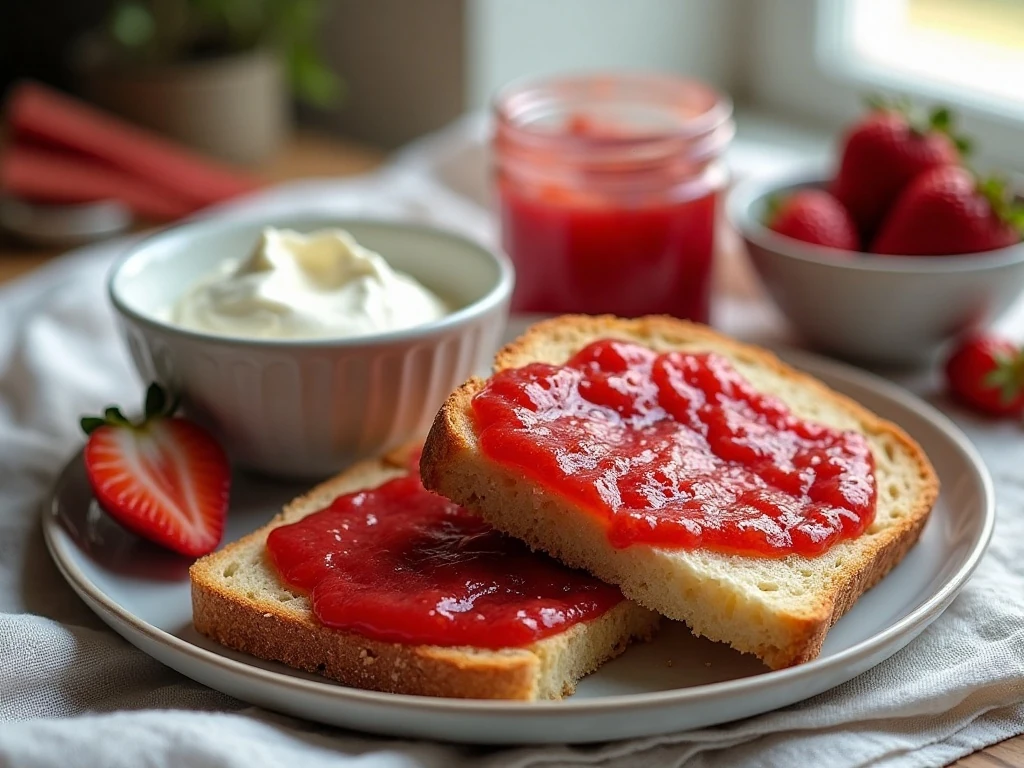
Spread this jam over buttered toast while it is still slightly warm, or swirl it into plain Greek yogurt for a quick breakfast. It is equally good layered into overnight oats, spooned over pancakes, or warmed gently and drizzled over pound cake.
For a playful seasonal dessert, use it as a topping for vanilla ice cream with toasted nuts. It also pairs nicely with a crisp biscuit, cream scone, or soft dinner roll.
When apples are in season, place a small dish of this jam alongside our stovetop caramel apples for a colorful dessert spread.
Storage and Safe Canning
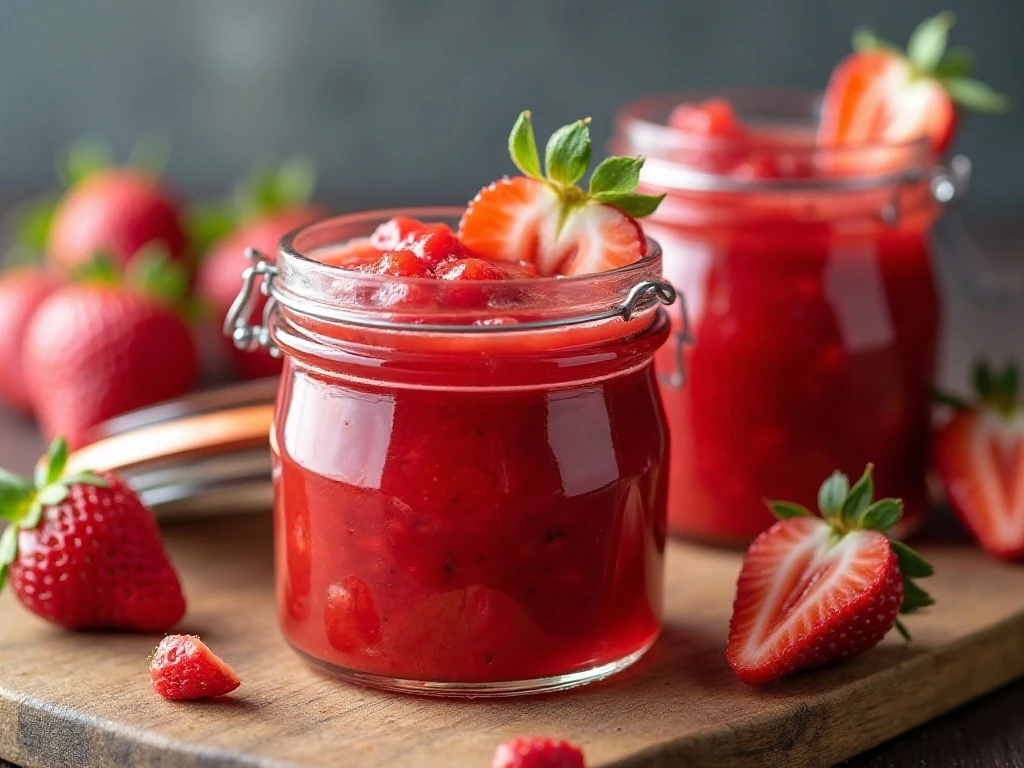
Pouring the jam into clean, hot jars is important, but filling jars alone does not make the preserve shelf-stable. Allow the jam to cool, cover it, and refrigerate it promptly unless you are following a current tested water-bath canning recipe with the specified processing instructions.
- Refrigerator: The jam is generally best used within about 2 to 3 weeks.
- Freezer: Freeze it for several months in suitable freezer containers, leaving room for expansion.
- Longer storage: Use a current, tested canning recipe and process the filled jars according to its water-bath directions.
Always use clean utensils when serving and discard the jam if it develops an unusual odor, mold, or an unexpected appearance. Once opened, keep it chilled and return it to the refrigerator after every use.
For a savory seasonal menu, balance this sweet preserve with our easy bread stuffing; the contrast between buttery herbs and bright fruit is especially appealing at a holiday table.
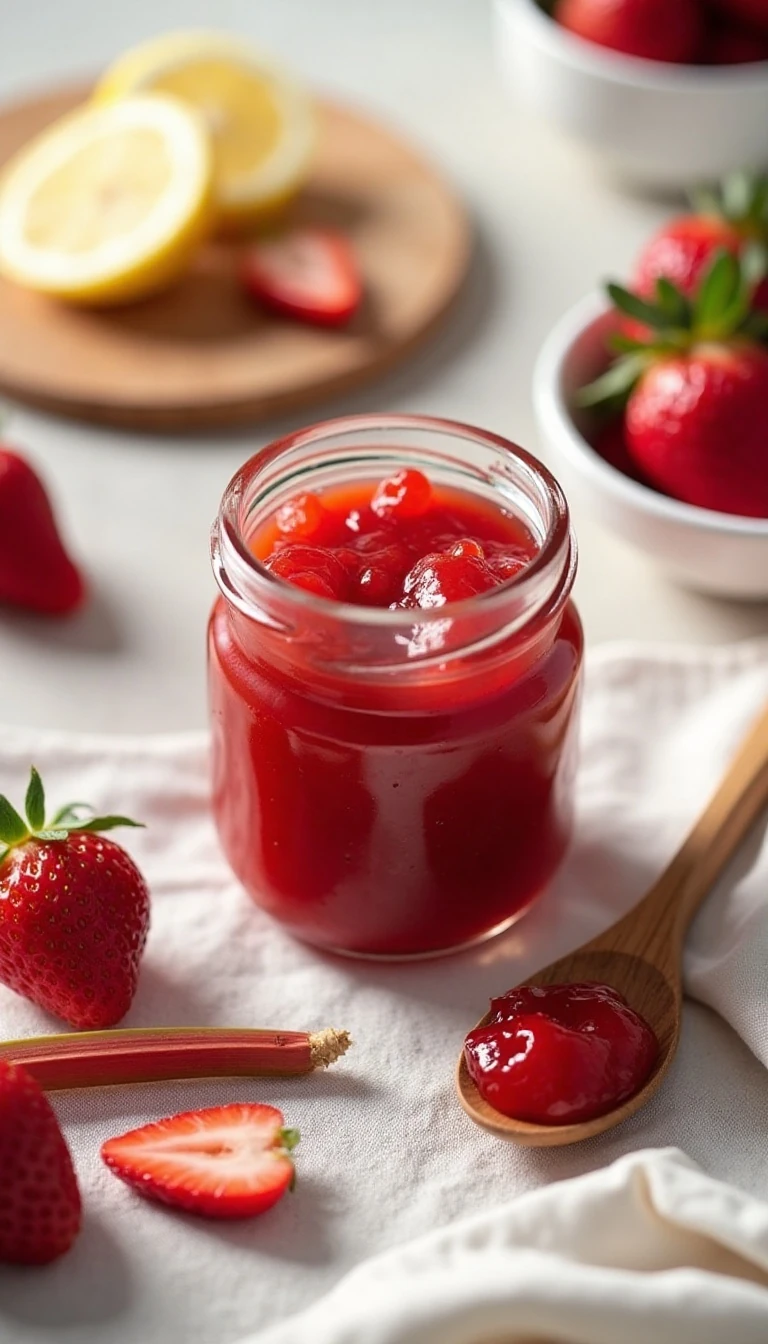
Easy Strawberry Rhubarb Jam Recipe (No Pectin Needed)
Ingredients
Method
- Hull and chop the strawberries. Trim the rhubarb and cut it into even 1/2-inch pieces.
- Place the strawberries, rhubarb, sugar, lemon juice, and optional salt in a large nonreactive saucepan. Stir well and let the fruit stand for about 30 minutes.
- Bring the mixture to a boil over medium-high heat, stirring frequently. Use a wide pan if possible so moisture can evaporate efficiently.
- Reduce the heat to maintain a vigorous simmer and cook uncovered for 20 to 30 minutes. Stir often and scrape the bottom of the pan to prevent sticking.
- Skim off excess foam if desired. Check the jam with a thermometer or chilled plate, and continue cooking for a few additional minutes if it has not thickened enough.
- Pour the hot jam into clean, hot jars, leaving appropriate headspace. Cool and refrigerate, or use a current tested water-bath canning procedure for longer storage.
Notes
Final Thoughts
This strawberry rhubarb jam is one of the easiest ways to capture the flavor of fresh summer fruit without buying commercial pectin. Equal parts strawberries and rhubarb create a lively balance, while sugar and lemon juice turn the mixture into a glossy preserve with a soft, spreadable set.
Give the fruit its full 30-minute maceration when you have time, cook it in a wide pan, and rely on the chilled-plate test rather than the clock alone. Those small details help you make a batch that tastes fresh and thickens properly despite natural differences in the fruit.
Once cooled, keep a jar ready for toast, biscuits, yogurt, cake, or ice cream. With about 4 cups of jam from one batch, you can enjoy some immediately and still have enough to refrigerate, freeze, or share.
2 thoughts on “Easy Strawberry Rhubarb Jam Recipe (No Pectin Needed)”