This creamy salmon coconut chowder is a quick, comforting fish dinner made with tender salmon, Yukon Gold potatoes, vegetables, full-fat coconut milk, ginger, curry powder, and fresh lime. It serves 4 to 6 people and comes together in about 45 to 50 minutes, including 15 to 20 minutes of preparation and 25 to 30 minutes of cooking.
Every spoonful combines a silky coconut broth with flaky salmon, soft potatoes, sweet carrots, crisp-tender bell pepper, and aromatic garlic and ginger. The finished chowder is rich without heavy cream, while lime juice and fresh herbs keep the flavor bright and balanced.
Jump to RecipeWhy You’ll Love This Recipe
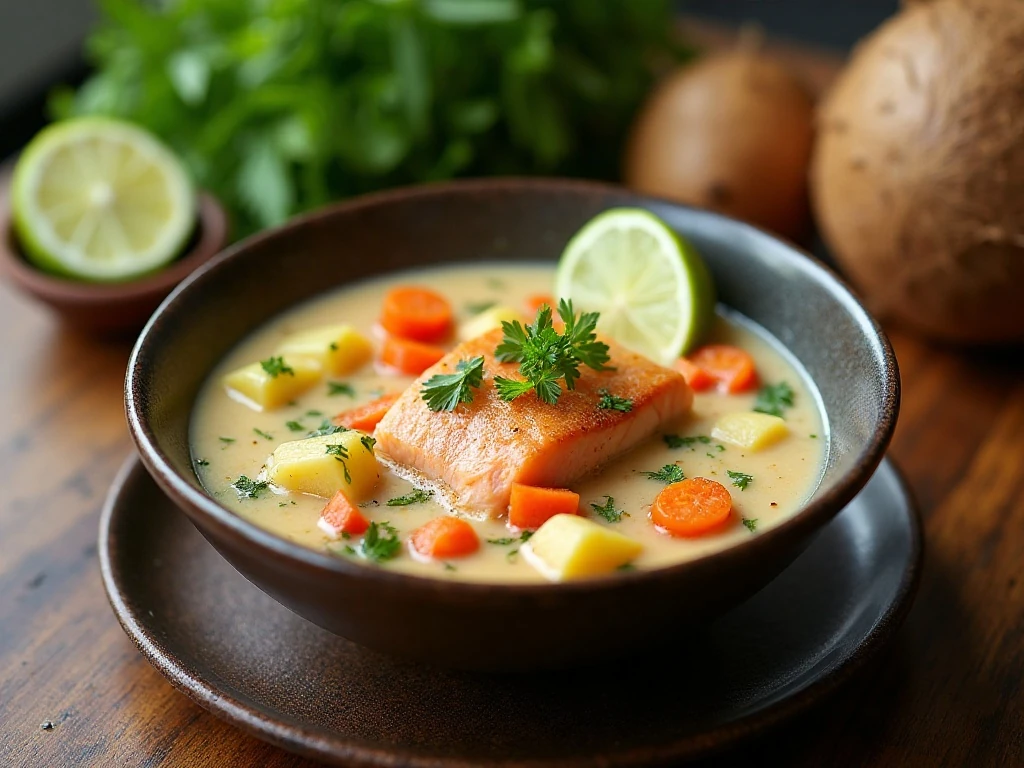
This salmon coconut chowder is the kind of meal that feels special enough for a weekend supper but is practical for a busy weeknight. The vegetables soften in one pot, the potatoes cook directly in the seasoned stock, and the salmon needs only a few gentle minutes at the end.
Unlike traditional chowders that rely on flour, butter, or heavy cream, this version gets its creamy body from full-fat coconut milk. It remains pleasantly light on the palate because ginger, curry powder, fish sauce, and lime add savory depth and a clean finish.
The texture is especially satisfying: tender potato cubes give the broth substance, while salmon pieces stay moist and distinct. If you enjoy cozy seafood soups, you may also like this creamy potato shrimp soup for another comforting bowl.
Ingredients You’ll Need

Choose salmon fillets that are skinless and fresh, then cut them into even 1-inch chunks so they cook at the same rate. Yukon Gold potatoes are ideal because their waxy texture holds together in the broth while contributing a naturally buttery bite.
- Aromatic base: Onion, carrots, celery, garlic, ginger, and red bell pepper create a sweet and fragrant foundation.
- Seasoning: Curry powder, kosher salt, and black pepper provide warmth without overpowering the salmon.
- Broth: Fish stock or seafood stock gives the deepest ocean flavor, though low-sodium chicken stock also works well.
- Creamy element: Full-fat, unsweetened coconut milk creates a smooth texture and gentle tropical richness.
- Finishing touches: Fish sauce adds savory complexity, while lime juice and fresh herbs sharpen the final flavor.
Shake the coconut milk can thoroughly before opening it, especially if the cream has separated from the liquid. If your stock is salted, begin with less added salt and adjust only after the fish sauce and lime juice have been stirred in.
How to Make It Step-by-Step
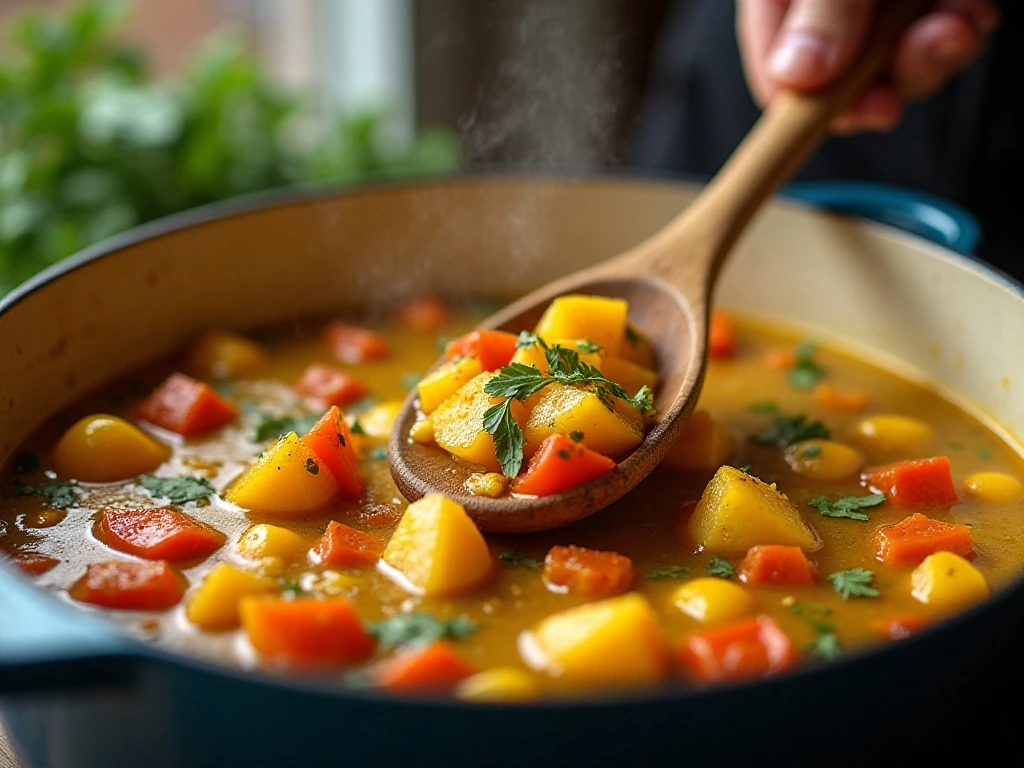
Step 1: Warm the coconut oil or neutral oil in a large Dutch oven or soup pot over medium heat. Add the diced onion, carrots, celery, and red bell pepper, cooking for 5 to 7 minutes while stirring from time to time, until the vegetables begin to soften and the onion turns translucent.
Step 2: Stir in the chopped garlic, grated or minced ginger, curry powder, salt, and black pepper. Cook for 30 to 60 seconds, just until the garlic and ginger become fragrant; this short cooking time protects the garlic from scorching.
Step 3: Add the peeled, 1/2-inch potato cubes and pour in the stock. Bring the mixture to a boil, then immediately reduce the heat to a gentle simmer and partially cover the pot so steam can escape.
Step 4: Simmer the vegetables and potatoes for 12 to 15 minutes. Test a potato with a fork near the end of this time; it should be nearly tender but not so soft that it falls apart when the salmon is added.
Step 5: Stir in the well-shaken coconut milk and bring the chowder back to a gentle simmer. Avoid prolonged hard boiling, because aggressive heat can cause the coconut milk to separate and make the broth look grainy.
Step 6: Carefully add the salmon chunks, spreading them around the pot so they are mostly surrounded by broth. Cook gently for 4 to 7 minutes, depending on the size of the pieces, until the salmon is opaque and flakes easily.
Step 7: Turn the heat to low and stir in the fish sauce, if using, along with one tablespoon of fresh lime juice. Taste the broth and adjust the salt, black pepper, or lime juice until the flavors taste rounded and lively.
Step 8: Finish each bowl with chopped cilantro or flat-leaf parsley and serve with lime wedges. Spoon the chowder carefully so the salmon chunks remain intact and attractive.
Chef’s Tips for the Best Chowder

Cutting the vegetables and potatoes evenly is more than a presentation detail; it helps everything cook at a similar pace. Keep the potato cubes close to 1/2 inch and the salmon pieces close to 1 inch for dependable results.
Do not add the salmon at the beginning. Fish cooks quickly, and extended simmering can make it dry, cause it to break apart, and leave you with fewer recognizable pieces in each serving.
- Keep the heat gentle: A quiet simmer is enough to cook the salmon and protect the coconut broth.
- Add lime at the end: Fresh acidity brightens the finished chowder without exposing the coconut milk to prolonged acidic cooking.
- Use fresh aromatics: Fresh ginger and garlic give the broth a clearer, warmer flavor than dried substitutes.
- Taste in stages: Stock, fish sauce, salmon, and lime all affect seasoning, so the final adjustment should happen just before serving.
For a little heat, add a small amount of red pepper flakes, sambal, or Thai red curry paste with the garlic and ginger. For a gentler bowl, omit the curry powder and let ginger, garlic, lime, and herbs lead the flavor.
If you are planning a salmon-centered menu, serve this chowder alongside a crisp starter such as our creamy cucumber tomato salad. Its cool, fresh texture offers a pleasant contrast to the warm coconut broth.
Easy Variations
This recipe is flexible while keeping the same basic method. Sweet potatoes can replace the Yukon Gold potatoes for a sweeter, more colorful chowder, and they pair naturally with coconut milk and curry powder.
You can also add corn, spinach, mushrooms, or chopped tomatoes. Add quick-cooking spinach near the end, while mushrooms should be sautéed with the initial vegetables and corn can be added with the potatoes.
For a more Southeast Asian direction, use a small amount of Thai red curry paste or sambal instead of, or in addition to, the curry powder. Add heat carefully, since the goal is to support the salmon rather than cover its delicate flavor.
Want another fresh salmon idea for a different meal? Try this spicy salmon poke, which uses the same fish in a cool, bright preparation.
Serving Suggestions

Serve the chowder in warmed bowls with lime wedges on the side and a final scatter of cilantro or parsley. Crusty bread, toasted sourdough, or simple crackers are useful for catching every drop of the creamy broth.
A plain green salad also works well, especially when dressed with a light vinaigrette. Since the chowder already contains potatoes and vegetables, you do not need a heavy side dish to make it a complete meal.
For a cozy dinner party, prepare the vegetable and potato base ahead of time, then add the coconut milk and salmon shortly before serving. This keeps the fish tender and lets you bring the chowder to the table while it is at its freshest.
If you are finishing the meal with something sweet, a batch of chewy oatmeal cookies makes a relaxed dessert after the savory soup.
Storage and Reheating
Cool leftover chowder promptly, transfer it to an airtight container, and refrigerate it for up to 3 days. Because seafood and coconut milk are delicate, keep the soup chilled rather than leaving it at room temperature for an extended period.
Reheat leftovers in a saucepan over low to medium-low heat, stirring gently until hot. Do not bring the chowder to a rolling boil, since high heat can cause the coconut milk to separate and may make the salmon tough.
If the broth thickens in the refrigerator, loosen it with a small splash of stock or water while reheating. Add a fresh squeeze of lime and a few herbs just before serving to restore the bright finish.
Frequently Asked Questions
Can I use frozen salmon? Yes, thaw it completely in the refrigerator, pat it dry, and cut it into even chunks before adding it to the simmering chowder. Frozen fish added directly to the pot can cool the broth and cook unevenly.
Can I use light coconut milk? You can, but the chowder will be less rich and less creamy. Full-fat, unsweetened coconut milk is the best choice for the texture described in this recipe.
Why did my coconut milk separate? Coconut milk can separate when exposed to prolonged hard boiling or very high heat. Keep the pot at a gentle simmer and add the lime juice after cooking for the smoothest result.
Can I make it without fish sauce? Absolutely. Fish sauce is optional, so omit it and adjust the salt and lime juice to taste; the stock, salmon, curry powder, ginger, and garlic will still create a flavorful broth.

Creamy Salmon Coconut Chowder
Ingredients
Method
- Heat the oil in a large Dutch oven or soup pot over medium heat. Add the onion, carrots, celery, and red bell pepper, then cook for 5 to 7 minutes, stirring occasionally, until the vegetables begin to soften.
- Add the garlic, ginger, curry powder, kosher salt, and black pepper. Cook for 30 to 60 seconds, stirring constantly, until the aromatics smell fragrant but the garlic is not browned.
- Add the cubed potatoes and stock, then bring the mixture to a boil. Reduce the heat to a gentle simmer, partially cover the pot, and cook for 12 to 15 minutes, until the potatoes are nearly tender.
- Shake the coconut milk can well before opening and stir it into the pot. Return the chowder to a gentle simmer, avoiding a prolonged hard boil so the coconut milk stays smooth.
- Add the salmon chunks and cook gently for 4 to 7 minutes, depending on their size. The salmon is ready when it is opaque in the center and flakes easily with a fork.
- Stir in the fish sauce, if using, and the fresh lime juice after the salmon has cooked. Taste and adjust the salt, pepper, and lime to suit your preference.
- Ladle the chowder into bowls and finish with chopped cilantro or flat-leaf parsley. Serve immediately with lime wedges for squeezing over each portion.
Notes
Final Thoughts
This creamy salmon coconut chowder brings together everything a satisfying fish dinner needs: tender salmon, hearty potatoes, colorful vegetables, a fragrant broth, and a bright lime finish. It is comforting enough for a chilly evening yet fresh enough to enjoy throughout the year.
Keep the salmon simmer gentle, use full-fat coconut milk, and wait until the end to add the lime juice. Those three details help produce a smooth, creamy chowder with moist fish and a beautifully balanced flavor in every bowl.
Serve it with warm bread, extra lime wedges, and plenty of herbs. Once you taste how quickly this one-pot recipe comes together, it is likely to become a regular on your fish dinner menu.