An air fryer is one of the easiest ways for beginners to make crisp, flavorful food with less oil than traditional deep-frying. Start by preheating for 3–5 minutes when quick browning matters, keep food in a single layer, and cook this beginner-friendly batch of chicken wings at 400°F (200°C) for 22–30 minutes, turning halfway through.
These wings come out deeply browned, juicy inside, and wonderfully crisp outside. A small amount of aluminum-free baking powder helps dry and blister the skin, while paprika, garlic, onion, salt, and pepper create a savory base that is delicious on its own or tossed with about ½ cup of Buffalo sauce.
Jump to RecipeWhy You’ll Love This Recipe
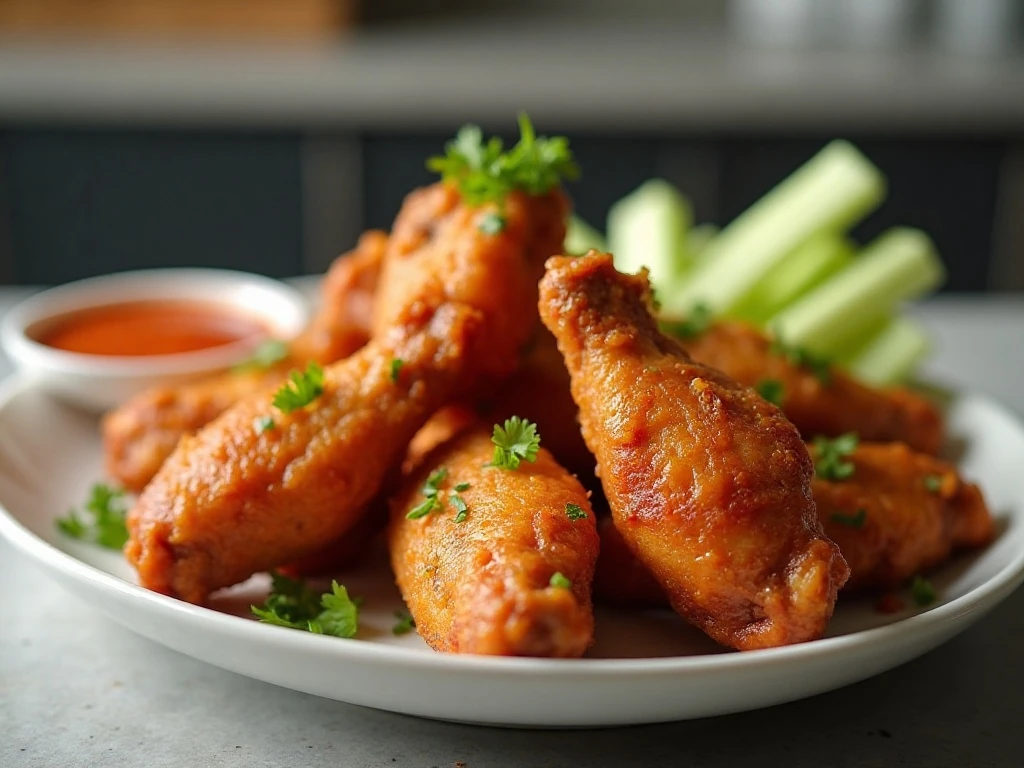
Chicken wings are a smart first project for anyone learning how to use an air fryer. The high-speed circulating heat browns the skin beautifully while allowing excess fat to drip away, so the finished wings taste rich without requiring a deep pot of oil.
This method also teaches the most important air-fryer habits: dry food well, leave room for air to move, check doneness with a thermometer, and adjust timing for your particular appliance. Once you understand those basics, you can confidently try vegetables, eggs, reheated leftovers, and many other foods.
The seasoning is intentionally simple. It gives the wings a savory, gently smoky flavor, and the optional sauce can take them in a spicy, tangy, or sweet direction.
For another fun appetizer idea, try these crispy potato jalapeño poppers after you master the wings.
Ingredients You’ll Need
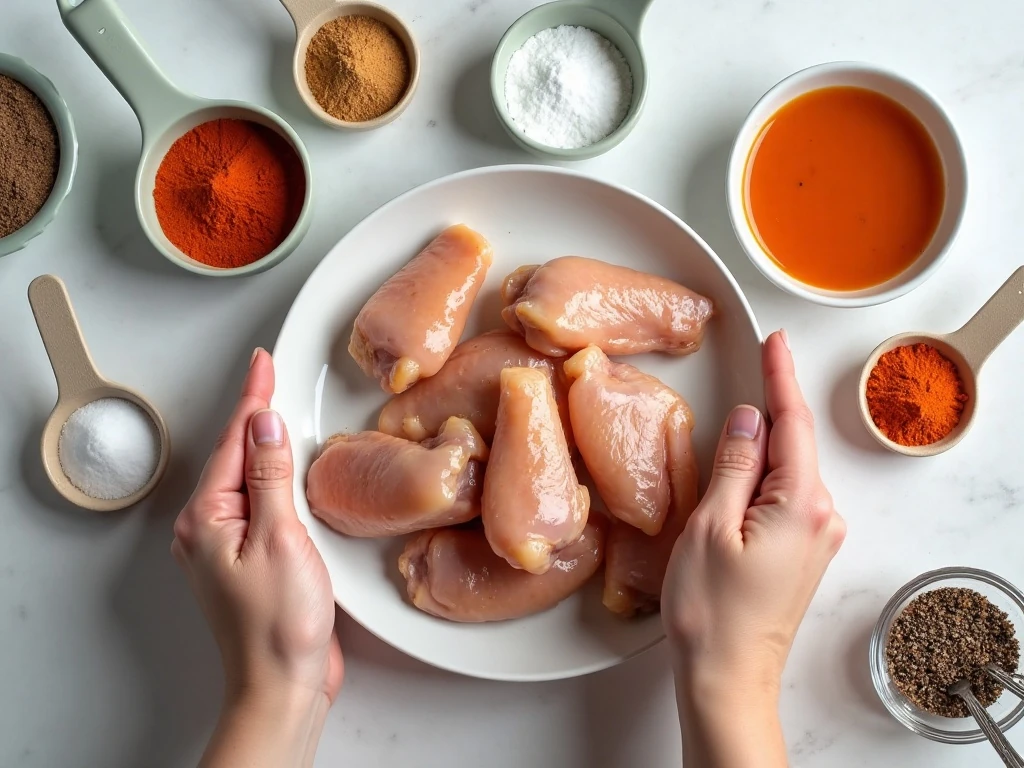
The ingredient list is short, but each item has a job. Chicken wings provide a naturally flavorful cut, while baking powder helps the surface dry and become crisp during cooking.
- Chicken wings: Use 2 lb (900 g), split into drumettes and flats. Pat them completely dry before seasoning.
- Baking powder: Measure 1 tablespoon of aluminum-free baking powder. Do not substitute baking soda, which has a different chemical action and can leave an unpleasant taste.
- Seasonings: Use 1 teaspoon each of kosher salt and paprika, plus ½ teaspoon garlic powder, ½ teaspoon onion powder, and ¼ teaspoon black pepper.
- Neutral oil: One tablespoon of avocado, canola, or vegetable oil helps the seasonings coat the wings and supports browning.
- Sauce: Keep about ½ cup of Buffalo sauce or another sauce ready for serving, if desired.
You do not need special accessories to begin. Paper towels, a mixing bowl, tongs, and an instant-read thermometer are enough for this recipe, although a small brush can make basket cleanup easier.
How to Make It Step-by-Step
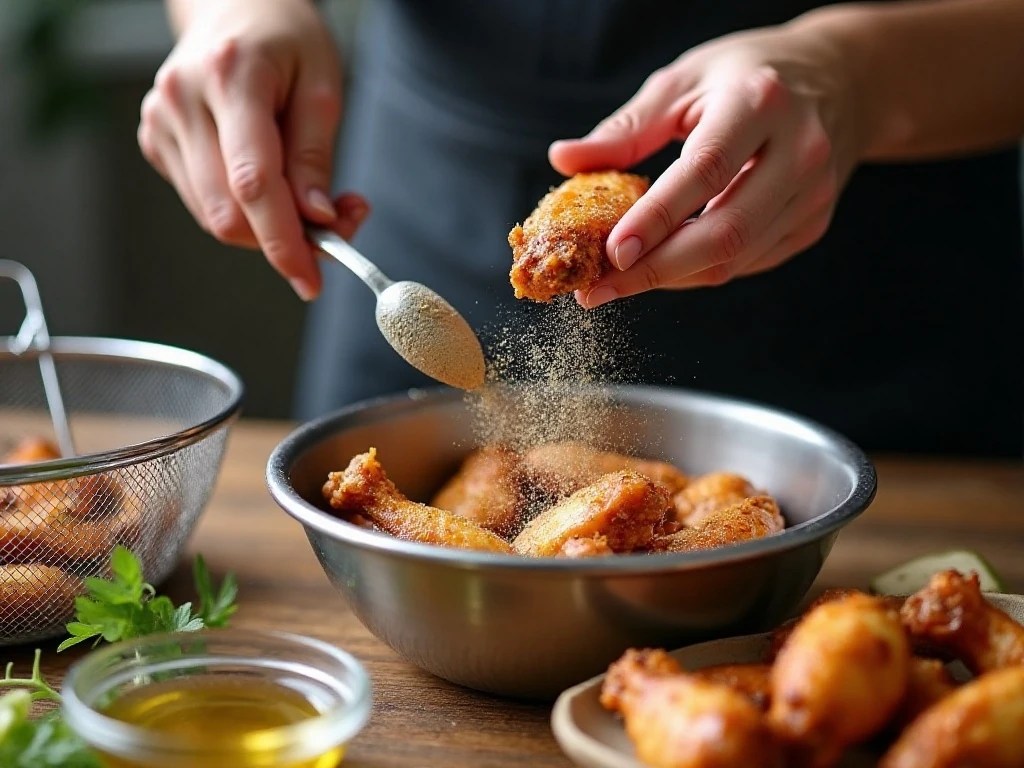
Step 1: Dry the wings thoroughly with paper towels, pressing around every piece to remove surface moisture. This step matters because wet skin steams instead of browning, making it much harder to achieve a crisp finish.
Step 2: Add the baking powder, kosher salt, paprika, garlic powder, onion powder, and black pepper to a bowl. Toss the dry wings with this mixture and 1 tablespoon of neutral oil until every piece has a light, even coating.
Step 3: Preheat the air fryer for 3–5 minutes if your model recommends it or if you want the wings to begin browning immediately. Preheating is useful for quick browning, but some appliances and recipes work well without it.
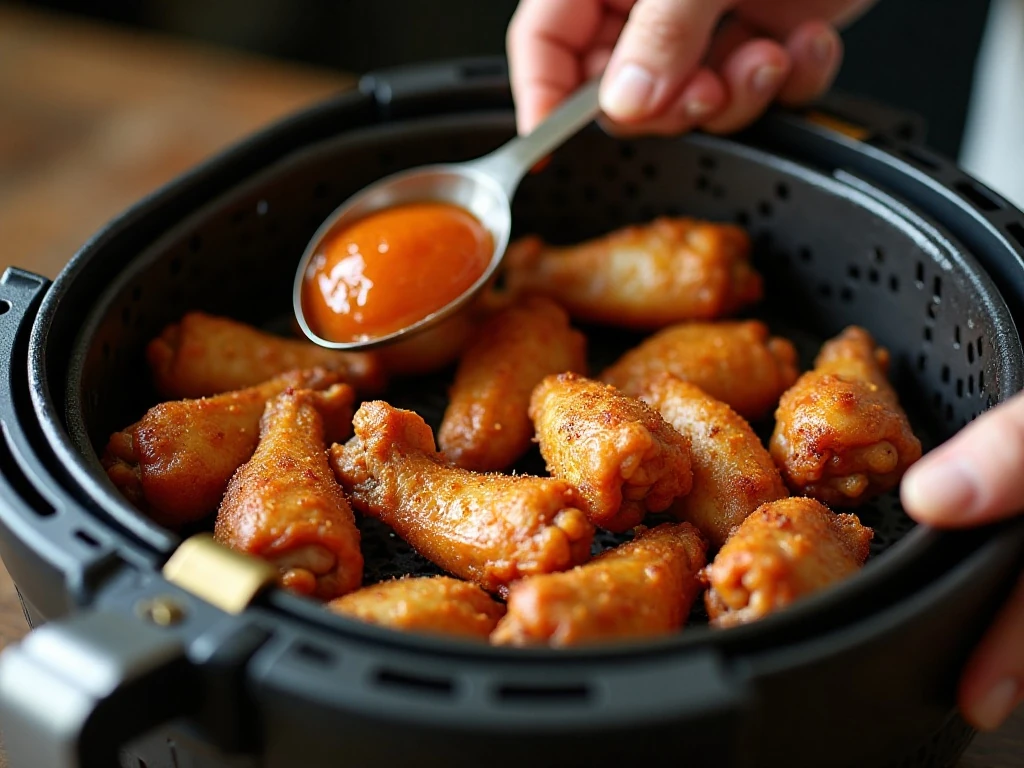
Step 4: Arrange the wings in a single layer in the basket, leaving small spaces around them whenever possible. Do not pile them together, because crowded food blocks the circulating air and can create pale, soft patches.
Step 5: Cook the wings at 400°F (200°C) for 22–30 minutes, depending on their size and your appliance. Turn the wings or shake the basket halfway through so both sides brown evenly.
Step 6: Check the thickest pieces with an instant-read thermometer before serving. The safe minimum internal temperature is 165°F (74°C), while wings are often more tender around 175–185°F (79–85°C).
Step 7: Rest the cooked wings for 2–5 minutes before saucing. Toss them with about ½ cup of Buffalo sauce just before serving, or keep the sauce on the side to preserve as much crispness as possible.
Air Fryer Basics Every Beginner Should Know
An air fryer is essentially a compact convection oven. A heating element warms the air while a fan circulates it quickly around the food, producing browning and crisp edges with much less oil than deep-frying.
Basket size affects how much food you can cook at one time. A larger basket may fit 2 lb of wings more comfortably, while a smaller model may require two batches; cooking in batches is better than crowding.
Use the basket rather than covering its ventilation holes with foil unless your appliance instructions specifically allow it. Air needs to flow beneath and around the food for consistent cooking.
Cooking times are guides, not guarantees. Different brands, basket shapes, starting temperatures, and wing sizes can change the result, so begin checking near the lower end of the time range.
For breakfast practice, see how simple air fryer eggs can be. They are another useful way to become familiar with your machine’s heat and timing.
Pro Tips for Crisp, Flavorful Results
- Dry first: Moisture is the enemy of crisp skin, so take the time to pat every wing dry.
- Use baking powder correctly: A small amount of aluminum-free baking powder helps the skin brown. Baking powder is not the same as baking soda.
- Keep the layer loose: Food should have room around it. If wings touch slightly, they can still cook, but a packed basket will not brown evenly.
- Turn halfway: Shaking or turning redistributes the pieces and helps prevent one side from becoming darker than the other.
- Measure doneness: Color is helpful, but a thermometer is the reliable test. Check the thickest wing, avoiding contact with the bone.
- Sauce at the end: Wet sauce can soften crisp skin. Add it after cooking or serve it separately.
- Watch the first batch: Treat your first cooking session as a calibration test. Record the time and temperature that work best for your model.
Want a lighter vegetable side while the wings cook? Air fryer zucchini cooks quickly and pairs well with spicy wings.
Serving, Storage, and Reheating
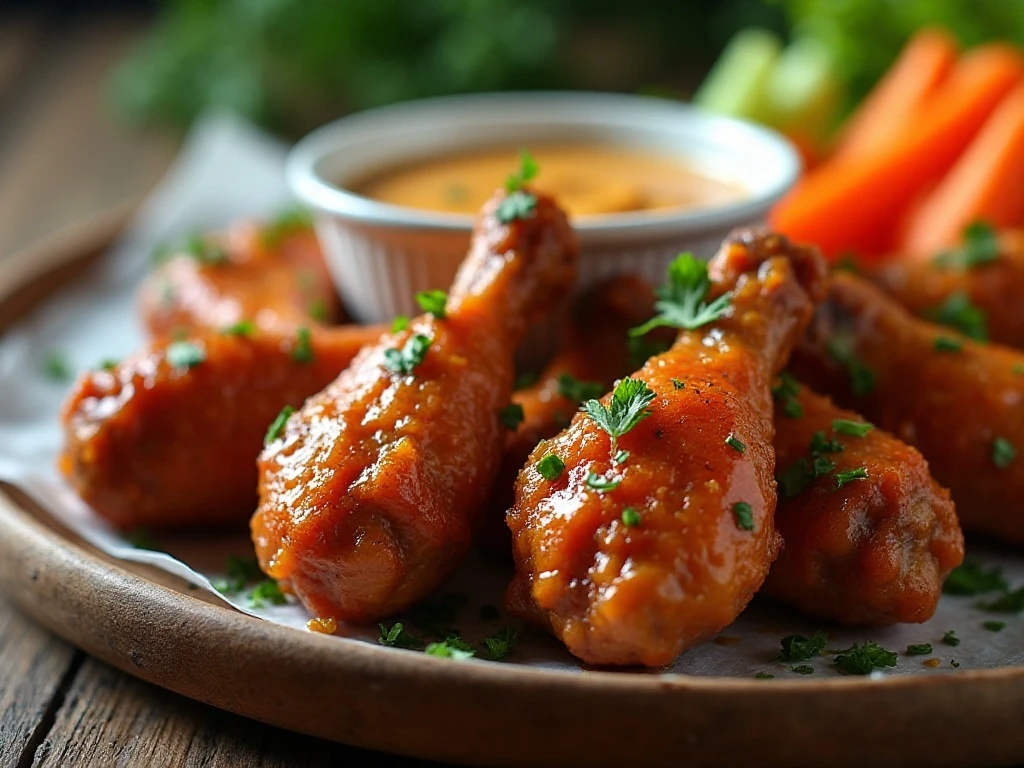
Serve the wings immediately after their short rest with Buffalo sauce, ranch or blue cheese dressing, celery, carrot sticks, or a crisp green salad. For a milder platter, divide the batch and sauce only part of it.
Transfer leftovers to a covered container and refrigerate them promptly. For the best texture, reheat the wings in the air fryer until hot and crisp rather than using the microwave, which can make the skin soft.
Reheating time will depend on how many wings you have and how powerful your appliance is, so check them frequently. Avoid adding sauce until the wings are hot, especially if crispness is your priority.
If you are planning a dessert course, keep the air fryer clean and dry before changing from savory foods to sweets. This royal icing recipe is a helpful baking reference for decorating cookies after dinner.
Common Beginner Mistakes to Avoid
The most common mistake is overcrowding. It is tempting to fit the entire batch into the basket, but the wings need circulating air; split them into batches when necessary.
Another mistake is adding sauce before cooking. Sauce can burn, drip into the basket, or prevent the skin from becoming crisp, so wait until the wings are finished.
Do not rely only on the timer. Begin checking the wings around 22 minutes, then continue cooking until they are deeply browned and reach at least 165°F (74°C) in the thickest pieces.
Finally, avoid opening the basket repeatedly. A quick turn halfway through is useful, but frequent checking releases heat and may lengthen the cooking time.
When you are ready for a different flavor profile, try these garlic Parmesan chicken wings for a rich, savory variation.
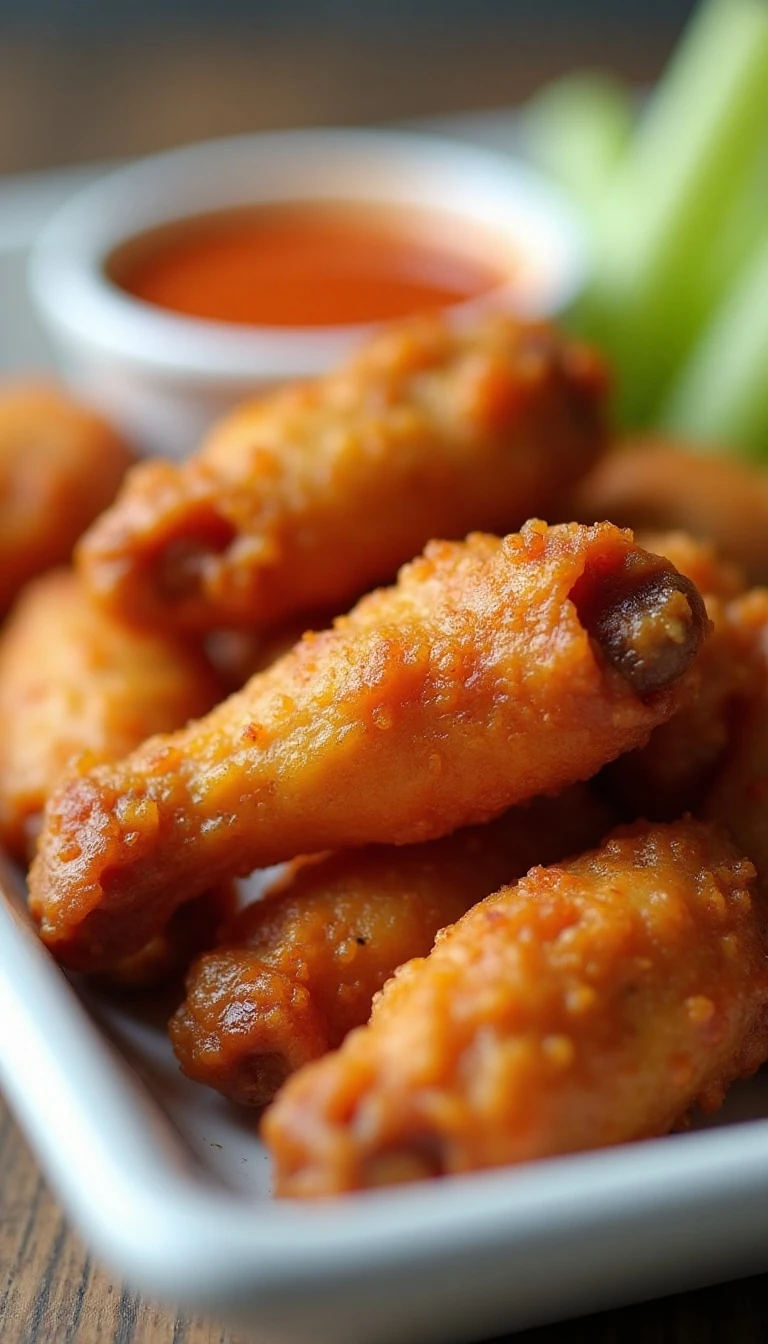
Beginner Air Fryer Chicken Wings
Ingredients
Method
- Pat the wings very dry with paper towels. Combine the baking powder, kosher salt, paprika, garlic powder, onion powder, and black pepper, then toss the wings with the seasoning mixture and neutral oil.
- Preheat the air fryer for 3–5 minutes if your appliance benefits from preheating. Arrange the wings in a single layer without crowding the basket.
- Air fry at 400°F (200°C) for 22–30 minutes, turning or shaking the basket halfway through cooking. Continue until the wings are deeply browned and the thickest pieces reach at least 165°F (74°C).
- Let the wings rest for 2–5 minutes. Toss them with about ½ cup Buffalo sauce or serve the sauce on the side so the skin stays as crisp as possible.
Notes
The Essential Air Fryer Cookbook
More ways to enjoy your air fryer.
Discover 25+ easy air-fryer recipes, from crispy chicken and savoury sides to baked treats. Get clear ingredients, serving information, timings and step-by-step instructions in one digital cookbook.
Digital PDF · Read on your phone, tablet or computer.
Get the Air Fryer Cookbook →One-time purchase. Private PDF access by email after successful payment.
Final Thoughts
Learning to use an air fryer is mostly about mastering airflow, moisture, spacing, and temperature. This chicken-wing recipe puts all four lessons into practice while delivering a dinner or appetizer that is crisp, juicy, and easy to customize.
Begin with dry wings, use a single layer, turn halfway, and confirm that the thickest pieces reach at least 165°F (74°C). With those habits in place, your air fryer will quickly become a dependable tool for weeknight meals and snack-time favorites.
Start with Buffalo sauce, then experiment with the wings plain or with other sauces once you know how your appliance cooks. The more you use it, the easier it becomes to judge basket space, timing, and the exact level of browning you enjoy.