This easy scones recipe makes eight medium scones with crisp, lightly sweet tops and soft, tender centers. Made with all-purpose flour, cold butter, baking powder, egg, and cold cream or milk, the dough comes together in about 15 to 20 minutes, then the shaped scones bake at 400°F for 18 to 22 minutes.
The secret to light, flaky scones at home is simple: keep the butter and liquid cold, leave a few pea-sized butter pieces in the dough, and handle the mixture gently. A short 15- to 30-minute chill before baking helps the scones hold their shape while the butter creates delicate layers in the oven.
Jump to RecipeWhy You’ll Love This Recipe

These homemade scones offer the best contrast: a gently crisp exterior surrounding a soft, buttery middle. They are sweet enough to enjoy plain, yet restrained enough to pair beautifully with jam, whipped cream, lemon curd, or a pat of butter.
The dough is mixed by hand in one bowl, and there is no need for a mixer or complicated shaping. The round-and-wedge method is especially convenient because it creates eight even portions with very little leftover dough.
For a cozy breakfast spread, serve these scones beside a loaf from our easy cinnamon bread recipe. The warm cinnamon flavor and buttery scones make a lovely combination for a weekend brunch.
Ingredients You’ll Need
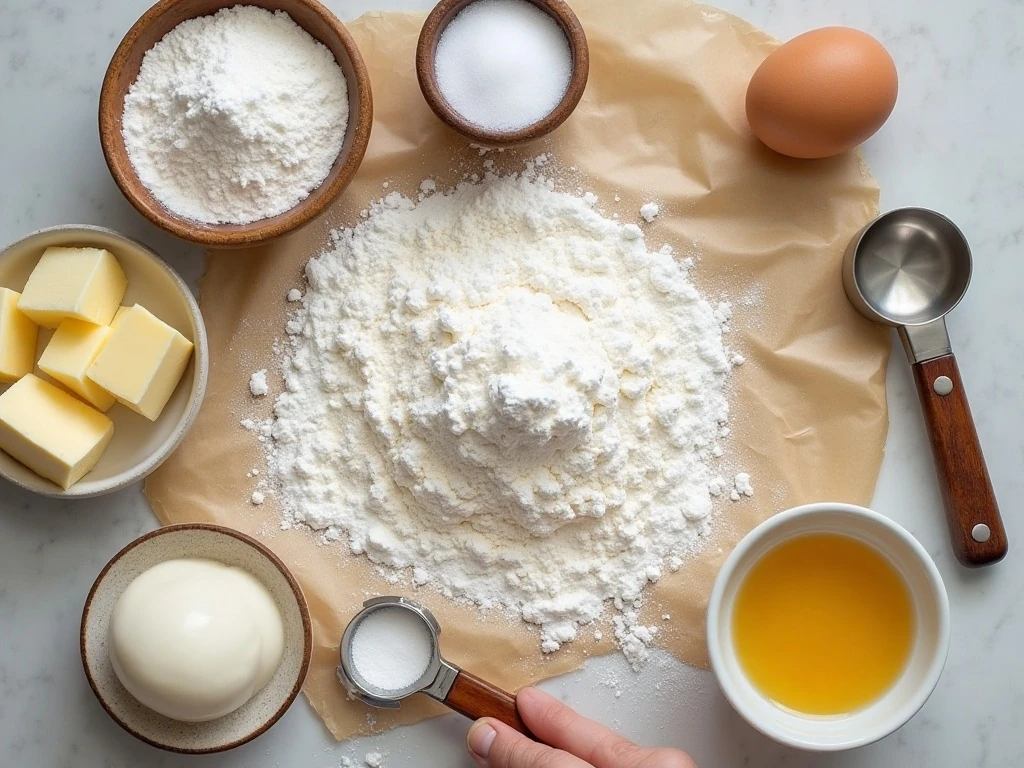
Each ingredient has a clear job in this dependable scone formula. Weighing the flour is helpful for the most consistent texture, but standard measuring cups work when the flour is spooned in and leveled.
- All-purpose flour: The sturdy base gives the scones structure without making them heavy.
- Granulated sugar: Adds gentle sweetness and encourages lightly golden tops.
- Baking powder: Provides the lift that makes the scones rise in the oven.
- Cold unsalted butter: Creates buttery pockets and flaky layers as it melts.
- Egg and cream or milk: Bind the dough and give the finished scones a tender crumb.
- Vanilla and coarse sugar: Vanilla adds a soft bakery aroma, while coarse sugar gives the tops a pleasant crunch.
Heavy cream makes a richer scone, while whole milk produces a slightly lighter result. Buttermilk can replace the cream or milk when you want a subtle tang.
How to Make It Step-by-Step

Step 1: Heat the oven to 400°F (200°C) and line a baking sheet with parchment. Preparing the pan first means the shaped dough can go straight onto the sheet without sitting at room temperature.
Step 2: Whisk the flour, sugar, baking powder, and salt in a large bowl until evenly combined. This distributes the leavening and salt so every scone has balanced flavor and lift.
Step 3: Add the cold butter cubes and cut them into the flour with a pastry cutter or your fingertips. Work quickly and stop when coarse crumbs form with a few pea-sized butter pieces still visible; those pieces are important for flaky layers.
Step 4: Whisk the egg, cold cream or milk, and vanilla extract in a separate bowl. Pour this mixture into the dry ingredients and stir gently with a fork or spatula just until no large dry patches remain.
Step 5: Turn the shaggy dough onto a lightly floured surface and gently bring it together. Do not knead it like bread, because too much handling develops gluten and can make the scones dense or tough.
Step 6: Pat or roll the dough into a round about 1 inch (2.5 cm) thick. Cut it into 8 wedges, or use a round cutter if you prefer classic circular scones; if using a cutter, press straight down instead of twisting.
Step 7: Arrange the pieces on the parchment-lined baking sheet. Chill the shaped scones for 15 to 30 minutes, which firms the butter and helps the dough keep its shape during baking.
Step 8: Brush the tops with 1 tablespoon of cream or milk and sprinkle with coarse sugar if desired. Keep the wash on the tops rather than the cut sides so the scones can rise freely.
Step 9: Bake for 18 to 22 minutes, checking near the shorter end of the range. The scones are ready when they have risen and look lightly golden, especially around the edges.
Step 10: Let the scones cool briefly on the baking sheet, then serve them warm. Split them with your fingers or a knife and add jam, cream, butter, or another favorite topping.
Pro Tips for Light, Flaky Scones

Start cold. Butter should come directly from the refrigerator, and the cream or milk should be cold as well. If your kitchen is warm or the butter begins to soften while mixing, place the bowl in the refrigerator for a few minutes.
Keep visible butter pieces. The butter does not need to disappear completely into the flour. Small pieces melt in the oven and release steam, helping separate the dough into tender layers.
Mix with a light touch. A shaggy dough is exactly what you want before shaping. The dough will come together as you gently press it, so resist the temptation to stir until perfectly smooth.
Measure the thickness. A round about 1 inch thick gives the scones enough height to rise while still baking through in 18 to 22 minutes. A thinner round will produce shorter scones, while a much thicker round may need more baking time.
Use a sharp cutting motion. If making wedges, cut cleanly through the dough. If using a round cutter, press straight down and lift straight up to protect the layers.
For a heartier breakfast table, add these freshly baked scones alongside a comforting minestrone soup later in the day. The scones also make a pleasant bread alternative with a bowl of soup.
Flavor Variations and Serving Ideas

The plain version is a wonderful starting point, but the dough welcomes flavorful additions. Fold in about 1/2 to 3/4 cup of raisins, currants, dried cranberries, or chocolate chips just after cutting in the butter.
For a bright citrus note, add lemon zest or orange zest with the dry ingredients. A little zest perfumes the entire batch without changing the liquid balance.
Although the base recipe uses 1/3 cup sugar, some bakers use 1/2 cup for sweeter, more dessert-like scones. Serve those with softly whipped cream and berries, or drizzle them with a simple glaze after cooling.
For a savory direction, leave out the coarse sugar and consider serving the plain scones with scrambled eggs or sharp cheese. They are also excellent with a warm mug of tea, coffee, or hot chocolate.
Storage, Freezing, and Reheating
Scones are at their finest warm on the day they are baked. Store cooled leftovers in an airtight container at room temperature for up to a day, though the crust will gradually soften.
To refresh them, warm the scones in a 300°F oven for several minutes until heated through. Avoid overheating, which can dry the tender centers.
You can also freeze baked scones once completely cool. Wrap them well, place them in a freezer-safe container, and thaw before warming; for the freshest texture, freeze unbaked shaped scones and bake them after chilling, adding a little time if needed.
If you are planning a full comfort-food menu, pair the sweet scones with savory dishes such as stovetop ground turkey chili. Keep dessert ready with a small batch of KitKat fudge, or offer a crunchy appetizer such as air-fried pickles with bacon and ranch.
Common Scone Mistakes to Avoid
- Warm butter: Soft butter blends too completely into the flour and reduces the flaky texture.
- Too much flour: Packing flour into a cup can make the dough dry, so weigh it or spoon and level it.
- Overmixing: Stir only until the dough holds together; a perfectly smooth dough may bake up tough.
- Skipping the chill: The chill is optional, but it gives the butter time to firm and helps the scones rise neatly.
- Overbaking: Remove the scones when lightly golden rather than waiting for a deep brown crust.

Easy Scones Recipe for Light, Flaky Scones at Home
Ingredients
Method
- Heat the oven to 400°F (200°C) and line a baking sheet with parchment. Whisk the flour, sugar, baking powder, and salt together in a large bowl.
- Add the cold cubed butter and cut it into the dry ingredients with a pastry cutter or your fingertips. Stop when the mixture looks like coarse crumbs with some pea-sized butter pieces remaining.
- In a separate bowl, whisk the egg, cold cream or milk, and vanilla extract if using. Pour the liquid mixture into the flour mixture and stir only until a shaggy dough forms.
- Turn the dough onto a lightly floured surface and gently bring it together without kneading. Pat or roll it into a round about 1 inch (2.5 cm) thick.
- Cut the round into 8 wedges, or use a round cutter for individual scones. Place the pieces on the prepared baking sheet with a little space between them.
- Chill the shaped scones for 15 to 30 minutes if time allows. Brush the tops with cream or milk and sprinkle with coarse sugar if desired.
- Bake for 18 to 22 minutes, until the scones are risen and lightly golden. Serve warm.
Notes
Final Thoughts
This easy scones recipe is a reliable way to bring light, flaky bakery-style scones to your own kitchen. With cold butter, a gentle hand, and a brief chill, you can create eight tender scones with golden tops and buttery layers in about 45 to 60 minutes from start to finish.
Enjoy them warm with jam and cream, or customize the dough with dried fruit, citrus zest, or chocolate chips. Once you make this simple version, it will be an inviting recipe to keep ready for relaxed breakfasts, afternoon tea, and last-minute guests.