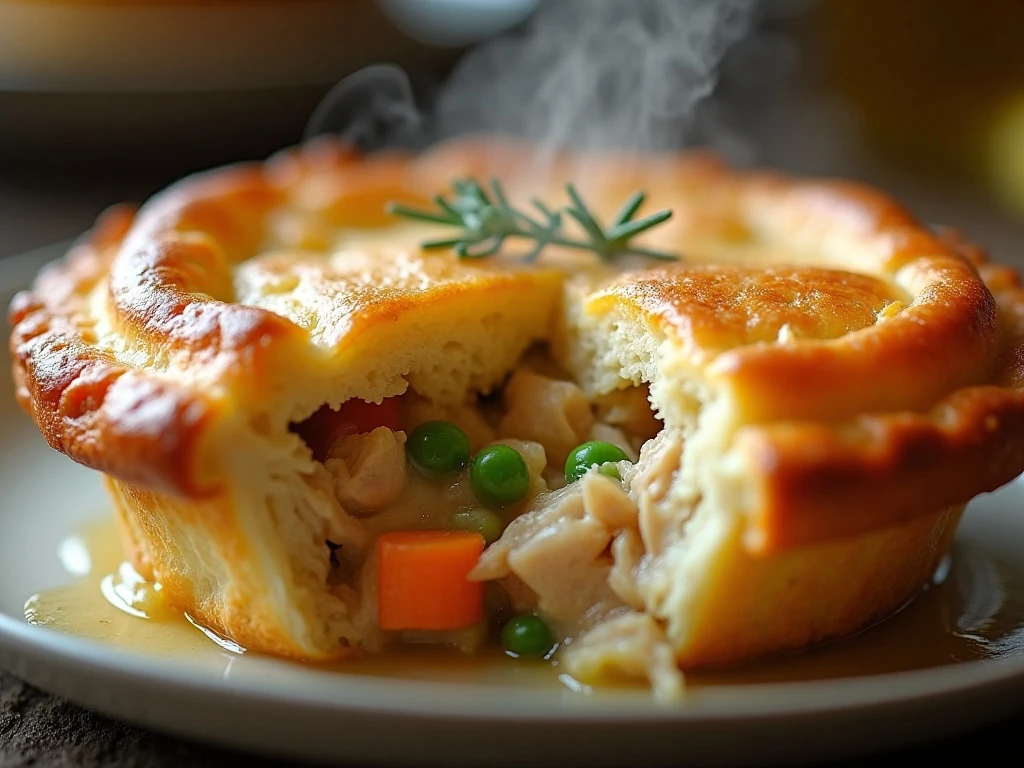
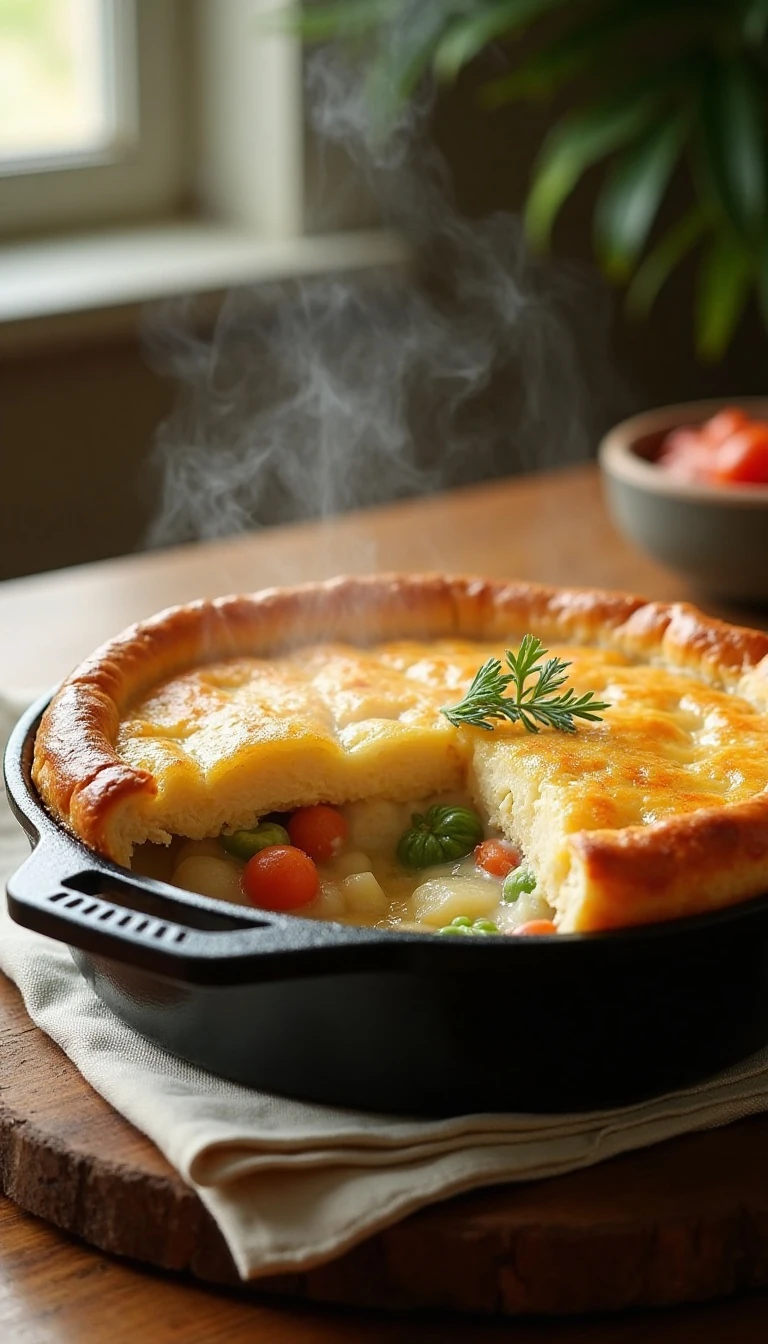
This cast iron chicken pot pie recipe makes a cozy savory main dish for six, combining tender cooked chicken, carrots, celery, peas, and a creamy chicken gravy beneath one golden pastry topping. The filling comes together on the stovetop in the skillet, then the entire pan goes into a 400°F oven for an easy, wonderfully comforting dinner.
Although this recipe may appear under a desserts category, chicken pot pie is decidedly savory rather than sweet. Every bite offers crisp pastry, rich sauce, tender vegetables, and seasoned chicken, while the cast-iron skillet keeps the filling hot and makes a beautiful centerpiece for the table.
Jump to RecipeWhy You’ll Love This Recipe
This skillet pot pie brings the best parts of a classic comfort-food dinner into one pan. The cast iron distributes heat steadily, helps the vegetables and sauce cook evenly, and moves directly from stovetop to oven without requiring a separate baking dish.
The filling is creamy but not runny, with a simple butter-and-flour roux providing body. Chicken broth supplies savory depth, while whole milk or heavy cream gives the sauce a pleasantly rich finish without overwhelming the vegetables.
A single pastry topping keeps preparation manageable and creates a generous crisp-to-creamy contrast. The pastry browns beautifully over the bubbling filling, making this dish just as appealing for a family dinner as it is for a casual gathering.
If you enjoy comforting chicken dinners, you may also like this creamy broccoli chicken casserole for another cozy meal idea.
Ingredients You’ll Need
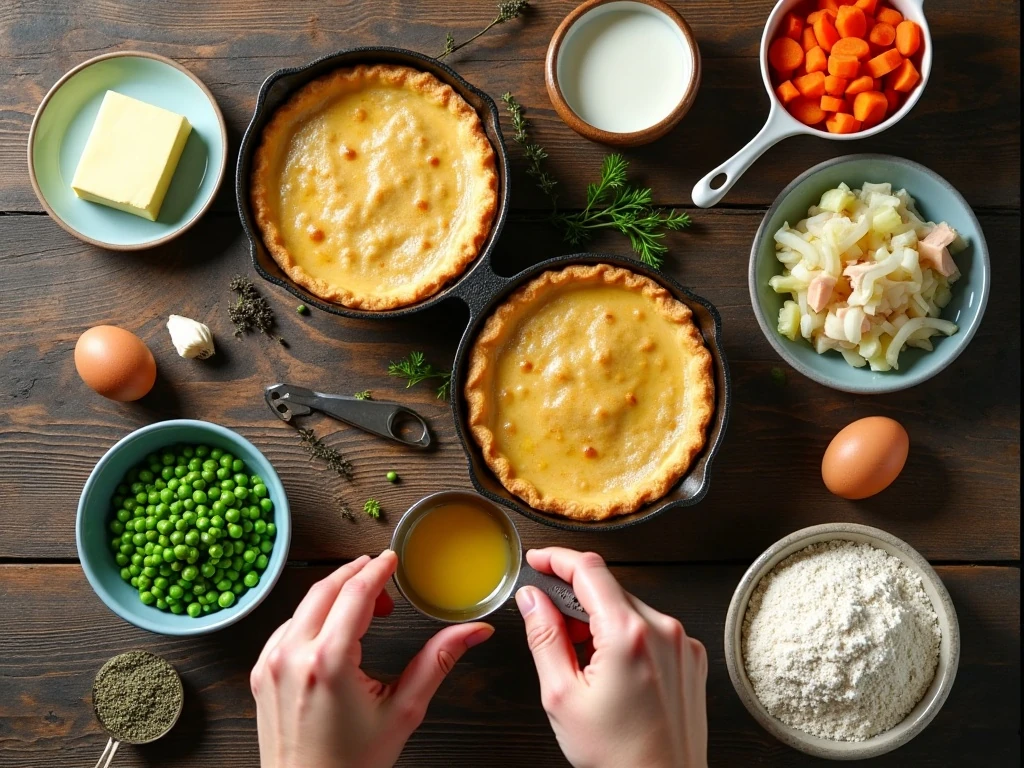
The ingredient list is classic and practical. Begin with three tablespoons of unsalted butter, one diced yellow onion, two diced carrots, two diced celery ribs, and two minced garlic cloves. These vegetables create the aromatic base of the gravy.
- Thickener: One-third cup all-purpose flour cooks into the butter and forms the roux.
- Liquid: Three cups chicken broth plus one-half cup whole milk or heavy cream make the sauce.
- Protein and vegetables: Three cups cooked bite-size chicken and one cup frozen peas complete the filling.
- Seasoning: One teaspoon fresh thyme leaves, one teaspoon kosher salt, and one-half teaspoon freshly ground black pepper provide balanced flavor.
- Topping: Use one refrigerated 9-inch pie crust or one sheet of thawed puff pastry, plus one egg and one tablespoon water for brushing.
Using cooked chicken makes this recipe especially convenient. If starting with raw chicken, poach or roast about 1 1/4 pounds boneless chicken to yield approximately three cups cooked meat, and check that it reaches 165°F internally.
How to Make It Step-by-Step
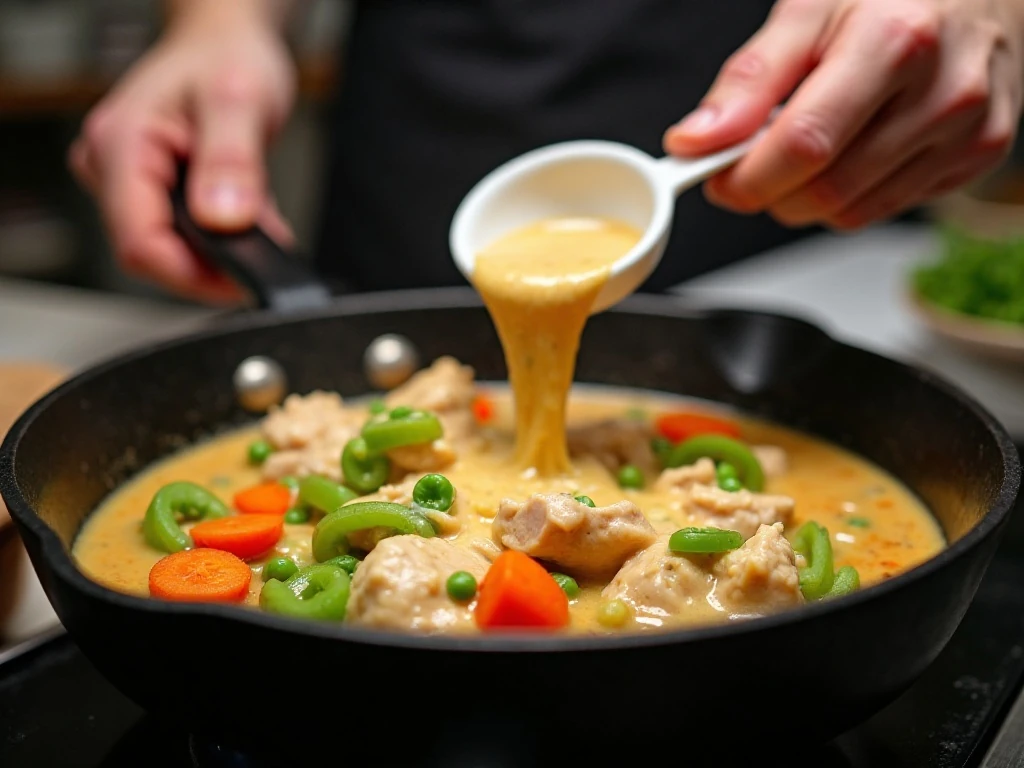
Step 1: Heat the oven to 400°F and set out a 10- or 12-inch oven-safe cast-iron skillet. Starting with a fully heated oven means the pastry can begin puffing and browning as soon as the skillet goes in.
Step 2: Melt the unsalted butter in the skillet over medium heat. Add the diced onion, carrots, and celery, then cook for 5–7 minutes, stirring occasionally, until the vegetables begin to soften but still retain some texture.
Step 3: Add the minced garlic and cook for about 30 seconds, just until fragrant. Sprinkle the flour evenly over the vegetables and stir continuously for 1–2 minutes to cook out the raw flour flavor.
Step 4: Gradually whisk in the chicken broth, adding it slowly so the sauce stays smooth. Pour in the milk or cream, then simmer for 3–5 minutes while stirring until the gravy thickens enough to coat a spoon.
Step 5: Stir the cooked chicken, frozen peas, thyme, kosher salt, and black pepper into the thickened sauce. Taste carefully and add more salt if needed, then remove the skillet from the heat.
Step 6: Lay the refrigerated pie crust or thawed puff pastry over the filling. Trim excess pastry or fold the edges inward, then cut several vents across the top so steam can escape during baking.
Step 7: Beat the egg with one tablespoon water to make an egg wash. Brush it over the pastry for a glossy, deeply golden finish, taking care not to let much egg pool around the edges.
Step 8: Set the skillet on a rimmed baking sheet and bake for 25–35 minutes. The pot pie is ready when the pastry is deeply golden and the filling is visibly bubbling; loosely cover it with foil if the crust browns too quickly.
Step 9: Let the baked pot pie stand for about 10 minutes before serving. The sauce thickens as it cools, making it easier to spoon generous portions without a loose filling running across the plate.
Chef Tips for a Crisp, Creamy Pot Pie
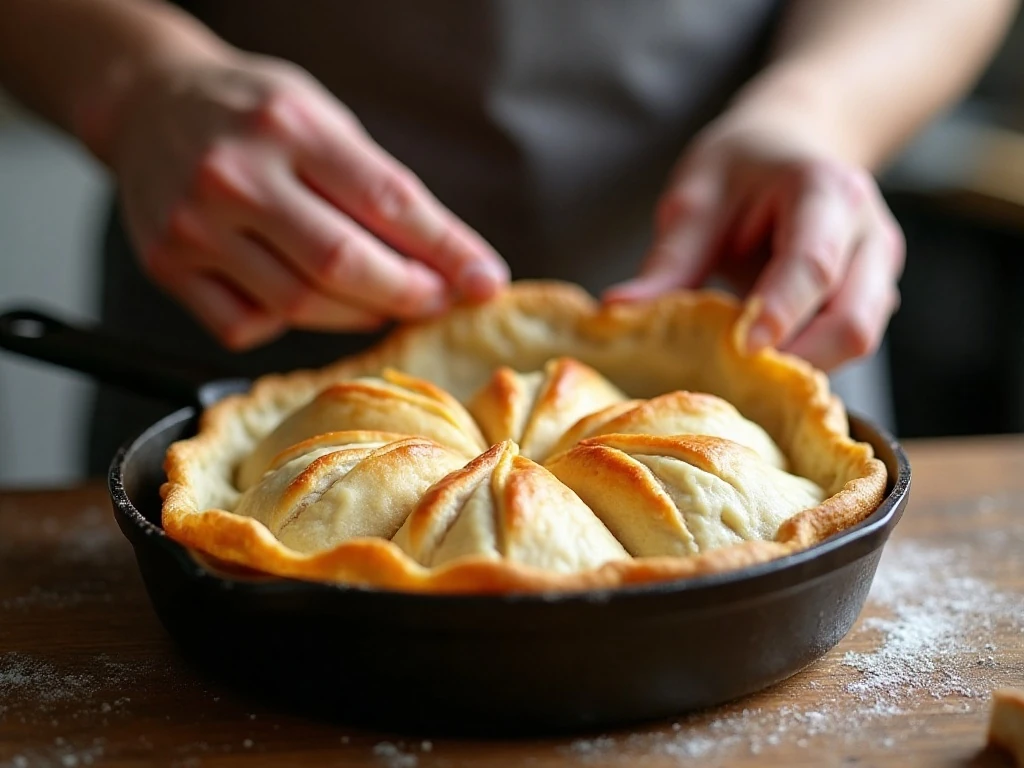
The most important texture tip is to cook the filling until it is fairly thick before adding the pastry. A loose filling can make the topping soggy and may bubble over as it bakes.
Keep puff pastry cold until the last possible moment. Cold pastry releases steam as the butter layers heat, which helps produce a crisp, flaky top; a warm sheet may become difficult to handle and bake less evenly.
- Place the skillet on a rimmed baking sheet to catch drips and make oven handling easier.
- Cut several vents in the pastry so steam does not become trapped beneath the crust.
- Use whole milk for a lighter sauce or heavy cream for a richer result.
- Let the skillet rest before serving instead of cutting into it immediately.
- Use oven mitts whenever touching the skillet handle, since cast iron remains hot long after baking.
For another savory chicken favorite with a sweet and sticky finish, take a look at these honey baked chicken wings. They make a delicious choice when you want a different style of comforting chicken dinner.
Pie Crust or Puff Pastry?
A refrigerated 9-inch pie crust gives the pot pie a familiar, tender pastry top with a traditional homemade-pie feel. It is simple to drape over the skillet and usually needs only a few vents and a quick egg wash.
Thawed puff pastry creates a lighter, flakier topping with visible layers and especially crisp edges. Keep it cold until baking, and avoid stretching it too thin when placing it over the filling.
Either topping works well with the same filling and baking temperature. Choose pie crust for classic comfort or puff pastry when you want a more dramatically flaky finish.
Serving, Storage, and Reheating
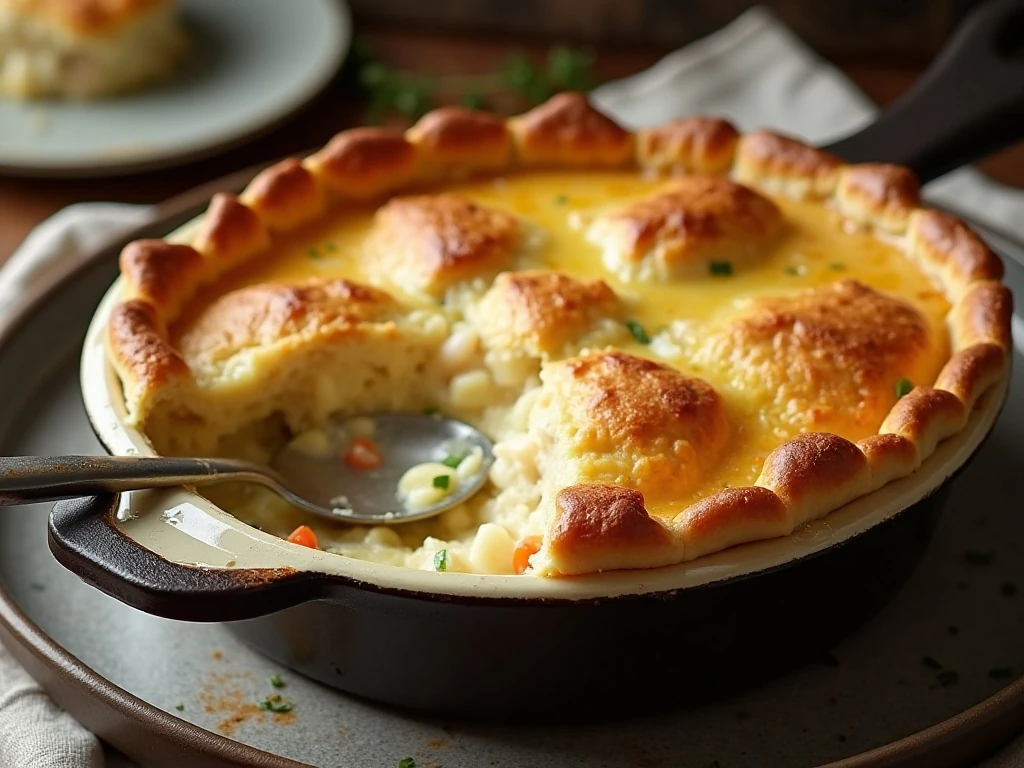
Serve the pot pie after its 10-minute rest, while the crust is still crisp and the filling is warmly bubbling. A simple green salad or steamed vegetable makes a fresh side, though the dish is satisfying enough to stand on its own.
Refrigerate cooled leftovers in a covered container. To reheat, warm individual portions gently until hot, taking care not to scorch the creamy sauce; the pastry will be best on the first day but remains enjoyable after reheating.
Because the skillet retains heat, avoid leaving the finished pot pie in the pan longer than necessary once serving is complete. Transfer leftovers after they have cooled sufficiently, and handle the cast iron carefully throughout.
For a vegetable-forward starter before this hearty meal, you can also serve our curried cauliflower soup. Its warm spices offer a flavorful contrast to the creamy chicken filling.
Common Questions
Can I use leftover roast chicken? Yes. Shredded or chopped cooked chicken works equally well, as long as the pieces are bite-size and measure approximately three cups.
Can I prepare the filling ahead? You can cook the filling ahead and chill it, but cool it promptly and cover it well. Add the pastry shortly before baking so the topping does not sit on a cold, moist filling for too long.
Why did my crust turn soggy? The filling may have been too loose, or the pastry may have warmed before baking. Cook the gravy until it coats a spoon and keep puff pastry cold for the crispest result.
Cast Iron Chicken Pot Pie
Ingredients
Method
- Heat the oven to 400°F. Melt the butter in a 10- or 12-inch oven-safe cast-iron skillet over medium heat, then cook the onion, carrots, and celery for 5–7 minutes, until the vegetables begin to soften.
- Add the minced garlic and cook for about 30 seconds. Sprinkle in the flour and stir continuously for 1–2 minutes so the raw flour cooks without browning too much.
- Gradually whisk in the chicken broth, followed by the milk or cream. Simmer for 3–5 minutes, stirring often, until the sauce thickens enough to coat a spoon.
- Stir in the cooked chicken, frozen peas, thyme, kosher salt, and black pepper. Remove the skillet from the heat once the mixture is hot and fairly thick.
- Lay the pie crust or puff pastry over the skillet, trimming or folding the edges as needed. Cut several vents in the top to let steam escape.
- Beat the egg with the water, then brush the mixture evenly over the pastry. Place the skillet on a rimmed baking sheet to catch any bubbling filling or drips.
- Bake for 25–35 minutes, until the pastry is deeply golden and the filling is bubbling. If the crust browns too quickly, loosely cover it with foil.
- Let the pot pie stand for about 10 minutes before serving. This resting time allows the sauce to thicken so each scoop holds together better.
Notes
Final Thoughts
This cast iron chicken pot pie is a dependable way to turn cooked chicken and everyday vegetables into a warm, satisfying dinner. The butter-flour gravy is creamy and savory, the peas add a touch of sweetness, and the pastry provides the crisp golden topping everyone reaches for first.
Give the filling time to thicken, vent the pastry, and allow the finished skillet to rest for 10 minutes. Those small details help create the ideal contrast between spoonable chicken gravy and flaky crust.
With a prep time of about 25–30 minutes, 15–20 minutes on the stovetop, 25–35 minutes of baking, and a brief rest, this six-serving meal is practical enough for a weeknight while still feeling special. Serve it straight from the skillet for a comforting centerpiece and a dinner that tastes like home.
2 thoughts on “Cast Iron Chicken Pot Pie Recipe with Golden Pastry”