This delicious braised beef short ribs recipe produces fork-tender, bone-in beef slowly cooked in dry red wine, beef stock, aromatic vegetables, garlic, and herbs. Brown the ribs thoroughly, then braise them covered at 325°F for 3 to 3½ hours until the meat is nearly falling from the bones.
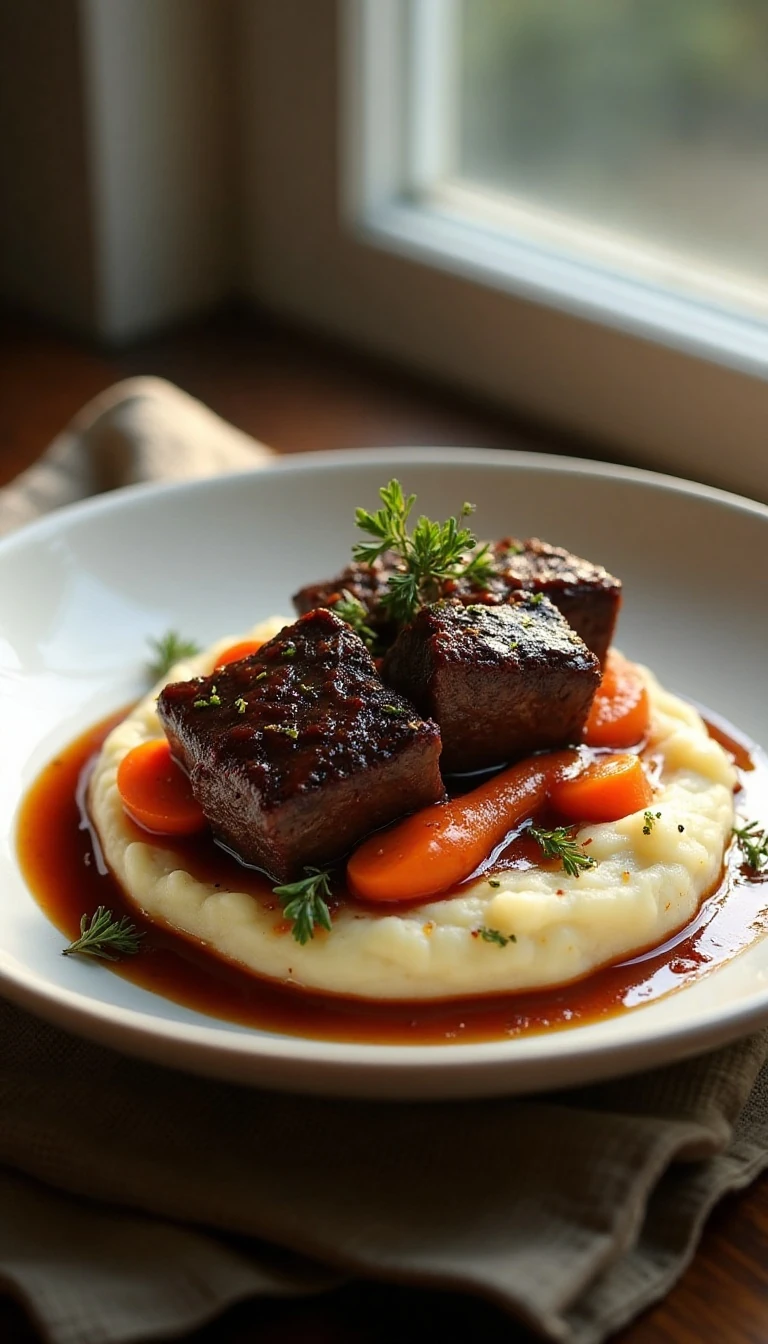
The finished short ribs are deeply savory, silky, and wonderfully rich, with a concentrated sauce that tastes especially good over mashed potatoes, creamy polenta, egg noodles, or crusty bread. The recipe makes 4–6 servings and takes about 4 hours from start to finish, including preparation.
Jump to RecipeWhy You’ll Love This Recipe
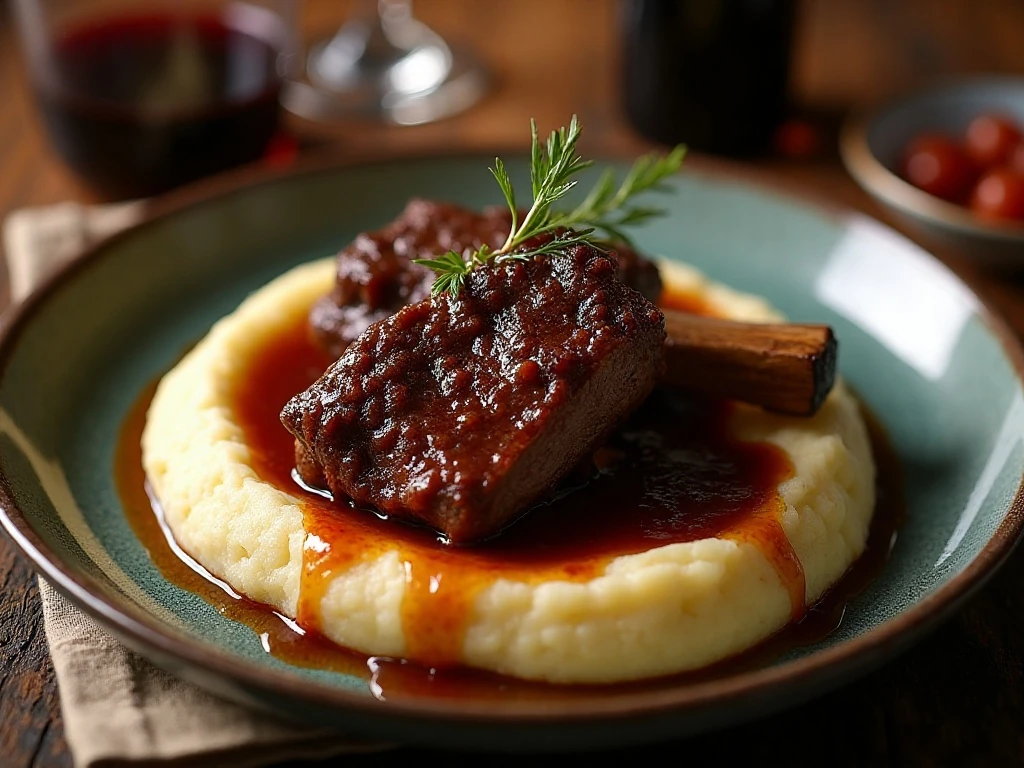
Braised beef short ribs are the kind of dinner that turns a simple evening into a special occasion. The meat starts out sturdy and richly marbled, but a long, gentle braise transforms it into tender bites that yield easily to a fork.
The sauce has layers of flavor from several small but important steps. Deeply browned beef contributes roasted notes, tomato paste adds savory depth, red wine brings fruit and acidity, and the classic onion, carrot, celery, garlic, and herb combination makes the pot smell irresistible.
This recipe is also wonderfully practical for entertaining. Most of the cooking happens in the oven, leaving you time to prepare a side dish, set the table, or relax while the ribs become tender.
- Serves: 4–6 people
- Prep time: 30–40 minutes
- Cook time: 3–3½ hours
- Total time: About 4 hours
If you enjoy hearty beef dinners prepared with a different technique, our air fryer roast beef recipe is another excellent option for your dinner collection.
Ingredients You’ll Need

Begin with 5 pounds of bone-in English-cut short ribs. Ask the butcher for pieces cut into 3–4-inch sections, which provide a generous amount of meat and a good surface area for browning.
You will also need 2 teaspoons of kosher salt, 1 teaspoon of freshly ground black pepper, and 2 tablespoons of neutral oil or olive oil. Seasoning the ribs before they enter the pot ensures that the flavor reaches beyond the surface.
The vegetable base consists of one large diced yellow onion, two diced medium carrots, two diced celery ribs, and 5–6 minced or smashed garlic cloves. These vegetables soften into the braising liquid and may either be strained out for a polished sauce or left in for a more rustic presentation.
For the sauce, gather 2 tablespoons of tomato paste, 2 cups of dry red wine, and 3–4 cups of low-sodium beef stock. Choose a wine you enjoy drinking, such as Cabernet Sauvignon, Merlot, or Pinot Noir, and avoid sweet cooking wine because it can make the finished sauce heavy.
Two bay leaves and 4–6 fresh thyme sprigs provide a classic herbal background. A small rosemary sprig, 1 tablespoon of Worcestershire sauce, and 1 tablespoon of balsamic vinegar or red-wine vinegar are optional, but each can add useful balance.
Finally, keep 2 tablespoons of all-purpose flour nearby if you prefer a slightly thicker sauce. It is not essential, and the sauce can also be thickened naturally by simmering it after the ribs are removed.
For another slow-cooked beef dinner with wine and vegetables, compare the method with this slow-cooked beef bourguignon.
How to Make It Step-by-Step
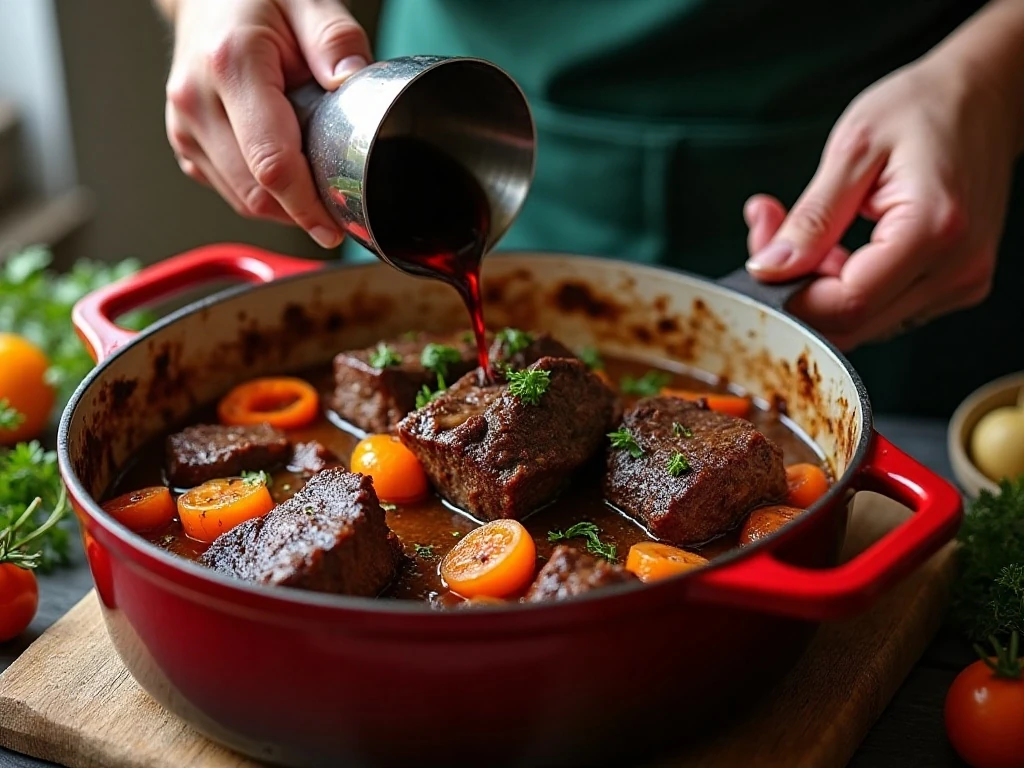
Step 1: Pat the short ribs completely dry with paper towels, since surface moisture prevents proper browning. Season all sides with the kosher salt and black pepper, then let the meat rest at room temperature for about 20–30 minutes while the oven heats to 325°F.
Step 2: Set a large Dutch oven over medium-high heat and add the oil. Once the oil is hot, brown the ribs in batches for 3–5 minutes on each broad side, turning them only when they release easily and show a deep brown crust.
Step 3: Move the browned ribs to a plate and reduce the burner to medium. Add the onion, carrots, and celery to the same pot, stirring for 5–8 minutes so the vegetables soften and pick up the flavorful browned bits left by the beef.
Step 4: Add the garlic and tomato paste, then cook for 1–2 minutes. The garlic should smell fragrant, while the tomato paste should darken slightly and coat the vegetables.
Step 5: If you are using flour, sprinkle it over the vegetables and stir for about 1 minute to remove its raw taste. Pour in the red wine, scrape the bottom of the Dutch oven thoroughly, and simmer for 5–8 minutes until the wine reduces by about one-third to one-half.
Step 6: Return the browned ribs to the pot, arranging them in a snug layer. Add 3–4 cups of beef stock, using enough to come halfway to two-thirds up the meat without completely covering it, then add the bay leaves, thyme, rosemary, and Worcestershire sauce if using.
Step 7: Bring the liquid to a gentle simmer on the stovetop, then cover the Dutch oven tightly. Transfer it to the 325°F oven and braise for 3–3½ hours, turning the ribs once or twice so the meat cooks evenly.
Step 8: Check the ribs near the end of the cooking time by inserting a fork into the thickest part of the meat. They are ready when exceptionally tender and nearly falling from the bones, not merely when they reach a particular clock time.
Step 9: Carefully transfer the ribs to a platter and remove the bay leaves and herb stems. Skim excess fat from the surface of the liquid, then strain the sauce for a smooth result or leave the softened vegetables in place for a rustic finish.
Step 10: Simmer the sauce on the stovetop if it needs to become more concentrated. Taste it before serving, adding more salt if necessary and stirring in the vinegar if the flavor seems overly rich or sweet.
Step 11: Spoon the sauce over the ribs and serve immediately with your preferred accompaniment. Mashed potatoes are a classic choice because they absorb the sauce, while polenta, egg noodles, and crusty bread offer equally satisfying options.
Pro Tips for Tender, Flavorful Short Ribs

Take browning seriously. The ribs should be deeply brown rather than gray. Work in batches with space between the pieces; overcrowding traps steam and keeps the beef from developing the roasted flavor that forms the foundation of the sauce.
Keep the ribs partially exposed. The stock should reach only halfway to two-thirds up the ribs. This arrangement lets the lower portion gently braise while the exposed meat continues to roast, producing tender beef and a more concentrated liquid.
Use a pleasant dry wine. Since the wine becomes part of the sauce, its flavor matters. Cabernet Sauvignon, Merlot, or Pinot Noir are reliable choices, but any dry red wine that you would happily drink can work well.
Make them ahead when possible. Cool the ribs in their braising liquid, cover, and refrigerate them overnight. The fat will solidify on the surface, making it simple to lift away before gently reheating the ribs and sauce.
Balance the final sauce. Long cooking produces a full, rich flavor, but a tablespoon of balsamic vinegar or red-wine vinegar can add brightness. Add it gradually and taste as you go so the sauce remains rounded rather than sharply acidic.
For a second classic version of this wine-braised style, see our traditional beef bourguignon recipe for more cozy dinner inspiration.
Serving Suggestions
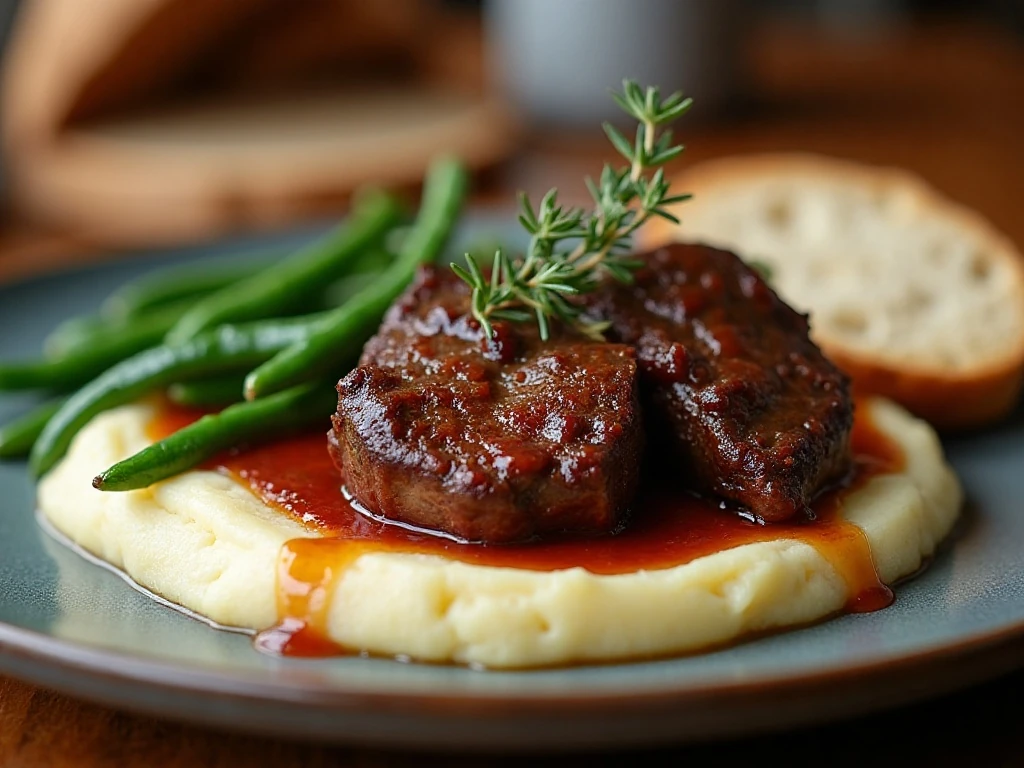
The most traditional pairing is creamy mashed potatoes, which provide a soft, buttery base for the glossy sauce. Spoon the sauce over both the potatoes and the beef so every bite includes the savory vegetables and wine reduction.
Polenta is another excellent option, especially when prepared until smooth and spoonable. For a heartier presentation, serve the ribs with wide egg noodles or place them beside thick slices of crusty bread for soaking up every last drop.
A simple green vegetable keeps the plate balanced. Steamed green beans, roasted Brussels sprouts, or a crisp salad can add freshness without competing with the braised beef.
If you are planning a broader dinner spread, a bright fruit-based side such as this fresh peach salsa can provide a pleasant contrast to the rich main course.
Storage, Reheating, and Make-Ahead Advice
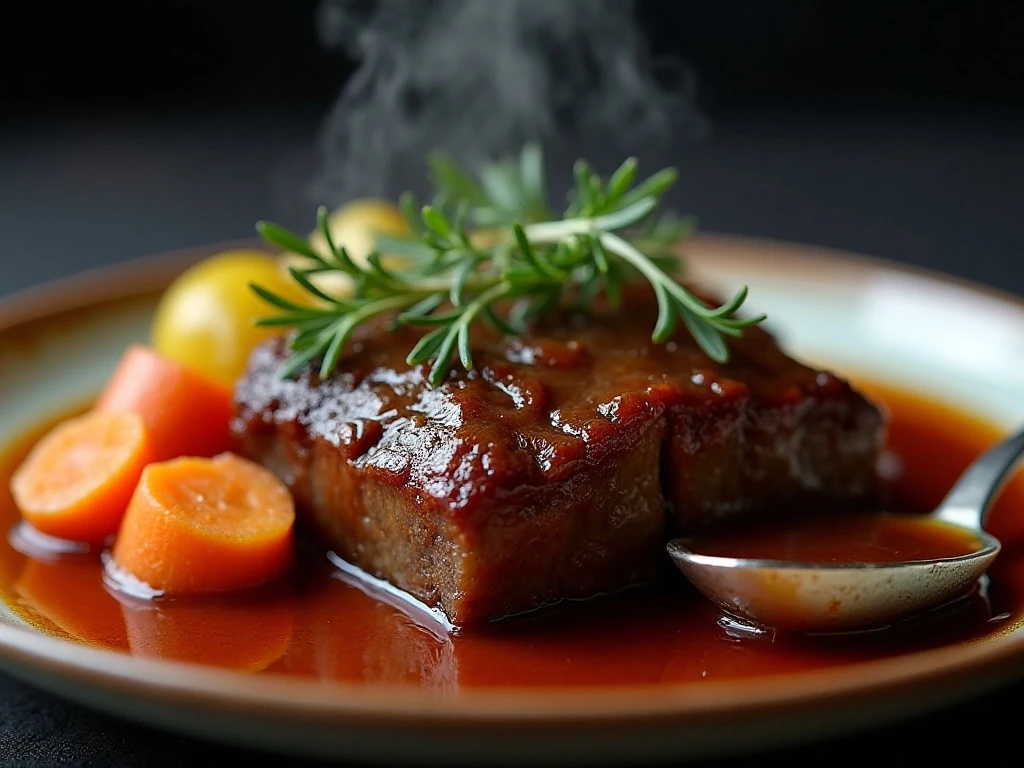
Let leftover ribs and sauce cool before transferring them to an airtight container. Refrigerate them for up to 3 days, keeping the meat in the sauce so it stays moist during storage.
For the best make-ahead result, refrigerate the entire braise overnight. Remove the firm fat from the surface the next day, then reheat the ribs gently in the sauce on the stovetop or in a covered 325°F oven until hot.
Reheat only until warmed through rather than boiling the sauce aggressively. A hard boil can cause the meat to break apart and may make the sauce look greasy.
When serving leftovers, refresh the sauce with a small splash of beef stock if it has thickened too much. Taste again before plating, since reheating can change the seasoning slightly.
For another comforting option when you have leftover cooked meat on hand, you can also browse this easy turkey casserole idea for a separate family dinner.
Delicious Braised Beef Short Ribs Recipe
Ingredients
Method
- Pat the short ribs very dry, then season every side with kosher salt and freshly ground black pepper. Let them sit at room temperature for 20–30 minutes while the oven heats to 325°F.
- Heat the oil in a large Dutch oven over medium-high heat. Brown the ribs in batches for 3–5 minutes per broad side until deeply browned, then transfer them to a plate.
- Reduce the heat to medium and add the diced onion, carrots, and celery. Cook for 5–8 minutes, stirring occasionally, until the vegetables soften and develop light browning.
- Add the garlic and tomato paste, cooking for 1–2 minutes until fragrant and slightly darkened. If using flour, sprinkle it over the vegetables and stir for about 1 minute.
- Pour in the red wine and scrape the browned bits from the bottom of the pot. Simmer for 5–8 minutes, reducing the wine by roughly one-third to one-half.
- Return the ribs to the Dutch oven and add enough beef stock to reach halfway to two-thirds up the ribs. Add the bay leaves, thyme, rosemary if using, and Worcestershire sauce if desired.
- Bring the liquid to a gentle simmer, cover the pot, and transfer it to a 325°F oven. Braise for 3–3½ hours, turning the ribs once or twice, until the meat is very tender and nearly falling from the bones.
- Transfer the ribs to a platter and skim excess fat from the braising liquid. Strain the sauce for a smooth finish or keep the vegetables in the pot for a rustic sauce, then simmer it on the stovetop if it needs further reduction.
- Taste the sauce and adjust the seasoning, adding the vinegar if it tastes overly rich or sweet. Serve the short ribs with plenty of sauce over mashed potatoes, polenta, egg noodles, or crusty bread.
Notes
Final Thoughts
This delicious braised beef short ribs recipe rewards patience with tender meat, a full-bodied red-wine sauce, and the unmistakable comfort of a slow-cooked dinner. The most important details are simple: dry the ribs well, brown them in batches, keep them only partly covered with liquid, and cook them until truly fork-tender.
Serve the ribs fresh from the oven for a memorable meal, or prepare them a day ahead so the flavors become even more developed and the excess fat is easy to remove. Add a spoonful of sauce to every serving, bring plenty of mashed potatoes or crusty bread to the table, and enjoy a dinner that feels both rustic and wonderfully special.