To make pancakes without baking powder, use baking soda with an acidic ingredient such as buttermilk. In this easy breakfast recipe, 1 teaspoon of baking soda reacts with 1 1/2 cups of buttermilk to help the pancakes rise, while eggs and melted butter add richness and tenderness.
The result is a stack of golden, soft-centered pancakes with lightly crisp edges and a pleasant tang from the buttermilk. The batter takes about 10 minutes to prepare, rests for 5 minutes, and cooks in 15–20 minutes, so you can have approximately 8–10 pancakes on the table in about 30 minutes.
Jump to RecipeWhy You’ll Love This Recipe
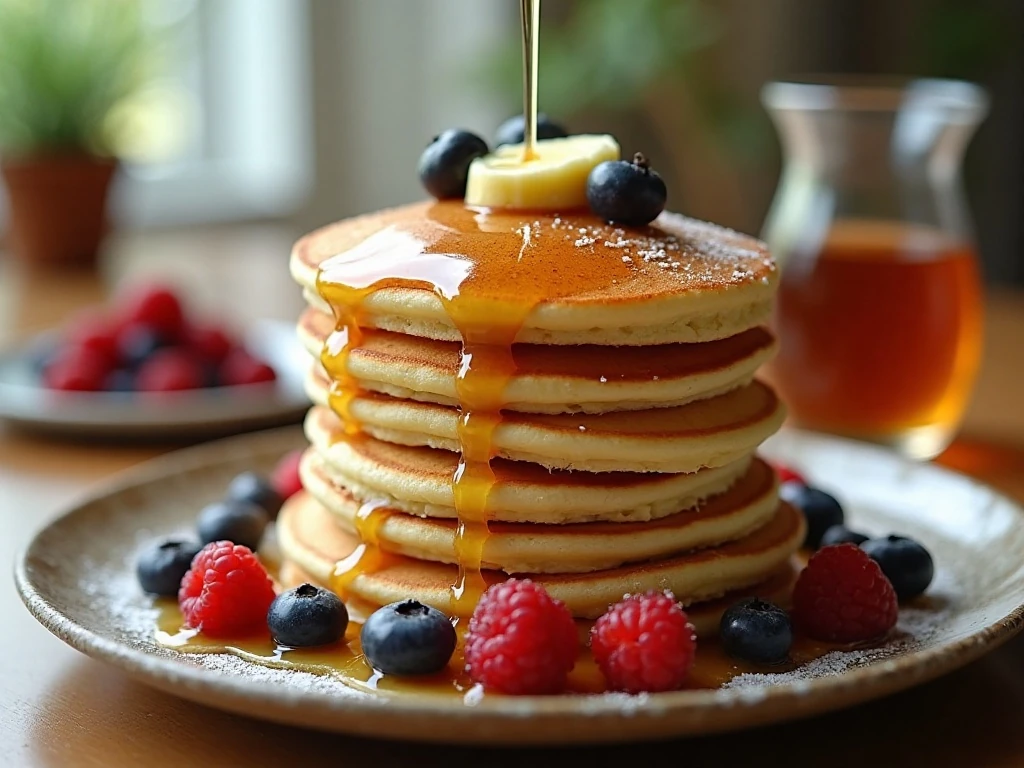
These pancakes prove that baking powder is not essential for a light, satisfying breakfast. Baking soda provides the lift, but it needs acidity to work properly, and buttermilk supplies exactly what the batter needs.
Buttermilk also contributes more than acidity. Its gentle tang balances the sugar and butter, giving the pancakes a fuller flavor than plain milk pancakes while helping create a tender crumb.
The recipe is simple enough for a weekday morning but special enough for a relaxed weekend brunch. Serve the stack with classic maple syrup, or add fresh fruit for a colorful plate.
If you enjoy making breakfast from scratch, you may also want to try our homemade pumpkin pancake recipe when you are in the mood for warm autumn spices.
Ingredients You’ll Need
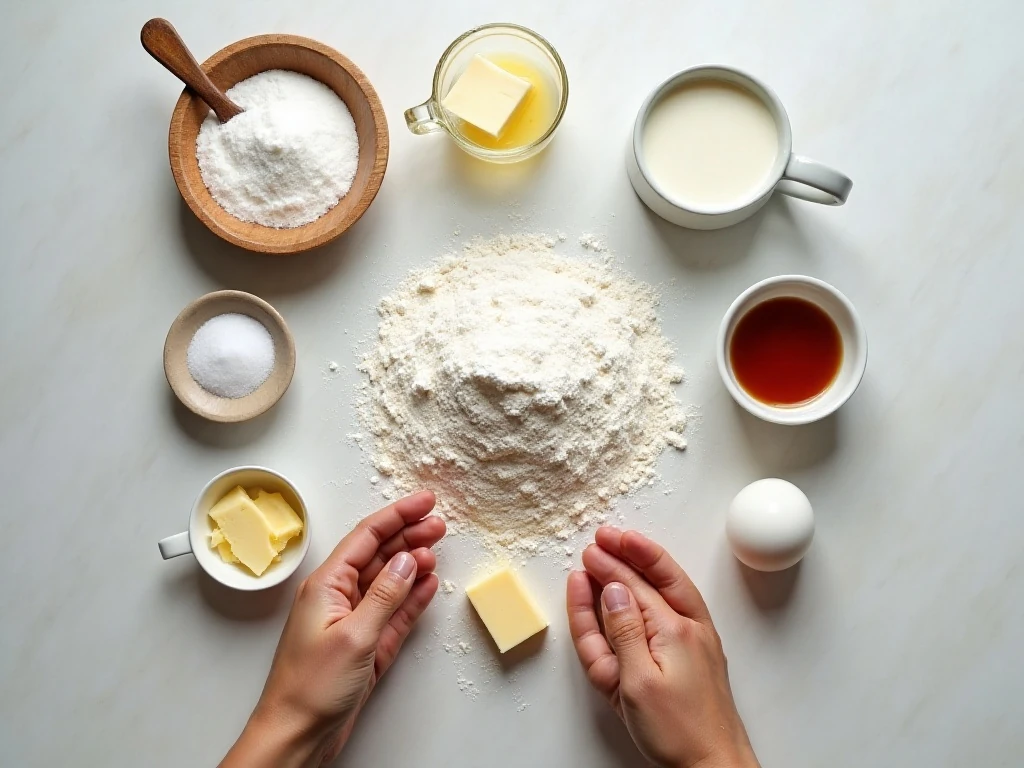
The ingredient list is short, but each item has a specific job. Measure the flour carefully for pancakes that are tender rather than heavy, and use fresh baking soda for the most reliable reaction with the buttermilk.
- All-purpose flour: Forms the structure of the pancakes and gives them a soft, familiar texture.
- Granulated sugar: Adds mild sweetness and helps the surfaces brown beautifully.
- Baking soda: Replaces baking powder and reacts with the acidity in the buttermilk.
- Fine salt: Brings the flavors into balance.
- Buttermilk: Supplies acidity, moisture, and a pleasant tang.
- Eggs: Bind the batter and add richness while contributing some lift.
- Melted unsalted butter: Makes the pancakes flavorful and tender.
- Vanilla extract: Optional, but it adds a soft dessert-like aroma.
For the best texture, use unsalted butter in the batter so you can control the salt. Keep additional butter nearby for lightly greasing the cooking surface and finishing the pancakes.
Planning a brunch spread? These pancakes pair nicely with savory and sweet dishes, including the flavors found in our cranberry Brie bread.
How to Make It Step-by-Step
Step 1: Add the flour, sugar, baking soda, and fine salt to a large mixing bowl. Whisk for several seconds so the baking soda and salt are evenly distributed rather than concentrated in one area.
Step 2: In another bowl, whisk together the buttermilk, eggs, melted butter, and vanilla if using. Make sure the melted butter has cooled slightly so it blends into the dairy and does not begin cooking the eggs.
Step 3: Pour the wet ingredients into the bowl of dry ingredients. Stir gently with a whisk or spatula just until no large dry pockets remain; a few small lumps are completely acceptable.
Step 4: Let the batter stand for about 5 minutes while you heat a griddle or skillet over medium heat. Lightly butter the cooking surface, using only enough to create a thin coating without making the pancake edges greasy.
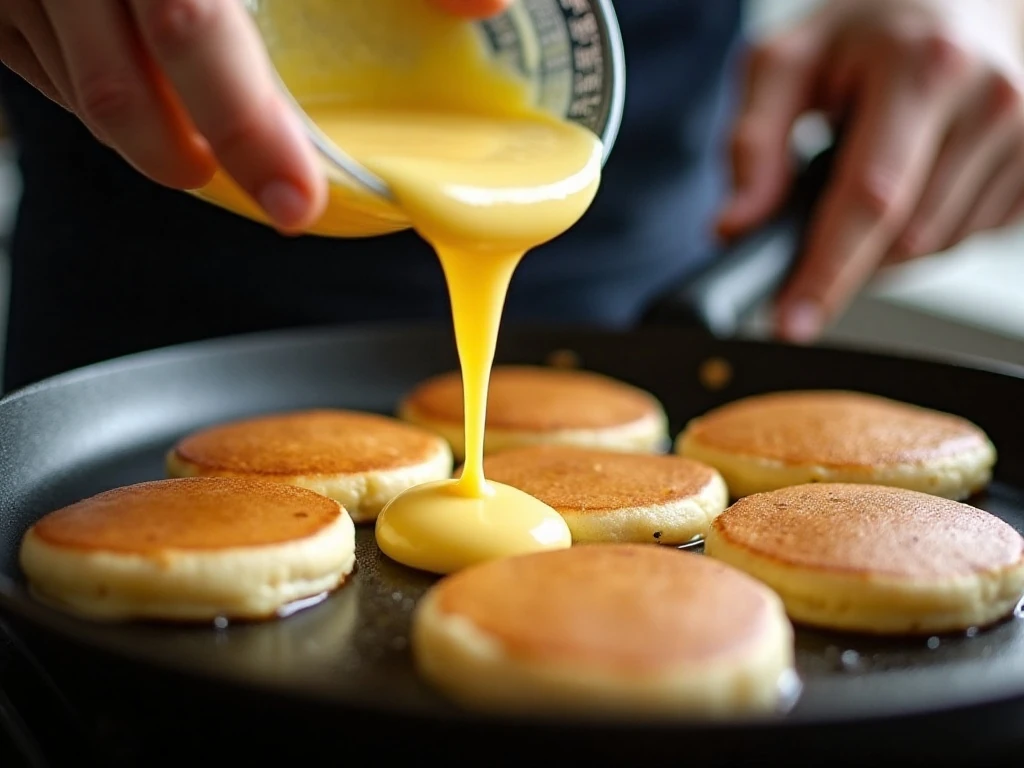
Step 5: Pour approximately 1/4 cup of batter onto the heated pan for each pancake. Leave enough room between portions to turn them comfortably, and cook for about 2–3 minutes until bubbles appear across the surface and the edges look set.
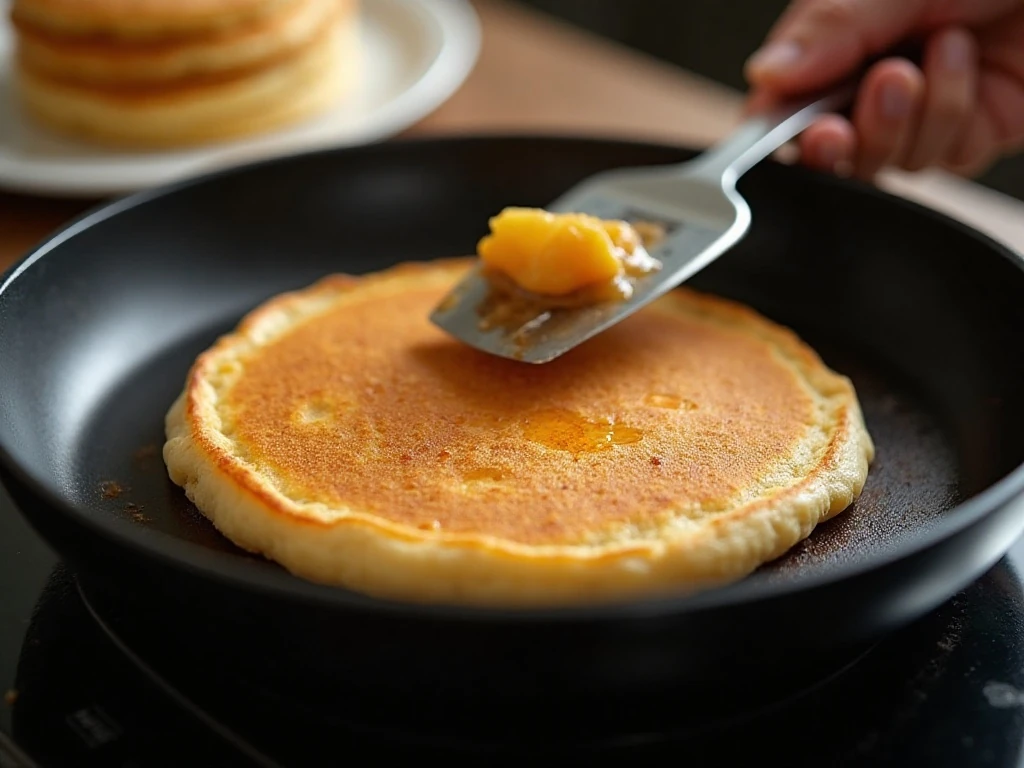
Step 6: Slide a spatula underneath each pancake and flip it with a confident turn. Cook the second side for 1–2 minutes, until golden brown and cooked through.
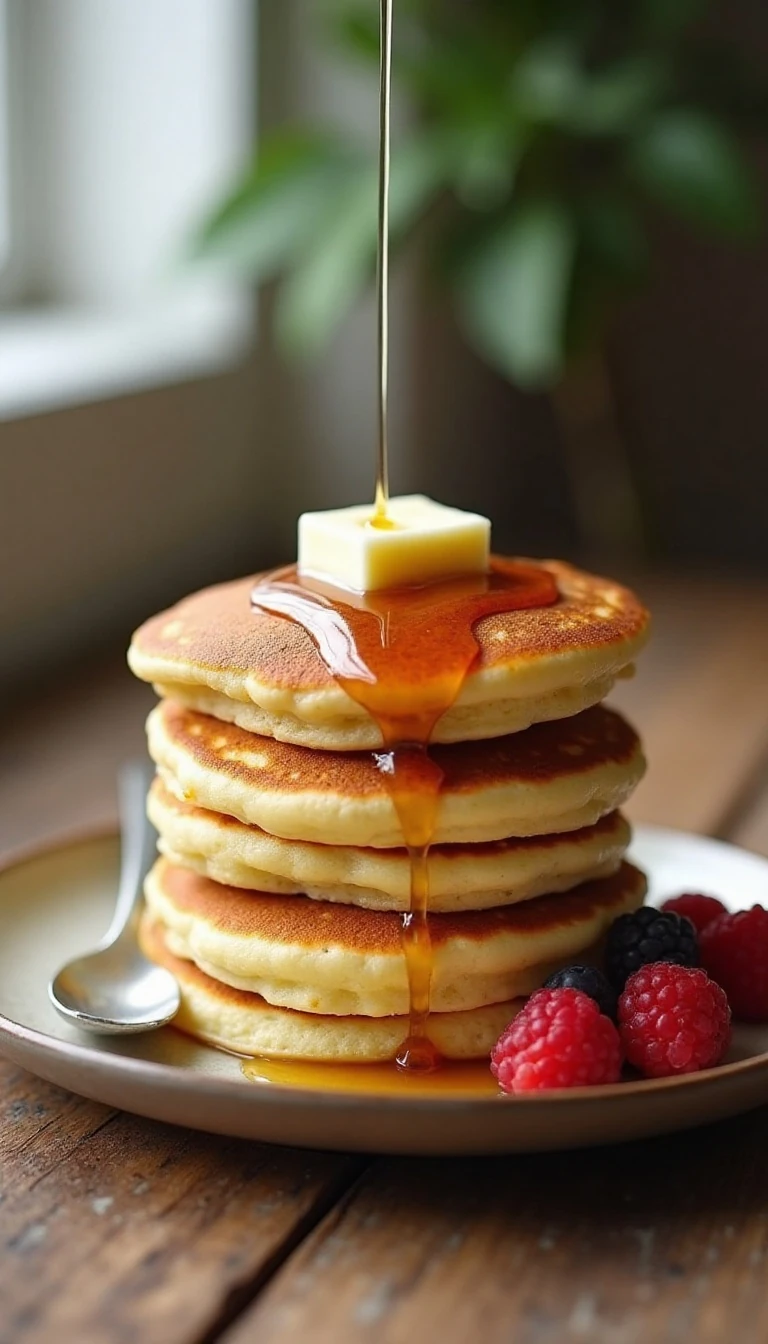
Step 7: Transfer the finished pancakes to plates and serve immediately. Add butter, maple syrup, or fruit while they are hot so the toppings melt and spread into every tender layer.
How the Baking Soda Provides Lift
Baking powder contains both a base and an acid, which is why it can create bubbles when liquid is added. Baking soda is different: it needs an acidic ingredient to activate it.
In this recipe, buttermilk supplies that acidity. When the baking soda meets the buttermilk, the reaction produces carbon dioxide bubbles, and those bubbles help the pancakes become lighter as they cook.
Do not add extra baking soda in an attempt to make taller pancakes. Too much can leave a noticeable alkaline or soapy flavor, and the stated 1 teaspoon is matched to the 1 1/2 cups of buttermilk.
If you only have regular milk, stir 1 tablespoon of lemon juice or white vinegar into 1 1/2 cups of milk. Let it stand for 5 minutes before using it in place of the buttermilk.
For another fresh appetizer idea to serve later in the day, see our guide to classic bruschetta in minutes.
Pro Tips for Light, Golden Pancakes
The most important rule is to avoid overmixing. Excessive stirring develops gluten in the flour, which can make the finished pancakes dense, chewy, and less tender.
- Use medium heat: A properly preheated pan cooks the center before the exterior becomes too dark.
- Grease lightly: Too much butter can make the surface uneven and cause the pancakes to fry instead of brown gently.
- Watch the bubbles: Flip when bubbles form and the edges look set, not merely when the underside has started to color.
- Keep portions consistent: A 1/4-cup measure helps every pancake cook at a similar rate.
- Serve in batches: Pancakes are at their best immediately, when the edges are warm and the centers are soft.
If the first pancake browns too quickly, lower the heat slightly and give the pan a moment to settle. If it remains pale after several minutes, the pan may need a little more heat.
A relaxed brunch can include both sweet and savory options. For a festive dinner-inspired dish, keep our four-ingredient cranberry chicken recipe in mind for another meal.
Alternative Method Without Baking Powder or Baking Soda
If you do not have baking powder, baking soda, or buttermilk, whipped egg whites can provide the lift. This method uses 1 1/2 cups flour, 2 tablespoons sugar, 1/2 teaspoon salt, 2 eggs, 1 1/2 cups milk, 2 tablespoons melted butter, and optional vanilla.
Separate the eggs and mix the yolks with the milk, melted butter, vanilla, and the dry ingredients. In a clean bowl, beat the egg whites to soft peaks, then fold them gently into the batter as the final step.
The whipped whites hold air that expands on the hot pan, creating a lighter texture without chemical leavening. Fold carefully and cook the batter soon after mixing so the air bubbles do not dissipate.
This version tastes milder because it does not have the characteristic tang of buttermilk. It is a useful option when your refrigerator contains regular milk and eggs but no leavening ingredients.
Serving, Storage, and Reheating
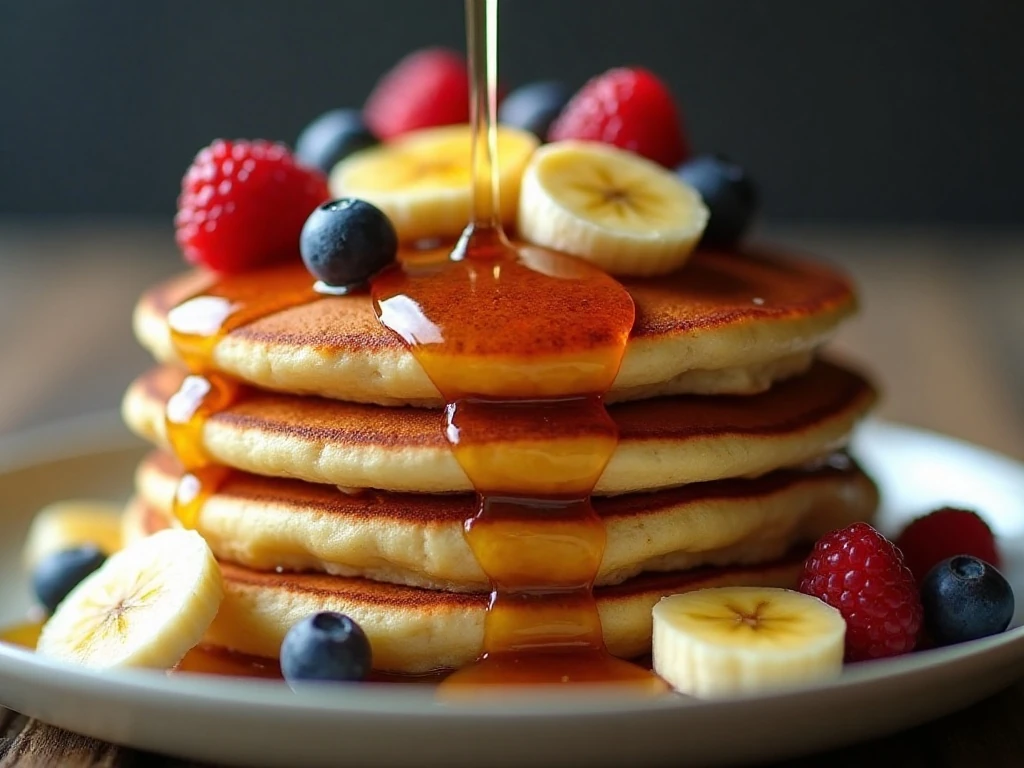
Serve these pancakes hot with butter and maple syrup, or add sliced bananas, berries, apples, or a dusting of powdered sugar. A spoonful of yogurt or a small handful of toasted nuts can also add contrast without overpowering the buttery flavor.
For the best breakfast experience, cook all the pancakes and serve them as soon as possible. If you need to hold them briefly, keep them warm in a low oven, taking care not to leave them there long enough to dry out.
Leftovers can be cooled, covered, and refrigerated. Reheat them gently in a skillet or toaster until warm, adding fresh butter and syrup just before serving.
Because the batter contains an activated leavening reaction, it is best to cook it shortly after its 5-minute rest rather than storing raw batter for a long period. Freshly mixed batter gives you the most dependable rise and the softest texture.
For a bright side dish at a larger gathering, consider adding a spoonful of fruit salsa inspired by our fire and ice watermelon salsa.
Buttermilk Pancakes Without Baking Powder
Ingredients
Method
- Whisk the flour, sugar, baking soda, and salt together in a large bowl.
- In a separate bowl, whisk the buttermilk, eggs, melted butter, and optional vanilla until combined.
- Pour the wet mixture into the dry ingredients and stir just until combined. A few small lumps are fine, so avoid mixing until perfectly smooth.
- Let the batter stand for about 5 minutes while a lightly buttered griddle or skillet heats over medium heat.
- Pour approximately 1/4 cup of batter for each pancake. Cook for about 2–3 minutes, until bubbles form on the surface and the edges look set.
- Flip each pancake and cook for 1–2 minutes more, until the second side is golden brown and the center is cooked.
- Serve the pancakes immediately with butter, maple syrup, or fruit.
Notes
Final Thoughts
Making pancakes without baking powder is straightforward when you pair baking soda with an acidic ingredient. Buttermilk activates the soda, eggs add structure, and melted butter brings the rich flavor that makes a homemade stack so appealing.
Keep the batter slightly lumpy, give it a short rest, and cook the pancakes over medium heat. Those three details help you avoid tough centers, scorched surfaces, and uneven browning.
Once the edges are set and the bubbles have formed, flip the pancakes and finish them until golden. Serve them immediately with your favorite toppings for a warm, comforting breakfast that does not depend on baking powder.