To make perfect bacon the fast and easy way, place 1 pound of sliced bacon in a cold large skillet, add 1/4 cup water for more even cooking and less splattering, and set the pan over medium heat. Simmer until the water evaporates, then continue cooking the bacon in its rendered fat for 12–20 minutes total, turning occasionally, until it reaches your preferred level of crispness.
This simple method produces bacon with deeply browned edges, tender savory centers, and a satisfying crisp finish without adding oil. For a full package, the oven is another reliable option: bake bacon in a single layer on a rimmed sheet pan at 400°F (205°C) for 15–20 minutes, or 20–25 minutes for thick-cut slices.
Jump to RecipeWhy You’ll Love This Recipe
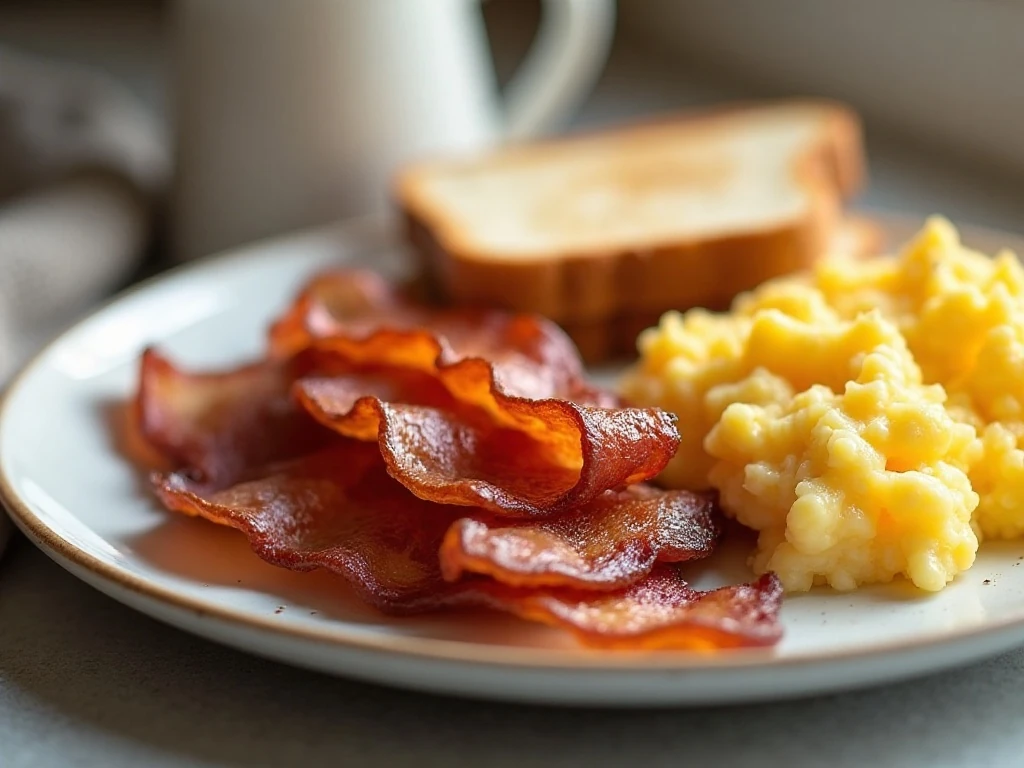
Perfect bacon does not require a complicated technique, special equipment, or added oil. Starting with a cold skillet gives the fat time to render gradually, helping the slices brown more evenly instead of scorching in spots before the centers are ready.
The optional water step is useful when you want less splattering around the stovetop. As the water simmers away, the bacon gently cooks before finishing in its own flavorful fat, creating crisp edges and a pleasantly meaty center.
This recipe is also flexible enough for everyday breakfasts and weekend brunches. One pound generally produces 8–12 cooked slices, depending on the size and thickness of the bacon.
Once your bacon is ready, use it in savory bacon and egg bites for an easy make-ahead breakfast.
Ingredients You’ll Need
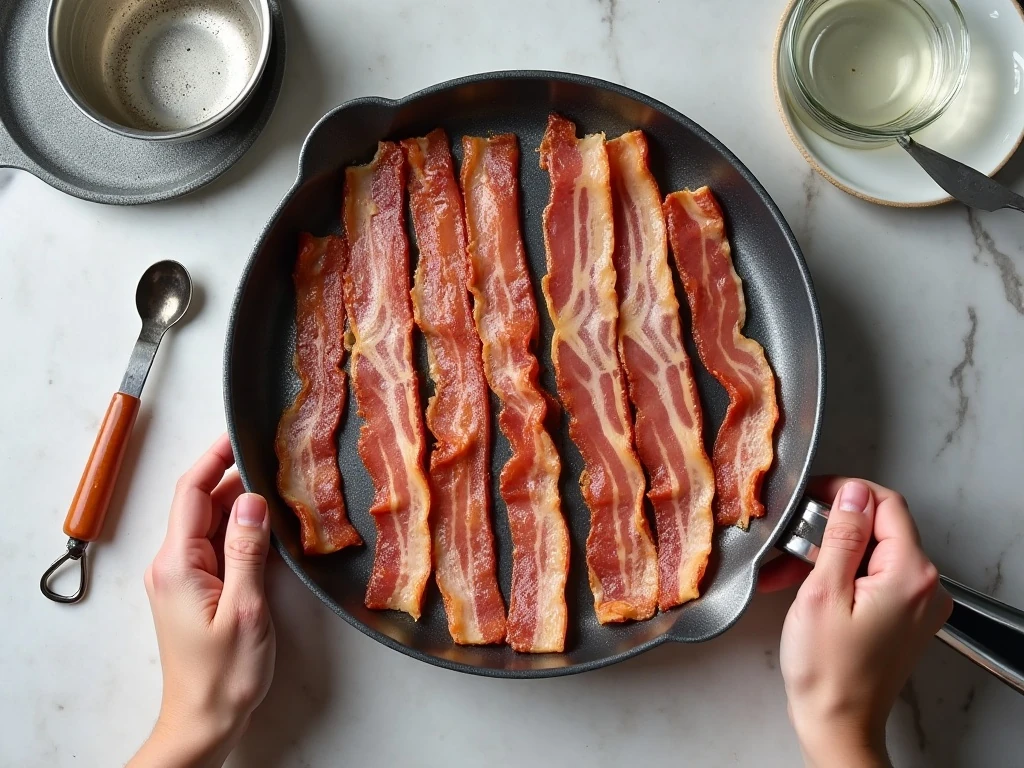
The ingredient list is wonderfully short, which makes this method ideal when you need a dependable side dish quickly. Choose regular-cut bacon for a faster, lighter crunch or thick-cut bacon for a meatier bite and longer cooking time.
- 1 pound sliced bacon: Arrange the slices in one layer so heat can reach each piece evenly.
- 1/4 cup water, optional: Add it for the lower-splatter method and gentle initial cooking.
- No oil: Bacon supplies all the fat needed for cooking, so additional oil is unnecessary.
A large skillet is best because it gives the slices room to spread as they cook. If the bacon is too long for the pan, cut each slice in half before arranging it.
For a hearty side dish, crumble some of the finished bacon over loaded baked potato slices. The smoky bacon adds a crisp contrast to the tender potato and melted toppings.
How to Make It Step-by-Step

Step 1: Place the bacon in a cold, large skillet in a single layer, making sure the slices do not overlap. If necessary, cut the bacon in half so every piece fits comfortably; overcrowding can lead to uneven browning and soft spots.
Step 2: Pour 1/4 cup water into the skillet if you are using the lower-splatter method. The water will not make the finished bacon watery because it cooks off during the first stage, while its gentle heat helps the fat render steadily.
Step 3: Set the skillet over medium heat and bring the water to a simmer. Let the bacon cook as the water gradually evaporates, resisting the urge to turn up the heat because medium heat protects the slices from burning.
Step 4: When the water has evaporated, continue cooking the bacon in the rendered fat. Turn the slices occasionally with tongs so both sides brown evenly and the thinner edges do not become overly dark.
Step 5: Cook for 12–20 minutes total, checking the bacon near the shorter end of that range. Regular-cut slices may finish sooner, while thick-cut bacon and a very crisp preference may require more time.
Step 6: Move the bacon to a paper-towel-lined plate or a wire rack as soon as it reaches the texture you want. A wire rack is especially helpful for very crisp bacon because excess fat drains away without trapping steam underneath the slices.
Step 7: Serve the bacon hot alongside eggs, toast, pancakes, or your favorite brunch dishes. If you plan to save the rendered fat, let it cool slightly, strain it into a covered container, and refrigerate it.
How to Cook Bacon in the Oven
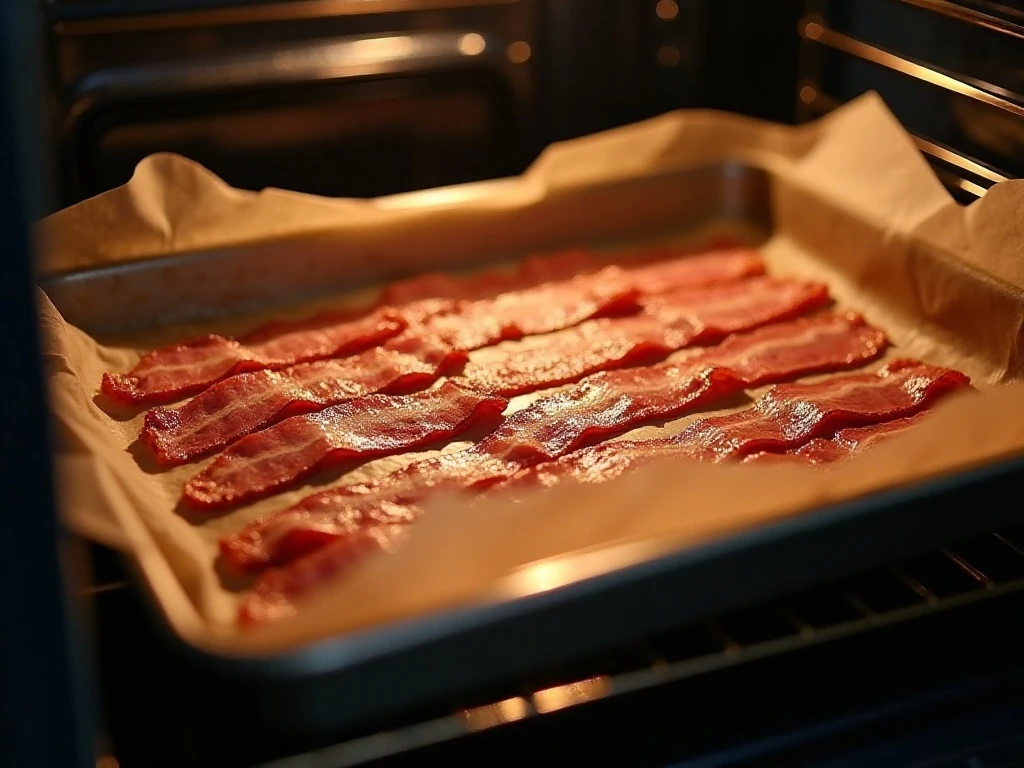
The skillet method is excellent for a smaller batch, but the oven is convenient when you want to cook a full pound at once. It keeps the stovetop clear and gives the slices plenty of room to brown in a single layer.
Heat the oven to 400°F (205°C). Arrange 1 pound of bacon on a rimmed baking sheet, using parchment paper or aluminum foil to make cleanup easier if desired.
Bake for 15–20 minutes, checking near the minimum time so the bacon does not pass your preferred level of crispness. Thick-cut bacon may require 20–25 minutes, and you can rotate the pan if your oven has noticeable hot spots.
A wire rack may be placed on the baking sheet, although bacon cooks well directly on the pan. Drain the finished slices on paper towels or a rack, and reserve the rendered fat if desired.
For a complete meal, pair oven-cooked bacon with herb-marinated chicken over farfalle. The bacon can be served as a crisp starter or crumbled over the pasta for extra savory flavor.
Pro Tips for Crisp, Even Bacon
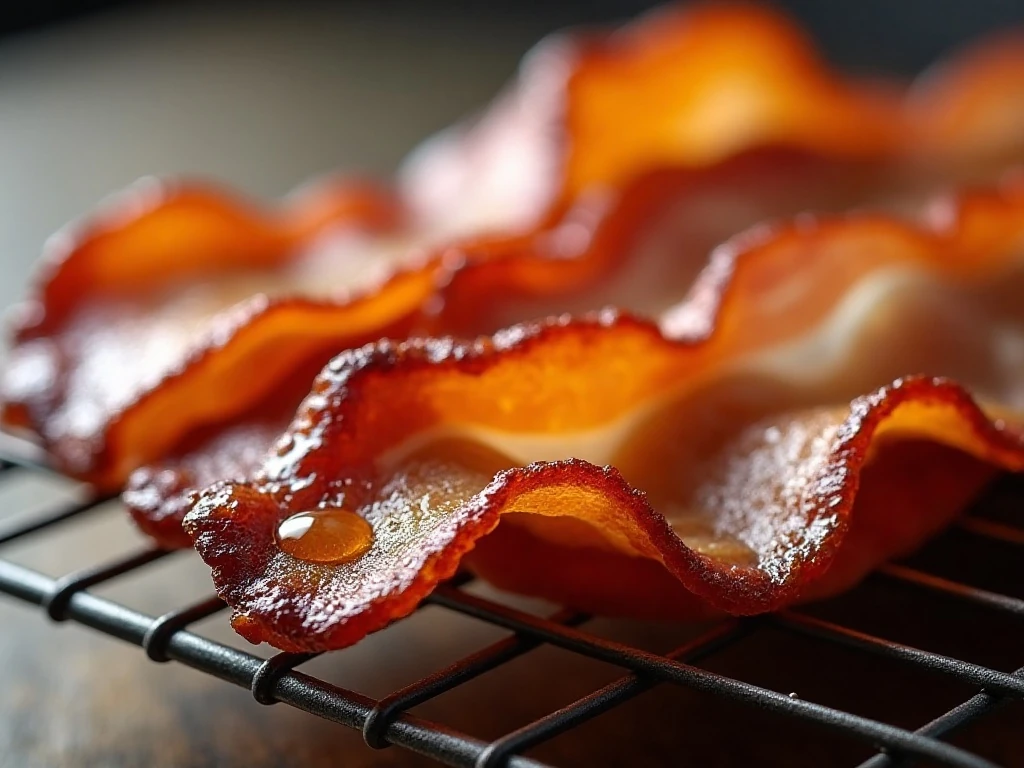
Small details make the difference between bacon that is beautifully crisp and bacon that is burnt on the edges while still chewy in the middle.
- Begin cold: Always start with a cold pan for gradual fat rendering and more even cooking.
- Leave space: Do not overlap slices or overcrowd the skillet. Cook in batches if the pan cannot hold the bacon in one layer.
- Use medium heat: Moderate heat gives the fat time to melt and the meat time to brown without scorching.
- Turn occasionally: Turning helps both sides cook evenly, especially when using a skillet.
- Drain properly: Paper towels are convenient, while a wire rack is best for maintaining a crisp texture.
- Watch the finish: Bacon continues to firm slightly as it cools, so remove it when it is just shy of your ideal texture.
Keep a close eye on the pan toward the end of cooking because the final few minutes can change bacon from golden brown to overly dark. If you prefer softer bacon, remove it as soon as the centers are cooked and the edges are lightly browned.
For dessert after a savory brunch, serve a bright slice of luscious lemon meringue pie. Its tart filling and light topping make a refreshing contrast to salty bacon.
Serving Ideas, Storage & Reheating

Serve bacon with classic breakfast foods such as scrambled eggs, breakfast potatoes, toast, or pancakes. It is also delicious chopped into salads, layered into sandwiches, scattered over baked potatoes, or folded into omelets.
Freshly cooked bacon is at its best served hot, but leftovers can be refrigerated in a covered container. Reheat them gently in a skillet or oven until warmed through, taking care not to cook them so long that they become dry.
Strained bacon fat can be stored in a covered container in the refrigerator. Use it to fry eggs, sauté vegetables, or cook potatoes when you want a subtle smoky flavor.
For a playful sweet finish to brunch, try serving easy homemade beignets after the bacon. The crisp, powdered-sugar-coated pastries make the meal feel special without requiring a complicated menu.
Common Questions About Cooking Bacon
Should I preheat the skillet? No. A cold skillet is the recommended starting point because the gradual heat helps render the bacon fat and supports even browning.
Do I need oil? No added oil is needed. Bacon releases enough rendered fat to cook the slices thoroughly and develop their characteristic savory flavor.
Why add water? The optional 1/4 cup water helps reduce splattering and allows the bacon to cook gently while the water simmers away. After evaporation, the bacon finishes in its rendered fat.
How do I know when bacon is done? Look for browned surfaces and edges that have reached your preferred crispness. The total skillet cooking time is usually 12–20 minutes, depending on thickness and texture preference.
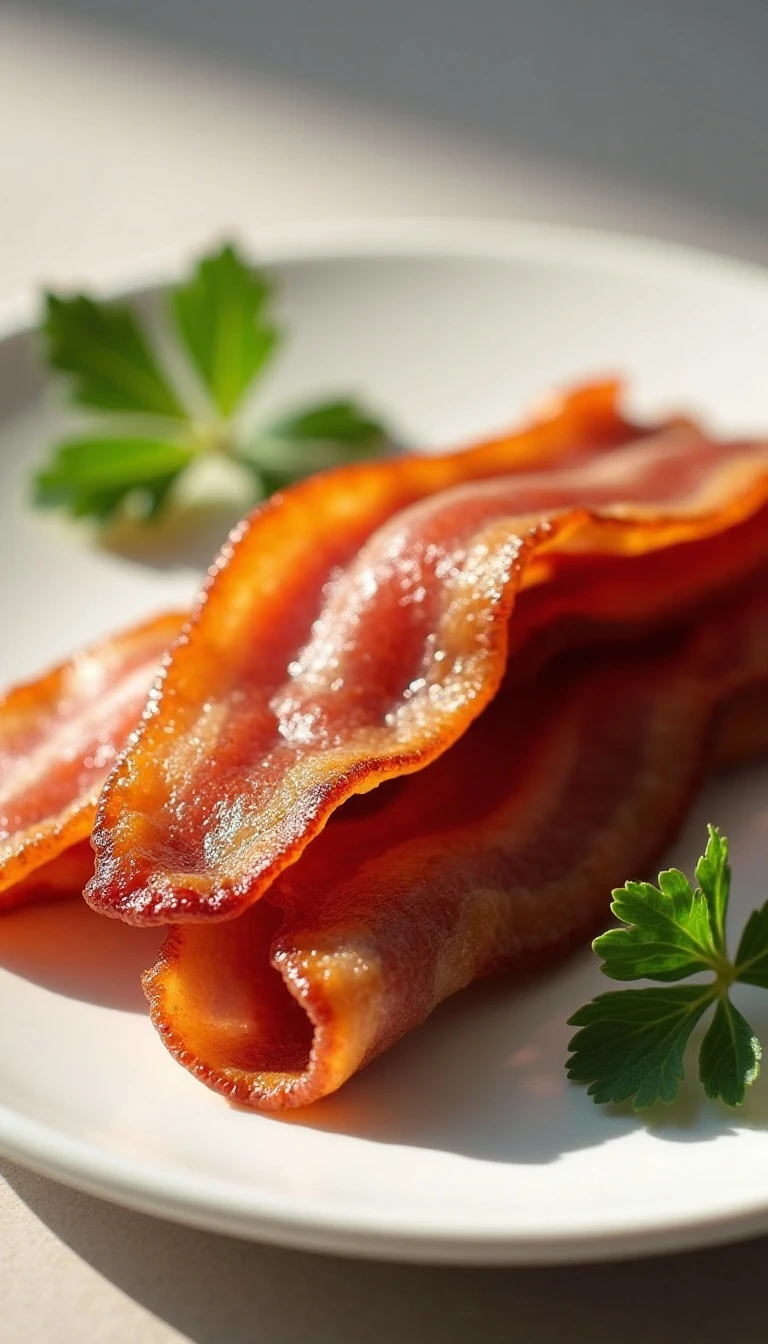
Perfect Bacon the Fast and Easy Way
Ingredients
Method
- Place the bacon in a cold large skillet in a single layer, cutting the slices in half if needed. Add 1/4 cup water if you want a lower-splatter method and especially even cooking.
- Set the skillet over medium heat and bring the water to a simmer. Cook until the water evaporates, allowing the bacon to warm gradually and begin rendering its fat.
- Once the water has evaporated, continue cooking the bacon in its rendered fat. Turn the slices occasionally and cook for 12–20 minutes total, depending on thickness and desired crispness.
- Transfer the cooked bacon to a paper-towel-lined plate or wire rack to drain. Serve hot, and strain and refrigerate the rendered fat if you wish to use it later.
Notes
Final Thoughts
Perfect bacon is all about patience at the beginning and attention at the end. Start the slices in a cold skillet, add water if you want less splatter, cook over medium heat, and let the bacon finish slowly in its own rendered fat.
For a smaller batch, the skillet method takes about 15–22 minutes from start to finish. When you need to cook a full pound evenly, use a rimmed baking sheet at 400°F (205°C) for 15–20 minutes, allowing 20–25 minutes for thick-cut bacon.
Drain the finished slices on a rack or paper towels, serve them while hot, and save the strained fat for another meal. With these straightforward steps, richly browned, crisp, flavorful bacon can become the easiest part of breakfast, brunch, sandwiches, salads, and more.