This easy and creamy vegan hummus recipe makes about 2 cups in just 10 minutes, with no cooking required when you use canned chickpeas. Blend chickpeas with tahini, fresh lemon juice, garlic, olive oil, salt, and cold water for a smooth, satisfying dip that works beautifully as an appetizer, sandwich spread, snack, or vegetable dip.
The flavor is bright, nutty, garlicky, and silky, with enough lemon to keep every bite lively. The key to a soft restaurant-style texture is processing the tahini and lemon juice first, then adding ice-cold water gradually while the food processor runs.
Jump to RecipeWhy You’ll Love This Recipe
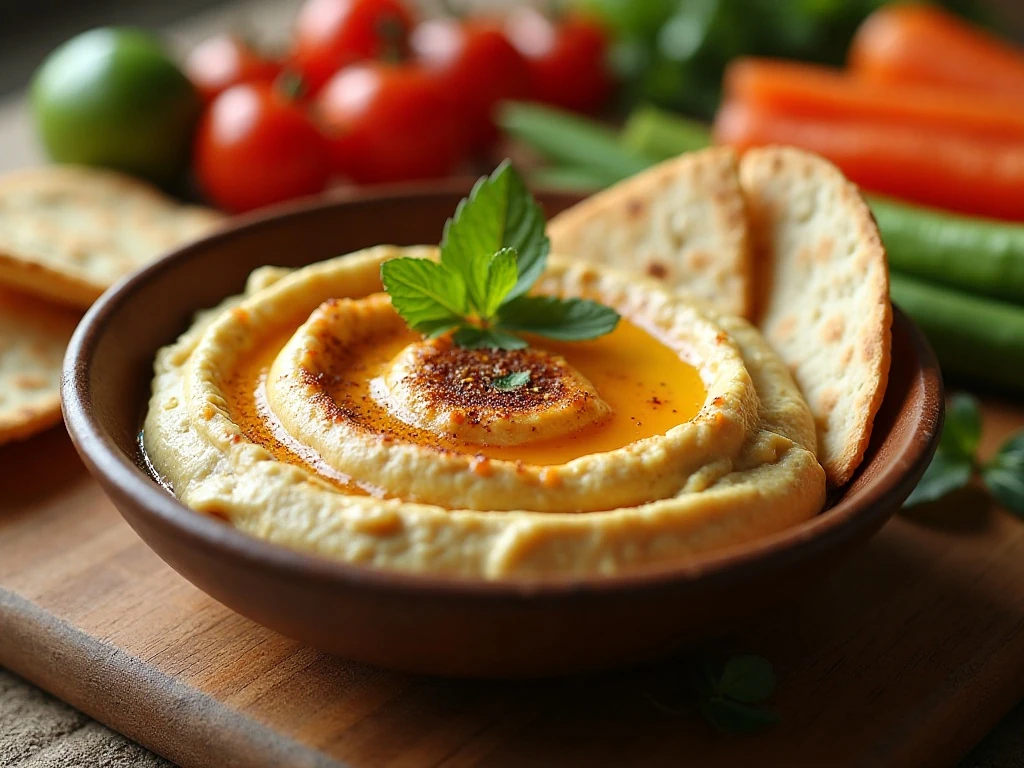
This vegan hummus is one of those dependable recipes that earns a regular place in the refrigerator. It uses familiar ingredients, takes only 10 minutes from start to finish, and creates a creamy dip without dairy, eggs, or complicated preparation.
Canned chickpeas keep the recipe especially convenient because there is no soaking or simmering. The food processor does the work, transforming the ingredients into a thick, spoonable dip with a fresh lemon finish and a subtle savory bite from garlic.
Serve it with warm pita, crisp vegetables, crackers, toasted bread, or roasted potatoes. It also makes a flavorful spread for wraps and sandwiches when you want something more interesting than mayonnaise.
For a party table with plenty of variety, hummus can sit beside hearty comfort food such as our Big Mac casserole. The cool, lemony dip provides a welcome contrast to richer dishes.
Ingredients You’ll Need
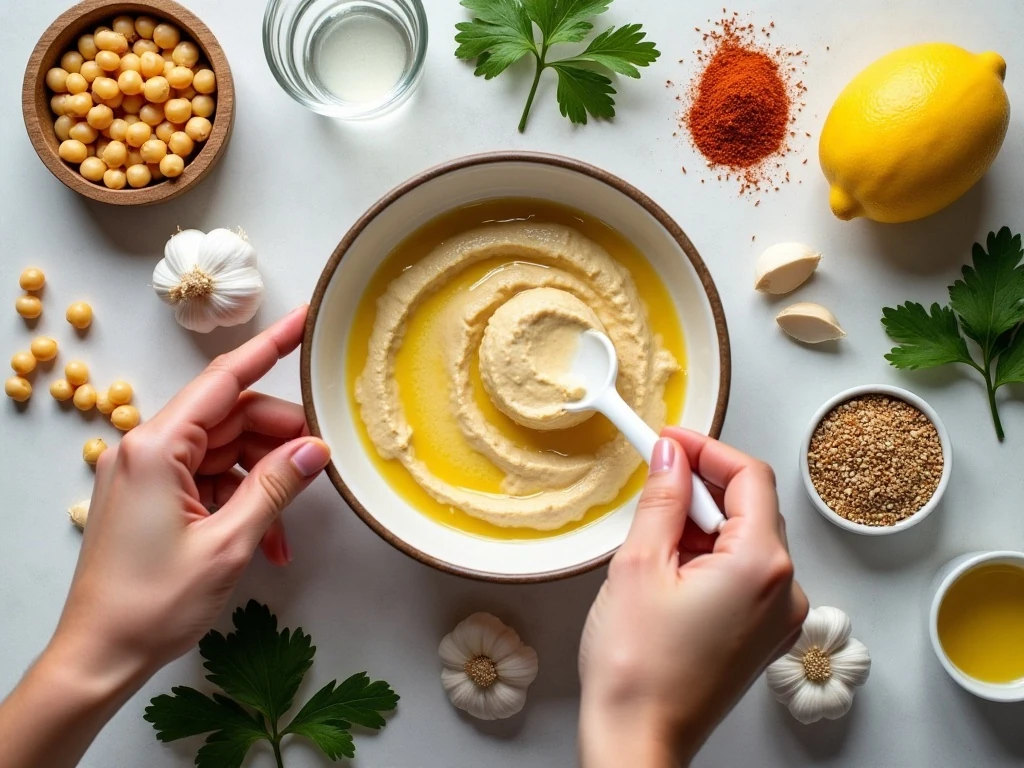
The ingredient list is short, but each item has a clear job. Chickpeas create the creamy body, tahini contributes sesame richness, and lemon juice brings acidity that keeps the dip from tasting heavy.
- Chickpeas: Use one 15-ounce can, drained and rinsed. Removing excess can liquid helps you control the final flavor and consistency.
- Tahini: Choose a smooth, pourable sesame paste and stir it well before measuring. If the tahini is thick or separated, mix it in its jar first.
- Lemon juice: Freshly squeezed juice gives the hummus a brighter flavor than bottled juice.
- Garlic: One small peeled clove adds savory warmth without overpowering the chickpeas.
- Olive oil: Two tablespoons go into the mixture, with extra for the finished bowl.
- Cold water: Add 2–4 tablespoons gradually to loosen the dip while keeping it thick and smooth.
- Salt and cumin: Fine sea salt is essential for balance, while 1/4 teaspoon cumin is optional for a warm, earthy note.
For the finishing touch, use paprika, chopped parsley, whole chickpeas, toasted sesame seeds, or a combination. A shallow swirl on top catches the olive oil and makes even a simple bowl look inviting.
How to Make It Step-by-Step

Step 1: Drain and rinse the chickpeas under cool running water. Give them a good shake in the colander to remove excess liquid, and reserve a little aquafaba if you want to use it for thinning later.
Step 2: Add the tahini and fresh lemon juice to the bowl of a food processor. Process for about 30–60 seconds, until the mixture becomes smooth, creamy, and slightly lighter in color; this first step helps emulsify the tahini.
Step 3: Add the peeled garlic clove, olive oil, fine sea salt, and cumin if using. Pulse or process briefly so the garlic and seasonings are evenly distributed before the chickpeas go in.
Step 4: Add the drained chickpeas and blend for 1–2 minutes. Stop once or twice to scrape down the sides, then continue processing until the mixture looks thick and mostly smooth.
Step 5: Keep the food processor running and add cold water 1 tablespoon at a time. Wait briefly after each addition, watching the texture as it loosens, and stop when the hummus is creamy but still thick enough to hold a swirl.
Step 6: Taste the hummus carefully and adjust the salt, lemon juice, or tahini as needed. Transfer it to a serving bowl, make a shallow spiral with the back of a spoon, and finish with olive oil and your chosen garnishes.
Chef’s Tips for Extra Creamy Hummus
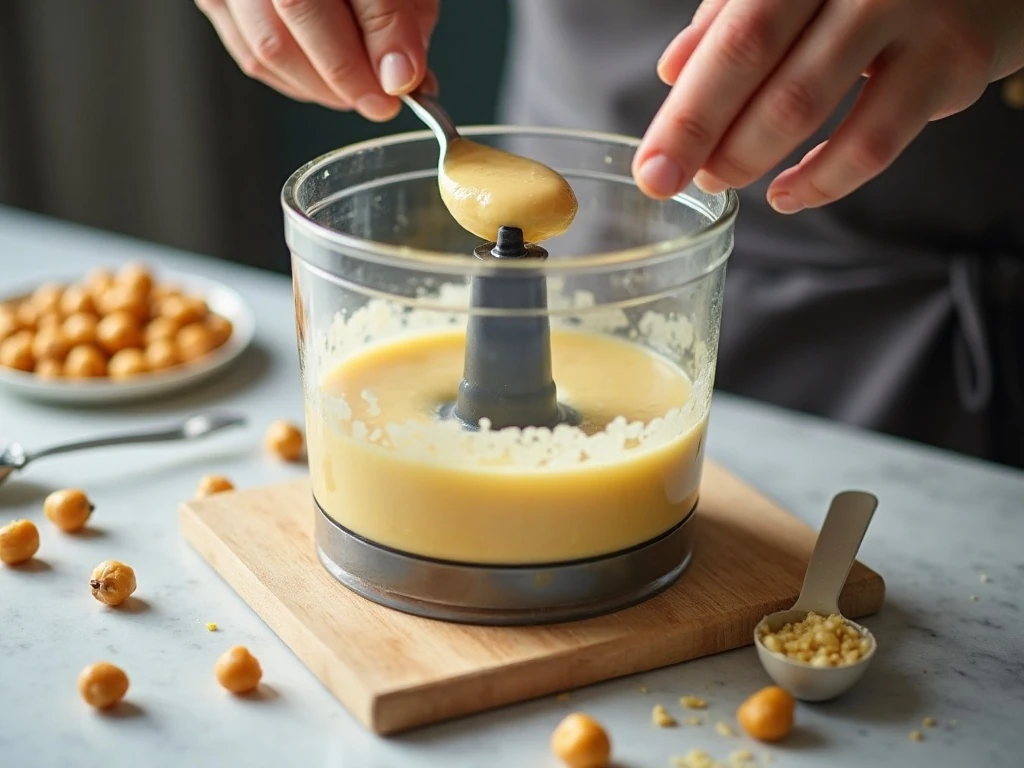
The order of blending matters more than many people realize. Processing tahini and lemon juice before adding the chickpeas creates a lighter base, so do not rush straight to blending everything together.
Cold water is another important detail. Add it slowly instead of pouring in all 2–4 tablespoons at once, because the chickpeas and tahini can vary in thickness and may need less liquid than expected.
If your hummus tastes flat, add a small amount of salt or lemon juice rather than immediately adding more oil. If it tastes too sharp, a little additional tahini can soften the acidity and provide a fuller sesame flavor.
For a richer, more tahini-forward version, increase the tahini to 1/3–1/2 cup. This creates a deeper sesame taste and a particularly luxurious consistency.
Canned chickpeas are perfect for a quick batch, but dried chickpeas can also be used. Start with about 3/4 cup (150 g) dried chickpeas, soak them overnight, and simmer until very tender; this adds roughly 1–1 1/2 hours of cooking time.
For especially smooth hummus made with dried chickpeas, cook them until they are very soft. Some cooks also use 1/2 teaspoon baking soda during cooking, or peel the chickpeas after cooking, though neither technique is required for a delicious everyday dip.
If you enjoy preparing plant-based comfort food, this hummus also pairs nicely with a warm bowl of vegan cauliflower soup. Both recipes are creamy in texture while keeping the ingredients simple.
Serving Ideas and Garnishes

For the classic presentation, spoon the hummus into a shallow bowl and use the back of a spoon to form a circular well. Drizzle olive oil into the center and around the spiral, then sprinkle with paprika and parsley.
- Serve with pita wedges, naan, flatbread, or toasted baguette.
- Add cucumber, carrot sticks, celery, bell pepper, radishes, or snap peas for a crisp vegetable platter.
- Spread it inside wraps with lettuce, tomato, roasted vegetables, or falafel.
- Use it as a base for a grain bowl with rice, quinoa, greens, and roasted chickpeas.
- Top it with whole chickpeas and toasted sesame seeds for added texture.
Hummus is also a useful appetizer when you are serving a mixed menu. Set it out before dinner alongside a creamy main course such as garlic mushroom chicken, giving guests a bright, plant-based option to enjoy with bread and vegetables.
Storage and Make-Ahead Advice
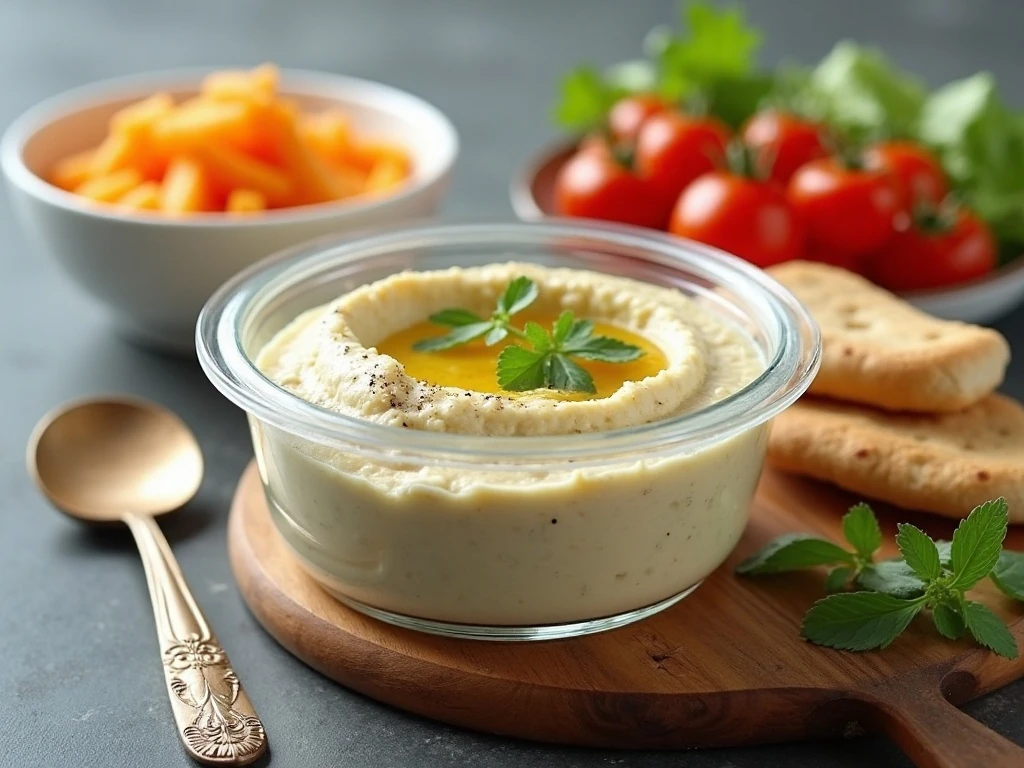
Transfer leftover hummus to an airtight container and refrigerate it promptly. Press a piece of parchment or plastic wrap directly against the surface if you want to reduce air exposure, then cover the container securely.
Before serving leftovers, stir the hummus well. Refrigeration can make it seem firmer, so add a small splash of cold water and mix until the original creamy consistency returns.
The dip is best enjoyed within several days while the lemon and garlic remain fresh. Keep garnishes and extra olive oil separate when possible so the surface stays neat and the texture remains easy to adjust.
For a snack board, make the hummus earlier in the day and garnish shortly before serving. This gives the flavors time to mingle without allowing the herbs or paprika to become damp.
Simple Troubleshooting Guide
If the hummus is too thick, continue processing and add cold water one tablespoon at a time. A little reserved aquafaba can also help thin the mixture, but use it gradually so the dip does not become watery.
If the hummus is gritty, the chickpeas may need more processing time. Scrape the bowl, blend for another minute, and add a small amount of cold water if the blade is struggling to move through the mixture.
If the garlic flavor is too strong, let the hummus rest in the refrigerator before tasting again. The flavor often rounds out after it sits, and extra tahini or chickpeas can help balance an especially assertive clove.
If the dip tastes bland, check the salt first, then add a little more lemon juice. Taste after each adjustment because the balance can change quickly in a small batch.
For dessert after a snack-heavy gathering, finish with a slice of easy butterscotch pie. A savory hummus platter followed by a creamy dessert makes a relaxed menu feel complete.

Easy and Creamy Vegan Hummus Recipe
Ingredients
Method
- Drain and rinse the chickpeas thoroughly. Reserve a little aquafaba if you would like an alternative thinning liquid.
- Add the tahini and lemon juice to a food processor and process for 30–60 seconds, until the mixture is smooth and slightly lightened.
- Add the garlic, olive oil, fine sea salt, and optional cumin. Process briefly to distribute the seasonings.
- Add the chickpeas and blend for 1–2 minutes, stopping to scrape down the sides of the bowl as needed.
- With the processor running, add cold water 1 tablespoon at a time until the hummus is smooth and creamy.
- Taste and adjust the salt, lemon juice, or tahini to suit your preference. Transfer the hummus to a bowl, make a shallow swirl, and finish with olive oil and garnishes.
Notes
Final Thoughts
This easy and creamy vegan hummus recipe proves that a handful of everyday ingredients can produce an exceptionally satisfying dip. With canned chickpeas, the total time is just 10 minutes, making it practical for a quick snack, lunch, party platter, or last-minute appetizer.
Remember the three details that make the biggest difference: blend the tahini with lemon juice first, process the chickpeas thoroughly, and add ice-cold water gradually. Once the hummus is smooth, finish it with olive oil and colorful garnishes for a bowl that looks as good as it tastes.
Make the classic version first, then try the richer tahini variation or experiment with your favorite toppings. For a fun drink pairing after dinner, you can also browse this whipped coffee recipe for a sweet finish.