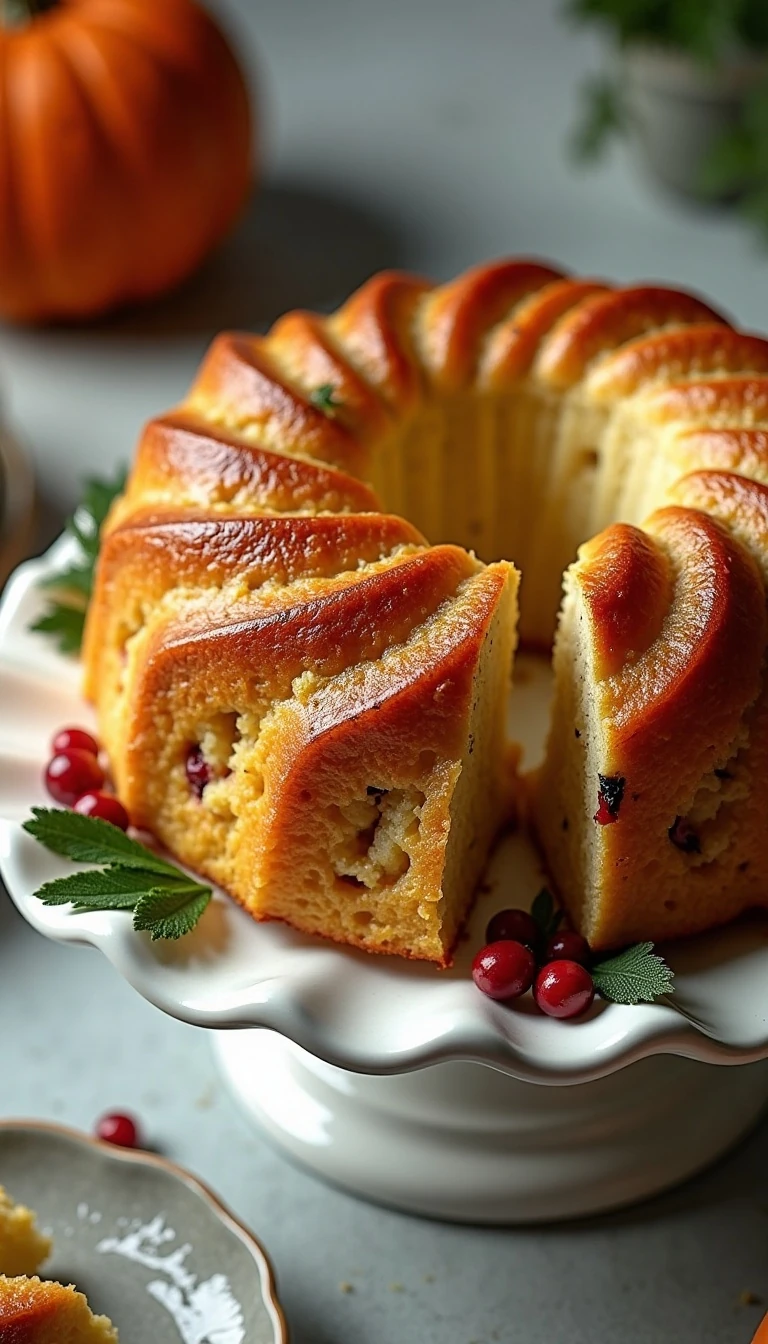
Stuffing in a Bundt pan is a creative holiday side dish made with sturdy bread, buttery sautéed vegetables, fresh herbs, stock, and eggs. Bake it at 350°F in a generously buttered 10- to 12-cup Bundt pan for 45 to 55 minutes, then rest it for 10 to 15 minutes before turning out a beautifully browned stuffing ring that serves 10 to 12 people.
This molded stuffing has everything guests love about classic dressing: crisp golden edges, a tender savory center, aromatic onion and celery, and the woodsy flavor of sage and thyme. Optional sausage, dried cranberries, toasted pecans, or chestnuts let you tailor the ring to your holiday menu while keeping the preparation practical and make-ahead friendly.
Jump to RecipeWhy You’ll Love This Recipe
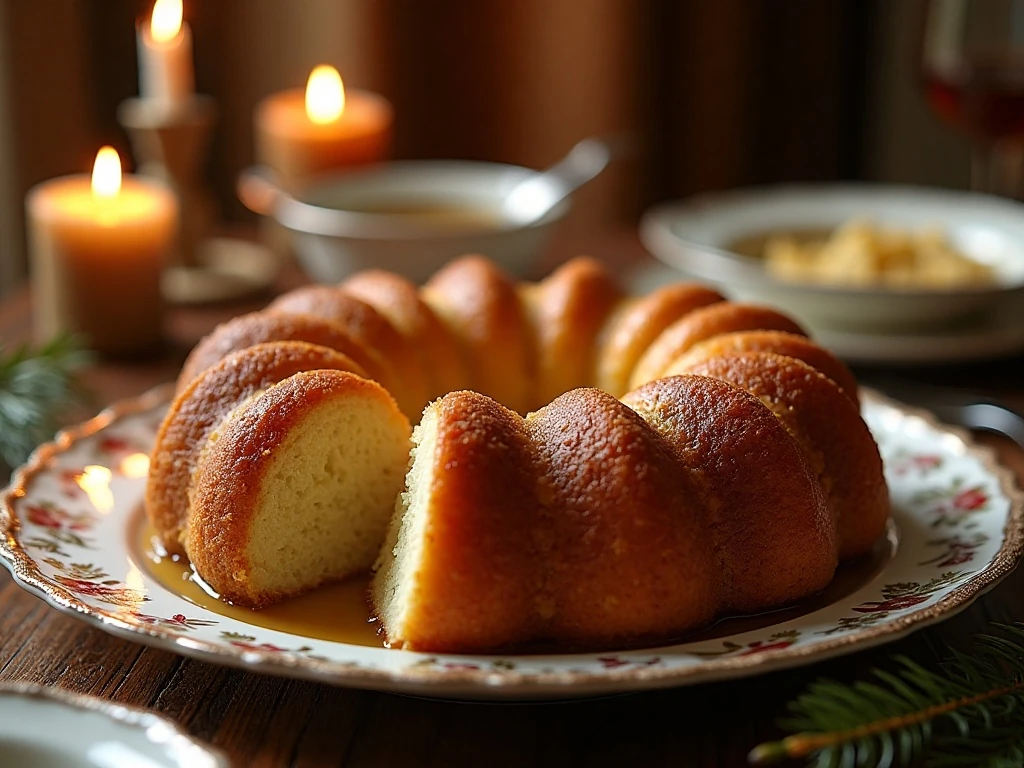
Holiday stuffing is usually served from a casserole dish, but a Bundt pan gives this familiar side dish a memorable centerpiece appearance. The ring shape creates plenty of browned ridges and edges while leaving a convenient center space for gravy, roasted vegetables, or a small bowl of cranberry sauce.
This recipe is also generous enough for a crowd, yielding 10 to 12 servings from 1 1/2 pounds of bread. It is comforting without being fussy, and the basic mixture welcomes seasonal additions without losing its classic character.
The best bite combines crisp, buttery exterior pieces with a moist, herb-scented middle. For a menu built around several cozy sides, you can also serve it alongside our garlic mashed potato stuffing casserole for an especially abundant holiday spread.
Ingredients You’ll Need
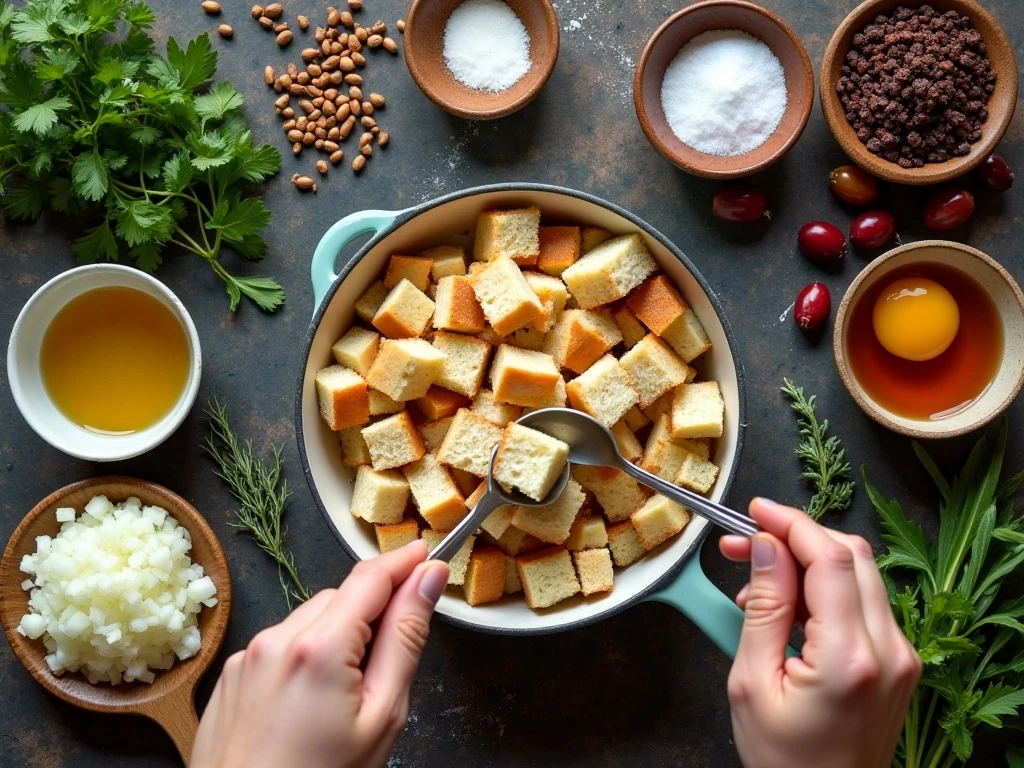
Choose bread with enough structure to absorb stock without collapsing. White, French, sourdough, and country bread all work well, especially when cut into uniform 1-inch cubes.
- Bread: Use 1 1/2 pounds of sturdy bread. Day-old bread is ideal, but fresh cubes can be dried in a low oven.
- Aromatic base: Eight tablespoons of unsalted butter, one yellow onion, four celery stalks, and two garlic cloves provide a rich savory foundation.
- Herbs: Fresh parsley, sage, and thyme bring a classic holiday aroma. Dried sage and thyme can be used in the specified smaller amounts.
- Seasoning: Kosher salt and freshly ground black pepper sharpen the flavor, while low-sodium stock gives you better control over the final seasoning.
- Binder: Two beaten eggs combined with warm stock help the molded stuffing hold its shape after baking.
- Optional additions: Add 8 ounces of cooked crumbled breakfast or Italian sausage, or choose 1/2 cup of dried cranberries, toasted pecans, or chopped chestnuts.
Warm the stock before adding it to the eggs so the liquid blends smoothly. Avoid pouring all of the stock in at once; the bread may need the full 2 1/2 cups, or it may need less depending on how dry it is.
If you are planning a full holiday dinner with a mixture of easy mains and sides, one-pan chicken and rice is another comforting option for a relaxed family-style table.
How to Make It Step-by-Step
Step 1: Heat the oven to 350°F (175°C), then generously butter a 10- to 12-cup Bundt pan. Work the butter into every ridge, groove, and around the center tube because those decorative areas are the most likely to catch.
Step 2: Check the bread before beginning the vegetable mixture. If it is fresh, spread the cubes on baking sheets and dry them in a 250°F oven for about 30 to 45 minutes, stirring once or twice, then cool them completely.
Step 3: Melt the 8 tablespoons of butter in a large skillet over medium heat. Add the finely chopped onion and celery, and cook for 8 to 10 minutes until tender and fragrant but not deeply browned.
Step 4: Stir in the garlic, sage, thyme, 1 1/2 teaspoons of kosher salt, and black pepper. Cook for about 1 minute, then stir in the parsley and remove the skillet from the heat so the herbs stay aromatic.
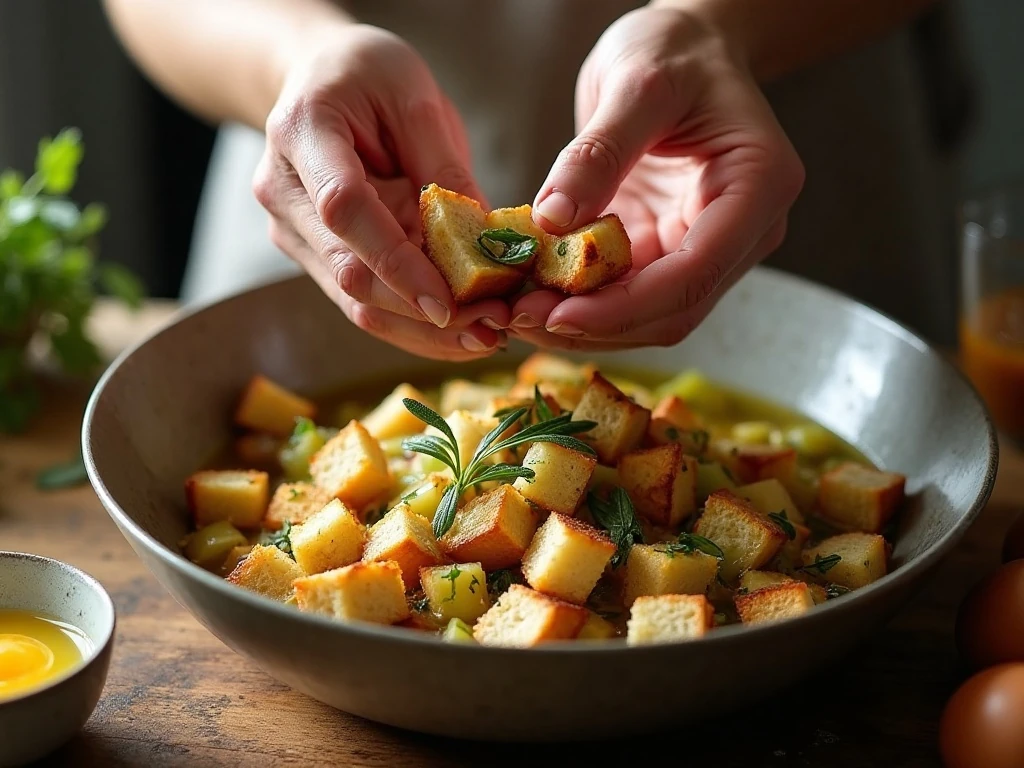
Step 5: Transfer the cooled bread cubes to a large bowl. Add the buttery vegetable mixture and fold in any cooked sausage, dried cranberries, toasted pecans, or chopped chestnuts you are using.
Step 6: Whisk the two eggs with 2 cups of warm stock. Pour the mixture over the bread gradually while tossing gently, then add more stock only if necessary; properly moistened bread should hold together when squeezed without releasing liquid.
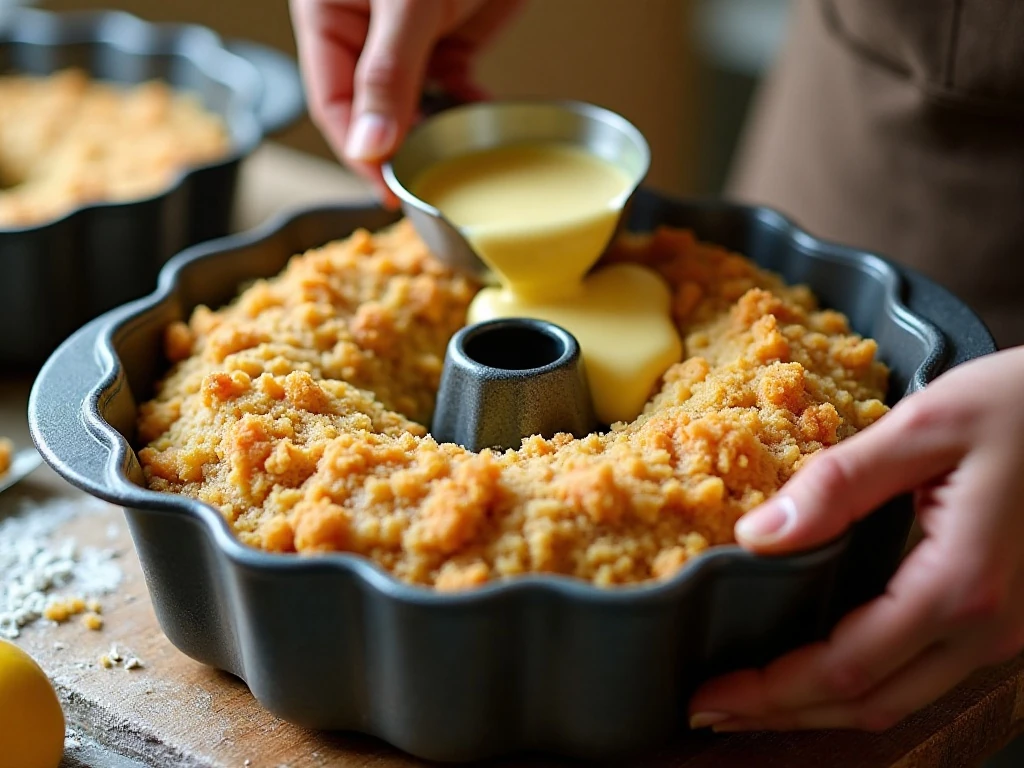
Step 7: Spoon the stuffing into the prepared Bundt pan and distribute it evenly around the ring. Pack it firmly enough to remove large air pockets, but do not compress it excessively or the center can become heavy and dense.
Step 8: Cover the pan loosely with foil and bake for 25 to 30 minutes. Remove the foil and continue baking for 15 to 25 minutes, until the exposed top is browned and the center is heated through.
Step 9: Let the baked stuffing rest in the pan for 10 to 15 minutes. Place a serving platter over the pan, invert carefully, and lift off the Bundt pan to reveal the decorative ring.
Pro Tips for a Perfect Stuffing Ring
Dry bread is the foundation of a successful molded stuffing. It absorbs the seasoned stock gradually and keeps the mixture cohesive, while overly fresh bread can turn soft before the center has time to set.
Use your hands or a wide spatula to toss the bread gently. The goal is to distribute the egg-stock mixture evenly without crushing the cubes, which helps preserve a pleasing contrast between the browned exterior and tender interior.
- Butter thoroughly: Pay special attention to the center tube and deep grooves of the pan.
- Add liquid slowly: Stop once the bread is moist and holds together when squeezed.
- Keep the foil loose: A loose cover protects the top during the first stage while allowing the final bake to brown the ridges.
- Rest before turning out: The short rest helps the ring firm up and reduces the chance of cracking.
- Season thoughtfully: Taste the vegetable mixture before combining it with the eggs and stock, remembering that sausage and stock may add salt.
For a seafood-forward holiday menu, the stuffing pairs nicely with pan-roasted cod with cherry tomato sauce. The fresh tomato sauce provides a bright contrast to the buttery herbs in the stuffing.
Variations and Serving Ideas
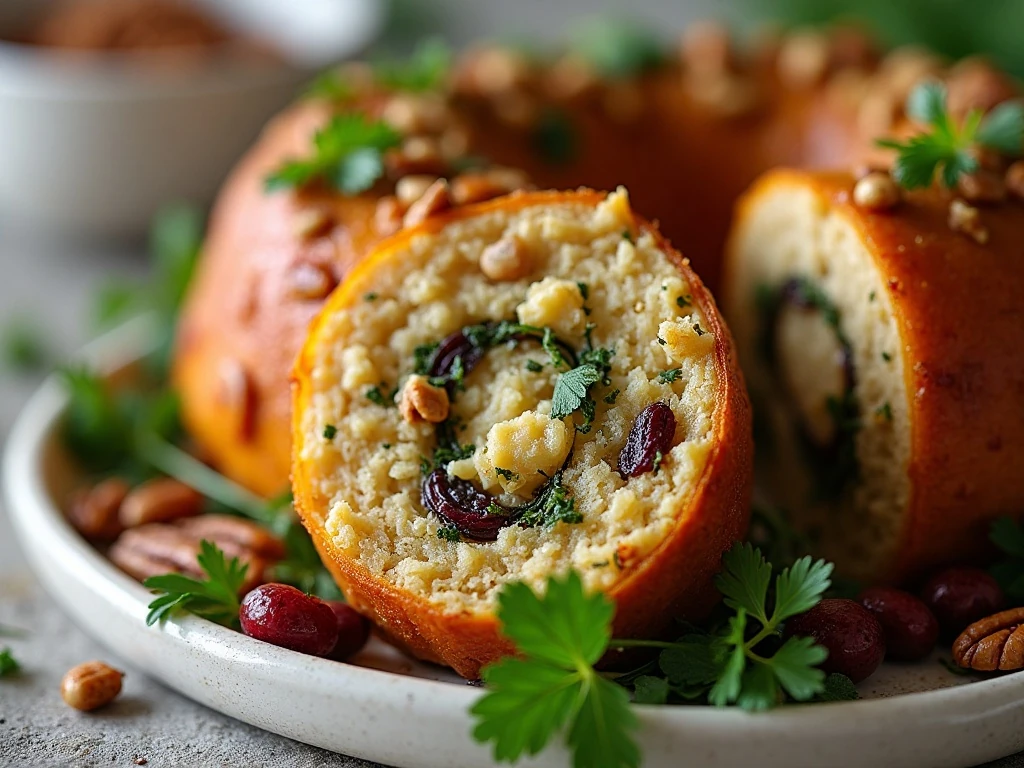
Sausage makes the stuffing heartier and adds savory richness, especially when you use breakfast sausage or Italian sausage that has been cooked and crumbled before mixing. Drain excess fat from the cooked sausage so the finished ring does not become greasy.
For a sweet-and-savory version, fold in the dried cranberries. Toasted pecans add crunch, while chopped chestnuts bring a mellow, earthy flavor that feels especially fitting for a winter celebration.
Serve slices with turkey, chicken, roast pork, or a vegetarian centerpiece. A spoonful of gravy in the center of the ring turns the Bundt pan design into a practical serving feature rather than decoration alone.
For another main course that works well with the herbs and buttery texture, try chicken thighs with mushroom herb sauce. The savory mushroom flavor echoes the sage and thyme without overwhelming the stuffing.
Storage, Reheating, and Make-Ahead Notes
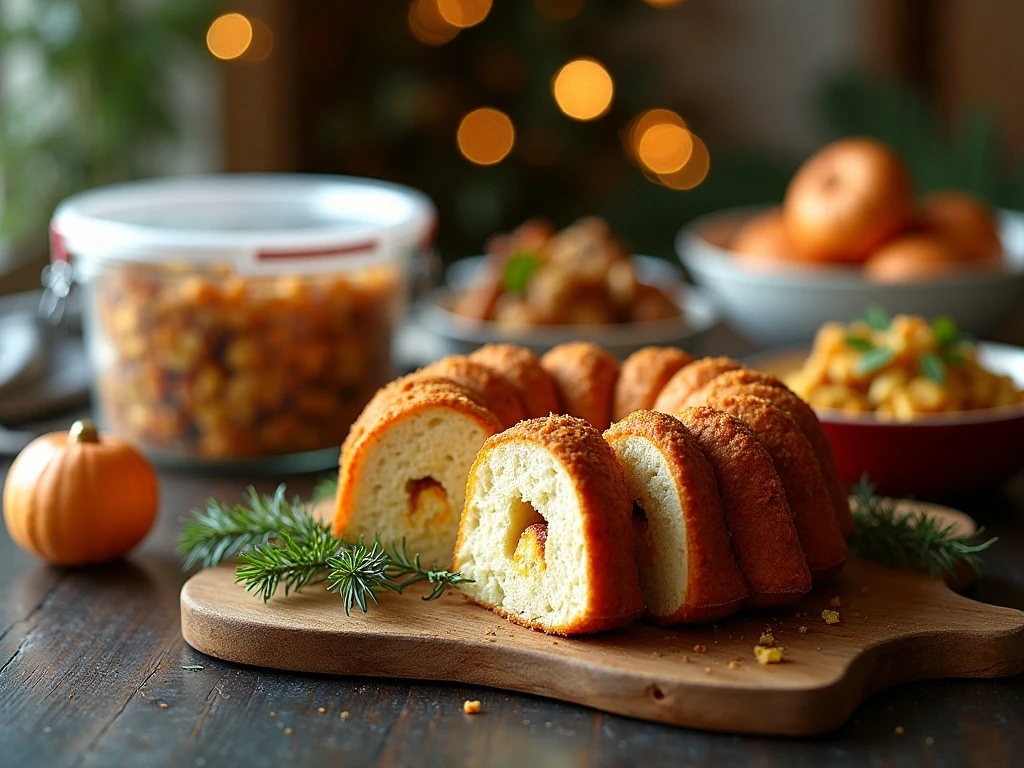
Cool leftovers promptly and store them covered in the refrigerator. Reheat individual portions in the microwave or warm the ring in a covered baking dish until hot throughout, adding a small splash of stock if it seems dry.
You can prepare the bread cubes and sautéed vegetable mixture ahead of time, then cool them separately and refrigerate them. Combine the ingredients with the eggs and stock shortly before baking for the best texture.
If the stuffing is baked ahead, cover it well and reheat it gently so the center stays tender. Remove the cover briefly near the end if you want the browned ridges to regain some crispness.
For a lighter menu balance, pair the stuffing with a colorful vegetable dish or a bright salad. Sheet pan shrimp fajitas can also inspire a casual dinner spread when you want a flavorful main course with plenty of fresh toppings.
Stuffing in a Bundt Pan
Ingredients
Method
- Heat the oven to 350°F (175°C). Generously butter a 10- to 12-cup Bundt pan, coating every ridge and groove.
- If the bread is fresh, spread the cubes on baking sheets and dry them in a 250°F oven for 30 to 45 minutes, stirring once or twice. Cool completely before mixing.
- Melt the butter in a large skillet over medium heat. Add the onion and celery and cook for 8 to 10 minutes, until softened.
- Add the garlic, sage, thyme, salt, and pepper, cooking for about 1 minute. Stir in the parsley, then remove the skillet from the heat.
- Place the bread in a large bowl and add the sautéed vegetables. Fold in cooked sausage, dried fruit, toasted nuts, or chestnuts if using.
- Whisk the eggs with 2 cups of warm stock. Pour the liquid over the bread gradually, tossing gently, and add the remaining stock only as needed.
- Pack the stuffing firmly but evenly into the prepared Bundt pan. Avoid pressing it excessively, since over-compressing can make the center dense.
- Cover the pan loosely with foil and bake for 25 to 30 minutes. Remove the foil and bake for another 15 to 25 minutes, until browned and heated through.
- Rest the stuffing for 10 to 15 minutes. Place a serving platter over the pan, carefully invert the pan, and lift it away.
Notes
Final Thoughts
Stuffing in a Bundt pan turns a beloved holiday side into a dramatic table centerpiece without requiring complicated technique. The recipe depends on a few simple details: sturdy dry bread, gradual stock addition, generous pan buttering, and a patient 10- to 15-minute rest before unmolding.
Once the ring is on the platter, garnish it with parsley, sage, cranberries, or toasted nuts and let the browned ridges take center stage. Each slice delivers the familiar comfort of holiday stuffing with a polished shape that makes a family dinner or festive gathering feel extra special.