This juicy herb-roasted pork loin recipe makes a flavorful dinner centerpiece with a tender, juicy center and a savory crust of garlic, rosemary, thyme, and black pepper. Roast a 2 1/2- to 3-pound boneless pork loin at 375°F for about 50–70 minutes, then use an instant-read thermometer to confirm the thickest part reaches 145°F.
The preparation takes only 15–20 minutes, and the pork can be seasoned 30 minutes ahead or marinated overnight for deeper flavor. After a 10–15 minute rest, slice the roast across the grain and spoon the rich pan juices over every serving.
This is the kind of dinner that feels special without requiring complicated techniques. The herbs create a fragrant, savory coating, while optional Dijon mustard and lemon juice add tangy contrast to the naturally mild pork.
Jump to RecipeWhy You’ll Love This Recipe

This herb-roasted pork loin is a dependable choice when you want a company-worthy dinner that still feels manageable on a busy evening. The roast needs a short seasoning period, one pan, and a thermometer to produce tender slices with plenty of savory flavor.
Garlic gives the rub its bold foundation, rosemary adds a piney aroma, and thyme brings a gentle earthy note. Sage is optional, but its warm flavor pairs especially well with pork and makes the kitchen smell wonderful as the roast cooks.
The recipe also gives you flexibility. Dijon mustard and lemon juice make the rub brighter, while chicken stock or dry white wine in the pan helps create flavorful juices for spooning over the finished slices.
If you enjoy pork dinners with a similar herb-forward flavor profile, you may also like our garlic thyme pork chops, a faster option for a weeknight meal.
Ingredients You’ll Need
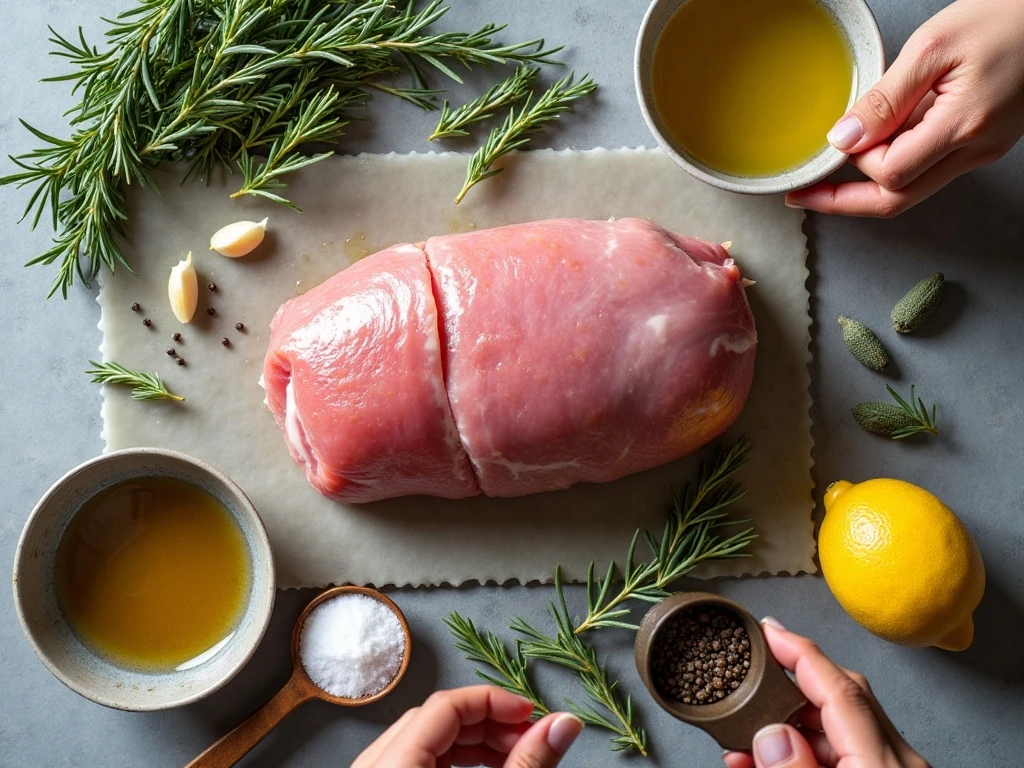
The ingredient list is short, but each item has a clear purpose. Choose a boneless pork loin roast weighing 2 1/2–3 pounds, and look for a piece with an even shape so it cooks at a steady rate.
- Pork loin: The main roast is lean, broad, and substantial enough to serve 6–8 people.
- Olive oil: Helps the seasonings cling to the surface and encourages browning.
- Garlic: Four finely minced or grated cloves spread their flavor throughout the herb coating.
- Rosemary and thyme: Use 1 tablespoon of each when fresh, or 1 teaspoon of each when dried.
- Sage: One teaspoon of finely chopped fresh sage is optional but delicious.
- Salt and pepper: Kosher salt and freshly ground black pepper bring the flavors into balance.
- Dijon and lemon: These optional ingredients add savory tang and freshness.
- Stock or wine: A half cup in the roasting pan creates flavorful liquid for serving.
Fresh herbs offer the brightest aroma, but dried rosemary and thyme work well when that is what you have available. If using dried herbs, rub them between your fingers before mixing to release more fragrance.
How to Make It Step-by-Step

Step 1: Take the pork loin out of the refrigerator 20–30 minutes before roasting. Pat it thoroughly dry with paper towels, since a dry surface helps the herb mixture adhere and encourages better browning.
Step 2: Trim away only excess surface fat, leaving a thin layer if the roast has one. That small amount of fat can protect the surface during roasting and contribute flavor to the pan juices.
Step 3: Heat the oven to 375°F. While it preheats, combine the olive oil, garlic, rosemary, thyme, sage, kosher salt, black pepper, Dijon mustard, and lemon juice in a small bowl.
Step 4: Rub the mixture evenly over all sides of the pork. Press it gently into the surface so the garlic and herbs stay in place, then season the ends as well as the broad sides.
Step 5: For a more developed flavor, cover the seasoned roast and refrigerate it for 30 minutes or overnight. Before roasting, bring it closer to room temperature rather than placing it into the oven ice-cold.
Step 6: Set the pork fat-side up in a roasting pan or baking dish. Add the chicken stock or dry white wine to the bottom of the pan if desired, taking care not to wash the seasoning off the top.
Step 7: Roast the pork for 50–70 minutes. The exact time depends on the roast’s thickness, shape, and starting temperature, so begin checking the thickest section with an instant-read thermometer before the upper end of the time range.
Step 8: Remove the roast when the thickest part reaches 145°F. This is the important doneness test for whole-muscle pork; the temperature will rise slightly as the meat rests.
Step 9: Move the pork to a cutting board and tent it loosely with foil for 10–15 minutes. Do not wrap it tightly, because trapped steam can soften the flavorful exterior.
Step 10: Slice the pork across the grain into even portions. Spoon the pan juices over the slices just before serving for a juicy finish.
Chef Tips for Juicy Pork Loin
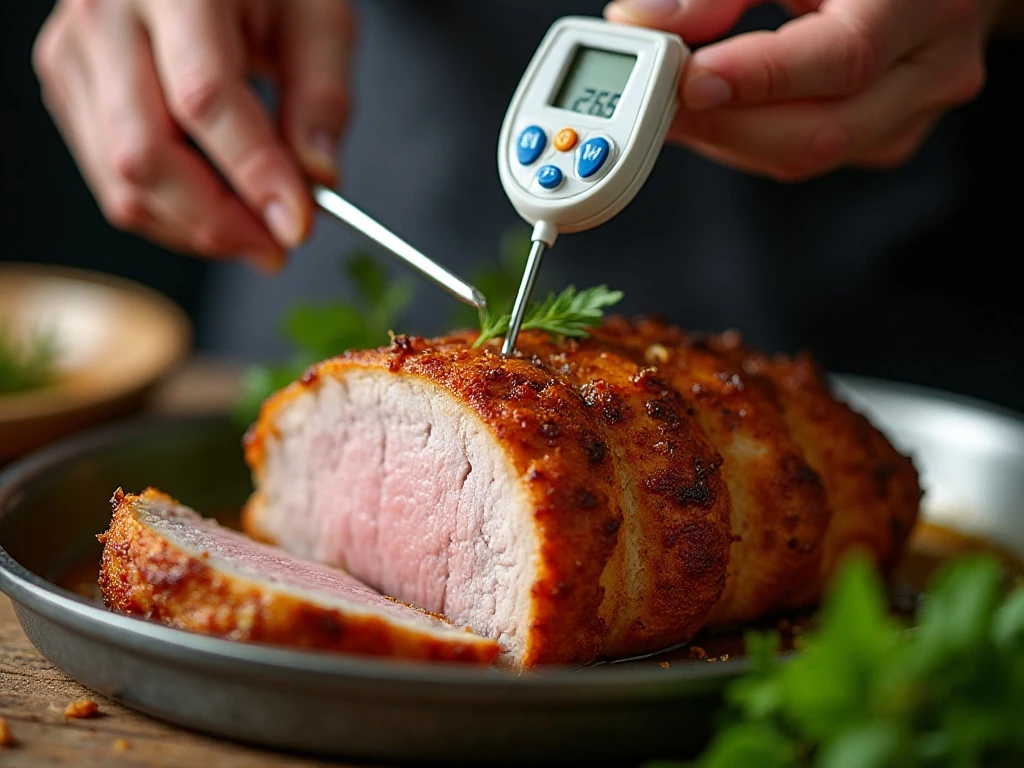
The thermometer matters more than the clock. Pork loin is lean, and cooking it well beyond 145°F can leave the slices dry even when the seasoning is perfect.
Pay attention to the difference between pork loin and pork tenderloin. Pork loin is a larger, wider roast and needs the 50–70 minute roasting window used here, while pork tenderloin is much smaller and generally cooks faster.
For additional browning, sear the seasoned pork in a hot skillet before placing it in the oven. This step is optional, and the oven-only method remains convenient and flavorful when you prefer fewer dishes.
Keep the roast fat-side up while it cooks. If there is a thin fat layer, it can slowly render over the surface, helping the top stay aromatic and beautifully browned.
When checking the temperature, insert the thermometer into the thickest part from the side if possible. Avoid touching the pan or sliding the probe into an unusually thin end, as either can give an inaccurate reading.
What to Serve with Herb-Roasted Pork
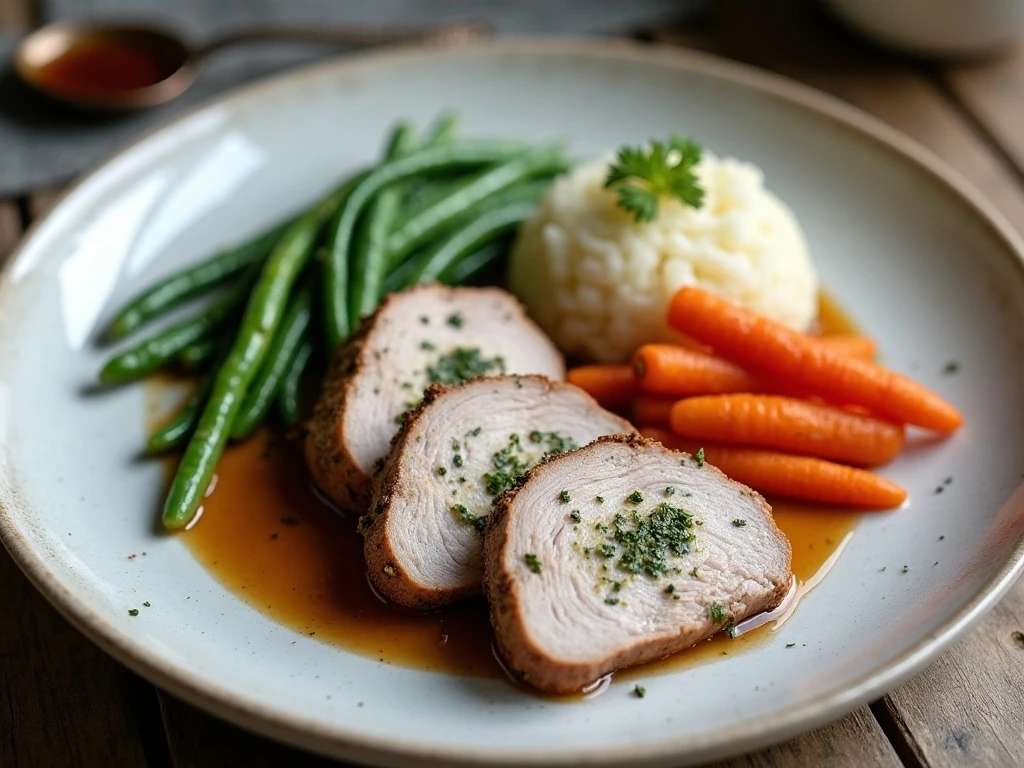
The roast is rich enough to pair with simple sides and versatile enough for a full Sunday dinner. Creamy mashed potatoes, roasted carrots, green beans, or a crisp apple salad all complement the garlic and herbs.
- Roasted potatoes with a little olive oil and thyme
- Buttered green beans or steamed broccoli
- Apple, fennel, or cabbage slaw for a fresh contrast
- Warm dinner rolls for catching the pan juices
- Applesauce or a light mustard sauce for a sweet-tangy accent
For another pork centerpiece with a different personality, try our Margarita Style Pork Spare Ribs. Those ribs bring bright citrus notes and a more relaxed, barbecue-inspired feel to the table.
If you are planning a larger meal, prepare the side dishes while the pork rests. That short resting period is enough time to warm vegetables, finish a salad, and transfer the pan juices to a small serving bowl.
Storage and Reheating

Cool leftover pork promptly, then store it in an airtight container in the refrigerator. Sliced pork is best enjoyed within a few days, with the pan juices stored alongside it whenever possible.
Reheat gently in a covered baking dish with a spoonful of stock or pan juice. A moderate oven or short microwave intervals will help prevent the lean meat from drying out.
For a different tender pork dinner, compare this roast with our baked garlic pork tenderloin. Remember that tenderloin and loin are different cuts, so their cooking times are not interchangeable.
Frequently Asked Questions
Can I marinate the pork overnight? Yes. Coat the roast with the herb mixture, cover it, and refrigerate it overnight. Bring it closer to room temperature before roasting, then cook according to the internal temperature rather than a fixed time.
Do I have to use the pan liquid? No. The half cup of chicken stock or dry white wine is optional, but it gives you flavorful liquid to spoon over the sliced pork.
Can I use dried herbs? Yes. Use 1 teaspoon dried rosemary and 1 teaspoon dried thyme in place of the fresh herbs. Fresh sage is optional, so it can be omitted if unavailable.
Why should the pork rest before slicing? Resting for 10–15 minutes allows the juices to settle and the temperature to rise slightly. Cutting immediately can cause more of those flavorful juices to run onto the cutting board instead of staying in the meat.
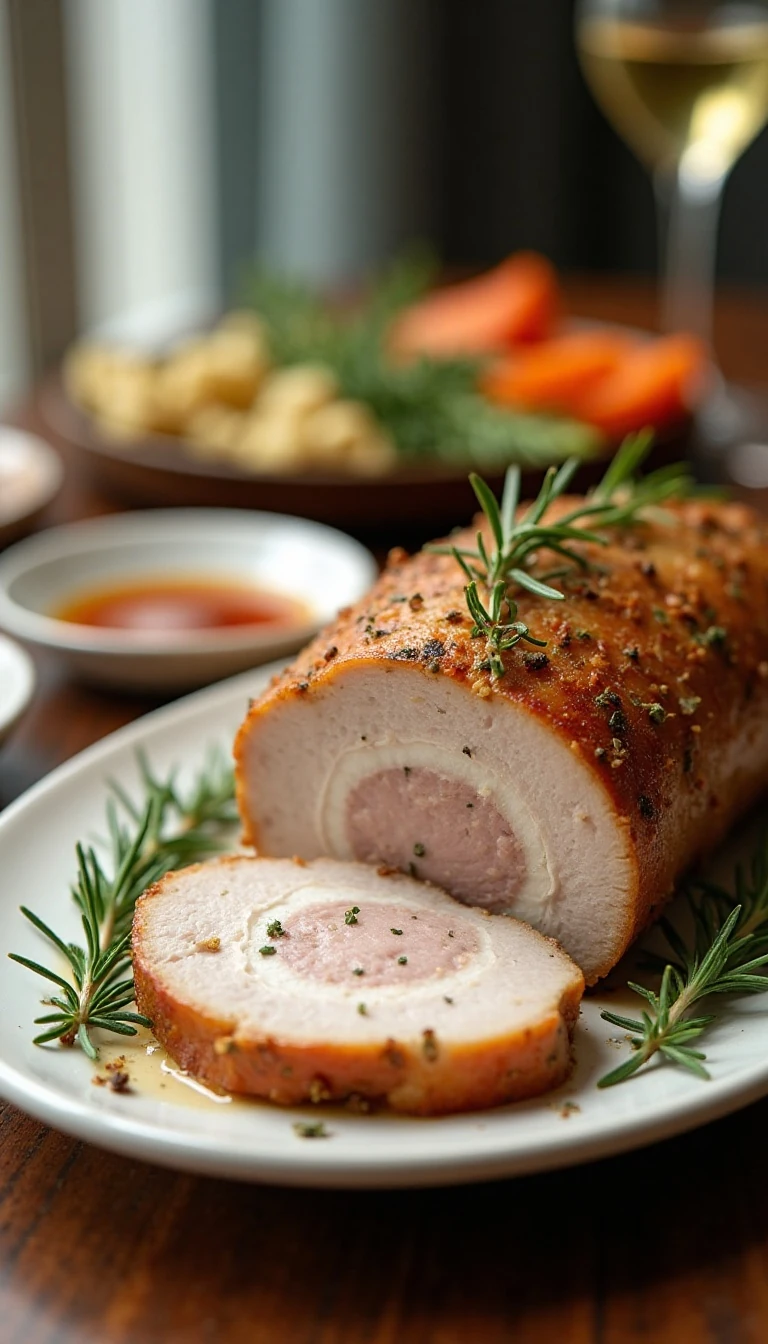
Juicy Herb-Roasted Pork Loin
Ingredients
Method
- Remove the pork loin from the refrigerator 20–30 minutes before cooking. Pat it thoroughly dry with paper towels and trim only excess surface fat, leaving a thin layer if present.
- Heat the oven to 375°F. In a small bowl, mix the olive oil, garlic, rosemary, thyme, sage, kosher salt, black pepper, and the optional Dijon mustard and lemon juice.
- Rub the herb mixture evenly over every side of the pork loin. For deeper flavor, cover and refrigerate the seasoned roast for 30 minutes or overnight, then bring it closer to room temperature before roasting.
- Place the pork fat-side up in a roasting pan or baking dish. Pour the chicken stock or dry white wine into the bottom of the pan if using, keeping the liquid around rather than over the seasoned roast.
- Roast for 50–70 minutes, depending on the shape of the roast and its starting temperature. Begin checking early with an instant-read thermometer, and remove the pork when the thickest part reaches 145°F.
- Transfer the pork to a cutting board and tent it loosely with foil. Let it rest for 10–15 minutes so the temperature can rise slightly and the juices can settle.
- Slice the rested pork across the grain into even pieces. Spoon the pan juices over the slices and serve immediately with your favorite dinner sides.
Notes
Final Thoughts
Juicy herb-roasted pork loin is a practical, flavorful dinner that makes the most of a simple boneless roast. Garlic, rosemary, thyme, and optional sage form a fragrant crust, while Dijon, lemon, and pan juices provide the savory brightness that keeps every bite interesting.
For the best result, dry the pork well, season every side, roast at 375°F, and trust your instant-read thermometer. Once the center reaches 145°F, give the roast its full 10–15 minute rest before slicing across the grain.
Set the platter in the center of the table with plenty of pan juices and a few uncomplicated sides. Whether you serve it for Sunday dinner, a holiday gathering, or an easy weeknight meal, this tender herb-roasted pork loin is a recipe worth keeping close.