This Easy Thai Peanut Chicken and Noodles recipe delivers a complete weeknight dinner in about 35–40 minutes. Tender sliced chicken, crisp red bell pepper, and noodles are tossed in a creamy homemade peanut sauce made with peanut butter, soy sauce, lime juice, rice vinegar, honey, sesame oil, garlic, ginger, and sriracha.
Every bite balances nutty richness, bright citrus, gentle sweetness, savory depth, and as much chili heat as your family enjoys. The recipe makes 4 generous servings and works with rice noodles, linguine, or thin spaghetti, making it an easy, flexible Asian-inspired meal for busy evenings.
Jump to RecipeWhy You’ll Love This Recipe
This Thai peanut chicken dinner is the kind of meal that feels special without demanding a long ingredient list or an afternoon in the kitchen. The sauce comes together in one bowl, the chicken cooks quickly, and the final toss brings every component together in a single skillet or wok.
The texture is just as appealing as the flavor. Soft, saucy noodles contrast with juicy chicken, crisp-tender bell pepper, crunchy peanuts, and fresh green onions, while lime wedges add a lively finish that keeps the creamy sauce from feeling heavy.
It is also easy to adjust for different tastes. Use chicken breast for a leaner option, chicken thighs for extra juiciness, or choose rice noodles for a gluten-free direction when paired with suitable gluten-free soy sauce.
If you enjoy making chicken the centerpiece of dinner, our stuffed chicken dinner is another satisfying recipe to add to your menu.
Ingredients You’ll Need
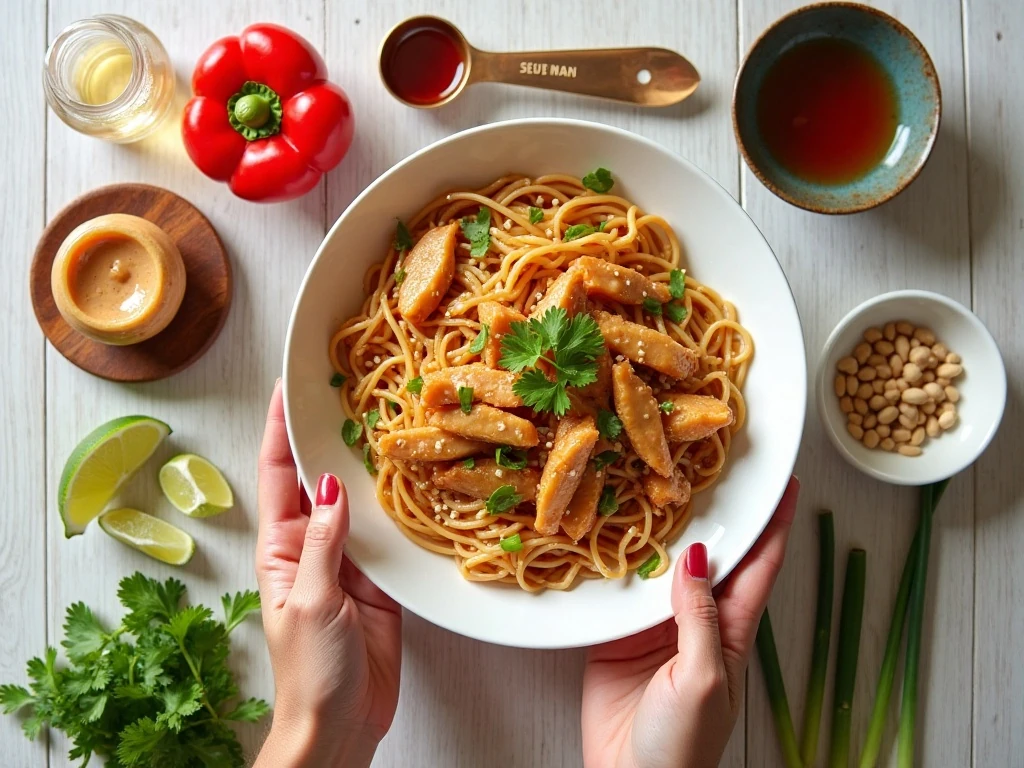
The ingredient list is organized around three elements: the chicken and noodles, the peanut sauce, and the toppings. Thinly slicing the chicken is important because it lets the pieces brown quickly while staying tender.
- Chicken: Use 1 pound of boneless, skinless chicken breasts or thighs, sliced thinly against the grain.
- Noodles: Choose 8 ounces of dried rice noodles, linguine, or thin spaghetti. Follow the package directions carefully because cooking times vary widely.
- Vegetables: One thinly sliced red bell pepper adds color, mild sweetness, and a crisp bite.
- Peanut sauce: Creamy peanut butter, low-sodium soy sauce, lime juice, rice vinegar, honey or brown sugar, toasted sesame oil, sriracha, garlic, ginger, and warm water create the signature coating.
- Finishing touches: Sliced green onions, roasted peanuts, optional cilantro, and lime wedges provide freshness and crunch.
Low-sodium soy sauce gives you more control over the final seasoning, especially because peanut butter and chili-garlic sauce can vary in saltiness. If your peanut butter is particularly thick, plan to use closer to 1/2 cup warm water when thinning the sauce.
For another colorful chicken meal with a sweet-savory profile, take a look at this brown sugar pineapple chicken recipe.
How to Make It Step-by-Step
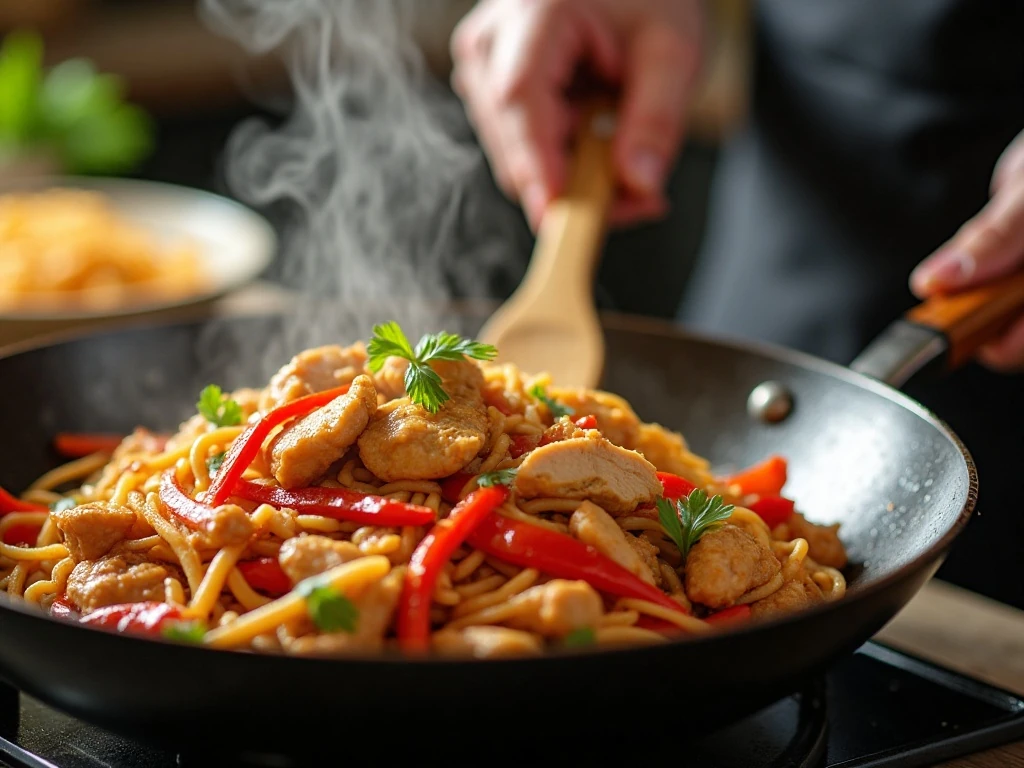
Step 1: Bring a pot of water to a boil and cook the noodles according to the package directions. Rice noodles generally require soaking or just a few minutes of boiling, so check them early and stop when they are tender but not mushy; drain, rinse briefly with cool water, and reserve about 1/2 cup noodle water.
Step 2: While the noodles cook, whisk the peanut butter, soy sauce, lime juice, rice vinegar, honey or brown sugar, toasted sesame oil, sriracha, minced garlic, and grated ginger in a medium bowl. Add warm water or reserved noodle water a little at a time until the mixture becomes smooth, glossy, and pourable rather than stiff.
Step 3: Heat 1 tablespoon of neutral cooking oil in a large skillet or wok over medium-high heat. Add the thinly sliced chicken in a single layer and cook for approximately 4–6 minutes, stirring occasionally, until the pieces are browned and the thickest chicken reaches 165°F (74°C).
Step 4: Add the sliced red bell pepper to the cooked chicken. Stir-fry for 2–3 minutes, allowing the pepper to soften slightly while keeping enough crispness to contrast with the noodles.
Step 5: Add the cooked noodles and prepared peanut sauce directly to the skillet. Toss continuously for 1–2 minutes so the sauce coats the noodles and warms through, adding a little more warm water if it looks too thick or begins clinging heavily.
Step 6: Divide the noodles among 4 bowls and finish with sliced green onions, chopped roasted peanuts, optional cilantro, and lime wedges. Serve right away, squeezing lime over each portion for a bright, tangy finish.
How to Get the Peanut Sauce Just Right
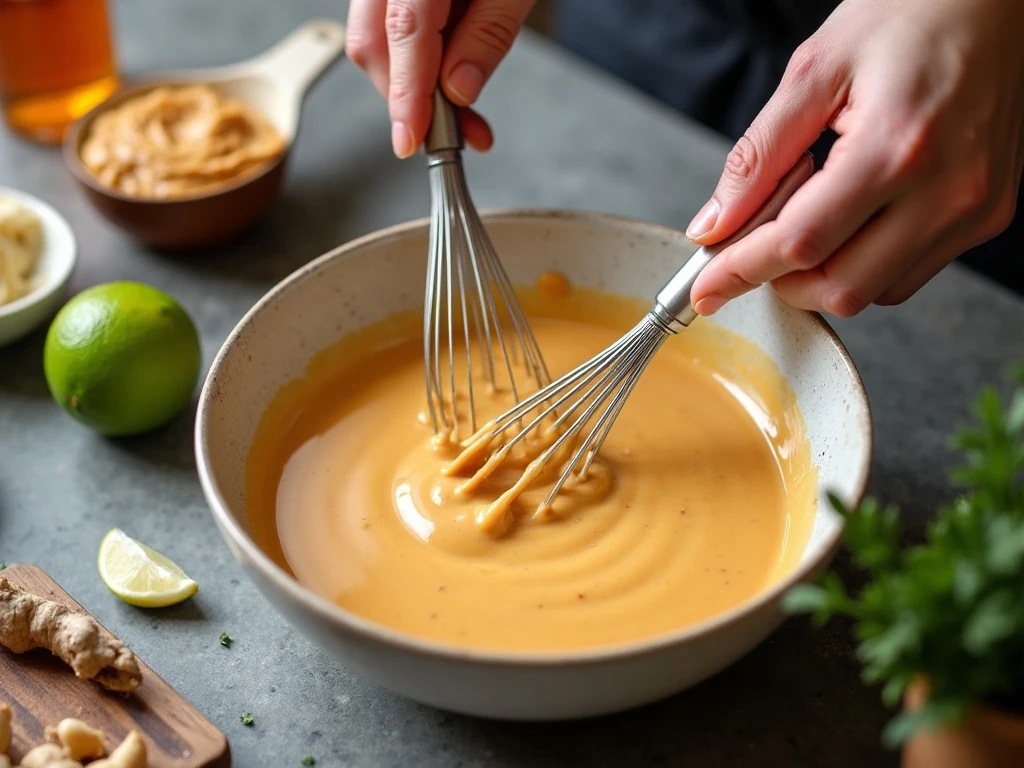
The consistency of the sauce makes a major difference. It should be thick enough to cling to the noodles but loose enough to distribute easily through the skillet, and reserved noodle water is the best way to reach that balance.
Add the liquid gradually rather than pouring in all of it at once. Starchy noodle water helps the peanut butter blend with the other ingredients, giving the sauce a silky texture without making it watery.
Taste the sauce before adding it to the pan. More lime juice gives extra brightness, additional sriracha increases heat, and a small amount of honey or brown sugar can soften a particularly sharp or spicy batch.
For a different Asian-inspired meal with fresh, bold flavors, you can also try this spicy salmon poke recipe.
Chef Tips for Tender Chicken and Perfect Noodles
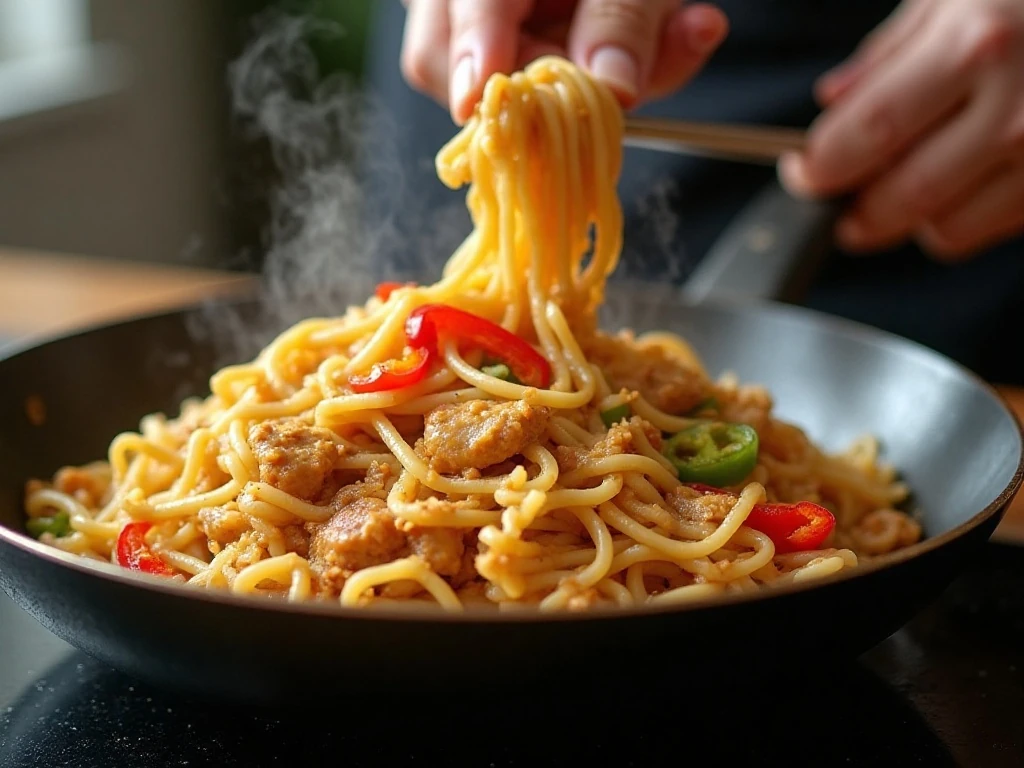
- Slice evenly: Uniform chicken pieces cook at the same rate and help prevent thin pieces from drying out before thicker pieces are safe to eat.
- Use a hot pan: Medium-high heat encourages browning and keeps the chicken from steaming in its own moisture.
- Do not crowd the skillet: If your pan is small, cook the chicken in batches so the pieces have room to brown.
- Undercook rice noodles slightly: They continue cooking when tossed with the hot chicken, sauce, and pepper.
- Keep the toppings fresh: Add peanuts, green onions, cilantro, and lime after cooking so their flavors and textures remain distinct.
- Serve immediately: Peanut sauce naturally thickens as it cools, so the dish is at its creamiest straight from the skillet.
Have all the ingredients measured before turning on the stove. Once the chicken is in the hot skillet, the remaining cooking moves quickly, and preparation keeps the process calm and organized.
Easy Variations and Substitutions
For a creamier, milder sauce, add 1/2 cup coconut milk while whisking the peanut sauce. This creates a softer chili profile and a looser coating, so add it gradually and adjust with reserved noodle water only if needed.
Vegetables can change with the season or whatever is in the refrigerator. Shredded carrots, snow peas, broccoli, and cabbage all work well, provided firmer vegetables receive enough time to become crisp-tender.
Peanut butter can be replaced with almond butter or sunflower-seed butter. The flavor will change, but the same method applies; add the warm water slowly because different nut and seed butters have different thicknesses.
Already-cooked rotisserie chicken is another useful shortcut. Shred or slice it and add it only during the final tossing step so it warms through without becoming dry.
For a Mexican-inspired option to serve on another night, this smothered chicken burrito dinner makes a hearty change of pace.
Storage, Reheating, and Serving Ideas
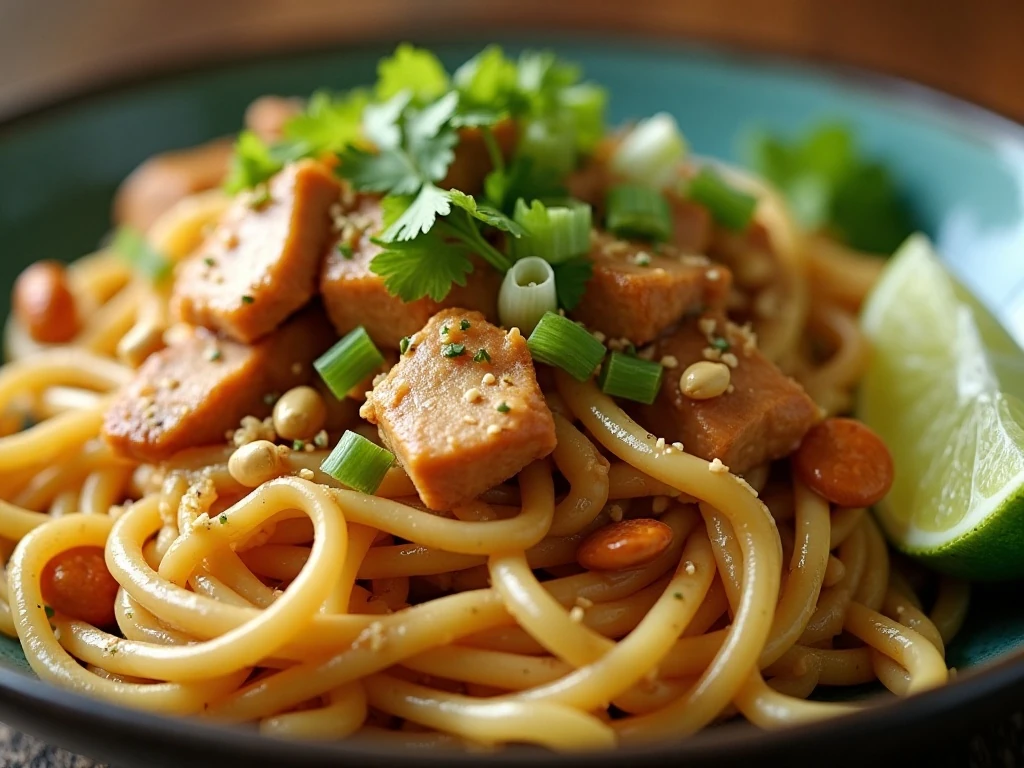
Store leftover Thai peanut chicken and noodles in an airtight container in the refrigerator. The noodles will absorb some sauce as they sit, so expect the texture to be thicker the next day.
Reheat gently in a skillet or microwave with a splash of water, stirring until the sauce loosens and the chicken is hot. Avoid prolonged high heat, which can dry the chicken and make the noodles overly soft.
Serve this dish on its own for a complete meal, or pair it with a simple cucumber salad, steamed vegetables, or fresh fruit. Extra lime wedges at the table let everyone adjust the acidity to taste.
Keep the garnishes separate when storing leftovers if possible. Fresh peanuts and green onions added after reheating restore the contrast that makes the original dish so inviting.
If you are planning a tropical dessert after dinner, these pineapple coconut bars would be a delicious finale.
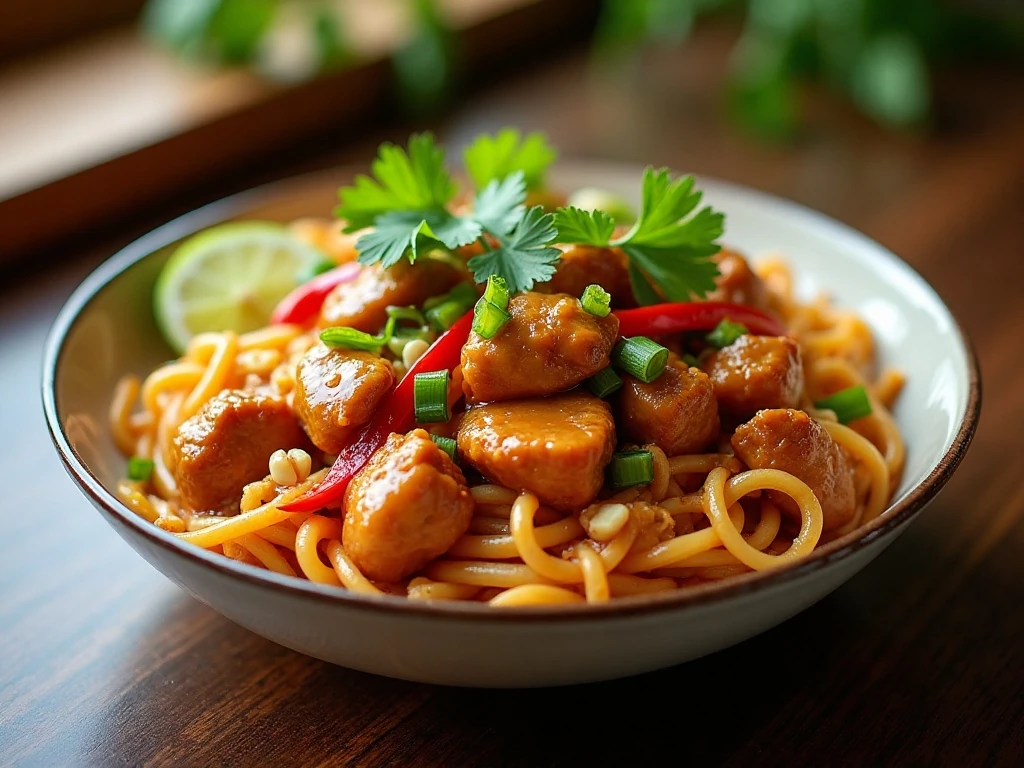
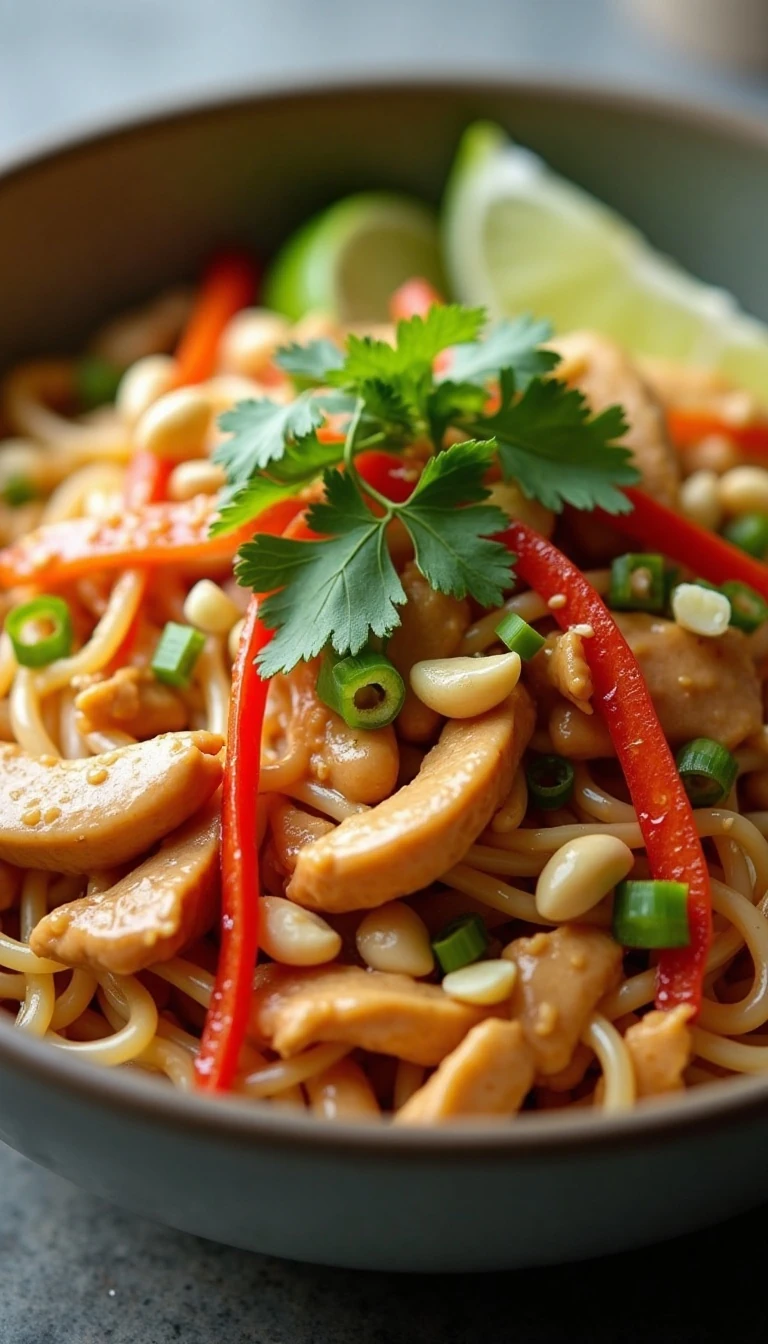
Easy Thai Peanut Chicken and Noodles
Ingredients
Method
- Cook the noodles according to the package directions. Rice noodles may need soaking or only a few minutes of boiling, so avoid cooking them past tender. Drain, rinse briefly with cool water, and reserve about 1/2 cup noodle water.
- Whisk the peanut butter, soy sauce, lime juice, rice vinegar, honey or brown sugar, sesame oil, sriracha, garlic, and ginger in a bowl. Add warm water or reserved noodle water gradually until the sauce is smooth and pourable.
- Heat the neutral oil in a large skillet or wok over medium-high heat. Add the chicken in a single layer and cook for approximately 4–6 minutes, stirring occasionally, until browned and the thickest pieces reach 165°F (74°C).
- Add the sliced red bell pepper to the skillet. Cook for 2–3 minutes, just until it softens slightly while retaining some crispness.
- Add the cooked noodles and peanut sauce to the chicken and pepper. Toss for 1–2 minutes, adding more warm water if the sauce becomes too thick or clings heavily to the noodles.
- Serve immediately with sliced green onions, chopped roasted peanuts, optional cilantro, and lime wedges. Squeeze fresh lime over each portion just before eating.
Notes
Final Thoughts
This Easy Thai Peanut Chicken and Noodles recipe proves that a deeply flavorful dinner does not need complicated techniques. With a quick homemade sauce, thinly sliced chicken, tender noodles, and crisp vegetables, you can bring a colorful, satisfying meal to the table in about 35–40 minutes.
Remember the two details that matter most: reserve noodle water and avoid overcooking the rice noodles. Those simple steps help the peanut sauce stay smooth and keep the noodles pleasantly tender instead of sticky or mushy.
Finish each bowl with roasted peanuts, green onions, cilantro if you like, and plenty of lime. Whether you prefer a gentle warmth or a bold chili kick, this flexible Asian-inspired dinner is easy to make your own and worth repeating on busy weeknights.
1 thought on “Easy Thai Peanut Chicken and Noodles Recipe”