This juicy boneless stuffed turkey recipe turns a 3- to 4-pound turkey breast into an impressive roulade filled with savory bread stuffing. The turkey is butterflied, filled, rolled, tied, and roasted at 375°F (190°C) for approximately 1 hour 15 minutes to 1 hour 40 minutes, until both the thickest part of the turkey and the center of the stuffing reach 165°F (74°C).
Each slice is tender, moist, and full of comforting holiday flavor, with buttery bread, sweet-tart cranberries, aromatic sage, thyme, onion, celery, and garlic tucked inside. This boneless stuffed turkey serves 6–8 people and is an excellent choice for Thanksgiving, Sunday dinner, or any gathering where you want a beautiful centerpiece without roasting a whole bird.
Jump to RecipeWhy You’ll Love This Recipe
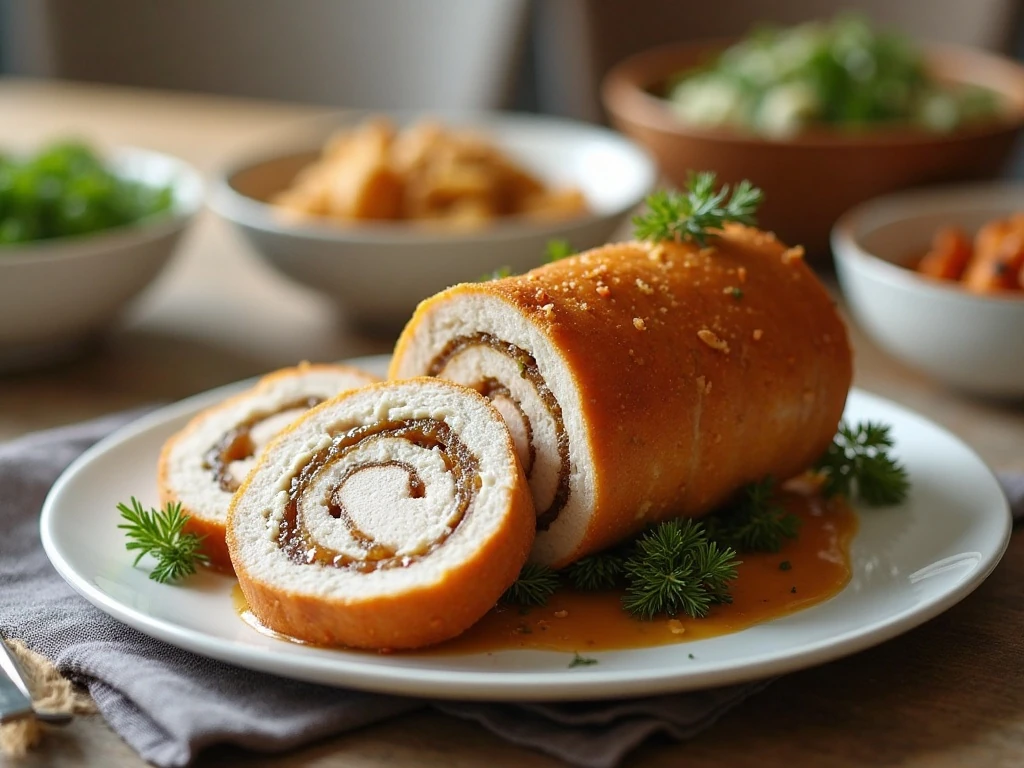
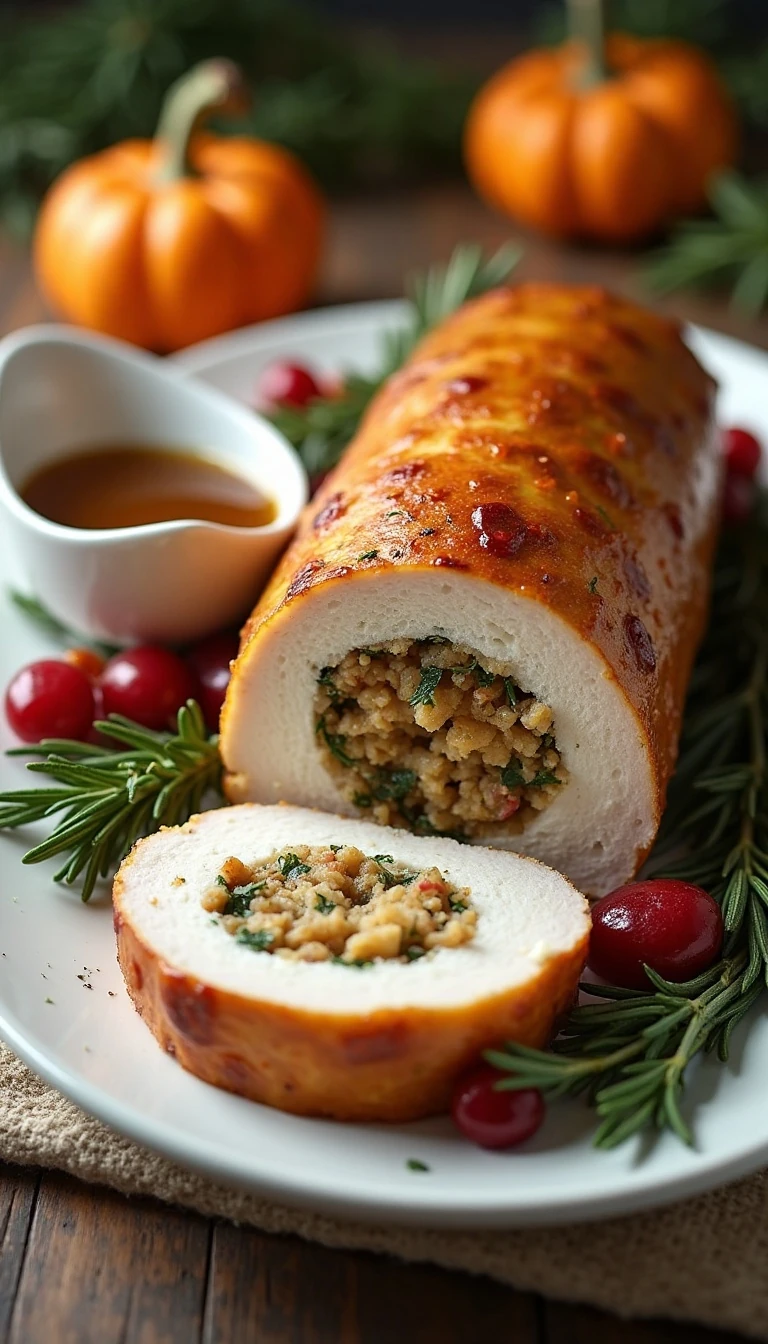
A boneless stuffed turkey breast gives you the festive flavor of a traditional turkey dinner in a manageable, easy-to-slice roast. The roulade shape keeps the stuffing nestled in the center while the turkey cooks evenly around it.
This recipe is also practical for a smaller celebration. It makes 6–8 servings, requires no carving around bones, and can be prepared with familiar pantry ingredients. The finished slices look elegant on a platter, yet the method is straightforward enough for a first-time cook.
The contrast of textures makes every bite special. The outside becomes beautifully browned, the turkey stays tender when cooked to temperature, and the buttery stuffing remains soft with lightly crisp edges.
For another comforting way to use turkey after a holiday meal, you can also try this easy turkey casserole idea.
Ingredients You’ll Need
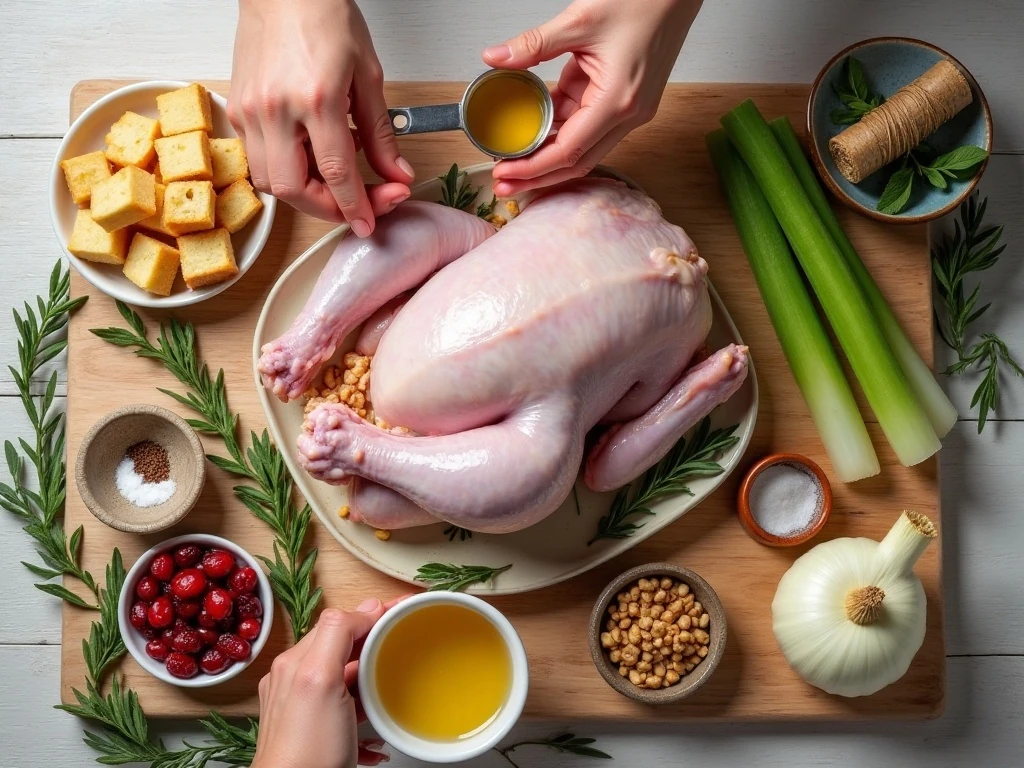
Start with a boneless, skinless turkey breast weighing about 3–4 pounds. If your butcher has not butterflied it, you can prepare it at home by slicing through the thickest section and opening the meat like a book.
Day-old bread is ideal for stuffing because it absorbs stock while retaining enough structure to roll inside the turkey. Use a sturdy white, French, Italian, or whole-grain loaf cut into about 6 cups of cubes, or approximately 10–12 ounces.
- Aromatics: Onion, celery, and garlic create a savory base.
- Herbs: Sage and thyme provide classic poultry flavor.
- Moisture: Warm low-sodium stock and melted butter soften the bread.
- Binder: One beaten egg helps the stuffing hold together.
- Optional additions: Dried cranberries or parsley add freshness and color, while pecans or walnuts bring crunch.
Keep an extra portion of stock nearby, but add it gradually. The bread should feel moist when pressed, never wet or mushy.
How to Make It Step-by-Step
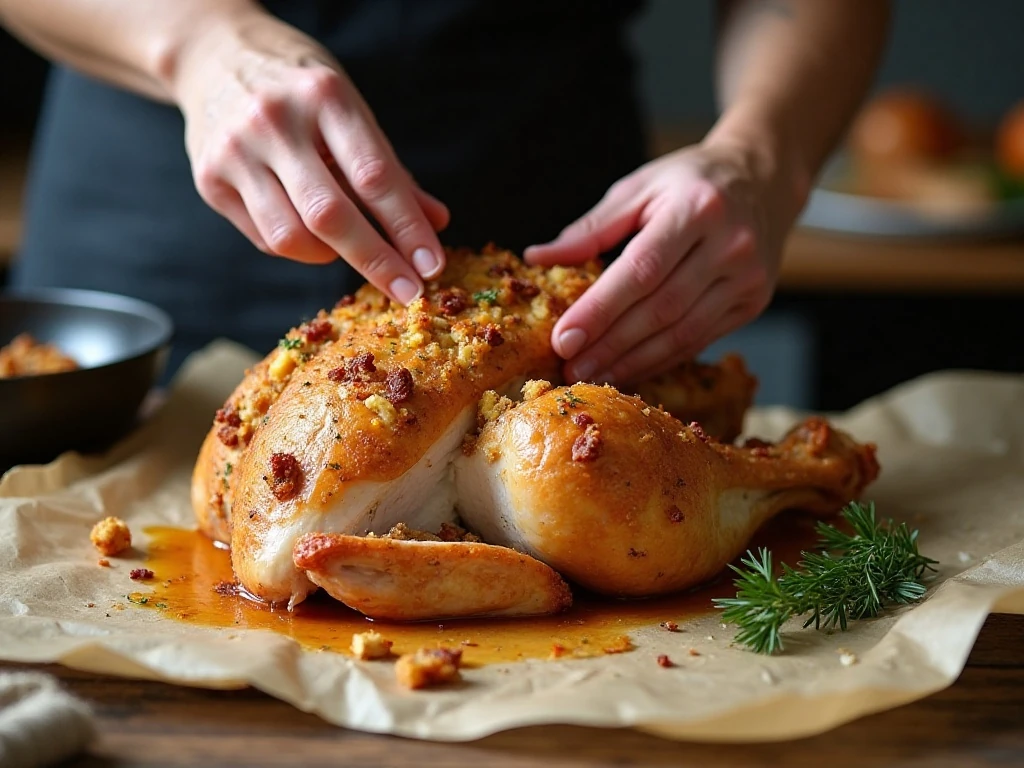
Step 1: Prepare the stuffing vegetables. Melt 4 tablespoons of unsalted butter in a skillet over medium heat, then cook the diced onion and celery for 5–7 minutes. Add the minced garlic and cook for 30 seconds, just until fragrant.
Step 2: Combine the stuffing. Place the 6 cups of day-old bread cubes in a large bowl and add the sautéed vegetables, dried sage, dried thyme, salt, pepper, and any optional cranberries, parsley, or nuts. Pour in 1 1/2 cups of warm stock and toss gently, adding more as needed until the bread is moist but not soggy.
Step 3: Add the egg and cool the mixture. Stir in the beaten egg once the stock and vegetables have been incorporated. Spread the stuffing on a shallow plate or baking sheet so it cools more quickly; warm stuffing is difficult to spread and can soften the turkey surface.
Step 4: Prepare the turkey breast. If it is not already butterflied, use a sharp knife to slice horizontally through the thickest section, stopping before cutting all the way through. Open the breast like a book, cover it with plastic wrap, and gently pound it to an even thickness of about 1/2–3/4 inch.
Step 5: Season both sides. Sprinkle the turkey with the kosher salt, black pepper, dried thyme, and dried sage or poultry seasoning. Seasoning the inside and outside gives the meat flavor throughout the roulade.
Step 6: Spread on the cooled stuffing. Lay the turkey flat and distribute the stuffing in an even layer, leaving about a 1-inch border around the edges. Avoid pressing the filling down firmly because a loose layer cooks more reliably and gives the roll room to close.
Step 7: Roll and tie the roulade. Starting at one long side, roll the turkey tightly around the stuffing until it forms a compact cylinder. Tie it with kitchen twine at 1–2-inch intervals and secure the ends so the filling stays inside during roasting.
Step 8: Chill if desired. Place the tied roulade seam-side down and refrigerate it for 20–30 minutes. This optional rest firms the shape and helps produce cleaner slices after cooking.
Step 9: Set up the roasting pan. Preheat the oven to 375°F (190°C), then place the roulade seam-side down in a roasting pan. Rub the outside with 2 tablespoons of olive oil or melted butter and pour 1 cup of chicken or turkey stock into the bottom of the pan.
Step 10: Roast the turkey. Cook it uncovered for approximately 1 hour 15 minutes to 1 hour 40 minutes, with the exact time depending on the thickness and weight of the roll. Baste once or twice if you like, and loosely cover the turkey with foil if it begins to brown too quickly.
Step 11: Check the internal temperature. Insert an instant-read thermometer into the thickest part of the turkey and another check into the center of the stuffing. Do not rely on the clock alone; both the turkey and stuffing must reach 165°F (74°C).
Step 12: Rest and slice. Move the roast to a cutting board, tent it loosely with foil, and let it rest for 15–20 minutes. Remove every piece of twine, then slice the roulade into 1/2- to 1-inch rounds with a sharp carving knife.
Pro Tips for Juicy Turkey
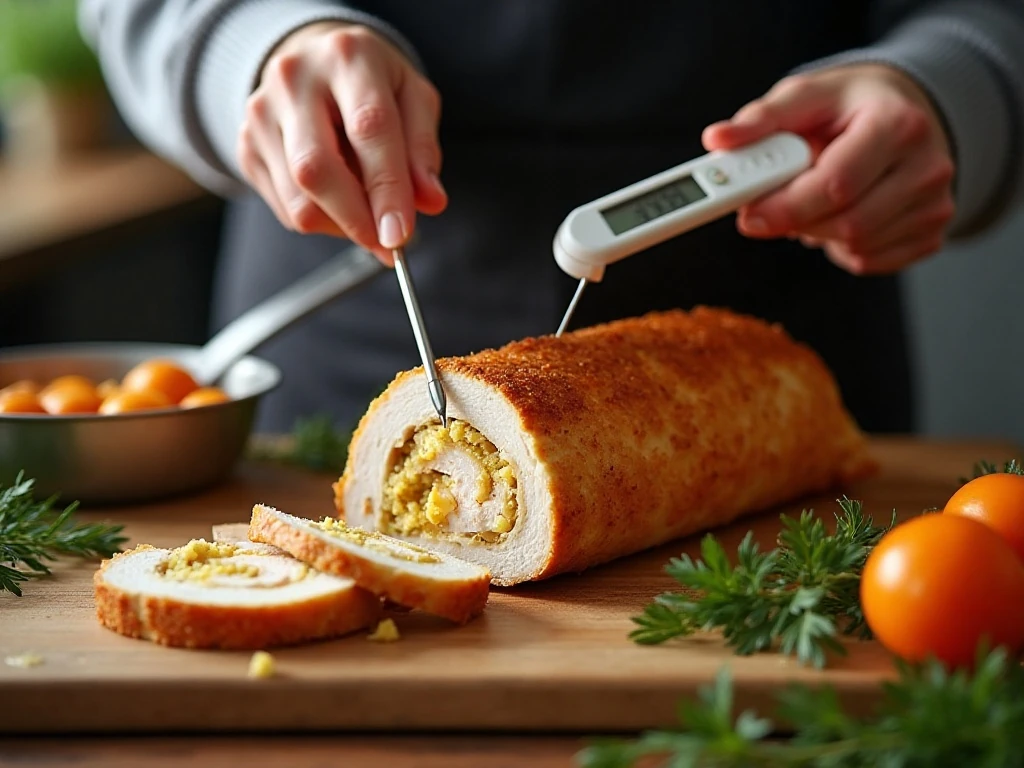
The most important tip is to cool the stuffing before it touches the turkey. Hot filling makes the breast harder to roll and may partially cook or soften the surface of the meat.
Do not overfill or tightly compress the bread mixture. An even, relaxed layer is easier to roll, less likely to split, and more likely to reach a safe temperature in the center at the same time as the meat.
Use twine at regular 1–2-inch intervals rather than tying only the ends. This keeps the roulade compact and gives each slice a neat spiral of turkey and stuffing.
If you want especially tidy rounds, chill the tied turkey for 20–30 minutes before roasting and allow the cooked roulade to rest completely. For a helpful side dish with earthy flavor, pair the meal with garlic butter roasted mushrooms.
Serving Suggestions
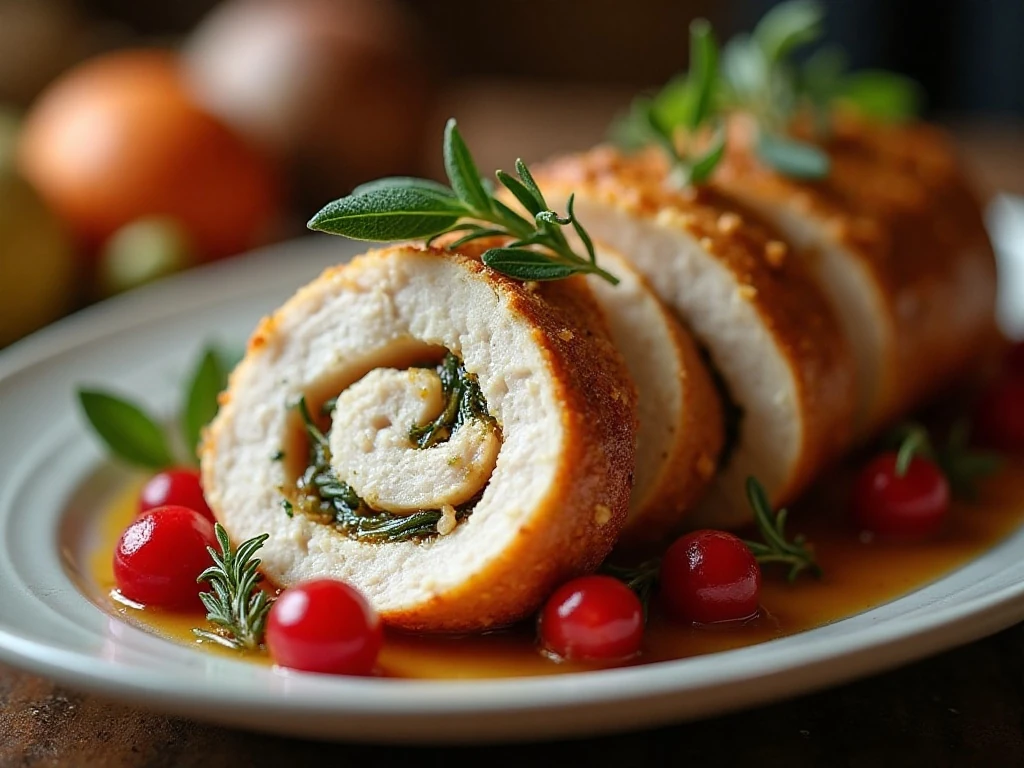
Arrange the sliced roulade on a warm platter and spoon a little pan juice over the top. A simple gravy made from the roasting-pan juices, additional stock, and a small butter-flour roux is an excellent finishing touch.
Serve the turkey with mashed potatoes, roasted root vegetables, green beans, cranberry sauce, or a crisp winter salad. The stuffing already contains herbs and aromatics, so the best sides can remain simple and fresh.
If you enjoy stuffed comfort-food dishes, these stuffed potato wedges make a fun alternative for a casual gathering. For a hearty vegetable side, slow-cooked sausage and cabbage also pairs well with roasted poultry.
Storage and Reheating
Refrigerate leftover turkey in a covered container within two hours of serving. Store the slices with a little pan juice or gravy to help protect their moisture, and use the leftovers within several days.
Reheat gently in a covered baking dish with a splash of stock until warmed through. Avoid high heat for an extended time, which can dry the turkey and make the stuffing firm.
Leftover slices are delicious tucked into sandwiches or served with a fresh salad. You can also pair the meal with this cozy pot pie recipe when planning a comfort-food menu.
Flavor Variations
For a richer, meatier stuffing, add 4 ounces of cooked, crumbled sausage after sautéing the vegetables. Dried apricots or chopped apples can replace the cranberries for a sweeter seasonal note.
For a non-bread filling, use spinach, mushrooms, and goat cheese, keeping the filling layer moderate so the roulade can still close securely. Whichever variation you choose, cool the filling first and use the thermometer test at the end.
Juicy Boneless Stuffed Turkey Recipe
Ingredients
Method
- Melt the butter in a skillet over medium heat. Cook the onion and celery for 5-7 minutes until softened, then add the garlic and cook for 30 seconds.
- Place the bread cubes in a large bowl. Add the sautéed vegetables, sage, thyme, salt, pepper, and optional cranberries or nuts, then stir in enough warm stock to moisten the bread without making it soggy. Mix in the beaten egg and cool the stuffing before using.
- If needed, butterfly the turkey breast by slicing horizontally through the thickest part and opening it like a book. Cover it with plastic wrap and gently pound it to an even 1/2- to 3/4-inch thickness, then season both sides with salt, pepper, sage, and thyme.
- Spread the cooled stuffing over the turkey, leaving about a 1-inch border. Roll it tightly from one long side into a roulade, tie it with kitchen twine at 1- to 2-inch intervals, and secure the ends.
- Place the roulade seam-side down in a roasting pan. Rub the outside with olive oil or melted butter and pour 1 cup of stock into the bottom of the pan.
- Roast uncovered at 375°F (190°C) for approximately 1 hour 15 minutes to 1 hour 40 minutes, depending on the turkey's thickness and weight. Baste once or twice if desired, and cover loosely with foil if the exterior browns too quickly.
- Check the thickest part of the turkey and the center of the stuffing with an instant-read thermometer. Both areas must reach 165°F (74°C) before the roulade is removed from the oven.
- Transfer the cooked turkey to a cutting board, tent loosely with foil, and rest for 15-20 minutes. Remove the twine and slice into 1/2- to 1-inch rounds before serving.
Notes
Final Thoughts
This juicy boneless stuffed turkey is a reliable centerpiece that looks far more elaborate than it is. With a tender turkey breast, fragrant bread stuffing, golden roasted exterior, and clean spiral slices, it brings classic holiday comfort to a smaller table without the work of preparing a whole bird.
Give yourself 30–40 minutes for preparation, allow the optional 20–30-minute chill for a firmer roll, and plan on 15–20 minutes of resting time after roasting. Most importantly, check that both the turkey and stuffing reach 165°F (74°C), then slice and serve with plenty of pan gravy.
Prepare the stuffing ahead during a busy cooking day, gather your twine and thermometer, and take your time with the rolling step. Once you see those beautiful slices on the platter, this recipe is likely to become a favorite for holiday dinners and Sunday meals alike.