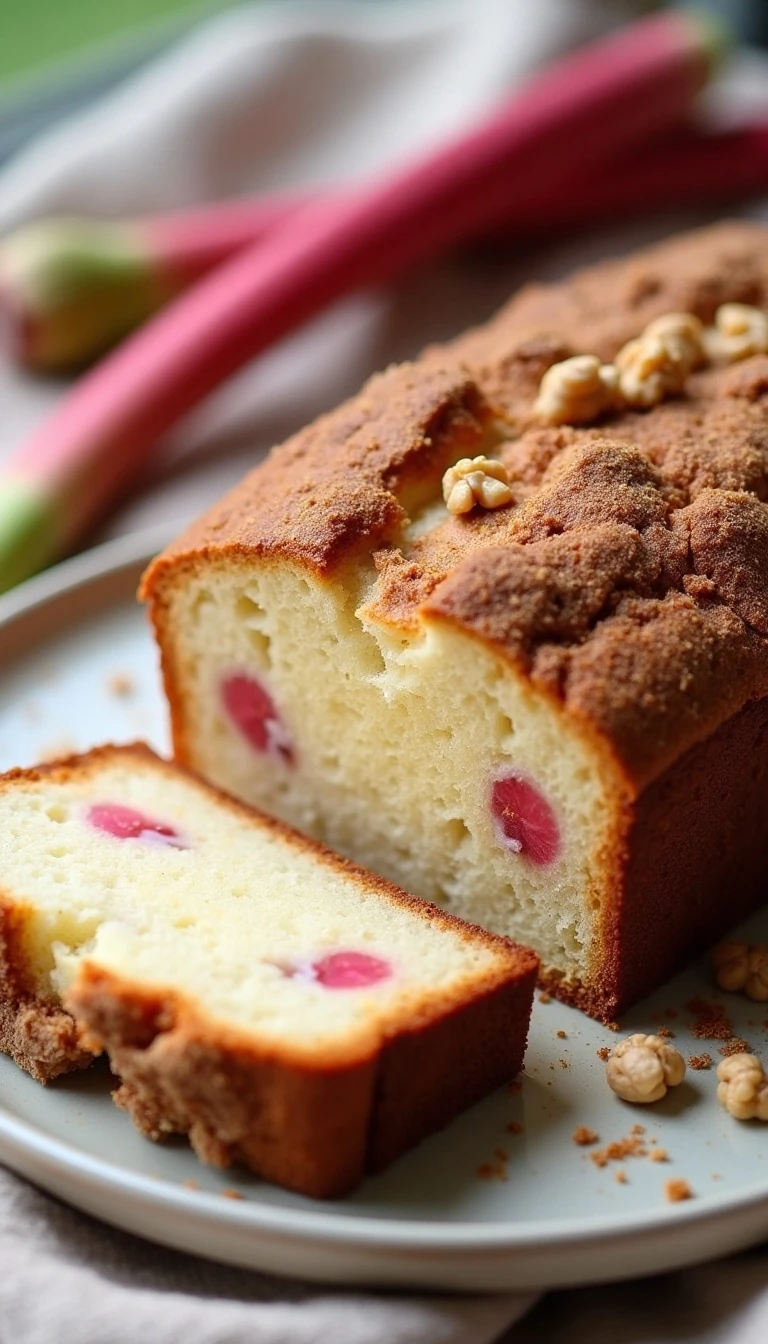
This one-bowl rustic rhubarb bread is a tender, moist quick bread made with fresh chopped rhubarb, brown sugar, buttermilk, oil, and vanilla. It takes just 15 minutes to prepare, bakes in a 9 x 5-inch loaf pan for 55–65 minutes, and makes about 10 slices without any kneading, yeast, or rising time.
Every slice balances sweet caramel-like brown sugar with the bright, pleasantly tart flavor of rhubarb. The optional cinnamon-walnut topping bakes into a crisp, buttery crust while the inside stays soft and flavorful, making this loaf wonderful for breakfast, an afternoon snack, or a simple dessert with coffee.
Jump to RecipeWhy You’ll Love This Recipe
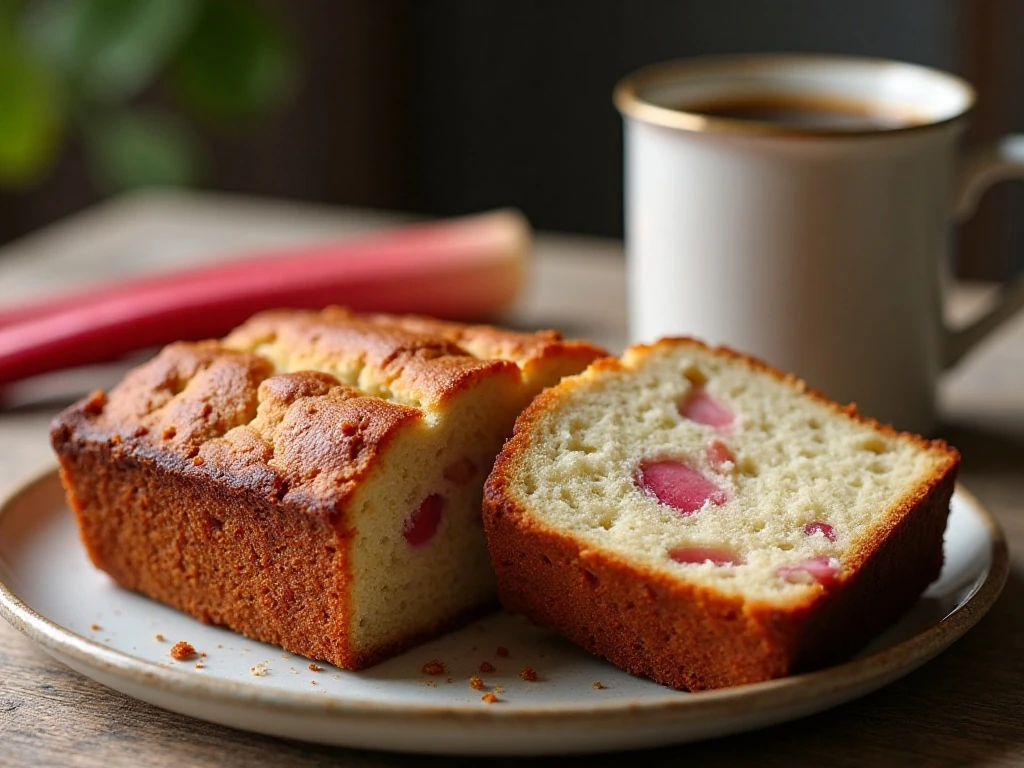
This rustic rhubarb bread has the comfort of a homemade loaf but the simplicity of a muffin batter. Everything comes together in one large bowl, so there is no mixer to wash and no yeast dough to knead, shape, or wait to rise.
Buttermilk is one of the most useful ingredients here. Its acidity works with the baking soda to help the loaf rise, while its creamy texture keeps the crumb tender. If you enjoy baking with buttermilk, you may also like this buttermilk bread with honey for a yeast-based option.
The flavor is especially satisfying because the brown sugar softens rhubarb’s natural tartness without hiding it. Fresh, brightly colored stalks provide a lively fruit flavor and attractive pink flecks throughout the loaf.
Ingredients You’ll Need
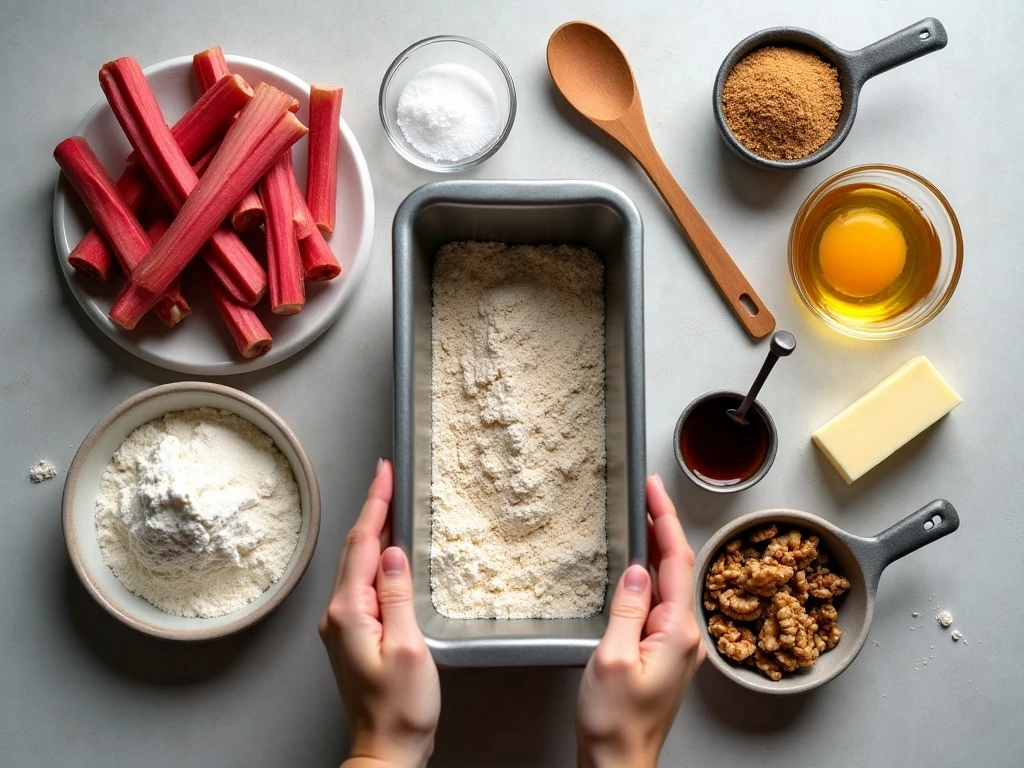
The ingredient list is short, but each item has a clear purpose. Measure the flour carefully, pack the brown sugar firmly into the measuring cup, and use a room-temperature egg so it blends smoothly with the buttermilk and oil.
- Flour: All-purpose flour provides the structure for this quick bread.
- Baking soda: This reacts with the acidity in the buttermilk to help the loaf rise.
- Brown sugar: Packed light brown sugar adds sweetness, moisture, and a gentle molasses note.
- Buttermilk: It creates a soft crumb and supports the baking soda.
- Neutral oil: Vegetable oil keeps the bread moist without adding a strong flavor.
- Rhubarb: Finely chopped fresh stalks soften evenly and distribute tart flavor in every slice.
- Topping ingredients: Sugar, nuts, butter, and cinnamon create a crumbly, fragrant crust.
Choose firm rhubarb stalks with vivid color and crisp ends. Never use the leaves, and do not add extra sugar directly to the fruit; the brown sugar in the batter is generally enough.
How to Make It Step-by-Step
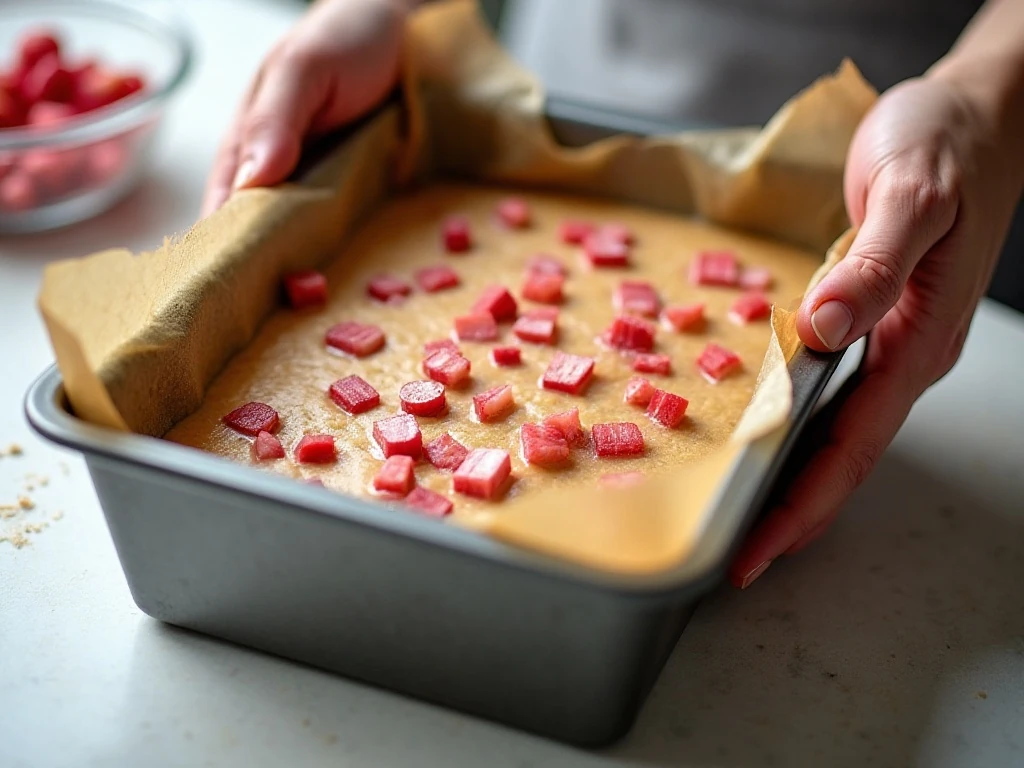
Step 1: Heat the oven to 350°F (175°C), then grease a 9 x 5-inch loaf pan. Line the bottom with parchment if you want an especially easy release, leaving a little paper extending up the long sides as handles.
Step 2: Whisk the flour, baking soda, and salt together in one large bowl. This distributes the leavening and salt before the wet ingredients are added, helping the loaf bake evenly.
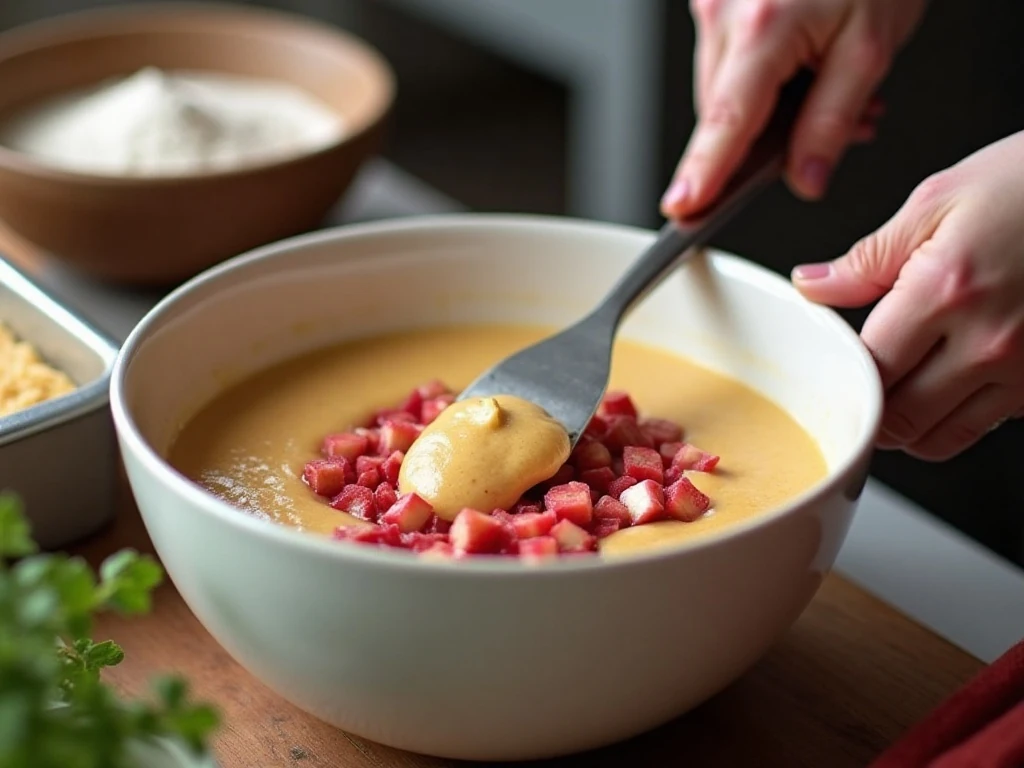
Step 3: Add the packed brown sugar, room-temperature egg, buttermilk, neutral oil, and vanilla to the same bowl. Stir just until the dry ingredients are moistened; a few small streaks of flour are preferable to vigorous mixing.
Step 4: Fold in the finely chopped rhubarb with a spatula. Work gently and stop as soon as the pieces are spread through the batter, since too much stirring can produce a dense or tough loaf.
Step 5: Scrape the batter into the prepared pan and smooth the top without pressing it down. The batter will be thick, and that consistency helps hold the rhubarb in place while the loaf bakes.
Step 6: Make the optional topping by mixing the granulated sugar, chopped walnuts or pecans, softened butter, and cinnamon until the mixture looks crumbly. Sprinkle it over the batter in an even layer so each slice receives a little buttery crunch.
Step 7: Bake for 55–65 minutes. Begin checking near the shorter end of the range, inserting a skewer into the center; it should come out clean or with only a few moist crumbs, not wet batter.
Step 8: Let the bread cool in the pan for about 10–15 minutes before transferring it to a wire rack. Wait until it is completely cool before slicing, because the rhubarb continues releasing moisture as the loaf settles.
Pro Tips for a Tender Loaf
The most important technique is to avoid overmixing. Once flour meets liquid, gluten begins developing, and excessive stirring can turn a soft quick bread chewy. Mix with a gentle folding motion and stop promptly.
Chop the rhubarb fairly small, ideally into pieces that are easy to distribute with a spatula. Large chunks can remain firm in the center or create pockets of excess moisture, while smaller pieces soften at the same rate as the crumb.
Drain frozen rhubarb thoroughly after thawing. Extra liquid can make the batter looser and may leave the center gummy, so press the thawed fruit gently in a strainer if needed without crushing it into a puree.
Use the correct pan size whenever possible. A 9 x 5-inch loaf pan gives the batter room to bake at the stated time. An 8 x 4-inch pan may need approximately 65–75 minutes, so begin checking early and watch the top for excessive browning.
If the crust is browning before the center is done, loosely tent the loaf with foil near the end of baking. Avoid opening the oven repeatedly, since a sudden temperature change can interfere with the loaf’s rise.
Optional Cinnamon-Walnut Topping
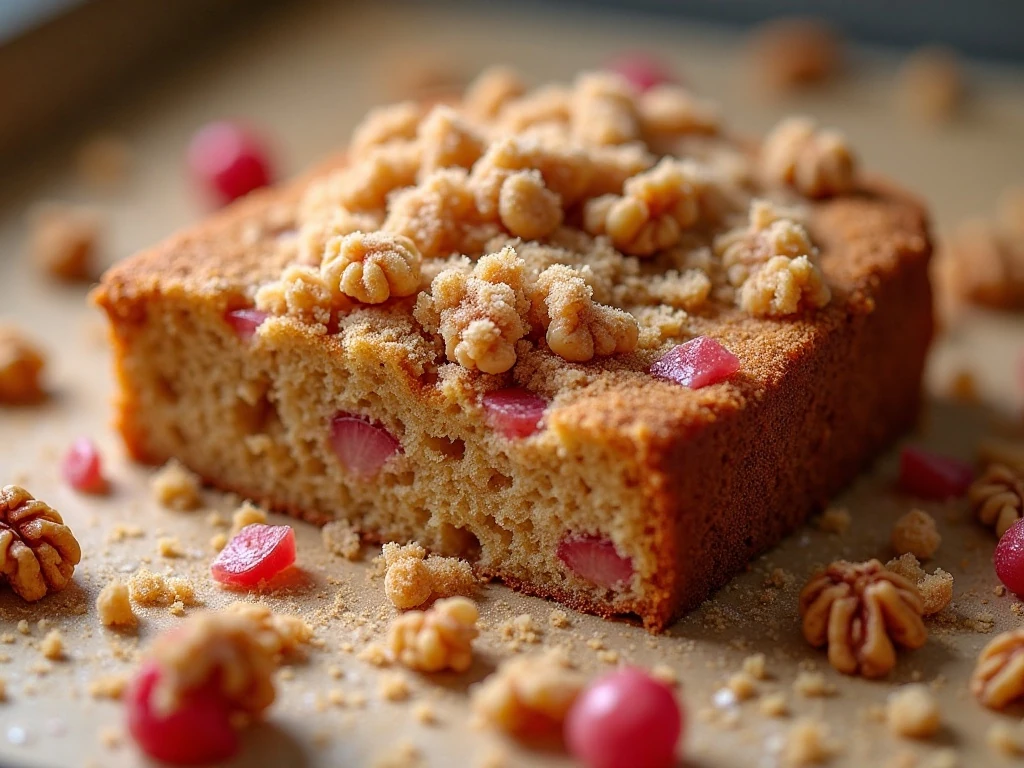
The topping is optional, but it gives this simple bread a bakery-style finish. Granulated sugar creates crispness, butter helps the mixture clump, cinnamon adds warmth, and walnuts or pecans bring a pleasant toasted bite.
For a nut-free loaf, leave out the walnuts or pecans and use the sugar, butter, and cinnamon mixture on its own. You can also skip the topping entirely for a softer, more understated crust that lets the rhubarb stand at the center.
For another fruit-forward loaf idea, compare the tart fruit notes here with our blueberry lemon bread. Both are excellent with tea, coffee, or a spoonful of softly whipped cream.
Easy Variations
Replace up to 1/2 cup of the rhubarb with chopped strawberries for a sweeter berry-rhubarb combination. Keep the total amount of fruit close to 2 cups so the batter retains the intended balance and baking time.
For extra crunch inside the loaf, add 1/2 cup chopped walnuts or pecans directly to the batter. Fold them in at the same time as the rhubarb, using a light hand so the mixture remains tender.
If you do not have buttermilk, plain yogurt thinned with a little milk can be used as a substitute. Stir it until it has a pourable consistency before adding it to the bowl.
This recipe is a quick bread rather than a yeast bread, so it follows a different method from recipes that require rising. For a dough-based baking project, try this versatile yeast bread dough when you have more time for kneading and fermentation.
Storage, Slicing, and Serving
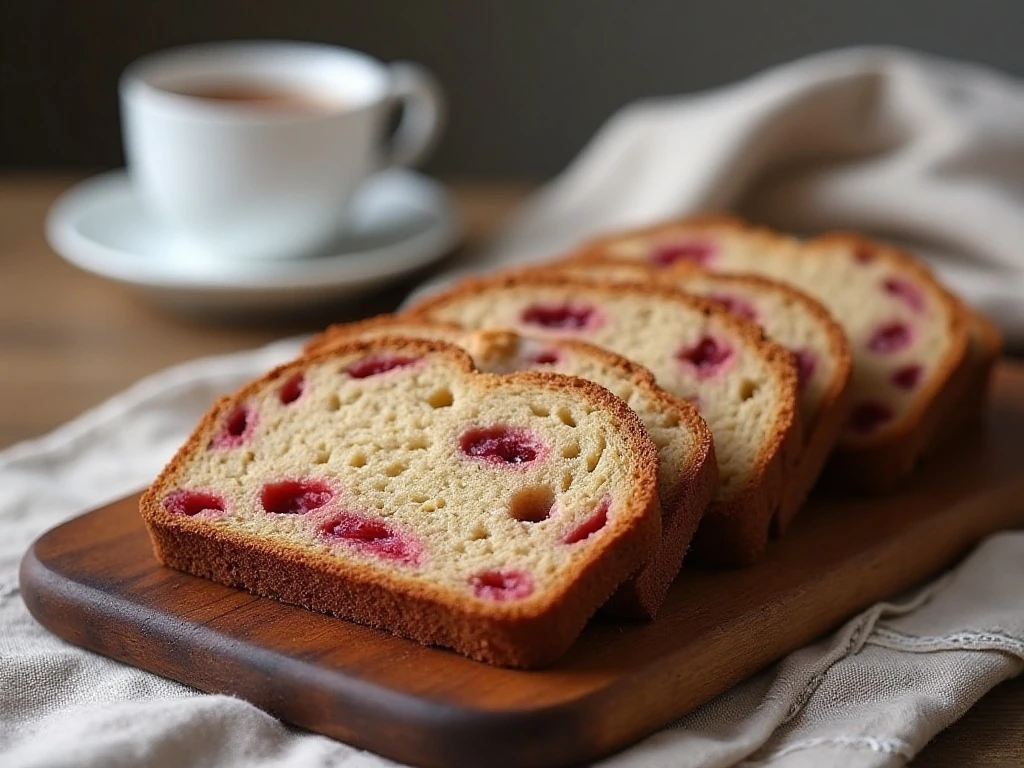
Cool the loaf completely before wrapping it. Store it in an airtight container or wrap it well, keeping it at room temperature for short-term serving; refrigeration is useful when you need to keep it longer.
Slice with a serrated knife using a gentle sawing motion. The tender crumb and juicy rhubarb pieces are easiest to cut cleanly once the loaf has fully cooled, and the topping is less likely to crumble away.
Serve slices plain, or add butter, cream cheese, or a small spoonful of lightly sweetened yogurt. The bread is also delicious warmed briefly, although very hot slices may seem softer because the fruit’s moisture has not settled.
If you enjoy unusual sweet loaves, our peanut butter bread offers a completely different flavor profile while using the same cozy quick-bread approach. For a savory baking project, Georgian cheese bread is a rich option for another day.
One-Bowl Rustic Rhubarb Bread
Ingredients
Method
- Heat the oven to 350°F (175°C). Grease a 9 x 5-inch loaf pan and line the bottom with parchment paper if desired.
- In one large bowl, whisk together the all-purpose flour, baking soda, and salt.
- Add the brown sugar, room-temperature egg, buttermilk, vegetable oil, and vanilla. Stir only until the dry ingredients are moistened; do not overmix.
- Fold in the finely chopped rhubarb. If using frozen rhubarb, thaw it first and drain away excess liquid.
- Scrape the batter into the prepared loaf pan and smooth the surface gently.
- For the topping, mix the granulated sugar, chopped nuts, softened butter, and cinnamon until crumbly. Sprinkle the mixture evenly over the batter.
- Bake for 55–65 minutes, or until a skewer inserted in the center comes out clean or with only a few moist crumbs.
- Cool the loaf in the pan for about 10–15 minutes, then transfer it to a wire rack. Cool completely before slicing.
Notes
Final Thoughts
This one-bowl rustic rhubarb bread is a dependable way to turn fresh rhubarb into a tender homemade loaf. Buttermilk, brown sugar, and oil keep the crumb soft, while the fruit brings a bright tart contrast that prevents the bread from tasting overly sweet.
Give the batter a gentle stir, use a 9 x 5-inch pan, and allow the finished loaf to cool completely before slicing. With its optional cinnamon-walnut topping and simple preparation, this is the kind of recipe that belongs in your spring and early-summer baking rotation.
Make it for a weekend breakfast, wrap slices for a picnic, or serve it with coffee when friends visit. One bowl, a handful of everyday ingredients, and fresh rhubarb are all you need for a fragrant loaf with rustic charm.