Authentic German red cabbage, known as Rotkohl or Blaukraut, is made by slowly braising finely sliced red cabbage with onion, tart-sweet apples, vinegar, sugar, and warm spices. This traditional sweet-and-sour side dish takes about 20–25 minutes to prepare and 60–90 minutes to simmer, yielding approximately 6 servings.
The finished cabbage is tender without being mushy, deeply ruby-purple, gently sweet, and pleasantly tangy. A splash of red wine or apple juice, bay leaves, cloves, and optional caraway or cinnamon give this classic German side dish its comforting character, while making it a day ahead creates an even rounder flavor.
Jump to RecipeWhy You’ll Love This Recipe
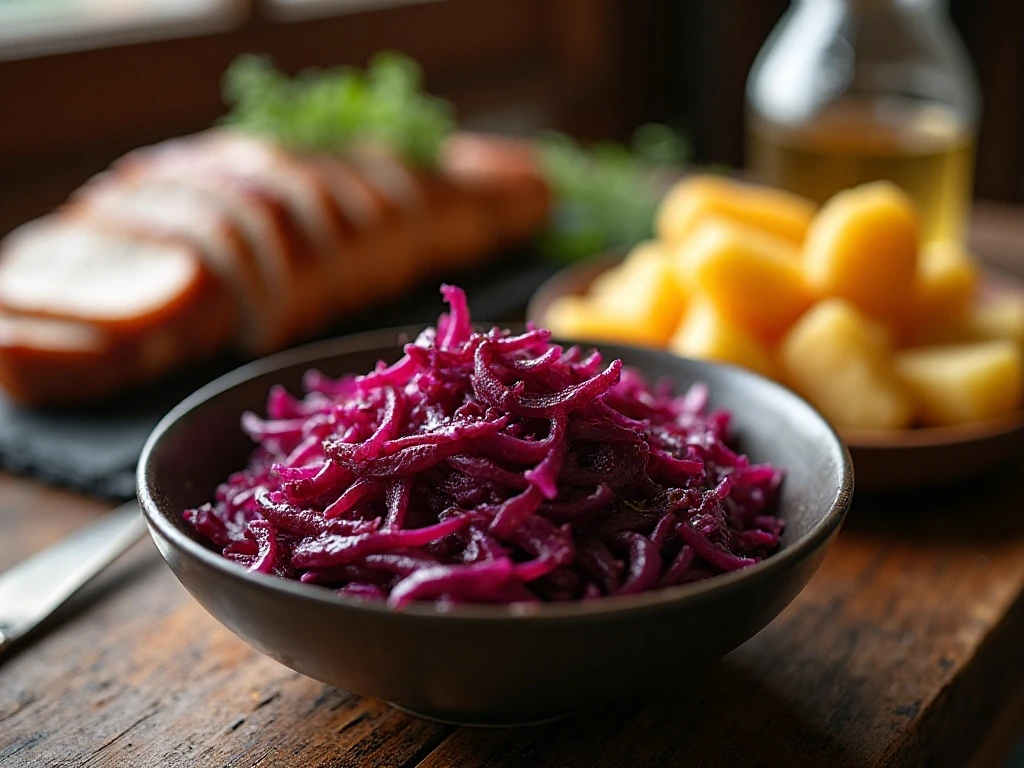
Rotkohl is one of those side dishes that brings color, fragrance, and balance to a hearty meal. The cabbage softens slowly while apples provide natural fruitiness, vinegar adds a bright tang, and sugar rounds out the sharper flavors.
This recipe is comforting enough for a Sunday roast yet simple enough for a weeknight dinner. It also makes a generous pot, so you can prepare it ahead and enjoy the leftovers with sausages, pork, beef, or roast poultry.
The most important quality is balance. Traditional German red cabbage should taste sweet and sour at the same time, with enough seasoning to complement the main dish without overwhelming it.
Ingredients You’ll Need
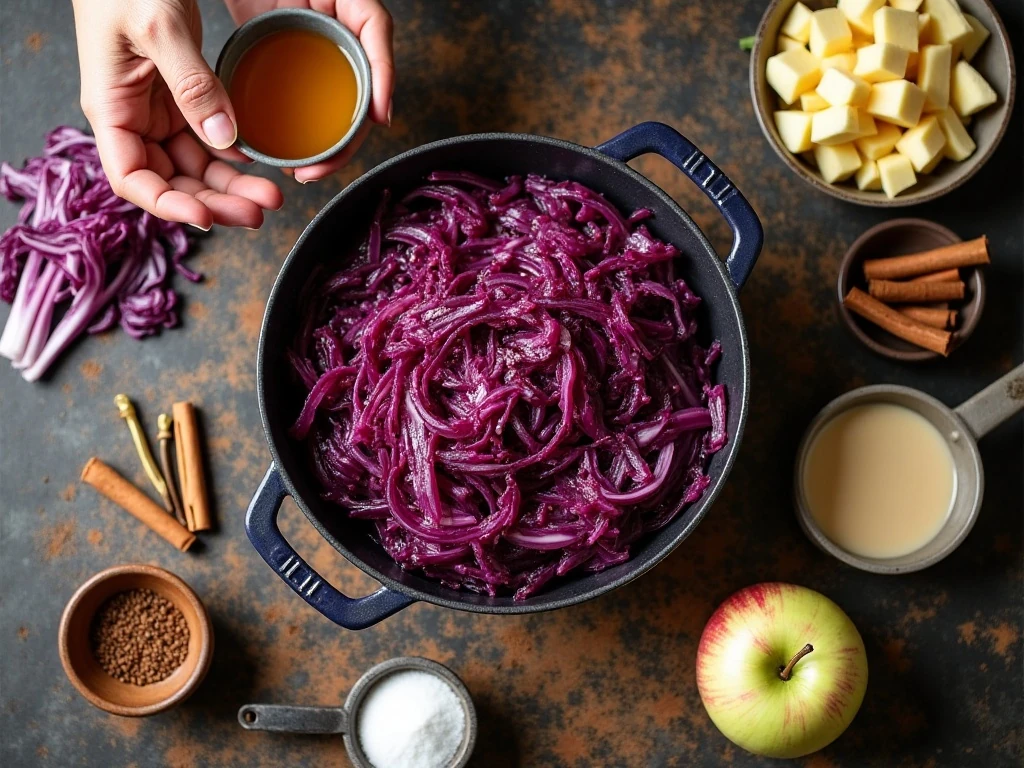
Choose a firm, heavy red cabbage with tightly packed leaves. Slice it as thinly as possible so every strand becomes tender and absorbs the cooking liquid.
- Red cabbage: One medium head, about 2–2½ pounds, provides roughly 6 servings.
- Apples: Tart-sweet apples add moisture and a naturally fruity note; they may be diced for visible pieces or grated for a smoother texture.
- Onion and cooking fat: Onion forms the savory base, while butter, lard, or neutral oil carries the flavors through the cabbage. Lard is especially traditional.
- Vinegar and liquid: Red wine vinegar gives Rotkohl its signature tang and helps protect its deep red-purple color. Use dry red wine, apple juice, water, or a combination for the remaining liquid.
- Seasonings: Sugar, salt, bay leaves, and cloves are the core flavorings. Caraway and cinnamon are optional regional or household variations.
Gather a large Dutch oven or heavy pot with a lid. The raw cabbage may look like a great deal at first, but it wilts considerably during the covered simmer.
Read More: another hearty cabbage dinner
How to Make It Step-by-Step

Step 1: Prepare the cabbage by removing the loose outer leaves and cutting the head into quarters. Remove the firm white core, then slice the cabbage into very thin ribbons with a mandoline or sharp knife.
Step 2: Peel, core, and dice or grate the apples, then finely dice the onion. Keeping the vegetables ready before cooking makes it easier to add them at the proper stages without letting the pot sit unattended.
Step 3: Warm the butter, lard, or oil in a large heavy pot over medium heat. Add the onion and cook for 3–5 minutes, stirring now and then, until it is soft and translucent rather than browned.
Step 4: Add the cabbage and apples to the pot. Toss everything together for about 5 minutes, until the cabbage starts to wilt and the apples are distributed throughout the mixture.
Step 5: Pour in the red wine vinegar and dry red wine or apple juice. Add the sugar, salt, bay leaves, cloves, and any caraway seeds or cinnamon you are using, then stir to combine.
Step 6: Add about ½ cup of water or unsalted stock. Cover the pot, reduce the heat to low, and simmer gently for 60–90 minutes, stirring occasionally so the bottom does not catch.
Step 7: Check the texture near the end of cooking. The cabbage should be very tender and glossy but still retain enough structure to look like ribbons; add a small splash of liquid if the pot looks dry.
Step 8: Remove the bay leaves, cloves, and cinnamon stick before serving. Taste carefully, then adjust the sweet-and-sour balance with extra vinegar for brightness, sugar or apple jelly for sweetness, and salt as needed.
Step 9: Serve the Rotkohl warm, or cool it and refrigerate it overnight. Reheat gently in a covered pot, stirring occasionally, until hot throughout.
Pro Tips for Deep Flavor and Color
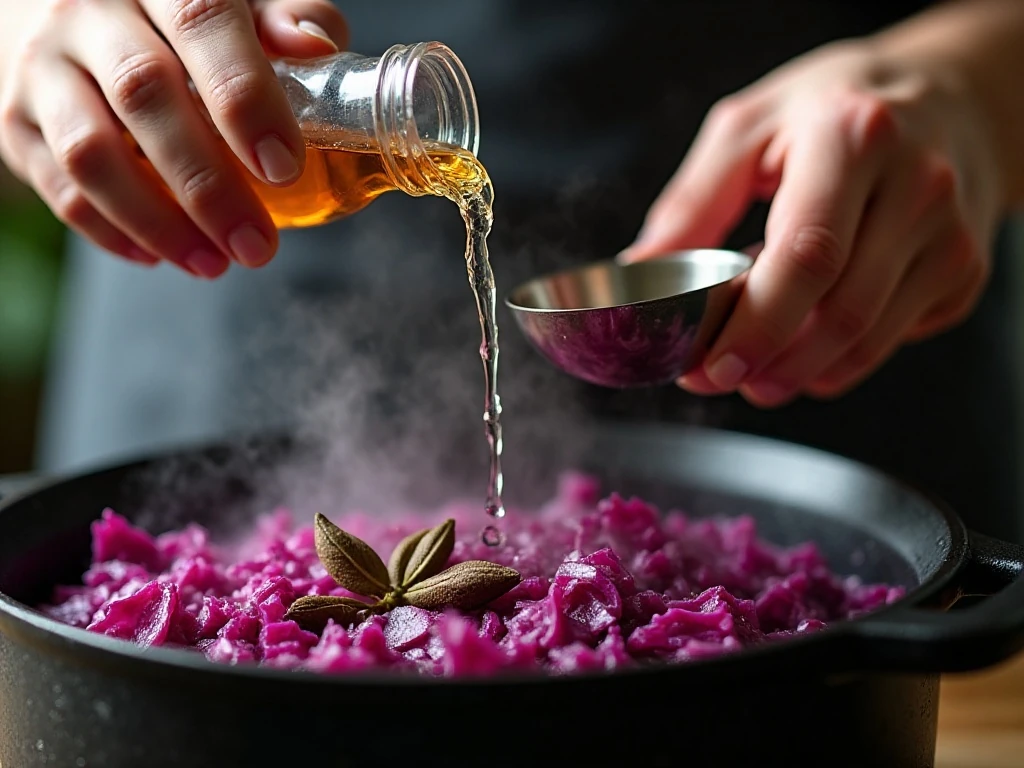
Add the vinegar early rather than waiting until the end. Its acidity helps the cabbage retain its beautiful deep red-purple color while also building the characteristic tang into every bite.
Keep the heat low once the liquid begins to simmer. A gentle braise softens the cabbage evenly, while a vigorous boil can evaporate the liquid too quickly and leave the outer strands overcooked before the center is tender.
Use a light hand with the optional spices. Cloves are powerful, and cinnamon can quickly make the dish taste dessert-like, so keep both measured and remove them before serving.
For a more polished texture, grate one apple and dice the other. The grated apple melts into the sauce, while the diced apple leaves tender fruit pieces throughout the cabbage.
For another cabbage preparation with a very different flavor profile, compare this dish with our Southern bacon fried cabbage.
What to Serve with Rotkohl
German red cabbage is a natural partner for roasted meats and sausages. Spoon it beside pork roast, bratwurst, roast duck, beef, or a holiday dinner featuring rich gravy, where its acidity helps balance every savory bite.
Serve it with boiled or roasted potatoes, potato dumplings, spaetzle, or buttered noodles to soak up the sweet-tart juices. A thick slice of crusty bread is also welcome at the table.
If you are planning a larger gathering, a colorful appetizer spread can begin the meal nicely; our snack board ideas offer inspiration for an easy starter.
For dessert, the warm spices and fruit notes pair especially well with a rich chocolate treat such as these cheesecake brownies.
The Essential Cabbage Cookbook
Love cabbage? Discover 100 comforting recipes.
Keep the inspiration going with classic cabbage sides, sausage suppers, soups, meatless meals, cabbage rolls and oven bakes. Every recipe includes measured ingredients, servings, cooking times and step-by-step instructions.
117-page digital PDF · Read on your phone, tablet or computer.
Get the Cabbage Cookbook →One-time purchase. Private PDF access by email after successful payment.
Storage & Reheating
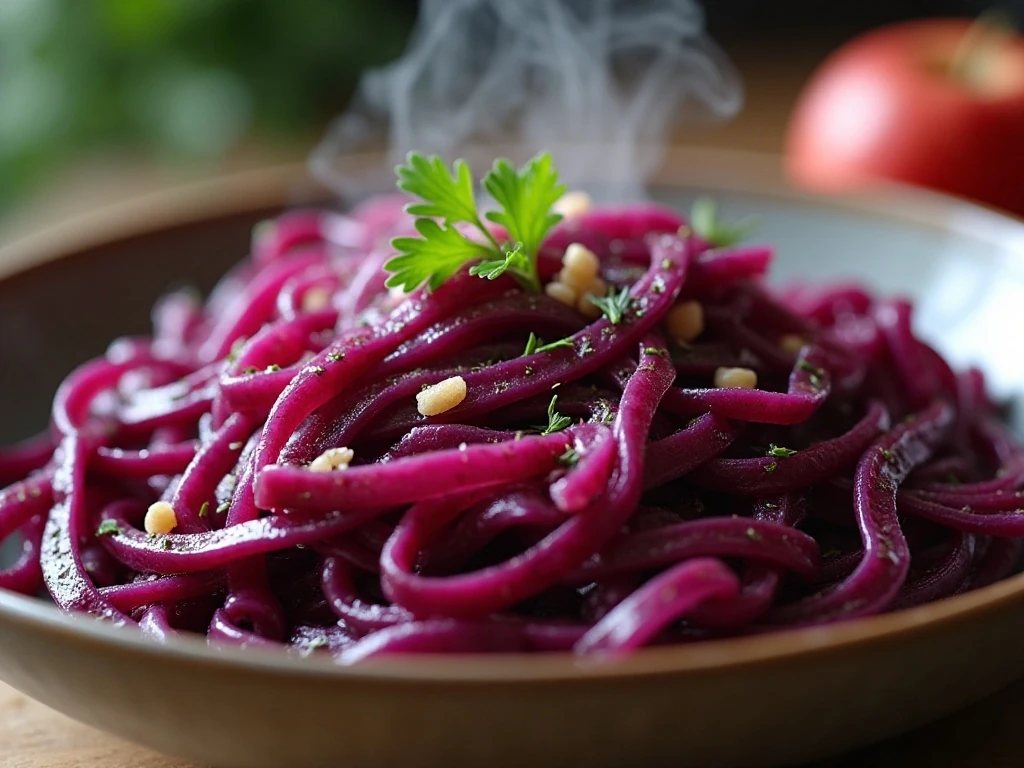
Cool leftover Rotkohl promptly, transfer it to a covered container, and refrigerate it. The flavor usually becomes deeper and more rounded after resting overnight, which is why many German cooks intentionally prepare it a day ahead.
Reheat the cabbage gently in a covered saucepan over low heat, stirring from time to time. If it seems dry, add a small splash of water, apple juice, or unsalted stock rather than extra vinegar at the start.
Taste again after reheating because the cabbage may absorb some of its seasoning while chilled. A final pinch of sugar, a little salt, or a few drops of vinegar can restore the balance just before serving.
When you want a bread accompaniment for the meal, try our versatile yeast bread dough for a warm homemade loaf or rolls.
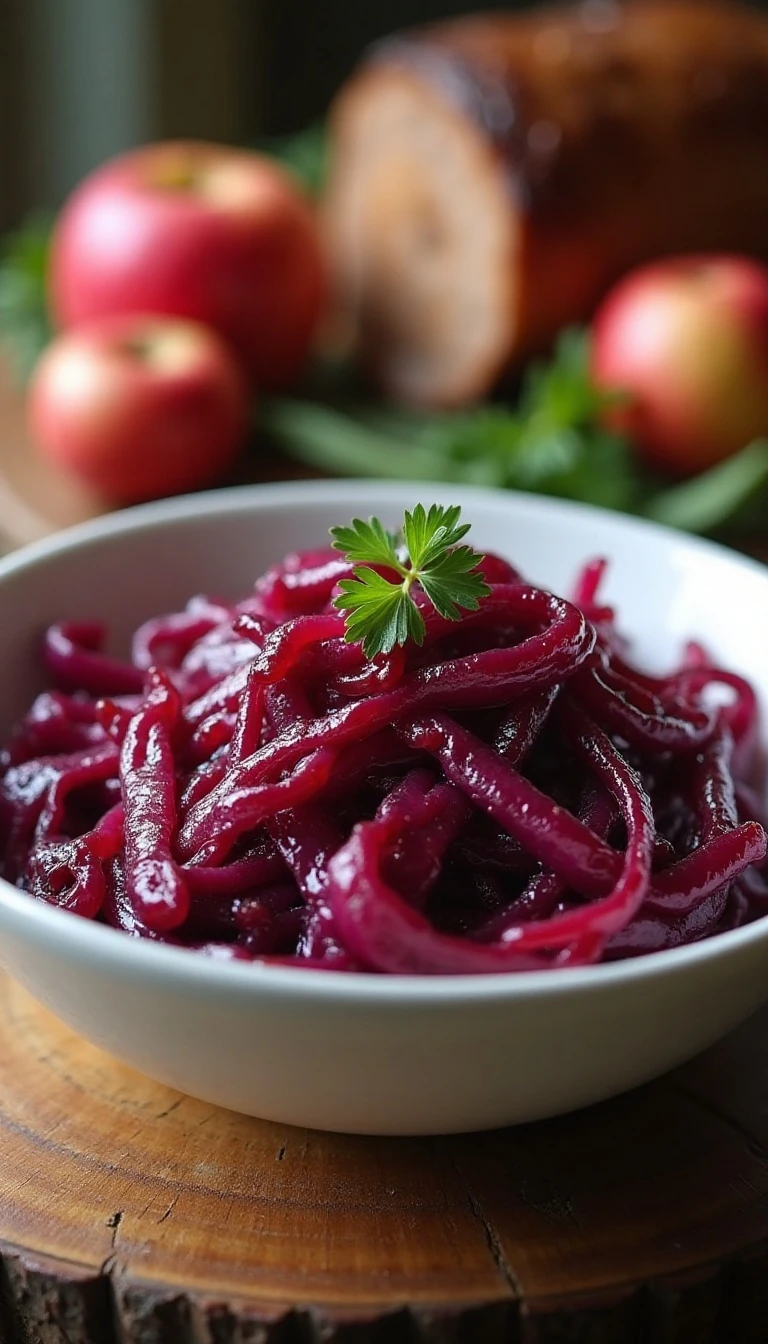
Authentic German Red Cabbage (Rotkohl)
Ingredients
Method
- Remove the outer cabbage leaves, quarter the cabbage, cut out the core, and slice the quarters very thinly. A mandoline creates the fine, traditional Rotkohl texture, but a sharp chef’s knife also works.
- Heat the butter, lard, or neutral oil in a large heavy pot or Dutch oven over medium heat. Add the diced onion and cook for 3–5 minutes, stirring occasionally, until softened but not browned.
- Add the sliced cabbage and prepared apples. Toss for about 5 minutes, allowing the cabbage to begin wilting and coating the onion mixture.
- Stir in the vinegar, red wine or apple juice, sugar, salt, bay leaves, cloves, and optional caraway seeds or cinnamon stick. Add the water or stock and mix well.
- Cover the pot and simmer gently over low heat for 60–90 minutes, stirring occasionally. Add a small amount of water or stock if the cabbage becomes dry before it turns tender.
- When the cabbage is very tender but not mushy, remove the bay leaves, cloves, and cinnamon stick. Taste and adjust with more vinegar, sugar or apple jelly, and salt as needed.
- Serve warm immediately, or cool and refrigerate overnight for deeper flavor. Reheat gently before serving, adding a spoonful of water if necessary.
Notes
Final Thoughts
Authentic German Rotkohl is a simple dish with remarkable depth. Thinly sliced cabbage, apples, onion, vinegar, sugar, and a few classic spices become tender and glossy after a slow covered simmer.
Use the sweet-and-sour flavor as your guide rather than treating the measurements as unchangeable. Apples vary in tartness, cabbage heads vary in size, and the ideal finish may call for a little more vinegar, sugar, or salt at the end.
For the best result, make this red cabbage ahead whenever possible and reheat it gently. That extra resting time gives the flavors a chance to mingle, making this traditional side dish even more delicious beside your favorite German-style main course.