This easy salmon pasta recipe makes a creamy, satisfying dinner for four in about 30 to 40 minutes. Tender bite-size salmon is cooked with garlic, lemon, heavy cream, Parmesan, and pasta water to create a silky sauce that clings beautifully to linguine, spaghetti, penne, or rigatoni.
The finished pasta is rich but bright, with fresh lemon balancing the cream and savory Parmesan. It is a practical weeknight meal made with familiar ingredients, and you can add spinach, peas, Dijon mustard, red-pepper flakes, or a splash of dry white wine when you want a little extra flavor.
Jump to RecipeWhy You’ll Love This Recipe
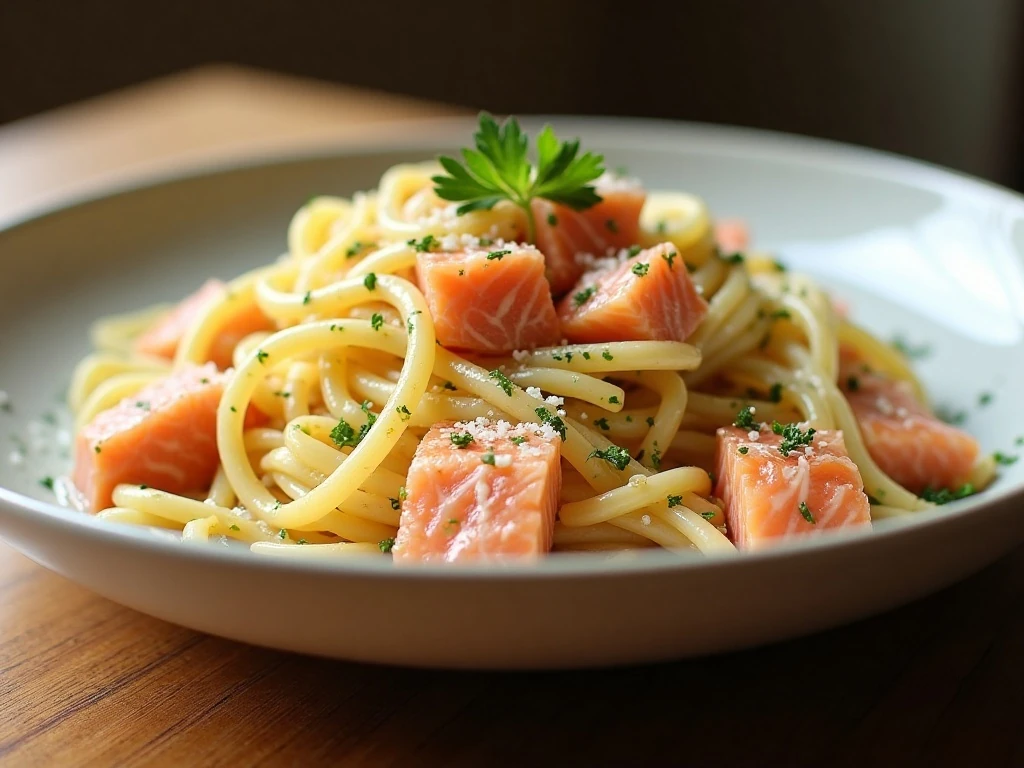
This creamy salmon pasta has the comfort of a restaurant-style dinner while relying on a short ingredient list and straightforward cooking. The salmon cooks in one skillet, the pasta boils in a nearby pot, and the sauce comes together in just a few minutes.
Lemon zest and juice keep the cream sauce from tasting heavy, while Parmesan adds savory depth and a lightly nutty finish. Fresh parsley or dill brings color and a clean herbal note to every forkful.
It is also flexible enough for different kitchens. Use linguine for long, sauce-catching strands, or choose penne and rigatoni for sturdy pieces that hold the creamy sauce inside their ridges.
If you enjoy creamy pasta dinners, you may also like this creamy lemon garlic pasta with chicken for another comforting skillet meal.
Ingredients You’ll Need
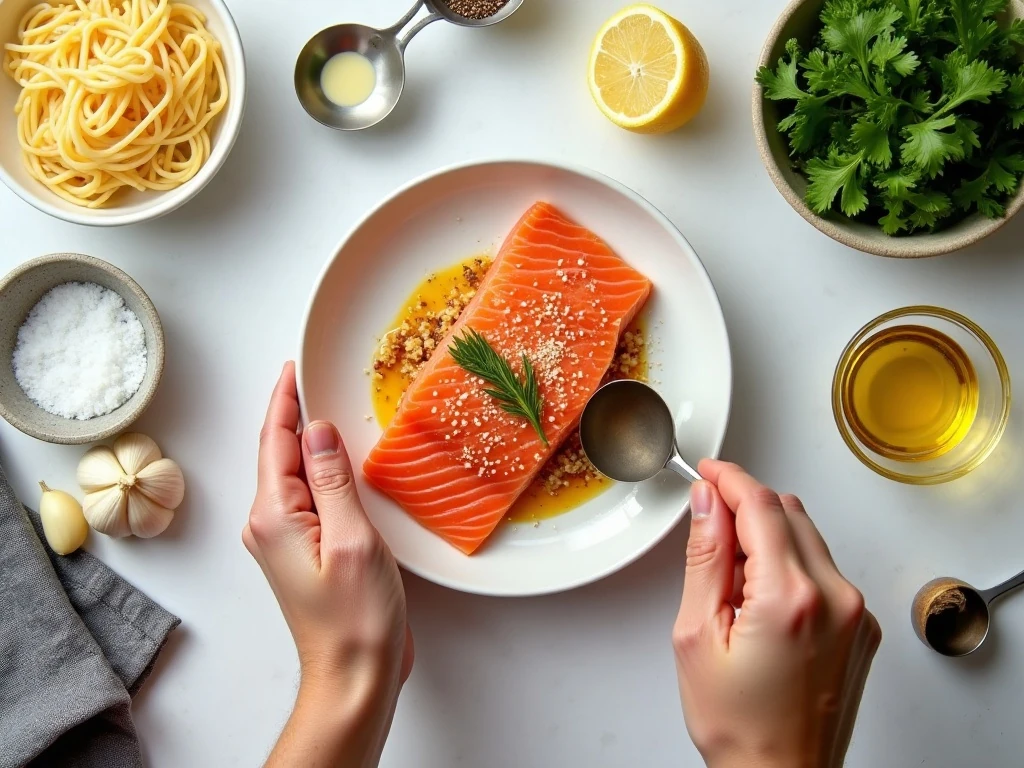
Fresh, skinless salmon fillet is the star of this recipe. Cut it into bite-size pieces so it cooks quickly and can be folded through the pasta without requiring a separate knife at the table.
- Pasta: Use 12 ounces of linguine, spaghetti, penne, or rigatoni.
- Salmon: One pound of skinless fillet, cut into pieces.
- Flavor base: Olive oil or unsalted butter, garlic, and an optional chopped shallot.
- Cream sauce: One cup of heavy cream, Parmesan, lemon zest, lemon juice, salt, and black pepper.
- Fresh finish: Two tablespoons of chopped parsley or dill.
- Thinning liquid: Up to 1/2 cup reserved pasta water, added as needed.
Optional additions include two cups of baby spinach, 1 teaspoon Dijon mustard, a pinch of red-pepper flakes, 1/2 cup frozen peas, or 1/4 cup dry white wine. If using wine, add it before the cream and let it cook briefly before continuing with the sauce.
For a simple bread side, serve dinner with our easy beer bread. Its tender crumb is especially good for catching the last spoonfuls of lemon Parmesan sauce.
How to Make It Step-by-Step

Step 1: Bring a large pot of generously salted water to a boil. Cook the pasta according to the package directions until just al dente, then reserve at least 1/2 cup of the cooking water before draining.
Step 2: While the pasta cooks, season the bite-size salmon pieces with a little of the salt and black pepper. Heat the olive oil or butter in a large skillet over medium heat and cook the salmon for approximately 5 to 7 minutes total, turning gently, until just opaque and easily flaked.
Step 3: Transfer the cooked salmon to a plate so it does not continue cooking in the hot pan. Add the chopped shallot to the skillet if using and cook for 2 minutes, stirring occasionally.
Step 4: Add the minced garlic and cook for 30 to 60 seconds. Keep the heat moderate and watch closely because browned garlic can become bitter.
Step 5: Pour the heavy cream into the skillet and add the lemon zest, remaining salt, pepper, and any Dijon mustard or red-pepper flakes. Simmer gently for 2 to 3 minutes, but do not let the cream boil vigorously.
Step 6: Stir in the finely grated Parmesan until it blends into the cream. Loosen the sauce with reserved pasta water, adding it one or two tablespoons at a time until the mixture looks smooth and coats a spoon.
Step 7: Add the drained pasta to the skillet and toss until every strand or piece is covered. The pasta water starch helps the sauce cling instead of pooling at the bottom of the pan.
Step 8: Gently fold the salmon into the pasta along with the lemon juice and chopped herbs. If using baby spinach, add it now and cook for 1 to 2 minutes, just until wilted.
Step 9: Taste the finished pasta and adjust it with more lemon, Parmesan, herbs, salt, or pepper as needed. Serve immediately while the sauce is warm and glossy.
Chef’s Tips for the Best Salmon Pasta
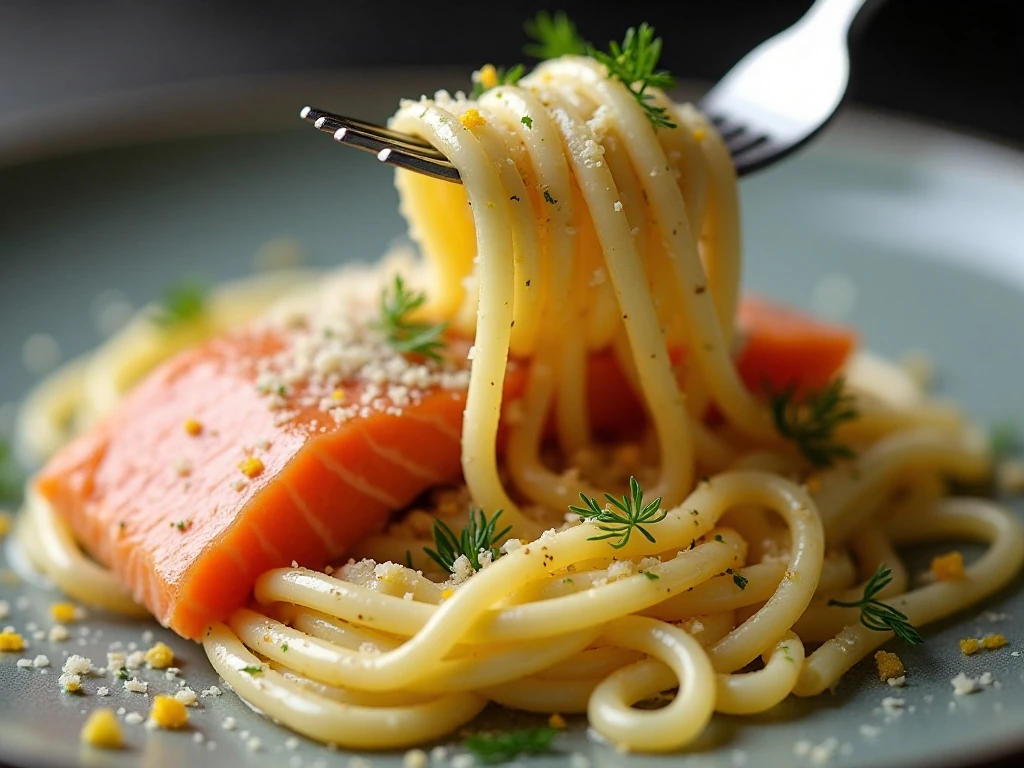
Do not skip the reserved pasta water. Its natural starch helps the cream and Parmesan form a smoother sauce, and a small addition can bring the consistency back if it thickens too much.
Watch the salmon carefully as it cooks. Bite-size pieces usually need about 5 to 7 minutes total, and they should be just opaque in the center; the salmon will warm again when folded into the pasta.
Grate the Parmesan finely so it melts more readily into the warm cream. Adding it after the gentle simmer, rather than during a vigorous boil, helps keep the sauce smooth.
For a little heat, use a pinch of red-pepper flakes. For extra freshness, use dill instead of parsley, or combine the herbs with a final sprinkle of lemon zest.
For another pasta idea with bold seasoning, try our Cajun sausage pasta. It has a different flavor profile but the same cozy, skillet-dinner appeal.
Optional Variations and Serving Ideas
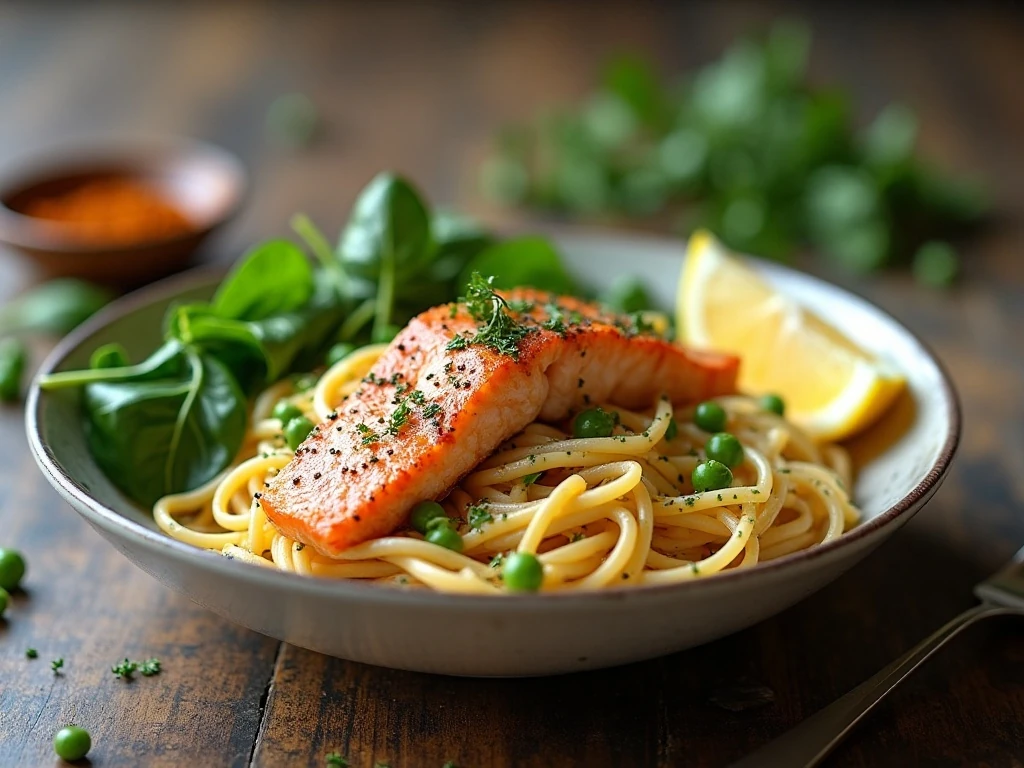
Baby spinach is an easy way to add color and a tender vegetable texture without preparing a separate side dish. Frozen peas can be stirred in for a gentle sweetness, while Dijon mustard adds a subtle tang that works well with both salmon and cream.
A splash of dry white wine can add brightness to the sauce. Pour in the 1/4 cup after cooking the garlic, allow it to cook briefly, and then add the cream as directed.
Serve the pasta with extra Parmesan, lemon wedges, and chopped parsley or dill. A crisp green salad, roasted vegetables, or simple steamed broccoli can round out the meal without competing with the delicate salmon.
For dessert, finish with our pineapple banana dessert for a cool, fruity contrast to the warm creamy pasta.
Storage and Reheating
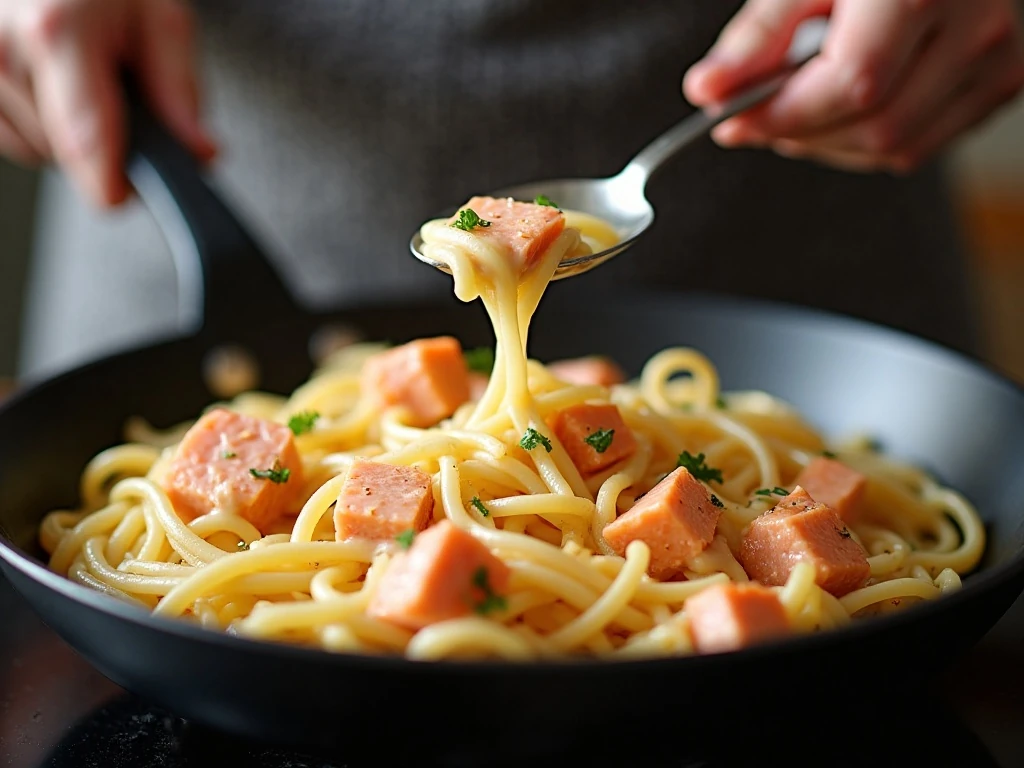
For the best texture, serve this pasta immediately, since cream sauces naturally thicken as they cool. If you have leftovers, place them in a covered container and refrigerate them promptly.
Reheat gently in a skillet over low to medium-low heat with a small splash of water or cream. Stir often and stop as soon as the pasta is hot, since high heat can dry out the salmon and cause the sauce to become overly thick.
When reheating, finish with a little lemon juice or fresh herbs to refresh the flavors. Avoid boiling the leftovers, and add Parmesan only after the sauce has warmed if you want a fresh cheesy finish.
After dinner, a seasonal sweet such as this late summer peach cake makes a lovely final course.
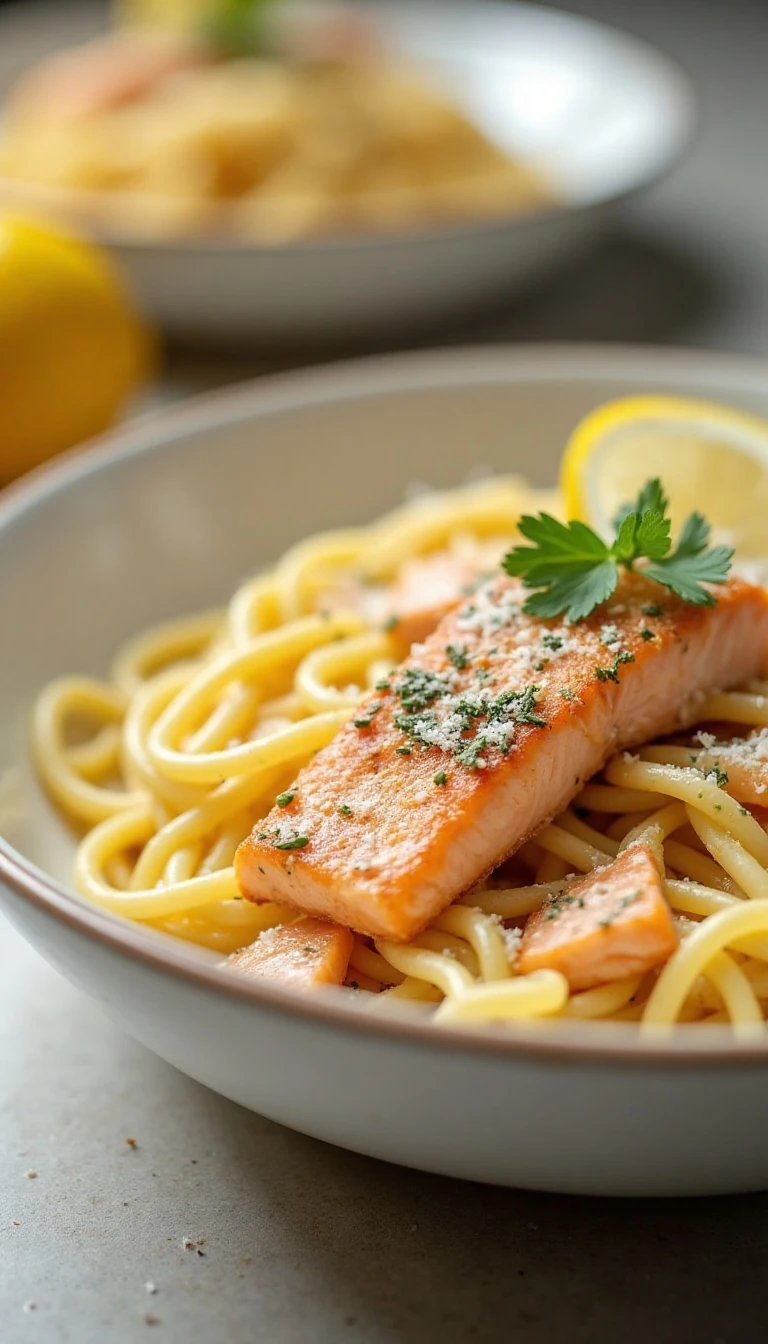
Easy Salmon Pasta Recipe
Ingredients
Method
- Bring a large pot of well-salted water to a boil and cook the pasta until just al dente according to the package directions. Reserve at least 1/2 cup of the cooking water before draining.
- Season the salmon pieces with a little of the salt and pepper. Heat the olive oil or butter in a large skillet over medium heat, then cook the salmon for about 5 to 7 minutes total, turning gently, until just opaque and easily flaked; transfer it to a plate.
- Cook the shallot in the same skillet for 2 minutes if using. Add the minced garlic and cook for 30 to 60 seconds, taking care not to let it brown.
- Pour in the cream, then add lemon zest, the remaining salt and pepper, and Dijon mustard or red-pepper flakes if using. Simmer gently for 2 to 3 minutes without allowing the sauce to boil vigorously.
- Stir in the Parmesan until incorporated. Add reserved pasta water one or two tablespoons at a time until the sauce is smooth and loose enough to coat the pasta.
- Add the drained pasta and toss until coated. Fold in the salmon, lemon juice, and herbs, adding spinach if using and cooking for 1 to 2 minutes until it wilts.
- Taste the pasta and adjust the seasoning with additional lemon, salt, pepper, Parmesan, or herbs. Serve immediately while the sauce is glossy and the salmon is warm.
Notes
Final Thoughts
This easy salmon pasta recipe is a dependable way to put a flavorful fish dinner on the table in about 30 to 40 minutes. Tender salmon, garlic, cream, Parmesan, and lemon create a sauce that feels special without demanding complicated techniques.
Keep the salmon just opaque, reserve the starchy pasta water, and add the lemon at the end for the brightest flavor. Once you have the basic method, you can make it your own with spinach, peas, mustard, herbs, or a pinch of red-pepper flakes.
Serve it hot with extra Parmesan and herbs, then enjoy every creamy, lemony bite while the sauce is at its smoothest.
13 thoughts on “Easy Salmon Pasta Recipe with Creamy Lemon Parmesan Sauce”