This creamy cauliflower pasta recipe turns tender cauliflower, garlic-infused olive oil, Parmesan, and starchy pasta water into a smooth, comforting sauce for four people. Ready in about 40–45 minutes, it is a satisfying vegetarian dinner made with 12 ounces of pasta and a modest amount of cheese instead of a large quantity of cream.
The finished pasta is silky, savory, gently garlicky, and brightened with optional lemon juice. Cook the cauliflower until completely tender, reserve plenty of pasta water, and you will have a sauce that clings beautifully to spaghetti, linguine, or penne.
Jump to RecipeWhy You’ll Love This Recipe
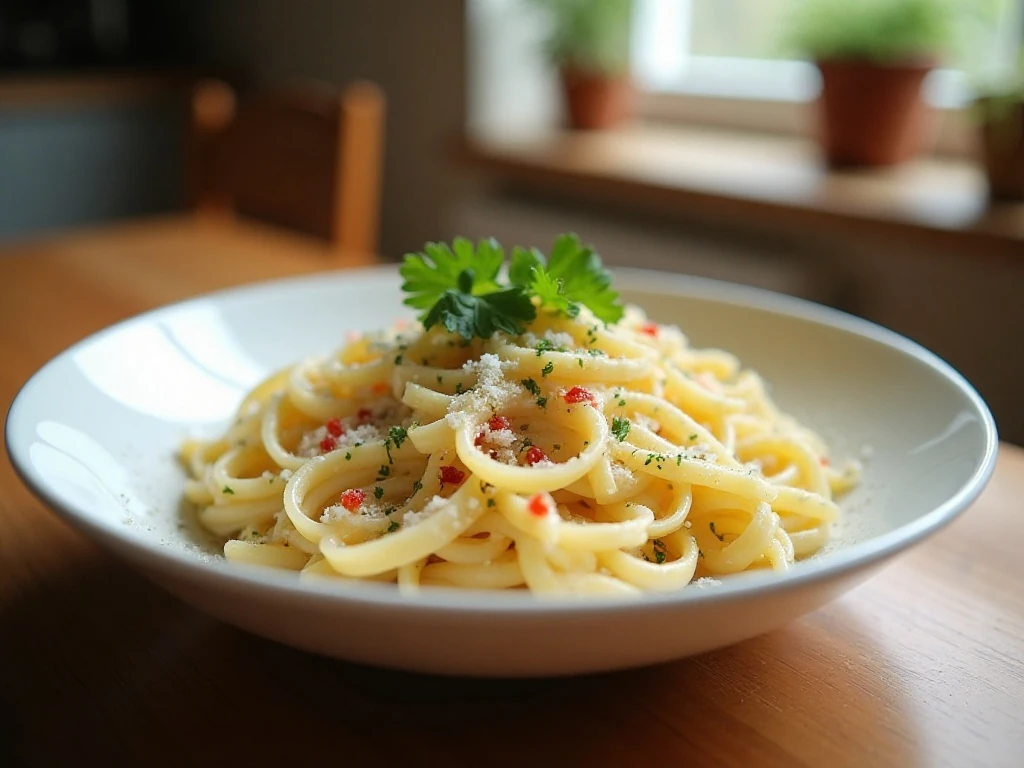
This creamy cauliflower pasta brings classic comfort-food appeal to the dinner table while keeping the ingredient list practical. The sauce gets its body from blended cauliflower, olive oil, Parmesan, and pasta water, so it tastes rich without depending on a large amount of cream.
Cauliflower has a mild flavor that welcomes garlic, black pepper, Parmesan, and lemon. Once blended, it becomes a velvety coating that feels luxurious with every forkful while still allowing the pasta to remain the star of the plate.
- Weeknight friendly: The recipe takes about 15 minutes to prepare and 25–30 minutes to cook.
- Vegetarian: It is a meatless main dish that feels hearty and complete.
- Flexible: Use spaghetti, linguine, or penne depending on what you have in the pantry.
- Easy to customize: Red pepper flakes, lemon juice, parsley, and extra Parmesan can be adjusted at the table.
If you enjoy finding creative ways to serve cauliflower, our roasted cauliflower tacos are another flavorful meatless dinner idea.
Ingredients You’ll Need
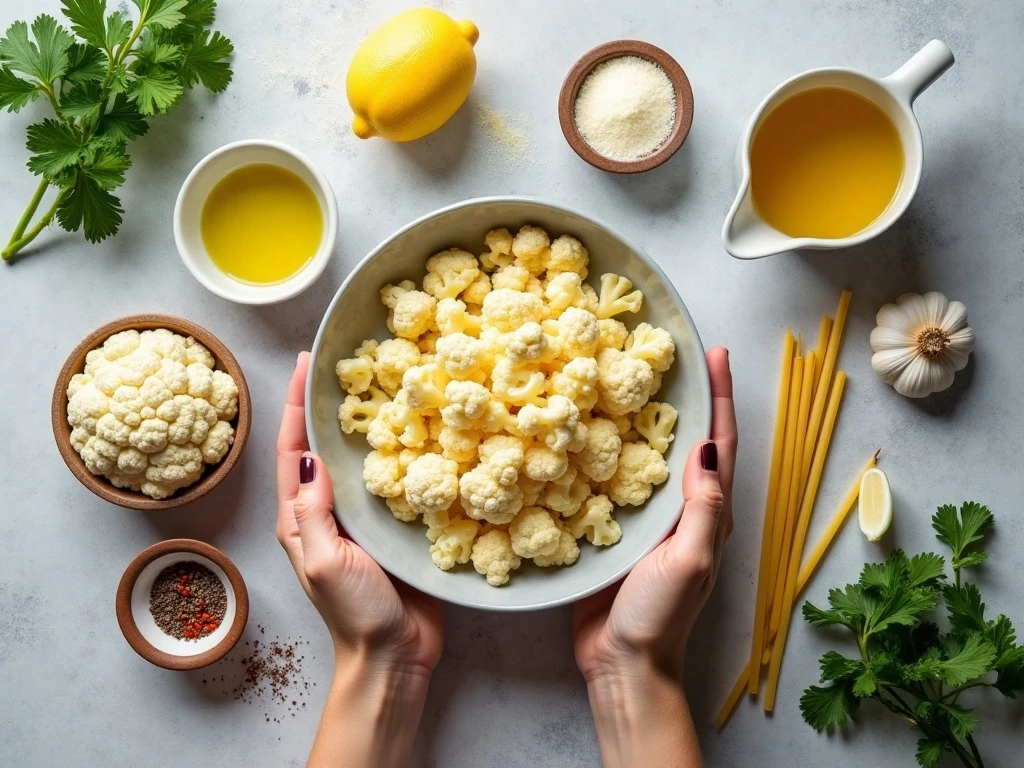
Start with one medium head of cauliflower weighing about 1½–2 pounds. Cut it into evenly sized florets so the pieces cook at the same rate and become tender enough to blend into a smooth purée.
Choose 12 ounces of spaghetti, linguine, or penne. Long noodles create an especially satisfying twirl, while penne captures the sauce inside its ridges and makes every bite creamy.
The sauce relies on three tablespoons of extra-virgin olive oil, four garlic cloves, and ½ cup of finely grated Parmesan. Two tablespoons of the oil flavor the garlic, and the final tablespoon is tossed with the pasta at the end.
You will also need ½ teaspoon kosher salt, ¼ teaspoon freshly ground black pepper, and ½ cup reserved pasta water. Keep at least 1 cup of pasta water before draining because you may need more to adjust the consistency.
Fresh lemon juice and parsley are optional, but both add a welcome contrast to the creamy sauce. A small pinch of red pepper flakes gives the pasta gentle heat without overpowering the cauliflower.
For another comforting cauliflower-centered dish, you can also serve this pasta alongside a bowl of tomato soup with cauliflower when the weather calls for a cozy meal.
How to Make It Step-by-Step

Step 1: Bring a large pot of well-salted water to a boil. Add the cauliflower florets and cook for 8–10 minutes, checking that they are completely tender when pierced with a fork. Use a slotted spoon to transfer the cauliflower to a blender or food processor, leaving the seasoned water in the pot.
Step 2: Add the pasta to the same pot of boiling water and cook according to the package directions until al dente. Before draining, scoop out at least 1 cup of the cooking water and set it aside. That cloudy, starchy liquid is an important part of the sauce, so do not skip this step.
Step 3: While the pasta cooks, warm 2 tablespoons of olive oil in a skillet over medium-low heat. Add the sliced or minced garlic and optional red pepper flakes, then cook for 1–2 minutes until the garlic smells fragrant. Keep the heat moderate because deeply browned garlic can taste bitter in the delicate sauce.
Step 4: Pour the warm garlic oil into the blender or food processor with the cooked cauliflower. Add the Parmesan, kosher salt, black pepper, optional lemon juice, and ½ cup of pasta water. Blend until smooth and creamy, stopping to scrape down the sides if needed.
Step 5: Check the sauce consistency before combining it with the pasta. If it is too thick, add pasta water 1–2 tablespoons at a time and blend again until the purée is silky but still substantial enough to coat the noodles.
Step 6: Drain the pasta and return it to the pot or transfer it to the skillet. Add the cauliflower sauce and remaining 1 tablespoon olive oil, then toss over gentle heat for 1–2 minutes. Add another splash of pasta water if the sauce tightens, stirring until it looks glossy and evenly distributed.
Step 7: Serve the pasta immediately in warm bowls. Finish each portion with extra Parmesan, black pepper, optional red pepper flakes, and chopped parsley for color and freshness.
Pro Tips for the Silkiest Sauce

The most important detail is cooking the cauliflower until it is completely tender. Slightly firm florets may leave small bits in the purée and produce a grainy texture instead of the smooth sauce this recipe is known for.
Reserve more pasta water than you think you need. The starch helps loosen the cauliflower mixture, gives the sauce a glossy finish, and helps it cling to the pasta without requiring extra cream.
- Grate the Parmesan finely: Smaller shreds melt more readily into the warm purée.
- Blend while the ingredients are warm: Warm cauliflower and garlic oil combine more easily than chilled ingredients.
- Add liquid gradually: It is easier to thin a thick sauce than to correct one that is too loose.
- Toss gently: A minute or two over low heat is enough to bring the sauce and pasta together.
- Taste before serving: Add a little more salt, lemon juice, or black pepper if the flavors need definition.
For a richer version, replace ¼ cup of the pasta water with heavy cream or add 2 tablespoons of cream cheese. The standard recipe remains pleasantly dairy-light by depending mainly on cauliflower, olive oil, Parmesan, and starchy water for its creamy texture.
If you want a second pasta option for your weekly dinner rotation, try this fresh bruschetta pasta with tomatoes, herbs, and bright Mediterranean flavors.
Serving Suggestions
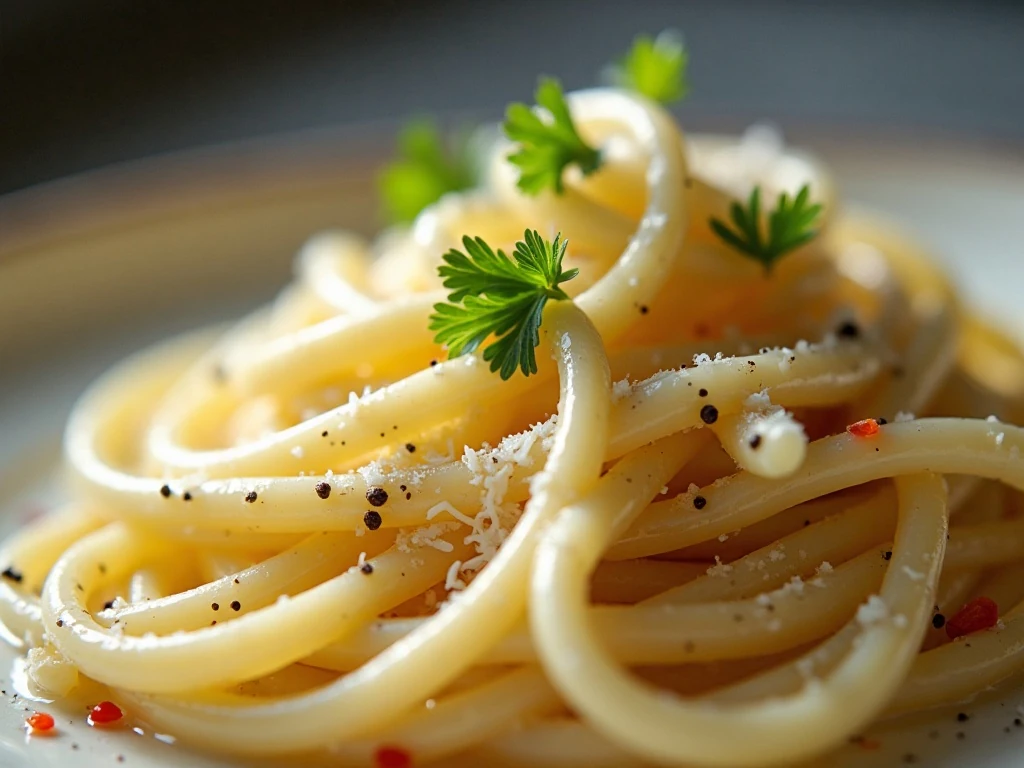
This pasta is best served immediately while the sauce is warm and glossy. Spoon it into shallow bowls and add Parmesan at the table so each person can choose how cheesy to make their serving.
A crisp green salad, roasted vegetables, or warm crusty bread makes a simple companion. The bread is especially useful for catching any remaining garlic-and-Parmesan sauce at the bottom of the bowl.
For a colorful finish, sprinkle on the parsley and a few red pepper flakes. A final twist of black pepper adds aroma and makes the pale sauce look as inviting as it tastes.
Because the pasta is substantial, a light dessert works well afterward. Our chocolate chip almond biscotti pairs nicely with coffee or tea for a crisp ending.
Storage and Reheating
Store leftover pasta in an airtight container in the refrigerator. The sauce will thicken as it cools, so plan to loosen it with a small splash of water when reheating.
Reheat gently in a skillet over low heat, stirring often and adding water a little at a time until the sauce becomes creamy again. Avoid high heat, which can make the Parmesan sauce tighten and cause the pasta to become dry.
- Refrigerate leftovers promptly.
- Use gentle heat when reheating.
- Add liquid gradually rather than all at once.
- Finish with fresh Parmesan, parsley, or black pepper before serving.
This recipe is designed for four servings, making it ideal for a family dinner or a planned lunch the next day. If you are preparing a larger Italian-style meal, our braciole roast offers a hearty option for guests who prefer a meat-centered main course.
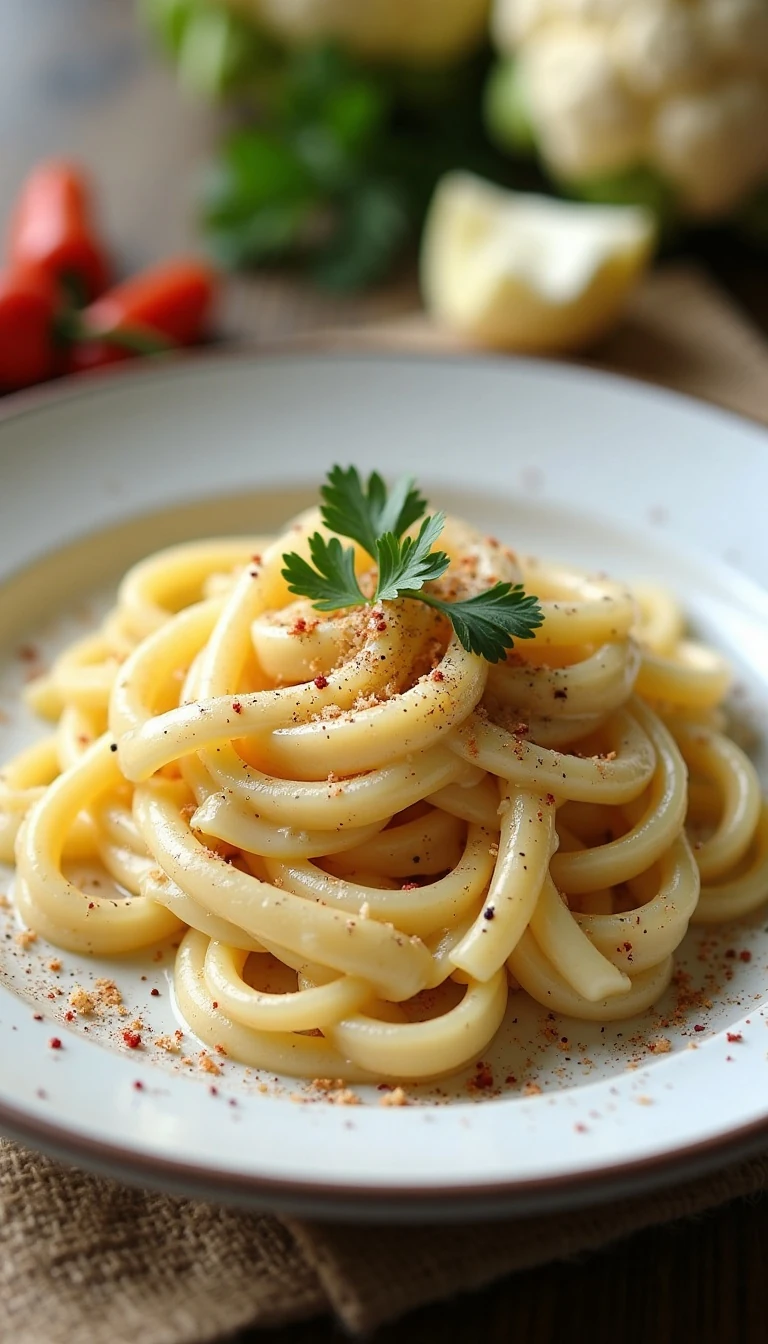
Creamy Cauliflower Pasta
Ingredients
Method
- Bring a large pot of well-salted water to a boil. Cook the cauliflower florets for 8–10 minutes, until completely tender, then transfer them to a blender or food processor with a slotted spoon.
- Cook the pasta in the same water according to the package directions until al dente. Before draining, reserve at least 1 cup of the cooking water.
- While the pasta cooks, warm 2 tablespoons of olive oil in a skillet over medium-low heat. Add the garlic and optional red pepper flakes, cooking for 1–2 minutes until fragrant without heavily browning the garlic.
- Add the garlic oil, Parmesan, salt, pepper, optional lemon juice, and ½ cup pasta water to the cooked cauliflower. Blend until smooth and creamy, adding pasta water 1–2 tablespoons at a time if the sauce is too thick.
- Return the drained pasta to the pot or skillet and toss with the cauliflower sauce and remaining 1 tablespoon olive oil. Warm gently for 1–2 minutes, adding more pasta water as needed to create a glossy sauce.
- Serve immediately with extra Parmesan, black pepper, optional red pepper flakes, and chopped parsley.
Notes
Final Thoughts
Creamy cauliflower pasta is proof that a comforting dinner does not need a heavy cream-based sauce. Properly cooked cauliflower, fragrant garlic, Parmesan, olive oil, and reserved pasta water create a smooth coating with savory depth and a fresh finish.
Keep the cauliflower tender, save plenty of cooking water, and adjust the sauce gradually as you toss. With those simple techniques, a humble head of cauliflower becomes a warm, satisfying meal that is easy enough for a weeknight and special enough to share.
Serve it hot with extra Parmesan, parsley, and black pepper, then enjoy every silky, garlicky bite.
3 thoughts on “Creamy Cauliflower Pasta Recipe: A Silky, Comforting Vegetarian Dinner”