This lemon meringue pie with a graham cracker crust twist is the answer when you want a bright, creamy, showstopping dessert without making traditional pastry dough. A buttery crust made from finely crushed graham crackers holds a smooth lemon custard, while a cloud of toasted meringue finishes every slice.
The flavor is wonderfully balanced: tangy fresh lemon cuts through the sweetness, the custard is silky and rich, and the graham cracker base adds a warm honeyed crunch. Plan for 30–40 minutes of preparation, about 8–10 minutes to bake the crust, 8–12 minutes to cook the filling, 12–15 minutes to brown the meringue, and at least 3 hours for cooling and setting.
Jump to RecipeWhy You’ll Love This Recipe

This pie brings together three textures that make a dessert memorable. The graham cracker crust is crisp and buttery, the lemon layer is soft and custardy, and the meringue is light, glossy, and gently toasted on top.
Replacing pastry with graham crackers also makes the recipe approachable for bakers who prefer not to roll dough. The crust needs only a quick mix and a short bake, yet it provides enough structure to support the generous lemon filling.
Fresh lemon juice is essential here because it gives the custard a clean, lively tang rather than a muted citrus taste. The finely grated zest adds fragrant oils that make the lemon flavor taste fuller in every bite.
If you enjoy the pairing of lemon and graham crackers in other forms, these lemon graham crumble bars make a wonderful companion dessert for a cookie tray or casual gathering.
Ingredients You’ll Need
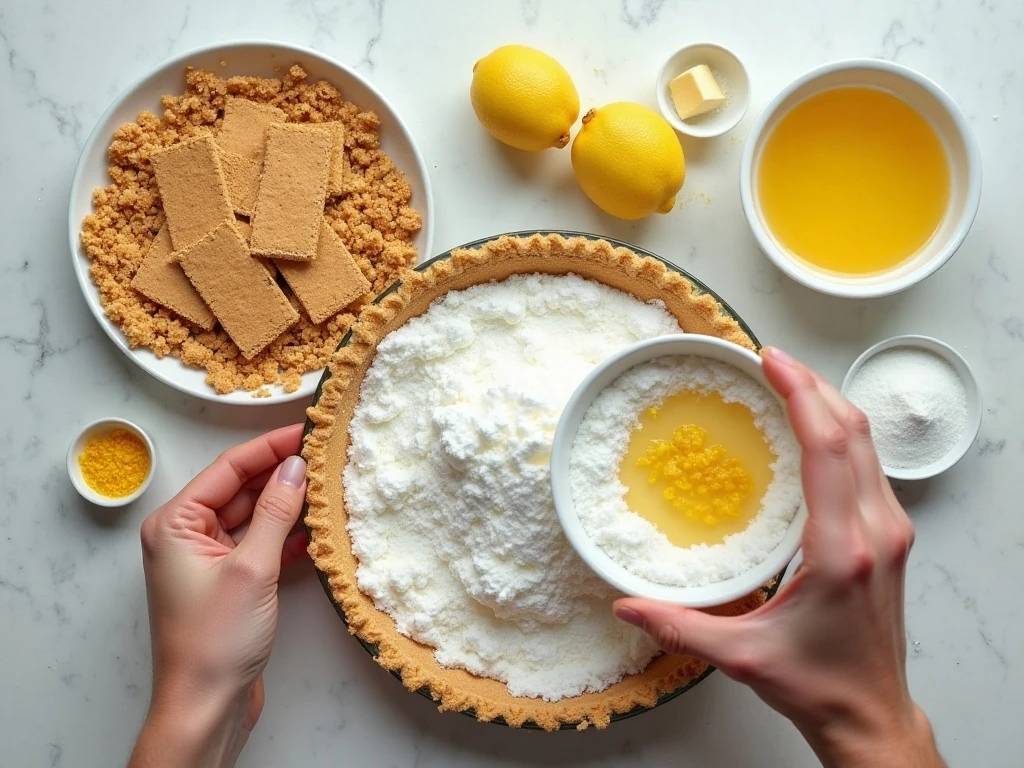
The crust uses 1 1/2 cups of finely crushed graham crackers, about 10–11 full crackers, along with 1/4 cup granulated sugar and 6 tablespoons melted unsalted butter. Add 1/8 teaspoon salt if you want a slightly more pronounced contrast with the sweet filling.
The lemon custard begins with 1 1/2 cups sugar, 1/3 cup cornstarch, 1/4 teaspoon salt, and 1 1/2 cups water. Six egg yolks provide richness and color, while 1/2 cup fresh lemon juice, 1 tablespoon lemon zest, and 2 tablespoons butter create a smooth, bright finish.
For the topping, use 4 egg whites at room temperature, 1/2 teaspoon cream of tartar, 1/2 cup granulated sugar, and 1/2 teaspoon vanilla extract if desired. Room-temperature whites whip more readily and produce a stable, voluminous meringue.
- Use fresh citrus: Choose lemons that feel heavy for their size and zest them before squeezing.
- Measure the crumbs evenly: Finely crushed crumbs create a compact crust that slices cleanly.
- Separate eggs carefully: Even a small amount of yolk can make it harder to whip the whites.
How to Make It Step-by-Step

Step 1: Heat the oven to 350°F (175°C). Mix the graham cracker crumbs, sugar, melted butter, and optional salt in a bowl until every crumb looks lightly coated, then press the mixture firmly over the bottom and slightly up the sides of a 9-inch pie plate.
Step 2: Bake the crust for 8–10 minutes, watching for a light golden color and a fragrant toasted smell. Cool it while you cook the filling, but do not refrigerate it because the lemon mixture should go into the crust while hot.
Step 3: Whisk the sugar, cornstarch, and salt in a saucepan before adding liquid. Gradually whisk in the water, starting slowly so the cornstarch dissolves smoothly without forming lumps.
Step 4: Place the saucepan over medium heat and whisk frequently as the mixture warms. Once it thickens and reaches a full boil, let it boil for about 1 minute so the cornstarch fully activates.
Step 5: Whisk the six egg yolks in a separate bowl. Slowly pour about 1 cup of the hot sugar mixture into the yolks while whisking constantly, which gently raises their temperature and helps prevent scrambling.
Step 6: Return the tempered yolk mixture to the saucepan. Cook for 2–3 minutes, whisking constantly, until the custard is thick, glossy, and smooth.
Step 7: Remove the pan from the heat and stir in the freshly squeezed lemon juice, finely grated zest, and butter. Pour the hot filling into the cooled baked crust and smooth the surface if needed.
Step 8: Put the room-temperature egg whites and cream of tartar in a clean bowl. Beat until foamy, gradually add the sugar, and continue beating until the meringue is glossy and holds stiff peaks; beat in vanilla if using.
Step 9: Spoon the meringue over the hot lemon filling and spread it to the crust edge. Press the topping firmly against the edge all around the pie, creating a seal that helps keep the meringue attached as it bakes.
Step 10: Bake at 350°F for 12–15 minutes, until the peaks and ridges are golden brown. Cool at room temperature for about 1 hour, then refrigerate for at least 2 hours so the filling can set before slicing.
Pro Tips for a Stable Pie

The graham cracker crust should be compact but not excessively thick. Press it firmly around the sides with the back of a measuring cup, keeping the layer even so it bakes at the same rate from the center to the rim.
Keep your whisk moving when cooking the cornstarch mixture and the tempered yolks. Constant whisking protects the custard from scorching and helps it become glossy rather than lumpy.
The most important meringue step is spreading it over hot filling. Hot filling helps the meringue adhere from underneath, while sealing the edges against the crust helps reduce shrinking and weeping.
For the best volume, use a clean, dry bowl and room-temperature egg whites. Add the sugar gradually rather than all at once, giving the whites time to form a stable foam before becoming glossy and firm.
For another dessert with a soft lemon center, try this lemon pudding cake. It offers a different texture but the same fresh citrus appeal.
Serving Suggestions

Serve this pie cold, after it has had at least 3 hours to cool and set. The chilled custard contrasts beautifully with the crisp graham cracker base and tender meringue, and the flavors become more defined as the pie rests.
Use a sharp, thin knife for slicing. Wipe the blade clean between cuts to keep the yellow filling, white meringue, and crumb crust looking distinct on each plate.
A small twist of lemon zest or a very thin lemon slice can decorate the finished pie, but keep garnishes restrained so the golden meringue remains the focus. This dessert is especially fitting for spring lunches, family celebrations, and holiday dinners.
For a savory lemon recipe to serve before dessert, this creamy lemon chicken with asparagus brings the same bright flavor to the main course.
Storage and Make-Ahead Advice
Cool the pie at room temperature for about 1 hour, then refrigerate it for at least 2 hours before cutting. Keep leftovers refrigerated and covered, using a pie dome or loose foil so the meringue is not pressed down.
The crust and filling benefit from chilling, but the meringue is at its prettiest and lightest soon after baking. For the cleanest presentation, make the pie earlier on the day you plan to serve it and slice it once thoroughly chilled.
Because the filling is soft and custard-based, avoid leaving the pie at room temperature for extended periods. Return any uneaten portions to the refrigerator after serving.
If you are planning a full comfort-food menu, you can balance this sweet finish with a hearty shepherd’s pie dinner. A lighter citrus side such as sweet lemon rice can also continue the lemon theme in a different course.

Lemon Meringue Pie With a Graham Cracker Crust Twist
Ingredients
Method
- Heat the oven to 350°F (175°C). Combine the graham cracker crumbs, sugar, melted butter, and optional salt, then press the mixture firmly into the bottom and slightly up the sides of a 9-inch pie plate.
- Bake the crust for 8–10 minutes, until it is lightly browned and fragrant. Set it aside to cool while preparing the lemon filling.
- Whisk the sugar, cornstarch, and salt together in a saucepan. Gradually whisk in the water until the mixture is smooth and no dry pockets remain.
- Cook the mixture over medium heat, whisking frequently, until it thickens and reaches a full boil. Continue boiling for about 1 minute.
- Whisk the egg yolks in a bowl. Slowly whisk about 1 cup of the hot sugar mixture into the yolks to temper them, then return the tempered mixture to the saucepan.
- Cook the filling for 2–3 minutes, whisking constantly, until thick and glossy. Remove the saucepan from the heat and stir in the lemon juice, lemon zest, and butter.
- Pour the hot lemon filling into the baked graham cracker crust. Keep the filling hot while preparing the meringue so the topping can adhere properly.
- Beat the egg whites and cream of tartar until foamy. Gradually add the sugar and continue beating until glossy, stiff peaks form, then beat in the vanilla if using.
- Spread the meringue over the hot lemon filling, taking it all the way to the edge of the crust. Press and seal the meringue firmly against the crust to help prevent shrinking.
- Bake the pie at 350°F for 12–15 minutes, until the meringue is golden brown. Cool at room temperature for about 1 hour, then refrigerate for at least 2 hours before slicing.
Notes
Final Thoughts
This lemon meringue pie with a graham cracker crust twist is both familiar and refreshingly different. The buttery crumb base removes the fuss of pastry while giving the tender lemon custard a deliciously toasted partner.
Take your time with the custard, add the meringue while the filling is hot, and allow the finished pie to chill thoroughly. Those simple details produce a pie with a firm slice, bright lemon flavor, and a beautifully browned topping.
Once cut, each serving delivers crisp crumbs, creamy citrus, and soft meringue in one forkful. It is the kind of dessert that looks special on the table yet remains practical enough to make at home.