This asparagus and egg brunch casserole is a make-ahead egg strata made with day-old bread, fresh asparagus, creamy milk custard, green onions, and melted cheese. It serves 8, takes about 20–25 minutes to assemble, bakes at 350°F for 40–50 minutes, and rests for 10 minutes before serving, making it an excellent brunch or light dinner recipe.
Every square has tender asparagus, soft custard-soaked bread, savory cheese, and a lightly browned top. Assemble it at least 30 minutes ahead or refrigerate it overnight for 8–12 hours, then bake until the center reaches about 160°F for a comforting casserole with very little last-minute work.
Jump to RecipeWhy You’ll Love This Recipe
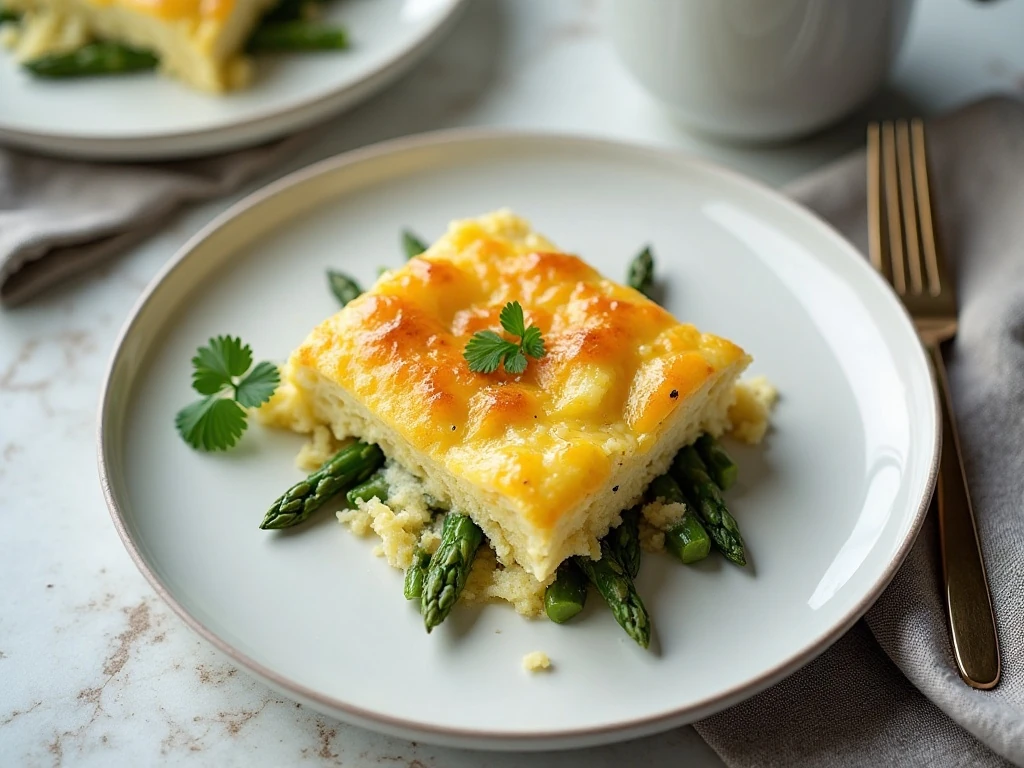
This asparagus and egg casserole brings together the best qualities of a strata and a hearty vegetable bake. The bread becomes tender and custardy in the center while the exposed edges turn lightly crisp, giving every serving a pleasant contrast of textures.
Fresh asparagus adds a grassy spring flavor and a beautiful green color, while Gruyère or Swiss contributes a nutty, savory finish. Sharp Cheddar is also an excellent choice when you want a familiar, more budget-friendly flavor.
It is especially useful when you are feeding a group because the preparation happens ahead of time. For another cozy casserole option at dinnertime, you may also enjoy this chicken and potato casserole.
Ingredients You’ll Need

The ingredient list is simple, but each part has an important job. Day-old French bread or sourdough gives the custard something substantial to soak into, and its slightly firm texture helps the finished casserole hold together when sliced.
- Asparagus: Choose firm, bright green spears and remove the woody ends before cutting.
- Eggs and dairy: Eight large eggs and whole milk or half-and-half create a creamy, tender custard.
- Bread: Use 8 ounces of 1-inch cubes, preferably bread that is at least a day old.
- Cheese: Gruyère, Swiss, or sharp Cheddar all melt well and bring savory richness.
- Fresh flavor: Sliced green onions add gentle onion flavor without overpowering the asparagus.
- Optional additions: Four to six ounces of cooked ham or crisp bacon make the dish heartier.
A small amount of dry mustard makes the cheese taste more pronounced, while a pinch of nutmeg adds warm, subtle depth. Use one or the other, or leave both out for a straightforward egg, vegetable, and cheese flavor.
If you like vegetable-forward baked dishes, this broccoli and cheese casserole is another comforting recipe to keep on your menu.
How to Make It Step-by-Step
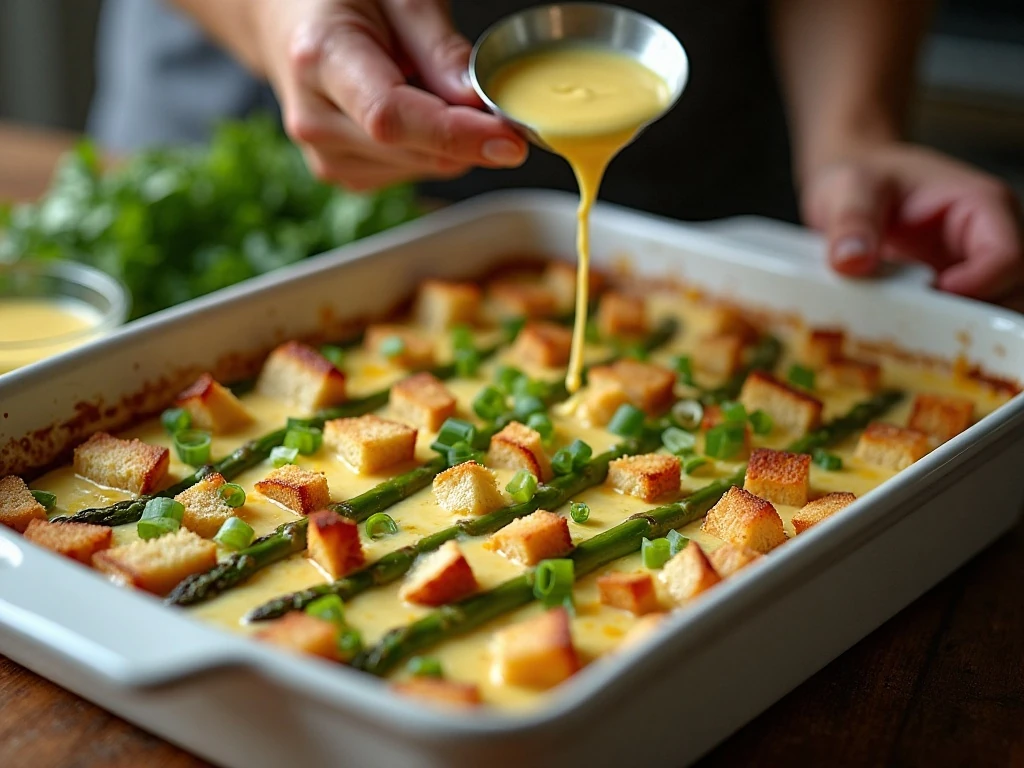
Step 1: Heat the oven to 350°F and butter a 9-by-13-inch baking dish with some of the butter or olive oil. The prepared dish prevents sticking and makes it easier to lift out neat portions after the casserole rests.
Step 2: Bring a pot of salted water to a boil and blanch the asparagus for 2–3 minutes, just until it is bright green and barely tender. Drain it immediately, cool it under cold water, and pat it very dry with a clean towel; removing surface moisture is essential for a firm casserole.
Step 3: Spread half of the bread cubes across the bottom of the baking dish. Scatter half of the asparagus, green onions, optional ham or bacon, and shredded cheese over the bread so the fillings are distributed from edge to edge.
Step 4: Add the remaining bread cubes and finish with the remaining asparagus, green onions, optional meat, and cheese. Building two layers helps every serving contain bread, vegetables, cheese, and custard instead of leaving all the toppings on the surface.
Step 5: In a large bowl, whisk the eight eggs with the milk or half-and-half, kosher salt, black pepper, and optional dry mustard or nutmeg. Continue whisking until the whites and yolks are fully blended and the seasoning is evenly dispersed.
Step 6: Pour the egg mixture slowly over the layered ingredients, moving around the dish so the custard reaches the corners. Press the bread down gently with the back of a spoon, then cover and refrigerate for at least 30 minutes or overnight for 8–12 hours.
Step 7: Bake the covered casserole for 25–30 minutes. Keeping it covered during the first part of baking allows the custard to cook gently while the bread absorbs the liquid.
Step 8: Remove the foil and continue baking for 15–20 minutes, until the center is set, the top is lightly browned, and an instant-read thermometer registers about 160°F in the center. If the casserole was chilled overnight, it may need to remain toward the longer end of the stated baking time.
Step 9: Remove the dish from the oven and rest it for 10 minutes before slicing. This short pause allows the custard to settle, making the casserole easier to cut and less likely to spill liquid onto the plate.
Pro Tips for the Best Texture
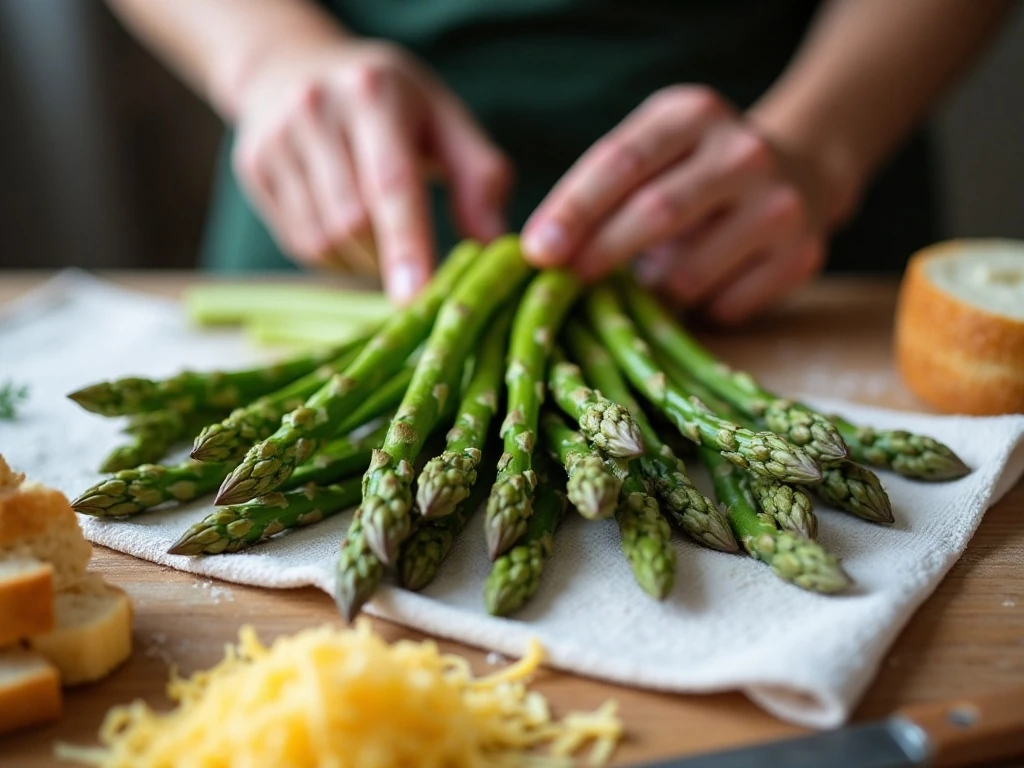
The most important preparation detail is drying the asparagus after blanching. Raw asparagus can release water as it cooks, and wet blanched asparagus can do the same, leaving the egg mixture loose instead of creamy and set.
Day-old bread is preferable because it has already lost some moisture and can absorb the custard without immediately collapsing. If your bread is fresh, cut it into cubes and let it sit uncovered for a while before assembling the dish.
Do not skip the resting period. The casserole will be hot and delicate straight from the oven, but ten minutes gives the eggs time to finish setting and makes serving much cleaner.
For a meat-free dinner, simply omit the ham or bacon. To make the meal more substantial without changing the core recipe, serve each square with a crisp green salad or roasted vegetables.
Make-Ahead, Storage, and Reheating
For a same-day meal, assemble the casserole and refrigerate it for at least 30 minutes before baking. For a relaxed morning or an easy dinner plan, assemble it the night before and chill it for 8–12 hours.
Keep the casserole covered while it is refrigerated, and bake it directly according to the instructions. A cold casserole may need the longer end of the 40–50 minute baking range, so check that the center is set and reaches about 160°F.
Store leftovers covered in the refrigerator and reheat individual portions gently until warmed through. Reheating in a moderate oven helps preserve the bread and cheese texture better than using very high heat.
For another make-ahead egg idea that is easy to serve at a gathering, take a look at these sausage, egg, and cheese breakfast bites.
What to Serve With Asparagus Casserole
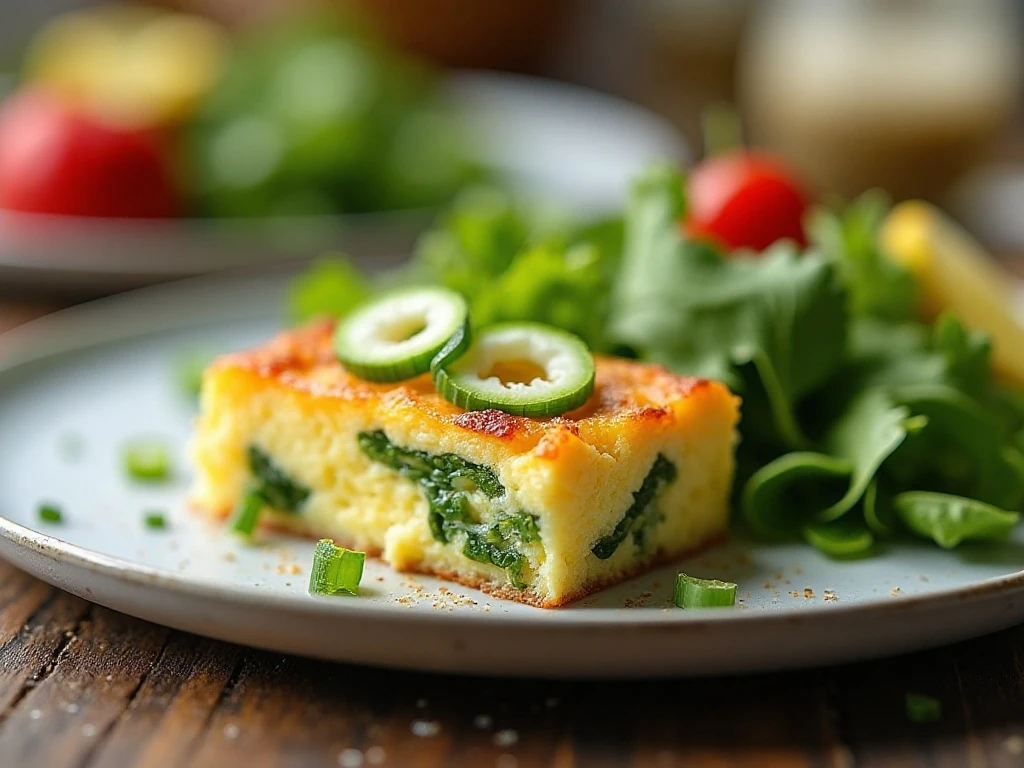
This dish is rich enough to stand alone, but a fresh side makes the plate feel balanced. Try a simple salad dressed with lemon, olive oil, salt, and pepper, or offer sliced fruit for a bright contrast.
- Mixed greens with a sharp vinaigrette
- Fresh berries, melon, or citrus segments
- Roasted tomatoes or lightly dressed cucumbers
- A small bowl of seasonal fruit salad
- Warm coffee, tea, or fresh orange juice for brunch
For dinner, pair it with a crisp vegetable side rather than another heavy bake. A chilled salad such as this chicken club pasta salad can also turn the meal into a generous buffet when you are serving several dishes.
Ingredient Variations
Gruyère and Swiss are traditional-style choices for this casserole because they melt smoothly and have a savory, nutty character. Sharp Cheddar brings a stronger flavor and is convenient when you already have it in the refrigerator.
Ham or bacon adds salt and smoky richness, but the casserole remains satisfying without meat. If using bacon, cook it until crisp, drain it well, and dice it before layering so excess grease does not collect in the dish.
The bread-based version is designed to be soft and spoonable, similar to a classic strata. Some egg casseroles omit bread and use 10–12 eggs for a firmer result, but this recipe follows the bread, asparagus, cheese, and custard method for a more substantial slice.
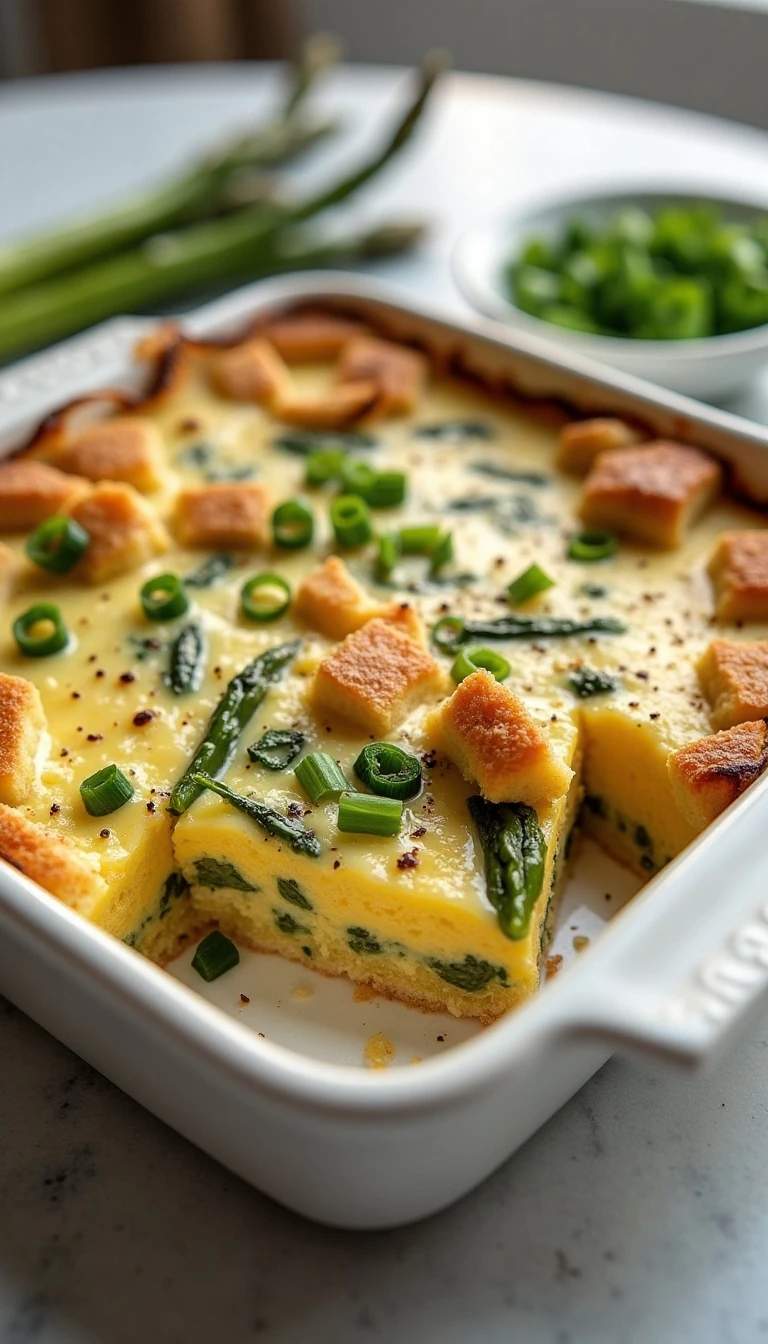
Asparagus and Egg Brunch Casserole
Ingredients
Method
- Heat the oven to 350°F and butter a 9-by-13-inch baking dish. Blanch the asparagus in boiling salted water for 2–3 minutes, drain, cool under cold water, and pat thoroughly dry.
- Spread half of the bread cubes in the prepared dish. Layer on half of the asparagus, green onions, optional ham or bacon, and cheese, then repeat with the remaining bread, asparagus, green onions, optional meat, and cheese.
- Whisk the eggs, milk or half-and-half, salt, pepper, and optional dry mustard or nutmeg until smooth and well combined. Pour the custard evenly over the casserole and gently press the bread down so it absorbs the liquid.
- Cover the dish and refrigerate for at least 30 minutes, or refrigerate overnight for 8–12 hours. Bake covered with foil for 25–30 minutes, then uncover and bake for another 15–20 minutes until the center is set, the top is lightly browned, and the internal temperature is about 160°F.
- Let the casserole rest for 10 minutes before cutting. Serve warm in squares.
Notes
Final Thoughts
This asparagus and egg brunch casserole is an inviting recipe to keep in rotation when you want something comforting, practical, and impressive without complicated cooking. Blanching and drying the asparagus, using day-old bread, and giving the assembled dish time to absorb the custard are the small details that make the final texture especially good.
Serve it warm after its ten-minute rest, with a crisp salad or fresh fruit alongside. Whether it is prepared for brunch, a family dinner, or a make-ahead weekend meal, this eight-serving casserole brings tender asparagus, creamy eggs, savory cheese, and golden bread together in every bite.
1 thought on “Asparagus and Egg Brunch Casserole Recipe”