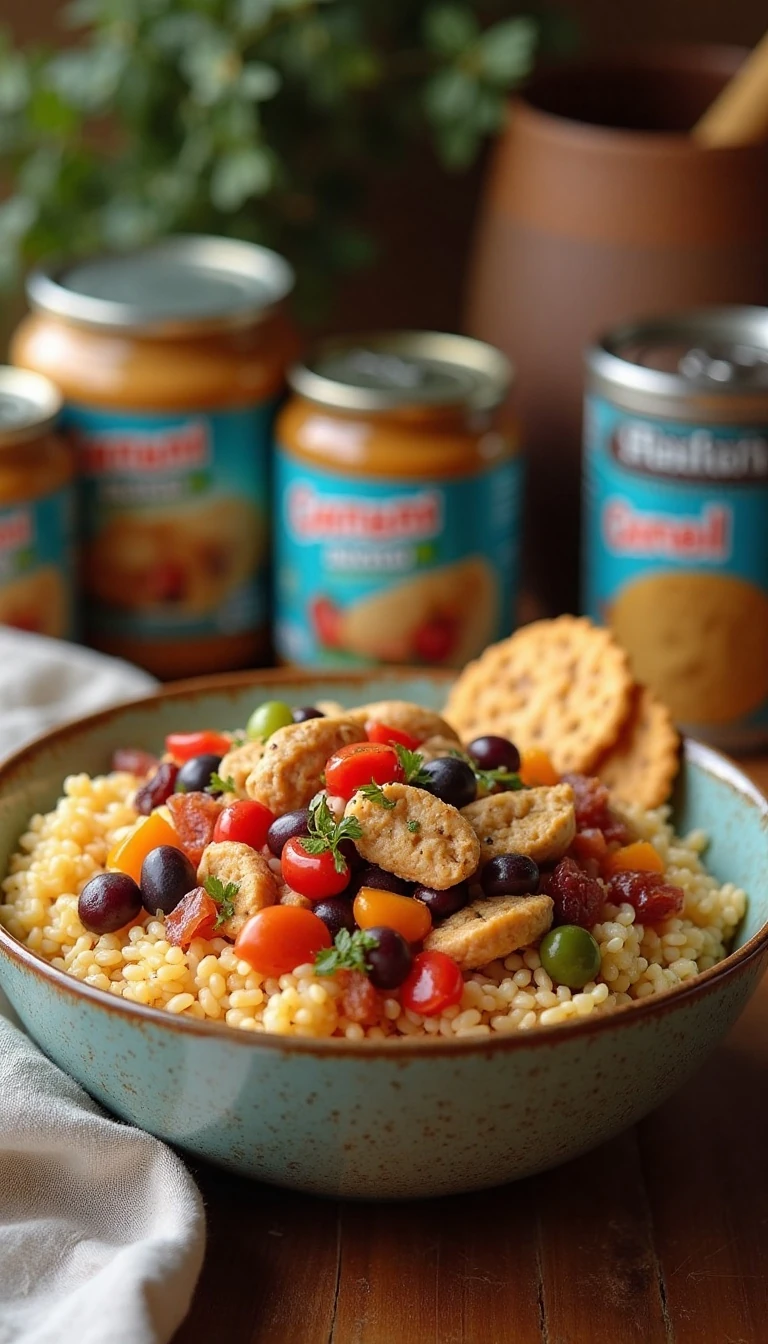
Ingredients
Method
Step-by-Step
- Choose commercially canned, dry, and shelf-stable foods that the people in your household already eat. Include alternatives for allergies, medical diets, infants, pets, and any cultural or personal food preferences.
- Check every can and package for leaks, swelling, severe rust, broken seals, or other damage before storing it. Set aside anything questionable rather than placing it with the usable supply.
- Organize foods in a cool, dry, dark location away from cleaning chemicals, direct sunlight, flooding, and extreme temperatures. Keep water containers stable and easy to access.
- Label or arrange foods by purchase date so the oldest items are used first. Keep a manual can opener, food-safe utensils, cooking fuel, and suitable water containers with the emergency supply.
- Use ready-to-eat foods when fuel or water is limited, and cook rice or pasta only when you have enough water and a safe heat source. Reheat canned foods only if desired because commercially canned foods are already cooked.
- Inspect the pantry periodically and replace expired, damaged, or unwanted items. Rotate the foods into ordinary breakfasts, lunches, and dinners so the supply stays familiar and fresh.
Notes
There is no universal quantity for this pantry plan. A common emergency-planning starting point is at least 1 gallon of water per person per day for three days, with additional supplies advisable for longer disruptions. Food quantities should reflect household size, dietary needs, storage conditions, and whether electricity, cooking fuel, and water will be available.