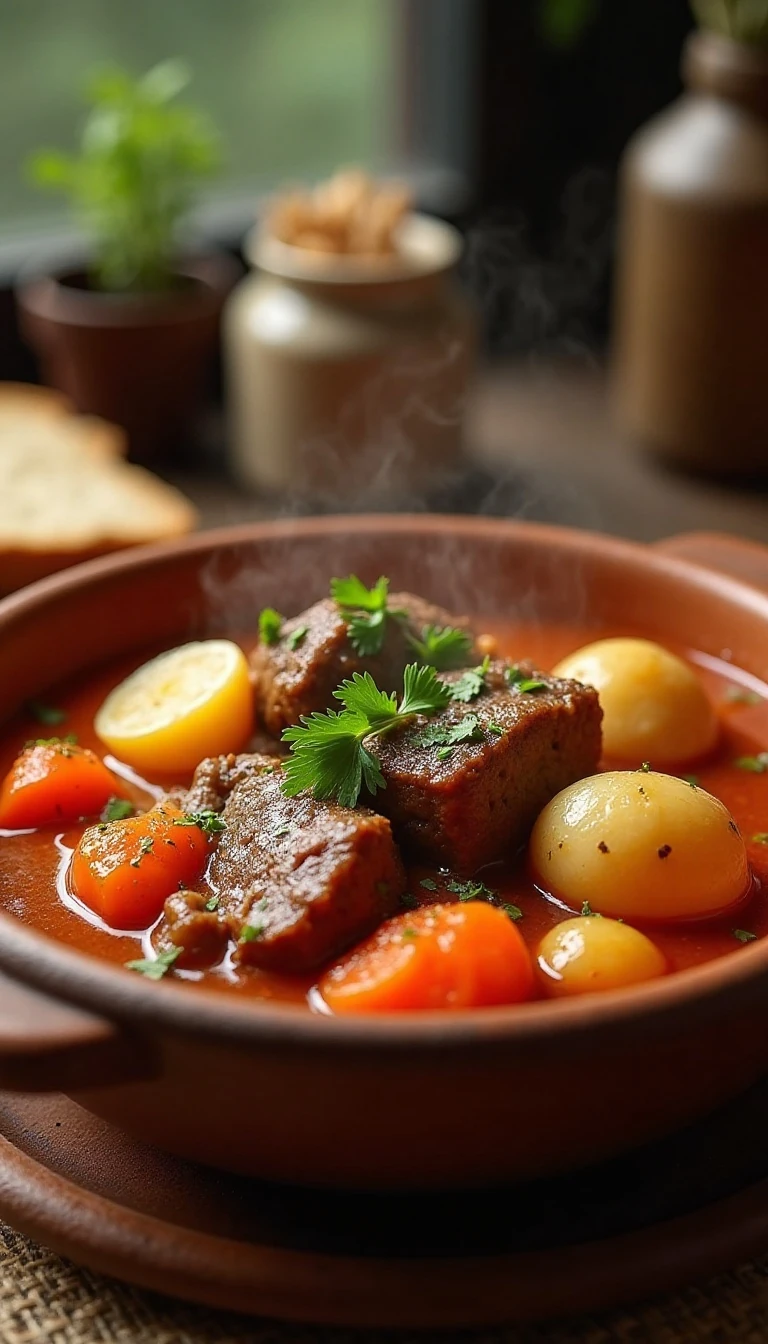
Ingredients
Method
Step-by-Step
- Pat the beef dry with paper towels and season it lightly with some of the kosher salt. Heat the lard or vegetable oil in a heavy Dutch oven or large pot over medium-high heat, then brown the beef in batches so the pieces sear instead of steam. Transfer each browned batch to a plate.
- Lower the heat to medium and add the onions to the same pot. Cook for 8–10 minutes, stirring often, until they are soft and lightly golden, scraping up the flavorful browned bits from the bottom.
- Remove the pot from the heat briefly. Stir in the sweet Hungarian paprika, minced garlic, and lightly crushed caraway seeds, allowing the residual heat to release their aroma without scorching the paprika.
- Return the browned beef and any juices on the plate to the pot. Add the chopped tomato, chopped pepper, black pepper, and bay leaf if using, then pour in enough stock or water to just cover the meat.
- Bring the liquid to a gentle simmer, then partially cover the pot. Cook for 1 1/2–2 hours, stirring occasionally and adding a little more water if needed so the beef remains surrounded by broth.
- Add the potatoes, sliced carrots, and sliced parsnip during the final 25–35 minutes of cooking. Continue simmering uncovered or partially covered until the vegetables are tender and the beef is completely fork-tender.
- For csipetke, mix the egg, flour, and pinch of salt into a firm dough. Pinch off pea-sized pieces directly into the simmering goulash during the last 10 minutes, giving them enough time to cook through.
- Taste the goulash and adjust the salt and paprika as needed. Let it rest for 10 minutes, remove the bay leaf if used, and finish with chopped parsley before serving.
Notes
Use genuine sweet Hungarian paprika and add it off the heat so it does not become bitter. Traditional goulash does not require flour, cream, or a roux. Refrigerate leftovers promptly and reheat gently with a splash of water or stock.