Ingredients
Method
Step-by-Step
- Heat the oven to 400°F (200°C) and line a baking sheet with parchment paper. Set the pan aside while you prepare the dough so the shaped scones can go into the oven promptly.
- Whisk the flour, sugar, baking soda, and salt in a large bowl. Stir in the caraway seeds if you are using them, making sure the baking soda is evenly distributed throughout the flour.
- Add the cold butter and cut it into the flour with a pastry blender or your fingertips until coarse crumbs form. A few small visible pieces of butter are welcome because they help keep the baked scones tender.
- Stir in the raisins or dried currants until they are coated with the flour mixture. This helps prevent the fruit from clumping together when the wet ingredients are added.
- Whisk the egg and buttermilk together in a separate measuring cup. Pour the liquid into the dry ingredients and stir just until a shaggy dough forms, adding 1–2 tablespoons more buttermilk only if the mixture remains very dry.
- Turn the dough onto a lightly floured surface and gently bring it together with your hands. Pat it into a round about 1 inch (2.5 cm) thick, taking care not to knead or compress the dough.
- Cut the round into 8 wedges, or use a round cutter to make 10–12 smaller scones. Arrange them on the prepared baking sheet and brush the tops lightly with buttermilk or cream if desired.
- Bake for 15–20 minutes, until the scones are puffed and golden brown and the centers feel set. Bake soon after adding the buttermilk because the baking soda begins reacting with the acidic liquid immediately.
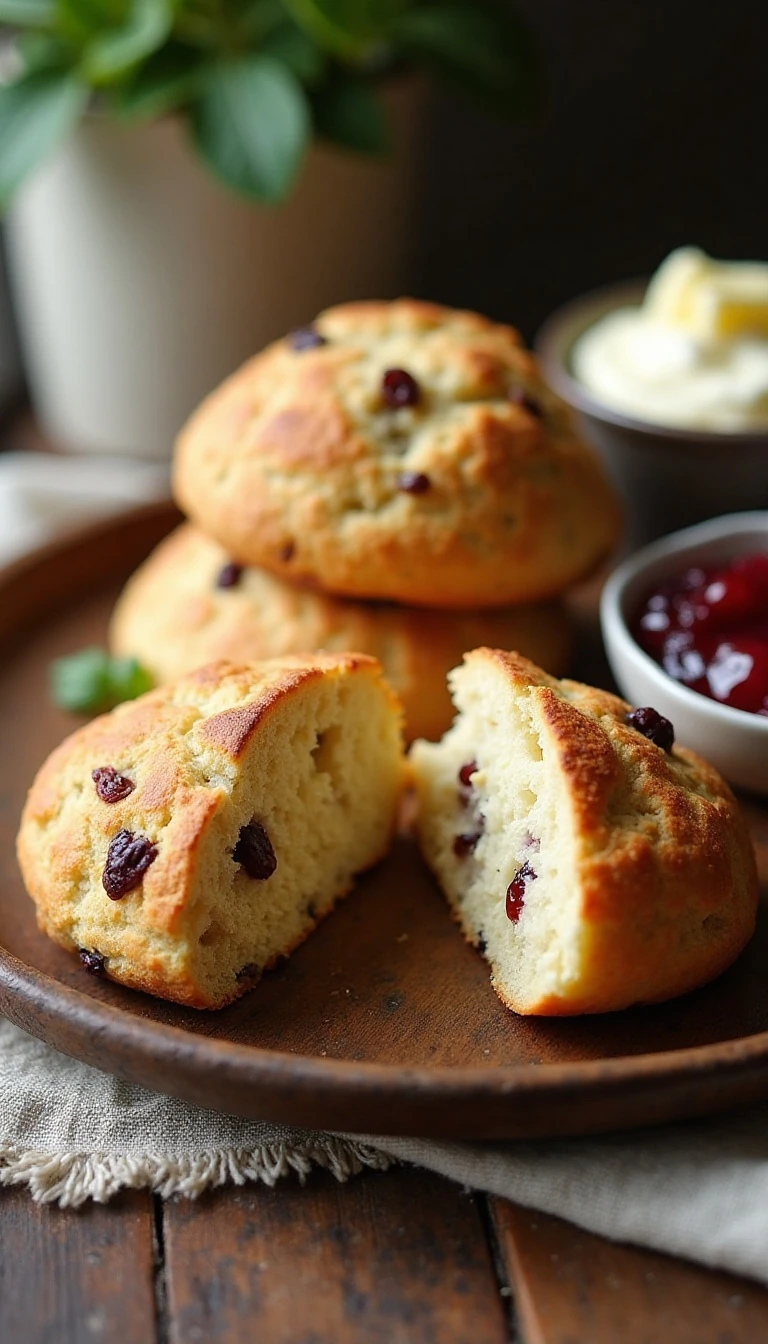
- Cool the scones on the baking sheet or a rack for at least 10 minutes before serving. Enjoy them warm with butter, jam, or clotted cream.
Notes
Keep the butter and buttermilk cold, and mix only until the dough comes together. For a less sweet, more traditional soda-bread flavor, sugar can be reduced to 1–2 tablespoons or omitted. Store cooled scones in an airtight container and gently rewarm before serving.