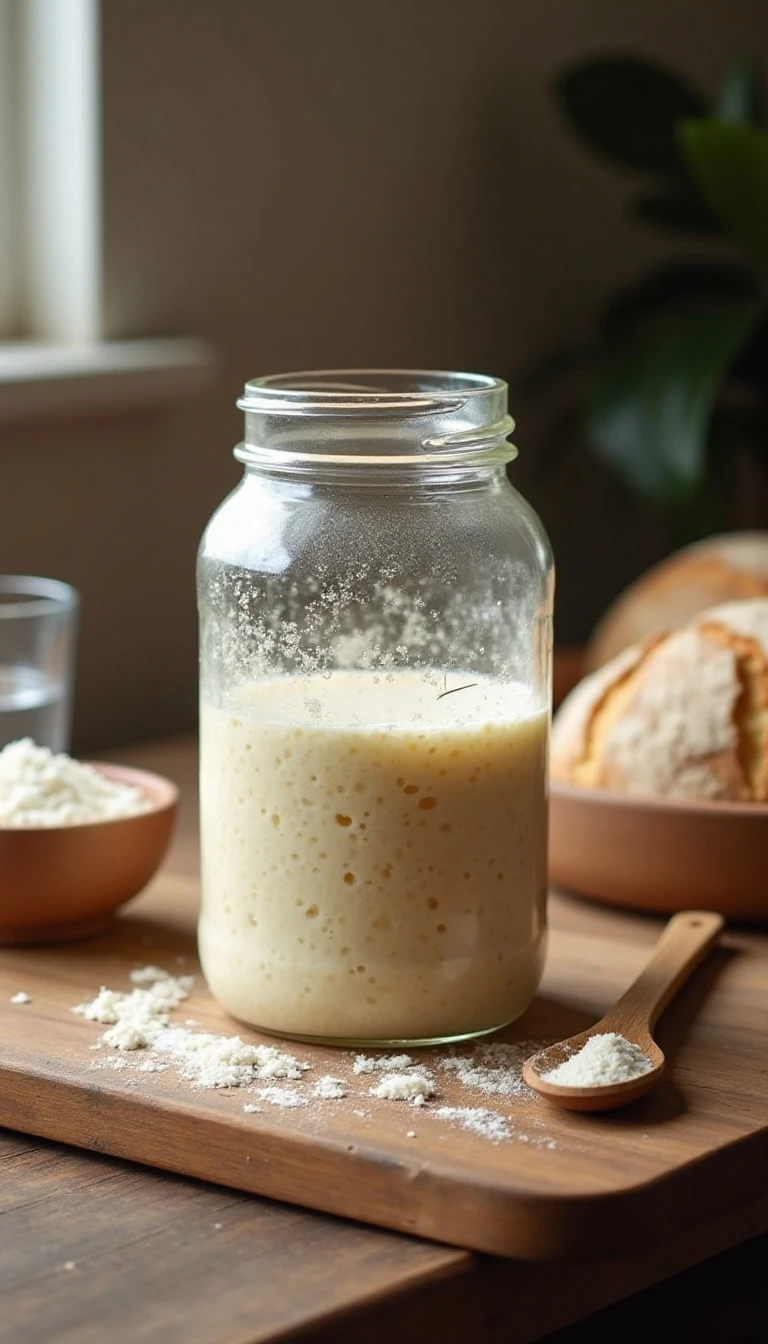
Ingredients
Method
Step-by-Step
- Combine 50 g whole-wheat or dark rye flour and 50 g lukewarm water in a clean 1-quart glass jar. Stir until no dry flour remains, cover loosely, and leave at room temperature for 24 hours.
- On day 2, inspect the mixture for bubbles and a mild sour aroma. Discard about half, leaving approximately 50 g in the jar, then add 50 g flour and 50 g water and stir thoroughly.
- Repeat the discard-and-feed routine every 24 hours. Mark the level after each feeding so you can see when the starter rises and falls.
- If the starter becomes vigorous enough to rise and fall within 12 hours, begin feeding it every 12 hours. Continue until it consistently doubles within about 4–8 hours and smells pleasantly tangy or fruity.
- Use the starter near its peak rise, when it looks domed, airy, and full of bubbles but has not begun to collapse. This is the ideal time to add it to a bread or baking recipe.
Notes
Use a digital scale for accurate equal-weight feedings. Whole-wheat or dark rye flour is recommended at the beginning, while unbleached all-purpose or bread flour may be used after the starter becomes active. If gray liquid or a sharp alcoholic smell appears, the starter is hungry; stir the liquid in or pour it off and feed the starter. Discard the entire culture if you see fuzzy mold or pink, orange, or red discoloration.